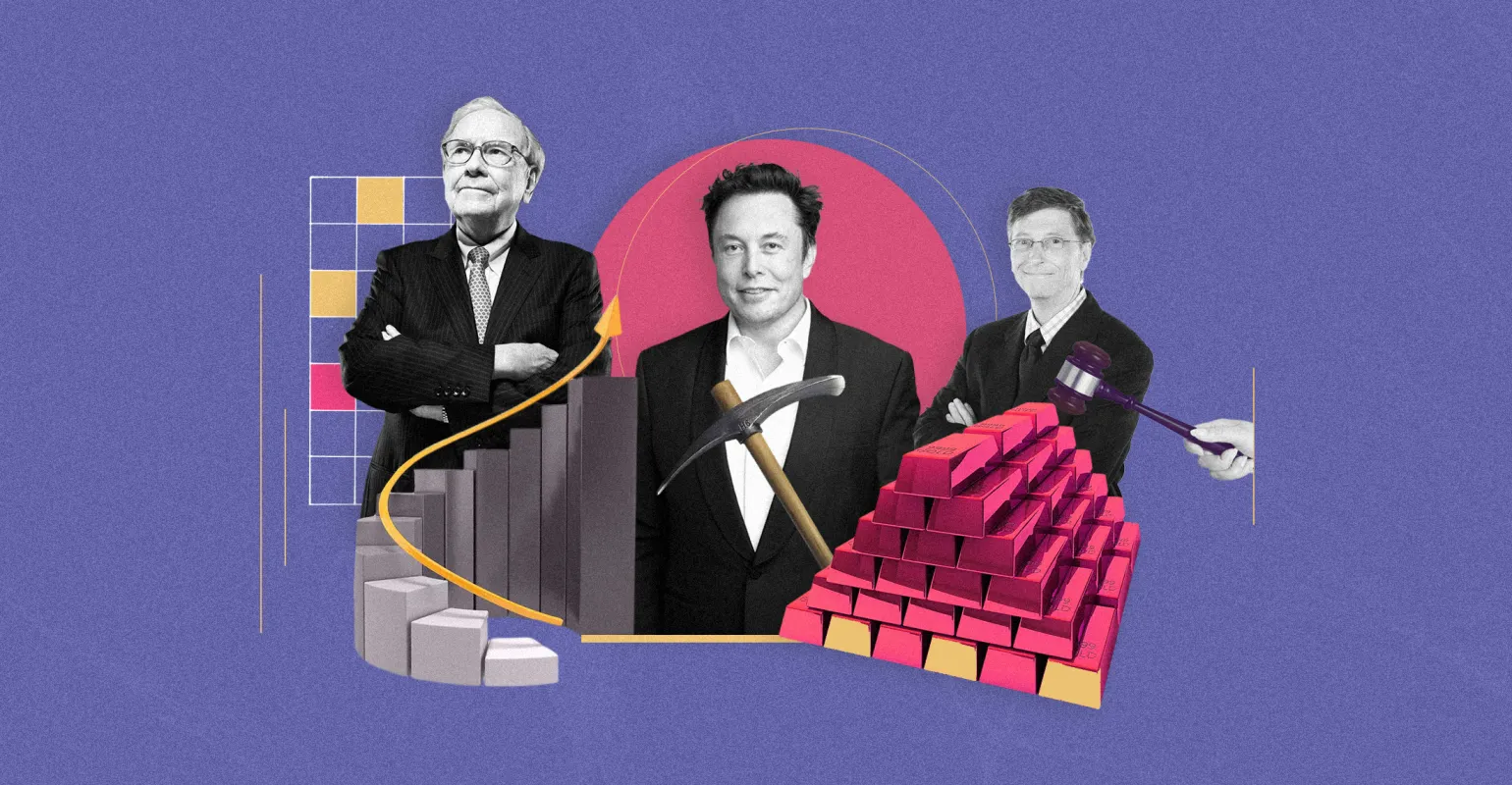
Contents:
- Elon Musk: His Family's Wealth and the Beginning of His Career
- Bernard Arnault: His Legacy in the World of Luxury
- Bill Gates: The Legacy of Successful Parents and the Beginning of a Great Journey
- Warren Buffett: From His Roots to Financial Heights
- Carlos Slim: The Path to Success from His Lebanese Roots to Wealth

4 Internet Marketing Professions: A Free Mini-Course
Learn MoreElon Musk: His Family Wealth and Early Career
Elon Musk's net worth is currently estimated at $234 billion, confirming his status as one of the richest people in the world. His financial success is due to his success in companies such as Tesla and SpaceX, which have significantly changed the electric vehicle and space technology industries. Musk continues to be an influential figure in business and innovation, attracting the attention of investors and analysts around the world.
Elon Musk's childhood was marred by bullying and domestic violence, but he did not lack material wealth. In her book, "Woman with a Plan," Elon's mother, Maye Musk, emphasizes that the family lived a comfortable life, owning a home, a private jet, a yacht, and several cars. This financial security was provided by his father, Errol Musk, who co-owned an emerald mine in Zimbabwe. Despite the difficult circumstances in which Elon grew up, his financial security played a significant role in his future success and passion for innovation. Errol Musk states, "We were very rich. Sometimes we had so much money that we couldn't close the safe." This statement casts doubt on Elon Musk's claims that his family lacked sufficient financial resources. This situation highlights the difference in perceptions of wealth and may provide insight into how finances shape personal and family histories. Thanks to financial stability, Elon Musk was able to attend the prestigious private school Pretoria Boys High School and travel around the world. During one of his trips to New York, he sold two emeralds for $2,000 at a Tiffany jewelry store. This experience not only highlighted his entrepreneurial spirit but also became an important part of his life's journey, which later led him to international success in business and technology.

At the age of nine, Elon Musk received a Commodore VIC-20 computer, which marked the beginning of his passion for programming. At the age of twelve, he sold the code for his first video game, Blastar, to PC and Office Technology magazine for $500. In 1988, at the age of 17, Elon moved to Canada, using his mother's citizenship. He first attended Queen's University and then transferred to the University of Pennsylvania, where he studied physics and business. These early steps in education and programming became the foundation for his future success in the tech industry.
After graduation, Elon Musk attempted to obtain a PhD from Stanford University, but after just a few days, he decided to drop out to pursue entrepreneurship. In 1996, he founded his first company, Zip2, with his brother, Kimbal. According to biographer Ashlee Vance, the initial capital was $28,000, provided by their father. However, Musk himself claims that his father invested in the company later. This early investment was an important step towards creating a successful business, which became the foundation for Musk's further ambitious projects in the field of technology and innovation.
Zip2 created software that became the basis for modern mapping services such as Yandex.Maps and Google Maps. The brothers founded the company during a period of active growth of the internet market, which allowed them to attract customers and investors. In 1999, the startup was acquired by Compaq for $307 million, and Elon Musk received $22 million from this deal. This event became an important stage in his career and contributed to the further development of his business project.
Bernard Arnault: A Legacy in the World of Luxury
Bernard Arnault's net worth is currently $154.2 billion, cementing his position among the richest people in the world. As the head of the LVMH group, Arnault actively influences the luxury and fashion industries, which contributes to his financial success and the growth of his fortune.
Bernard Jean-Étienne Arnault is a prominent French businessman and the permanent head of LVMH, which manages more than 70 famous luxury brands, including Christian Dior, Louis Vuitton, Givenchy, and Moët & Chandon. His father, Jean-Léon Arnault, owned the Ferret-Savinel construction company, which laid the foundation for Bernard's career advancement. After graduating from the prestigious Ecole Polytechnique de Paris, in 1976 he decided to sell the Ferret-Savinel construction division to the Rothschilds for 40 million francs, equivalent to approximately $6.7 million. Bernard informed his father of the deal after it had been completed, highlighting his determination and commitment to business independence. Under his leadership, LVMH significantly expanded its presence in the luxury market, cementing its status as one of the industry's leaders. Following the sale of his business, Arnault focused on restructuring his remaining assets and began selling real estate. In 1981, when François Mitterrand's Socialist government came to power in France, he decided to emigrate to the United States to avoid the high wealth taxes the new government promised to impose. However, life in America did not live up to his expectations, and in 1984 he returned to France, investing $15 million in the bankrupt textile concern Agache-Willot-Boussac, which owned the famous Christian Dior brand. Arnault's return to France was a key moment in his career, allowing him to revive and develop the business that would become the foundation of his future success in the fashion and luxury industries.

At this new stage of his career, Bernard Arnault focused on building a luxury empire, divesting most of his company's assets and laying off nine thousand employees. This decision freed him up to focus on developing premium brands. By 1987, his concern Financiere Agache, which was later renamed, had revenues of $1.9 billion, with net profits reaching $112 million. In 1988, taking advantage of internal conflicts within the LVMH conglomerate, Arnault received a blocking stake and assumed the leadership position. Under his leadership, renowned brands such as Givenchy, Guerlain, Celine, Sephora, and Tiffany joined the empire. By 2021, LVMH had achieved impressive financial results, with revenues of €64.2 billion and profits of €17.2 billion. These indicators confirm the success of Arnault's strategy and his ability to manage luxury brands in the global market.
Bill Gates: the legacy of successful parents and the beginning of a great journey
As of the last update, Bill Gates's net worth is $129.5 billion. This makes him one of the richest people in the world. Bill Gates continues to be a significant figure in business and philanthropy, actively participating in various charitable initiatives.
Bill Gates's father, William Henry Gates Sr., achieved significant success as a lawyer, serving as chairman of the bar associations in Seattle and Washington state. He founded the law firm Preston Gates & Ellis, now part of the international company K&L Gates, which is among the 100 largest legal structures in the United States. Bill's mother, Mary Maxwell, came from an influential family and became the first female president of Pacific National Bank, now First Interstate Bank. Both parents were active on the board of the University of Washington, where they graduated in 1950, highlighting their connection to education and their contributions to the region.
From an early age, Bill Gates was surrounded by high standards and a desire to succeed. He attended the prestigious private Lakeside School, where his interest in programming began to flourish. Psychotherapy was an important aspect of his life, which likely helped him cope with the pressures associated with his ambitions. In high school, Gates worked as a programmer at a power plant, an important step on the path to his distinguished career in technology and business.
In 1973, Bill Gates entered Harvard University, choosing law to fulfill his parents' expectations. However, his true interest lay in mathematics. Soon, Gates decided to leave his studies and co-found Microsoft with his friend Paul Allen, a turning point in his life and career in technology. This decision paved the way for the creation of one of the most influential software products in the world and changed the landscape of the computer industry.
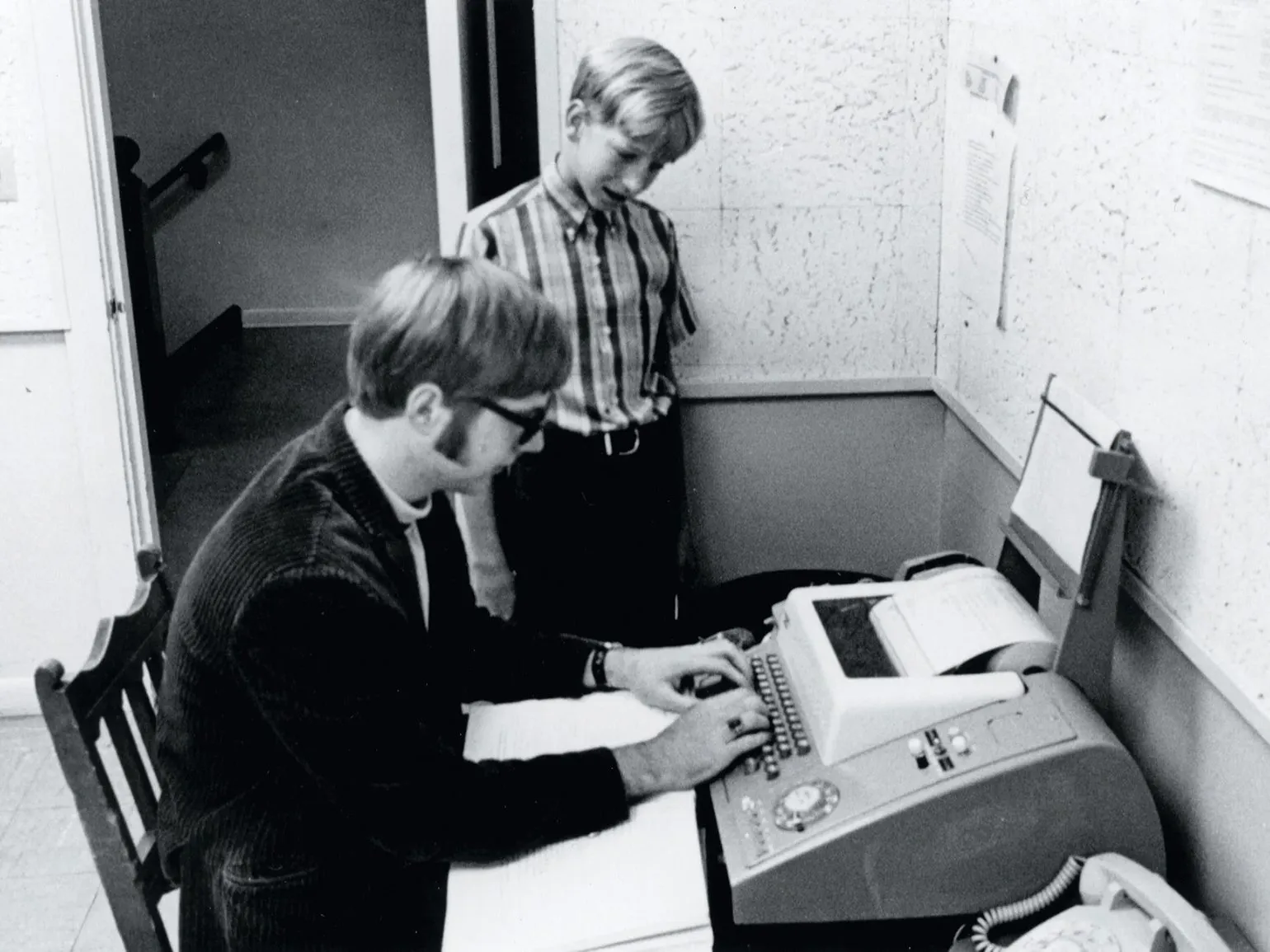
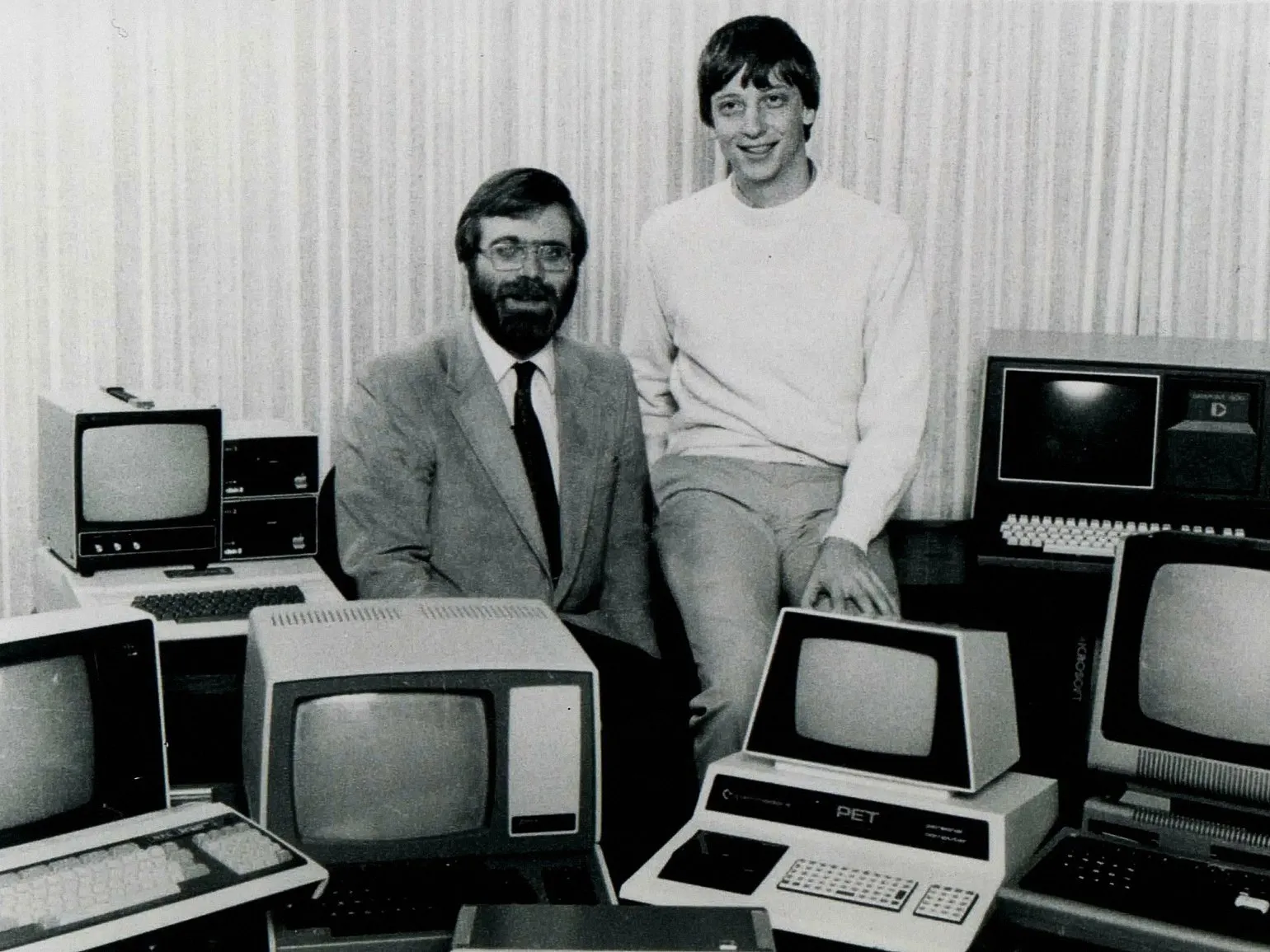
In its early days, Microsoft sold software to MITS, known for its Altair 8800 computers. After MITS went bankrupt, Microsoft began collaborating with major players such as Apple, Commodore, and Tandy. A key moment for the company came in 1980, when Microsoft signed a contract with IBM to supply the MS-DOS operating system. This success was largely due to Bill Gates' mother, who at the time served as chair of the executive committee of the United Way of America. She attracted the attention of IBM President John Opel, which contributed to a successful collaboration between the companies.
Warren Buffett: From Origins to Financial Heights
As of 2023, Warren Buffett's net worth is $117.6 billion, confirming his status as one of the wealthiest people on the planet. Buffett, known as the "Oracle of Omaha," continues to exert significant influence on financial markets and investment strategies, making him a significant figure to study in the world of business and investment.
Born on August 30, 1930, in Omaha, Nebraska, Warren Buffett has become the personification of investment success and wisdom in the world of finance. His mother, Leila, was a homemaker, and his father, Howard Buffett, worked first as an insurance agent and then as a stockbroker at Union State Bank. The onset of the Great Depression led to the bankruptcy of the bank and the loss of Howard's job, which radically changed their lives and shaped the character of the future investor. These early experiences laid the foundations for his approach to investing and financial literacy, which later led to his becoming one of the most successful investors in the world.
In 1931, Howard Buffett, along with partners Carl Falk and George Sklenicka, founded the brokerage firm Buffett, Sclenicka & Co. Initially, their clients were friends and acquaintances, who were offered reliable investments in utility stocks and municipal bonds. Within its first month of operation, the company began generating income, and by 1936, the Buffett family had moved into a new, more comfortable home, reflecting the growing success of the business.
In 1943, Howard Buffett, a vocal Republican, was elected to the House of Representatives from Nebraska. This event marked a turning point for his family, who were able to move to a more prestigious Washington, D.C., suburb. The move to the capital region opened up new opportunities for Buffett's political and social activities and also contributed to strengthening his influence in Republican circles.
Warren Buffett, following his father's example, began studying business at the age of 17. He enrolled at the Wharton School at the University of Pennsylvania but then transferred to the University of Nebraska to reduce tuition costs. In 1950, he continued his education at Columbia University, where he studied with such luminaries as Benjamin Graham and David Dodd. Despite Graham's initial rejection, in 1954, Buffett received the opportunity to work for the Graham-Newman Corporation, which became a significant milestone in his career and contributed to his emergence as one of the most successful investors in the world.
Just two years after leaving Graham-Newman Corporation, Warren Buffett founded the investment partnership Buffett Associates, starting with $105,000. By 1962, the fund's assets under management had increased to $7 million. Buffett currently manages the Berkshire Hathaway holding company, whose market capitalization exceeds $700 billion. He continues to be one of the most influential investors in the world, making him a role model for many traders and entrepreneurs.
Carlos Slim: The Path to Success from Lebanese Roots to Wealth
Carlos Slim's current net worth is $81.1 billion, confirming his status as one of the most influential businessmen in the world. Slim is known for his successful investments in various industries, including telecommunications and real estate. His influence on the economy and business environment is undeniable, making him a significant figure on a global scale.
Carlos Slim, the richest man in Mexico, was born on January 28, 1940, in Mexico City to Lebanese immigrants. His father, Khalil Salim Haddad, left Lebanon in 1902 when the country was under the control of the Ottoman Empire. He sought to avoid conscription into the army, as his Christian Maronite family did not want their son to fight for the Islamic rulers. Carlos Slim became a successful businessman, making a fortune through investments in telecommunications, construction, and other sectors.
Khalil, better known as Julián Slim Haddad, arrived in Mexico where he was met by his four older brothers. In 1904, they founded the company "La Estrella de Oriente" with a capital of 25,800 Mexican pesos, which is approximately $30,000 today. The company began importing and selling a variety of goods, including jewelry, fabrics, and perfumes. By 1921, the estimated value of the business had risen to 100,000 pesos. This successful start laid the foundation for the company's further development and its influence on the market.
In 1926, Julián became the full owner of the company, buying out his brother's share, which allowed him to increase his fortune to more than 1 million pesos. That same year, he married Linda Helu, the daughter of the publisher of Mexico's first Arabic-language newspaper. The couple had six children, including Carlos, the fifth. From an early age, Carlos showed an interest in finance, keeping track of his pocket money, and at the age of 12 he began investing, buying his first shares.

After graduating from the National Autonomous University of Mexico in 1963, Carlos Slim began his career in the stock market as a trader. He soon decided to focus on building his own business, starting with real estate investments and gradually expanding his holdings in the tobacco and mining industries. However, the real breakthrough in his career came in the 1990s, when he began investing in telecommunications. His company, Telmex, quickly took a leading position in the Mexican market, controlling approximately 70% of the share.
Carlos Slim successfully married Soumaya Domit Gemayel, the daughter of a shoe business owner and niece of the famous politician Amin Pierre Gemayel, who served as President of Lebanon in the 1980s. At their wedding, their mother-in-law gave the newlyweds a million dollars, emphasizing the significance of this event in their lives and family history.
If you're interested in business, check out these articles. They contain relevant information, helpful tips, and strategies that will help you better understand the market and develop your entrepreneurial skills. Reading these materials will keep you abreast of the latest trends and innovations in the business world.
- "Our stuff is total crap." How careless statements by businessmen destroyed company stocks
- The 7 richest TikTokers in the world: where do they get their money?
- A strange business from Japan: renting relatives and selling hugs
- 10 free unusual online courses: from learning languages to cooking
- The 5 most expensive EdTech startups of 2021: leaders from China, India, and the USA
Starting a Business in 2025: 5 Steps to Success
Want to launch your business in 2025? Learn 5 key steps to successfully implementing your idea!
Learn More