Contents:
- Restrictions on the application of the tax regime for the self-employed (NPT)
- Taxes for the self-employed: what you need to know about the NPT
- Efficient tax accounting for the self-employed on the NPT
- Step-by-step instructions for switching to the NPT
- How can an individual entrepreneur switch to the NPT?
- Key aspects of the tax on professional income
- How to deepen your knowledge of taxation
Internet Marketing: 4 Professions on a Free Course
Learn MoreRestrictions on the Application of the Tax Regime for the Self-Employed (NPI)
The tax on professional income (NPI) offers favorable conditions for individuals and sole proprietors engaged in the sale of goods of their own production, performance of work, or provision of services. This tax system allows you to avoid registering as an individual entrepreneur, which simplifies the process of doing business. The NPI is suitable for those who want to legally earn income while maintaining simplicity in paperwork and reporting. Using the NPI opens up new opportunities for self-employed citizens, promoting the development of small businesses and creative activities.
Self-employed individuals have the opportunity to combine their activities with work under an employment contract. It should be noted that wages received under an employment contract are not included in the calculation of professional income tax. This allows the self-employed to optimize their tax liabilities and earn additional income without the risk of increasing the tax burden.
There are certain restrictions on the types of activities that self-employed individuals can carry out. The following activities are prohibited:
- sale of excisable goods and goods subject to mandatory labeling;
- resale of goods and property rights belonging to other persons;
- extraction and sale of minerals;
- entrepreneurial activities on behalf of third parties;
- delivery of goods on behalf of third parties.
Self-employed individuals have the right to carry out any activities that are not prohibited by current legislation. This allows them to freely develop their skills and offer services in various fields, such as handicrafts, consulting and IT. It is important to remember that compliance with legal regulations is a prerequisite for the successful operation of self-employed individuals.
There are additional restrictions for non-standard production items (NPO). These restrictions may relate to aspects such as dimensions, materials, manufacturing technologies, and other requirements that must be taken into account during the design and production of NPO. Compliance with these restrictions is critical to ensuring the quality and compliance of products with established norms and standards. Proper understanding and application of these restrictions will help avoid errors in the development process and improve production efficiency.
- employment contracts cannot be drawn up with employees (employees may be hired under civil law contracts);
- NPO cannot be combined with other tax regimes;
- the annual income of a self-employed person must not exceed 2.4 million rubles.
If an individual's annual income exceeds the established limit, a 13% tax must be paid on the amount exceeding 2.4 million rubles. For example, if income is 3.2 million rubles, a self-employed person is required to pay 13% on 800,000 rubles. This amount is considered ordinary personal income, subject to taxation at the personal income tax rate. Individual entrepreneurs who have exceeded the established income limit are required to switch from the professional income tax (PIT) to another tax regime. It is important to submit an application to switch to an alternative tax regime within 20 days of exceeding the limit. Otherwise, they will be automatically transferred to the general tax system, which may lead to an increase in the tax burden. A timely application will help avoid unwanted consequences and optimize tax liabilities. For more detailed information on the various tax systems, we recommend visiting the Skillbox Media website. There you will find up-to-date materials and analyses that will help you better understand the structure of tax legislation and its specific features.
Taxes for the Self-Employed: What You Need to Know About the Professional Income Tax
Under the professional income tax (PIT), individual entrepreneurs must pay tax solely on their income. However, they may be required to pay VAT when importing goods. For individuals operating under this tax regime, the PIT replaces the personal income tax (PIT). Thus, the PIT offers a more simplified approach to taxation, which can be beneficial for small entrepreneurs and self-employed individuals, allowing them to focus on growing their business without unnecessary bureaucracy.
The professional income tax rate depends on the client category with whom you interact. The main client groups include individuals, legal entities, and sole proprietors. Each category has its own taxation features and rates, which are important to consider when planning your income. Understanding these differences allows you to optimize tax deductions and improve the efficiency of financial management.
- 4% — when receiving income from individuals;
- 6% — when selling services or goods to legal entities.
The tax period for the professional income tax (PIT) is one calendar month. The tax must be paid no later than the 25th day of the month following the reporting month. For example, the tax for April must be paid no later than 25 May inclusive. Below are details on maintaining tax records for the PIT, which will help you properly organize your tax obligations.
Taxpayers on the simplified tax system (PIT) have the opportunity to take advantage of a tax deduction of 10,000 rubles. This deduction is provided once and allows you to reduce the total tax amount, and its use occurs in stages. During the period when the deduction has not yet been exhausted, the tax rate is reduced: from 4% to 3%, and from 6% to 4%. This makes the tax burden less burdensome and provides an opportunity to optimize financial expenses for individual entrepreneurs.
If a self-employed person's monthly income from a legal entity is 15,000 rubles, then under the standard tax is 900 rubles (15,000 × 6%). However, when applying the reduced rate, the tax is reduced to 600 rubles (15,000 × 4%). This means that the deduction amount for the reporting month will be 300 rubles (900 - 600). The remaining deduction, which can be carried over to the next month, will be 9,700 rubles (10,000 - 300). All calculations can be easily performed using the "My Tax" app, which simplifies the tax management process for the self-employed. Self-employed citizens are exempt from mandatory social security contributions. However, they have the opportunity to voluntarily make pension contributions through the "My Tax" app. In this app, self-employed individuals can independently determine the amount of their contributions. This allows them to save for retirement if they want to ensure their financial security in the future. Effective tax accounting for the self-employed on the professional income tax (PIT) Self-employed citizens working under the professional income tax (PIT) receive significant advantages. They are exempt from the need to fill out tax returns and submit reports, which significantly simplifies running a business. Interaction with tax authorities occurs through the convenient "My Tax" app or the taxpayer's personal account. This solution enables efficient management of income and tax accounting, making the process more transparent and accessible for self-employed individuals. Using these tools helps optimize time and reduce administrative burdens, which is especially important for small businesses and freelancers. When receiving payment for services or goods, self-employed individuals are required to generate a receipt for each payment. To do this, open the "New Sale" section in the app. Enter the name of the product or service, specify the price, select the buyer category—individual or legal entity—and enter the buyer's Taxpayer Identification Number (TIN). Correct registration of receipts is an important part of running a business for the self-employed, which allows you to comply with tax regulations and ensure the transparency of financial transactions.
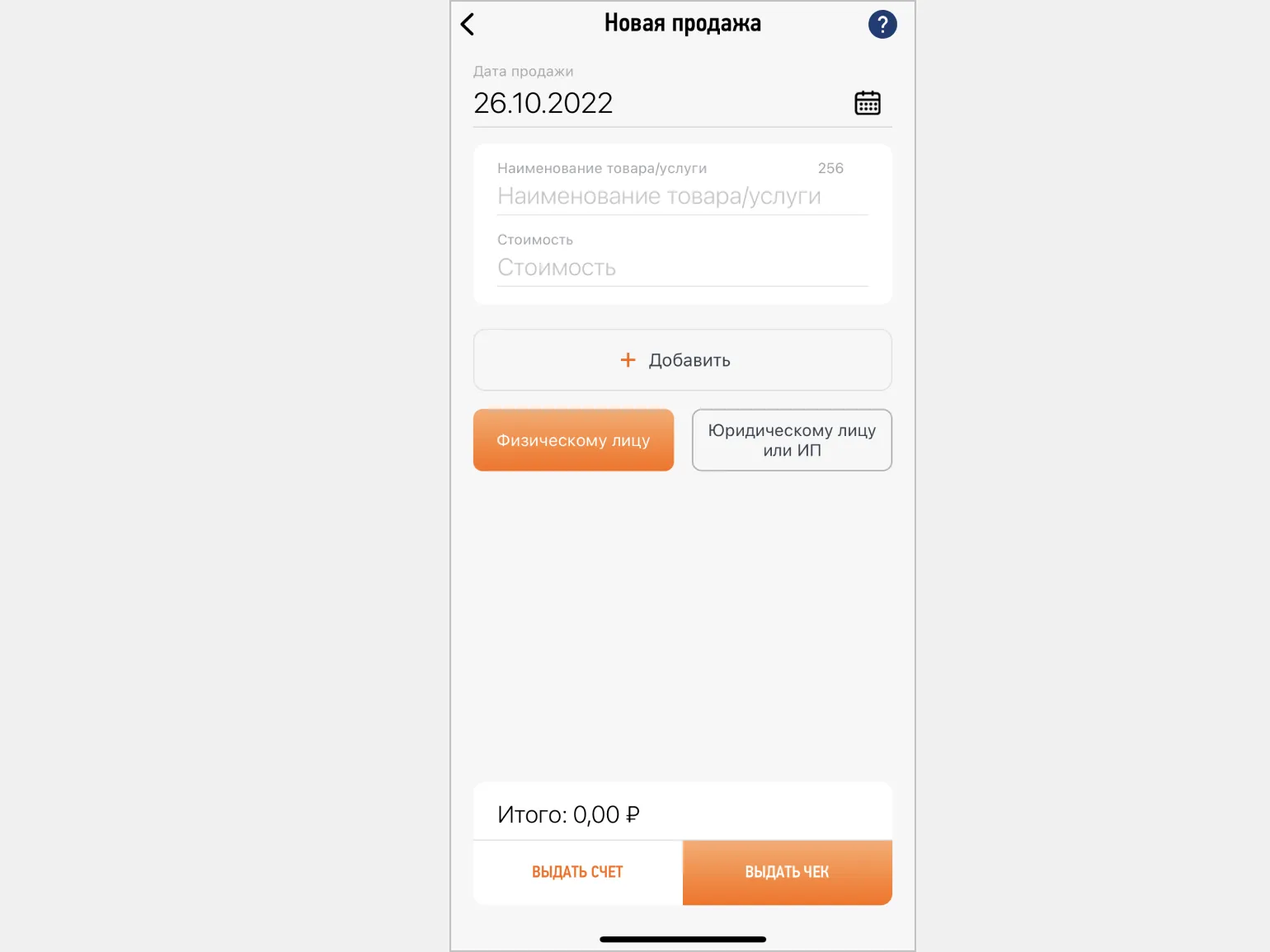
After clicking the "Issue Receipt" button, the application automatically generates a receipt that can be sent to the client. This process significantly simplifies interaction with customers and ensures transparency of financial transactions, which is an important aspect of running a business. Automated receipt generation helps avoid errors, saves time, and improves customer service.
At the end of each month, tax authorities, based on the information collected, determine the amount of tax to be paid. An invoice for tax payment is issued no later than the 25th of the following month. It should be noted that if there are no sales during the month, fixed payments are not accrued, which makes the tax system on professional income tax advantageous for self-employed individuals. This feature allows you to avoid unnecessary financial costs and provides flexibility in managing your income.
Step-by-step instructions for switching to the NPD
If you are an individual and plan to register as self-employed under the Tax Regime for Self-Employed Persons (NPD), you have four convenient options. Registering as self-employed provides flexibility in running a business and allows you to minimize your tax liabilities. You can choose the most suitable registration method to start your business without unnecessary difficulties.
- Use the "My Tax" app. To access it, you will need your TIN and the password you use to log in to your taxpayer account. If you don't have an account, you can create one through the app by providing a scanned copy of your passport and a photo.
- Register through your taxpayer account on the FTS website. You will also need your Taxpayer Identification Number (TIN) and password for your personal account or an account on the Gosuslugi portal.
- Use the Gosuslugi portal. Log in to your personal account, select the "Registration as Self-Employed" service, and follow the steps.
- Contact authorized banks. A full list of such banks can be found on the FTS website. We recommend using the bank through which you conduct your financial transactions. Find the "Self-Employment" service in your bank's app or on the website and follow the instructions.
After submitting the application, a self-employed registration application is created and automatically sent to the tax authority. The tax service typically processes the application within six business days, but in practice, a response is received much faster. Registering as self-employed allows you to legalize your activities, avoid fines, and gain access to preferential tax rates. This simplifies doing business and promotes the development of entrepreneurship in the country.
Notification of registration or registration refusal will be available in the taxpayer's personal account or in the bank account, depending on the selected application method. In addition, you can check the status of your registration on the official website of the Federal Tax Service (FTS). This provides convenient access to the necessary information and allows you to quickly track the registration process.
How can an individual entrepreneur switch to the NPD?
If you are an individual entrepreneur and use the patent taxation system, it is important to wait until your patent expires. You must also notify the tax authorities of the termination of activities related to the use of the patent before switching to the new taxation system for individual entrepreneurs (NPD). This will help avoid potential problems with the tax authorities and ensure a smooth transition to the new tax system.
For individual entrepreneurs operating under other special regimes (simplified tax system, automated simplified tax system, or agricultural tax), the transition to the new patent tax regime (NPT) is carried out in two stages. First, it is necessary to notify the tax authorities of the intention to switch to the NPT by submitting a corresponding application. Then, a patent should be issued, which will allow operating under the new regime. This approach ensures a smooth transition and minimizes potential risks for the business.
- The first stage: register as self-employed in any of the ways described above.
- The second stage: notify the tax service of the termination of the previous special regime within one month from the date of registration as a NPT payer. Please note that it is not possible to combine the NPT with other tax regimes.
An individual entrepreneur must take into account several important aspects for successful business. First of all, you will need to register with the tax authorities and obtain the appropriate status. It is also important to open a bank account, which will allow for effective financial management and non-cash payments. It is necessary to familiarize yourself with the requirements for accounting and tax reporting to avoid fines and legal problems. In addition, an individual entrepreneur should ensure that he or she has the necessary licenses and permits, if their activities require them. It is also important to develop a business plan that will help clearly define development goals and strategies. Finally, successful online business promotion through SEO optimization and the use of social media is an important step towards attracting customers and increasing income.
- Pay off all outstanding insurance premiums, if any.
- No later than the 25th of the following month, pay the tax and file a tax return for the period worked before switching to the NPF.
If an individual entrepreneur (IE) used the general taxation system (OSNO), the transition to the new tax regime (NPF) requires the same steps as the transition from other special regimes. In this case, the IE must additionally complete several important actions. First of all, you should notify the tax authorities of your intention to switch to the tax on professional income. You also need to calculate the taxes accrued under the general taxation system and prepare the relevant documents. It's important to consider all the specifics of the new regime to avoid errors and ensure proper compliance with tax laws.
- Calculate personal income tax on income from entrepreneurial activity for the period from the beginning of the year until the date of registration as a taxpayer of professional income, file a declaration and pay the tax. There are no special deadlines for filing a declaration and paying the tax.
- Calculate VAT, file a declaration and pay the tax within the standard deadlines.
- Recalculate fixed insurance premiums for yourself and pay them within the usual deadlines.
Key aspects of the tax on professional income
- The tax on professional income (NPI) is a specialized tax regime intended for self-employed professionals. Under this regime, taxpayers pay only one tax, which significantly simplifies the accounting and reporting process.
- Individuals not registered as sole proprietors, as well as individual entrepreneurs, can use the NPT subject to certain conditions, making this regime accessible to a wide audience.
- Under the NPT, self-employed individuals pay only income tax; social security contributions are not mandatory. However, such deductions can be made voluntarily for the purpose of forming a future pension.
- Self-employed individuals interact with tax authorities through the My Tax mobile application. Users enter information about their income, after which the system automatically calculates the tax amount to be paid, eliminating the need for complex reporting.
- To begin working under the NPT, you must register as self-employed. This can be done through the My Tax application, in the taxpayer's personal account, on the Gosuslugi portal, or at an authorized bank. If an individual entrepreneur previously used a different tax regime, they must notify the tax authorities of the transition to the NPT.
How to Deepen Your Knowledge of Taxation
- If you are just starting to study tax systems and are looking for the best option for your business, we recommend reading our article - "Tax Systems: Concept, Types, and Tips for Selecting".
- In this publication, we examine the simplified tax system (STS) in detail: which categories of business it is suitable for and how to make the transition to it.
- As of July 1, 2022, an experimental tax regime - the automated simplified tax system (ASTS) - came into effect in a number of regions of Russia. You can learn more about its features in the Skillbox Media article.
- Regardless of the tax system you choose, it is important to submit reports and pay taxes on time. Helpful tips on this issue can be found in the Skillbox "Taxes and Taxation" course, which includes training in all aspects of tax accounting, reporting preparation, and working with the 1C program.
- In addition, Skillbox offers the "Finances for Entrepreneurs" program, which will be useful for those who want to choose the optimal tax system, understand reporting issues, and establish interaction with the accounting department. The course also teaches how to build financial models and plan expenses, which will help you start your own business.
Additional resources Skillbox Media for entrepreneurs provide useful tools and information for business development. This section contains materials to help you improve your management, marketing, and sales skills. You will find articles, videos, and case studies demonstrating successful practices and modern approaches in entrepreneurship. Use these resources to improve your competitiveness and business efficiency. Skillbox Media offers the up-to-date knowledge necessary for success in your business.
- Sole Proprietor or LLC: What to Choose? We discuss the pros and cons of each option.
- Instructions for opening an individual entrepreneur in 2022: a step-by-step guide.
- Accounting: its meaning, structure, and how to organize the process.
- Financial report: what it is and how to compile it correctly.
- Financial model: why does a business need it and how to create it.
Taxes and taxation: 5 key skills for an accountant
Want to become an accountant? Learn 5 essential skills for a successful career!
Find out more