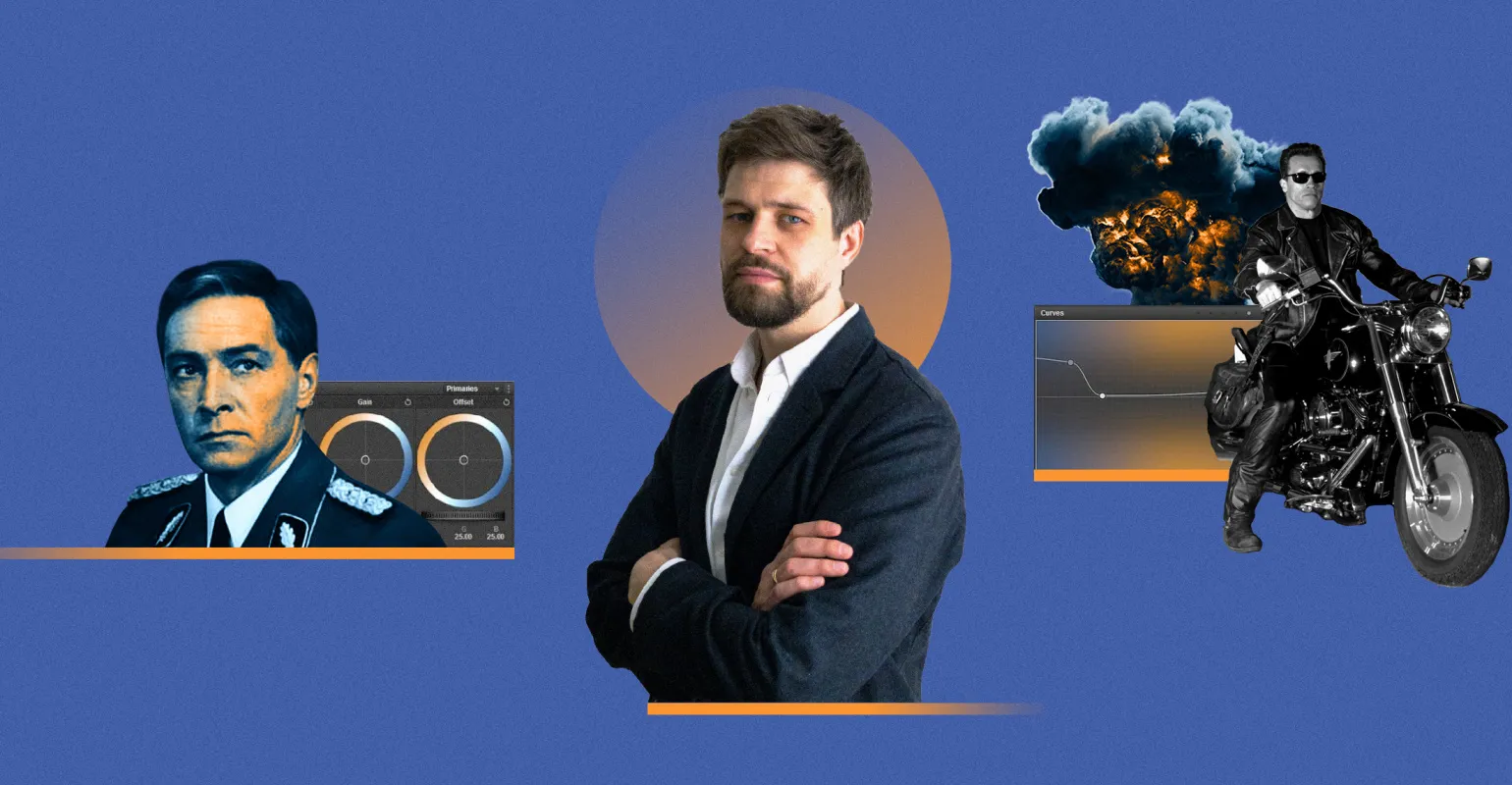
Contents:

Thinking about a new profession, but don't know where to start? Find out what suits you: IT, design, game development, management, or marketing. Take a free career guidance course.
Learn moreIn this interview, you will find interesting answers to topical questions. We will discuss key topics and ideas that concern many. Immerse yourself in a fascinating conversation, where experts share their experiences and opinions. Learn about the latest trends and prospects in your chosen field. This is a great opportunity to expand your knowledge and gain new insights. Don't miss the chance to hear from professionals.
- How to become a colorist when it's hardly taught anywhere;
- What did Christopher Nolan's colorist do wrong;
- How do Indians "colorize" Stirlitz and why that's too much;
- Is it possible to not colorize films at all (spoiler - yes);
- Why do we need films shot on film in 2021;
- What is the best program for a colorist to work with?
A quick reference is a concise summary of information on a specific topic. It serves to familiarize you with key aspects and basic data. This format is especially useful for quickly finding information and understanding the essence of the issue. Quick references are often used in various fields such as science, technology, economics, and culture. They help save time by providing the most important information in a concise form. A well-written brief includes key facts, definitions, and data, making it an indispensable tool for learning new information.
Alexey Nesterenko, originally from Nizhnevartovsk, had an interesting path to the world of cinema. He began at music school, then served in the army, and received a management education at Tyumen State University. Only then did Alexey decide to devote himself to creativity and enrolled in the directing program at the Moscow School of Cinematography. Currently, he shares his knowledge of color correction by teaching students in the "Editing Director" course at Skillbox.
"If you want to become a colorist, first buy a DSLR"
My path to the profession of colorist began with a deep interest in the world of color and its influence on perception. I received my basic education at the Moscow School of Cinematography, where I studied color theory and practical coloristic techniques. This experience laid the foundation for further development in this field. During my studies, I realized the importance of constant self-improvement and practice, which led me to participate in various master classes and seminars. Each new lesson increased my confidence and deepened my understanding of the work of a colorist.
While studying at the Moscow School of Cinematography (MSK), I took a series of lectures on color grading in the "Short Form Directing" course. However, these classes were rather superficial and amounted to simply "pressing buttons." It's important to note that the MSK also offered a theoretical course on cameras, which is key for a colorist. Understanding camera operation and the principles of digital imaging is the foundation of professional color grading. This course was taught by experienced teachers Oleg Sharabanov and Petr Mudrenov, which made it especially valuable for students.
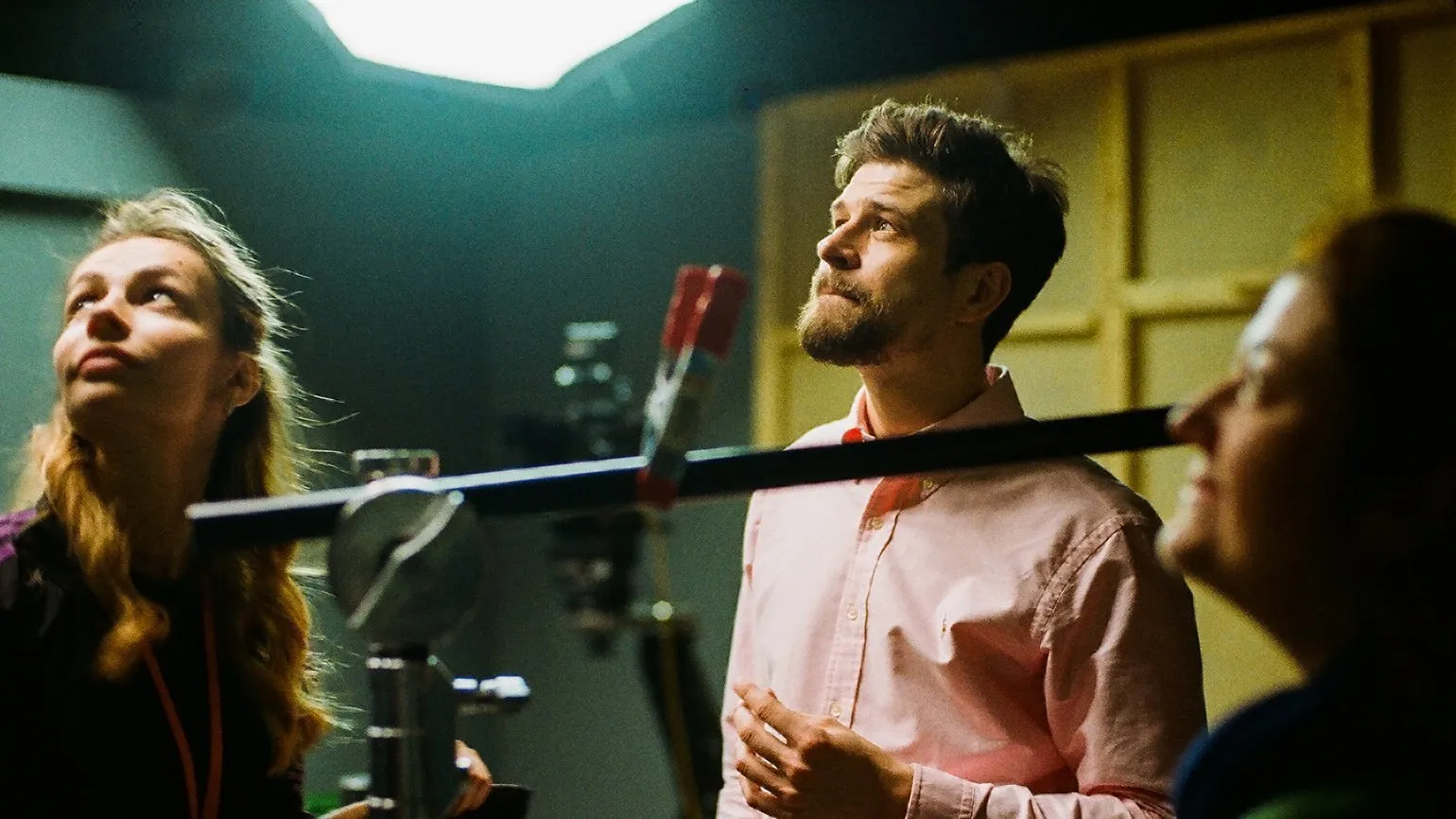
There is no specialized education for colorists in Russia. Currently, it seems that training in this profession is only available in three cities: Los Angeles, London, and Berlin. Therefore, a comprehensive course in color correction for film is only available in these locations. This creates certain difficulties for Russian professionals seeking to master coloristics skills and improve their qualifications. Given the importance of color correction in modern cinema, the need for high-quality colorist training in Russia is becoming increasingly urgent. In this situation, training as a photographer would be the optimal solution. This will allow you to master the basics of color correction and image perception, as well as gain a deeper understanding of the nature of photography. Studying these aspects will help develop the necessary skills for creating high-quality visual materials. In Russia, most colorists are self-taught, gaining knowledge from the internet. I also experimented with various professions in film and realized that color correction was what truly interested me. I began to delve into this field in depth, fulfilling numerous orders and establishing useful contacts. As a result, I now work for two companies: Nika Digital and CG Company. My experience and professional connections allow me to successfully develop in the field of color correction and provide high-quality services to clients. These days, many teenagers, when purchasing DSLR cameras, consider themselves professional photographers and confidently declare their intention to make a living from it. However, it is important to understand that owning expensive equipment does not make someone a photographer. Photography is an art that requires knowledge, practice, and an understanding of the basics of composition, light, and image processing. A conscious approach to photography should include not only technical skills but also creativity and the ability to see the world from a unique perspective. Therefore, if someone is seriously interested in this field, it is worth recommending that they study theory, practice, and not rush to conclusions about their professional competence. Buying a DSLR camera and experimenting with post-production does not make you a professional photographer. A professional photographer is not only someone with photography skills but also a specialist who can effectively communicate and anticipate clients' needs. It's important to understand that working in this industry requires not only technical mastery but also the ability to establish rapport with the client to create exactly the result they expect. Working with a model requires not only technical skills but also a deep understanding of psychology. Psychological support helps to reveal the model's inner qualities and unlock their potential. In this process, the photographer acts not only as a specialist in photography but also as a director who guides the model and creates a comfortable atmosphere. The ability to see and understand a person allows you to create emotionally rich and expressive images, which is a key aspect of a successful photo shoot. What camera do you have? I have a Leica R7, the latest model in the line of compact SLR cameras. This camera combines high image quality and ease of use, making it an ideal choice for both professionals and photography enthusiasts. The Leica R7 offers a wide range of customization options and allows you to create impressive images in a variety of conditions.
On the Signs of a Good Colorist, "Interstellar," and the Failed Version of "Seventeen Moments of Spring"
Russian color correction has its own unique characteristics compared to Western color correction. The main difference lies in the approaches to working with color and style. In Russia, attention is often focused on the brightness and saturation of colors, which can create more expressive and emotional images. Western specialists, in turn, tend to more natural and realistic shades, striving to preserve the original perception of the scene.
The use of technology and software is also important. Russian color correctors may use specific methods based on the traditions of Russian cinema, while in the West, the latest technologies and international color correction standards are often used. This may include different approaches to working with color space and gamut.
Furthermore, cultural differences influence the perception of the aesthetics and emotional content of the material. Russian color correction can convey feelings and moods specific to the domestic context, while a Western approach may be more universal and oriented toward the international market.
Thus, the differences between Russian and Western color correction lie not only in technique but also in cultural aspects, making each unique and appealing to its own audience.
I once wondered: what is the difference between good and great color grading? In this field, colorist Walter Volpatto, who works at Company 3, excels. He is responsible for color grading Christopher Nolan's films, which speaks to the high level of his skill. I recently purchased his seminar to better understand his approach to work and the techniques he uses in the color grading process.
He works with subtleties, using small accents. Where does he get these details? From observation and studying the history of cinema. He analyzes what the image looked like in the 1970s: film with its unique characteristics, lenses and their features, cameras and their style. These nuances create a boundless world, rich in details that shape the overall perception of visual art.
An experienced colorist stands out from the rest precisely because of their nuances, observations, and broad perspective. We also have such specialists on our team, but their number is limited.
Nolan creates a unique atmosphere in his films, and one of his most striking achievements is the use of black. In Interstellar, the black space is so deep and mesmerizing that the viewer feels immersed in it, especially when watching the film in IMAX. This visual style emphasizes the scale and grandeur of space, making the story even more gripping and emotional.
In Interstellar, I feel like the black level was not executed well enough. Let me explain my point of view. Absolute black does not occur in nature. Typically, its luminosity is only 2-3%, which is actually 2% gray. When creating an image for the big screen, you can use a gray level of 1%, and in some cases even reduce it to 0%. However, going below this limit is not advisable, as this can lead to a loss of information and a void. This is certainly undesirable and inappropriate in visual art.
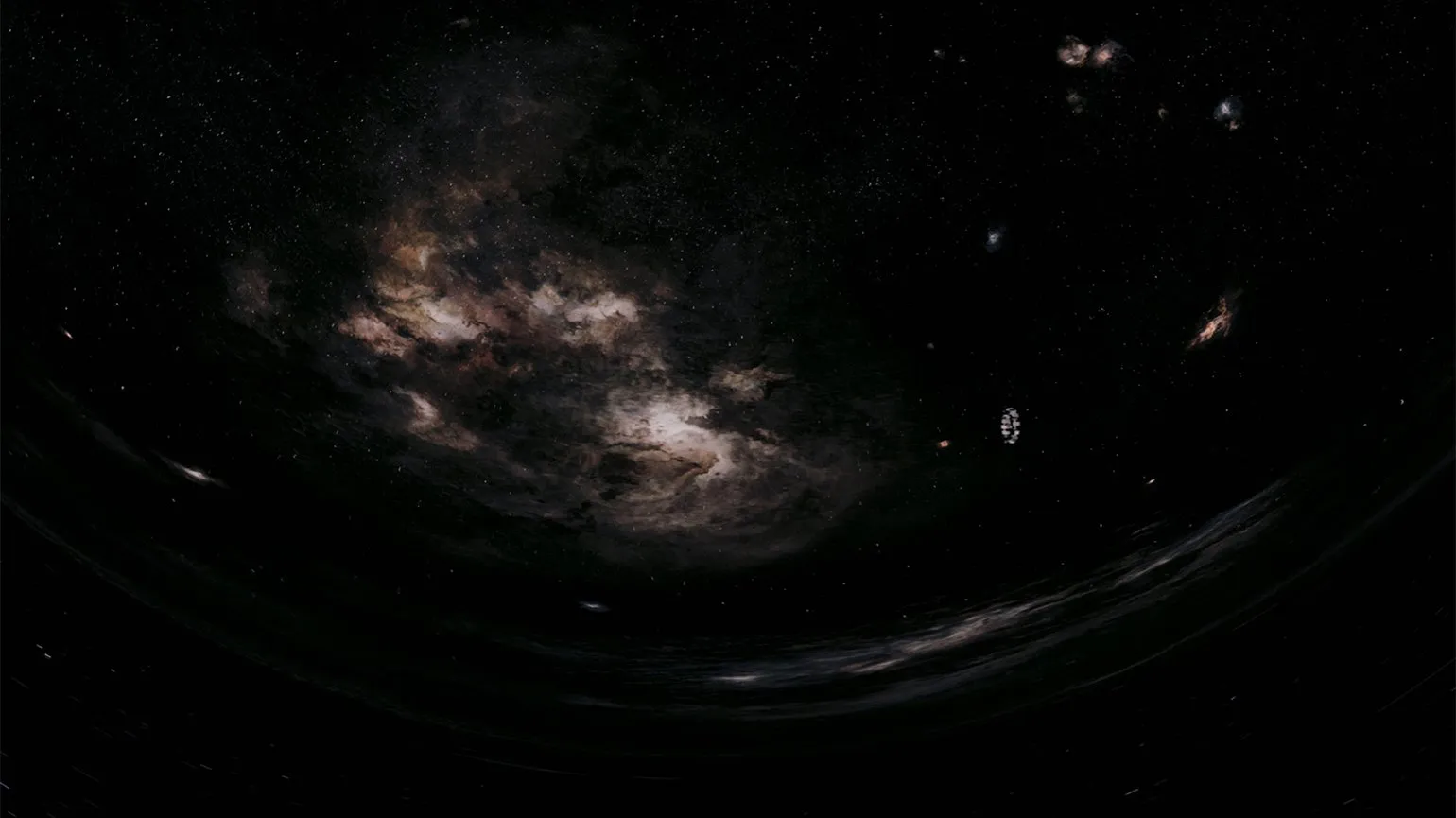
If in a daytime scene of a film there is black in the folds of clothing or hair of characters, but it is below zero, this indicates shortcomings in the work of the colorist. In space, there is no light source due to the lack of atmosphere, and the colorist on Interstellar may have incorrectly adjusted the lighting, reducing it to zero or even lower, making the image virtually invisible. However, this may be a deliberate artistic technique intended by the director.
I consider colorization of black-and-white films an important step in updating cinematic classics. This process helps attract new audiences and makes older works more accessible to modern viewers. While some may believe that color can distort the creators' original intent, proper colorization can emphasize the atmosphere and emotion inherent in a film. It is important to approach this with respect for the original, preserving its artistic values and historical significance. In this way, colorization can become a bridge between generations, preserving the legacy and bringing a new perspective to beloved films.
When the colorized versions of Seventeen Moments of Spring were released, I had not yet worked in the field of colorism. On the Vremya program, the host noted that significant work had been done. However, I only realized the true scale of this work later, when I delved into color grading.
The process of creating visual effects in the film industry is often more labor-intensive than it seems at first glance. Typically, a significant number of specialists are hired for this work, for example, in India. The film is sent to this country, where a team of 150 people is engaged in masking and creating effects. Despite claims of advanced technologies such as neural networks, in practice, these systems cannot perform coloring in a matter of seconds. Each frame requires meticulous work, which takes a significant amount of time and resources. Rotoscoping is a manual process that requires attention and patience. This labor-intensive approach requires significant financial investment, which has led to the transfer of such processes to India, where labor is cheaper.
My position on this issue is unequivocal. If I were offered to choose between a color or black-and-white version of "Stirlitz," I would choose black-and-white without hesitation. Why change the original when the production designer has already created a unique atmosphere in every scene? The cinematographer put his efforts into enhancing the beauty of the black-and-white image. This is a delicate work, the result of which is lost in the color interpretation. Something important is lost in color versions, what many call "the magic of cinema." The black-and-white format allows the viewer to delve deeper into the emotional component of the film and see it from a new side.
Film vs. Digital
Film and digital photography are two different methods of capturing images, each with its own characteristics and advantages. Film uses chemical processes to create an image on a light-sensitive material, which gives the pictures a unique texture and color range. This method requires careful preparation and processing, which can be a fascinating process for the photographer. On the other hand, digital photography relies on sensors that convert light into electronic signals, allowing for instant viewing and editing. Digital images are easier to store and share, making this method more accessible to a wider audience. Both approaches have their fans and can be used depending on the photographer's goals and desired outcome.
Film has a special liveliness, while digital imaging can be described as more accurate and precise. I spend a lot of time working with images, sometimes up to 12 hours a day, and am accustomed to the digital format. However, when I encounter film, I immediately sense its different visual qualities. It's a unique sensation that cannot be conveyed digitally. Film creates atmosphere, depth, and texture that make the image more expressive and rich.
Fatty is a term often used in cooking and dietetics. It refers to foods containing a high amount of fat, which can be either vegetable or animal. Fats play an important role in our bodies, providing energy, facilitating the absorption of vitamins, and maintaining cellular health. However, excessive consumption of fatty foods can lead to health problems such as obesity and cardiovascular disease. Choosing the right fats, balancing them in your diet, and consuming them in moderation are key to maintaining health and well-being. Pay attention to the quality of your fats: choose unsaturated fats found in olive oil, nuts, and fish, and avoid trans fats, which are often found in processed foods. Yes, the image is indeed saturated. Thanks to the different grain sizes and emulsion, even a white wall on the screen gains dynamism. However, this does not mean that digital imaging is bad. It is simply different in its nature and characteristics. When Tarantino made The Hateful Eight, he stated his intention to use only 70mm Panavision. Many critics have asked: why shoot an intimate, almost theatrical story set in a single setting on film? It was perceived as an excessive desire to stand out.
What question exactly interests you?
The question is this: have you never wondered why you work with film, and why do you need this pathos?
While studying directing at the Moscow School of Cinematography, an experienced advertising cameraman came to visit us. I decided to ask him about his desire to shoot on film in 2020. He replied that it was associated with a great risk, since there is a possibility of failure to obtain a high-quality image. This professional, working in the advertising field and with many years of experience under his belt, always strives to ensure high quality and sufficient footage, especially when it comes to large budgets. In his situation, minimizing risks becomes a priority.
As a novice colorist, I actively used film grain in my work. However, over time, I realized that when color grading, it's important to consider the director's opinion, as it's their vision, not just my interpretation. In this context, the choice between film and digital technology becomes less significant. The main thing is to ensure high-quality service and create a harmonious visual perception that matches the creators' intent. Film is not a matter of show-off, but rather a matter of artistic perception. Film imbues images with a special expressiveness due to its peculiarities and imperfections. Unlike digital photography, which captures only what the lens captures, film technology allows for the conveyance of depth and character, creating a unique atmosphere. Thus, film remains an essential tool for artists and photographers seeking to express their individuality and vision of the world.
Do you prefer to accept work at the post-production stage, or is it more important for you to be familiar with the director's ideas before filming begins?
Previously, I was actively involved in the pre-production processes for films, but soon realized that in doing so, I was taking on the responsibilities of the cinematographer and production designer.
Collaboration with the cinematographer and designer is a key aspect of a successful creative process. Instead of replacing these specialists, it is important to integrate their skills and ideas into the overall project. This will achieve a higher quality and unique result. Effective collaboration with professionals in the field of cinematography and art direction contributes to the creation of harmonious and expressive content. The combined efforts of camera operators and artists opens up new horizons for creative solutions and improves the visual aesthetics of the final product.
Color fashion in modern cinema: from teal & orange to sugar syrup
Colorists really do have a concept of fashion. Michael Bay pioneered the orange trend, sparking a widespread embrace of the color in makeup. This example demonstrates how celebrity influence can shape color design and makeup preferences, leading many to embrace new trends.
The teal & orange effect, well-known in the film industry, emerged long before Michael Bay. This visual technique is widely used in Hollywood action films, where explosions and dynamic scenes predominate. The main purpose of this effect is to highlight the explosions and characters' faces against the background, creating a contrast between the orange and blue hues. Blue tones serve as a background that emphasizes the brightness of the orange elements, which makes the scenes more expressive and memorable for the viewer.

Subsequently, many began to use muted and colorless palettes, as was implemented in the films "Contagion" and "Midsummer." These visual solutions contributed to an atmosphere of anxiety and uncertainty, which enhanced the perception of the plot and the characters' emotions. The aesthetics of such films became popular and inspired other directors to take similar approaches in the visualization of their works.
Greyer, indeed. At some point, a fashion emerged for low-contrast, film-style images. I also tried to follow this trend, but soon realized that "cinematic" images do not exist as such. There are only certain methods and techniques that allow you to create the desired effect. It is important to understand that to achieve a high-quality result, you need to study and apply these methods, and not simply copy fashionable styles.
Modern clients expect more natural and realistic images in their projects. They strive for visual content to reflect reality as much as possible. This requirement is likely due to the growing popularity of streaming platforms such as Netflix, where the emphasis is on balanced, contrasting, and high-quality images. When creating videos for YouTube, it's important to avoid using film grain, as it can significantly degrade the final image quality. A crisp, high-contrast image ensures a high level of content perception, which is especially important for attracting and retaining an audience on YouTube.
What does the future hold? The desire for natural images will likely persist, and users will seek out bright, saturated colors reminiscent of sweets on their screens. Bright and expressive colors will become an important element of visual content, attracting attention and evoking positive emotions. This may lead to new trends in design and graphics, where an emphasis will be placed on a color palette that contributes to a unique and memorable visual experience.
In two of my recent projects, different clients expressed a desire to include thick sugar syrup in the image. This detail adds uniqueness and appeal to the visual content, emphasizing the texture and richness of the product. Thick sugar syrup is a popular culinary ingredient and can be used in a variety of recipes, so its depiction can attract audience attention and increase interest in the project.
I believe that the lack of color correction in films can significantly impact the viewer's perception. This can create some discomfort and distract from the plot, as visual aesthetics play an important role in cinema. Incorrect color schemes can ruin the atmosphere and evoke negative emotions in viewers.
Films that do not pay due attention to color correction can be perceived as unfinished or low-quality. Color correction helps create harmony between scenes, emphasizes mood, and enhances emotional load. Therefore, it is important that every film undergoes this process to achieve maximum impact and meet audience expectations.
When a viewer is in a movie theater, goes out for popcorn, and then comes back, they are not interested in details such as the color of the sofa on the screen. Their main question is: "What happened? What did I miss?" Cinema is, first and foremost, storytelling. Color and visual elements serve only as auxiliary tools to convey the story. The most important thing is the plot and the emotions it evokes in the viewer.
Film is unimaginable without a director, who determines the artistic direction and development of the plot. At the same time, the work of a colorist, while important, is not essential. Poor color correction can negatively impact the perception of a film, and in some cases, it is better to do without it altogether than to tolerate poor quality work.
I recently completed several interesting projects, each of which brought unique solutions and approaches. In one of them, I worked on creating a responsive web design for a corporate website, which improved the user experience and increased conversions. In another project, I optimized content for a blog, which led to a significant increase in traffic and improved search engine rankings. I also developed an SEO strategy for an online store, which helped increase the site's visibility and attract a new audience. All of these projects highlight the importance of high-quality content and effective optimization for successful online promotion.
The series "Secrets of Family Life" by Shota Gamisonia, presented on the Kion online cinema, was an interesting and challenging project for me. Post-production required not only a high level of professionalism and knowledge of specialized software but also the ability to effectively collaborate with the team. The project encountered numerous difficulties. One significant issue was that after I completed the color correction and made the edits approved by the producers, I returned to the studio two days later to find that all my changes had been discarded. The program simply didn't save my work, and I lost the results I'd worked on for five out of eight episodes. This required considerable effort on my part to find a way out of this situation.
The clients and creative producers of the show "Secrets of Family Life" were highly demanding. For example, the same wall might appear in both episodes three and five. The showrunners meticulously checked these details: they'd open shots of the wall in both episodes, take screenshots, and compare them to ensure they were identical. This attention to detail extended to virtually every element and location. Even though this was a series, not a feature-length film, the deadlines were always tight. Therefore, the team had to show maximum flexibility and creativity to successfully cope with the tasks on time.

Recently I was doing color correction for the second season of the TV series "Difficult Teens". My friend and demanding cameraman, Andrey Luninsky, assisted me in this process. Our goal was to create a film-like image on the screen. We tried numerous applications, but none met our requirements. Ultimately, I turned to the Dehancer plug-in, which emulates film. This tool was developed by our compatriot Pavel Kosenko, who runs the Sreda photo lab in Moscow. Using Dehancer allowed us to achieve an image as close as possible to the desired result. Since Andrey and I are both actively involved in film photography, we knew exactly what image quality we wanted to achieve.
At Skillbox, classes are organized to maximize the transfer of knowledge and skills to students. I teach students key aspects of their chosen specialty, focusing on practical assignments and real-world projects. Each course includes theoretical materials supported by hands-on exercises, allowing students to apply their acquired knowledge in real-world situations. We also cover current industry trends and tools, helping graduates become competitive in the job market. My goal is not only to impart knowledge but also to develop students' critical thinking and ability to work independently.
I teach lectures as part of the "Editing Director" course and don't aim to turn students into colorists. My goal is to teach future directors how to improve editing so that it is harmonious in both cuts and color. I strive to give them an understanding of the basics of color correction and show them how to correctly transition from one color to another. This knowledge will allow them to create higher quality and more professional video work, which is an important aspect in modern film and television.
I am not a director, I am a colorist. In my youth, I played guitar in a rock band. My goal was always not to create a song, but to design it and bring it to perfection. I came to the film industry with the same approach, striving to emphasize visual aesthetics and create a harmonious perception of each frame. My job as a colorist is to add depth and mood, turning each scene into a work of art.
I don’t have a talent for telling jokes, so you shouldn’t expect mastery in directing from me. My main task is to create a harmonious image that conveys the desired emotions and meaning.
Blitz
I usually use digital painting programs such as Adobe Photoshop or Corel Painter. These applications offer a wide range of tools and brushes, allowing me to create a variety of styles and effects. I also experiment with programs like Procreate and Clip Studio Paint, which are ideal for drawing on tablets. The choice of program depends on specific tasks and my work preferences. I use DaVinci Resolve for color correction. This program has become familiar and native to me, allowing me to realize any creative ideas. In DaVinci Resolve, I can perform a wide range of tasks related to video processing and visual effects creation, making it an indispensable tool in my work. Color correction in Adobe Premiere has its drawbacks. Firstly, the program's interface can be complex for beginners, which makes working with color difficult. Secondly, some users note that the standard color correction tools do not always provide the necessary precision and control, especially when working with high-quality video. Also, achieving a professional result may require the use of additional plugins or programs, which increases the cost and time of processing the material. It's important to note that more complex tasks may require the use of specialized color correction programs, such as DaVinci Resolve, which offer more advanced features and capabilities.
Premiere Pro offers limited color correction capabilities compared to DaVinci Resolve. While Premiere does offer basic primary color correction, it doesn't offer the same variety of color tools and features as DaVinci. This makes DaVinci a preferred choice for professionals seeking high-quality color processing.
Working with audio and video in Adobe Premiere is similar to woodworking. Just as a skilled craftsman has a set of chisels sharpened to different angles to work with different types of wood, Premiere users have their own tools to achieve high-quality results. However, Premiere offers only one standard tool, which limits the processing options. To achieve the best results, it is important to diversify your approaches and use additional plugins and tools that will help expand the program’s functionality and meet specific video and audio editing requirements.
Name three of your favorite films, not including their color correction. These could be films that left a deep mark on your soul, inspired you to think, or simply gave you unforgettable emotions. Each film has a unique story to tell, and your preferences may reflect your interests and tastes. Share your choices and explain what exactly attracted you to these films.
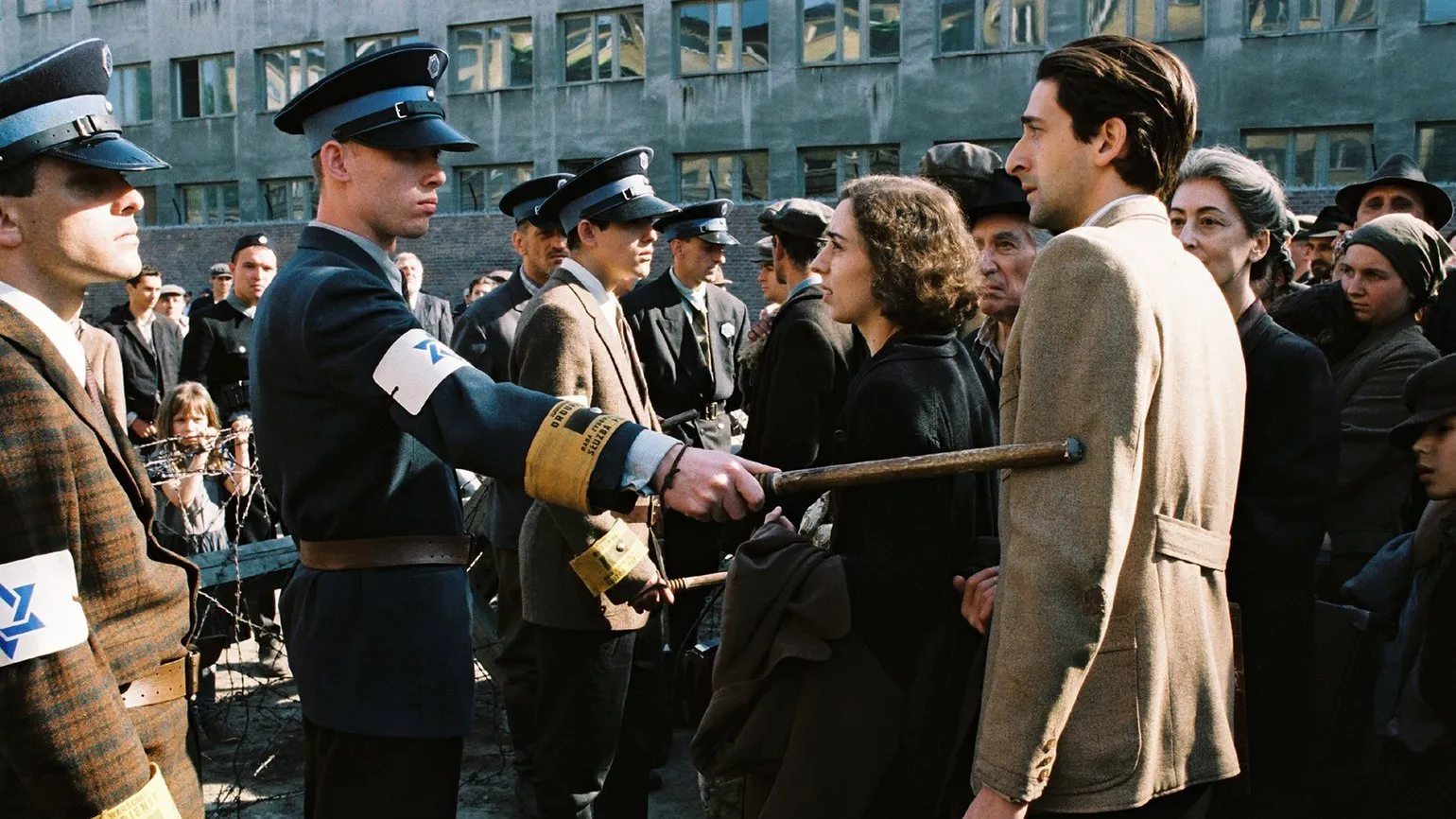
One of the most impressive films I have ever seen is Roman Polanski’s The Pianist. The first time I watched this film, it made an incredible impression on me. There are films after which you realize that life will never be the same again. The Pianist is exactly such a film, making you think about human destiny, suffering, and fortitude.
The second film that deserves attention is This is "Foxcatcher," directed by Bennett Miller and starring Steve Carell, Mark Ruffalo, and Channing Tatum. I can't count how many times I've watched it. For me, this film is not just entertainment, but a profound parable that touches on important life issues.

The third film on my list is "The Lives of Others" by director Florian von Donnersmarck. It used to hold a special place in my heart, but lately I have begun to appreciate it in a different way. On a recent rewatch, I noticed that the main character seems too one-dimensional throughout the story, which affected my perception of the film.
I recently started watching Nikita Mikhalkov's films and was pleasantly surprised by his talent. His cinema reveals a new side, and I realized how impressive it is. I especially remember his role in "Cruel Romance", where he demonstrated masterful acting, causing sincere applause. I also noticed the work of Andrei Konchalovsky and am now studying his work with interest. Both directors made a significant contribution to Russian cinema and continue to inspire audiences with their films.
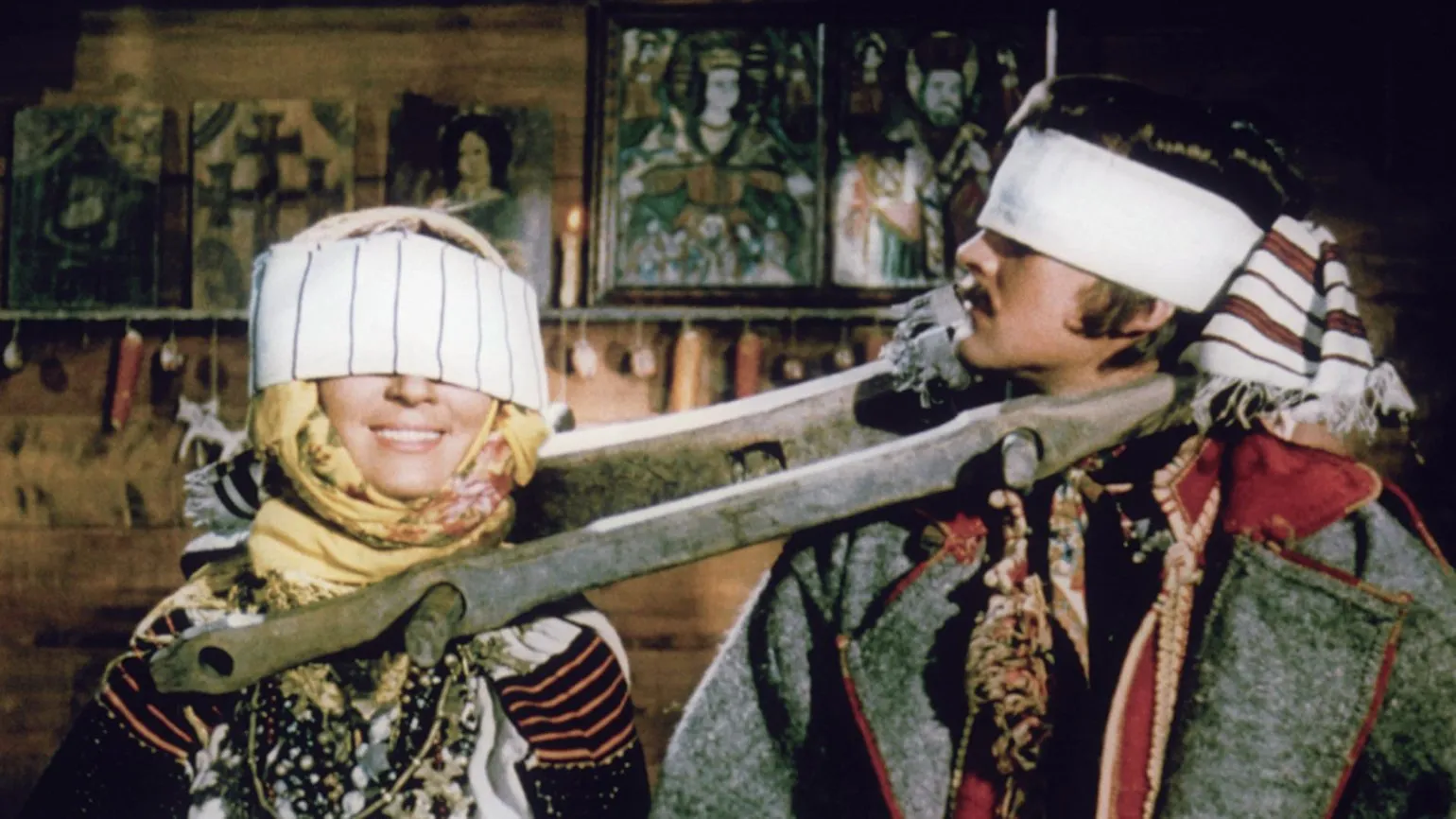
I can't decide on a third film. Perhaps it's worth mentioning something from Russian or Soviet cinema, for example, "Shadows of Forgotten Ancestors" and "The Color of Pomegranates." Recently, my wife and I visited Armenia and the Sergei Parajanov Museum. We were amazed by the scale of his talent and personality. Regardless of the circumstances - be it prison or freedom - he always made friends and created a festive atmosphere around him.
Rework the text, preserving its main theme and avoiding adding unnecessary details. Optimize the text for SEO and expand the content if necessary. Avoid using emoticons and unnecessary symbols. Do not divide the text into points or lists, leaving it as a continuous flow.
Read also:
- "Watch your favorite movie forty times, and you'll understand how cinema works." Interview with film producer Dmitry Kupovykh.
- "If you want to make films, learn how everything works: from the script to lighting." Director Egor Ivanov on his studies at NYFA and how he created commercials for leading global brands.
- "I realized that cinema is born on its own. I simply adore this process!" Zhenya Aglushevich from Sochi studied to be a translator, but decided to become a director. After studying at Skillbox, he entered film school in Vancouver.
Free career guidance
Take a short test and find out which profession is right for you, and then try your hand at your chosen specialty. At the end of the course, you will have a session with a career guidance specialist. It will help you decide on your career path.
Find out more