Contents:

Want to work remotely? ➞ Master IT, design, or marketing. Join Telegram and take 5 online courses to get started in top digital professions.
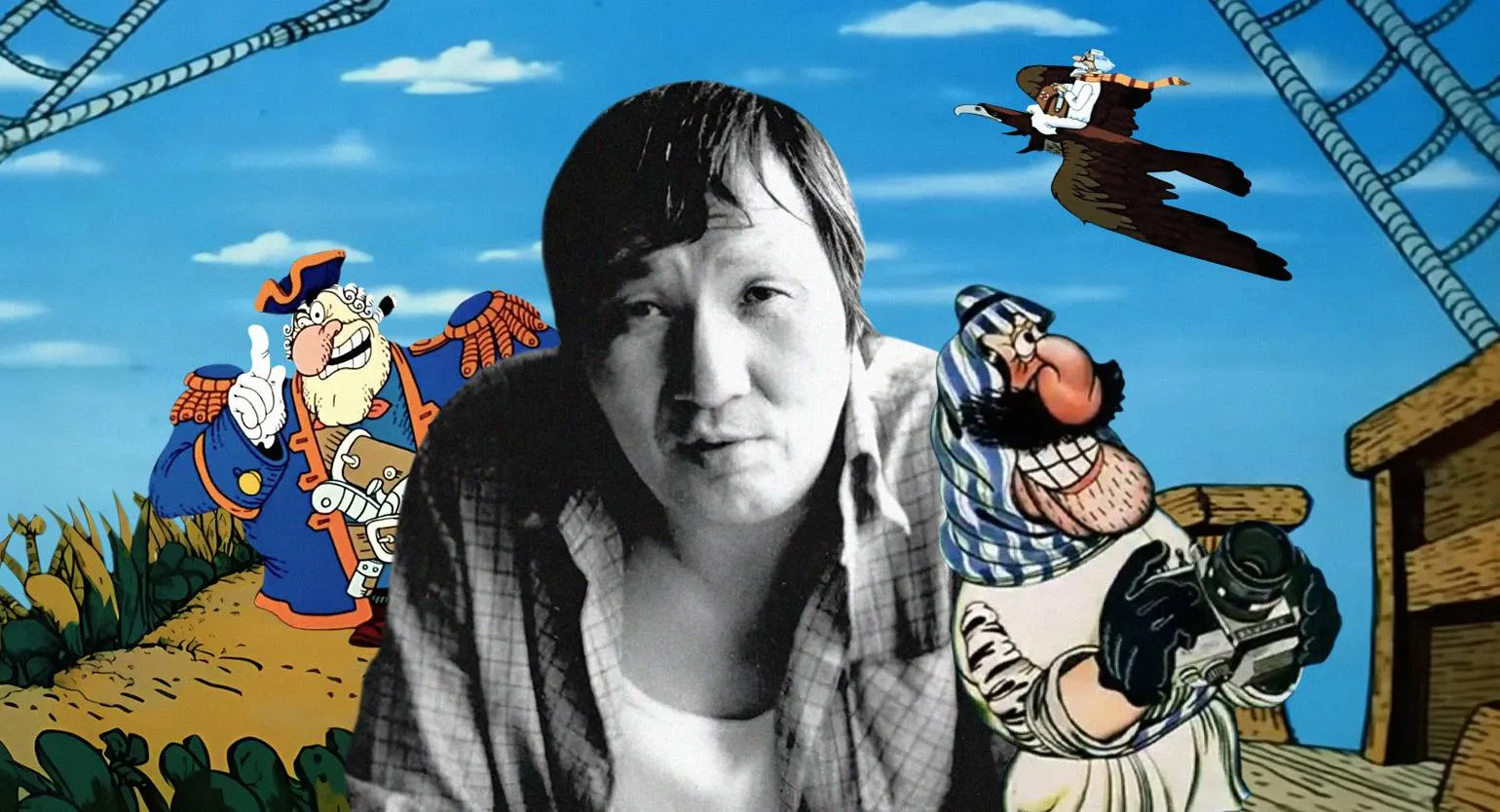
Learn moreSoviet and Ukrainian artist Radna Sakhaltuyev passed away on August 31 at the age of 90. Together with director David Cherkassky, he created a number of outstanding Soviet animated films, including "The Adventures of Captain Vrungel," "Doctor Aibolit," and "Treasure Island." These cartoons became classics and left a significant mark on the history of animation. We remember Radna Sakhaltuev’s favorite works and analyze their influence on the culture and perception of animation in Soviet times.
- What do Sakhaltuev and Cherkassky’s cartoons owe to Vladimir Mayakovsky;
- How “The Adventures of Captain Vrungel” left the city without electricity;
- How character sketches were stolen from the studio;
- Which leg is John Silver missing?
“All the heroes of this drama, from the filibuster to the Master of Science…”
Good afternoon, chief!
They are preparing the cannon to fire. Why is this necessary? They're probably about to fire.
Hello, I'm Dr. Livesey.
It's scary to think that many famous quotes, gags, songs, and memes might never have been created if not for the meeting between director David Cherkassky and artist Radna Sakhaltuyev. The likelihood of their meeting was slim: Cherkassky is from the town of Shpola in the Cherkasy region, and Sakhaltuyev was born in Ulan-Ude, the capital of the Buryat ASSR. Radna initially planned to enroll in the Omsk Tank School, but was unable to do so due to the repressions that befell his father. As a result, he chose a path in art and enrolled in the animated film department of the Gerasimov Institute of Cinematography (VGIK). This meeting proved pivotal in their lives and determined the development of their unique creative collaboration.
Alexander Cherkassky had no formal education in cinematography and worked as a civil engineer. In 1959, upon learning of the creation of an animation workshop at the Kyivnauchfilm studio, he brought his amateur drawings and was hired. Later, Radna Sakhaltuyev was assigned to the same workshop, and they quickly became an inseparable team, collaborating on animated works that brought them industry recognition.
In 1969, the duo's first collaboration, "Mystery-Bouffe," based on a play by Vladimir Mayakovsky, premiered. This work already featured all the elements that would later become the hallmark of their most famous cartoons: the combination of animation and live-action sequences, buffoonery, vibrant titles, and bold camera angles. This work laid the foundation for further experiments and creative solutions that defined the unique style of their animation.
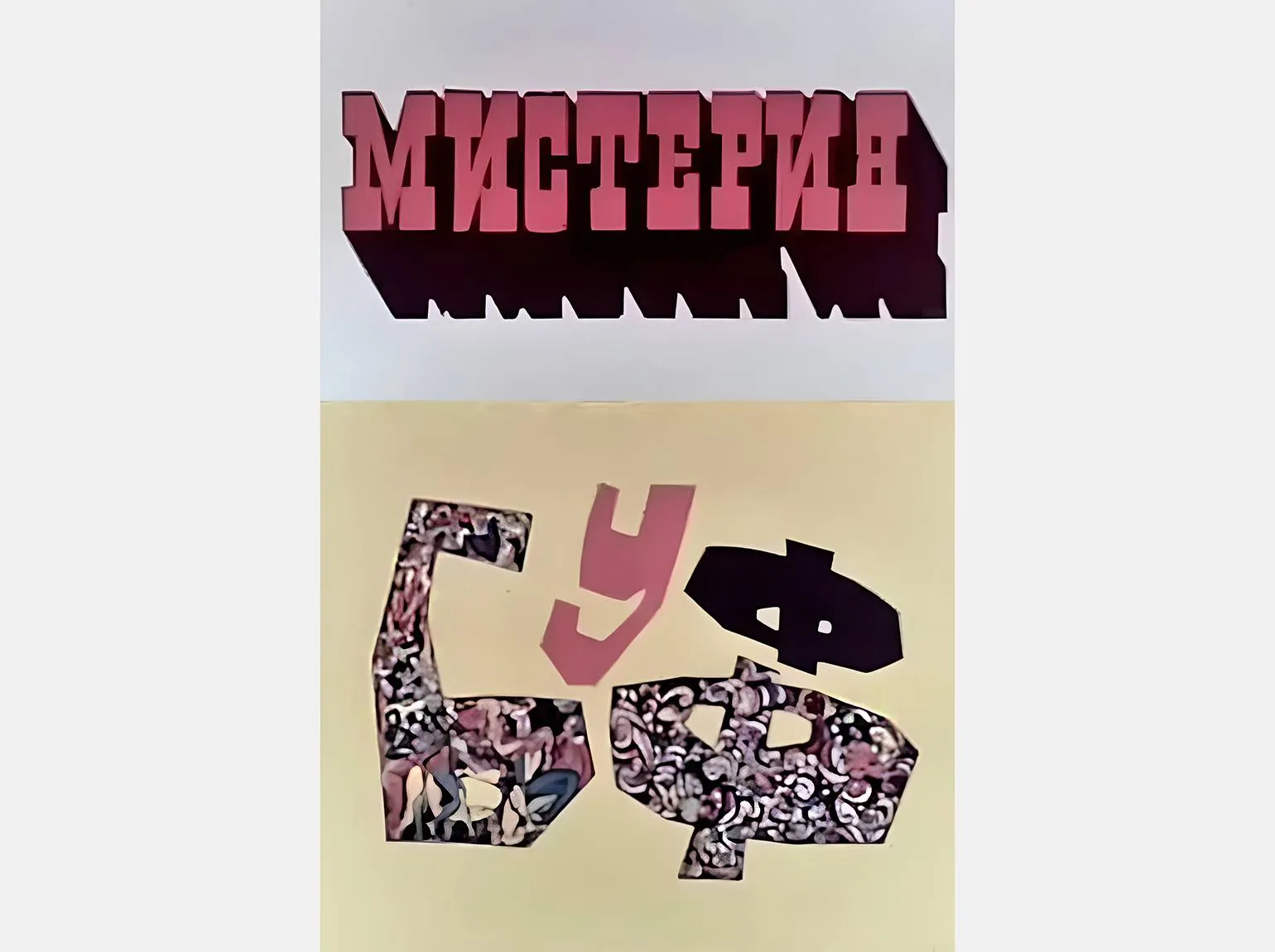
The graphics in the work refer to "Windows Mayakovsky's "Rosta," but the characters—a White Guard with a monocle, a bourgeois with a cigar, and a speculator in a boater—are reminiscent of Captain Smollett, the Chief, and Julico Banditto. Thus, one could say they owe Mayakovsky the inspiration that served as the basis for their creation.
This was followed by adaptations of Rabelais's works and folk tales, a parody of Jules Verne's work, and the feature film "Farewell, Pharaohs!" In January 1980, during school holidays, "The Adventures of Captain Vrungel" premiered on Soviet television. This cartoon became a landmark event, attracting the attention of viewers with its originality and captivating plot.
"Report to me where the "Trouble" is coming from and where it is going!"
When I was offered to make a film of "The Adventures of Captain Vrungel," I was thrilled. As a child, before the war, this was my favorite book, and now I had the opportunity to bring it to the screen," Cherkassky shares his impressions.
Andrei Nekrasov's humorous story, published in 1937, introduces readers to the brave Captain Vrungel, the devoted first mate Lom, and the cunning card sharper Fuchs. Together, they set off on a round-the-world voyage on the yacht "Trouble." Along the way, they encounter many comical and absurd situations, including a concert in Hawaii and the Neptune Festival. This captivating story is full of humor and unexpected twists, making it engaging for readers of all ages.
The work's themes don't coalesce into a coherent plot, remaining merely a collection of naval legends. Nekrasov's original version featured a main antagonist, Admiral Kusaki, who sought to thwart the heroes, driven by his mischievous imperialistic nature. However, by the late 1970s, depictions of such villains were perceived as outdated and irrelevant.
The script was interesting and funny, but at the same time too literary. It presented a coherent narrative of the journey, but it clearly lacked dramatic tension. I realized that it was impossible to create a quality series based on this plot. At some point, I don’t remember exactly how, the idea of the theft of Venus arose, which became a turning point in the development of history.
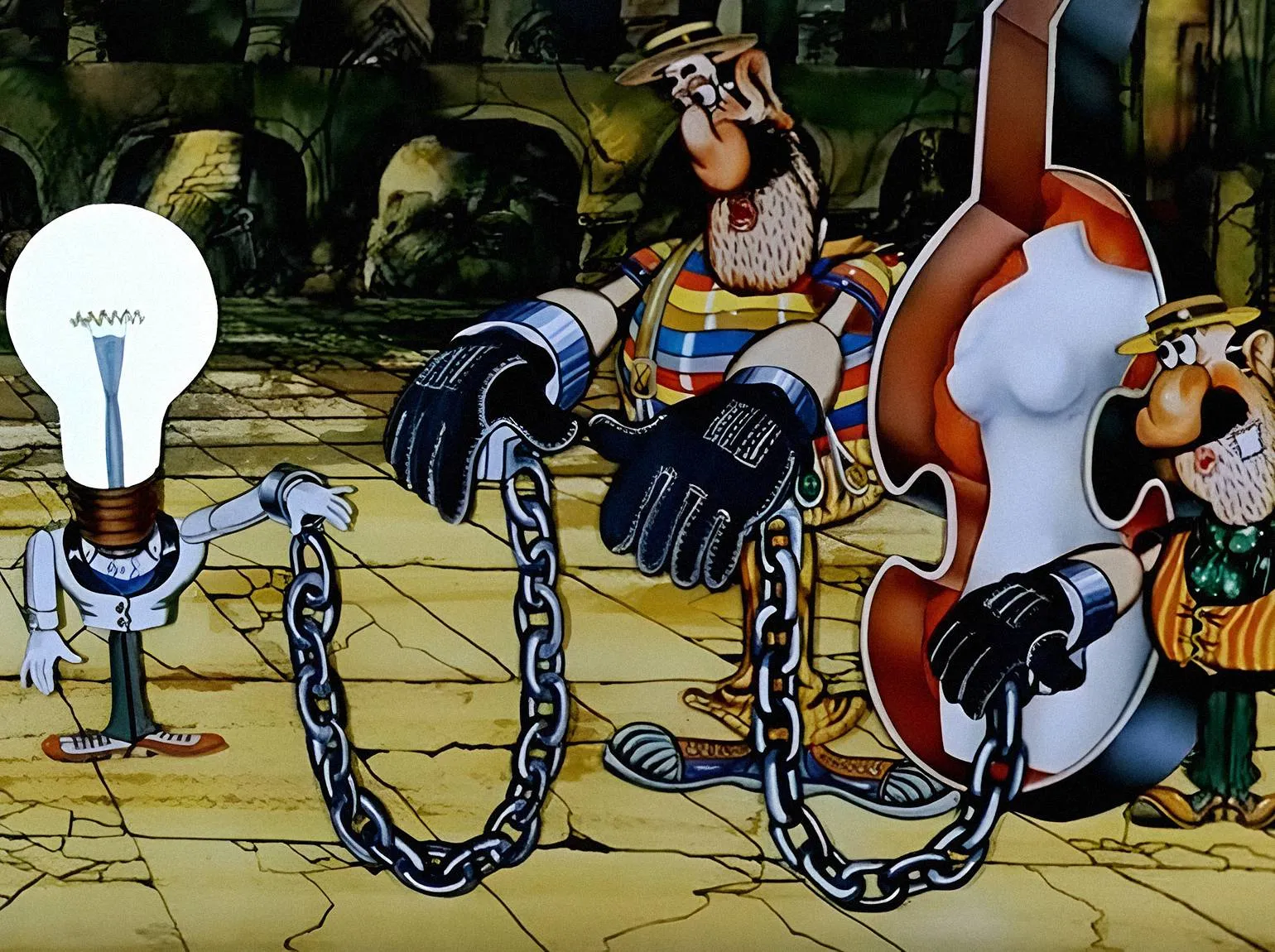
"Adventures Cherkassky's "Vrungel" became a gripping spy thriller. The plot revolves around a villain named the Chief, who orchestrates the theft of a statue of Venus from the Royal Museum in London. To conceal his secret intentions, he organizes a round-the-world sailing regatta for single-masted yachts, in which Vrungel's crew participates on the yacht "Trouble." During the course of events, the thief Fuchs, who stole the Venus, mistakenly ends up on the yacht "Trouble" instead of the yacht "Black Cuttlefish." This leads to a tense chase involving the Chief's assistants, mafiosi Julico Banditto and De La Voro Gangsteritto, as well as agent Zero-Zero-X and his robot dog. Meanwhile, Vrungel and Lom, unaware of the current events, find themselves embroiled in a series of adventures. The plot is distinguished by a complex plot, and the cartoon became one of the longest-running series in the history of Soviet animation, consisting of 13 episodes and a total running time of over two hours. Animation production before the advent of computer graphics was an extremely labor-intensive process. A ten-minute cartoon took about nine months to produce, while 30 minutes of animation took just one year. The team worked 14-16 hours a day, with many sleeping in the studio on folding beds. This project involved not only Cherkassky and Sakhaltuyev, but also a large team of professionals. Among them was Alexander Tatarsky, the renowned creator of innovative cartoons such as "Plasticine Crow" and "Last Year's Snow Was Falling," and the founder of the Pilot studio. This experience became the foundation for the subsequent development of the animation industry in Russia.
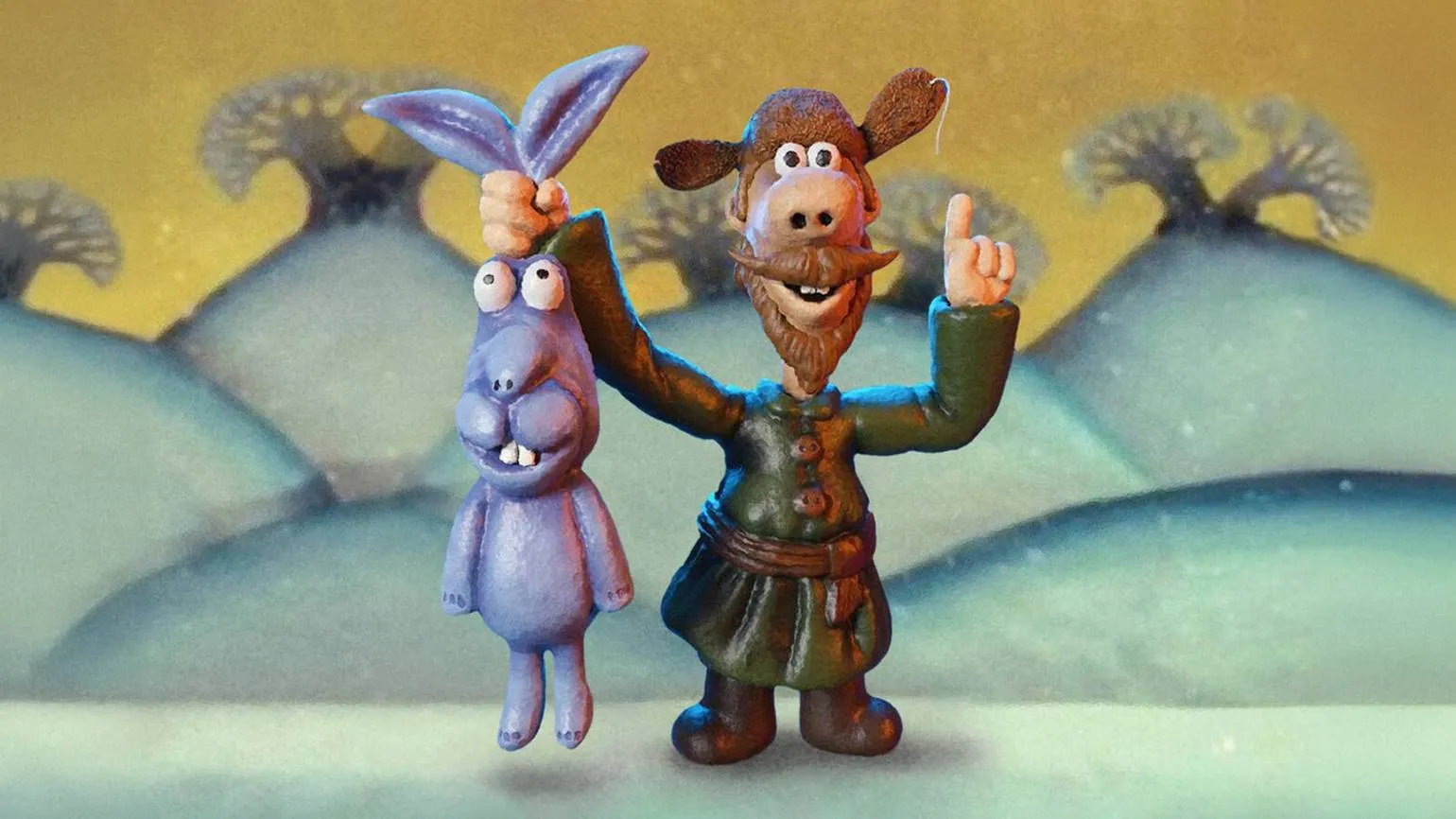
The result of this hard work was impressive. The children enjoyed the captain's exciting adventures, and there were plenty of witty jokes for the adults. The media even reported that during the premiere of the new episode of "Vrungel," a power outage occurred in one city because everyone turned on their televisions at once. The cartoon also received high praise from officials—the first episodes were approved by Goskino without any edits, and the creators received a telegram of thanks from the government.
What exactly produced a hypnotic effect on the viewer? Both form and content were innovative: such a combination had never been seen before in the Soviet Union. Consider the camera: it sometimes becomes subjective, depicting the world through the characters' eyes, sometimes observing from the ceiling or from the ground, sometimes using a wide angle with a fisheye lens. This variety of angles creates a unique visual experience that captivates attention and heightens emotional perception.
Cherkassky and Sakhaltuyev applied their experience in combining animation and live action, which they developed on the "Mystery-Buff" project. The animated film "Vrungel" seamlessly blends the animated characters Vrungel, Lom, and Fuchs, the yacht "Trouble," and real-life shots of cityscapes, the sea, and even a forest fire in the background. To achieve this technique, special multi-story machines were created, which required considerable effort from the creators, including constant climbing and climbing stairs. As a result, it was possible to achieve a unique effect of merging fantasy and reality, which created a lively atmosphere and captivated the viewer in the process.
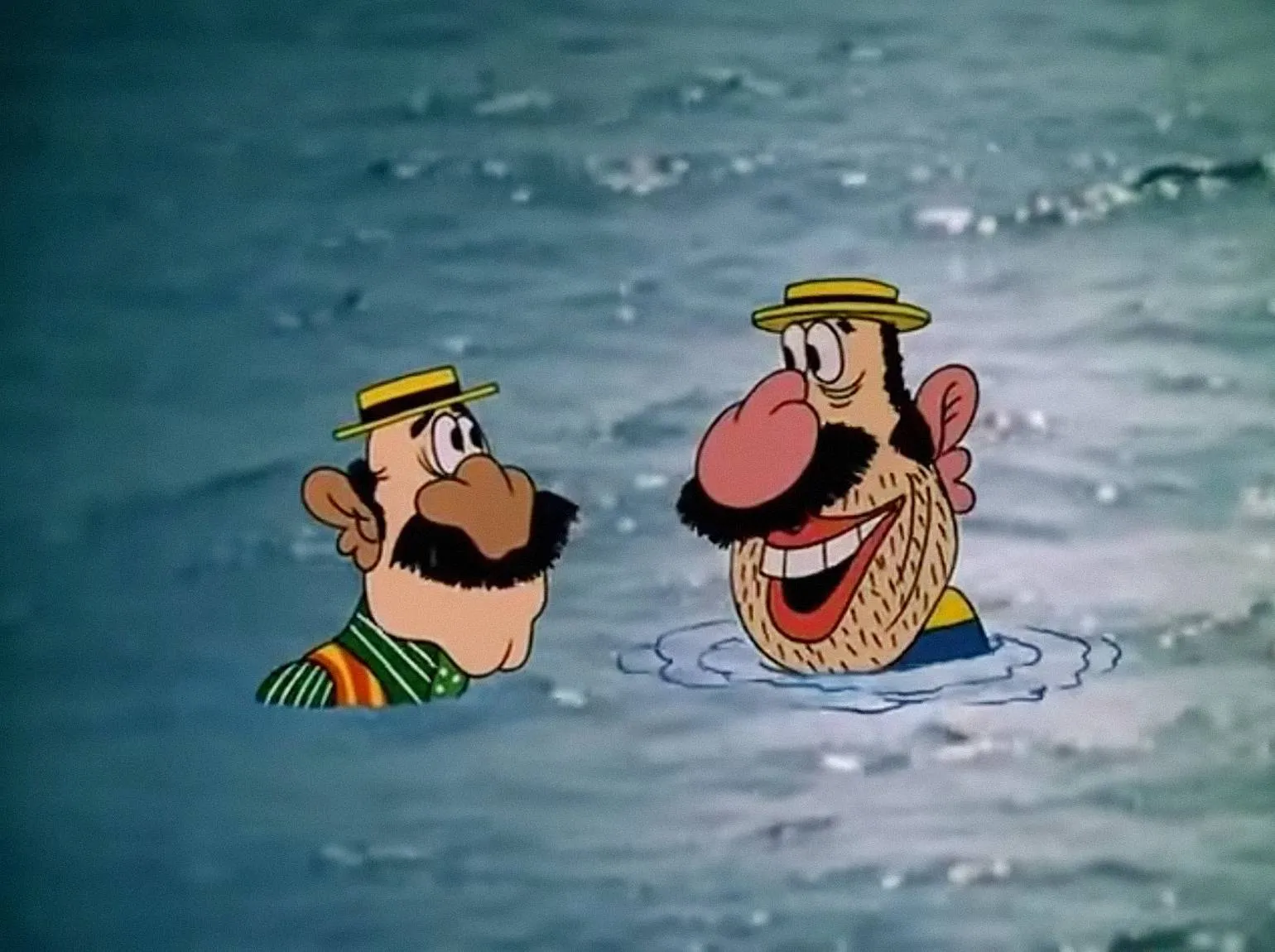
The idea of creating animated characters came to Sakhaltuyev and Cherkassky didn't go for it because they had a surplus of resources, but rather because they were trying to conserve their limited budget. Cherkassky shared, "We were always looking for ways to save money." As a result, they began using cutaway animation, replacing traditionally drawn characters with flat puppets with movable joints and interchangeable facial parts. This approach not only speeds up the filming process but also significantly reduces costs. Moreover, this technique gives the characters' movements a certain unusual, twitchy charm, reminiscent of the silent film era.
Reading is an important aspect of our lives, contributing to the development of thinking and broadening our horizons. It helps improve communication skills and enriches vocabulary. Reading books, articles and other materials contributes not only to the acquisition of new knowledge but also to the formation of critical thinking. This is a key element of personal growth and self-development. It is important to make time for reading not only to develop yourself but also to enjoy the process of immersing yourself in new ideas and concepts. Reading also improves concentration and promotes relaxation, making it beneficial in everyday life. Don't forget the importance of reading in your education and professional growth.
Soviet cartoons occupy a special place in the history of animation and remain beloved by viewers of all ages. In this article, we will present you with the top 25 Soviet cartoons that are rightfully considered classics and continue to delight generations.
Cartoons of the Soviet period are distinguished by a unique style, original plots, and deep morals. They not only entertain but also teach important life lessons. Films such as "Hedgehog in the Fog" and "Winnie the Pooh", were remembered by viewers for their unique charm and positive atmosphere.
Soviet animation was able to create many unforgettable characters, such as Leopold the Cat, Prostokvashino, and Cheburashka. These heroes became symbols of childhood for many and continue to live in the hearts of viewers.
In addition, many Soviet cartoons are marked by high artistic standards and innovative animation techniques, which makes them relevant even in the modern world. Cartoons such as "Smeshariki" and "The Three Bears," remain popular today, attracting new audiences and continuing the tradition of high-quality animation.
We invite you to reminisce and discover the best Soviet cartoons that left an indelible mark on the history of animation and continue to inspire new generations.
"Vrungel" is full of cinematic Easter eggs, making it a cartoon that combines elements of detective and spy films, along with a game of ships and captains. This cartoon attracts viewers with fascinating plot twists and interesting references to cult films. Each frame is filled with details that only attentive viewers can notice, adding an extra level of interactivity and immersion.
- Agent Zero-Zero-X, who chases the mafia boss using his incredible agility and a multitude of gadgets, is, of course, a reference to James Bond, Agent 007.
- The mafia boss is constantly shown only in fragments—sometimes his mouth with a cigar, sometimes his hands in rings, like Blofeld, one of the main villains in the Bond series. However, to Soviet viewers, he might have been more reminiscent of the Chief from Leonid Gaidai's "The Diamond Arm." Who parodied the same Blofeld - the circle is closed.
- The famous phrase "Chief, everything is lost," which De La Voro Gangsteritto utters, is also from "The Diamond Arm."
- And the scene of "Hawaiian ditties," which Vrungel and Fuchs, pretending to be natives, sing in front of foreigners, is parodied by the trio "Yaroslavl Guys." The songs of this group became the soundtrack to "The Seven Brides of Corporal Zbruev."
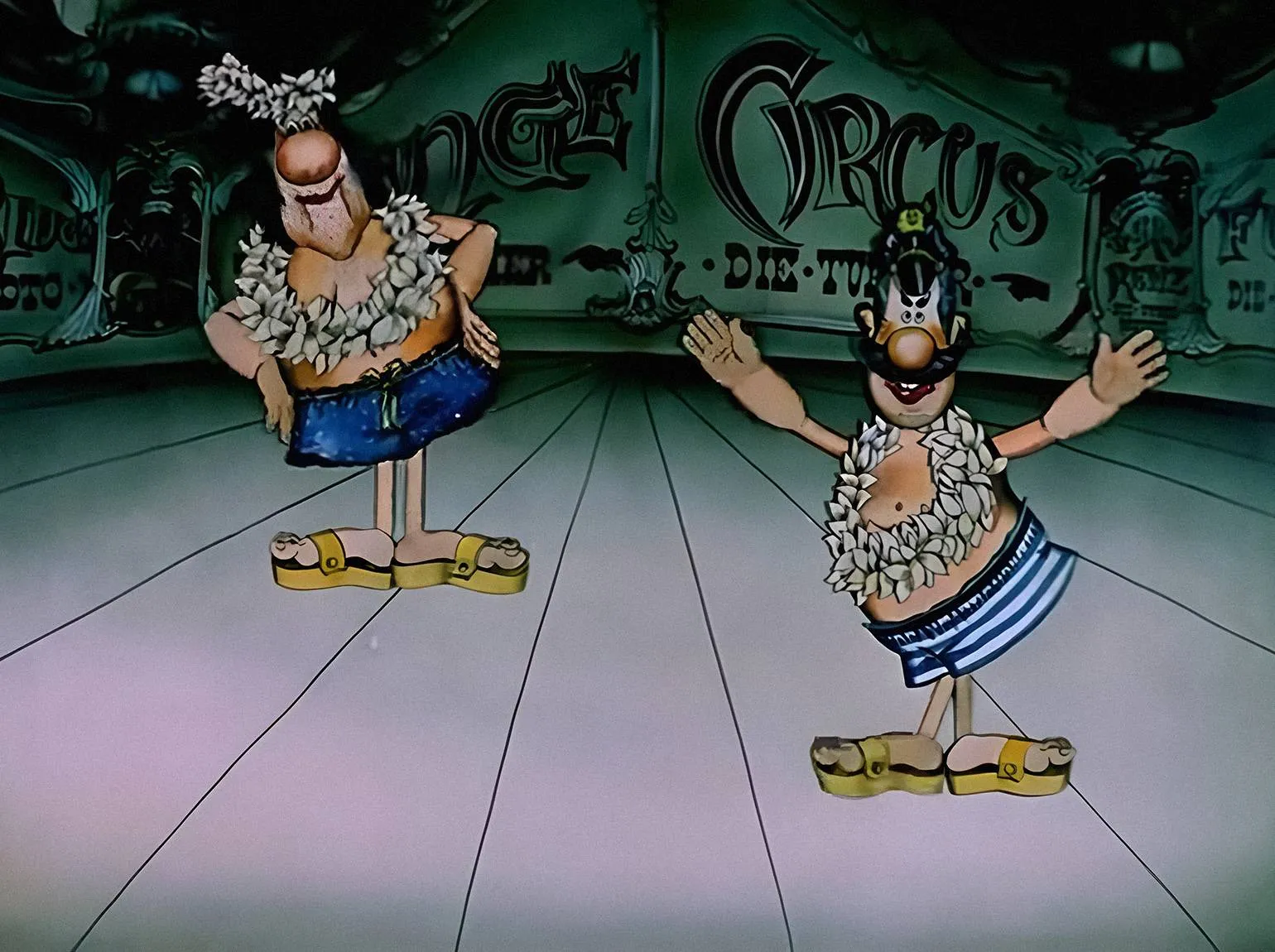
Songs of composer Georgy Firtich's songs, based on the verses of poet and playwright Yefim Chepovetsky, became real hits. One striking example is the composition "Many, Many," which is a clear reference to the then-popular Abba song "Money, Money." Also worth noting are the memorable melodies "We Are Banditto-Gangsteritto" and the super agent's song with the lines "I'm there and here, wherever they send me... And they send me often!" These works were performed by such talented artists as Zinovy Gerdt, Semyon Farada, and Evgeny Paperny. Their performances imbued the songs with a special charisma and memorability, which contributed to their popularity. Cherkassky shared his memories of the work: "Despite the large number of tasks, we approached them with pleasure and ease. All the ideas arose spontaneously, and there were no problems, since there simply was no time for them. We were in the same room, where an atmosphere of constant discussion reigned. Everyone had something new to offer: ideas, jokes, pranks. It was truly easy and pleasant to work."
"A troupe of solo vocalists under the direction of Maestro Barmalini"
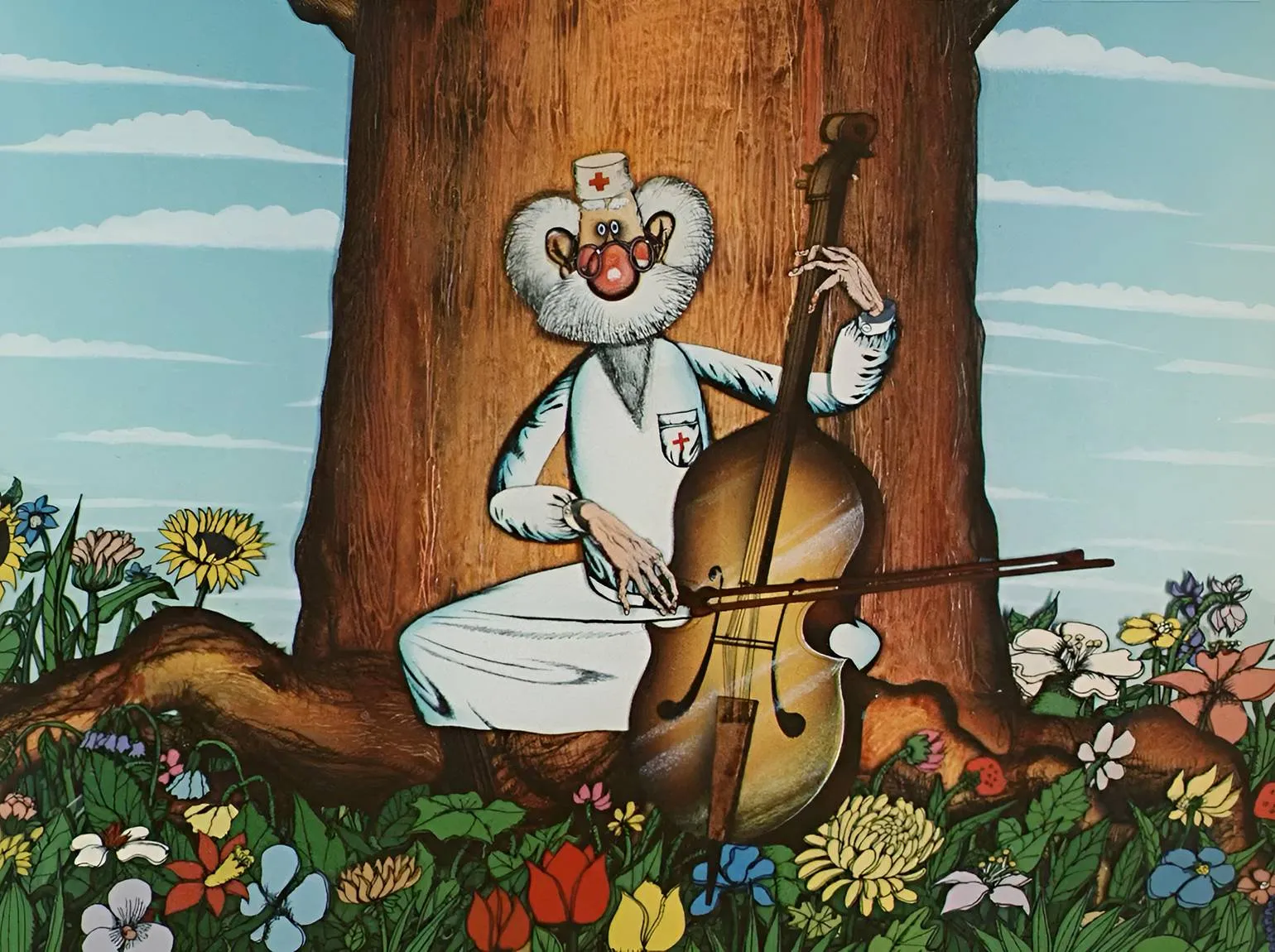
After completing work on the cartoon "Vrungel," David Cherkassky received a new commission to create an animated film. The plans for the new project were to use the works of Korney Chukovsky as a basis, including the well-known fairy tales about Doctor Aibolit, as well as "The Fly-Tsokotukha," "The Stolen Sun," and "The Cockroach." This collection of works promised to form the basis for a captivating and educational cartoon that would appeal to both children and adults. The cartoon "Aibolit" was created by the same team as "Vrungel": artist Radna Sakhaltuyev, composer Georgy Firtich, and lyricist Efim Chepovetsky. This animated film utilized a proven technique that harmoniously combined cut-out animation, hand-drawn animation, and real footage. Furthermore, "Aibolit" featured familiar characters from the previous cartoon, such as the captain of the "Black Cuttlefish" and Barmaley's pirates, who are reminiscent of the thugs from "Vrungel." This creates interesting connections between the two works and highlights the unique animation style.
Developing other characters required creating new concepts from scratch. Cherkassky created the sketches himself, while Sakhaltuyev polished them to their final form. The team worked from morning until evening, taking only a midday break to play soccer. According to Radna Sakhaltuyev, several sketches went missing during the process: someone likely stole them when the studio was empty. This added additional stress to the team, and they began working even more intensively.
The image of Aibolit underwent changes during the development process. Initially, he was depicted as short and plump, with a distinctive mustache, reminiscent of the character Vrungel. However, after talking with Moscow poet Valentin Berestov, who knew Korney Chukovsky, they arrived at a new vision. Berestov suggested depicting Aibolit as tall and thin, making his appearance more similar to Chukovsky himself and the famous Dr. Schweitzer. This change in image became an important stage in the visual perception of the character, emphasizing his uniqueness and connection with real people.
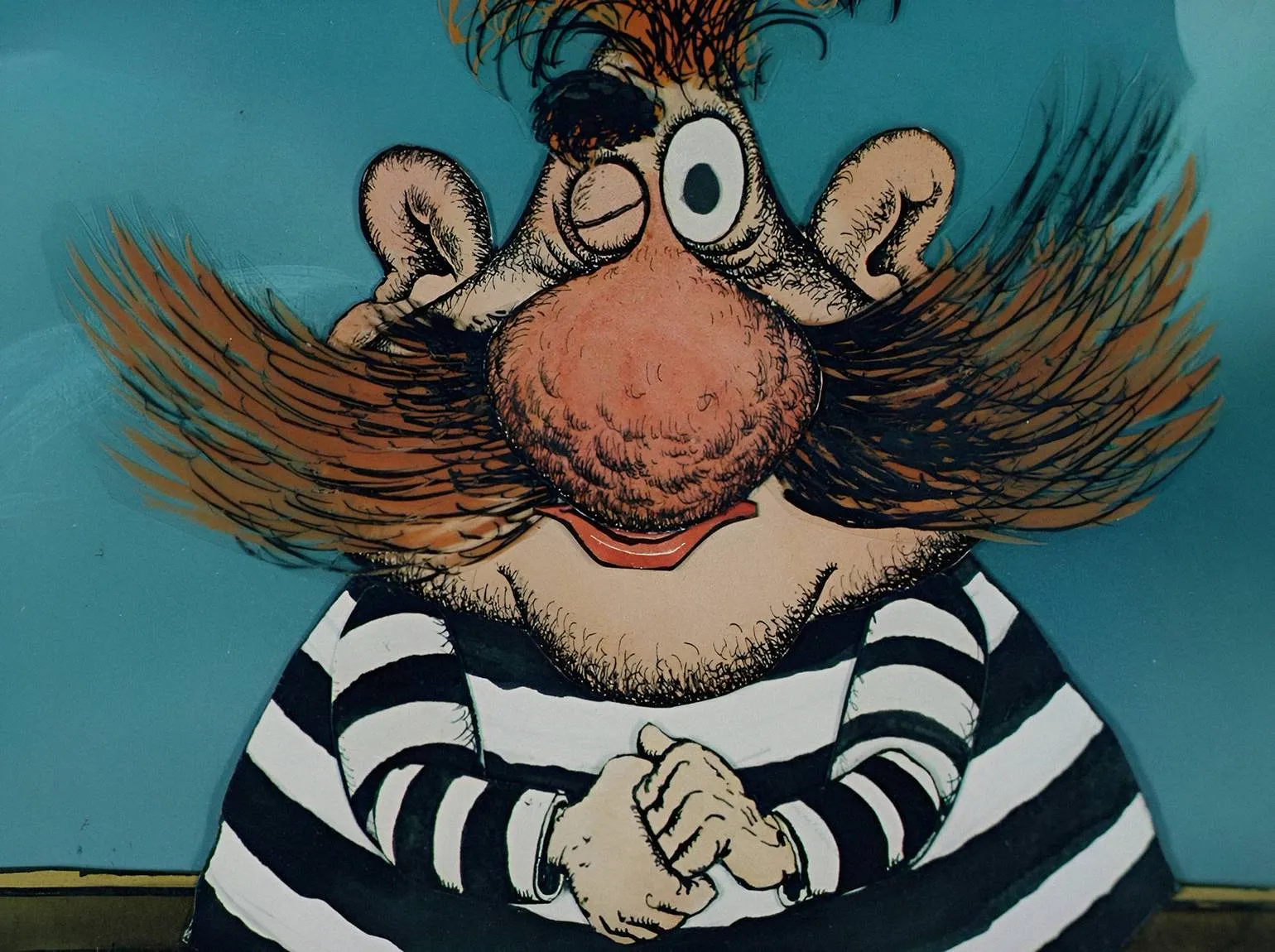
The enemy turned out to be a complex and multifaceted character. Cherkassky explains: "He is vulnerable, you see? Reading Chukovsky, you understand how much is combined in this hero. That's why we decided to make him touching, not a villain. At first, he tries to appear evil; there's even a line: "Am I an evil robber? Evil!" In our interpretation, he appears as an unfortunate Jew. He was voiced by Zhora Kishko, whose tone imbued the character with tenderness and a bit of whining."
In various episodes, Barmaley is voiced by Semyon Farada. A similar situation is observed with the other actors: at the beginning of "Aibolit," Yevgeny Paperny voices Aibolit; in the third episode, the doctor is voiced by Sergei Yursky; and in the remaining episodes, by Zinovy Gerdt and Georgy Kishko. The narrator, the parrot Karudo, is voiced by actor Vsevolod Abdulov, and the evil sister Varvara is voiced by Maria Mironova, Andrei Mironov's mother.
This variety of voices gives the project a unique character and makes it more memorable for viewers. The diverse cast allows for the creation of multifaceted characters, which significantly enhances the work's appeal.
The visual style remained unchanged, but Cherkassky decided to experiment with form. He conceived of "Aibolit" as a large-scale opera. However, members of the artistic council were critical of this approach, believing that the constant singing might be boring for children. As a result, the script was reworked, and much of the music created was omitted from the film. Instead, the project included the vibrant vaudevillian composition "Little Children, Never Go to Africa for a Walk," which regained popularity on TikTok several years ago.
While other songs from the film failed to achieve popular status, "Doctor Aibolit" itself, with its charm, cannot compete with the popularity of "Vrungel." Nevertheless, for David Cherkassky, this cartoon remains his favorite project thanks to the ease and smoothness with which Chukovsky's lines flow into one another.
Reading is an important aspect of our lives, which helps develop thinking, broaden horizons and enrich vocabulary. It is important to choose high-quality sources of information in order to obtain relevant and useful knowledge. Books, articles, and research can greatly enhance your education and promote personal growth. Remember to devote time to reading to continually develop and stay up-to-date with the latest trends in various fields. Read not only to gain information, but also to be inspired by new ideas.
Creating your own cartoon is a fun and creative process that can be accomplished in ten steps. First, start by developing an idea. Determine the theme, genre, and target audience for your cartoon. Then, create a script detailing the plot, characters, and dialogue.
The next step is to create a storyboard. Visualize key scenes and transitions to better understand how your work will develop. After that, move on to designing characters and backgrounds. Think about the animation style that will best suit your story.
Then, choose the right animation software. There are many tools available for both beginners and professionals. Once you have mastered the program, start animating. Work on the characters' movements and add effects to bring the cartoon to life.
Don't forget about the sound design. Record the characters' voices and select suitable sound effects and music. Then do the final editing, combining all the elements.
Once you've finished working on the cartoon, think about how to promote it. Post it on platforms like YouTube or Vimeo and share it on social media. Creating a cartoon requires patience and perseverance, but the result will definitely please you.
"To Bristol, Friends!"
After the success of the cartoon "Aibolit", Cherkassky received an order from Moscow producers to adapt Robert Stevenson's novel "Treasure Island". Only two years were allotted for the creation of the two-hour film - a record-breaking deadline. In case of a delay, the project could lose funding. This circumstance had a significant influence on the cartoon's unique style, which features live-action silent scenes and musical interludes. In these interludes, live actors, transformed into pirates, sing about the dangers of smoking and drinking, and promote the benefits of physical activity.
The lyrics were written by poets Naum Olev and Arkady Gartsman. Gartsman recalled that the words "Doesn't the liver bloom like a rose from cirrhosis?" deeply touched David and marked the beginning of their collaboration. Interestingly, the original version of the line from the opening song, "Here, every page, there's a thief or a murderer, there are no weddings, but many funerals," sounded different: "Here, every page, there are gloomy faces, the ringing of louis d'ors and piastres." She alluded to the deaths of Soviet General Secretaries Brezhnev, Andropov, and Chernenko, but after discussions, the lyrics had to be changed.
Composer Vladimir Bystryakov created the music for the songs, which he described as "semi-gangster country." The musical accompaniment was recorded by the group "Festival," also known for their soundtrack to the film "The Three Musketeers." This unique style and original sound made the compositions particularly memorable.
The Odessa troupe "Grotesk" presented a unique performance of pirates in an adaptation of "Treasure Island." In this project, even the director himself appears on screen wearing a cocked hat and mustache. Analyzing the comments under the video version, one can notice that as children, viewers did not appreciate the video inserts, expecting a continuation of the animated story. However, with age, they begin to understand and appreciate this aspect. Iconic phrases like "Chance!", "Lords, sirs, peers, know your limits," "Jim keeps to his daily routine!", and "Greed is a nasty thing!" have become true quotations that have left a mark on viewers. There's no moralizing here, but there's 100% irony. The alternation of live actors and cartoon characters creates an atmosphere of cheerful chaos, although moments of their intersection in the frame are less common than Cherkassky would like.
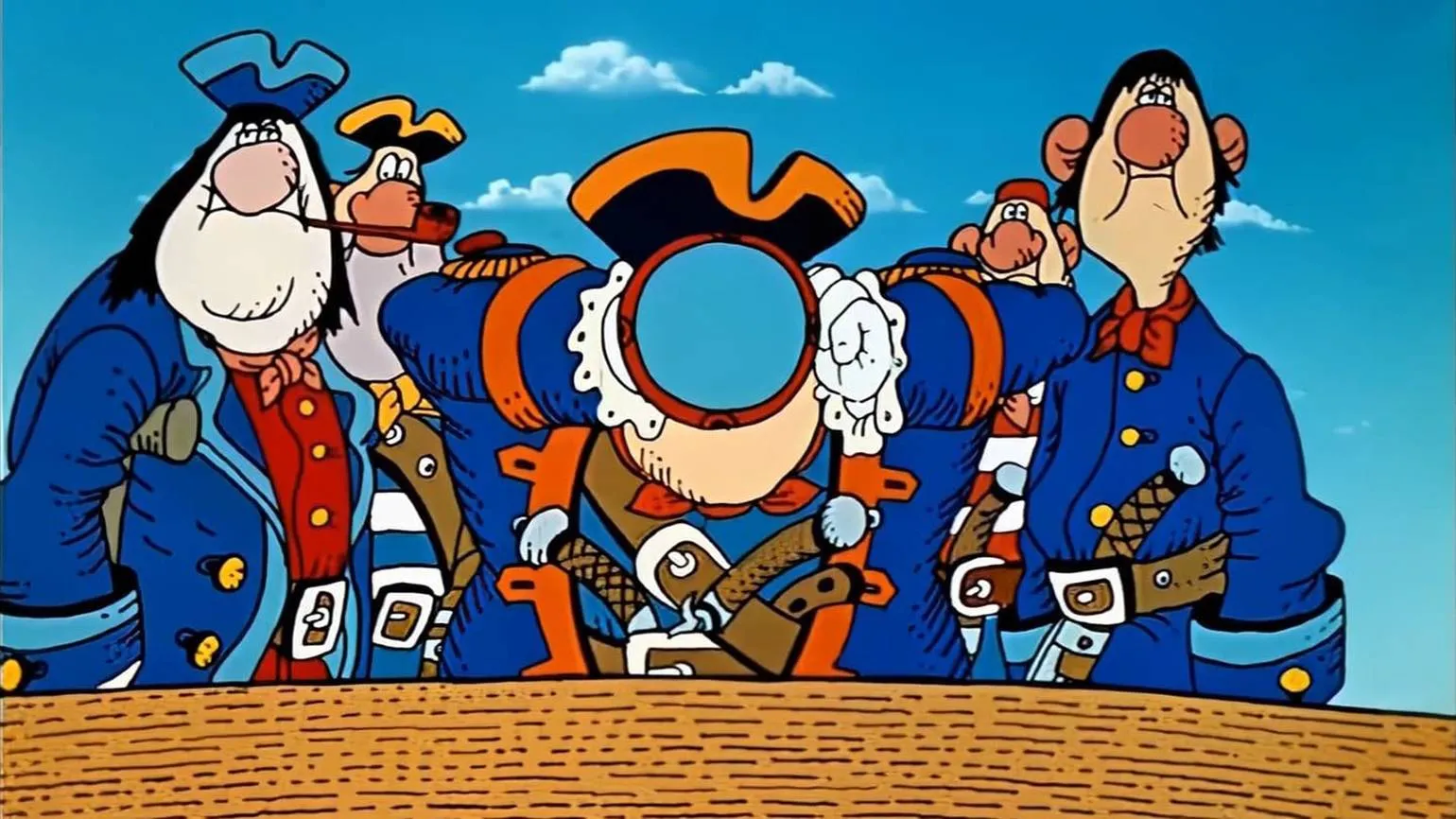
Quotes from the movie "Treasure Island" fill the atmosphere and add a touch of fun. These phrases have become iconic and are often used in everyday life, adding elements of adventure and romance. Using such quotes can enrich conversations and lift the spirits, making them more vivid and memorable.
We created a modern film that put a twist on the classic plot. We enriched it with elements typical of action films and thrillers, but at the same time strove to emphasize humor rather than fear. This approach allowed us to create a unique work that reflects the realities of our time while simultaneously playing with traditional genre canons.
Naked Jim defeats a huge pirate using a powerful set of kung fu moves and exclaiming like Bruce Lee. The pirate, firing a cannon at incredible speed, is reminiscent of Rambo. Each time a significant character appears, a dossier is presented in the style of Tatyana Lioznova's "17 Moments of Spring". For example, about John Silver it is said: "The most terrible pirate, but he pretends to be kind, which he succeeds at. A secretive character, unmarried." Silver is voiced by Armen Dzhigarkhanyan, who clearly parodies his role as Gorbaty from the film "The Meeting Place Cannot Be Changed." Despite the comedic approach, Dzhigarkhanyan's performance is spine-tingling, making Silver's character memorable and multi-layered.
The director explained that Armen was chosen for the role because of his unique voice. However, despite the ominous intonation, the funny drawing broke the seriousness of his voice, which brought an ironic element to the tape.
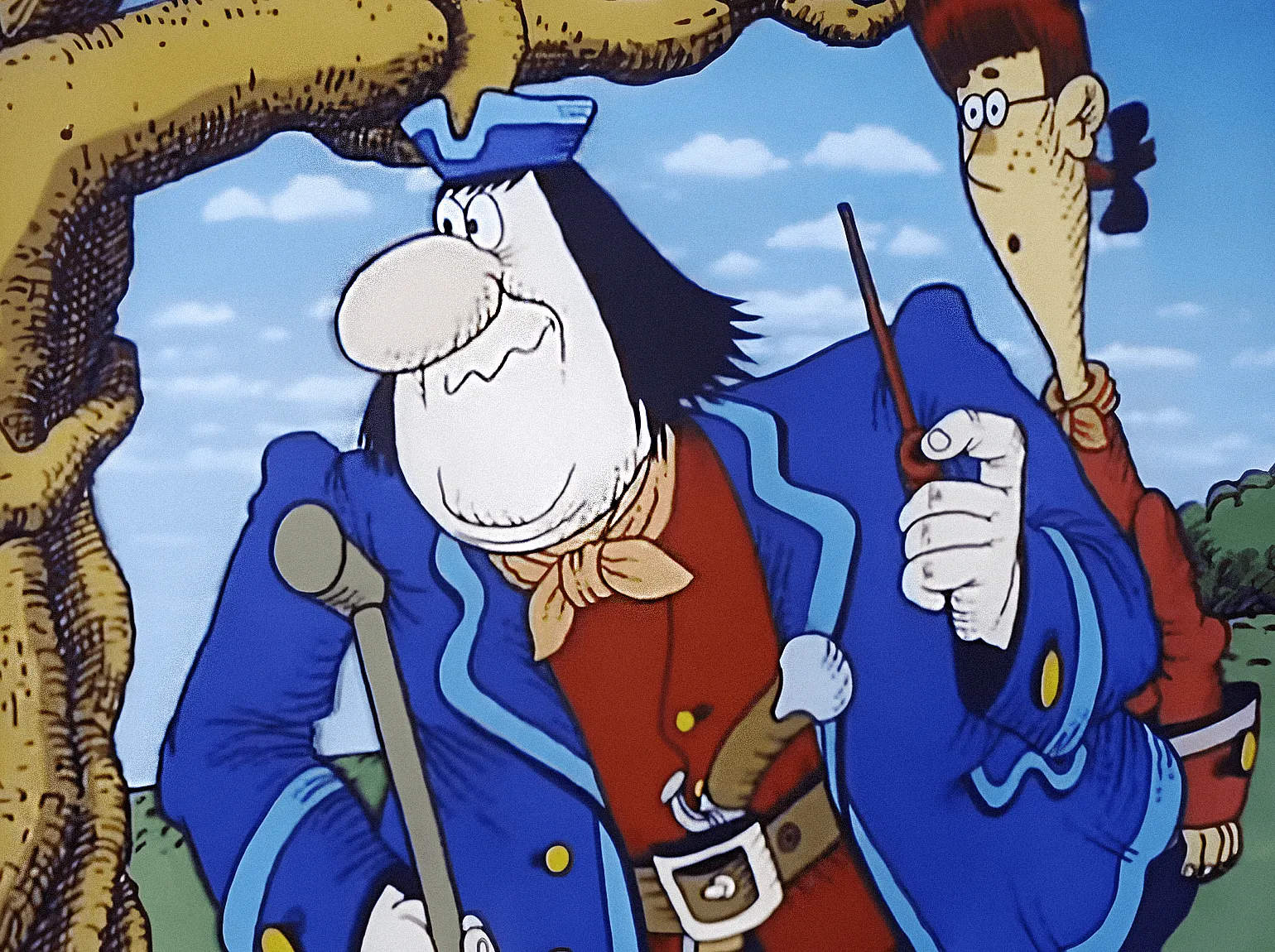
Other characters also leave A lasting impression. The stingy Squire Trelawney, the lisping and slightly odd Captain Smollett. And, of course, we can't forget the most iconic character—the optimistic Dr. Livesey. His line, "Enlarged liver, spleen—how delightful!" captures his character—simultaneously cynical and wildly optimistic. The role of this character was voiced by Yevgeny Paperny, known for his roles as Lom in "Vrungel" and Aibolit in the second animated film.
Dr. Livesey, a well-known character, was based on Paperny's friend, playwright Leonid Slutsky. Slutsky had a distinctive personality: he was a large, broad-shouldered man with a distinctive smile, reminiscent of a horse's jaw. Paperny described his character humorously, exaggerating the number of teeth—60 instead of the usual 32. Initially, he copied Lyonya as a joke, but later decided to use him as a prototype for a cartoon. As a result, the character of Dr. Livesey became so popular that, according to Paperny, he continues to "feed" him to this day.
This film features even more slapstick comedy than the previous installments. The heroes, chasing each other, can be compared to classic characters like Tom and Jerry or The Wolf and the Hare, as they defy all possible laws of physics. One of the pirates is killed when his illuminated silhouette disappears behind a door, leaving only his hopping legs that go overboard. Another character collides with the swinging doors of a saloon, causing him to temporarily split in two. All these comic moments are accompanied by speech bubbles and sound effects reminiscent of comic strips with captions like "Boom" and "Bang." This approach creates a unique atmosphere, introducing elements of visual humor and dynamism into the film, making it engaging for viewers.
The live actors were given a cartoonish style. Valery Chiglyaev, who played one of the pirates in the film inserts, shared his experience: "At first, I practiced singing slowly while moving at a normal rhythm. Then they increased the tempo, and on screen it seemed as if I was opening my mouth in time with the song, but at the same time quickly waving my arms and legs, like in a cartoon." This approach to animation and live action creates a unique atmosphere and visual style that draws viewers in.
"Treasure Island" is Cherkassky's most visually experimental film. This work again uses fisheye and subjective camera techniques. Particularly notable is the labor-intensive technique of total animation, where not only the characters but also the entire background around them is actively moving. This creates the effect of the camera moving in three-dimensional space, bringing the audience closer to the sensation of real cinema.
The new films, like the previous ones, contain errors, likely caused by rushed production. In the same scene, a character may appear in different outfits. One of the characters, Silver, exhibits anomalies—first his left leg, then his right leg disappears. In some cases, to speed up the filming process, it was obvious that a decision was made to save on quality: entire scenes are repeated with minimal changes. For example, the pirates mourn the losses equally in the first episode, when blind Pew drowned, and in the second, when Trelawney sent several of his comrades to the bottom.
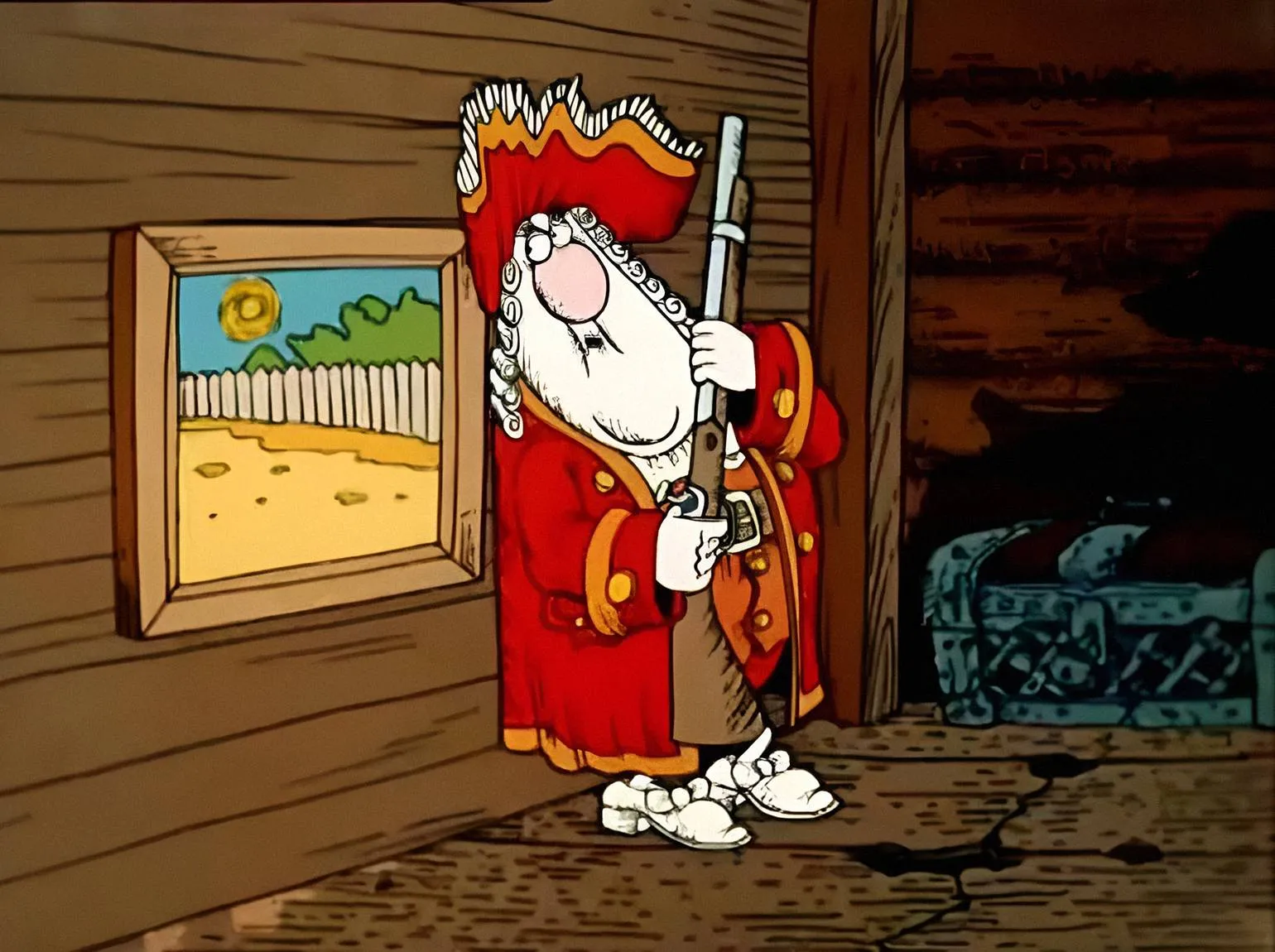
Cartoon Released in 1989, "Treasure Island" retains its appeal, but rather emphasizes the atmosphere of farce and merry chaos. At the height of perestroika, it accurately captured a reality full of chaos and confusion. This work was highly acclaimed, winning the Grand Prize at the All-Union Television Film Festival in Minsk and First Prize at the International Television Film Festival in Czechoslovakia. Its unique blend of adventure and vibrant characters makes the cartoon relevant today. "Treasure Island" was the last full-length animated film produced in the Soviet Union. Director Yuri Cherkassky was working on a new project called "The Pasta of Death, or Dr. Bugensberg's Mistake," but only managed to complete the pilot episode. Sequels to such popular cartoons as "Vrungel" and "Treasure Island" were never realized. With the collapse of the country, the legendary animation studio "Kievnauchfilm" also ceased to exist. Cherkassky was forced to seek new opportunities in a private studio, where he focused on creating commercials. Radna Sakhaltuyev also moved into advertising and book illustration, never returning to the world of animation.
In 2018, David Cherkassky passed away, and his main co-author and artist recently passed away. Nevertheless, their legacy lives on in cartoons full of engaging games and humor. These works are imbued with the atmosphere of the sea and adventure, leaving unforgettable impressions of the creativity of these talented masters.
Read also:
Soviet cinema left a significant mark on world culture, giving viewers many outstanding films. This list presents 50 of the most beloved Soviet films that still evoke nostalgia and interest in viewers. These films span a variety of genres: drama, comedy, melodrama, and adventure. They capture the spirit of the times and explore important social and human themes. Many of these films have become classics and continue to inspire new generations of filmmakers. Don't miss the opportunity to immerse yourself in the atmosphere of Soviet cinema and discover masterpieces that will forever remain in the hearts of viewers.