Contents:

Free test: which digital profession is right for you? Find out the answer in 15 minutes and try your hand at a new specialties.
Find out moreHow "Sotnikov" Was Written
The story was based on real events. In August 1944, a young Red Army lieutenant, Vasil Bykov, was driving past a Romanian village and noticed his former comrade-in-arms among the German prisoners. He wrote about this experience in the article "How the Story "Sotnikov" Was Created." This meeting inspired the work, in which the author reflected deep human experiences and the realities of war.
Suddenly I noticed the tanned, unshaven face of one of those sitting indifferently in a ditch next to the fence. This look seemed familiar to me. The prisoner also fixed his detached gaze on me, and the next moment I recognized him as my former comrade-in-arms, presumed dead since the fall of 1943. Moreover, for his steadfastness, he had been posthumously awarded a high decoration. He asked for a cigarette and briefly recounted his sad story. He had not been killed, merely wounded and captured. In the camp where he had ended up, hundreds were dying of starvation, and he wanted to survive. To deceive the Germans, he enlisted in Vlasov's army, hoping to find an opportunity to defect to his own people. However, the opportune moment never arrived. From the beginning of our offensive, he was forced to fight against his own people, although he fired into the air, consoling himself with the thought that he was not the enemy. I listened to him and believed him. He was not lying; he spoke the truth. He was not one to desire to serve the enemy; his personal bravery and military prowess were confirmed by a high decoration. Once captured, he put his life first and decided to outsmart the Nazis.
The meeting remained etched in his memory, and more than twenty years later, Sergei Bykov, already a renowned writer thanks to his works such as "The Third Rocket," "Alpine Ballad," and "The Dead Don't Feel Pain," began work on his new work, "Liquidation." This novel originally had this title, and it was under this title that it was published in Minsk in 2014, when the text was first released uncensored.
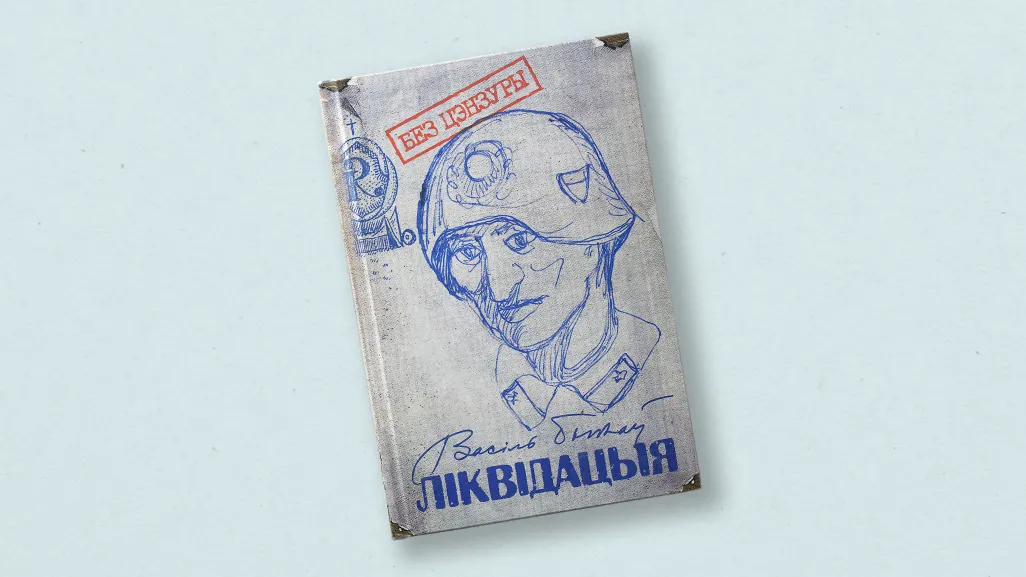
55 years ago, a difficult struggle for the publication of the work "Sotnikov" began. The author, Vasil Bykov, wrote it in Belarusian, then translated it into Russian and sent it to the magazine "Novy Mir", which at that time was a stronghold of liberal democratic literature in the Soviet Union. However, in February 1970, significant changes occurred in the editorial staff, and most of the editorial board was removed from their positions, which led to the destruction of the magazine. Bykov did not stand aside and turned to the former editor-in-chief Alexander Tvardovsky. Igor Zolotussky later recalled these events, emphasizing how the political situation influenced the fate of the work and literature in general.
Vasil approached Tvardovsky with a question about his story: whether to leave it in the magazine "Novy Mir" or remove it. Tvardovsky, without holding back his emotions, responded sharply, urging Vasil to act decisively. The conversation ultimately ended abruptly when Tvardovsky hung up. This episode highlights the importance of choice and courage in a literary career.
The novel "Sotnikov" was published in the magazine "Novy Mir," despite the fact that Bykov did not withdrew the manuscript. Just a year after its publication, Tvardovsky died, which was their last meeting. This situation carries a bitter irony, as the drama of the work seems to reflect the main themes of Bykov, who often explored issues of choice and death in his works.
How to read "Sotnikov"
For readers of the novel "Sotnikov," Robert Jordan's "For Whom the Bell Tolls" was on par with the works of Remarque and Hemingway. Both authors explore the themes of love and death, and the choice facing Jordan's protagonist is not so different from the dilemma faced by Bykov's. These works emphasize the universality of human experience and deep internal conflicts, linking them to eternal questions about life and destiny. Bykov's detailed and objective style resembles reportage, focusing on every detail and revealing the psychology of the characters. His work finds its roots in Tolstoy's works, such as "Sevastopol Tales," "The Prisoner of the Caucasus," and the battle scenes of "War and Peace." However, "Sotnikov" is not limited to the themes of war and psychology. This work has a sense of religious drama, which rather resonates with the legacy of Dostoevsky. The story contains numerous Christian allusions. The village elder, Sych, whom Rybak and Sotnikov visit, is clearly engrossed in reading the Bible. Sotnikov perceives the presence of the Germans and police as "diabolical," and, preparing for death, reflects: "Ultimately, this is their right, their bestial custom, their power." This reflects the words from the Gospel of Luke: "But now is your hour and the power of darkness." The myth becomes reality for the participants in the events, who are only partially aware of it. The climax occurs before the execution, when Sotnikov peers into the face of a boy in the crowd: "Full of pain and fear, his gaze followed someone under the gallows, drawing ever closer. Sotnikov didn't know who was coming, but from the boy's expression, he understood everything completely." It is clear who is ready to share the suffering of the executed.
The religious aspect is neither the only nor the last one in this situation. The widow Demchikha, who has given shelter to two partisans, asks: "You probably don't believe in hell, then?" This underscores not only her personal beliefs, but also the broader theme of faith and doubt that permeates the characters' lives. The question of belief in the afterlife and hell reflects the internal conflicts and moral dilemmas that people face in the midst of war and hardship.
The fisherman noted with slight irony that they believe in heaven.
You will live to see heaven, that's for sure.
The atheist Red Army soldier Sotnikov could hardly have expected the Kingdom of Heaven. However, he is not a complete reflection of Jesus. His character is characterized by stoic pride: he decides to go with the fisherman on a mission, a decision conditioned by the fact that the others refused. However, it is his illness that slows his comrade down. His cough betrays his presence and endangers not only his life but also that of Rybak and Demchikha, who is completely innocent. Sotnikov shows little pity for those he believes have betrayed him, such as the village elder. He does not act as a savior of sinners, which emphasizes his internal struggle and complex moral dilemmas.
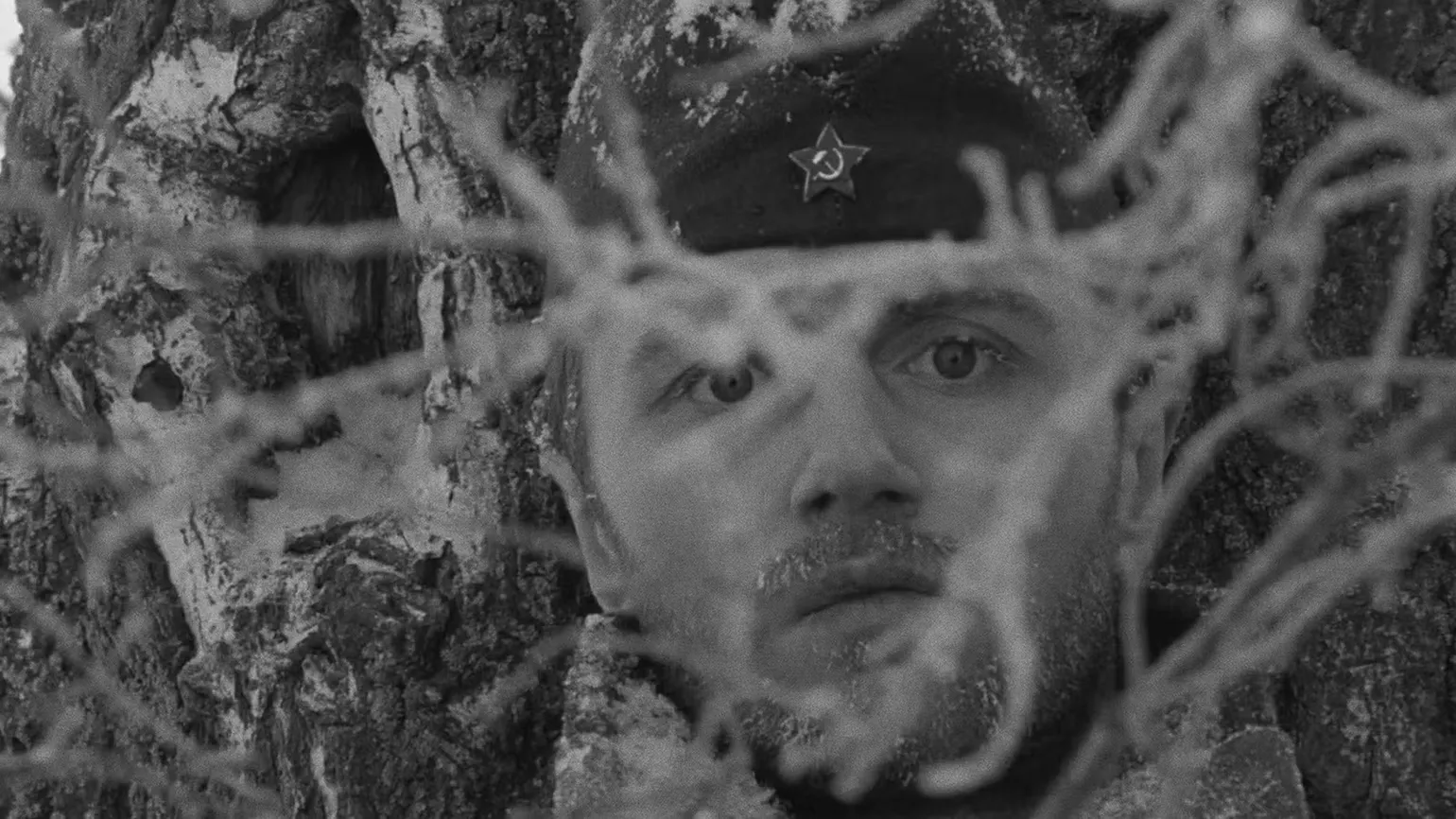
History ceases to be perceived as a confrontation between good and evil. In Sotnikov's eyes, fascists and policemen represent people who voluntarily lose their agency and become part of a soulless system: "Either you serve it, or it will destroy you." When he, on the brink of life and death, is deprived of the ability to resist, when hope for revenge, heroism, or even a good memory disappears, there is only one way to preserve himself—to resist destruction.
He had one last opportunity, one he was not going to give up. This opportunity was unique and depended entirely on him. He had every right to dispose of it, for only he could leave this world with a clear conscience and human dignity. This was his final grace, a sacred luxury that life generously bestowed upon him.
This statement can be linked to the philosophy of Sartre, who emphasizes that true human life begins beyond despair. In his correspondence with Ales Adamovich, Bykov openly admits that his work is inspired by existentialism, as he understands it. One of the clearest examples of this inspiration is his reference to Albert Camus's The Plague, which he calls his Gospel. Existentialism emphasizes the search for the meaning of life and internal conflict, which makes the works of these authors relevant to understanding human existence.
Find out more:
He is risen indeed: the most memorable images of Christ in cinema
The images of Jesus Christ on screen always evoke deep emotions and reflection. Cinema has offered numerous interpretations of this key figure in Christianity, each reflecting a unique approach to his life and teachings. Films dedicated to Christ not only convey biblical events but also explore philosophical, cultural, and historical aspects of his personality.
From classic works to modern adaptations, each film brings its own unique interpretation. Many directors strive to convey not only the religious significance but also the humanity of Jesus, making these films relevant to a wide audience.
Exploring the portrayal of Christ in cinema allows for a deeper understanding of his influence on culture and art, as well as on modern society. Each of these films offers viewers the opportunity to reflect on the meaning of life, faith, and spiritual values.
Thus, images of Christ on screen continue to be a vital topic for discussion and analysis, inspiring generations of viewers to reflect on spirituality and humanity.
How "The Ascent" Was Filmed
Six years after the release of "Sotnikov," Ukrainian director Larisa Shepitko took on the film adaptation of the story. Shepitko, who had already won acclaim for her drama "Wings," which tells the story of a pilot's life after the war, experienced complex feelings about her next project, "You and I," based on a screenplay by Gennady Shpalikov, which illuminates the lives of young scientists. The film stars such actors as Yuri Vizbor, Alla Demidova, and Oleg Efremov, and won one of the prizes at the Venice Film Festival. However, Shepitko faced strict censorship, forcing her to defend numerous episodes. These difficulties exacerbated her condition, and she fell into a deep depression.
An unfortunate fall during pregnancy further exacerbated the situation. The director suffered a concussion and a spinal injury, forcing her to spend several weeks in bed. During this difficult time, contemplating the nearness of death, Shepitko read the novella "Sotnikov" and realized that a film adaptation of this work would fully reflect her inner state. Preparing for filming became a spiritual feat for her. Valentina Khovanskaya, the project's second director, recalled how seriously Shepitko approached this creative process.
The film "Sotnikov" contains no overtly anti-state elements, but its profound meaning may puzzle some viewers. Larisa, one of the characters, indignantly declares that those who think so do not understand the true meaning of the film. She emphasizes that this film has its roots in the Bible, prompting reflection on the connection between religious texts and contemporary issues. This assertion opens a discussion about how classical literature and spiritual values can be reflected in contemporary art, including cinema.
The film's title was invented by Larisa's husband, director Elem Klimov, for which he received ten rubles as part of their humorous tradition. "Ascent" differs from Bykov's works, which emphasize a specific character, Sotnikov, and especially from the formally terrifying "Liquidation." In this film, the focus shifts to lofty, spiritual themes.
In Greek, the word "ascent" is translated as "anabasis." Originally, this term had a military meaning and denoted movement from low to higher ground. It became known thanks to Xenophon's famous work. Over time, the concept of "anabasis" acquired a deeper meaning, associated with a person's spiritual ascent and their striving for the divine. In his memoir "The Long Road Home," writer Vasil Bykov mentions that Larisa, one of the heroines of his works, truly strove for lofty religiosity and even planned to call the film "Ascension." Her passionate approach impressed Bykov, and he remarked: “If we had met earlier, perhaps I would have written ‘Sotnikova’ differently.” This demonstrates how ideas about ascension and spirituality can influence creativity and the perception of works of art.
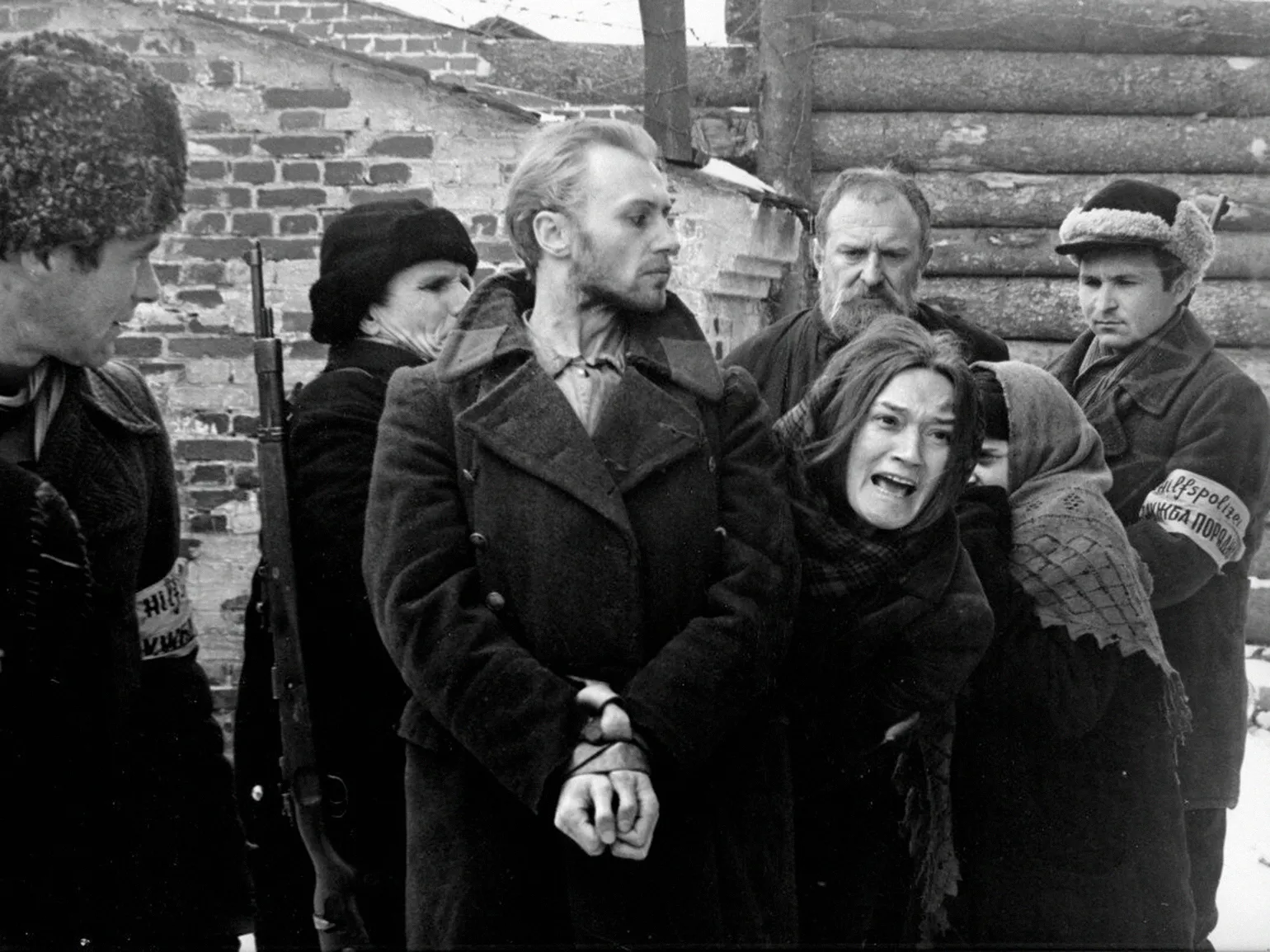
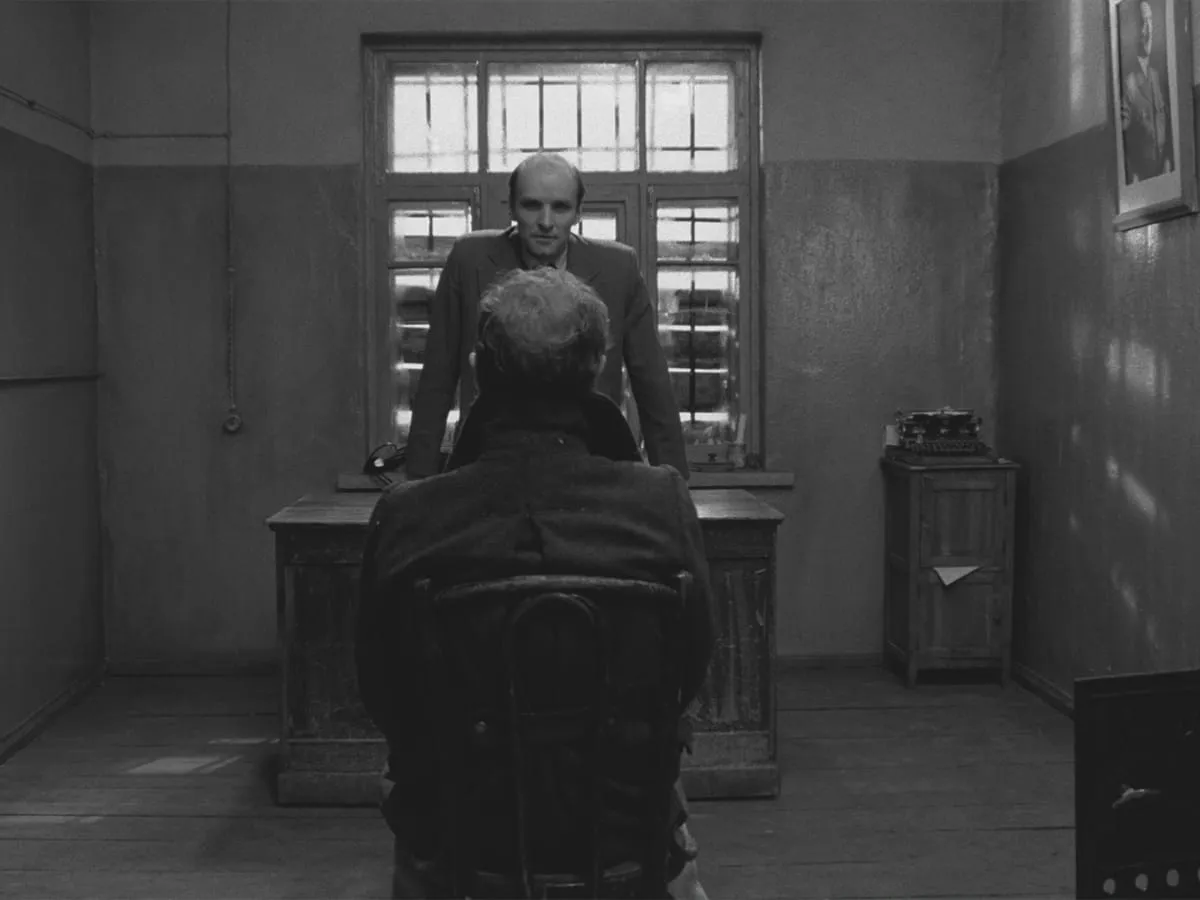
This text is a theological dispute, and the censors from Goskino were not wrong when they suspected that Shepitko's war story was turning into a "religious parable with a mystical tint." In the work, Rybak and Sotnikov, like Abraham and Isaac or Cain and Abel, lead a sheep—a lamb—through a snowy desert, symbolizing sacrifice and the path to redemption. Completing their ascent (to Golgotha), they freeze in poses reminiscent of works by Bruegel and Rogier van der Weyden, emphasizing the depth of their internal conflict. The cowardly Rybak earns the apt nickname "Judas" from the audience, and the village elder recites Psalm 51 before his execution: "Have mercy on me, O God, according to your great mercy..." This text serves not only as a work of art but also as a unique religious allegory, exploring the themes of betrayal, redemption, and spiritual quest. Bykov's work didn't draw such overt parallels. According to Boris Plotnikov's memoirs, the writer set his own conditions: filming must take place in severe frost and in virgin snow. Shepitko also adhered to this approach, considering it the most authentic. The actors had to experience winter "with every fiber of their being."
According to forecasts, such weather conditions were expected only near Murom, so our team headed there. Every day was a serious challenge, even for the men, and especially for Larisa Efimovna. However, she felt that by making this film, she was fulfilling her true calling. Larisa was tormented by severe pain, but despite this, during the filming of "The Ascent," she woke up two to three hours earlier than everyone else to pull herself together and then, at the limit of her abilities, work all day. This is an example of true dedication and fortitude that inspires those around her.
Plotnikov recalled that the filming participants experienced severe cold, sometimes even frostbite. After each take, the director personally warmed and rubbed the actors, showing care and attention. Her will and energy literally hypnotized and inspired the entire film crew, which allowed them to focus on work. No one complained about the difficult conditions, which emphasized the team's dedication and professionalism.

Reading is an important aspect of personal growth and development. It enriches our inner world, expands horizons and deepens our understanding of the surrounding reality. Books, articles, and other sources of information help us gain new knowledge and ideas, which contribute to the improvement of skills and abilities. Immersion in literature also develops imagination and critical thinking, allowing us to analyze and compare different points of view. Regular reading helps improve concentration and memory, making it not only an enjoyable but also a useful activity. Get involved in reading and discover new worlds and possibilities.
Think Like a Woman, Shoot Like a Man: 15 Female Directors in the Film Industry
The world of cinema is increasingly hearing the names of female directors who are changing the perception of cinematography. These talented professionals bring a fresh perspective and unique ideas, creating films that touch on important social and cultural issues. In this article, we will look at 15 outstanding female filmmakers who have had a significant impact on modern cinema.
Each of them has her own style and approach to filmmaking, demonstrating that the female perspective plays a key role in cinema. Their work not only entertains but also raises important questions, making viewers reflect on life, society, and human relationships.
By studying their films, you can see how they use a variety of cinematic techniques to convey their ideas and emotions. These women are inspiring a new generation of directors, showing that there are no boundaries for creativity and expression in cinema.
If you want to learn more about the contributions of women to the film industry and their influence on art, be sure to check out the work of these 15 talented filmmakers.
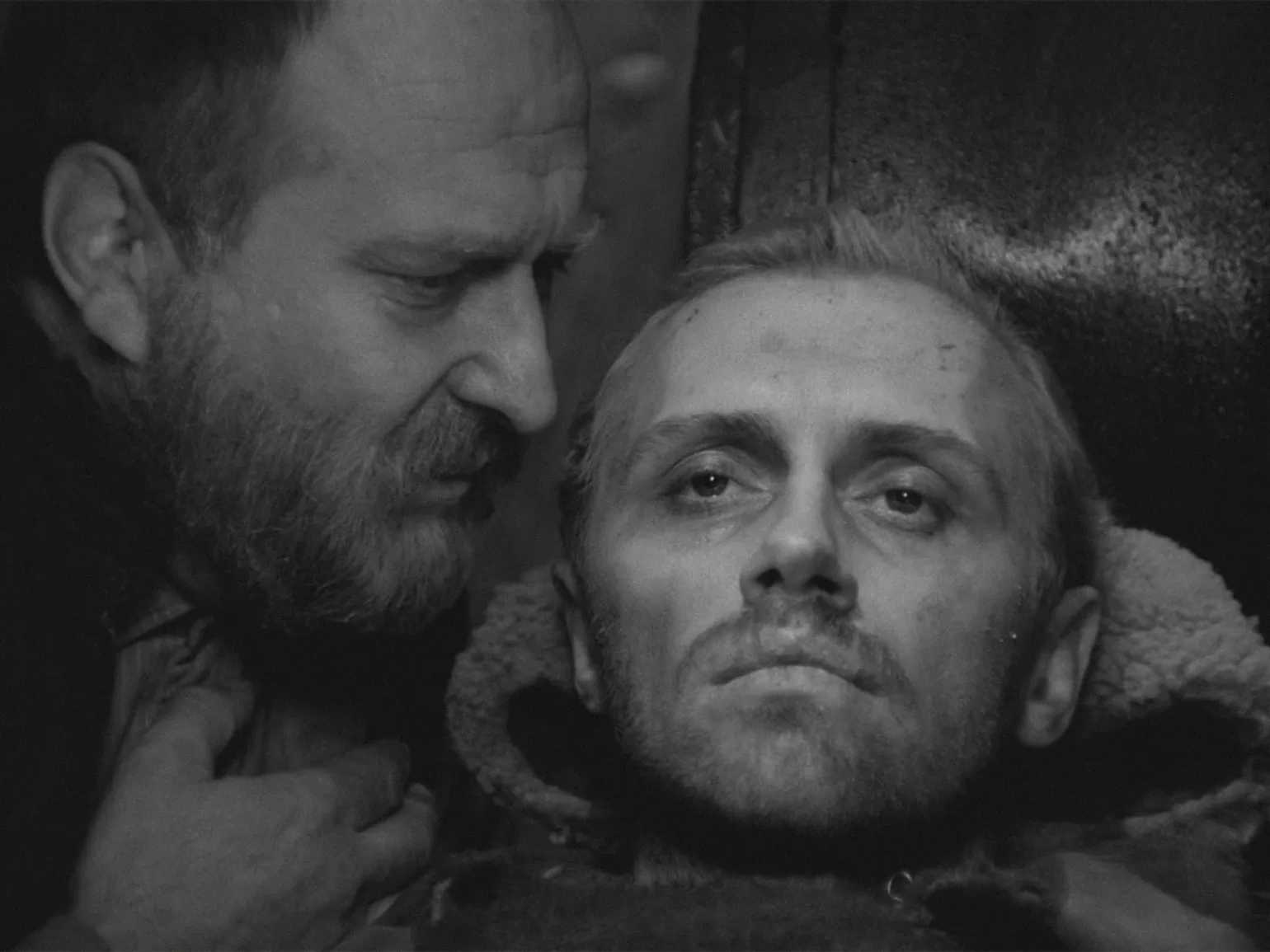
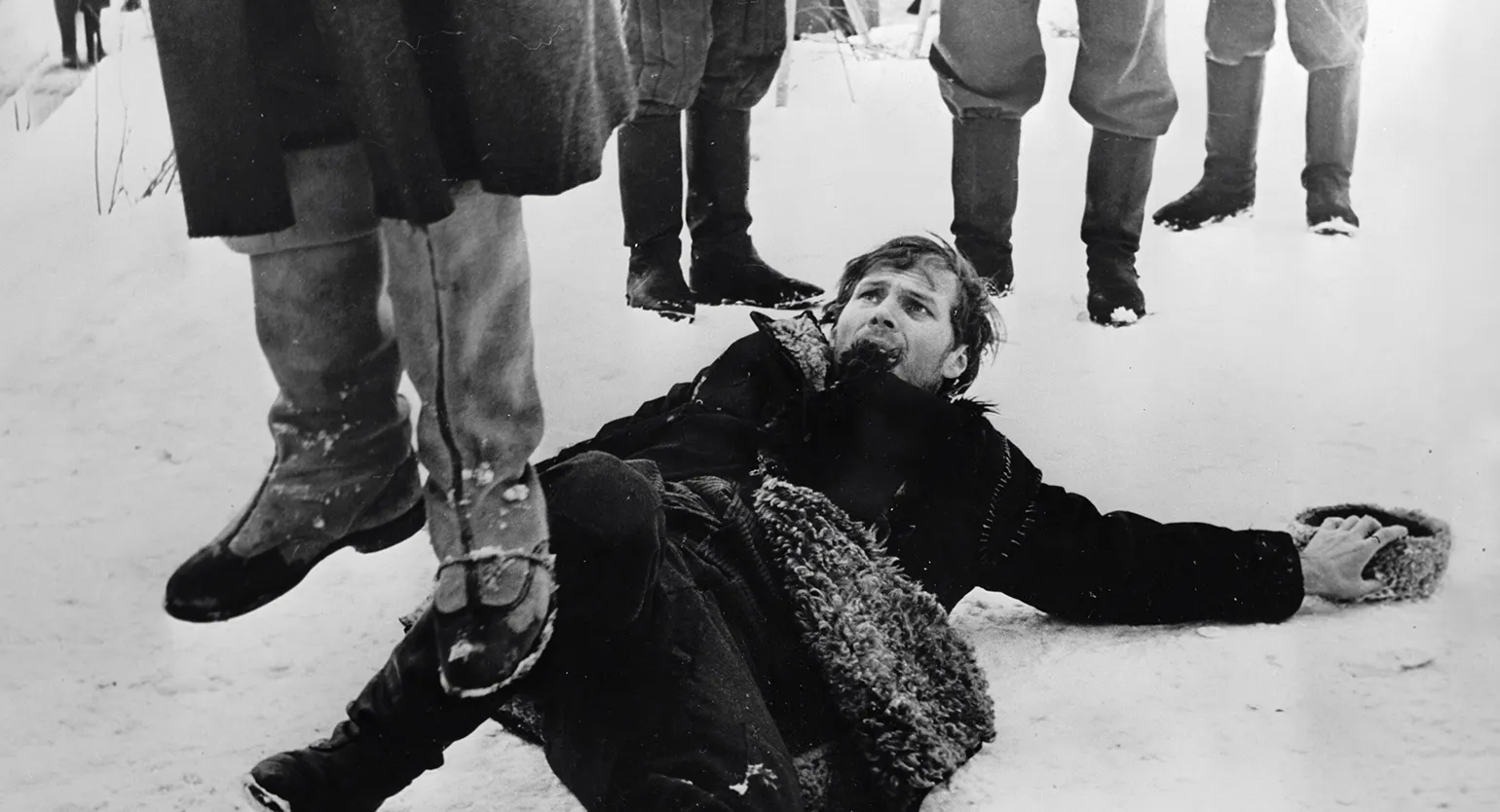
Reproaches of ambiguity and parable-likeness can also be addressed to the films of Andrei Tarkovsky. Nevertheless, one can understand the dissatisfaction of both Tarkovsky and Fassbinder, representatives of art who explore the dark sides of the human soul. Shepitko, a film that reflects her personality, is black and white and stark, refusing to compromise morally. Unlike the original story, the film lacks psychological nuance. An important aspect of the work is the author's desire to peer into the soul of the traitor Rybak, from whose point of view the main part of the narrative is told, as well as into the soul of Portnov, who, despite his vileness, is not presented as absolute evil. In this context, there is a tragic questioning, but an absence of absolute moral condemnation, which allows the viewer to more deeply understand the internal conflicts of the characters. In Shepitko's film, the plot reaches a climax of religious ecstasy and mystery. The character Sotnikov, despite his inner weaknesses, no longer seeks Christ among the crowd – he himself becomes the embodiment of Jesus. As a result, suffering and sacrifice acquire meaning and justification: this applies not only to Sotnikov's victim, but also to the other characters who also find themselves on the same Golgotha with him. In contrast, the traitor in the film is offered neither forgiveness nor the opportunity for repentance: when he attempts suicide in the toilet, even his belt breaks, preventing him from carrying out his plan. This contrast underscores a profound moral dilemma and emphasizes the importance of redemption and self-sacrifice. This approach may have been relevant to the intelligentsia of the seventies, but to a modern viewer, it may seem dubious from a spiritual standpoint. However, the key to understanding The Ascent today lies in its artistic execution. The film is rich in subtle and delicate details: black tree branches, the moon floating in a gray, frosty haze, long wide shots where the cameraman seems lost in thought, showing snow-white fields with miniature figures. Particularly memorable are the characters' gazes, which accidentally meet the camera, creating a sense of direct interaction with the viewer. Alfred Schnittke's music, beginning softly against the backdrop of creaking trees and howling wind, enhances the atmosphere and immerses one in the film's world, adding depth to its emotional intensity.
There is a special perspective that frees the work from the influence of Soviet, Christian, and other ideologies, allowing the viewer to peer within. This is the hidden chamber where everyone, be it Rybak, Sotnikov, or Portnov, daily faces the decision of loyalty to their principles or self-destruction. War, in all its terrible reality, only emphasizes and exacerbates this inevitable conflict between spirit and body, the desire to live and the desire to remain true to oneself, between conformity and freedom. In this context, Larisa Shepitko's film certainly resonates with the work of Vasil Bykov, raising important questions of human nature and moral choice in times of crisis.
Reading is an important aspect of our lives that enriches knowledge and expands horizons. It promotes the development of thinking, improves vocabulary and helps to better understand the world around us. Reading books, articles, and other materials develops critical thinking and creativity. It's important to devote time to this process, choosing a variety of genres and topics to reap the maximum benefit. If you're looking for book or article recommendations, don't miss out on the many resources available to help you improve your skills and deepen your knowledge in areas of interest. 20 Outstanding War Movies War movies always captivate audiences with their drama and historical significance. They offer a deeper understanding of military conflicts and their impact on humanity. This list features 20 of the best war movies worth watching. Each one explores themes of courage, sacrifice, and human resilience in its own unique way. These films offer viewers a unique perspective on various wars and conflicts, from World War I and II to modern warfare. They not only tell stories of soldiers and battles but also explore human destinies, showing how war changes lives.
War films can serve as a powerful reminder of the importance of valuing peace and striving for understanding between nations. In this context, these films become not only entertaining but also educational works of art. Whether you're interested in history or just enjoy good cinema, these 20 war films will captivate you.
Free test: which digital profession is right for you?
IT, design, marketing or management? Find out the answer in 15 minutes. And then try your hand at a new specialty for free.
Find out more