Contents:

Thinking about a new profession, but don't know where to start? Find out what's right for you: IT, design, game development, management, or marketing. Take a free career counseling session.
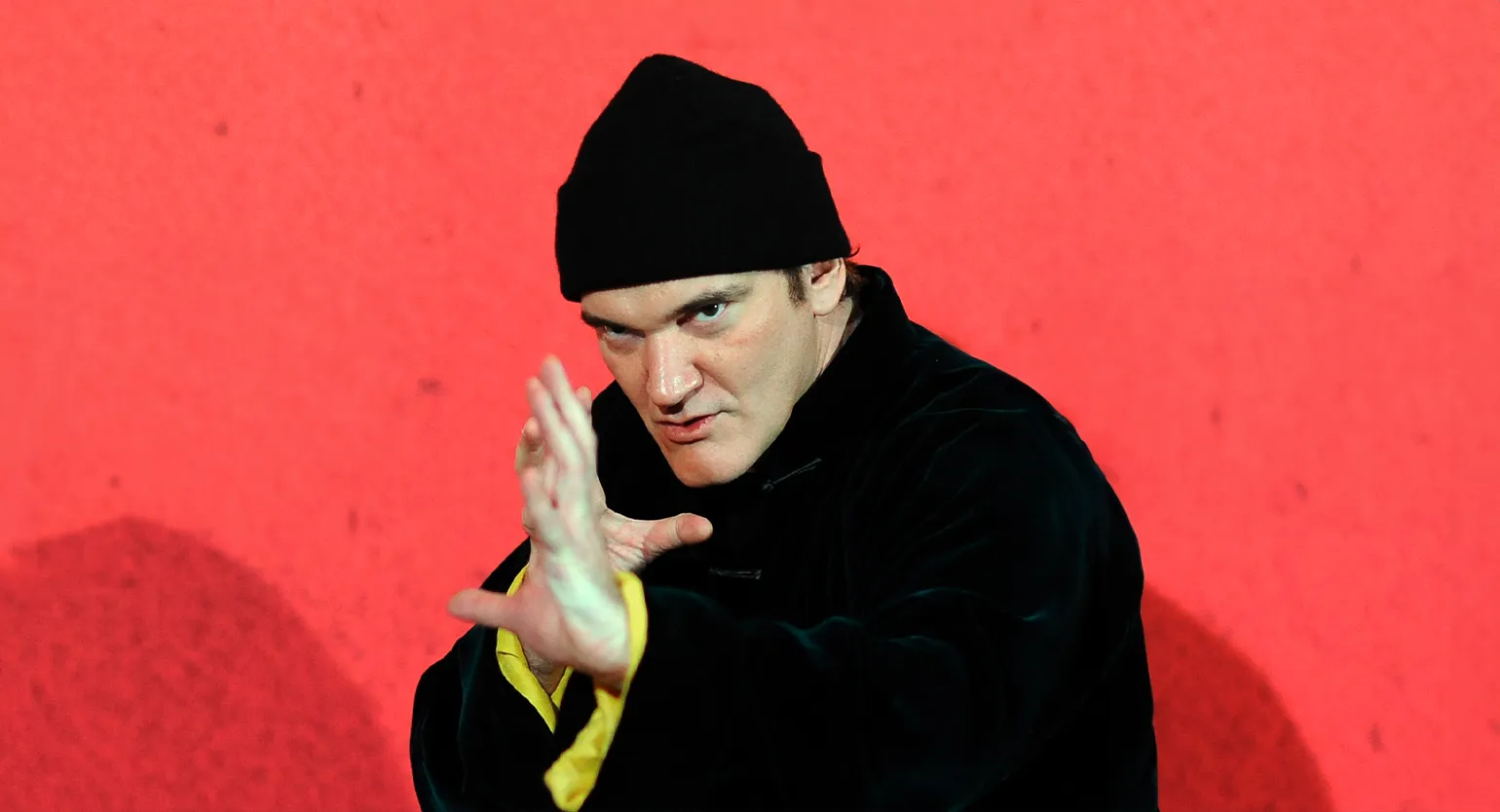
Learn moreAs a child, Quentin Tarantino often frequented grindhouses, where he avidly watched B-movies. He was particularly drawn to crime thrillers and westerns, among which the works of Sergio Corbucci held a special place. These films had a significant influence on the formation of his artistic style and choice of subject matter in the future. Tarantino not only drew inspiration from the plots and atmosphere but also studied the unique techniques used in these genres. This passion became the foundation for his subsequent film career, where he successfully combines elements of crime and westerns in his works.
Quentin Tarantino's work is imbued with a love for the master of the genre, Sergio Corbucci, which is clearly evident in his film Django Unchained, which is an homage to the original 1966 Django. However, Tarantino did not limit himself to this film. He borrowed clichés, plot twists, and characteristic tropes from many of Corbucci's works, introducing elements of gray morality and complex characters into his films. These aspects make Tarantino's films unique and memorable, highlighting his mastery of creating multi-layered stories.
In this article, we will consider what unites the two outstanding directors and in which of Quentin Tarantino's works the influence of Sergio Corbucci can be seen. Both masters of cinema created a unique style that has had a significant influence on the development of the genre. Tarantino, known for his cult films, draws inspiration from the work of Corbucci, who rose to fame with his Spaghetti Westerns. Tarantino's films, such as "Kill Bill" and "Django Unchained," feature elements characteristic of Corbucci's work, including stylized violence and complex characters. These connections highlight how classic cinema continues to influence modern directors, shaping their artistic vision and approach to storytelling.
In this article, we will provide you with up-to-date information and helpful tips on the topic. We will cover key aspects that will help you better understand the subject and apply this knowledge in practice. Read on to discover all the important details and recommendations.
- What Quentin himself thinks of Sergio's films;
- What is special about Corbucci's spaghetti westerns;
- What the American director adopted from the Italian;
- How the two "Djangos" are similar and different.
Subscribe to the "How are you?" Telegram channel. In this channel, our experts share deep and well-founded knowledge in the field of psychology and self-development. Every weekend, we will publish fresh selections of films and music that will help you broaden your horizons and enrich your leisure time. Join our community and stay up-to-date on current topics related to personal growth and cultural news.
What Tarantino Says About Corbucci
In the Video Archives podcast, Quentin Tarantino discusses films of the past with screenwriter Roger Avary, co-writer of such cult films as Pulp Fiction and Reservoir Dogs. In particular, they delve into the analysis of iconic westerns of the 1950s and 1960s. During the conversation, Tarantino repeatedly highlights the name of Sergio Corbucci, an Italian director who became an iconic figure in the spaghetti western genre. Tarantino emphasizes the uniqueness of Corbucci's work, noting that, unlike many of his contemporaries, he did not strive to create large-scale epic films. Instead, Corbucci focused on more earthy and "dirty" stories, often centered on revenge. These characteristics of his films have made them truly iconic and earned Corbucci a special place in cinema history.
Reading is an important part of our lives, and it brings many benefits. Books develop intelligence, enrich vocabulary, and help you better understand the world around you. Reading also improves concentration and memory. It's important to make time for this healthy habit so you can not only have fun but also learn new things. Find interesting books and articles that match your interests and immerse yourself in a world of knowledge. Don't forget to share your findings with others to inspire them to read.
The 20 Best Westerns in Cinema History
The Western is a genre that has become an integral part of world cinema. It immerses viewers in the world of the Wild West, filled with adventure, conflict, and relatable characters. This list features the 20 best Westerns that have left a significant mark on cinema history and continue to inspire new generations of viewers.
Each of these films has a unique atmosphere, memorable characters, and gripping plots. Westerns not only entertain but also explore important social and cultural themes such as justice, freedom, and moral dilemmas. These films have become classics of the genre, and their influence is still felt today.
From epic battles to profound human stories, Westerns offer a rich selection for film lovers. Immersed in the atmosphere of the Wild West, viewers can experience the spirit of adventure and the grandeur of nature. These films continue to captivate and engage audiences, remaining relevant and significant in modern cinema.
Sergio Corbucci presented a unique interpretation of the Wild West, full of cynicism and cruelty. His egocentric character, driven by a thirst for revenge, does not fit the traditional image of a hero, but rather represents the archetype of a villain immersed in gray morality. In his Westerns, Corbucci often pits evil against evil, forcing the viewer to sympathize with the lesser of the two. This creates profound moral ambiguity and highlights the complexity of human nature in the harsh reality of the Western frontier.
Quentin Tarantino considers Sergio Corbucci not only an outstanding director of spaghetti westerns, but also one of the greatest masters of the western genre as a whole. The Italian director masterfully mastered the genre, in many ways surpassing his American colleagues. Although Corbucci borrowed some elements from his predecessors, such as John Ford, who already in the late 1930s undermined the traditional image of the ideal hero in Stagecoach, it was Corbucci who was able to fully realize this concept in his famous film Django. His works are distinguished by their deep character development and original approach to plot, which makes them significant in the history of cinema.
Sergio Corbucci masterfully created an authentic western atmosphere in his films, introducing elements of the absurd. The brutality of the characters depicted on screen imbued his works with a unique surrealism that set them apart from other films of the genre. As Quentin Tarantino once noted, Corbucci's films have a unique ability to combine traditional Western elements with unexpected and bizarre plot twists, making them memorable and original. This approach captivates viewers and challenges them to consider the paradoxes of human nature and the cruelty of society.
Who would have thought that a director, a master of traditional Westerns, is capable of such a deep dive into the subject and creating surreal, brutal and believable films. His works demonstrate a unique approach to storytelling, combining elements of realism and the absurd. This allows viewers not only to empathize with the characters, but also to reflect on deeper philosophical questions. This contrast in his work highlights the diversity of his talent and opens new horizons in the world of cinema.
How Sergio Corbucci Filmed
To better understand the characteristics of Sergio Corbucci's Westerns, it is worth analyzing his filmography. It contains many key elements that help reveal the characteristic features of his work.
The career of the Italian director began with the drama "Save My Daughter", released in 1951. This film tells the touching story of a poor farmer who decides to steal jewelry to pay for his gravely ill daughter's surgery. The director went on to direct several musicals, including Caravan of Songs and The Sound of Love, both released in 1955. His filmography also includes comedies such as Whoever Stops Loses (1960). These works helped shape his career and strengthen his reputation in the film industry.
Sergio Corbucci was not one to stay in one place and began actively mixing genres. He added elements of satire to drama, as can be seen in the situation comedy The Two Marshals (1961), where the director ridicules fascist officers. This passion for mixing genres became his signature style, and he was not afraid to introduce comedic elements even into horror films. The result of this experiment was the eccentric film Maciste Against the Vampires (1961). Corbucci demonstrated how genre diversity can enrich cinema, bringing new ideas and a fresh perspective to familiar plots.
Sergio Corbucci began experimenting with various genres, creating not very successful films in the peplum genre - Romulus and Remus (1961) and The Son of Spartacus (1962). After immersing himself in multi-genre atmospheres and epic stories, Corbucci switched to comedies, releasing The Monk of Monza (1963) and The Deputies (1963). In addition, he presented audiences with a pure horror film, Castle of Blood (1964). Later, the Italian decided to master the American film genre, which led to the creation of the classic western Minnesota Land (1964). This film marked a milestone in his career and highlighted his ability to adapt to a variety of film styles.
"Minnesota Land" is crafted in the tradition of the Hollywood Western, telling the story of a hero—a blind cowboy who is wrongfully convicted. The film is more reminiscent of an action film, with the Wild West presented as a theatrical backdrop. This work was a trial run for the director in the world of the Western, but already in it one can sense that Corbucci had finally found his ideal genre form. The film combines elements of action and drama, making it unique in its kind.
The next film was more reminiscent of a "spaghetti western": "Johnny Oro" (1966) presented viewers with a hero-avenger with elements of increased cruelty, but still retained the features of the American template. A real breakthrough in the genre was the film "Django", also released in 1966, which changed the perception of westerns and brought new accents to the narrative.
"Django" is a classic spaghetti western that fully reflects the nature of the genre. The main character, a vengeful and withdrawn outsider, encounters cynical and greedy characters, creating an atmosphere of cruelty and hopelessness. The world around them is filthy and unwelcoming, underscoring the tension. The plot unfolds slowly, focusing on the inner state of Django, played by Franco Nero. The viewer is drawn into his personal tragedy despite the lack of a detailed backstory. We witness his merciless reprisals against those who stand in his way, creating a vivid impression and prompting reflection on the nature of revenge and justice in this harsh world.
The film stands out for its unique depiction of reality. In the world of "Django," there is no clear division between good and evil, although evil sometimes displays traits of honor. Human life has no value here, and in some scenes, the frame is overflowing with corpses. The protagonist eliminates opponents in a completely unrealistic manner: a simple revolver shot can send victims flying several meters in the wrong direction, and blood flies in thick, bright sprays. This style emphasizes the brutality and absurdity of the surrounding world, making the film memorable and provocative.
The muddy mess of the city streets appears more realistic than the manicured squares of American westerns. This observation can be extended to many aspects: the absurd reality created by Corbucci is enriched with real-life details. This approach allows for a deeper understanding of the social and cultural contexts in which the events unfold, making them more relatable and understandable to the viewer.
The director creates a simple yet effective visual atmosphere, using an accentuated zoom to emphasize the characters' emotions in close-ups. He masterfully hides the characters' true intentions behind witty dialogue, presenting each of them as a villain. The heroes rarely open up to each other, and even declarations of love sound insincere. In this world, emotions and empathy make people vulnerable, which often leads to their death.
What Tarantino Adopted
Quentin Tarantino's work is characterized by actively borrowing the techniques and styles of other directors. He successfully utilizes scenes and images he admires, adapting them to his unique style and context. The influence of Sergio Corbucci is particularly noticeable, from whom Tarantino borrows many elements, giving his work a rich and multilayered quality. This art of reworking and reimagining visual and narrative solutions has become one of the hallmarks of his films.
Quentin Tarantino's first film, Reservoir Dogs (1992), tells the story of down-on-their-luck gangsters who fail to identify a spy in their midst. The main characters are amoral villains, each worse than the last. Their selfish motives and reckless actions are indefensible. They resemble Wild West cowboys robbing a train overflowing with jewels. The film became a landmark film thanks to Tarantino's unique style, which combines violence and dark humor to create a memorable and tense plot. A similar situation is observed in other films. "Pulp Fiction" illustrates the lives of people existing outside the law. In "Jackie Brown," the protagonist finds herself in a difficult situation and escapes it through murder and cunning. In the "Kill Bill" duology, the victim is transformed into an aggressor, and the plot of "Death Proof" focuses on a serial killer and the women who seek revenge. In other works, we also observe that the characters have their own dark sides—each of them has committed murder, betrayal, or deception at least once in their lives. These themes add depth to the films, reflecting complex moral dilemmas and human nature.
Tarantino adapts the characteristic gray morality of Corbucci's films into his own unique universe. His characters, sometimes no less cruel than the villains, are indefensible. This moral ambiguity makes his work particularly gripping and provocative, reflecting the complexity of human nature and the dark sides of society.
On-screen violence has become a key element in the work of American directors, acquiring particular significance in contemporary cinema. It is often depicted in an excessive form, which at times leads to absurd situations. This phenomenon raises questions about the impact of violence on viewers and its role in shaping public opinion. Directors use violence as a means of expressing the emotional states of characters and highlighting social problems, making it an important tool in their artistic arsenal.
In Quentin Tarantino's Inglourious Basterds, viewers witness brutal reprisals against fascists, which reflects the author's approach to historical justice. In Once Upon a Time in Hollywood, he focuses on the extermination of members of the Manson cult. The bloody vendettas depicted in both films are executed with Tarantino's signature style, combining elements of dark humor and aesthetic violence. These scenes not only entertain but also provoke reflection on the nature of evil and moral responsibility. Tarantino masterfully uses cinema as a means to analyze and reinterpret historical events, creating memorable images and dialogue that linger in the minds of viewers.
In some cases, the violence can even seem comical. In the short story "Penthouse: The Man from Hollywood" from the anthology "Four Rooms," one of the characters loses a finger. This amputation is shown in a sped-up edit, heightening the surprise and absurdity of the scene. In this context, Tarantino doesn't seek to revel in violence, but rather uses it as a means to create a unique atmosphere and introduce an element of shocking humor.
Tarantino, like Corbucci, uses violence as a tool for expressing onscreen justice. Their depictions of violence serve not only as an artistic device but also as an attempt to reflect dissatisfaction with existing social problems. Both directors criticized fascism and racism, highlighting important aspects of social injustice. Through their films, they seek to draw attention to serious issues that remain relevant in the modern world.
Corbucci's heroes are rugged, silent cowboys, often acting as women's saviors. In each new city, they meet a mysterious stranger and win her heart by demonstrating emphasized indifference—a classic plot device. In contrast, Tarantino's heroes possess a clear masculinity, but the director does not admire them, but rather ridicules the "male world", emphasizing the fragility of their images. Many of Quentin Tarantino's films contain strong feminist ideas, which makes them socially significant and relevant in modern cinema.
Read also:
A trope in cinema is an established device or element that is often used in the plots of films and television shows. Tropes can include specific storylines, character archetypes, visual styles, and even dialogue. They serve to establish recognizability and can evoke specific associations and emotions in viewers. For example, the "hero of the people" trope suggests that the main character comes from humble beginnings and rises to greatness over the course of the story. Using tropes helps content creators effectively convey ideas and feelings and makes the story easier for viewers to digest. It's important to understand that tropes can be both positive and negative, and their use requires skill to avoid clichés and maintain the originality of the work. In the Kill Bill duology, the protagonist, played by Uma Thurman, is determined to exact revenge on the yakuza group responsible for her husband's death. This strong woman overcomes all obstacles, destroying male villains and demonstrating her power, which challenges patriarchal norms. The film explores themes of revenge, strength, and feminism, emphasizing women's ability to resist violence and oppression.
The heroines of Death Proof demonstrate determination and courage in their revenge against a killer driver who mercilessly oppressed defenseless girls on the road. Their fight for justice becomes the central theme of the plot, reflecting important social issues about protecting women and combating violence. This film not only entertains but also provokes reflection on morality and responsibility.
Quentin Tarantino's films are dominated by male characters, but their power is ultimately contested by women or other men, depending on the circumstances. This characteristic of his work becomes an important motif reflecting issues of gender inequality. Tarantino masterfully exploits the dynamics between the sexes, highlighting how traditional roles can be reimagined and inverted.
Quentin Tarantino sometimes includes subtle references to beloved scenes from the works of Sergio Leone in his films. These details create a unique atmosphere and highlight the Italian master's influence on Tarantino's work.
In his debut feature, Reservoir Dogs, the ear-slicing scene was inspired by a similar scene in Django Unchained. In that Western, a Mexican leader cuts off the ear of a local nationalist, while in Reservoir Dogs, the scene is transformed into a musical number with thriller elements, where Michael Madsen's character brutally tortures his captive. The aesthetically executed murder of slave owner Calvin Candie, played by Leonardo DiCaprio in Django Unchained, also borrowed elements from another Western, The Mercenary. In both interpretations, the men are fatally shot in the white flower on their jackets, creating a spectacular and memorable visual effect.
In Once Upon a Time in Hollywood, Quentin Tarantino chose to include the character of Sergio Corbucci. In one scene, Rick Dalton, played by Leonardo DiCaprio, meets Corbucci at a restaurant. Rick initially confuses the director with Sergio Leone, and then calls the film Navajo Joe (which Tarantino considers a failure) a failure. Despite this, Corbucci decides to invite Dalton to his film because he values the actor's authenticity over his personal qualities—Corbucci has always prioritized creativity over personal relationships. This scene also reflects Tarantino's attitude toward Sergio, as Quentin sees him as a true filmmaker, dedicated to his craft. Unfortunately, this sequence was not included in the final version of the film.
A Django So Different
Although the titles of the films and the names of the main characters in Django are the same, they are two completely different works. Both films explore themes of freedom, struggle, and revenge, but do so in different contexts and with unique storylines. The first Django, directed by Sergio Corbucci in 1966, is an Italian spaghetti western that has become a cult classic for its brutal style and vibrant visual language. The second film, directed by Quentin Tarantino in 2012, combines elements of the western with dark humor and social critique, making it relevant to modern audiences. Despite common elements, each of these "Djangos" offers a unique experience and different interpretations of the same idea.
After the Civil War, a lone cowboy, Django (Franco Nero), arrives in a deserted Wild West town. He brings with him a coffin and Maria (Loredana Nushiak), who was rescued from the Mexicans. Their meeting in this half-dead town marks the beginning of a thrilling adventure filled with dangers and unexpected twists. Django, possessing survival skills and courage, faces local bandits who threaten his new acquaintance. This is a tale of freedom and redemption, where every step the hero takes determines his fate.
Django's primary goal is revenge, but it's unclear who exactly and for what. His connection to his dead girlfriend, Mercedes Zaro, whom he visits twice in the film at the cemetery, is suggestive. His dialogue hints, and his clothing suggests that Django likely fought for the Union Army. The town in which the story unfolds is controlled by his adversaries—Southern Confederate soldiers. Local power is concentrated in the hands of Major Jackson, played by Eduardo Fajardo, and his supporters, who wear red caps reminiscent of the Ku Klux Klan. Apparently, they have already dealt with all the blacks in the area and now intend to turn their attention to the Mexicans.
Django eliminates some of the major's troops, resulting in the settlement once again falling under the control of the Mexican army. However, Mexicans also have their flaws and shortcomings, which do not go unnoticed.
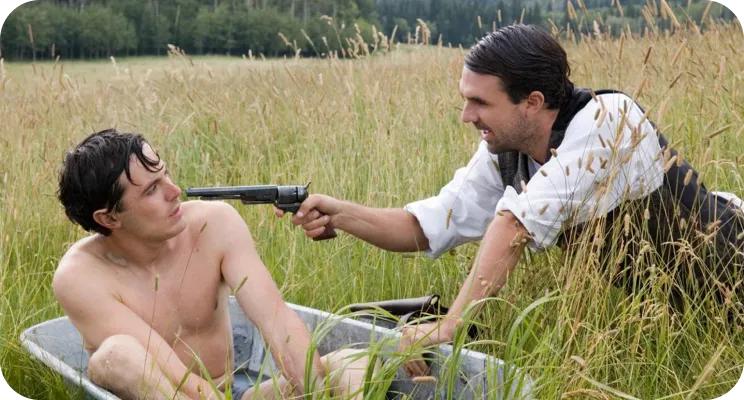
Dr. Schultz (Christoph Waltz), a bounty hunter, frees Django (Jamie Foxx) from captivity to help him search for the people from the plantation. Together, they track down the brothers listed on the "Wanted Dead or Alive" poster and eliminate them. Django becomes a full-fledged partner with Schultz, who shares the profits with him and promises to help free his wife from slavery. This film raises important themes of the struggle for freedom and justice, revealing the complex relationships between the characters and their motivations.
The unfortunate Broomhilda, played by Kerry Washington, is in the hands of slave owner Calvin Candie. She cannot be ransomed, as Calvin does not deal in small deals. He prefers to trade only high-class fighters without rules from his candyland. To help Broomhilda, her friends decide to stage a performance, posing as interested buyers: an aristocrat and his personal assistant. This deception becomes a key element of their plan to save Broomhilda and demonstrates the lengths people will go for freedom.
The films begin with the same elements: red titles, solemn music, and the main character moving forward. One is shackled, symbolizing his lack of freedom, while the other bears the burden of revenge, which will become his goal. These elements create tension and set the tone for the entire film, preparing the audience for a gripping development.
Franco Nero makes a memorable cameo in Tarantino's film, playing a slave owner whose black slaves participate in underground no-holds-barred fighting. When Nero's character approaches the counter where Django stands, he asks his name. Django slowly spells it out, to which Nero's character replies, "I know how to pronounce it." This moment symbolizes the passing of the baton from one generation of Djangos to the next, emphasizing the importance of identity and historical memory in the context of the struggle for freedom.
Are there any similarities between the two Django films, beyond the references and unexpected character appearances? The short answer is yes. Although the plots of these two films do not intersect, they still share an invisible common motif, which Quentin Tarantino himself mentions. This creates interesting parallels and allows viewers to see deeper than just the entertainment aspect. Tarantino's creative approach is demonstrated in the way he uses common themes to connect different stories and create unique cinematic art.
In the documentary "Django & Django", Quentin Tarantino discusses the plot of the 1966 film and raises an important question about the role of the mysterious Mercedes Zaro. It is intriguing to know who this woman was to Django? At first glance, one might assume that she was his wife, killed during his service in the war. Returning to his hometown, Django seeks revenge on Major Jackson for the death of his beloved. However, this version is questionable. Firstly, it seems as if Django has never lived in this city, as no one recognizes him, and secondly, he doesn't have his own home. This aspect adds depth to the understanding of the character and his motivations, highlighting the complexities and contradictions in his story.
Most likely, according to Tarantino, events developed differently. Perhaps Django never met Zaro and never visited her city. Mercedes could have been the wife of Django's comrade who was killed in the war - for example, the black wife of a black friend. Dying in Django's arms, he could have asked him to convey a farewell message to his wife.
Arriving in the city, Django witnessed tragic events: a major, supported by the Ku Klux Klan, destroyed the entire black population, and then, out of boredom, began to persecute the Mexicans. His task now is not only to convey a message, but also to avenge the brutal murders. The climax of the film occurs when Django meets Jackson at Mercedes' grave. This meeting becomes critical for the former soldier, connected to the events that changed his life. Despite receiving a wound to the arm, Franco Nero's character destroys the major, which has symbolic meaning, given that "nero" in English means "black".
In Quentin Tarantino's interpretation, the main theme of his two films is the confrontation with racism. Unlike Django Corbucci, who avenged his wife, Tarantino's Django fights for his freedom and the freedom of his spouse. Both characters are heroes forced to act in harsh circumstances, bound by obligations and moral principles. Their stories highlight the importance of personal freedom and justice in the face of oppression.
In this context, Sergio's original intentions are irrelevant. Following the concept of the author's death, his work can be understood in various ways. Quentin Tarantino saw in his work the idea of the struggle for racial equality. This theme was further explored in his film Django Unchained, which became a symbol of liberation and the fight against oppression.
Free career guidance
• Determine what you want from a new profession• Take the test and find out which professions are right for you• Understand what such specialists
Learn more