Contents:

Learn: Free Career guidance
Find out moreMarlene Dietrich and pantsuits
Marlene Dietrich became the first woman on screen to wear a man's suit not to portray a man or cause gender confusion, but because it looked beautiful, comfortable, and somewhat provocative. Interestingly, the idea to put Marlene in a man's tailcoat belonged not to her, but to her friend and director of the film "Morocco" (1930), Josef von Sternberg. Sternberg later recalled that his goal was to soften Dietrich's aggressive sexuality, to cover her curves and famous lines. However, the result was the opposite. He used a costume he noticed on the singer in a Berlin club, including a tailcoat, a top hat, and other accessories. The heroine was supposed to appear in this outfit at a café, and Sternberg believed that men's clothing would enhance the atmosphere of the scene. He wanted to show that Dietrich's sensual charm was defined by more than just her classical beauty. This decision was a significant step in the world of fashion, and since then, tailcoats and men's trouser suits have become an integral part of her wardrobe, arousing interest and controversy.
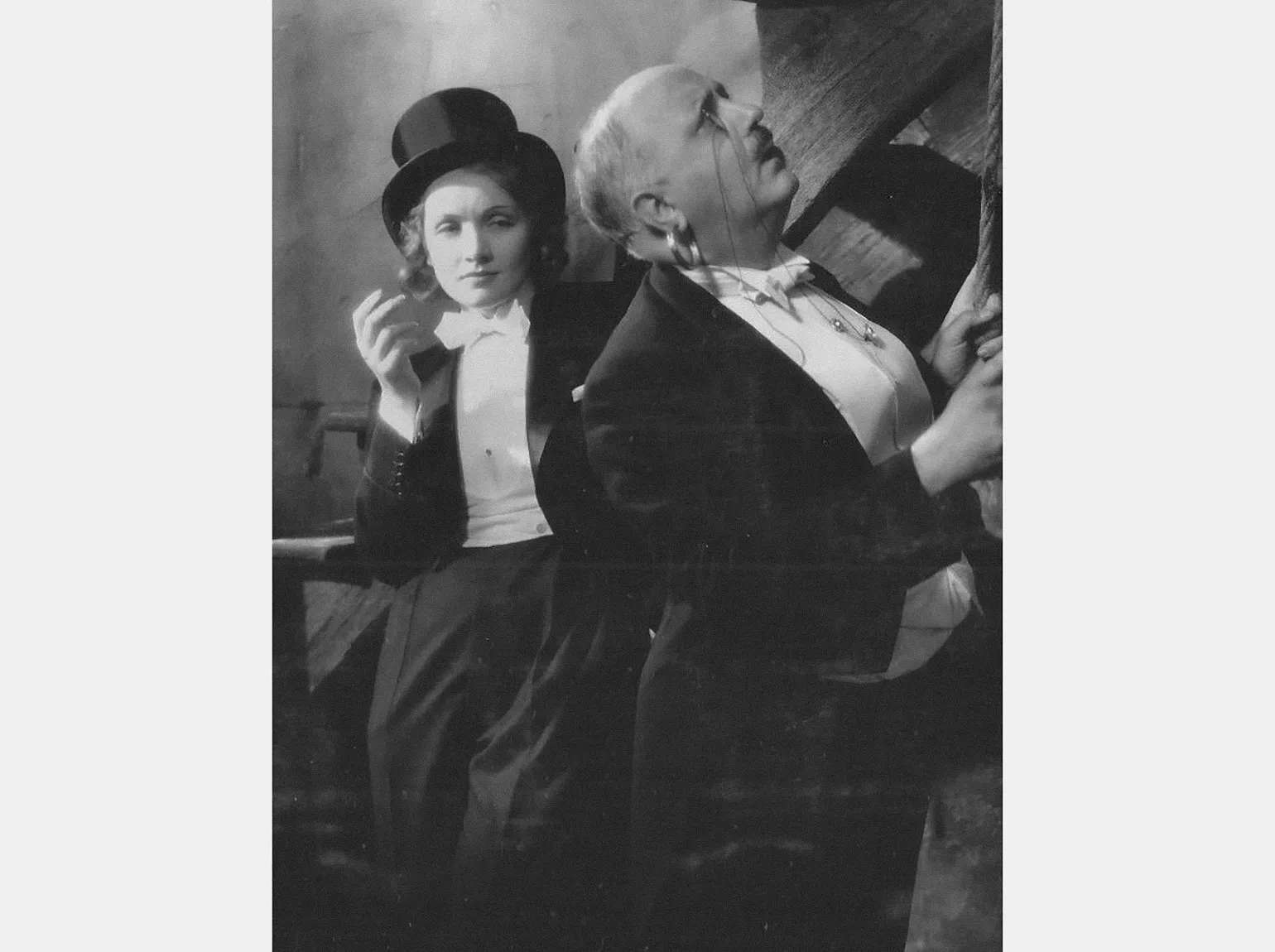
Marlene Dietrich's love of men's suits and refusal to adhere to traditional gender norms led to significant negative perceptions among law-abiding citizens and members of high society. London hotels refused to accommodate her if she arrived wearing trousers, and in Paris, the mayor personally demanded that the actress either remove her trousers or leave the capital. Many Parisian restaurants displayed signs reading "No women wearing trousers." Legend has it that Dietrich once removed her trousers at the entrance to a restaurant and entered the establishment in her underwear, demonstrating her courage and defiance of established norms. This episode became a symbol of the struggle for freedom of expression and the challenging of traditional gender stereotypes.
Katharine Hepburn and Casual Trousers
Katharine Hepburn is known for her active role in creating the outfits for her characters. Costume designer Edith Head noted, "No one designs for Miss Hepburn; they are created with her. She is a true professional with a clear sense of her style—be it costumes, scripts, or her lifestyle." In preparation for new roles, Hepburn regularly submitted her ideas to designers and selected only the most talented professionals. She particularly admired the work of the famous designer Adrian: "He was my favorite designer. We had a common vision of what the clothes should look like and what they should express." Katharine Hepburn left a bright mark on the fashion world, combining style and personality, which made her an icon not only of cinema, but also of fashion.
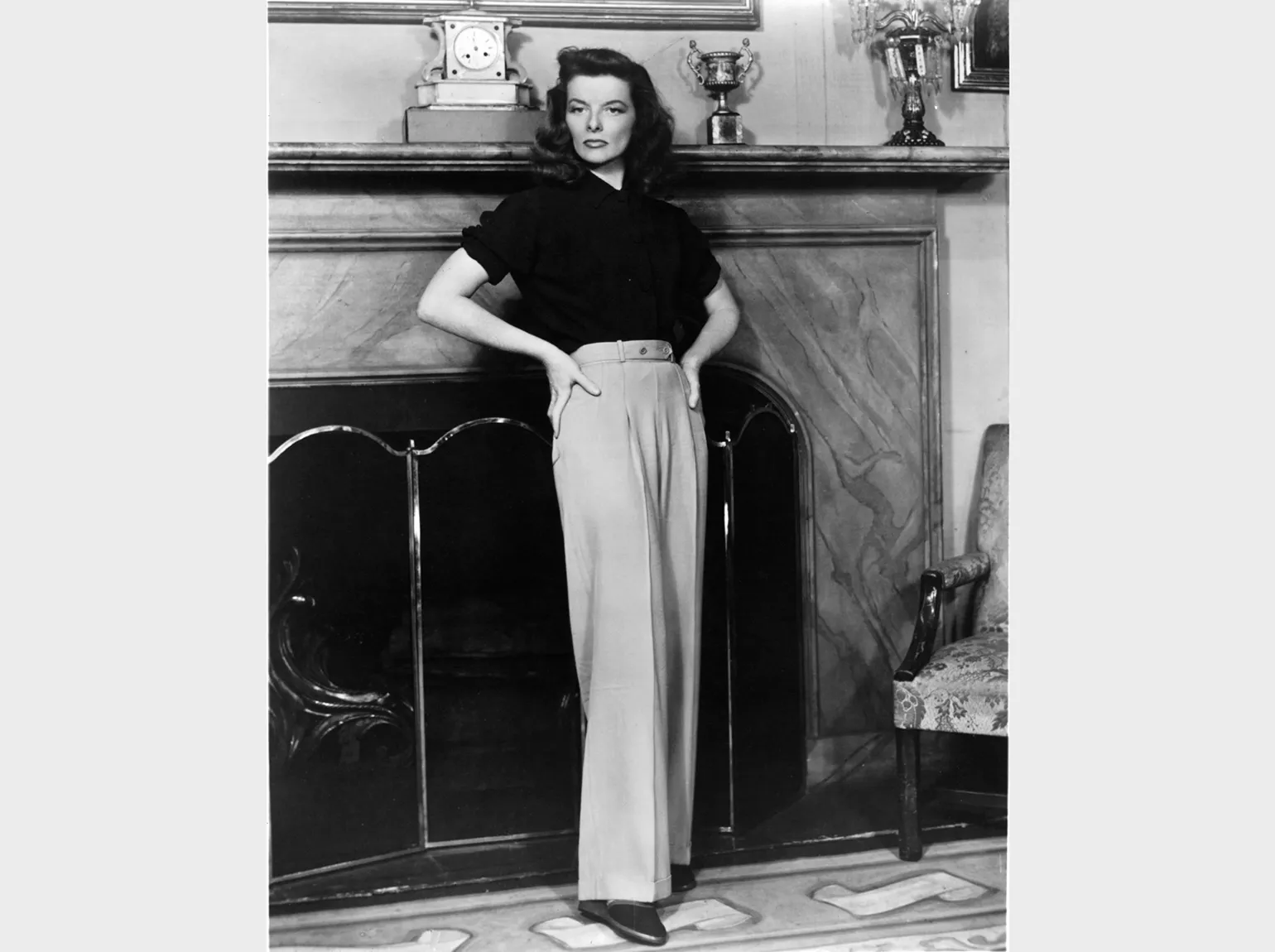
When Adrian presented his first sketches When it came to the costumes for Katharine Hepburn's character in the 1940 film The Philadelphia Story, the actress was thrilled, as they perfectly reflected her understanding of the role. Hepburn and Adrian, being big fans of women's trousers, were able to create three trouser looks in the film, despite the strong objections of the head of the film studio, Louis B. Mayer. These costumes not only emphasized the heroine's individuality but also became an important element of the style of the film era, contributing to a change in the perception of women's fashion in the 1940s.
Marilyn Monroe and Jeans
Jeans are becoming increasingly popular in women's fashion. One of the main ambassadors of jeans in the 50s was Marilyn Monroe, who happily wore denim both in everyday life and on film sets. A case in point is her choice of high-waisted jeans for the 1954 film River of No Return. This style not only emphasized her figure, but also became a symbol of a free and independent lifestyle, which influenced fashion trends of that era and continues to inspire designers and fashionistas to this day.
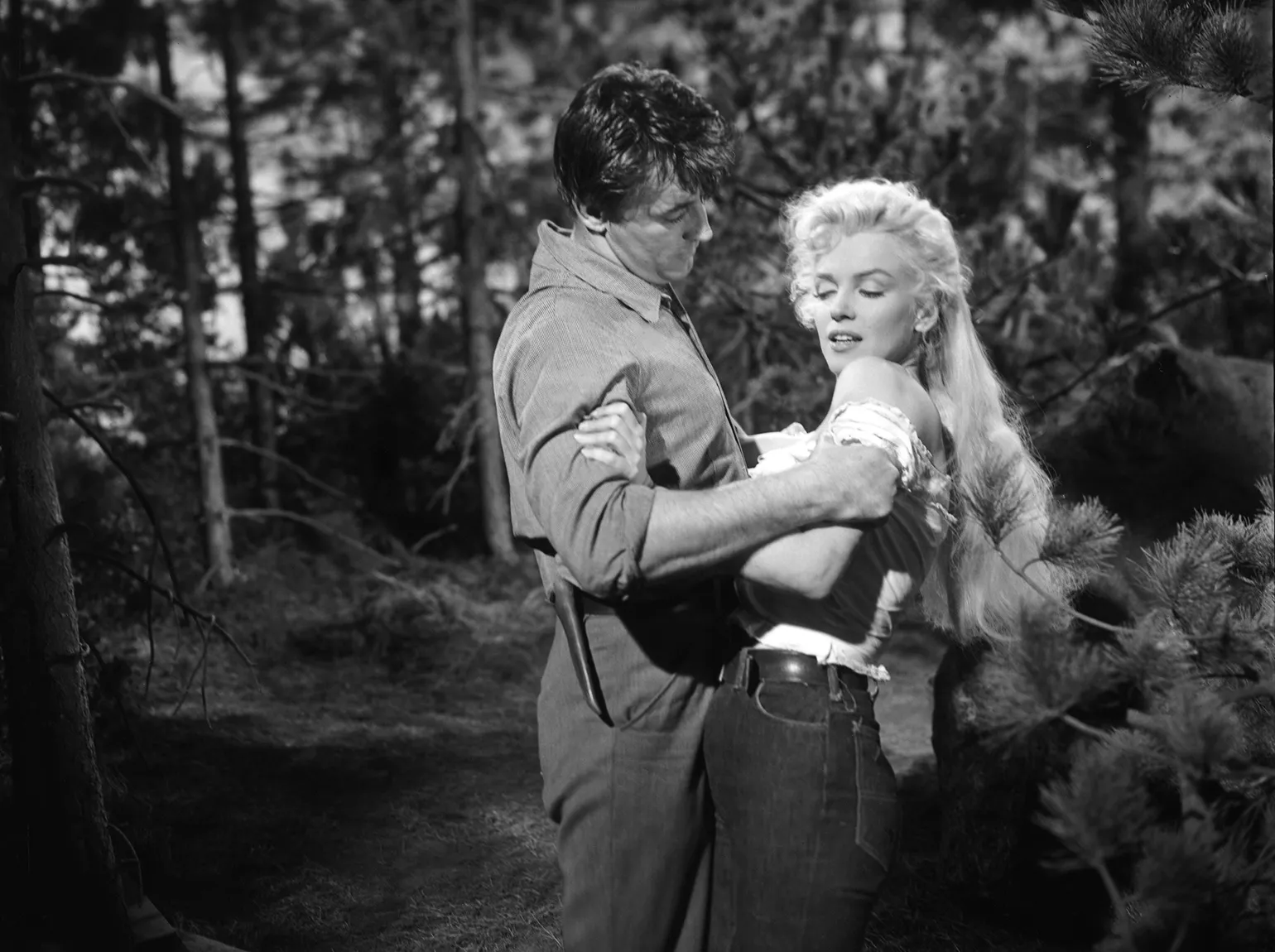
The combination of a light shirt and jeans became the basis of one of the most enduring trends of the 20th and 21st centuries. In 1999, the famous designer Tommy Hilfiger acquired these jeans, depicted in the famous painting, at a Christie's auction for 37 thousand dollars. He later gave them to the singer Britney Spears, which only increased the popularity of this style.
Diane Keaton and oversized
Unlike the characters of the film "Saturday Night Fever", the main characters of "Annie Hall", played by Woody Allen and Diane Keaton, look quite extraordinary. However, it was Diane Keaton's style that became the founder of a new trend for oversized suits, which was then picked up by emancipated women of Manhattan and around the world. In 1977, the concept of menswear for women was perceived as fresh and original. Annie Hall's wardrobe, featuring crisp shirts, masculine vests, oversized jackets, and wide-leg trousers, became a symbol of change and a breath of fresh air for progressive New York society. This style not only reflected the character's individuality but also had a significant impact on fashion, inspiring women to make bold clothing choices and blurring the boundaries between masculine and feminine style.
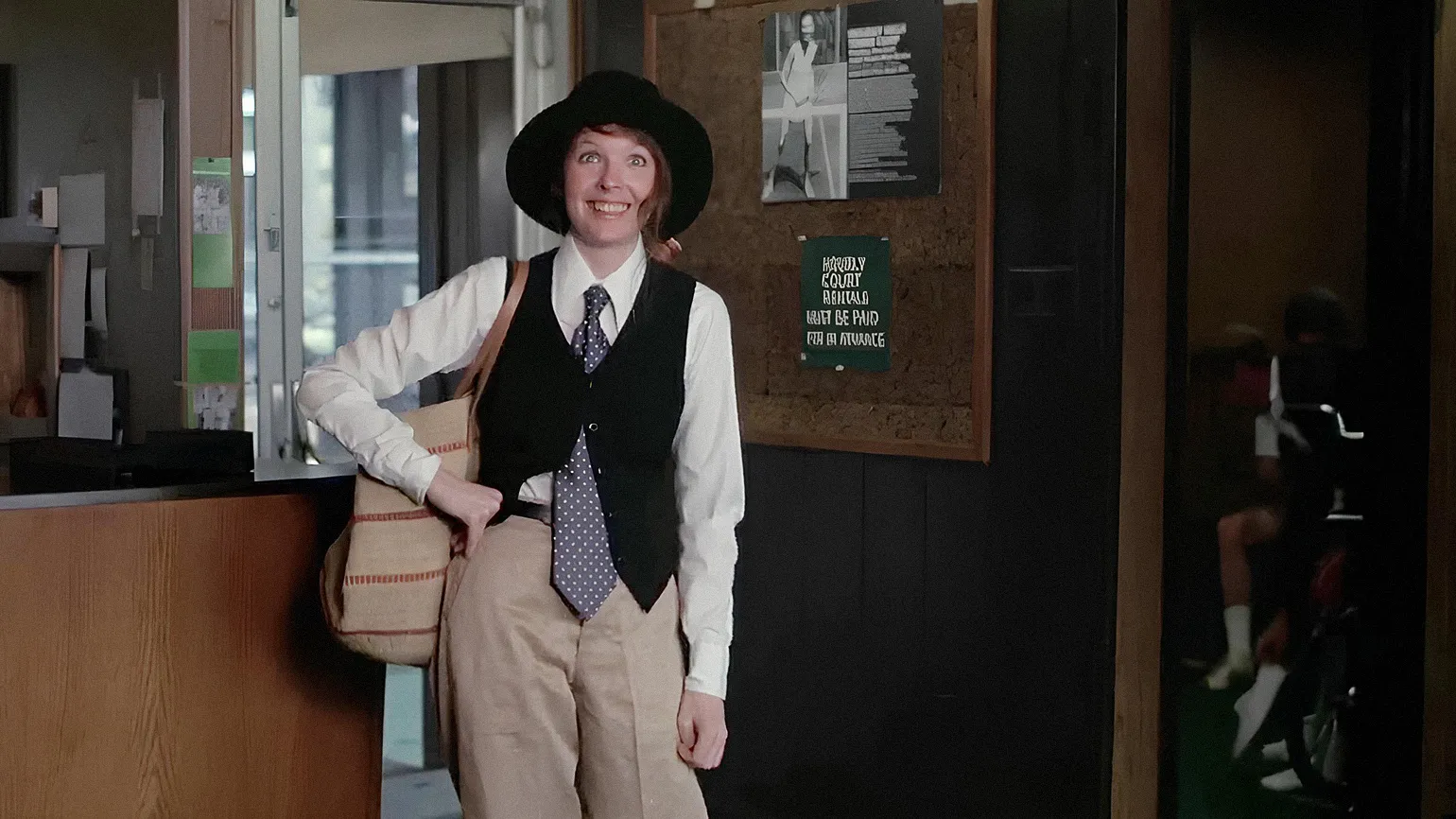
The style of the film's main character quickly gained popularity, and a year after its release, the influence of this fashion became obvious. Interest in the film's costumes attracted the attention of numerous news outlets. New York Daily News journalist Priscilla Tucker conducted an in-depth interview with costume designer Ruth Morley, in which she discussed the process of creating the film's looks. Such attention to a film costume designer was rare at the time, making the interview a significant event for the fashion industry.
In her article for the New York Daily News, Morley shared that the film's purchases were primarily made at Reminiscence, a low-cost warehouse of military uniforms and vintage clothing. Most of the vests and ties were found at thrift stores, while vintage shirts and felt hats were purchased at Unique Clothing Warehouse. According to Morley, the pleated trousers, which became a trend on Seventh Avenue, were found at Eaves Costume Co., where Keaton's men's shoes were also purchased. The only new item in the heroine's wardrobe was a shirt with a stand-up collar, purchased at a men's boutique in San Francisco.
Ruth Morley has repeatedly emphasized in interviews that the unique style of the heroine of the film "Annie Hall" was largely shaped by Diane Keaton herself. The actress had an interest in menswear from an early age, and her wardrobe in the 70s consisted mainly of wide shirts and oversized trousers. In her autobiography, Keaton shares her memories: "I didn't have a stylist (I didn't even know this profession existed), and so I decided to create my outfit for the Oscars myself. Since I wouldn't be allowed to wear a hat to the ceremony, I focused on creating a multi-layered and complex look. I bought a vest and two long linen skirts at the Ralph Lauren store. I chose trendy slacks to complement them at Armani, where I also found a linen jacket, a white shirt, a black tie, and a scarf—the icing on the cake. I bought high heels at Saks, and borrowed a pair of socks from Robin. The result was a stylish look in the spirit of "Annie Hall."
Despite the fact that the film is over forty years old, it continues to have a significant influence on the fashion industry. The phrase "dress like Annie Hall" has become commonplace, and broad-shouldered jackets and oversized suits have remained relevant trends in recent years. This iconic look serves as a source of inspiration for many designers and fashionistas, emphasizing the importance of individual style and self-expression in clothing.
Uma Thurman and Cropped Trousers
The film "Pulp Fiction" not only popularized black fitted suits, but also introduced women's cropped trousers into fashion, as worn by the character Mia Wallace, played by Uma Thurman. At first glance, Mia's style may seem simple, but it contains many references and quotations. For example, Mia's haircut, bangs, and hair color were borrowed from the character Anna Karina in Jean-Luc Godard's "Band of Outsiders." The inspiration for the image of the mobster's wife, her passion for cocaine, and manner of speech were drawn from Michelle Pfeiffer in Brian De Palma's "Scarface." Mia's white shirt and black trousers evoke images from Reservoir Dogs: according to Tarantino, Mia is actually a member of the gang. This complex and layered style highlights Tarantino's rich film history and influence on contemporary fashion and culture.
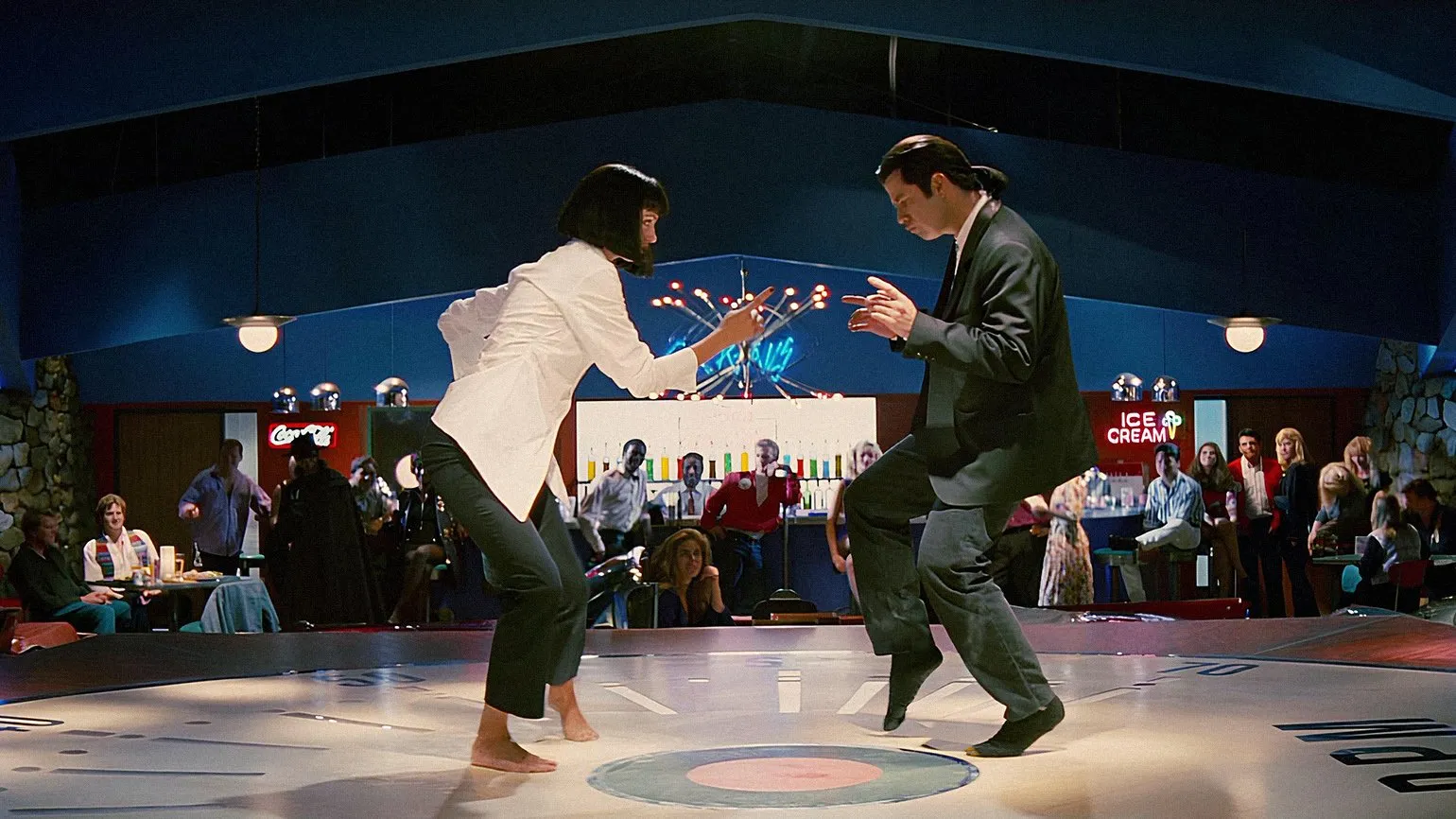
Dance moves, characteristic of the heroes of films of the 50s and 60s, are becoming an important part of modern cinema. Prominent examples of this can be seen in Tarantino's films like Band of Outsiders and the Fellini classic 8 1/2. This unique blend of golden-age cinematic cues made Pulp Fiction's Mia Wallace a style icon. It inspired girls around the world to experiment with burgundy nail polish and embrace fashionable wardrobe choices, particularly cropped pants. The influence of such cinematic elements on everyday fashion and style highlights how art can shape cultural trends. According to Betsy Heimann, Mia's pants were indeed cropped, but it was almost accidental. The costume budget was limited, and with Uma Thurman's height of 1.80 meters (5'8"), most standard pants looked short on her unless they were custom-made. As a result, Heimann decided to crop the already short pants even further, which inadvertently sparked a new fashion trend.
As for nail polish, in the summer of 2016, Urban Decay released the Mrs. Mia Wallace collection, inspired by the film "Pulp Fiction." This collection, consisting of eyeshadow, eyeliner, nail polish, and lipstick, allowed anyone to instantly transform into Mia. As Tarantino argues, the hallmark of a good film is the audience's desire to emulate the characters. Quentin Tarantino's films confirm this statement, inspiring many fans to create images similar to those they see on the screen.
Free career guidance
• Determine what you want from a new profession• Take the test and find out which professions suit you• Understand how Find out more