Contents:
Cybersecurity specialist: 5 steps to success
Learn moreWhat is a brute-force attack?
A brute-force attack is a hacking method in which an attacker methodically tries all possible combinations of logins, passwords, and encryption keys. The main goal of this technique is to gain unauthorized access to protected systems and valuable data. Brute-force attacks can be aimed at a variety of resources, including user accounts, servers, and databases. Defenses against such attacks include the use of complex passwords, multiple authentication, and limiting the number of unsuccessful login attempts.
Brute-force should not always be viewed as a negative process. Cybersecurity specialists and "white hat" hackers use this method to test software for resistance to attacks, identify vulnerabilities, and improve security. Each system must undergo appropriate testing to confirm its reliability and protection against potential threats. Using brute force for these purposes improves security and prevents possible attacks.

It should be noted that brute force methods played a key role in revealing the encryption secrets of the Enigma machine, which was used by German troops to transmit encrypted messages during World War II. Mathematician Alan Turing made a significant contribution to this process by developing methods for analyzing ciphers. For a deeper understanding of his contribution and significance in the history of cryptography, we recommend reading our article.
Study additional materials:
Hackers: Who They Are, What Types Are There, and How They Relate to Hats
Hackers are information technology professionals who use their skills to access computer systems and networks. Depending on their goals and methods, hackers are divided into several categories, each with its own characteristics and motivations.
There are three main categories of hackers: white hats, black hats, and gray hats. White hat hackers operate legally, helping organizations strengthen their security. They conduct penetration testing of systems, identify vulnerabilities, and offer solutions to protect data. Black hat hackers engage in illegal activities, including data theft, malware distribution, and other malicious activities. Gray hat hackers fall somewhere in between these two categories – they can use their skills for both good and evil, sometimes infiltrating systems without permission but without causing significant damage.
The association between hackers and hats in their names comes from classic films and literature, where white hat characters were associated with good heroes, while black hats were antagonists. This clearly demonstrates the moral dichotomy that exists within the hacker community.
Understanding the different types of hackers helps companies and users better protect their devices and data and take a more conscious approach to cybersecurity. Hacker attacks are becoming more sophisticated every year, so knowing who hackers are and how they operate is paramount to protecting your information.
How Brute-Force Attacks Work
Brute-force, or the "brute force" method, is one of the simplest and, at the same time, most dangerous hacking methods. This technique involves trying all possible combinations to find the correct password. Unlike more sophisticated methods such as phishing, brute-force relies on computing power, making this approach less sophisticated but extremely effective. Despite its simplicity, brute-force attacks can have serious consequences for data security. Therefore, it is important to use strong passwords and additional security measures to minimize the risk of a successful hack.

Brute-force attack software significantly speeds up the hacking process, allowing Attackers can effectively bypass security systems. Many of these tools have legitimate uses and are used by cybersecurity specialists to conduct penetration tests and assess the security of information systems. On modern, powerful computing devices, such programs can check billions of passwords per second, making simple and common passwords like "kotbarsik" or "123456" extremely vulnerable. To improve security, it is recommended to use complex passwords and multifactor authentication, which significantly complicates a successful brute-force attack.
Hackers often use cloud server rentals and botnets to increase the effectiveness of their attacks. These strategies provide additional computing power, significantly accelerating the password cracking process and increasing the likelihood of a successful hack. Cloud server rentals allow attackers to utilize powerful computing resources, while botnets enable distributed attacks, making them even more difficult to detect and prevent. It is important to understand that these methods pose a serious data security threat and require careful monitoring by organizations.
Brute-Force Attack Methods: How to Protect Your Data
Brute-force attacks are hacking methods used by hackers to gain unauthorized access to protected information. These attacks can be carried out using random characters or known combinations, making them diverse in their approach. In this article, we'll take a detailed look at the most common brute-force attack techniques and effective measures to protect against them. Ensuring data security requires understanding these strategies to minimize risks and protect your information from attackers.
The classic brute-force method relies on systematically trying all possible character combinations. For example, if a password consists of eight random Latin letters, it would take an attacker approximately 6,600 years to completely try all possible combinations if they tried one combination per second. This lengthy process highlights the importance of creating complex passwords and implementing additional security measures to protect data from unauthorized access. Using longer and more varied passwords significantly increases the time required to crack them, making your information more secure.
To ensure reliable security of your accounts, it is recommended to use long passwords. Passwords should be more than eight characters long and include uppercase and lowercase letters, numbers, and special characters. This will significantly increase the level of protection and reduce the risk of unauthorized access to your data.
Dictionary attacks are a hacking method in which attackers use real words and phrases instead of random characters. These can be names, city names, or quotes from famous works. Considering that the Oxford Dictionary contains approximately 171,000 words, attackers can try all possible combinations in just a few days. Such attacks highlight the importance of using complex passwords that are not based on common words and phrases to ensure reliable protection of your data.
To ensure strong password security, avoid using real words and phrases. Instead, create passwords consisting of random characters, numbers, and symbols. This will significantly increase their complexity and reduce the likelihood of hacking. Use a combination of uppercase and lowercase letters, as well as special characters, to create unique passwords. Update your passwords regularly and avoid reusing them across platforms to minimize risks.
Hybrid attacks are a password cracking method that combines elements of a dictionary attack with the addition of random characters. For example, a user might use a common word and add a date of birth, which in turn weakens the password's security. Such passwords become more predictable and easier to crack. To protect your accounts, it's important to create complex passwords that include a combination of letters, numbers, and symbols, while avoiding the use of personal information.
To improve the security of your accounts, it's recommended to create complex passwords. Use a combination of letters, numbers, and special characters. Add random characters both in the middle and at the edges of words to make the password less predictable. This will significantly complicate the task of attackers when attempting to crack it. Remember that the more complex and unique your password, the better it protects your information.
Reverse password attacks are a serious threat, allowing attackers to use the same password for multiple accounts. This situation becomes especially critical if the victim uses the same password on different platforms. It is important to understand the risks associated with password reuse, as it significantly increases the likelihood of unauthorized access to personal information and accounts. It is recommended to use unique passwords for each account and use two-factor authentication to improve security.
To keep your online accounts secure, it is important to use unique passwords for each of them. Avoid simple and easy-to-guess combinations such as «123456» or «password». Create complex passwords that contain letters, numbers, and special characters. It is also recommended to regularly update passwords and use two-factor authentication to increase your level of security. Protecting your data online starts with strong passwords.
Personalized attacks are a cyberthreat method based on gathering information about the target victim. Hackers carefully examine data, including names of relatives, important dates, and other personal details. Social media is becoming a primary source of such information, allowing attackers to create profiles that will aid them in their attacks. Protecting personal information and social media accounts is crucial to preventing such threats.
To keep your accounts secure, avoid using personal information in passwords. This includes data such as name, date of birth, or address. Maintaining good digital hygiene is also important: regularly update passwords, use two-factor authentication, and scan devices for malware. Following these simple guidelines will help protect your personal information and reduce the risk of unauthorized access to your data.
This method involves using compromised credentials, such as logins and passwords, to gain access to other accounts. Frequent data breaches increase the risks associated with this technique. This approach allows attackers to easily bypass security systems by using known account combinations. Therefore, it is important to regularly update passwords and use unique logins for different services to minimize the risk of unauthorized access to personal information.
Protect your credentials: Regularly check for leaks and update passwords. This will help prevent unauthorized access to your accounts and increase the security of your personal information. Use strong passwords and remember the importance of changing them periodically.
Hackers can access password databases, even if they are stored in hashed form. Hash functions provide data security, but if hashes are leaked, attackers can use brute-force attacks to recover the original passwords. This emphasizes the importance of using strong hashing algorithms and adding salt to improve password security. It is also recommended to regularly update passwords and use multi-factor authentication to protect accounts from unauthorized access.
Service owners are advised to use salts and modern encryption protocols to enhance security. Using these methods will help protect user data and minimize the risk of information leaks. Salts help prevent brute-force attacks, and modern encryption protocols provide additional protection for transmitted information. Implementing these technologies is an important step in ensuring reliable service security.
Brute-checking is a method used by attackers to obtain passwords through access to email. Many online services send passwords and other important data via email, which creates risks for users. Using this method, attackers can easily gain control of accounts if they have access to the mailbox. To protect your data, it is important to use strong passwords and enable two-factor authentication, which will significantly increase the security of your accounts.
To protect your accounts, it is important to use unique and complex passwords. It is recommended to regularly update passwords to reduce the risk of unauthorized access. Using different combinations of letters, numbers, and special characters makes passwords more secure. Don't forget to use two-factor authentication for additional security.
Cryptographic information protection tools (CIPFs) play a vital role in data security. They are designed to protect confidential information from unauthorized access and use. CIPFs can be used to protect data both in transit and at rest. These technologies are used in various industries, including banking, government agencies, and the corporate sector. Effective use of cryptographic protection tools minimizes the risk of information leaks and ensures secure communications. In the face of modern cyber threats, the use of CIPFs is becoming an integral part of an information security strategy.
A Complete Guide to Protecting Against Brute-Force Attacks
Modern technologies allow attackers to quickly try billions of passwords. In 2023, powerful GPUs like the RTX 4090 will enable cracking speeds of up to an impressive 164 billion combinations per second. This underscores the importance of effective brute-force attack protection, which is more crucial than ever. Password protection and the use of complex authentication methods should be a priority for users and organizations to prevent unauthorized access to sensitive information.
To protect your accounts, using strong and complex passwords is crucial. Research by cybersecurity company Hive Systems demonstrates how long it takes to crack passwords based on their complexity. The more complex the password, the longer it will take an attacker to crack it. Using unique combinations of symbols, numbers, and uppercase and lowercase letters significantly increases security. This will help minimize the risk of unauthorized access to your personal data and accounts.
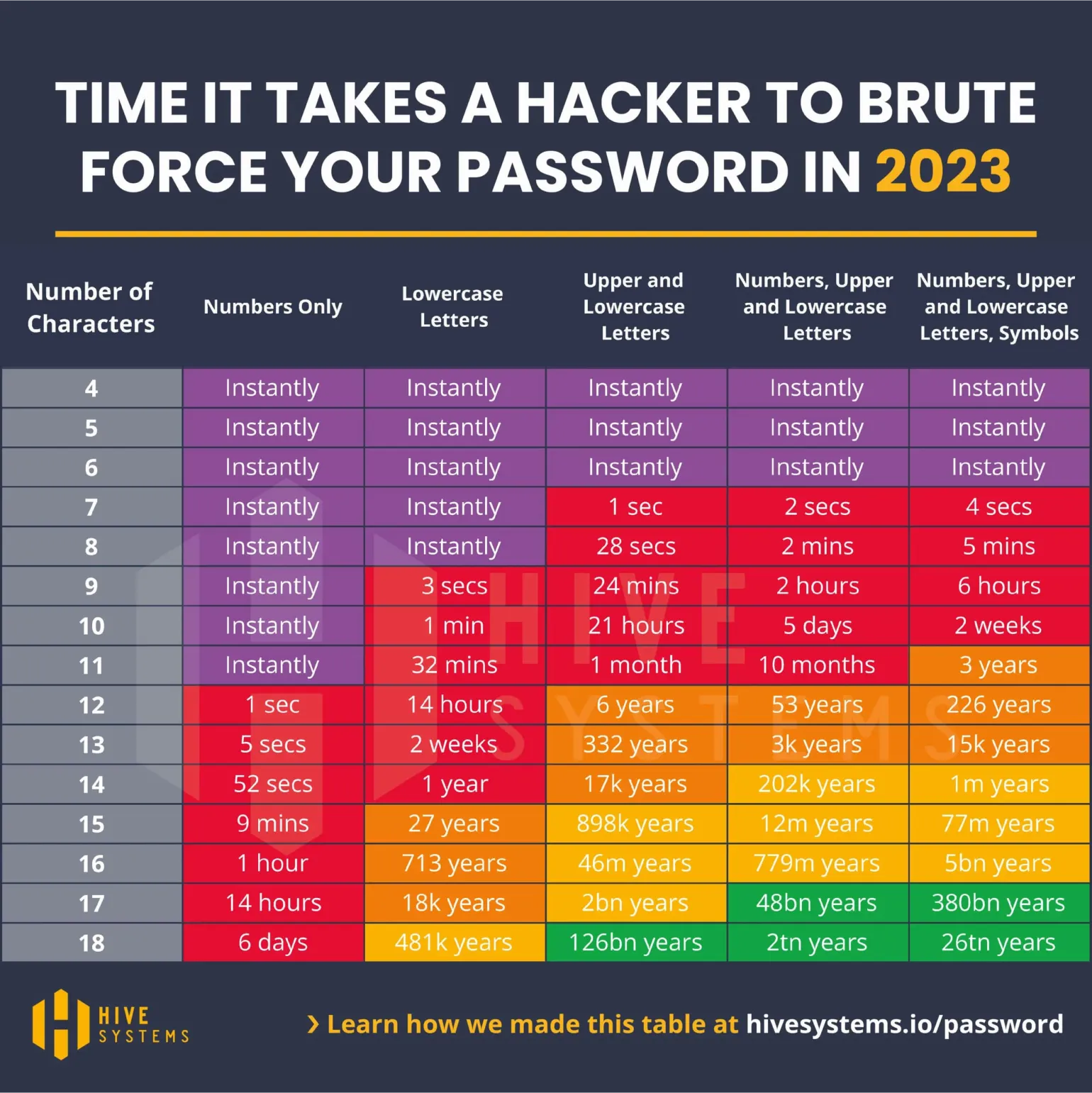
The data in the table is relevant for brute-force attacks. Keep in mind that dictionary attacks can be significantly more effective, but they will not work if your password is not in the dictionary. This emphasizes the importance of using unique and complex passwords that are not predictable.
Besides using complex passwords, there are many ways to protect yourself from brute-force attacks. First and foremost, we recommend enabling two-factor authentication, which will significantly increase the security of your account. You should also consider limiting the number of login attempts within a certain period of time. This will help prevent mass hacking attempts. Regularly updating passwords and using unique passwords for different services are also important precautions. Don't forget to monitor the security of your devices and install antivirus software to minimize risks.
- Use unique passwords for each service. If one of your passwords is compromised, the others will remain secure. For convenience, you can use password managers.
- Update passwords regularly. You never know when your password might have been compromised.
- Implement two-factor authentication. This will add another layer of protection by requiring additional confirmation upon login, for example, via SMS or biometric authentication.
Companies offering online services are actively implementing security measures to protect both users and administrators. These measures include the use of modern data encryption technologies, regular software updates, and the implementation of multi-factor authentication. In addition, organizations conduct employee cybersecurity training to minimize the risks associated with the human factor. All these actions are aimed at creating a safe environment for working and interacting on the Internet.
- Establish password complexity requirements. This may include the mandatory use of numbers, uppercase and lowercase letters, and special characters.
- Introduce delays between login attempts. For example, limiting one attempt per second will make brute-force attacks more difficult.
- Limit the number of login attempts from one IP address. Once the limit is reached, the user may be required to complete a captcha or will be blocked from logging in.
- Use salt when hashing passwords. This significantly complicates the task for attackers, even if the database is stolen.
- Two-factor authentication is being implemented as a security standard.
What is a brute-force attack?
A brute-force attack is one of the most common types of cyberattacks, in which an attacker sequentially tries all possible combinations of data in order to gain access to protected resources. This method is widely used to hack accounts, authentication systems, and cryptographic protocols. The effectiveness of brute-force attacks depends on the complexity of passwords and the security mechanisms used to protect data. To improve security, it is recommended to use long and complex passwords and enable multi-factor authentication. The higher the level of protection, the more difficult it is for an attacker to carry out a successful brute-force attack.
How to protect against brute-force attacks?
Protecting against brute-force attacks is an important task for ensuring account security. One of the main methods of protection is using complex and unique passwords that are difficult to guess. It is recommended to regularly update passwords and avoid using the same passwords across different platforms. Modern tools can check billions of password combinations per second, which makes it necessary to take additional security measures. Using two-factor authentication and monitoring account activity will also help significantly reduce risks.
Additional resources
Subscribe to our Telegram channel to receive up-to-date information on cybersecurity and programming. On our channel, you'll find helpful tips, news, analysis, and resources to help you stay on top of the latest tech trends. Stay safe and grow with us!
Useful Articles to Read
We've compiled a series of articles to help you better understand internet security and learn how to protect yourself online.
- How Websites Are Hacked and How to Protect Yourself
- Test: Guess Where a Real Hacker Attack Is and Where It Isn't
- How to Develop an Android App Yourself
Cybersecurity: 5 steps to an in-demand profession
Want to become a cybersecurity specialist? Find out how to master a profession from scratch and develop analytical thinking!
Find out more