
Contents:
- Edsger Dijkstra: A Pioneer of Programming
- Dijkstra's Algorithm: The Path to Efficiency
- Edsger Dijkstra: From Fortran to Algol and Innovations in Programming
- THE Operating System: Influence and Innovation
- Submarine Navigation: Myths and Reality
- Education as Joy: The Philosophy of Edsger Dijkstra
- Dijkstra and His Philosophy of Programming

Python course: 4 projects for your Portfolio
Learn moreMany aspiring IT professionals wonder how important mathematics is for a programmer. The answer to this question can vary. In some areas of programming, one can get by without deep mathematical knowledge. However, the renowned scientist Edsger Dijkstra emphasized that every programming task requires mathematical justification, and it is also important to prove the correctness of an algorithm. Mathematics helps developers better understand algorithmic structures and optimize code, which ultimately affects the quality of a software product. Therefore, a basic knowledge of mathematics can be useful for any programmer, regardless of their field of work.
Edsger Dijkstra: A Pioneer of Programming
Born in 1930 in Rotterdam, Edsger Wiebe Dijkstra was influenced by his parents, who were experts in chemistry and mathematics. This inspiration led him to study science. Initially, he aspired to become a lawyer, but, heeding his parents' advice, he enrolled in the Department of Mathematics and Theoretical Physics at Leiden University. This choice became a decisive step in his career, which subsequently had a significant impact on the development of programming and algorithms. Dijkstra is known for his seminal work in computer science, including the creation of the shortest path algorithm and the principle of structured programming, which made him a key figure in the field.

Edsger Dijkstra began his programming career in 1952, becoming the first Dutch professional programmer. At that time, there were only a few dozen computers in the world, and the work of programmers was limited to calculating trajectories and solving mathematical problems. Dijkstra made significant contributions to the development of programming and algorithms, which made him one of the key figures in this field.
During his studies, Dijkstra faced an important choice: to continue a career in theoretical physics or to focus on programming. He realized that physics was a more stable and respected field of knowledge compared to the new and uncertain field of information technology. This choice became a significant step for him towards shaping his professional identity and future career in IT.
During his wedding in 1957, when asked about his profession, he answered "programmer". However, municipal officials noted that such a profession did not exist in the Netherlands, and he was forced to identify himself as a physicist. This incident highlights the rapid development of computer science and programming, which at that time were not yet recognized as separate professions. Over time, the programmer profession became one of the most in-demand in the world, opening new horizons for technology and science. Dijkstra noted the complexity of programmers' work, which required not only theoretical knowledge but also practical skills. The first programming technique involved writing code for vacuum tube-based computers. These devices frequently failed and had high power consumption, significantly complicating the software development process. He identified two key lessons from his experience at the Mathematical Center. The first is the need to create clear and accessible documentation, which significantly facilitates understanding and use of the software. The second is the importance of detailed elaboration of the program code, which helps minimize the time spent on debugging. These lessons formed the foundation of his personal approach to programming, allowing him to develop higher-quality and more efficient solutions.
Dijkstra noted: "Program testing can only confirm the presence of errors, but does not guarantee their absence." This idea emphasizes the importance of high-quality coding in the early stages of development. Proper design and writing of code, taking into account best practices, helps minimize the number of errors and simplifies the process of identifying them at later stages. High-quality code contributes to increased software reliability and reduced maintenance costs, which is an important aspect in the development of successful projects.
Dijkstra not only became famous as an outstanding programmer, but also became an authoritative philosopher in the field of programming. He emphasized the importance of mathematics in the development of algorithms and software. His ideas on a structured approach to programming and algorithmic thinking continue to inspire developers and scientists, emphasizing that a deep understanding of mathematics is the foundation for creating efficient and reliable programs.
Dijkstra's Algorithm: The Path to Efficiency
Created by Edsger Dijkstra in the mid-20th century, Dijkstra's algorithm is a key element in graph theory and optimization. It allows one to efficiently find the shortest path from one vertex in a graph to all others, making it an important tool in fields such as computer networks, transportation systems, and robotics. Using Dijkstra's algorithm significantly simplifies problems related to routing and planning, providing optimal solutions in various scenarios.
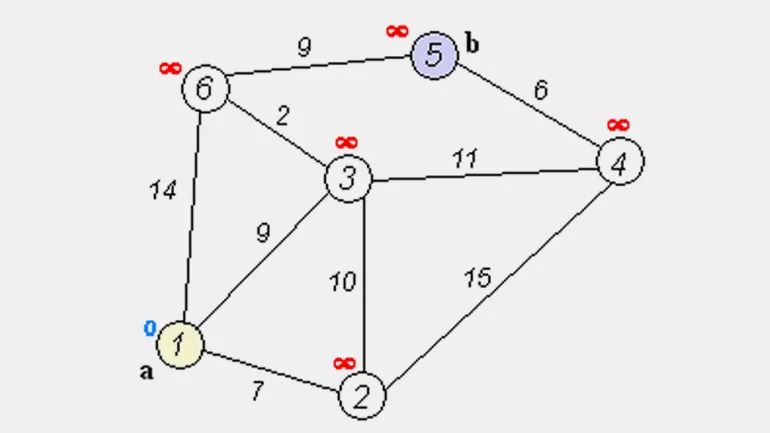
The algorithm operates on the principle of step-by-step graph exploration. The user specifies a starting point, and the algorithm sequentially finds the shortest path to the remaining nodes. Along the way, it marks the sections it has traversed, and terminates the process when all graph nodes have been processed. This approach enables efficient exploration of the graph structure and allows for finding optimal routes.
Dijkstra's algorithm finds wide application in various fields, including network routing, route planning, and logistics optimization. It allows for efficient solution of shortest path problems in graphs, making it useful in fields such as transportation, telecommunications, and computer graphics. Dijkstra's algorithm is also relevant in the development of navigation systems and mobile applications, providing users with fast and accurate determination of optimal routes. Due to its efficiency and reliability, the algorithm is often used in scientific research and development related to data analysis and process optimization.
- navigation systems for constructing optimal routes,
- airline booking platforms,
- video games, where it helps create realistic NPC behavior,
- computer networks, where it is used for routing data packets.
The algorithm is valuable not only for its efficiency but also for its ease of implementation. It clearly demonstrates how complex problems can be solved by following clear and logical steps. This underscores Dijkstra's wisdom: a competent programmer understands their limitations and approaches problems with respect and humility, avoiding tricky and complex solutions. This approach leads to the creation of more robust and understandable programs, which is an important aspect of software development.
Dijkstra's algorithm continues to be an important tool for specialists and developers, offering effective solutions in the fields of route optimization and data processing. Its application in various fields, such as navigation systems and network analysis, makes it indispensable in modern technologies. Dijkstra's algorithm allows one to find the shortest paths in graphs, making it relevant for problems requiring high accuracy and speed of information processing. Due to its efficiency, this algorithm remains a popular choice for solving complex computational problems.
For a deep understanding of the application of Dijkstra's algorithm and its theoretical foundations, it is recommended to familiarize yourself with materials on resources such as GeeksforGeeks and Khan Academy. These platforms offer detailed explanations and examples that will help you better understand shortest path algorithms in graphs. Dijkstra's algorithm is an important tool in graph theory and is widely used in a variety of applications, including navigation systems and networks.
Edsger Dijkstra: From Fortran to Algol and Innovations in Programming
Edsger Dijkstra, a prominent computer scientist, became known not only for his scientific achievements, but also for his witty remarks. During his time, high-level programming languages were few, and Fortran stood out among them. However, Dijkstra criticized this language, calling it an "infantile disorder." His views on programming languages and software development had a significant influence on the formation of modern computer science and programming.
According to Dijkstra, the sooner we forget about the Fortran programming language, the better. He argues that this language does not promote effective thinking, but rather distracts and drains cognitive resources, leading to unnecessary waste of time and effort. As a result, using Fortran becomes unprofitable for programmers, creating high costs in the software development process.
Edsger Dijkstra emphasizes that Fortran, as a programming language, is outdated and does not meet modern requirements. Its use is not only impractical but also ineffective, as it does not promote the development of a programmer's thinking. As a result, reliance on such a tool can lead to significant training and development costs, making it an impractical choice in the current environment. Switching to more modern programming languages will optimize resources and improve code security, ultimately leading to higher-quality and more reliable solutions.
Unlike Fortran, Dijkstra was positively impressed by Algol 60 due to its harmony, clarity, and elegance. Together with programmer Jaap Zonneveld, he developed the compiler and algorithms necessary for a full implementation of the language. Dijkstra also played a key role in introducing recursion into the definition of Algol 60 and was the first to propose the concept of a "stack" for processing recursive programs, significantly expanding programming capabilities. Algol 60 became the basis for many modern languages and influenced the development of computer science.
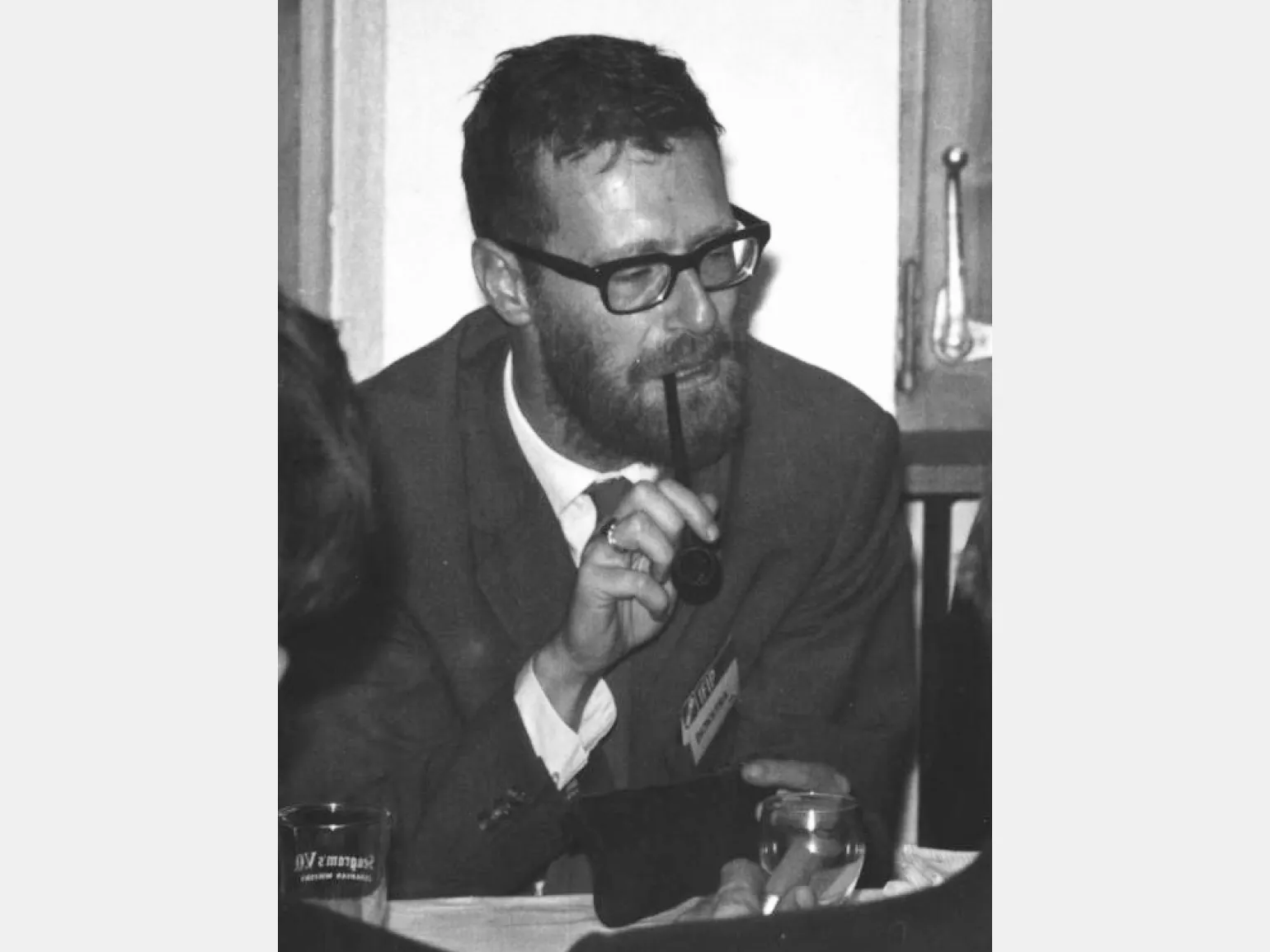
Zonneveld sat across the table from him, and each compiler command was committed only after discussion and agreement on its correctness. In the evening, each of them took their copy of the code home to avoid data loss in the event of unforeseen circumstances. This approach demonstrates the importance of thorough verification and communication in the software development process, which is key to ensuring the reliability and security of code.
Dijkstra emphasized the importance of collaboration in programming. He identified two main types of errors: writing errors and thinking errors. To effectively combat writing errors, the pair programming technique was used, which allowed developers to compare their punch cards and identify more than twenty discrepancies. At the same time, thinking errors required a more in-depth analysis, since their elimination required convincing colleagues of the correctness of the proposed solutions. Thus, teamwork not only improved the quality of code but also contributed to a better understanding of complex problems.
Dijkstra believed that computer science as an independent discipline began to develop actively with the publication of the report on the Algol 60 language. This programming language became a key foundation for subsequent research and development in the field of programming, opening new horizons for scientific research and practical applications in computer science. Algol 60 laid the foundations for modern programming languages, which significantly influenced the evolution of software and algorithmic thinking.
THE Operating System: Influence and Innovation
In 1962, Edsger Dijkstra was appointed professor of mathematics at the Eindhoven University of Technology, which marked the starting point of his significant contributions to the development of computer technology. During this period, he developed the THE operating system, named after the university (Technische Hogeschool te Eindhoven). This operating system had a significant influence on the architecture of modern operating systems and facilitated the introduction of new approaches to programming. Dijkstra's contributions to algorithm theory and software development continue to influence industry today, highlighting the importance of scientific research in computer technology.
Dijkstra introduced several innovative principles into the design of THE, the key ones being abstraction levels and layered design. These concepts significantly enriched the understanding of the structure and functionality of operating systems for both programmers and developers. In addition, semaphores and cooperating sequential processes, which ensure efficient task execution and resource management, became an important design element. These aspects significantly contribute to the creation of reliable and performant systems.
One of the main problems Edsger Dijkstra faced was deadlock in operating systems. Deadlock occurs when processes block each other, resulting in a system hang. This phenomenon became a serious difficulty for software developers. To solve this problem, Dijkstra proposed the concept of a semaphore—a synchronization primitive based on a counter and capable of performing two atomic operations: increment and decrement. The introduction of semaphores significantly improved the management of threads and processes in operating systems, providing more efficient interaction between them and reducing the likelihood of deadlocks. This development became the basis for many modern algorithms and systems, allowing for the creation of more stable and reliable software solutions.
The semantics of the semaphore and its use in operating systems significantly increased the efficiency of multitasking. These concepts became key for further research in the field of parallel programming. Currently, technologies based on semaphores are used in various fields, including server systems and mobile applications, which emphasizes their versatility and importance for modern computing processes.
Submarine Navigation: Myths and Reality
Submarines are a unique class of equipment with special characteristics. They are capable of diving to significant depths and, using advanced systems, can remain underwater for long periods of time. These qualities make submarines indispensable in military operations, scientific research, and environmental monitoring. Their applications cover a wide range of tasks, from intelligence gathering to studying marine ecosystems, underscoring the importance of the submarine fleet in the modern world.
The history of submarine construction goes back many centuries, but a real revolution occurred in the 20th century with the development of new technologies. Modern submarines are equipped with high-tech control systems that allow them not only to move underwater but also to perform various tasks, including reconnaissance and military operations. Moreover, modern submarines are also used for scientific research, opening new horizons in the study of oceans and marine ecosystems. The development of submarine construction continues to have a significant impact on naval forces and scientific research, underscoring the importance of this field in the modern world.
Edsger Dijkstra, a prominent computer scientist, made significant contributions to the development of programming, which can be compared with the evolution of underwater technology. In his works, he emphasized the importance of a structured approach to programming, analogous to the need for systems engineering in submarines. Dijkstra emphasized that a clear code structure allows for the creation of more efficient and reliable programs. This is fundamentally important because, as in submarine technology, where every detail must be carefully considered and coordinated, programming requires considering the relationships and dependencies between components. Thus, Dijkstra's ideas remain relevant and applicable in modern software development, emphasizing the importance of systems thinking and a structured approach. Edsger Dijkstra, author of the renowned work "The Discipline of Programming," viewed programming as an intellectual process requiring deep analysis and awareness. His concepts of modularity and a mathematical approach to software development became fundamental to computer science and have had a significant influence on modern programming methodologies. Dijkstra emphasized the importance of rigorous algorithmic structures and code clarity, which contributed to improving the quality and reliability of programs. These ideas remain relevant today, forming the basis for the effective development of software solutions.
- Submarines can remain underwater for several weeks.
- Modern technology allows submarines to operate at great depths.
- Edsger Dijkstra introduced the concept of structured programming, which changed the approach to writing programs.
Edsger Dijkstra emphasized that "progress is only possible when we begin to perceive programs as more than just a set of executable code." This statement is also important for the development of submarines, where every detail and system requires careful analysis and planning. The design process for submarines must consider not only technical characteristics, but also the interaction of all systems to ensure safety and efficiency. This approach contributes to the creation of reliable and high-quality solutions, which is especially important in a challenging marine environment.
Dijkstra used the comparison with submarines to emphasize the importance of understanding how things work and proper design in the fields of programming and shipbuilding. These analogies highlight that the successful implementation of complex systems requires not only technical knowledge but also a deep understanding of the fundamentals. This demonstrates that achieving excellence in any field requires a combination of professionalism and theoretical knowledge, which is key to effective problem solving and the creation of reliable systems.
Edsger Dijkstra's achievements significantly transformed computer science and marked a significant step in the understanding and analysis of complex systems. His work influenced the development of software and algorithms, which in turn improved the understanding of complex objects such as submarines. These devices continue to play a significant role in modern technology and military strategy. Dijkstra's contributions to the theory and practice of programming help professionals develop more efficient and reliable systems, making his legacy relevant and meaningful for current and future generations.
Education as Joy: The Philosophy of Edsger Dijkstra
In 1984, Edsger Dijkstra, a distinguished computer scientist, joined the faculty of the Computer Science Department at the University of Texas at Austin. There, he demonstrated his unique approach to teaching, which combined passion and originality. Dijkstra became known for his innovative methods, which inspired students to develop a deep understanding of programming and algorithms. His ideas and approaches had a significant impact on the development of computer science, making him one of the key figures in the field.
Dijkstra claimed that teaching under-researched adolescents the effective use of formal methods was one of the most rewarding aspects of teaching, as it brought immense satisfaction. This principle became the cornerstone of his teaching approach.
At the beginning of each semester, Dijkstra photographed his students to remember their names. He eschewed standard textbooks and formal curricula, preferring a classical teaching method—writing material on the board. His assignments were highly challenging and demanded in-depth analysis, and his comments on students' work were often more extensive than the solutions themselves. Exams lasted several hours, and at the end of the course, Dijkstra treated students to beer and presented autographed photographs. This approach contributed to the creation of a unique learning atmosphere, where students not only learned the material but also formed strong bonds with the teacher.
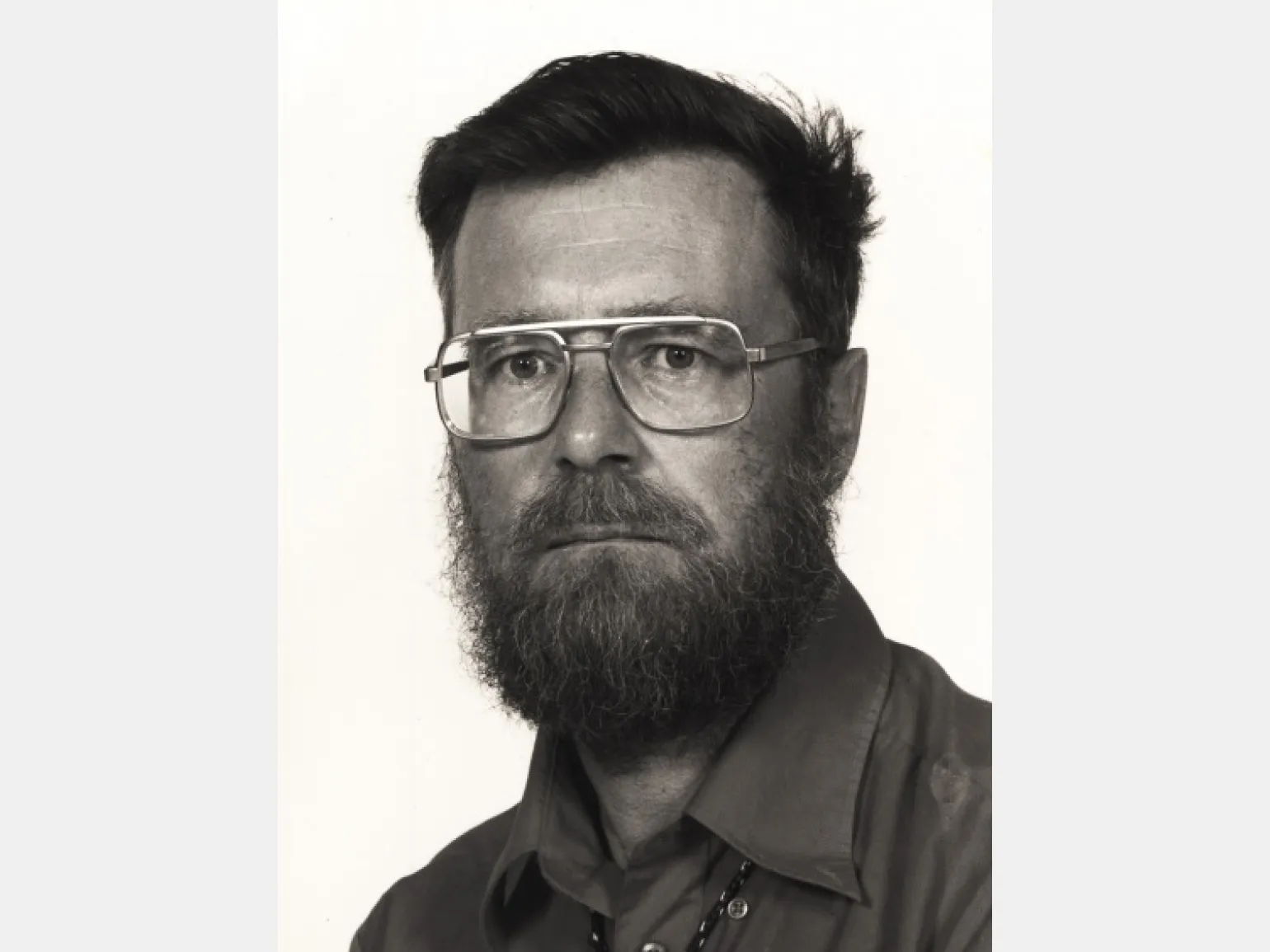
Dijkstra placed significant importance on education, believing that every research project should culminate in the creation of educational materials. He emphasized that the first task of computer science is to maintain order in a limited but vast discrete universe. The second, equally important task is to transform this knowledge into an academic discipline. Thus, Dijkstra emphasized the importance of systematizing and disseminating knowledge in the field of computer science, which contributes to the development of educational programs and the formation of future specialists.
Dijkstra was cautious when admitting students who had studied Fortran to undergraduate courses, as he feared that they could develop undesirable programming habits. He viewed the use of COBOL as a negative influence on the thinking of programmers, arguing that teaching this language should be perceived as a serious omission in the educational process. Dijkstra emphasized the importance of quality programming and sought to develop sound approaches and methods for working with code in students.
Dijkstra noted that focusing on learning and knowledge transfer is an essential aspect of the educational process. He emphasized that learning oneself creates the opportunity to teach others. This approach to learning remains relevant in today's world, where high-quality IT education is becoming increasingly important. In a world of rapidly changing technologies and the ever-increasing demand for qualified specialists, it is important not only to acquire knowledge but also to share it, thereby creating a community that fosters development and innovation.
For more information about Edsger Dijkstra's philosophy and his significant contributions to computer science, we recommend visiting the ACM and IEEE Computer Society websites. These resources contain valuable materials, articles, and research that illuminate Dijkstra's ideas and their influence on the development of computer science.
Dijkstra and His Philosophy of Programming
Edsger Dijkstra was an outstanding scientist who had a significant influence on the development of programming as a scientific discipline. His deep knowledge of theoretical physics and mathematics helped him form a clear understanding of the nature of science. Dijkstra understood the importance of clear concepts, terminology, and logic, which became the basis for the emergence of programming as a serious scientific field. His ideas and approaches contributed to the development of algorithms and data structures, and laid the foundations for modern programming methods. Dijkstra's contributions to the theory of computation and the design of programming languages continue to influence teaching and practice in the field of information technology.
Despite his outstanding achievements, Edsger Dijkstra's personal life remained quite modest. He had no interest in mass entertainment such as television or cinema, preferring more refined forms of leisure. Dijkstra found inspiration and solace in music, practicing the piano and attending classical concerts, particularly Mozart. He died in 2002, leaving behind a significant legacy in computer science, influencing the development of programming and the theory of algorithms.
Dijkstra's quote, "Computer science has no more to do with computers than astronomy has to do with telescopes," illustrates his philosophical view of programming. He emphasizes the importance of abstraction and a theoretical foundation in this field. Dijkstra emphasizes that computer science as a science extends beyond hardware and software code. It encompasses the study of algorithms, data structures, and design principles, enabling developers to create more efficient and reliable systems. This approach fosters a deeper understanding of programming and its role in modern technology.
In conclusion, it's worth noting one of the author's famous quotes: "If, in 10 years, you're doing your job quickly and sloppily, and you suddenly feel like I'm watching you and say to yourself, 'Dijkstra wouldn't have liked that,' that would be a worthy form of immortality for me." This thought emphasizes the importance of quality work and responsibility for one's own actions, which remains relevant in any field.
Learn more about programming and its founders in our Telegram channel. Subscribe to stay up to date with the latest news and fascinating facts!
Read also:
- Lotfi Zadeh and his fuzzy logic
- Test: what do you know about Niklaus Wirth, the developer of Pascal
- Ted Nelson: man and hypertext
Python Developer: Become an Expert in 3 Projects
Want to Become a Python Developer? Find out how with 3 projects and expert support! Read on.
Find out more