Contents:

Free Python Course ➞ Mini-course for beginners and experienced coders. 4 cool projects in your portfolio, live communication with the speaker. Click and find out what you can learn in the course.
Learn moreIan Goodfellow is a good friend
Generative adversarial networks, known as GANs, were developed by American researcher Ian Goodfellow in 2014. The concept arose spontaneously during a discussion with friends. GANs are a powerful tool in machine learning and artificial intelligence that allow you to create new data that is similar to real data. These networks consist of two components: a generator, which creates new data samples, and a discriminator, which evaluates their authenticity. Generative adversarial networks find applications in a variety of fields, including art, image modulation, and even video game development. Their popularity continues to grow, opening new horizons for research and innovation in the field of artificial intelligence.
Ian was a graduate student at the University of Montreal in Canada, where he was developing his dissertation on neural networks. One evening, the young scientists gathered at a bar to celebrate a colleague's thesis defense. During the discussion, they touched on an intriguing topic: how to train a computer to create images that would be indistinguishable from real photographs. They were particularly fascinated by the idea of generating images of cats, since many people love looking at photographs of these cute animals. Why not use algorithms to create an infinite number of such images?
Goodfellow's friends believed that to create a realistic image, a computer program should be programmed with mathematical formulas and rules that determine the arrangement of elements in the photograph. However, Ian was convinced that this method would not produce results. In his opinion, harmony cannot be measured and expressed using mathematics.
Goodfellow insisted on the implementation of neural networks, which he was researching. However, his colleagues were skeptical of this idea. Neural networks had previously been used to create artistic images, but the results left much to be desired. Furthermore, training neural networks required significant time and active human intervention. Goodfellow proposed an innovative model that utilized two interacting neural networks. The first was responsible for generating images, while the second assessed the quality of the generated content. If the generated image appeared unnatural, the second network sent it back for revision. If the image met high quality standards, the neural network approved it for display to users. This technique significantly improved the quality of generated images, providing more natural and appealing visual content. Many doubted the success of his idea. However, upon returning home, Goodfellow did not put off the task. He worked all night to create a program based on this model. By morning, his efforts were crowned with success: the neural networks began to successfully generate realistic images. These weren't just cats, but virtually any other objects. This breakthrough in technology opened new horizons for art and design, enabling the creation of unique visual solutions using artificial intelligence.
Ian Goodfellow published the results of his research, in which he presented a new model called a generative adversarial network (GAN). This innovative development not only became a significant contribution to the field of artificial intelligence but also opened up new horizons for its creative potential. Thanks to GANs, artificial intelligence gained the ability to create original works, which marked a significant step forward in the development of technology.
Generative adversarial networks (GANs) represent one of the most exciting concepts in machine learning in the last decade. These networks create new data by training two neural networks—a generator and a discriminator—to work in tandem. The generator creates fake data, while the discriminator evaluates its authenticity. This competitive process improves the quality of the generated data, making GANs a powerful tool for a variety of applications, such as image, video, music, and text creation. The development of generative adversarial networks opens new horizons for the research and application of artificial intelligence across a wide range of fields. Yann LeCun, head of artificial intelligence research at Facebook, emphasizes the importance of developing machine learning technologies and their application across various fields. His work focuses on creating innovative solutions that can improve user experience and optimize business processes. LeCun actively researches neural networks and deep learning, which contribute to progress in AI and its integration into everyday life.
Generative adversarial networks (GANs) are currently widely used for automatic image generation. These technologies enable the creation of a wide variety of images, including photographs of animals, with cats being particularly popular. GANs are also capable of generating images of people and works of art, which have found their way into major galleries, including the Tretyakov Gallery. The development of GANs opens new horizons in the world of art and technology, providing artists and designers with unique creative tools.
One of the most famous and discussed achievements of generative adversarial networks was the sale of a painting created by artificial intelligence at Christie's auction. This work, titled "Portrait of Edmond Belamy," depicts a fictitious person and was sold in 2018 for $432,500. This case became a landmark event in the art world, opening new horizons for the use of technology in creativity and generating widespread public interest in artificial intelligence.
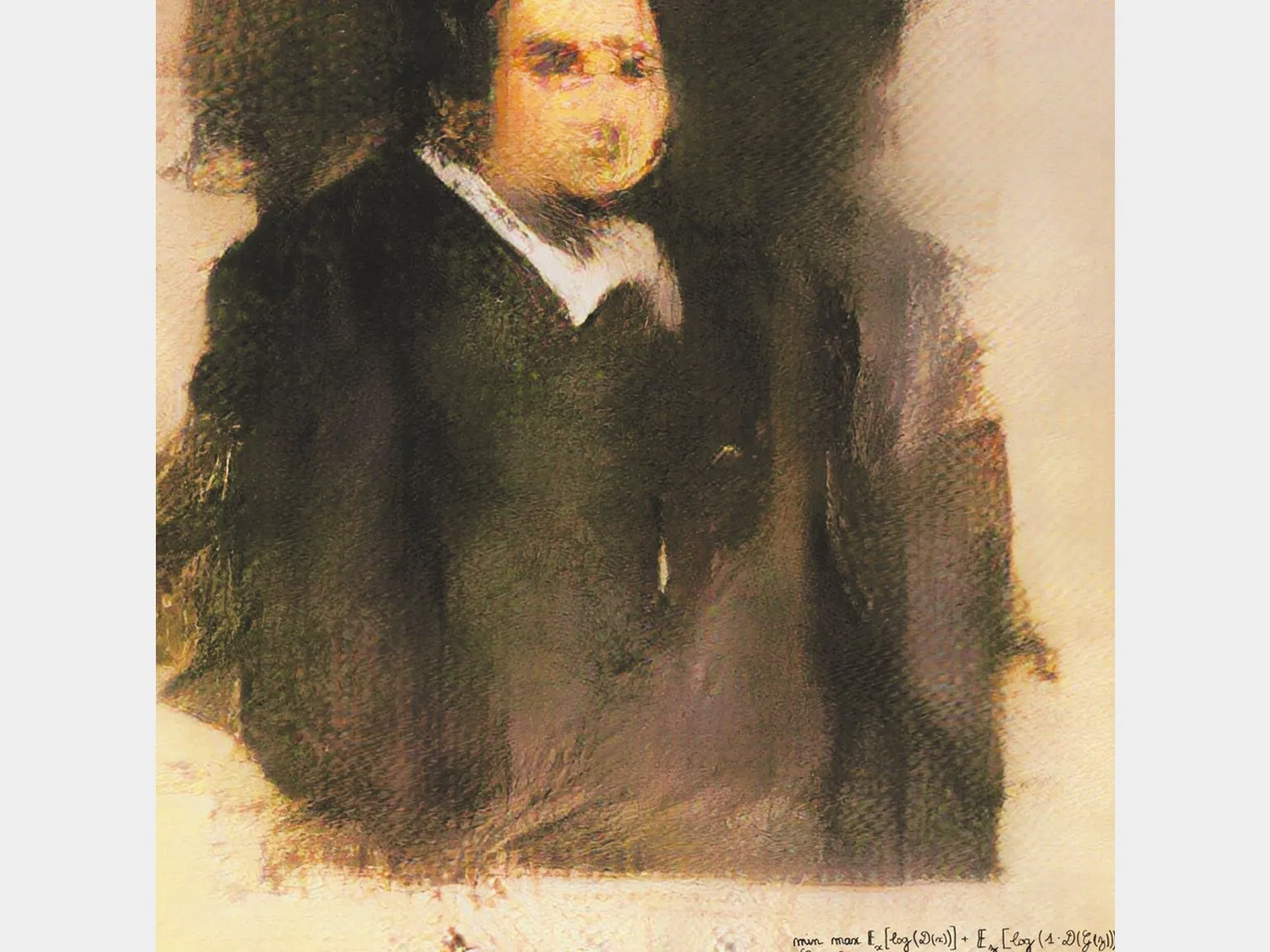
The creators of the painting, having come up with a character with the surname The Belamis expressed their gratitude to Ian Goodfellow, a pioneer of GAN technology. Goodfellow's surname translates as "good friend" in English and as "bel ami" in French. Thus, the authors not only emphasized the importance of innovation in artificial intelligence but also added cultural context, lending depth and complexity to their work. Goodfellow and his invention have enjoyed remarkable success. In 2017, American scientists named him one of the "Top Young Innovators." Over the past few years, Ian Goodfellow has worked at leading artificial intelligence labs, such as Google Brain, Elon Musk's OpenAI project, and Apple. His contributions to the development of artificial intelligence technologies have significantly influenced progress in this field, and his achievements continue to inspire a new generation of researchers.
Understanding how it works
Neural networks are simplified computer models inspired by the structure and function of the human brain. Their main advantage is the ability to learn from examples. Neural networks can adapt their internal parameters, which allows them to improve the efficiency and accuracy of task performance. This adaptability makes neural networks a powerful tool in various fields, such as image processing, data analysis, and artificial intelligence.
A generative adversarial model includes two neural networks that operate independently and with little or no human intervention. These networks interact with each other, creating conditions for learning and optimization. Each component performs a unique role: one network generates data, and the other evaluates its quality. This approach enables high performance in a variety of tasks, including image, text, and even music creation, making generative adversarial models an important tool in artificial intelligence and machine learning. Let's say they are tasked with mastering the creation of images of cats. This requires learning various techniques and tools that will aid in the process of drawing or digitally creating an image. It's important to understand the basics of cat anatomy to accurately capture their features and characteristics. It's also important to pay attention to the choice of color and texture to ensure the images look realistic and appealing. Practice and experimentation with different styles will help develop skills and create unique works. The first neural network, known as the generator and denoted by the letter G, functions as an artist network. It learns to create images, for example, of cats, and passes its work to the second neural network, the discriminator, denoted by the letter D. This neural network can be considered an expert network, as it evaluates the quality and realism of the generator's output. The interaction of these two neural networks plays a key role in the generative learning process, allowing for the creation of increasingly high-quality images.
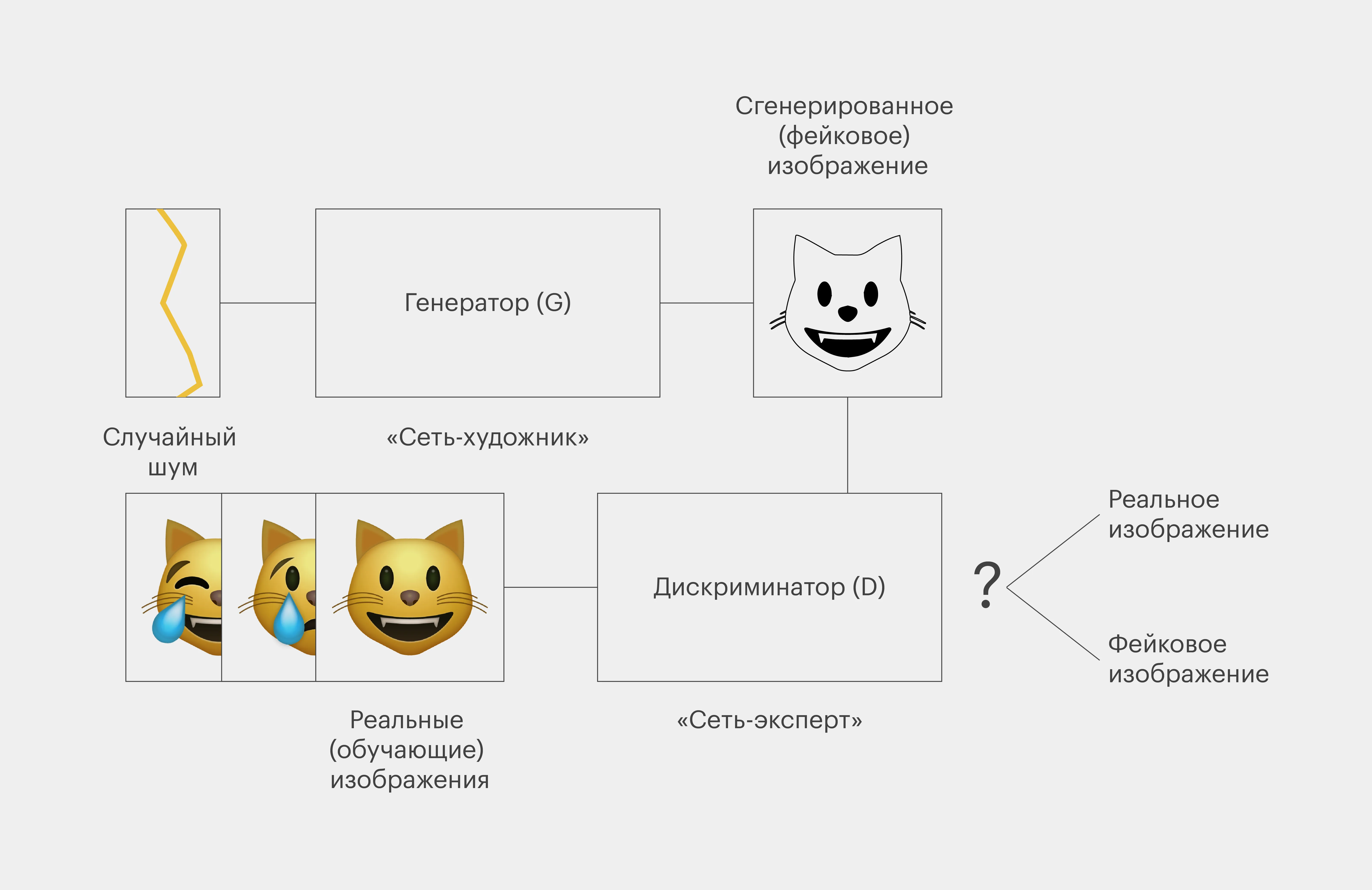
To achieve expert-level cat image recognition, the discriminator underwent special pre-training. During training, it analyzed thousands of real-world cat photographs, allowing it to effectively identify different breeds and features of these animals.
After examining the images, the expert network formed a general idea of cats' appearance, including characteristics such as the presence of paws, tail, whiskers, and eyes. However, the discriminator, without additional data from programmers, has limited knowledge and cannot consider it complete. This emphasizes the importance of a high-quality and diverse dataset for training neural networks to ensure more accurate recognition and understanding of objects.
During the process, an artist network is activated, which has no concept of cat appearance. Its main task is to continuously generate artistic images, which it then presents to the expert network. Receiving feedback from the expert, the artist network improves its work, developing its skills and expanding its understanding of image aesthetics. Thus, the interaction between the artist network and the expert network contributes not only to the refinement of artistic taste but also to the creation of unique and high-quality cat images.
Initially, the images produced by the generator may bear no resemblance to cats and appear as illegible yellow spots. As a result, the discriminator rejects such works, but simultaneously provides the generator with indirect hints on how to improve the images so that they come closer to its perception of cats. This learning process allows the generator to gradually produce more realistic animal images, ultimately resulting in high-quality and recognizable cat images.
Despite numerous rejections, the artist network remains optimistic. With the tenacity of a true creator, it revises its work again and again, striving to pass the rigorous scrutiny of critics. Each new drawing becomes a step toward overcoming obstacles, and its creative process is filled with persistence and determination.
The networks compete with each other, which explains the name of this model. The victory of one network inevitably leads to the defeat of the other. The generator learns to maximize the discriminator's error probability, while the discriminator strives to minimize its own error probability. In the scientific community, this phenomenon is known as the minimax game. These interactions between the generator and discriminator form the basis for the efficient operation of generative adversarial networks (GANs), which significantly improve the quality of the generated data.
After thousands of attempts, the generator successfully creates a realistic image of a cat, and the discriminator is unable to distinguish it from the real thing. This is a clear victory for the generator, while it is a defeat for the discriminator. It mistook the generated image for a real photograph, indicating a mistake. Thus, the process of image generation continues to evolve, demonstrating advances in artificial intelligence and computer vision.
The model generates images that have been tested by the discriminator, which ensures a certain level of quality in the resulting images. However, because the expert network does not have a complete understanding of cat morphology, it can sometimes make errors, including images with anomalies, such as cats with eyes on their tails. This can be confusing for viewers, especially those who prefer more traditional images.
The image generator uses random noise as input to create a variety of images. An element of randomness allows the neural network to produce different versions of cat images, varying fur color, body shape, paw placement, and eye placement. Without this element, there would be a tendency to repeat the same image that had previously successfully passed filtering. Thus, the generator is able to produce unique and original images, making the creative process more engaging and unpredictable.
This is a brief description, but it provides a general understanding of how generative adversarial networks (GANs) function. GANs are a powerful tool in machine learning and artificial intelligence used to generate new data similar to existing data. The basic mechanism of GAN operation involves two neural networks—a generator and a discriminator—competing with each other. The generator creates new data samples, while the discriminator evaluates their quality, determining whether they are real or generated. This learning process allows both networks to improve their skills, resulting in the generator producing high-quality data that is difficult to distinguish from the original. GANs are used in a variety of fields, including the creation of images, videos, music, and other forms of media.
Let's see the results - with cats and more
Largest IT companies and independent developers have created various versions of generative adversarial neural networks. These technologies are actively used to create unique content, improve image quality, and generate text. The development of such neural networks has become an important step in the field of artificial intelligence, opening up new opportunities for business and creativity.
In 2018, a team of specialists from Google developed the BigGAN algorithm. This algorithm is capable of generating images with a high degree of realism, which impressed even one of the leading experts in the field of artificial intelligence, Ian Goodfellow. BigGAN demonstrates new capabilities of generative models, opening up prospects for application in various fields, such as art, design, and advertising.
That same year, NVIDIA introduced its own StyleGAN model. The source code and all necessary information for specialists were posted on GitHub. The creators trained the neural network to generate images of non-existent human faces, cars, bedroom interiors, and, of course, cats. StyleGAN's results were published online, demonstrating its impressive capabilities for generating realistic images. Inspired by the StyleGAN neural network model, engineer Philippe Wang developed a service called "This Cat Does Not Exist." Visiting this website, you can see an image of a cat that doesn't exist in reality, created using a generative adversarial network. To get a new image, simply refresh the browser page, and you'll see a completely unique cat generated by the algorithm. This project demonstrates the capabilities of modern technologies in artificial intelligence and image generation.
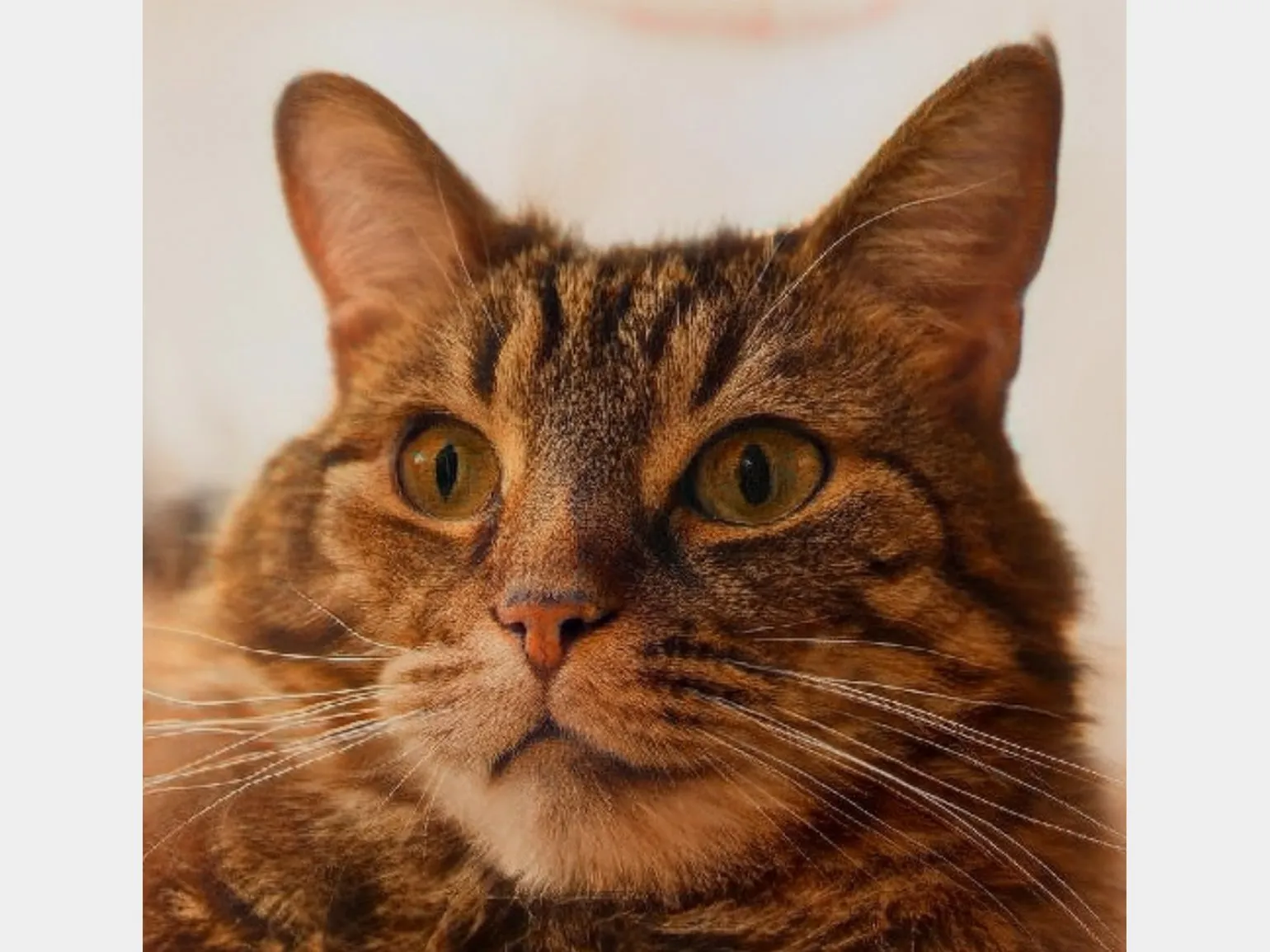
Wang has developed similar websites dedicated to images of horses and human faces. These platforms allow users to easily find and share high-quality photos, providing a user-friendly interface and a variety of content.
A service that generates images of non-existent people has unexpectedly become popular among attackers. Using artificial intelligence technologies, they create fake pages on social media filled with realistic photos of fictitious users. These fake accounts are used for online fraud, disinformation, and spam. It is important to be attentive and recognize such accounts to protect yourself from potential threats and manipulation online.
Website managers need to develop algorithms to recognize fake users. Facebook administrators have already removed over three billion suspicious accounts, highlighting the seriousness of the problem. Effective methods for combating such accounts help improve the quality of interaction on platforms and protect users from deception.
Generative adversarial networks (GANs) are widely used in contemporary art. "Portrait of Edmond Belamy" is just one of many examples of the use of this technology. More and more artists are integrating computer technology into their creative processes, opening up new horizons for creating unique works of art. GANs enable the creation of original images, experimentation with forms and styles, and the expansion of traditional art. Sofia Crespo developed a unique series of paintings called "Neural Zoo" using computer technology. Using generative adversarial networks (GANs), she was able to create images that combine the characteristics of various animals and plants. The results are impressive, and you can see them by visiting the Neural Zoo website. Sofia's project, "This Jellyfish Does Not Exist," is a unique website that generates fake images of jellyfish using neural networks. Every time the page is refreshed, users see a new, artificially generated image of a jellyfish. This project demonstrates the capabilities of modern artificial intelligence technologies and their application to the artistic field, opening new horizons for creativity and visual art.
Finally, it's worth mentioning an interesting service related to neural networks and cats. American researcher Christopher Hesse created the edges2cats algorithm, which translates as "doodles into cats." This tool allows you to transform hand-drawn images into photorealistic photographs of cats. The algorithm demonstrates the amazing capabilities of modern technologies and their application to artificial intelligence, opening new horizons for artists and cat lovers.
To use the program, go to the website and create an image that even vaguely resembles a whiskered and striped animal. The neural network will do the rest. The service also supports images of bags, shoes, and building facades, expanding its functionality and user experience.
Summary
Ian Goodfellow's invention had a significant impact on the development of technology, changing our world forever. His new neural network model gave artificial intelligence the ability to create unique works. Today, when we look at images of people, cats, horses, or jellyfish, the question arises: can we be sure that these are not skillfully computer-generated images? This revolution in AI opens new horizons in both art and other fields, forcing us to rethink the concepts of originality and authorship.
If you are interested in cats or simply want to deepen your knowledge of neural networks and acquire a sought-after profession in this rapidly developing field, Skillbox programs may be the perfect solution for you. Gain the necessary skills and knowledge to successfully compete in the artificial intelligence and machine learning job market.