
Contents:

Free Python Course: 4 Projects for Your Portfolio
Learn MoreThe Evolution of Computers: From Binary to Ternary Technologies
The Probability of a Transition to Ternary Ternary computers account for 60%. Ternary computers, which use a base-three number system, can offer advantages over traditional binary systems. These devices are able to process information more efficiently and can significantly increase performance in certain applications. In the context of modern computing problems, the research of ternary technologies is becoming increasingly relevant, and the likelihood of their mass adoption increases.
A bit is the basic building block of binary computers, accepting two values: 0 and 1. In contrast, ternary computers use a trit, which is capable of representing three states, such as -1, 0, and 1. This difference in number systems opens up new possibilities for information processing and computation, allowing ternary computers to potentially solve certain problems more efficiently.
A trit, as an element of information, has greater capacity and efficiency compared to a bit. Specifically, a trit is 1.5 times more efficient, which allows it to reduce the level of uncertainty about a system by three times, while a bit copes with this task only twice as well. This makes trinary computers preferable for data processing and storage, especially in systems where a high degree of information and reduced uncertainty are important. Using trinary computers can significantly improve the efficiency of data processing and the quality of decisions. The advantage of ternary computers is their ability to use fewer logic elements to perform similar tasks compared to binary systems. For example, determining the sign of a number in a ternary system requires only one ternary element, whereas in a binary system, two elements are required. This allows for a significant increase in data processing efficiency and a reduction in circuit complexity, making ternary systems promising for future computing technologies.
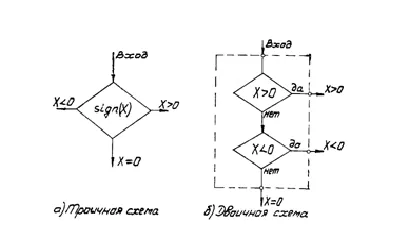
Creating ternary elements may be more complex and expensive at the initial stages, but in the future, fewer of them will be needed to perform similar functions. As technology advances and production volumes increase, cost differences may become negligible. Ternary elements represent a promising approach for streamlining processes and increasing system efficiency. Reducing the number of components in devices accelerates data processing and increases reliability. This also leads to lower power consumption and reduced heat generation, making devices more affordable for users. As a result, your smartphones, laptops, and other gadgets can become lighter, faster, and more energy-efficient. :Optimization of components opens up new opportunities for improving the performance and efficiency of modern technologies.

The Setun computer should be viewed not as a unique artifact in the history of computing technology, but as one of the first representatives of a significant series of domestic computers. Despite its relatively slow speed compared to its Western counterparts, it was more accessible and reliable. This makes Setun an important milestone in the development of computer technology in Russia and underscores its role in laying the foundations for future innovation in this field.
Skeptics may argue about profitability and production costs, but the key is to focus on the prospects and benefits of new technology. The development of innovative solutions opens up new opportunities to improve efficiency, reduce costs, and enhance product quality. Investments in new technologies can lead to significant long-term benefits, making them attractive to businesses. Therefore, it is important to consider not only current costs, but also the potential benefits that may arise from the implementation of modern technologies.
Programming: A New Look at Possibilities
The probability is 60%.
The creator of the Setun system believes that the ternary basis of calculations is more intuitive than the binary one. In everyday life, many situations require a ternary approach, making it more suitable for solving various problems. Ternary representation can be useful in aspects such as logic, decision making, and information processing, as it allows for more options and nuances to be taken into account. Thus, using a ternary system can significantly improve the efficiency of calculations and analytics in various fields.
- Increase / No change / Decrease;
- Forward / Stop / Backward;
- Win / Draw / Lose;
- Friendly / Neutral / Hostile;
- Excess / Norm / Deficit.
This approach significantly improves the decomposition of problems, making them more understandable and accessible to a wider range of users. Using a simpler and more intuitive programming language can help attract more people to learn technology, which in turn reduces the time required for mastery. This makes technologies more accessible and promotes their popularity among beginners.
Until the 1980s, there was a balance between men and women in computer science. Women could have likely maintained this balance and even made programming more attractive to women, thanks to their natural analytical abilities. Historically, women have been active in software development and have made significant contributions to the development of technology. However, over time, perceptions of the profession have shifted, leading to a decline in women's interest in IT. It is important to be mindful of this balance and strive to restore it by supporting women in their pursuit of careers in programming and other fields of computer science.
What does the future hold for Habr? The possible scenarios are varied. The site could transform into something similar to Odnoklassniki, and memes about male logic could become the basis for numerous jokes and discussions. This evolution could impact the platform's content and audience, changing its perception and role online. Nevertheless, it is possible that Habr will remain true to its original goals, continuing to be a platform for the exchange of knowledge and experience.
However, pessimists can only nod sullenly, without offering any constructive solutions.
Diversity of Software: New Horizons
The probability of successfully solving a problem using software is 80%.
Programs, like computer systems, consist of basic components, including arithmetic operations and functions. Each function or operation executes a specific rule that transforms the input data, be it a single value or many values. These fundamental elements are the basis for creating complex algorithms and ensure the efficient execution of programming tasks. Understanding how to work with arithmetic operations and functions is key to developing high-quality software.
A quadratic function is a mathematical operation that squares an input value. In contrast, the addition operation combines two numbers. These basic mathematical operations form the basis for more complex calculations and data analysis. Understanding quadratic functions and addition operations is an important aspect of learning mathematics, opening the door to more advanced concepts and problem-solving techniques.
Binary logic, the foundation of digital technology, uses functions and operations that transform zeros and ones according to established rules. There are four basic single-input operations that play a key role in processing data and forming logical expressions. These operations provide the foundation for modern computing systems and algorithms, enabling efficient calculations and data analysis.
- Complete nullification: regardless of the input value, the result is always zero.
- One-to-one: any input value is converted to one.
- Negation: zero is converted to one and vice versa.
- Repetition: the operation simply returns the input value.
In ternary logic, the number of possible operations with a single input value increases to 27. These operations can be seen in the table below. In it, ones and minus ones are replaced by pluses and minuses, respectively, and zero remains unchanged. Ternary logic expands the capabilities of calculations and operations, which makes it important for the development of efficient algorithms and digital systems.
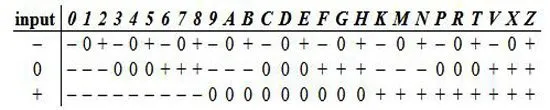
When it comes to binary operations, the number The number of possible variants increases significantly: 16 in the binary system and 19,683 in the ternary system. This impressive number demonstrates the wide range of possibilities for data manipulation and algorithms. Such operations can be used in various fields, including computer science, mathematics, and information theory. Understanding these variants is important for developing efficient algorithms and optimizing data processing processes.
The diversity of basic information processing methods opens up opportunities for finding optimal solutions to each problem. In the course of this search, numerous programs are developed that can effectively solve complex problems. These tools become indispensable in various fields, ensuring the automation of processes and improving the quality of results. Using appropriate methods allows you to optimize work processes and achieve your goals with maximum efficiency.
Skeptics and pessimists may be surprised: in the field of technology and programming, you can always find an optimal solution, just as the sounds of a zoo create a harmonious atmosphere. Innovation and creative approaches make it possible to overcome any obstacles, opening new horizons for the development and implementation of effective solutions. It is important to remain open to new ideas and opportunities, as they can be the key to success in the rapidly changing world of technology.
Programmer's Day: Meaning and Date of the Holiday
Programmer's Day, celebrated on the 256th day of the year, is a significant event for all professionals in the field of information technology and programming. The number 256 was chosen deliberately, as it represents the largest integer power of two (2^8), which makes it especially significant in the context of the binary number system. This day serves as a reminder of the contribution of programmers to the development of technology and the digital world. Celebrating Programmer's Day highlights the importance of programming and its impact on modern society, and also provides an opportunity to exchange knowledge and experience in this dynamically developing field.
In non-leap years, the holiday is celebrated on August 31, which creates an interesting coincidence with Knowledge Day. This date is no coincidence and highlights the importance of programming in the educational process. Programming is becoming an integral part of modern education, preparing students for the challenges of the digital age and opening new horizons for their future careers. Educational institutions are increasingly focusing on developing programming skills as a key element in training qualified specialists.
If we used a base-3 number system, a similar date for celebration would be the 243rd day of the year (3^5). However, this date may seem less convenient for celebration. Many people prefer more memorable options, such as March 3 (03.03) or the third Wednesday of each month. These dates are easier to remember and have more vivid symbolism, making them more appealing for celebrations and events.
Programmer's Day is not only a professional holiday for programmers but also an opportunity for all technology users to recognize the importance of IT in our lives. On this day, we celebrate the work and achievements of the developers of the software we use every day. This holiday reminds us how technology is changing our world, simplifying everyday tasks and opening up new horizons. It is important to appreciate the contribution of programmers to the development of the digital age and support the innovations that shape our future.

The holiday on August 31, although it does not have Officially recognized in most countries, Programmer's Day is actively celebrated by professional communities and educational institutions. This day holds special significance for programmers, highlighting the importance of their profession and their contribution to the development of technology. Celebrating this day provides an excellent opportunity for professionals to share experiences, exchange knowledge, and maintain professional connections. Thus, August 31st becomes a significant date in the programmer's calendar, helping to strengthen the community and develop the industry.
Every year, a variety of events, hackathons, and competitions are held on this day, aimed at exchanging knowledge and ideas among developers. The program of events covers various aspects of programming, including web development, artificial intelligence, and other relevant technologies. Participation in such events allows developers to improve their skills, find like-minded people, and create innovative projects.
Programmer's Day is a wonderful opportunity to understand the impact of technology on our daily lives. This day allows us to reflect on how we can apply technological advancements to improve the world around us. Programmers play a key role in this process, creating innovative solutions that change the way we live and work. Celebrating Programmers' Day inspires the development and implementation of new ideas, which contributes to progress in various fields.
The Inner Pessimist: Enjoying the Fountain from SimCity. Immersing yourself in the virtual world of SimCity offers a unique opportunity not only to build cities but also to explore your inner experiences. In this context, the fountain becomes a symbol of hope and liberation from everyday worries. The virtual landscapes and opportunities offered by the game allow you to see your fears and doubts from a new perspective. In this fountain, the pessimist can find solace, allowing them to relax and reassess their life circumstances. SimCity is not only entertainment, but also a place for self-reflection and the search for harmony.
Quantum Computers: The Future of Technology is Here
Quantum computers are a cutting-edge technology that has the potential to significantly transform computing. Their unique ability to process information using qubits creates new opportunities in high technology. Thanks to quantum principles such as superposition and entanglement, these computers can perform complex calculations much faster than traditional systems. This makes them particularly promising for solving problems in cryptography, molecular modeling, and process optimization. The development of quantum technologies promises not only to improve existing solutions but also to open new horizons in scientific research and industry.
A qubit, unlike a regular bit, has three states: 0, 1, and superposition. This unique property allows quantum computers to perform many operations in parallel, which significantly speeds up computing processes. Thanks to the ability of qubits to exist in a superposition state, quantum computers can solve complex problems with high efficiency, opening new horizons in data processing and computing.
Quantum computing has the potential to revolutionize many industries. In medicine, it opens up opportunities for the development of personalized drugs tailored to individual patient needs. In materials science, quantum technologies enable the creation of new substances with tailored properties, which could lead to breakthroughs in industries ranging from electronics to energy. Quantum computing also facilitates the development of self-driving vehicles, making travel safer and more efficient. This could potentially lead to the creation of true artificial intelligence, capable of solving complex problems and making decisions at a level unachievable with current technology.
In a world where ternary computers are dominant, the qubit concept could advance significantly faster. This acceleration would facilitate faster progress in quantum computing and its integration into various fields, which, in turn, could spur innovation and support Moore's Law. Quantum technologies using qubits open new horizons for computing power, potentially transforming such industries as finance, medicine, and artificial intelligence.

The benefits of quantum computers can be realized today if current technological limitations can be overcome. Research confirms that quantum computing can significantly accelerate the development of new drugs, which is especially important during a pandemic. These technologies open new horizons in medicine, allowing for faster discovery of effective solutions to combat diseases. Quantum computers can process massive amounts of data and perform complex calculations, making them indispensable in pharmaceutical research. Investments in quantum technologies can lead to scientific breakthroughs and significantly reduce the time required to develop new drugs.
A qubit, or quantum bit, is the fundamental unit of information in quantum computing. Unlike a classical bit, which can be either 0 or 1, a qubit can exist in a superposition state, combining both of these states simultaneously. This property allows quantum computers to perform calculations with high speed and efficiency, significantly outperforming traditional computers in certain tasks. Qubits can be realized using a variety of physical systems, such as atoms, ions, or electrical circuits, making them key elements of quantum technologies. Qubits must be understood in terms of their role in quantum information science and the potential they offer for future computing solutions.
A qubit is the fundamental unit of information in quantum computing. Unlike a classical bit, which can only exist in one of two states—0 or 1—a qubit can exist simultaneously in either 0, 1, or a superposition of these states. This property of superposition allows quantum computers to perform many calculations simultaneously, significantly increasing their computing power compared to traditional computers. Qubits are a key element of quantum algorithms and play a vital role in the development of quantum technologies.
Quantum computers offer a number of significant advantages over traditional computing systems. One of the main advantages is their ability to perform complex calculations in a much shorter time. This is possible thanks to the use of quantum bits, or qubits, which can be in multiple states simultaneously, allowing for the processing of huge amounts of data in parallel.
Quantum computers are capable of solving problems that are inaccessible to classical systems, such as factoring large numbers, modeling molecular structures, and optimizing complex systems. This opens up new horizons in scientific research, financial technology, pharmaceuticals, and many other fields.
Furthermore, quantum computers can significantly improve data security. The use of quantum cryptography makes it possible to create systems that are virtually impossible to hack, providing a high level of information security. Thus, the advantages of quantum computers include their high computing power, ability to solve complex problems, and enhanced data security. These features make quantum technologies an important step forward in the development of computing systems. Quantum computers have the unique ability to solve complex problems at high speed, surpassing classical computers. This creates new prospects in areas such as cryptography, optimization, and modeling. Quantum technologies can significantly improve data security, increase the efficiency of algorithms, and enable more accurate predictions in scientific research and industry. The development of quantum computing opens new horizons for solving problems previously considered insurmountable for classical computing systems. The prospects for the development of quantum technologies are one of the most discussed topics in the scientific and technological communities. Quantum technologies, including quantum computing, quantum cryptography, and quantum sensors, promise to revolutionize many industries. Quantum computers are capable of solving problems that are inaccessible to classical computing systems, opening up new horizons for research in materials science, medicine, and artificial intelligence.
Quantum cryptography provides a high level of data security, which is especially relevant in the age of digitalization and the spread of cyber threats. Quantum sensors can significantly improve the accuracy of measurements in areas such as navigation and medicine.
With growing investment in research and development, as well as collaboration between universities, research institutes, and industry, quantum technologies can be expected to be actively implemented in the coming years. This will create new jobs and business opportunities, further accelerating their development. The prospects for quantum technologies are promising, and they have the potential to change our understanding of computing and security in the future.
According to recent research, quantum technologies will become accessible to most users by 2030, significantly changing modern computing and data processing methods. These innovative technologies promise to revolutionize a variety of fields, including science, finance, and information security, providing opportunities to solve complex problems more efficiently. Quantum computing is expected to process data at unprecedented speeds, opening new horizons for research and development. Don't let the skeptic in you get the better of you: the future of quantum technologies is near. These breakthrough developments promise to revolutionize a variety of fields, from computing to communications. Quantum technologies are opening new horizons that could change our understanding of data processing and information security. Investment in research and development in this field continues to grow, confirming that quantum solutions will be an integral part of our future. Get ready for the changes that quantum technologies will bring, and don't miss the opportunity to be part of this exciting evolution.
Python Developer: 3 Steps to a Successful Career
Want to become a Python developer? Find out how easy it is to master a profession with the help of experts and create a portfolio!
Find out more