
Table of Contents:
- Benefits of Unit Tests
- Testing Framework: Mike Cohn's Pyramid
- When Are Unit Tests Needed?
- Conclusion: The Importance of Integrated Testing
- Unit Testing Basics: How to Be Effective
- Effective Strategies for Unit Testing Code
- Benefits of Unit Testing in Software Development
- Why Unit Tests Are an Integral Part of Commercial Development

Free Python Course: 4 Projects for Your Portfolio
Learn MoreA unit test is a specialized tool designed to verify the functionality of individual code components. During the development of websites and applications, developers regularly add new features, refactor code, and make fixes. After each change, it is important to ensure that all elements work correctly and do not disrupt the overall functionality of the system. Unit testing helps identify errors early in the development process, which significantly simplifies the debugging process and improves the quality of the final product. Therefore, integrating unit tests into the workflow is an integral part of the modern approach to software development.
Testing the entire system after each update can be time-consuming and not always effective. Therefore, unit tests are becoming an important tool for verifying individual code components that have been updated or fixed. Using unit tests allows you to quickly identify and fix errors, improving the quality of the software product and reducing the risks associated with its deployment. An effective testing strategy includes not only unit tests but also their integration into the overall development process, which contributes to a more stable and reliable system.
Benefits of Unit Tests
Unit tests provide developers with a number of significant benefits. They allow them to quickly identify errors and confirm that changes to the code do not introduce new problems. This is especially important in an environment of frequent updates, where the stability and reliability of software are crucial. Unit testing contributes to higher code quality, simplifies the debugging process, and reduces support costs, making it an integral part of the modern development process.
Testing Structure: Mike Cohn's Pyramid
Mike Cohn's testing pyramid, which structures tests by levels of abstraction, is actively used in software testing. At the top levels of the pyramid are high-level tests, such as integration tests, which verify business logic and user interaction scenarios with the system. At the lower levels are low-level tests, including unit tests, which focus on identifying errors in individual functions. This approach ensures optimal test coverage, minimizing risks and improving the quality of the final product.

Many developers focus primarily on high-level tests, which can lead to missing specific errors. Integration tests are designed to verify the interactions between different systems, ensuring that they work together correctly. End-to-end (E2E) tests, on the other hand, analyze user processes, such as registration and login, to identify problems at the user experience level. Conducting both integration and E2E tests significantly improves software quality, minimizing risks and increasing user satisfaction.
When are unit tests needed?
Unit tests are especially important in a number of situations. Firstly, they help identify errors early in development, reducing the time it takes to fix them. Secondly, having unit tests provides confidence in code changes, as tests help verify that new changes do not break existing functionality. Thirdly, they serve as documentation of the code, facilitating the understanding of its structure and logic. Finally, unit tests contribute to improving the overall quality of software, enabling developers to create more reliable and robust applications.
- When code is complex to understand and raises questions during review;
- When code undergoes frequent changes, making manual testing impractical;
- When updates to one part of the code may negatively impact other parts.
Many developers focus exclusively on unit tests, ignoring integration and E2E tests. However, to achieve a full level of system verification, all types of testing must be applied. This allows for effective analysis of the interactions between various components and evaluation of their intermediate results. It is important to note that if unit tests detect an error, it will also be detected by integration and E2E tests. Using a comprehensive testing approach helps ensure high software quality and reduce the likelihood of future errors.
Conclusion: The Importance of Comprehensive Testing
Unit testing is a key element in software development, helping to maintain high code quality and reduce the number of errors. Incorporating unit tests into the development process helps ensure the reliability and stability of software products, which, in turn, increases user satisfaction. Effective unit tests help developers identify and fix defects early, reducing debugging time and improving overall team productivity. Regular use of unit testing also facilitates easy code changes and improvements, which is important in today's rapidly changing market demands.
Unit Testing Basics: How to Achieve Effectiveness
Unit testing is an important aspect of software development that helps ensure high code quality. During unit testing, developers use testing frameworks that allow them to simulate functions using mocking. In modern projects, code often includes numerous dependencies, making unit testing especially relevant. Properly organized tests help identify errors early in development, improve code maintainability, and increase developers' confidence in its stability. By focusing on unit testing, teams can significantly reduce risks and speed up the development process, ultimately leading to higher-quality and more reliable software products.
Functions should be tested in isolation, which ensures their functionality is verified under conditions as close to real-world conditions as possible. Testing frameworks play a key role in creating such conditions, allowing you to simulate calls from one function to another without the influence of external factors. This approach significantly improves the reliability and accuracy of testing, which in turn improves software quality and reduces the risk of errors during operation.
In this example in Go, we will consider a function that accepts a backup ID and returns the name of the file associated with it. This approach will help to clearly demonstrate the testing process in action, allowing you to see how to correctly implement and test the backup processing functionality in the application.
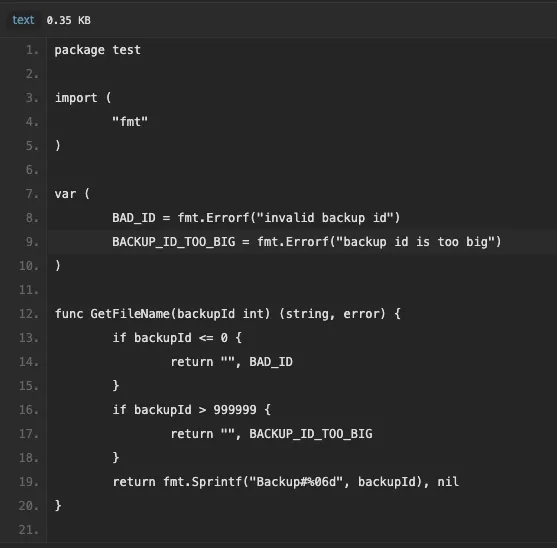
When testing, it is critical to consider not only positive scenarios, but also negative cases when the function should throw an error. For example, to test a function, you could use a data set that includes illegal values, such as -1 and 0, as well as extremely large values, such as 10200300. This will help identify potential vulnerabilities and ensure that the system correctly handles invalid input data. This approach not only improves the quality of the software, but also helps to increase its resilience to errors.
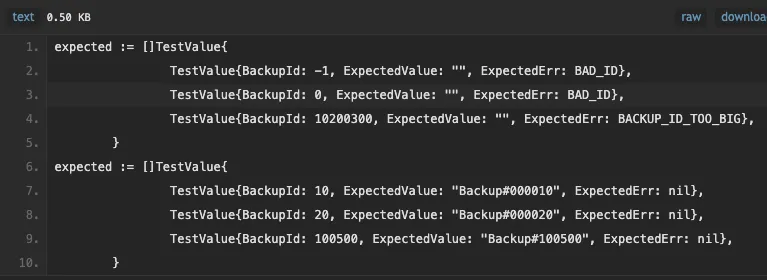
When entering invalid data, the function should return error messages such as BAD_ID or BACKUP_ID_TOO_BIG instead of returning the result. If the identifier is correct, a formatted file name is expected, for example, Backup#000010. This will allow users to quickly identify errors and correct them, and also ensures that the system will work with the correct data.
Let's look at the test code, which illustrates the process of checking the functionality of this function.


The code for testing can sometimes significantly exceed the volume of the main code, and this is quite natural. However, it is important to consider whether such a number of tests is really justified. It is recommended to focus on testing those sections of the code that change frequently or contain complex logical constructs. This will streamline the testing process and increase its efficiency by focusing efforts on the most critical elements of the application.
Some developers create excessive mocks, which can lead to brittle tests and increased code complexity. Effective unit testing requires only minor changes to the code structure. It is recommended to break complex functions into smaller ones, which will significantly simplify the testing process and increase its reliability. Optimizing the code structure not only improves readability but also promotes higher-quality and more effective testing, which is a key aspect of successful software development.
The classic book "Extreme Programming" emphasizes an important software development principle: create tests first, then write code. Although this method may seem complicated at first, it significantly improves code quality and reduces the likelihood of errors. Using this approach allows developers to confidently make changes to the code, since the presence of tests ensures its functionality is verified at every stage of development. Ultimately, this leads to more stable and reliable software products.
Effective Unit Testing Strategies for Code
Unit testing often raises doubts among developers, especially in large projects, where many consider it complex and time-consuming. In fact, integrating tests into code may be easier than it seems. In this article, we will discuss best practices that will help you effectively implement unit testing and ensure reliable coverage of your code.
One of the most effective approaches in software development is writing tests in parallel with the code. This approach helps minimize the risks associated with adding new features that may negatively affect existing functionality. It is important to adhere to the principle: "new code requires a new test." This not only ensures high code quality but also simplifies the process of its maintenance and scaling in the future. Regular testing allows for quick identification and correction of errors, significantly increasing the reliability and stability of the application.
A rigorous approach to software development assumes that new code cannot be accepted for review without first writing tests. Although this method requires additional time, it significantly increases the reliability and quality of code, especially when working under tight deadlines. This approach allows for the early detection of errors and ensures confidence in the functionality of the software product.
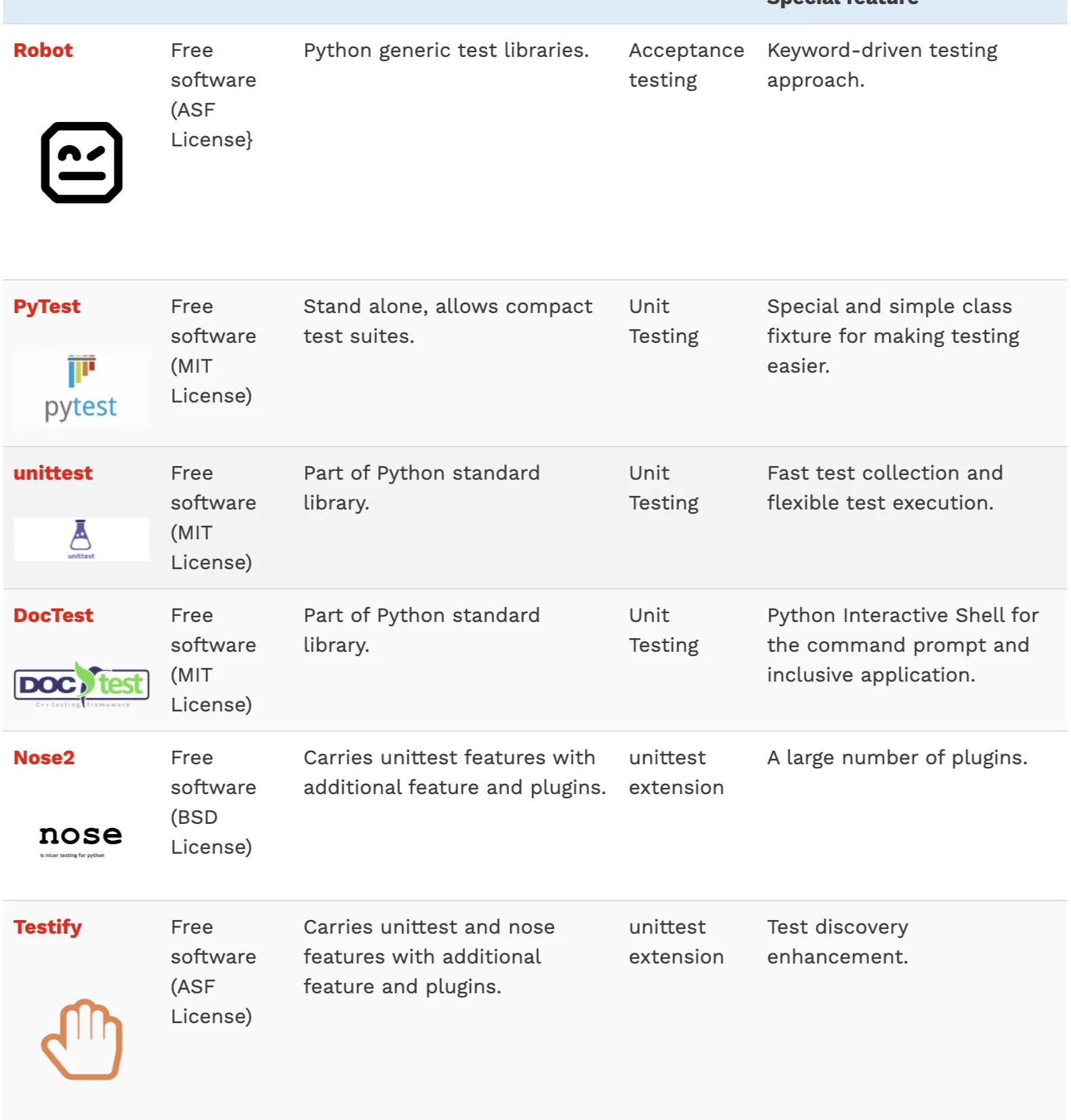
Using test frameworks significantly simplifies the software testing process. Today, ready-made solutions exist for most programming languages, such as JUnit for Java and PyTest for Python. To find a suitable testing framework for your project, simply search for "test frameworks" in a search engine. Choosing the right testing framework will help automate testing, improve code quality, and reduce debugging time.
Creating simple and understandable tests is an important aspect of software development. It's important to clearly define the input data a function accepts, as well as the expected output. When in doubt, rename variables for clarity and break functions into smaller parts. This will simplify the testing process and make the code more readable and maintainable. Clear tests not only make it easier to diagnose errors but also promote more effective collaboration within the team.
When working with complex functions, especially those requiring interaction between multiple components, it's a good idea to use integration tests. These tests evaluate how effectively components interact with each other, providing a deeper understanding of how they work together and identifying potential issues during the integration phase.
Including negative tests in your testing strategy is an important aspect that helps evaluate how your program handles invalid data and what errors may arise along the way. Negative testing helps identify vulnerabilities and improve the overall stability and reliability of your software. Proper use of negative tests can significantly improve the quality of your product and ensure it meets user expectations.
Testing all loops and conditional statements is a crucial part of developing maintainable code. Omitting these elements can lead to errors when changes are made. Therefore, be sure to include tests for all logical constructs to ensure the stability and reliability of your code. This will not only help avoid problems in the future but also improve the quality of your software.
Mutation testing is recommended for assessing the quality of tests. This method involves randomly changing values in the code and then checking how the tests react to these changes. If tests do not detect errors when modifying the code, this indicates insufficient test coverage. Effective mutation testing helps identify weaknesses in tests and improve their quality, which ultimately contributes to increased software reliability. Regular use of this method will provide a higher level of confidence in the correctness of the code.
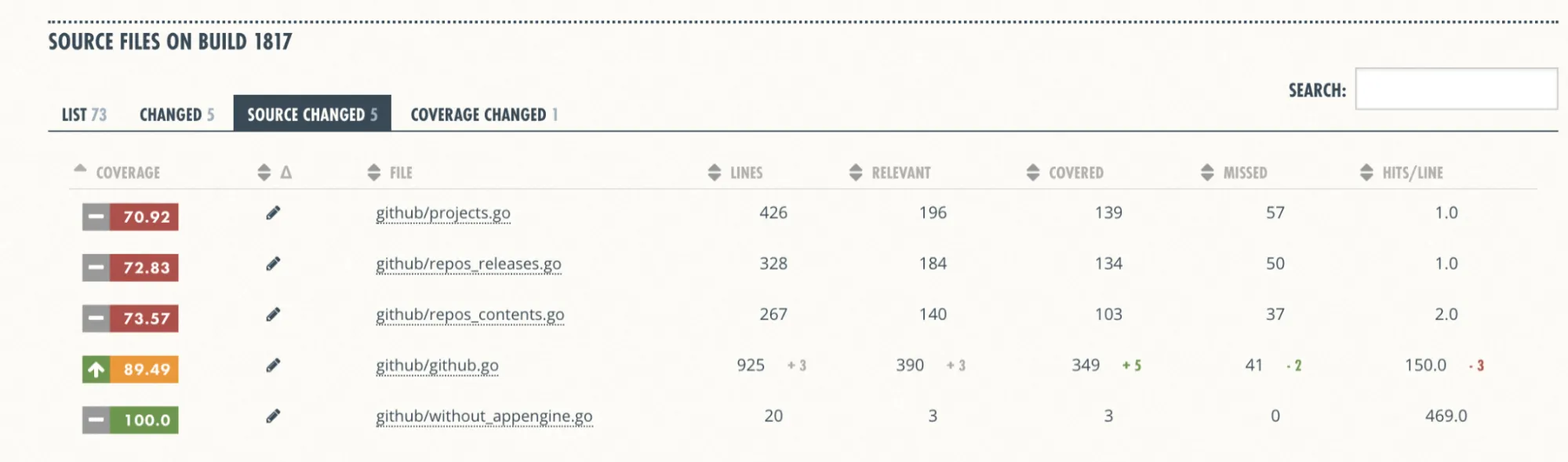
Aim for code coverage of at least 70%. While achieving 100% coverage can be difficult, 70-90% coverage is considered optimal. It's also important to ensure that new code doesn't degrade overall code coverage. High code coverage improves software quality and reduces the likelihood of errors.
To effectively monitor code coverage, it's recommended to use services such as Coveralls. This tool allows you to track changes in code coverage percentage after testing, which helps improve software quality. Regular code coverage analysis helps identify undertested areas and improves application reliability. Using Coveralls in your workflow will help maintain high quality standards and improve the productivity of your development team.
When developing tests, it is important to avoid brittle decisions that can lead to unstable results. If your test depends on external factors, such as execution time or the current state of the system, it is recommended to review its structure and logic. Stable tests facilitate more reliable code verification and reduce debugging time, thereby ensuring a higher quality software product.
When using global variables or state in your code, it is important to clear them before each test. This is necessary to prevent one test from unintentionally affecting the results of another. Proper isolation of tests leads to more reliable and accurate results, which is especially important during software development. Ensure that your test environment is configured so that each test starts from a clean state, thereby increasing the quality and stability of your code.
Monitoring test performance is a key aspect of effective teamwork. If tests take too long, this can negatively impact overall productivity. Regularly evaluate test execution times and make any necessary optimizations to improve their efficiency. Optimizing tests will not only speed up the testing process but also improve the quality of the final product.
Testing is a key tool for ensuring the reliability and stability of code. Adopting effective testing practices will significantly improve the quality of your project and reduce the risk of serious errors. Regular testing allows you to identify and resolve issues early in the development process, which contributes to a smoother and more successful evolution of your software. By investing time in testing, you ensure the longevity and sustainability of your project.
Benefits of Unit Testing in Software Development
If you're still hesitant about writing unit tests, consider a few compelling arguments in their favor. Unit tests are an essential component of the modern software development process. They help ensure high code quality by minimizing errors and simplifying debugging. Unit tests facilitate faster problem identification and resolution, which ultimately saves time and project resources. Furthermore, having tests in place allows developers to confidently make changes to the code without fear of breaking existing functionality. Incorporating unit tests into the development process not only improves the quality of the product but also increases the team's confidence in their code.
Unit tests have a significant advantage: they can catch errors early in development. For example, making a small change to code to improve logging can cause the entire system to crash. Using unit tests, I've repeatedly prevented such errors from reaching production, significantly saving development time and resources. Regularly using unit tests not only improves code quality but also contributes to a more efficient development process, allowing the team to focus on creating new features instead of fixing bugs.
Unit tests are an important tool that provides valuable documentation for your code. When you have difficulty understanding a specific function, simply refer to its tests. They clearly show what parameters the function accepts and what result it returns. This significantly simplifies the work of developers interacting with code written by others. Proper documentation created through unit tests facilitates better understanding and maintenance of code, which ultimately improves its quality and reduces the time it takes to fix bugs.
Code refactoring often raises concerns due to the potential for software failure. However, having unit tests allows you to make changes with the confidence that the tests will uncover potential issues. This significantly reduces risks and increases confidence in the quality of the code. Unit tests ensure that changes do not break existing functionality, making the refactoring process safer and more efficient.
At first glance, writing unit tests may seem like an increase in work, as it requires creating not only the function but also the corresponding tests. However, in practice, the lack of tests leads to significantly more time spent identifying and fixing bugs. Manual testing becomes an ineffective and labor-intensive process, which can slow down development and reduce the quality of the product. Unit tests help automate functionality verification, ensuring code reliability and reducing the time it takes to maintain it in the future. By investing time in writing tests, you increase the stability of your application and reduce the risk of critical errors.
Code sometimes ends up in production, which leads to indefinitely delayed fixes. I encountered this situation when using input files for manual testing. This process was time-consuming, and if I had developed unit tests, I could have quickly detected and fixed errors early. Automated tests reduce debugging time, improving code quality and reducing the risk of problems in production. Investing in unit testing is an important step to ensuring the reliability and stability of software.
Why Unit Tests Are an Integral Part of Commercial Development
In modern programming, especially in commercial development, testing has become a vital element of the workflow. Many companies require developers to have their code covered by unit tests. Based on my experience, I can say that this rule is strictly adhered to in all the places I've worked in recent years. Even a single error can lead to serious failures, and unit tests provide reliable protection against such problems. Implementing testing not only improves code quality but also increases developers' confidence in their decisions, which, in turn, contributes to more efficient and stable project work.
Modern companies often sign service level agreements (SLAs) to ensure the stability and availability of their services. In the event of a product failure, the business faces the risk of significant financial losses. Therefore, it is wiser to postpone the implementation of new code until all tests are completed than to launch an untested product that could lead to system failures. Even short-term downtime of a website or application can negatively impact a company's reputation and cause financial losses. Therefore, thorough testing and adherence to SLAs are key aspects of risk management and ensuring the reliability of business processes.
For a thorough understanding of unit testing principles, it is important to study testing frameworks that match your programming language. Familiarization with large open-source projects that use these frameworks will also be beneficial. Downloading these projects and experimenting with their tests will help you master unit testing more effectively and improve your skills in this area.
Each testing framework has unique characteristics that affect test writing, method invocation, mocking, and naming. Each tool has its proponents and critics, so it's recommended to try several frameworks and choose the one that best suits your project's requirements. The key is to ensure that the framework interacts effectively with your code, especially if you use specific ORMs. Choosing the right testing framework will not only simplify the development process but also improve the quality and reliability of your application.
To effectively master the nuances of application development and testing, it's important to learn from professionals with real-world experience. We recommend considering Skillbox University, which offers a variety of programming courses. Training under the guidance of experts significantly accelerates the process of mastering the necessary skills and knowledge, which in turn increases the chances of a successful career in the IT industry.
Python developer: 3 projects for a successful start
Want to become a Python developer? Learn how to create a portfolio in 3 projects and get support in your job search!
Learn more