
Contents:
How to organize corporate training so that it Has your e-learning become a valuable investment in your company's development, rather than a waste of resources? The books in our selection explore various aspects of this issue. Recognized experts share their experiences in organizing training sessions, developing a mentoring system, and creating a corporate culture that fosters employee development. They also present methods for effective adult learning that will help your team achieve high results.
E-Learning
Michael Allen is a renowned figure in his field, possessing significant experience and knowledge. He has authored numerous publications and materials that have helped many people in their professional careers. Michael Allen's works cover various topics related to management, training, and skills development. His approaches to training and development are innovative and practically oriented, making them in demand among specialists. With his expertise, Michael Allen continues to contribute to the development of his industry and inspires many to reach new heights.

Online learning, which has become especially relevant in the last two years, continues to face challenges. Proven and effective methods used in the traditional format often prove ineffective in distance learning. The experience of Michael Allen, who has been developing e-learning courses and consulting on e-learning since 1993, confirms this trend. Allen emphasizes the importance of adapting educational strategies to the specifics of the online format to ensure maximum learning effectiveness and meet student needs.
In this guide, the author explains in detail how to create an online training system for employees from scratch. At the beginning, the work examines unsuccessful examples and analyzes the mistakes that led to failure. Then, the key stages of course design, implementation, and effectiveness evaluation are described sequentially. This guide will be useful for HR specialists and managers seeking to improve the learning process and develop employee skills using modern online tools.
If you already use a distance learning program for employees, this book will help you identify its weaknesses and eliminate them. It provides practical recommendations and strategies for optimizing the learning process, which will increase its effectiveness and improve results.
"Talented Employees"
Jeffrey Liker and David Mayer are authoritative experts in the field of management and operational efficiency. Their work focuses on the implementation of lean manufacturing and continuous improvement principles that help companies optimize processes and reduce costs. They study how organizations can achieve high productivity through competent resource management and employee involvement in the optimization process. Liker and Mayer share their knowledge and experience, offering practical recommendations for businesses striving to improve quality and increase competitiveness in the marketplace.

The authors of this book explore the phenomenon of the Japanese corporation Toyota and emphasize that the key factor in its success is the personnel development program known as TWI (Training Within Industry (or on-the-job training). This system was developed in the United States during World War II, when there was an urgent need to quickly train qualified specialists for the military-industrial complex. The TWI program became the basis for improving productivity and quality of work, which significantly contributed to Toyota's growth as a leader in the global automotive industry.
Toyota management developed the TWI program, which formed the basis of a comprehensive approach to employee training. This method encompasses not only industrial instruction but also the standardization of work processes. An important aspect is also the formation of harmonious relationships between management and subordinates, which contributes to increased team effectiveness and an overall improvement in the organizational climate. The TWI program helps create a qualified and motivated workforce, which in turn contributes to high results in production activities.
Liker and Mayer have developed a practical guide for implementing this program, which will be especially useful for manufacturing companies. However, leaders of organizations in various fields will also find important insights in this material, as the concepts of long-term and consistent development presented are universal and applicable in any context.
"Coaching and Mentoring"
Eric Parslow and Melville Leedham are prominent figures in their field. Their work and contributions to the development of the relevant discipline are of interest to researchers and professionals. Parslow is known for his innovations and approaches that have changed the perception of key concepts in this field. Leedham, in turn, emphasizes practical aspects and the application of theoretical knowledge. The collaboration between these two specialists deepens understanding of their subject and inspires a new generation of researchers.

Mentoring is the oldest system of knowledge and skills transfer, which remains relevant and effective in the modern world. In the 21st century, mentoring is taking on new forms, adapting to the demands of the times and the needs of business. It is important to understand the difference between a mentor and a coach and how these professionals can contribute to the development of modern companies. Eric Parslow, co-founder of the European Mentoring and Coaching Council, along with Melville Leedham, share their experiences and views on the role of mentoring in business. Mentors help not only transfer knowledge but also develop personal and professional skills, which ultimately contributes to the growth and success of organizations. The book is divided into two main sections. The first section examines in detail the theoretical and practical aspects of mentoring and coaching. You will learn how the duration of a training program relates to the goals of the student, what principles should underlie a coaching session, and what tools and methods coaches and mentors actively use in their practice. This section will help you gain a deeper understanding of the key elements of successful mentoring and coaching, which will enhance the effectiveness of your sessions and the results you achieve.
The second section is especially valuable for managers and training professionals. In it, the authors explain in detail how to effectively implement coaching and mentoring in an organization. They also examine the key challenges these approaches can address and highlight common pitfalls to avoid when implementing coaching and mentoring programs. This section will help improve team performance and company results.
"Think Again"
Adam Grant is a renowned psychologist, author, and teacher who specializes in the study of organizational psychology. He is a professor at the Wharton School of the University of Pennsylvania and the author of several bestsellers, including "Gifts from Ill-Wishers" and "Open Up." His research focuses on collaboration, innovation, and personal effectiveness. Grant actively shares his knowledge through publications, lectures, and the podcast "WorkLife," where he discusses modern approaches to work and personal life, and offers advice on improving professional relationships and increasing productivity. His work inspires people to rethink traditional approaches to business and teamwork, making him one of the most influential thinkers in the field of industrial psychology.

This book is worth not only reading for yourself but also recommending to your employees. The author, a psychologist and Wharton professor who has worked with companies such as Google, Pixar, the NBA, and the Gates Foundation, argues that ingrained biases and cognitive distortions hinder our development. According to Adam Grant, they prevent us from rethinking known facts and make it difficult to make informed decisions. This book will help you and your colleagues better understand how to overcome these limitations and develop critical thinking, which is especially important in modern business.
This book is devoted to the important topic of critical thinking. The author shares real-life stories, emphasizing the importance of this competency and supporting his findings with scientific research. The text discusses ways to develop healthy skepticism and foster open-mindedness, as well as methods for sharing these skills with others. The final part of the book focuses on creating a culture of continuous learning and development within a company, which is key to the successful functioning of a modern business.
"Living Theater of Training"
Natalia Samoukina is a professional specialist in her field, possessing extensive experience and deep knowledge. She is actively involved in the development and implementation of innovative solutions, which allows her to achieve high results in her work. Natalia always strives for excellence and uses modern methods and approaches to achieve her goals. Her ability to adapt to change and find optimal solutions makes her a valuable expert. Natalia Samoukina - an example of professionalism and dedication, inspiring colleagues and clients to success.

Effective training should include two key components: practical Skill development and the creation of an engaging emotional atmosphere. Natalia Samoukina, a trainer with over 25 years of experience and a PhD in psychology, emphasizes that ignoring even one of these elements significantly reduces the likelihood of achieving training objectives. For training to be successful, it is important not only to impart knowledge but also to ensure the active participation of participants, which facilitates better assimilation of the material. Organizing corporate training often faces the problem of participant motivation. Convincing an experienced specialist that a trainer can impart useful knowledge and skills is a challenging task. To increase interest in training, it is important to select a trainer with a high level of expertise and practical experience. The right approach to preparing and delivering training will help create an atmosphere of trust and interest, which in turn will increase the effectiveness of training and allow employees to gain new knowledge that contributes to their professional development. This guide examines in detail the key aspects of developing and delivering training. It is aimed at trainers, providing them with a wide range of methods, exercises, and tools for effective training. Furthermore, the material will be useful for those responsible for organizing training within a company. The book will help in selecting a qualified specialist, formulating important questions, and evaluating the effectiveness of proposed programs.
"Six Disciplines of Breakthrough Learning"
Roy W. H. Pollock and his colleagues are outstanding experts in their field. Their work covers a wide range of topics related to contemporary trends and innovations. Pollock and his team are actively engaged in research, which allows them to make significant contributions to the development of science and technology. Their publications and research serve as an important source of information for scientists and practitioners seeking new knowledge and solutions to current problems. The work of Roy Pollock and his colleagues is helping to shape the future of their field by providing access to cutting-edge ideas and methodologies.
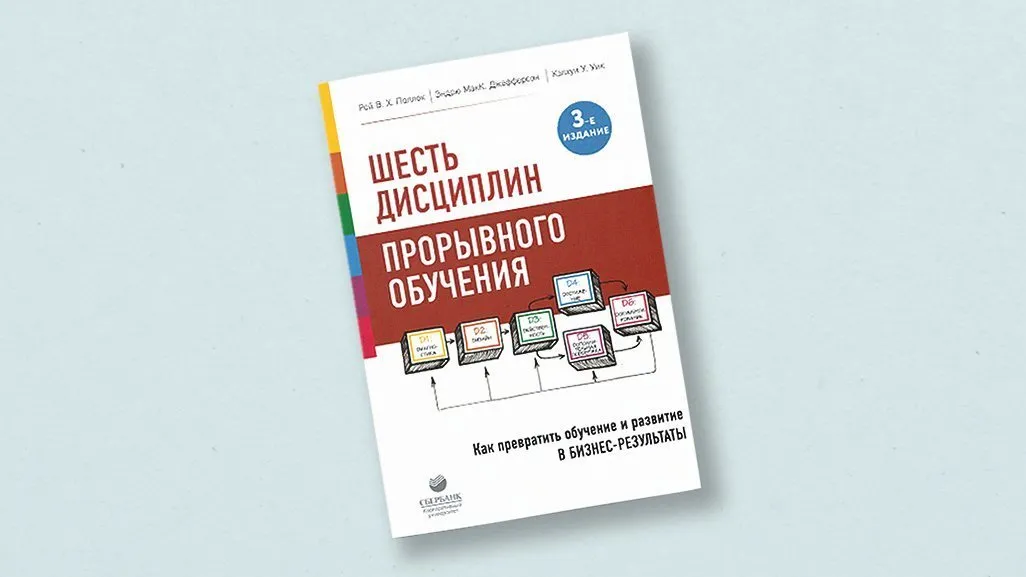
Staff training does not always justify Costs and doesn't always lead to the expected results. Corporate training experts such as Roy W. H. Pollock, Andrew McK. Jefferson, and Calhoun W. Wick recommend first assessing the training needs in a specific situation. In some cases, the root cause of problems may lie not in a lack of employee knowledge and skills, but in poorly organized work processes. This underscores the importance of a thorough diagnosis before deciding to conduct training, which can significantly improve the effectiveness of investments in personnel development. The authors offer the "6D" methodology for those who are ready to answer affirmatively. This methodology includes six steps that will help effectively implement plans and achieve set goals. Each stage has its own meaning and is aimed at systematizing the process, which contributes to increased productivity and improved results.
- D1: Diagnostics of expected business results.
- D2: Design of the complete learning experience.
- D3: Effectiveness of the learning process.
- D4: Achieving transfer of learning to practice.
- D5: Additional support for effectiveness.
- D6: Documentation and evaluation of effectiveness.
This concept is based not only on the professional experience of the authors, but also on the results of surveys among entrepreneurs, economic research, and the principles of andragogy. The book offers a detailed description of each stage, practical examples and recommendations for implementing the 6D program in both commercial and non-profit organizations and government agencies. This material will become a useful tool for anyone striving for effective management and development in various fields.
Reading is an important part of development and learning. It not only expands vocabulary but also improves critical thinking skills. Regular reading promotes concentration and the ability to analyze information. Furthermore, reading across genres helps develop a deeper understanding of the world and the diversity of human experience. Don't forget to devote time to books, articles, and other useful materials to enrich your knowledge and develop your intellectual abilities.
- How to Design Corporate Training Programs
- How Corporate Training Continues to Change
- 6 Most Promising Technologies for Corporate Training
- 6 Books on How to Teach Adults
Training and Development Manager
You will learn how to build corporate employee training programs and evaluate their effectiveness. You will be able to start a career in the HR department and implement a working personnel development system in the company.
Find out more