
Contents:
In the report "Research of the Russian Online Education Market", Netology highlighted the key challenges facing the industry in 2021 and analyzed the impact of significant changes in 2022 on corporate training. This analysis allows for a better understanding of current trends in online education and adaptation to new realities.
The report contains the results of two studies.
- The first was prepared by Netology, eLearning Center and TalentTech, and is based on a survey of senior T&D executives from more than one hundred companies with varying numbers of employees (from one hundred to tens of thousands) in 16 economic sectors. The main phase of the study took place in 2021.
- The second phase was prepared by TalentTech with experts from the HR Directors' Community "HR Order" and covered more than 280 small (32%), medium (17%), and large businesses (51%). The survey was conducted in the spring of 2022.
Research shows that…
- what problems were relevant last year and remain so in the current one;
- do companies outsource custom training to providers or prefer to create their own courses;
- how many companies are finally planning to return to offline formats;
- what tools are used in corporate training, and most importantly, how are they chosen;
- what are ordinary employees and managers taught;
- how much business spends on training and will budgets be cut in 2022.
What challenges did corporate training face in 2021?
The authors of the study identified several key problems that are primarily related to the involvement of participants, available resources, including both financial and time costs, as well as process automation issues. These issues can significantly impact the effectiveness of project implementation and the achievement of goals.
In 2021, 35% of surveyed company representatives noted that employee engagement had become a major challenge in corporate training. According to the report, this problem is most pronounced among rank-and-file employees, especially in the medium and large business segments. Effective employee engagement in the learning process is critical to improving their productivity and the overall performance of the company. Addressing this issue requires the implementation of innovative approaches and methods that can engage and motivate employees, which in turn contributes to improved learning outcomes and competency development.
Many experts focus on the issue of engagement in the learning process. At the EdCrunch Glocal international conference in December 2021, engagement was identified as one of the main challenges for learning and development (T&D). During the discussions, two solutions were proposed. The first is providing employees with the opportunity to learn without being distracted by work tasks. The second solution involves developing programs that make the learning process more engaging and engaging.
Research shows that Russian companies have used a variety of approaches to employee training. On the one hand, organizations actively established internal communications and allocated time for professional skills development. On the other hand, they implemented innovative training formats, such as simulators, training sessions, and courses with gamification elements, which helped make the learning process more engaging and effective. These methods contributed to increased employee engagement and knowledge improvement, which, in turn, had a positive impact on company productivity.
A study of e-learning preferences by ELC shows that key factors in employee engagement are not only gamification elements but also the connection between training and real-world work experience. Practical exercises and the ability to track results and progress also play a significant role in increasing motivation. These aspects contribute to more effective assimilation of the material and application of acquired knowledge in professional activities.
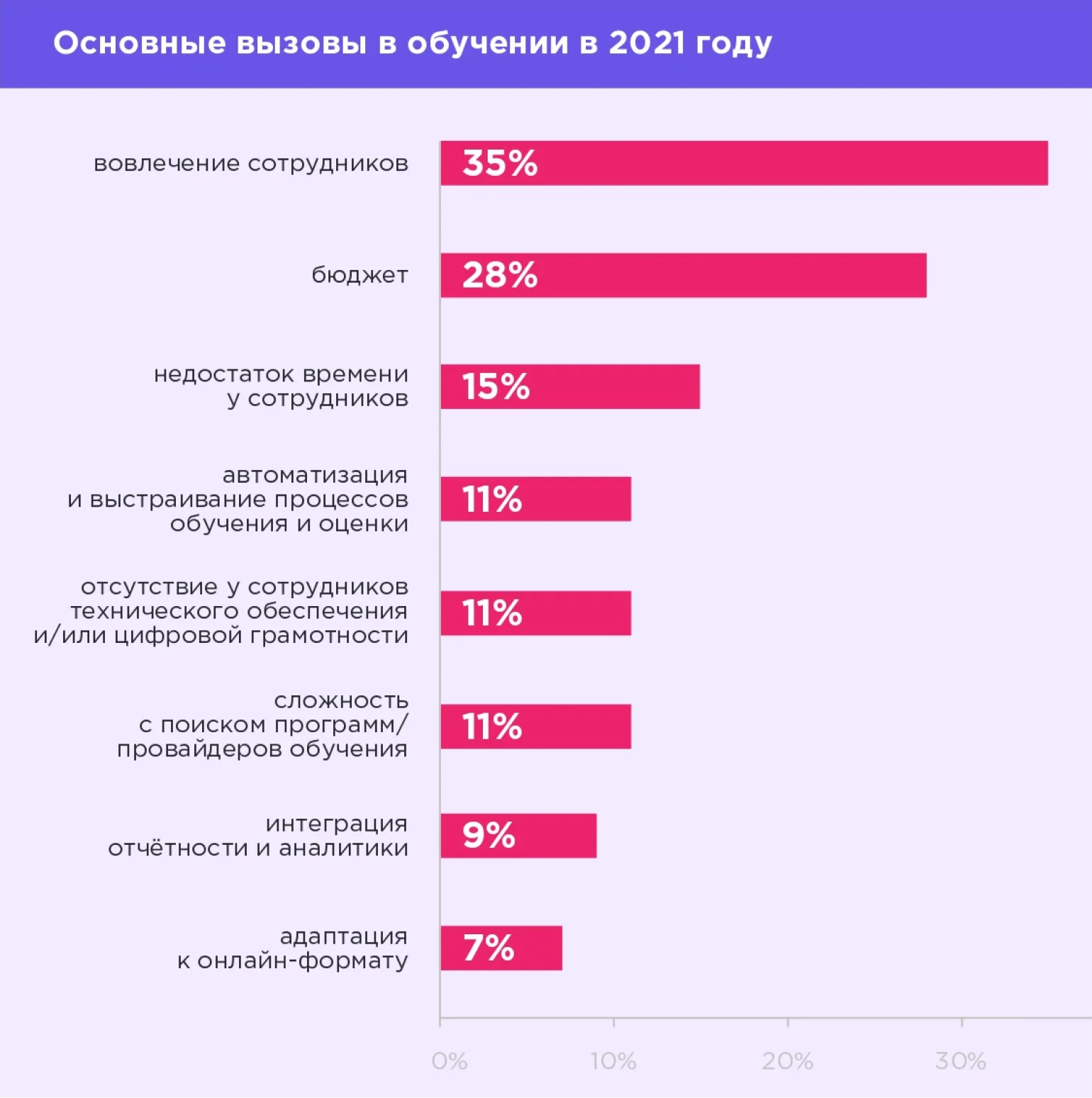
The second most significant challenge for companies is budget. Twenty-eight percent of respondents reported a lack of funding. In third place is a lack of time among employees, which makes it difficult to complete tasks, and this problem is faced by 15% of organizations. These challenges are particularly acute in small businesses, where limited resources can significantly impact work efficiency.
When choosing a training program, companies often consider cost and a format that allows training to be integrated with the work process. These factors are among the key criteria influencing decision-making.
In the overall ranking of problems facing companies, automation and integration rank low. However, a more detailed analysis shows that these difficulties primarily affect medium and large businesses. Researchers explain this by the fact that such companies often use multiple training tools from different providers. Integrating these tools into a single system is a long and complex process.

Reading is an important part of our lives. It not only develops thinking but also enriches vocabulary. Books, articles and other types of literature allow us to gain new knowledge and expand our horizons. Recent research shows that regular reading improves cognitive function and increases empathy. It's important to make time for reading to enjoy the process and get the most out of it. Maintain your reading habit by choosing a variety of genres and topics to make it interesting and engaging. Read also: EdTech services for corporate training are becoming a "solution zoo" due to the diversity of platforms and tools available on the market. With the rapid development of technology, companies are faced with the need to integrate multiple solutions, leading to fragmented training. Each of these solutions has its own unique features and capabilities, but this creates difficulties in management and use. Corporate training programs require a unified structure and a systematic approach to ensure effective interaction between various tools. The need to combine various platforms and content into a single ecosystem is becoming a pressing challenge for employers. It is important to find a balance between innovation and ease of use to avoid employee overload and ensure high-quality training.
Therefore, companies should strive to choose universal EdTech solutions that can adapt to their specific needs, simplifying the learning process and increasing its effectiveness.
How employees are trained in Russian companies
Russian companies are increasingly opting for in-house training, abandoning external programs. According to research, 64% of organizations are developing their own educational courses for their employees. These internal courses focus on training in company products and developing soft skills among frontline staff. Internal training programs not only deepen employees' knowledge of the specifics of the business but also improve the company's overall competitiveness in the market.
Third-party training products are used by 36% of companies. These most commonly include courses on occupational safety, soft skill development, and professional training specific to the organization's operations. The primary audience for these programs is mid-level employees and executives. Such courses contribute to the improvement of qualifications and the improvement of work processes, which is important for the successful functioning of a business.

Read also:
Renting courses for corporate training: feasibility and advantages
Corporate training is becoming an important component of company development. Renting courses for employee professional development raises many questions: is it worth investing in this format? An important aspect is that course rentals allow businesses to quickly adapt to changing market conditions and staff needs.
The advantages of course rentals include flexibility and accessibility. Companies have the opportunity to choose from a wide range of programs that meet current requirements. Renting also saves money and time, as there is no need to develop their own training materials and programs.
Furthermore, using ready-made courses from trusted providers guarantees high-quality training, as they are developed by professionals in their field. This allows employees to quickly and effectively acquire new skills, which, in turn, positively impacts the company's productivity and competitiveness.
Therefore, renting courses for corporate training is a smart solution for businesses seeking to develop and improve the skills of their employees.
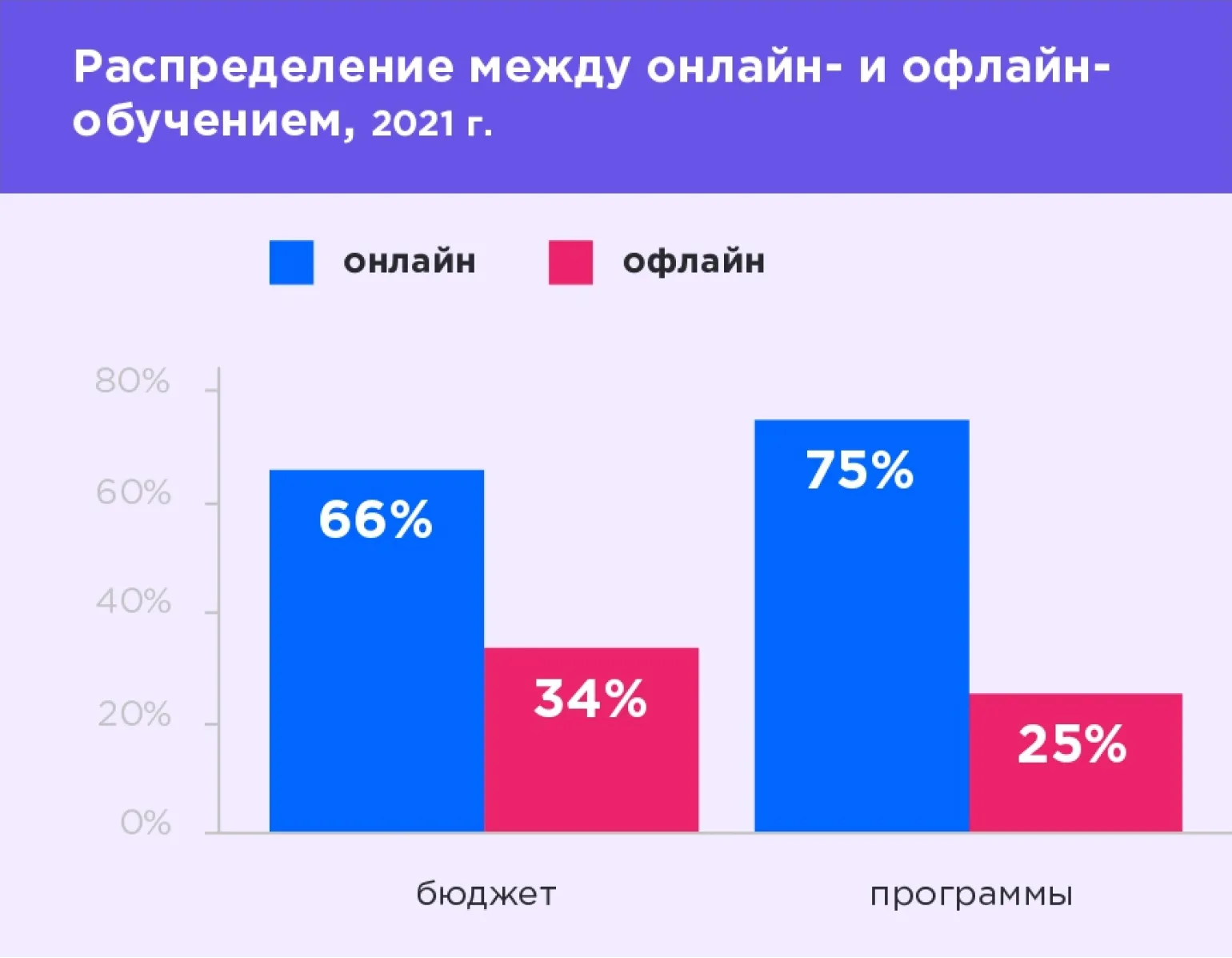
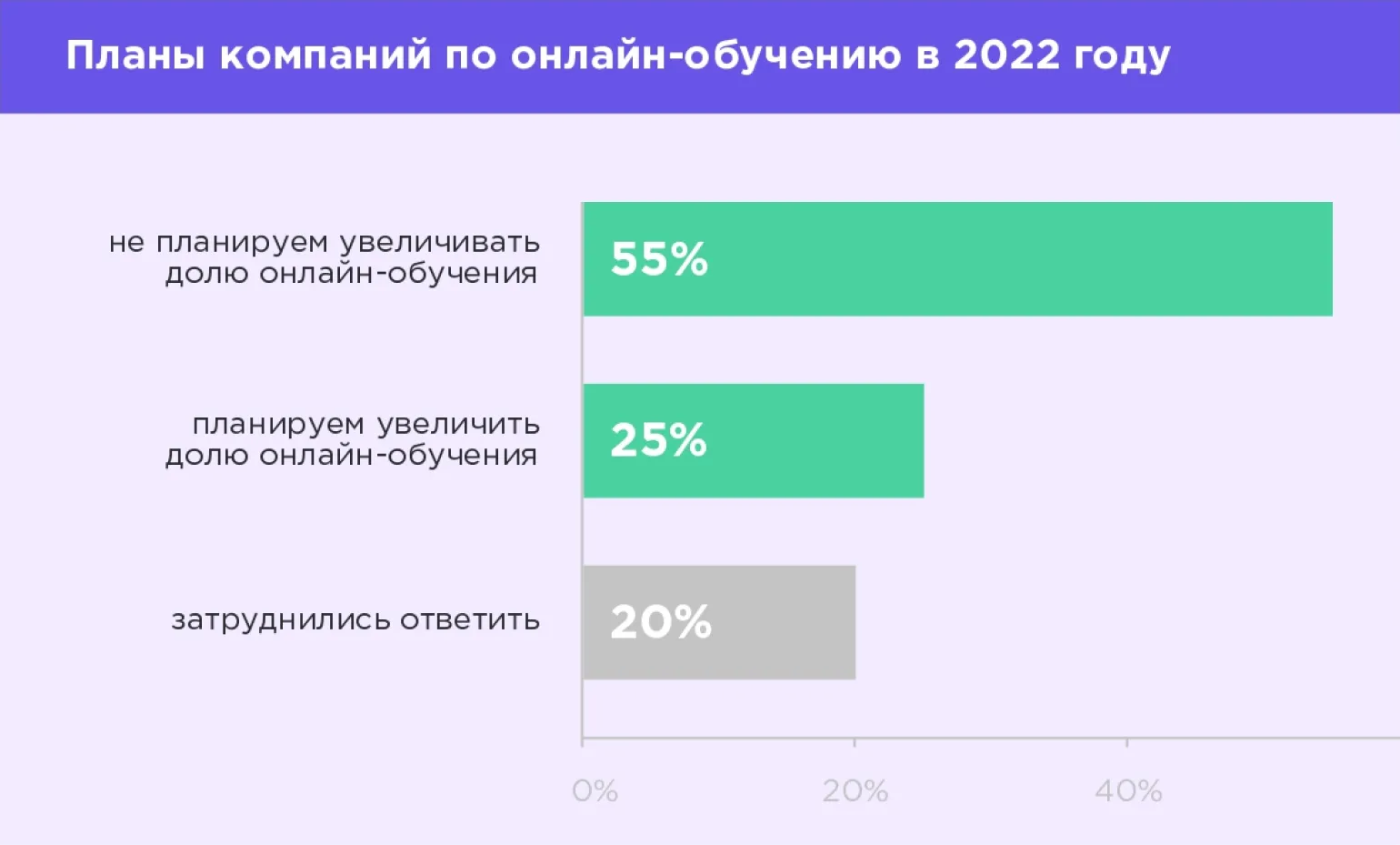
Corporate training has undergone significant changes as a result of the pandemic. Currently, 75% of corporate programs are delivered online, and companies have no intention of abandoning this approach. A significant portion of their budget—66%—is also allocated to online training. Although only 25% of the surveyed organizations plan to increase the share of the online format, the majority, namely 55%, prefer to maintain the status quo.
Optimal The training format is asynchronous courses developed in-house. This applies to both programs for line employees and managers. Asynchronous learning allows participants to study the material at their own pace, increasing the effectiveness of knowledge and skill acquisition. Internal courses ensure that the content is tailored to the specifics of the company and its objectives, which promotes a deeper understanding and application of the material covered.

Read more:
The choice between synchronous and asynchronous learning formats is a key point when developing a course. It is important to consider the characteristics of each approach to ensure the best student experience. Synchronous learning involves real-time classes, allowing students to interact with each other and the instructor. This format is suitable for courses that require immediate feedback and active participation. It creates an atmosphere of collaborative learning and fosters community building. Asynchronous learning, on the other hand, gives students flexibility in choosing their own time to study the material. This approach is ideal for those with limited time or who prefer to learn at their own pace. Asynchronous courses can also include video tutorials, readings, and assignments that students can complete at their own pace. When choosing a format, it is important to consider the target audience, the specifics of the course, and the learning objectives. A synchronous format may be more effective for courses that require hands-on interaction, while an asynchronous format is suitable for theoretical courses where students can master the material independently. Thus, the choice between a synchronous and asynchronous format depends on many factors. Assess your students' needs and determine which approach will be most effective in achieving their learning goals.
Which tools are popular in corporate training?
Learning management systems (LMS) were the most popular tool among survey participants. This is due to the ability to upload your own courses and integrate rented content, highlighting the importance of internal training in modern organizations. LMS are becoming an integral part of the educational process, allowing for the effective management of employee training and the improvement of their qualifications.
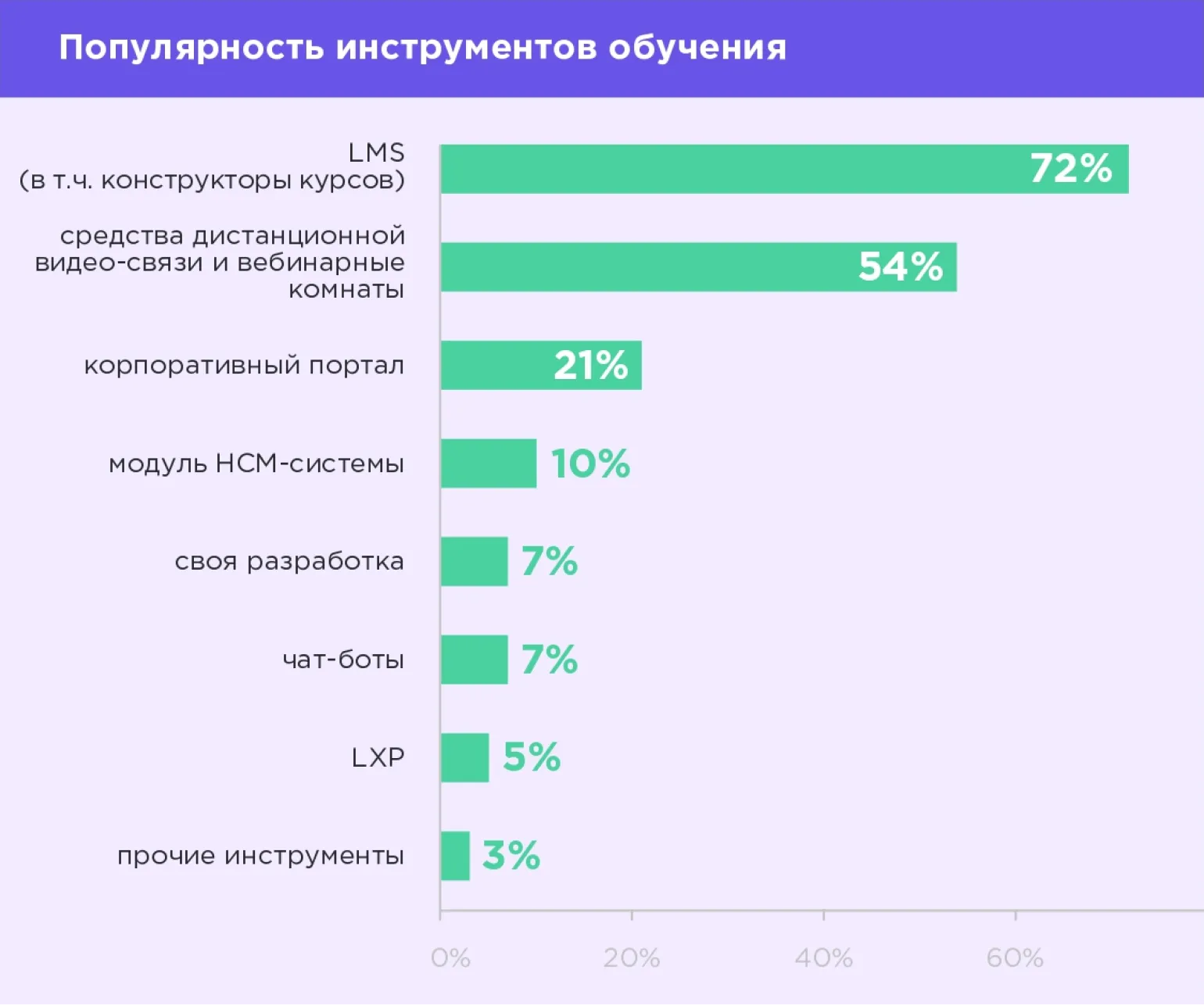
Videoconferencing systems and webinar rooms used for synchronous training are in second place in popularity. Corporate portals are chosen much less frequently. Chatbots and LXP systems are the least popular, and experts predict that interest in them on the Russian market will only grow in 5-7 years. In the context of modern learning, the greatest attention is paid to interactive and visually rich forms of interaction, which makes videoconferencing and webinars the preferred choice for many companies.
Research has shown that three criteria are key factors when choosing T&D tools. These criteria determine the effectiveness and feasibility of using various tools in the learning and development process.
- ease of use,
- cost,
- the ability to obtain detailed analytics.
The number of employees in a company directly affects its needs. In large organizations, analytics becomes a priority, which is due to the need to evaluate the effectiveness of training programs. In medium-sized businesses, the main factor in choosing is cost, while for small businesses, the key criterion is the convenience and ease of use of solutions.
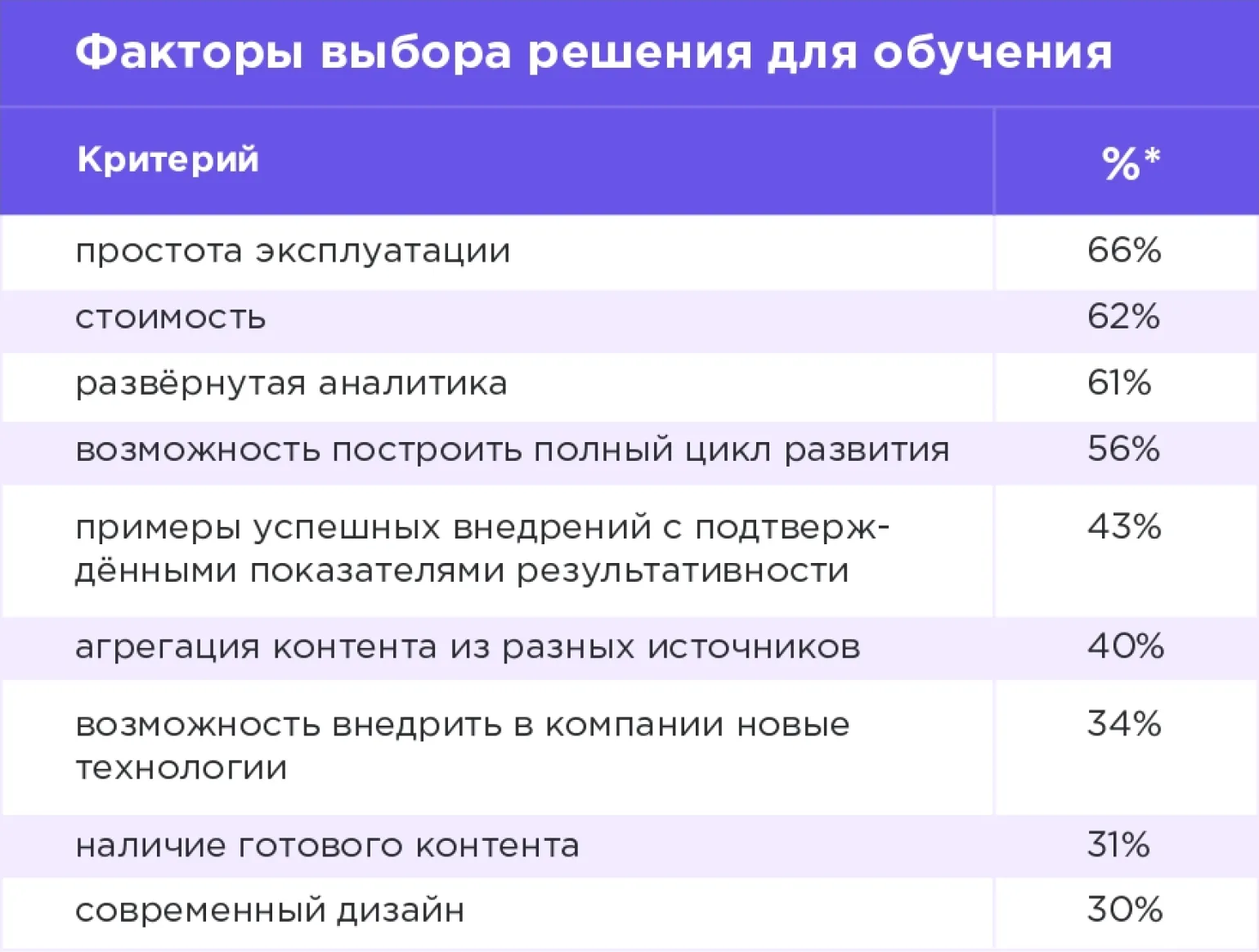
In the spring of 2022, a new, important aspect of choosing educational tools emerged, becoming obvious to many: the departure of foreign companies has created a situation in which Russian businesses urgently need domestic developments. Import substitution does not imply a thoughtless approach to selection. The use of domestic technologies should be based on a thorough analysis of their effectiveness and compliance with modern requirements. It is important to consider the quality, functionality, and support provided by developers. This will not only help maintain competitiveness but also facilitate the development of the national market for educational solutions.
A study by Netology identified key aspects essential for effective corporate training. Specifically, it became clear that the most important elements are the relevance of content and the ability to integrate new technologies. However, modern design and ready-made content are not critical to the successful implementation of training programs. Companies can focus on creating unique content and adapting educational technologies to their needs, which will allow them to achieve better results in employee development.

Read also:
Creating content for distance corporate training: key opportunities
Distance corporate training is becoming is becoming increasingly popular, and creating quality content plays a central role in this process. Effective content must not only be informative but also engaging to maintain employee interest.
It is important to consider a variety of content formats. Videos, interactive modules, webinars, and written materials can be used to create a varied learning experience. Each format should be given attention to ensure it aligns with the learning objectives and learning style of the target audience.
Tailoring content to the needs of a specific company is also critical. This includes using case studies, situations faced by employees, and corporate culture. This approach promotes a deeper understanding of the material and its application in real-world settings.
Technology tools such as Learning Management Systems (LMS) allow you to effectively manage content and track learner progress. Using analytics to evaluate engagement and learning outcomes can help further improve content.
Creating accessible and inclusive content is equally important. This includes using simple language, alternative text for images, and subtitles for videos, making training accessible to all employees.
In conclusion, creating content for corporate distance learning requires a comprehensive approach. High-quality, adapted, and accessible content contributes to the successful training and development of employees, which in turn has a positive impact on company performance.
How Corporate Training is Evaluated
The authors conducted a study of training effectiveness evaluation tools, and the results were contradictory. On the one hand, only 11% of companies measure the connection between training and business metrics, which implies assessing the impact of programs on revenue or goal achievement. On the other hand, the most common evaluation methods remain collecting feedback and measuring employee satisfaction. This highlights the need for more in-depth and targeted approaches to assessing the true impact of training on business.
In 2021, in addition to surveying employees immediately after course or program completion, many companies began using so-called "cold" surveys. In these surveys, learners assessed the effectiveness of the knowledge and skills they acquired some time after the training. This approach allows us to more accurately determine how useful and applicable the implemented knowledge was in real work practice.
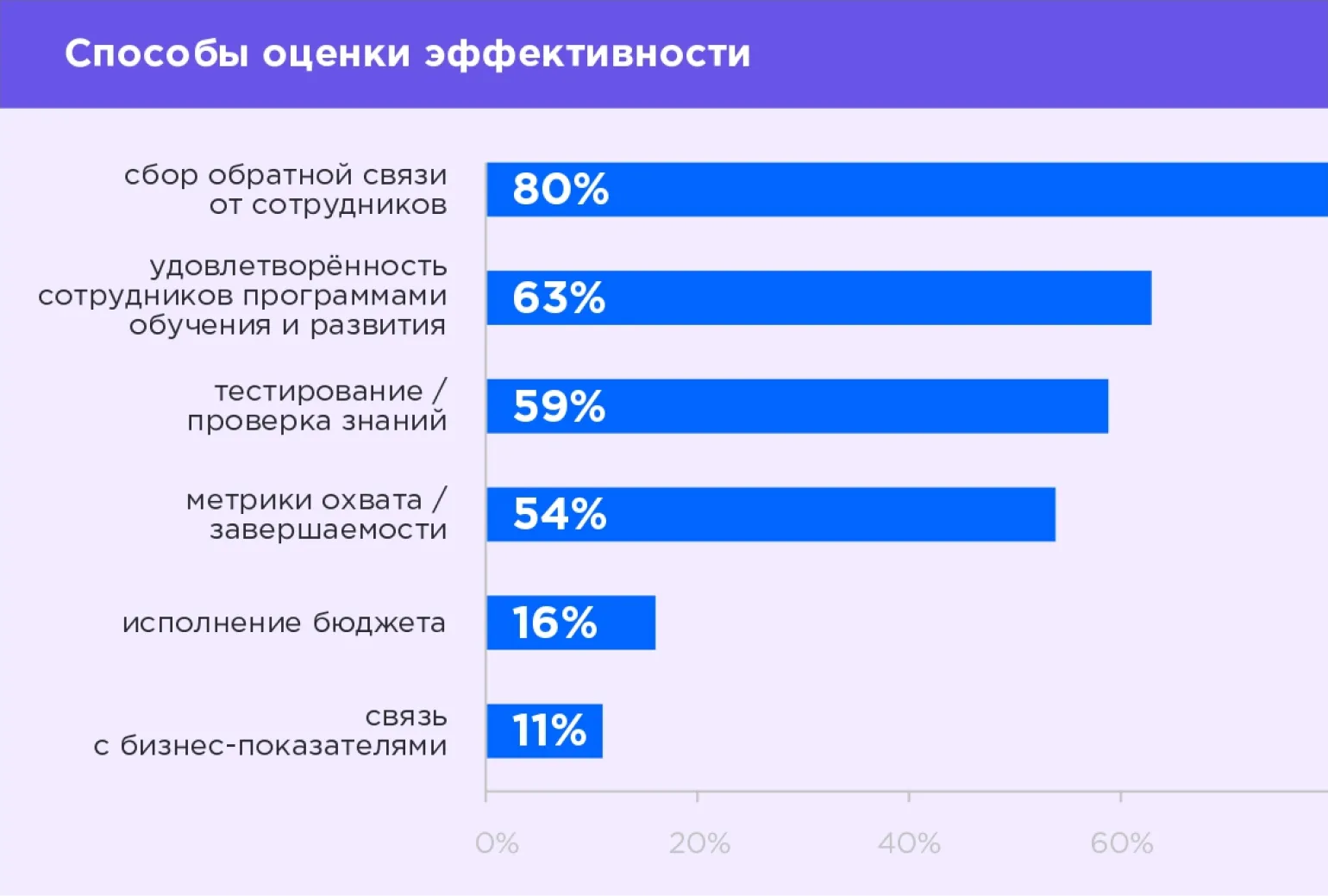
Testing and performance metrics only ranked third and fourth.
It's likely that respondents had the opportunity to select multiple answers, but the overall picture is this: employee training is primarily focused on employee assessments, while determining the actual business benefit of such activities is difficult. Experts have been raising this issue for a long time, pointing out that this is a widespread problem, and it seems that its solution is still far away.

Rework the text, maintaining its topic, taking SEO into account. Don't add unnecessary details or symbols, and avoid using lists. Here's your revised text:
Read also:
Measuring the Quality of Corporate Training: Four Cases
The effectiveness of corporate training is a key aspect for organizational development. Various methods can be used to evaluate the quality of training programs. In this article, we will consider four illustrative cases that will help you understand how to properly measure the results of corporate training.
The first case illustrates the use of surveys and questionnaires for employees after training. This allows you to receive feedback and evaluate how the training met the needs of employees and improved their skills.
The second case focuses on performance analysis. Comparing indicators before and after training helps to identify how the acquired knowledge and skills affected employee performance.
The third case demonstrates the use of ROI (return on investment) assessment methods in training. Considering the financial results and training costs helps us understand how well the program has justified the investment.
The fourth case focuses on monitoring long-term changes in employee behavior. Assessing changes in work and company culture after training helps determine the sustainability of the acquired knowledge and its impact on the overall team atmosphere.
These examples show that properly measuring the quality of corporate training requires a comprehensive approach and the use of various evaluation methods. This will not only improve training programs but also increase the company's overall productivity.
Who was trained and what in 2021 and how training plans changed on February 24, 2022
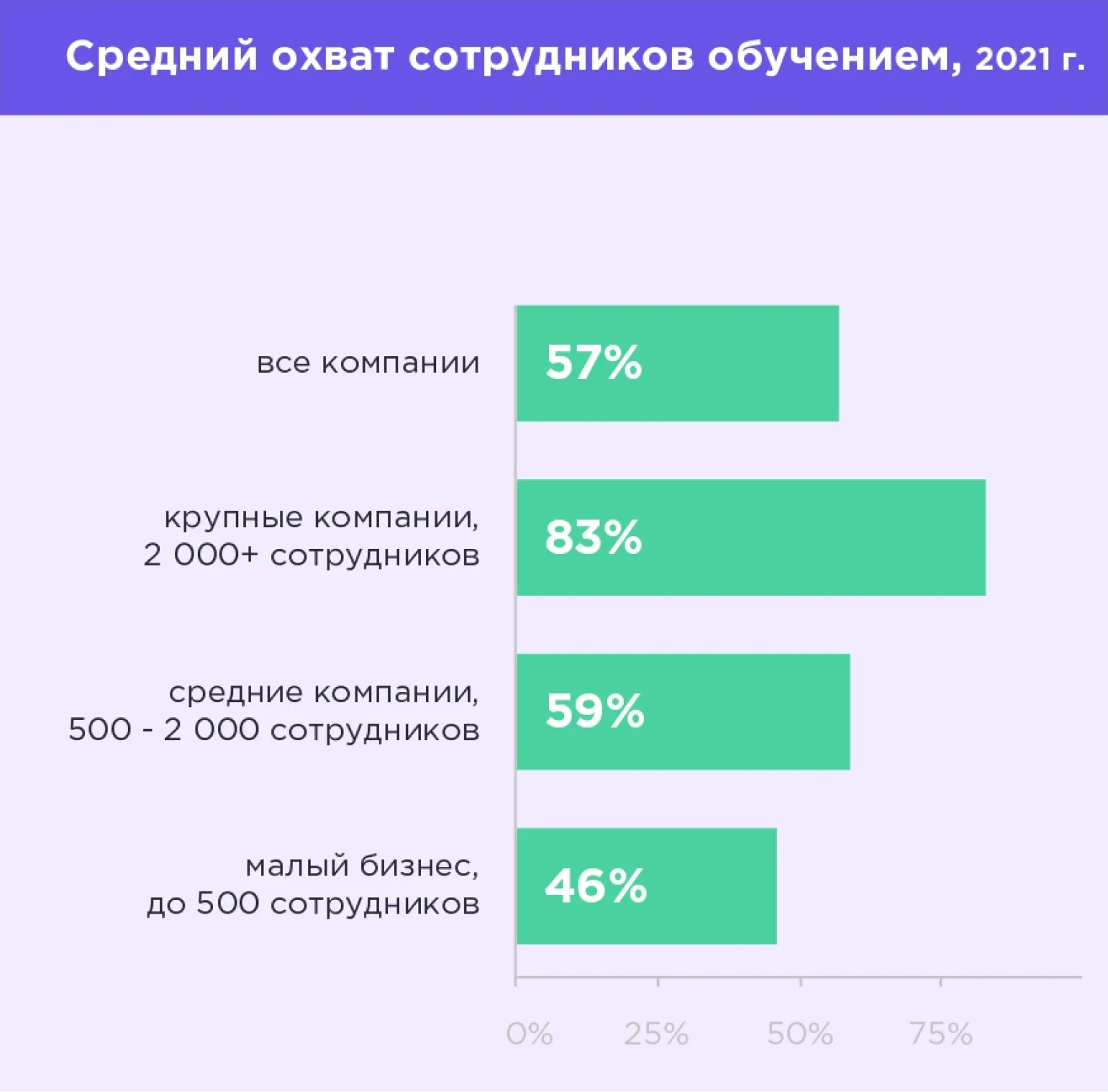
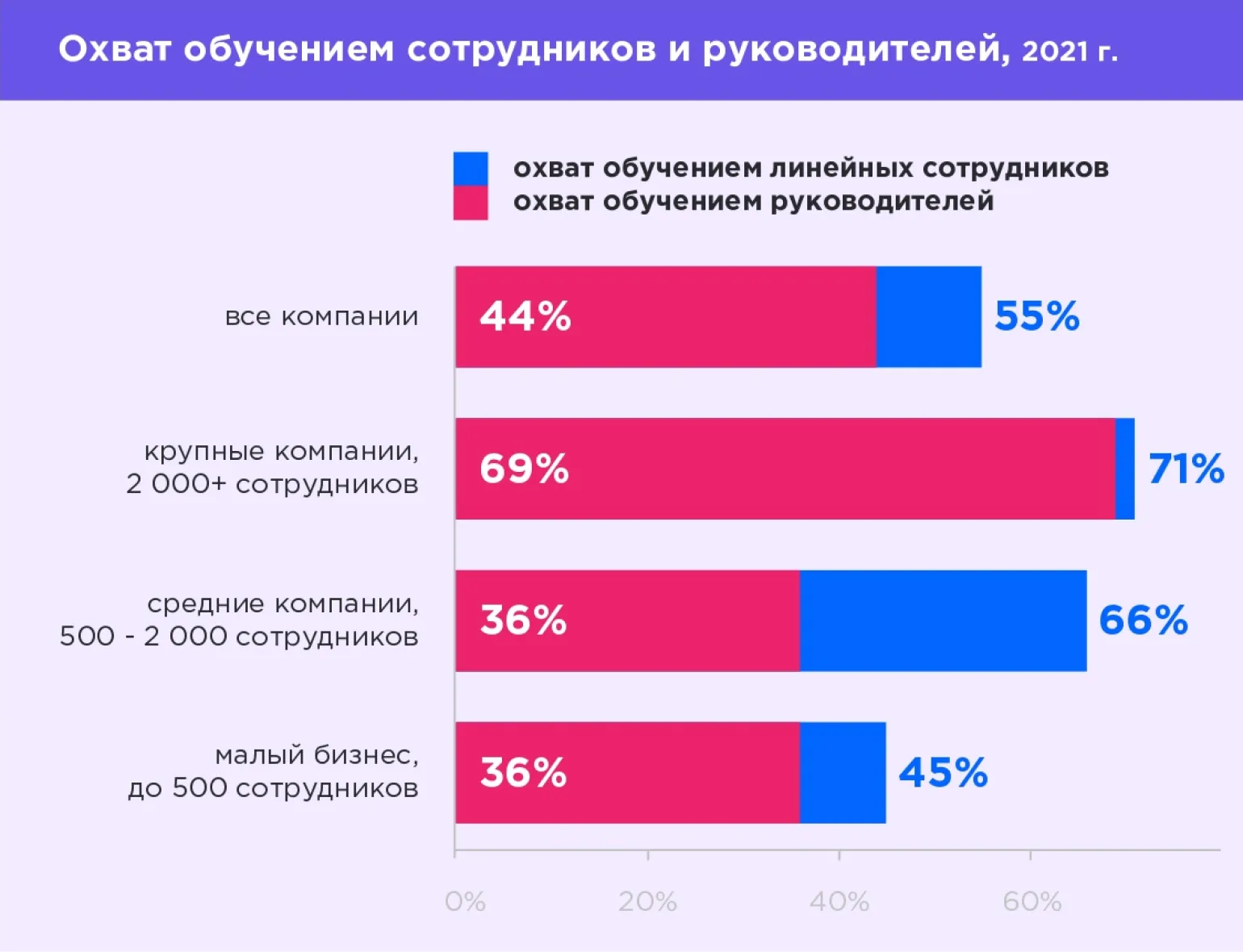
Research confirms that company size directly affects the level of employee training coverage. In 2021, 83% of employees in large organizations received training, while in medium and small businesses this figure was only 59% and 46%, respectively. This indicates that larger companies are investing more actively in their employees' development, which can contribute to their skills and overall performance. Importantly, employee training not only enhances their professional skills but also fosters loyalty to the company, which is key to its successful operation.
The overall coverage of company representatives surveyed, regardless of size, was 57%. This underscores the importance of research for understanding current business trends and allows one to assess the degree of involvement of various organizations in the proposed solutions.
In 2022, the study showed that About one-third of surveyed organizations intend to strengthen their employee training. However, half of respondents have not developed a new training strategy, and 20% do not intend to change their current plans or training pace at all. This highlights the need to rethink training approaches in a rapidly changing labor market.
Read also:
The study revealed which courses and training programs are most popular among working Russians. Given current trends in the labor market, many professionals are seeking to improve their skills and adapt to new demands. The most in-demand areas are IT, project management, and foreign languages. Employees actively participate in online courses and seminars to improve their skills and increase their competitiveness in the labor market. This desire to learn reflects not only personal ambitions but also the need to meet the demands of a rapidly changing world.
Most companies participating in the survey focus on training frontline employees in professional skills, accounting for 72%. Furthermore, 60% of organizations conduct training related to their company's products, while approximately 46% provide training on occupational health and safety. These data highlight the importance of professional development and compliance with workplace safety standards.
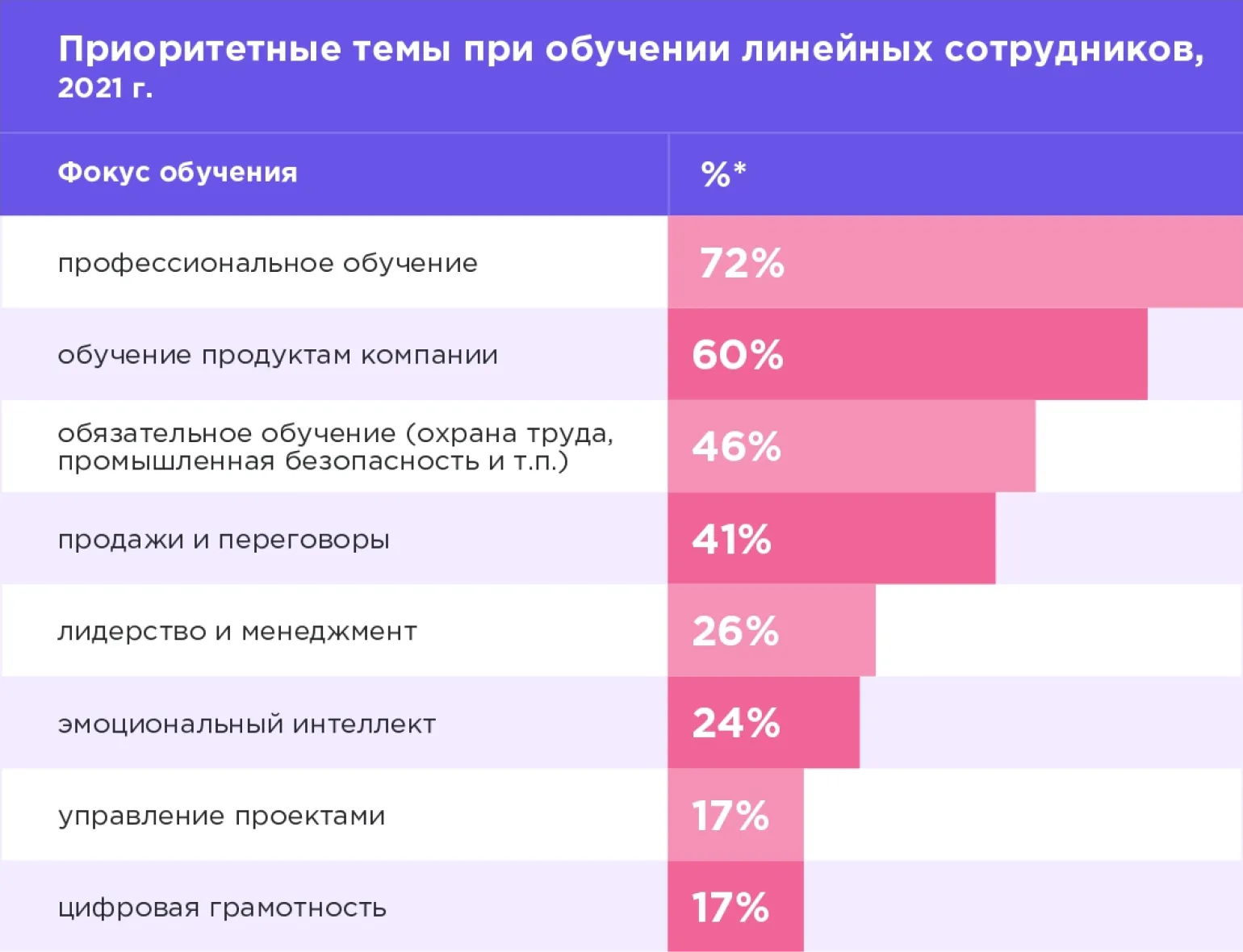
Soft skills, such as developing emotional intelligence and leadership skills, often receive less attention than other aspects of education and professional development. Meanwhile, digital literacy and project management rank low on the list of priority topics. However, developing soft skills is key to career success, as they help you adapt to change and interact effectively with others. It's important to understand that a combination of soft and technical skills is the key to success in the modern world.
According to the results of the second study presented in the overall report, priorities remain unchanged in 2022. Developing key professional competencies necessary for effectively performing daily tasks remains at the forefront.
Modern trends in corporate training reflect the need to adapt to new challenges. Companies are increasingly planning to train employees in new tools covering a wide range of areas, from recruiting to marketing. The training program also emphasizes stress management techniques, which is becoming an important aspect for improving employee productivity and well-being.
The 2021 study revealed the competencies characteristic of training managers. Leadership and management ranked first among key skills. Project management ranked second, and professional development ranked third. These data highlight the importance of developing management and project skills for successful functioning in the field of education and increasing the effectiveness of training programs.
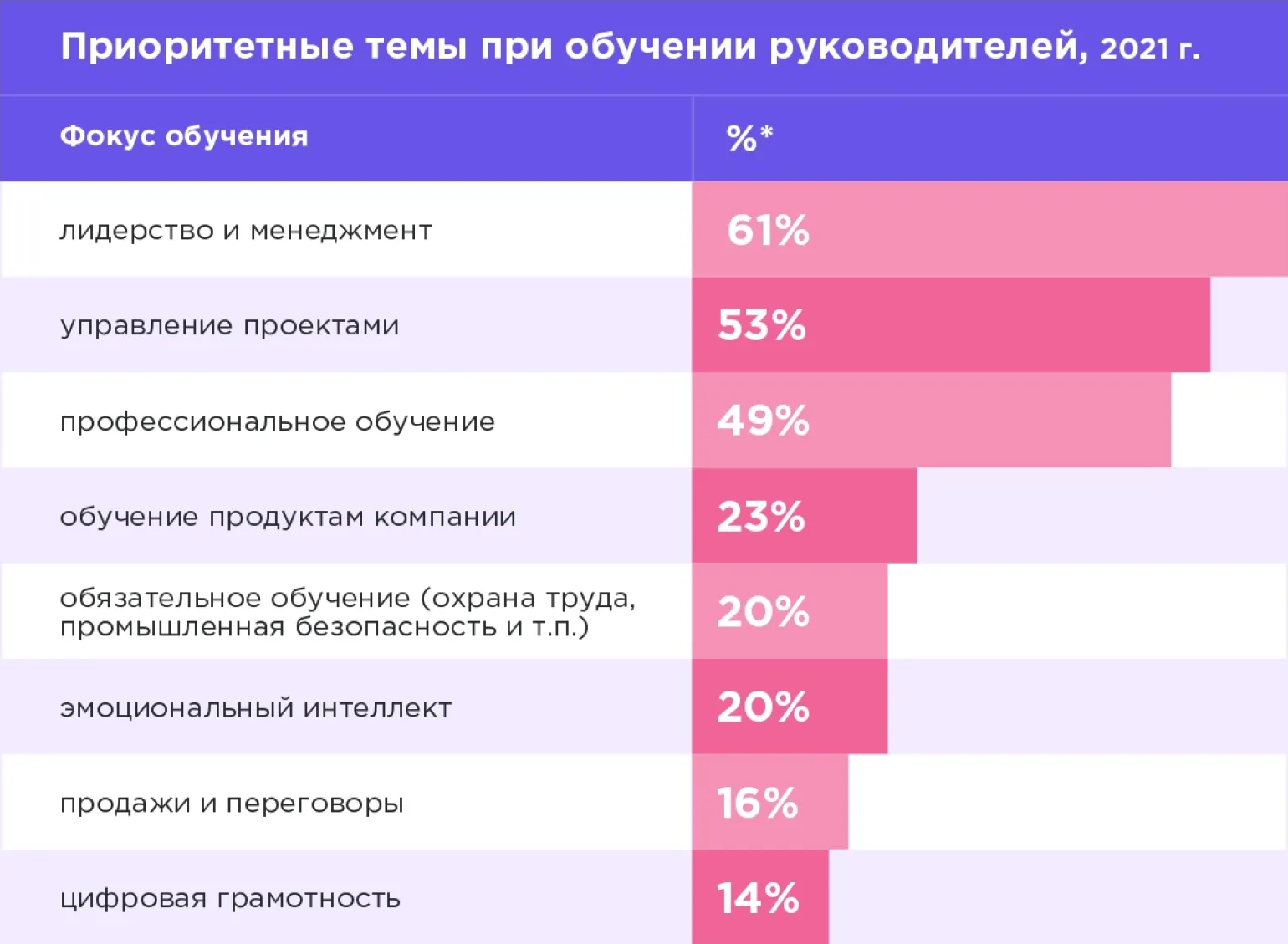
The events of early 2022 have significantly changed the approach to educational programs for companies. In the current environment, the emphasis is shifting to training managers to manage teams in crisis situations and effectively solve problems under uncertainty. However, the main priority remains the development of management competencies. Companies strive to prepare their leaders for the challenges of the modern world, combining traditional management skills with new methods of working in an unstable environment.
Respondents intend to focus on developing soft skills, including leadership, internal communications, adaptability, and goal-setting. It is also worth noting that 4% of participants plan to implement training on the topic of "green layoffs." This approach emphasizes the importance of the human aspect in the termination process and caring for employees.

Rework the text, keeping the main topic, and optimize it for SEO by adding the necessary keywords. Maintain the focus on the content and avoid unnecessary characters. Don't use lists or sections; simply provide plain text.
Read also:
Case Study: Training Managers in IT Recruitment Basics and Its Results
In today's world, IT recruiting is becoming an essential part of a successful business. Training managers in IT recruitment basics not only improves the recruitment process but also reduces the time it takes to fill vacancies. In this case, we will look at how the training helped managers master key skills and increase team efficiency.
The first stage of the training focused on familiarizing them with the basic principles of IT recruiting, including understanding business needs, formulating candidate requirements, and using modern tools for searching and evaluating applicants. Managers learned how to properly compose vacancies and attract the right talent, which significantly improved the quality of incoming resumes.
As a result of the training, communication between the HR department and managers significantly improved. Now they can more clearly articulate their expectations and requirements, which contributes to more effective recruitment. This, in turn, had a positive impact on the company's overall performance.
Furthermore, the training enabled managers to master candidate assessment methods, including behavioral interviews and technical assignments. This increased their confidence in the hiring decision-making process, which is especially important in a highly competitive labor market.
Thus, training managers in the basics of IT recruiting not only improved the recruitment process but also contributed to the formation of a unified team working towards common goals. The results of this case highlight the importance of investing in training and developing employee skills to achieve success in the IT field.
Is the business planning to reduce training costs?
The majority of company representatives surveyed, namely 97%, planned not to reduce training costs in 2022. This demonstrates a high level of awareness of the importance of investing in employee training and development to achieve a competitive advantage in the marketplace.
In 2021, Russian companies invested an average of 26,500 rubles per year on training each employee. Specialist training expenses amounted to 14,900 rubles per year, while training top managers cost 38,100 rubles, a 50% increase. These figures underscore the importance of investing in employee training and development, which is a key factor in improving companies' competitiveness in the marketplace.
In February 2022, changes in the geopolitical and economic environment had a significant impact on the financial plans of a number of Russian companies. According to the second report of the study, 40% of organizations reduced their employee training budgets. The authors of the report note that this trend mostly affects large businesses, where 46% of companies have decided to reduce training costs.
About 10% of companies intend to increase their budgets, while half of those surveyed do not plan to revise their financial costs. This is especially true for small businesses, where 60% of companies have chosen to maintain current spending on employee training. Such decisions may indicate stability and confidence in the future, emphasizing the importance of investing in personnel development.
Read also:
- "Everyone is a little bit in achtung": what was discussed at the Digital Learning 5.0 conference
- 9 ideas for cost-effective corporate training
- 6 elements that will help a company become self-learning
- 6 ways to make a training course engaging