
Contents:
- How children's supplementary education has become a tool for training and recruiting
- Is there any benefit from such utilitarian supplementary education for the needs of business?
- About a corporate physics textbook, or What other help can business provide to education?
- What challenges may the system of corporate children's supplementary education face in the future?

Learn: Who am I and what Want to?
Find out moreHow children's supplementary education has become a tool for training and recruiting
Russian Railways is actively developing systems of school and supplementary education for children across the country. As part of this initiative, in addition to specialized railway classes, educational institutions are implementing a career guidance project, "Children's Railways." About 18,000 schoolchildren are participating in the project, which allows them to acquire practical skills and knowledge about professions related to railway transport. This contributes not only to career guidance, but also to the development of interest in technical specialties among young people.
Alexander Zbarsky, Deputy Head of the HR Department of Russian Railways, noted that the corporation previously invested in children's supplementary education as part of its social policy. However, this situation has now changed. Career guidance has evolved from a tool for introducing children to a variety of professions into a means of engaging schoolchildren in specific fields where there is a particularly acute shortage of personnel.
In the railway industry, key specialists include assistant drivers, track fitters, electricians, and dispatch personnel. Students at the Children's Railways program have the opportunity to learn about various professions and prospects for secondary and higher vocational education in this field. In collaboration with the Russian University of Transport, Russian Railways organizes additional training for future railway workers, enabling them to successfully pass the specialized Unified State Exam in physics. This approach contributes to the development of qualified personnel for the railway industry and increases young people's interest in professions in this important field.
The speaker noted that additional education, which Russian Railways places emphasis on, also serves an educational function. However, he emphasized that the primary role of this process is to create a "funnel" that links school education with employee employment at the company.
Varvara Kublitskaya, Head of Talent Management at the Russian University of Transport, noted that the university employs a model for engaging children in the profession, actively collaborating with Russian Railways. Graduates of the Children's Railways often become students at this university. There is also a targeted training system aimed at preparing the company's future employees. This cooperation promotes the development of professional skills among young people and helps them choose a career path in the transport industry.

The University organizes specialized Olympiads and manages the Children's Technopark, where students from fifth grade onward develop engineering projects. According to the speaker, project-based learning is becoming increasingly important in the supplementary education system. This approach helps develop students' practical skills and fosters their interest in engineering and technology.
Our university has two key missions. The first is to develop a high-quality cohort of applicants. Previously, the emphasis was on high scores, but we now understand that future students' experience with project work and communication skills are more important. Therefore, we are implementing project-based learning, allowing students to work in teams and create real-world projects. Our second mission is to popularize transportation education in a broad sense. We strive to make this field more attractive and accessible to young people, emphasizing its importance and relevance in the modern world.
Oleg Belosheykin, Director of the Regional Center for Human Resource Development and Social and Labor Relations of the Sverdlovsk Region, emphasizes that the main goal of career guidance today is to meet the needs of businesses for qualified personnel. To support his point, he cited current statistics. Over the past three months, 7,757 people applied to employment centers in the Sverdlovsk region, of which 4,541 were unemployed. At the same time, companies in the region are currently seeking 60,886 workers, with more than half of these open positions in blue-collar jobs. This underscores the importance of timely career guidance and training for specialists capable of meeting labor market demands.
Oleg Belosheykin emphasizes the importance of beginning career guidance at school age to address the talent shortage. It is essential to establish interactions between all levels of education and business. The speaker notes that graduates who have received a welding profession should be able to work in their field, rather than transitioning to other fields, such as barista work. Effective career guidance will help create a more skilled workforce and reduce the mismatch between supply and demand in the labor market.
Read also:
When choosing a profession, young people often ignore its demand in the labor market. This can lead to them finding themselves in a situation where their skills and knowledge do not meet employers' requirements. It is important to recognize that the labor market is constantly changing, and professions that were popular several years ago may lose their relevance. Therefore, it is worth paying attention to analyzing trends and demand for specific specialties. An informed approach to career choice, based on up-to-date data, will help young professionals avoid employment difficulties and ensure a stable future.
Ingrid Pildes, Director of the Talent Academy, noted that the education sector is witnessing a transformation in the career guidance system at all levels. This system strives to create a seamless transition from school education to secondary vocational education institutions and universities, and then to employers. Such changes in career guidance help students more effectively choose a career path and adapt to labor market demands.
Children's supplementary education today is not simply hobby groups, but a variety of programs that meet the requirements of various industries and specific industrial partners. These programs provide students with the knowledge and skills necessary for successful future employment. Thus, supplementary education is beginning to play an important role in career guidance, helping children determine their career choice and prepare for future challenges in the labor market.
The Talent Academy focuses on supplementary education programs aimed at creating specific products and achieving tangible results. This applies to both creative activities and in-depth study of subjects. The programs also include preparation for participation in various competitions, which helps develop students' skills and competencies. Ingrid Pildes emphasizes the importance of a practical approach and results-oriented approach in the educational process, which contributes to a deeper assimilation of knowledge and the development of creative potential.
We focus not only on educational and social functions, but also on the importance of the visible results of the child's work. During the process of mastering any program, the child needs to see the result of their work, which will be meaningful both for them and for society. This promotes self-esteem and motivation for learning, which in turn fosters a more active social life.
Ingrid Pildes noted that there have been vocational training centers for high school students in the past, which provided students with the opportunity to try their hand at various professions within the school curriculum. These initiatives contributed to practical training and preparation of young people for future professional activities.
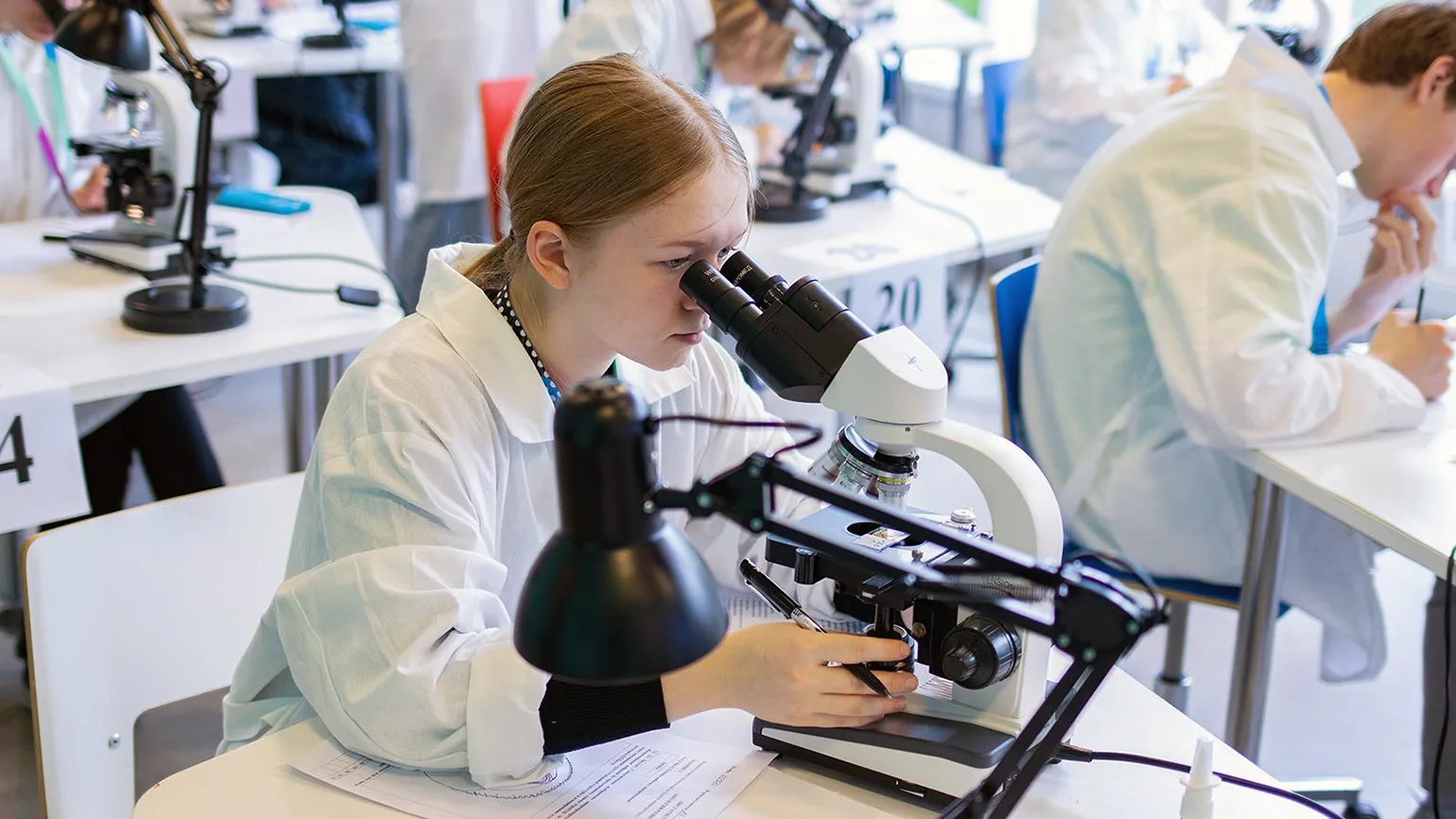
According to her, this experience should be used to effectively respond to current business needs.
Is there any benefit to such utilitarian supplementary education for the needs of business?
For business, an approach in which additional children's education becomes the basis for career guidance, and career guidance serves as a tool for directing children to areas with labor shortages, is beneficial. However, for the children themselves, this approach can be problematic. It contradicts modern trends in career diversity, where the emphasis is on developing universal competencies. In a rapidly changing labor market, it is important that children have the opportunity to change professions throughout their lives and adapt to new challenges. Thus, it is important to find a balance between the needs of business and the interests of children to ensure their successful future in a variety of professional fields.
A study by Mikhail Zenkin, Ivan Ivanov, and Ekaterina Ostapenko, entitled "Profession or Development: Potential, Approaches, and Models of Industry-Based Supplementary Education for Children in Russia," highlights current issues of supplementary education in our country. The work was conducted within the framework of the Institute of Education of the National Research University Higher School of Economics and analyzes various approaches and models aimed at developing children in the context of their professional orientation. This study emphasizes the importance of industry-based education and its impact on the future of young people in Russia.
The results of the study revealed that the majority of children and parents continue to perceive supplementary education not as a means of preparing for a specific profession, but as an opportunity for useful leisure and comprehensive development. This is perceived as participation in various clubs and sections, which, despite their value for personal growth, do not always meet the requirements of modern business.
In response to the moderator's question about how to evaluate the effectiveness of supplementary education programs, Ivan Ivanov, a junior research fellow at the A.A. Pinsky Center for General and Supplementary Education at the National Research University Higher School of Economics, noted that evaluation depends on the goals of a specific program and its funding sources. The effectiveness of such programs can vary depending on their objectives, target audience, and implementation conditions. It is important to consider that successful programs must meet the needs of students and labor market requirements, as well as deliver measurable results.
As an example, the author drew an analogy between children's maritime associations managed by municipal and regional education authorities and children's railways, as well as flagship schools affiliated with Russian Railways. This comparative analysis highlights the importance of a systems approach to organizing educational initiatives in various fields. Children's maritime associations, like railways, play a significant role in developing the skills of children and adolescents, generating their interest in professions related to the sea and transport. Maritime associations, administered by the Ministry of Education and educational authorities, primarily focus on child development and the creation of a broad developmental environment. In contrast, programs for railway workers emphasize career guidance, with clearly defined goals and corresponding outcomes. According to the results of the study, in the 2021/2022 academic year, approximately 4% of graduates of children's maritime associations in Russia continued their education at specialized universities and colleges. At the same time, Russian Railways statistics show that for railway supplementary education programs, this figure is significantly higher, at 18%. Such data highlights the differences in interests and career prospects among graduates of different educational programs. Ivan Ivanov emphasizes the importance of efficiency in supplementary education. He notes that it is important to remember that the main goal is education, and not simply the training of specialists for a specific industry. The speaker warns that a system focused solely on the utilitarian function of preparing children for professions may negatively impact their motivation to learn and their desire to acquire new knowledge. This underscores the need to create a harmonious educational environment where the emphasis is not only on skills, but also on developing the desire to learn and develop.

Explore additional materials:
Recently, data on popular areas of additional education among schoolchildren was published. Research shows that students are increasingly choosing courses that help develop the skills needed in the modern world. Programming, foreign languages, and art are especially popular. These areas not only contribute to personal development but also significantly increase the chances of successful employment in the future. Given the growing competition in the labor market, additional education is becoming an important aspect of the educational process for young people.
About a corporate physics textbook, or What other help can business give to education?
Alexey Ponomarenko, Deputy Director General of the Rosatom Corporate Academy, emphasizes the importance of passing on two core values to children in education: love for their work and attachment to their homeland. These guidelines are fundamental to the formation of successful and responsible individuals capable of contributing to the development of society and the country. In the modern educational process, it is necessary to emphasize the development of such qualities that contribute not only to professional growth but also to the patriotic consciousness of young people.
The speaker emphasizes the key role of the teacher in shaping students' interest in the subject. If the teacher fails to engage the student, this may lead to them not becoming an engineer, biologist, or doctor. Regardless of whether they work for companies such as Rosatom or Roscosmos, a lack of passion for the subject may force them to choose another profession and fail to realize their true ambitions. The importance of inspiration and motivation in the educational process cannot be overstated, as this directly impacts the future professional development of students.
Alexey Ponomarenko emphasizes that industrial stakeholders in the field of additional education can play a key role in solving current problems. They can enhance students' preparation in core subjects such as chemistry, physics, mathematics, and biology, which is especially important for companies like Rosatom. Furthermore, students need to be exposed to successful professionals from various industries, which will help them better understand career opportunities and requirements. The involvement of industry representatives in the educational process can significantly enrich the learning experience and increase student motivation.
Alexey Ponomarenko emphasizes that it is more important not to limit students to a narrow career path, but to provide them with a wide range of opportunities for self-fulfillment. According to him, Rosatom is actively engaged in fostering interest in engineering and natural sciences without tying it to future employment. He also noted the joint work with National Research Nuclear University MEPhI and Moscow Institute of Physics and Technology on the creation of a physics textbook for students in grades 6–11, as well as the publication of a university textbook on welding technologies. These initiatives aim to develop science and technology literacy among young people, which is key to a successful future in various professions.
According to the speaker, the profession a current schoolchild chooses in the future is irrelevant. The key is developing the necessary skills and competencies that will help them adapt to a rapidly changing world. It's important to focus on developing critical thinking, creativity, and teamwork skills, which will be beneficial regardless of the chosen profession. Therefore, the educational process should focus on the comprehensive development of the individual and preparation for the challenges of modern society.
Science and technology play a key role in improving the quality of life for both individuals and entire cities. Every professional activity, whether working in a coffee shop, a hair salon, or in municipal institutions, makes a significant contribution to public life. These businesses are an integral part of urban infrastructure, and their activities impact the overall comfort and satisfaction of residents. The quality of life in cities directly depends on the efforts and interactions of each citizen, which emphasizes the importance of active participation in community life.
What challenges may the corporate children's supplementary education system face next?
At the end of the discussion, moderator and Deputy Director of the Talent Academy Mikhail Zenkin invited the experts to discuss the key challenges they believe will face the industry and corporate supplementary education sector in the near future. The experts highlighted important aspects requiring attention for the successful development of this area.
Most speakers again noted the problem of personnel shortages in the industry. Varvara Kublitskaya and Oleg Belosheykin emphasized the importance of continuing education focusing on motivating graduates to find employment with companies, rather than switching to freelancing. An effective solution to this problem can help improve the situation on the labor market and attract qualified specialists to the industry.

Modern young people are increasingly Self-employment is a clear trend. This choice becomes a one-way ticket: once a person has experienced self-employment, returning to traditional factory work will be difficult. Oleg Belosheikin emphasized this fact, noting that self-employment shapes a new professional identity and lifestyle. Alexander Zbarsky identified two serious challenges for supplementary education. The first is the need to finance the technical equipment of centers. Initiatives such as the children's technology park of the Russian University of Transport and children's railways use expensive equipment that requires regular upgrades. According to Alexander, the volume of necessary investment is constantly increasing: "While a train car previously cost 7-8 million rubles, the latest commercial offer we received is already 18 million." The second challenge is the shortage of young teachers, which also impacts the quality of the educational process. The problem of a shortage of young specialists is observed not only in the supplementary education system. According to forecasts voiced by Olga Vasilyeva, President of the Russian Academy of Education, by 2029, the proportion of teachers under 30 will be no more than 6%. This trend raises serious concerns, as the lack of young people in the teaching profession could negatively impact the quality of education and innovation in the educational process. The situation requires attention and active measures to attract young people to the teaching profession.
Ivan Ivanov again raised the issue of conflicts of interest in supplementary education. He noted that the main challenge will be the fact that supplementary education has certain principles and guidelines. At the same time, corporations will strive to adapt this education to their needs and requirements. This contradiction may lead to changes in the quality and focus of educational programs, which is important to consider when developing strategies in the field of additional education.
Who am I and what do I want?
You will understand yourself, your desires and values together with professional psychologists. Learn to reflect, defend personal boundaries, notice emotions, and make conscious choices. Identify your true desires and find the path to inner well-being.
Learn more