
Contents:

Learn: Methodologist Profession from Beginner to PRO
Learn MoreWhat is Dual Coding Theory?
Dual Coding Theory states that the processing and memorization of information in our minds is carried out through two interconnected but independent subsystems - verbal and nonverbal. The verbal subsystem is responsible for processing textual and auditory information, while the nonverbal subsystem processes visual and figurative data. This theory emphasizes the importance of using both verbal and figurative representations to improve understanding and memorization of information, which can be especially useful in educational and cognitive processes. The correct combination of both subsystems can significantly improve the effectiveness of learning and assimilation of material.
Verbal processing of speech covers various ways of perceiving information, including visual, auditory, and tactile perception, for example, reading text in Braille. This ability allows people to understand and interpret spoken language regardless of the sensory channel used.
The nonverbal subsystem plays a key role in recognizing non-linguistic images, such as images, sounds, actions, and sensations. This system allows people to perceive and interpret information without relying on verbal communication. Thanks to the nonverbal subsystem, we can better understand the emotions and intentions of others, which significantly impacts interpersonal relationships and communication in general. Developing skills in working with non-linguistic images can significantly improve the quality of interactions and increase the effectiveness of communication.
When processing new information coming from the outside through the senses, the two subsystems form mental models in our consciousness known as representations. Simply put, these are internal representations of objects, phenomena, and events in the external world. Figurative representations are usually called imagens, and verbal representations are called logogens. These mental constructs play a key role in our perception and understanding of reality, allowing us to effectively interact with the world.
According to dual coding theory, the human verbal and image subsystems are closely interconnected. Allan Paivio, who developed this theory, refers to the connections between logogens and imagens as referential. These connections allow us not only to name and describe objects and images with words, but also to form images when perceiving words. For example, the word "book" may evoke an image of this object or the sounds associated with its use, such as the rustling of pages. Conversely, looking at a contour map of the world brings to mind the names of the oceans and continents depicted on it. Thus, dual coding theory emphasizes the importance of the interaction between language and visual images in the process of cognition and communication.
Dual coding theory highlights the associative links that connect representations within each of the systems. These connections allow words heard or read to evoke other words in the mind, and nonverbal images to create new images. Associative connections play a vital role in the process of information perception, facilitating deeper understanding and memorization. This highlights the importance of a multifaceted approach to learning and information comprehension, where verbal and nonverbal elements complement each other.
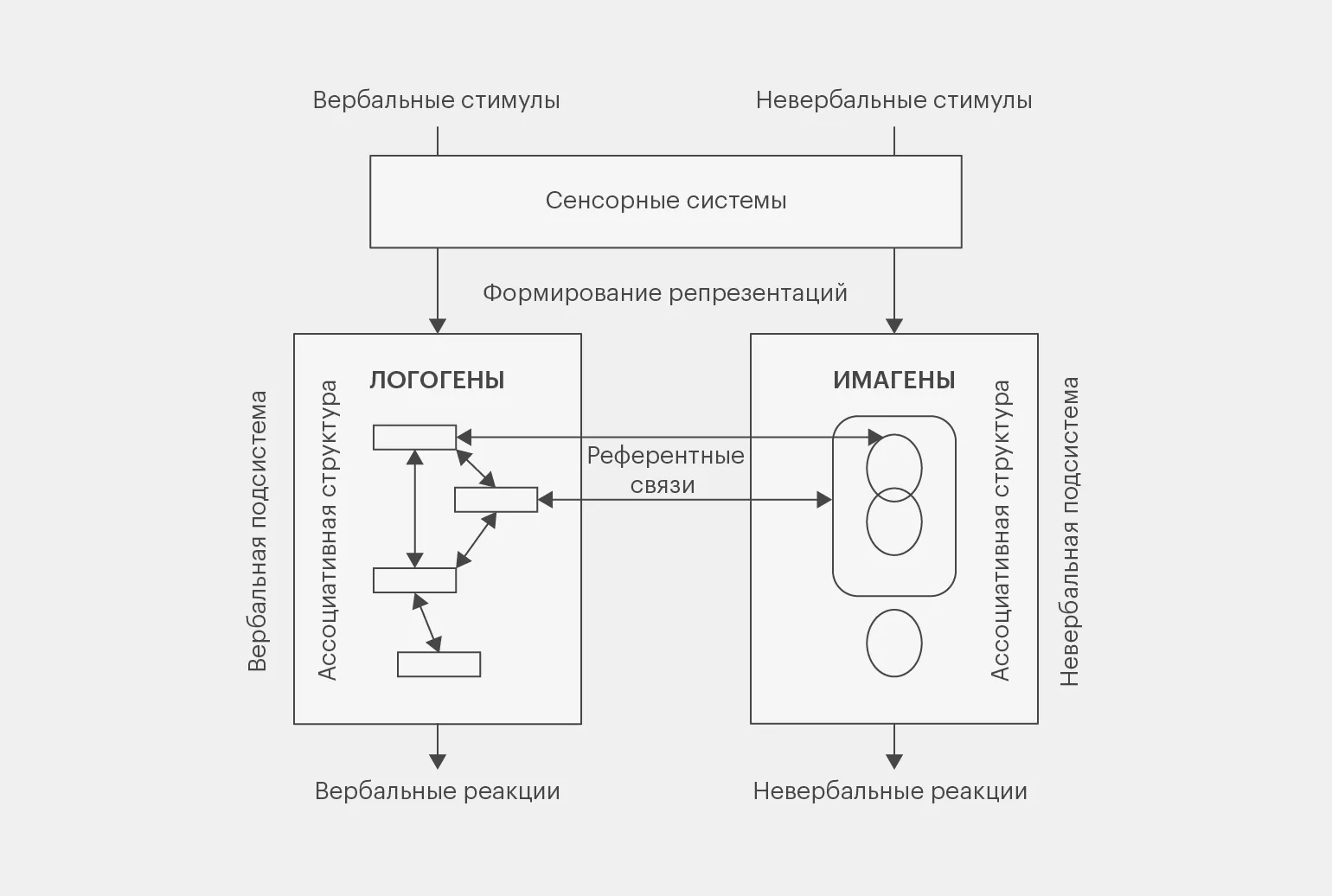
The diagram demonstrates the key differences between logogens and imagines. Logogens form hierarchical structures, allowing our minds to organize connections between specific and generic concepts, such as "currant," "gooseberry," "grape," and "berry." Verbal elements are processed sequentially: to understand the meaning of a sentence, words must be read one after another. In contrast, logogens are processed in parallel. When we see or imagine a classroom, we perceive it as a single image until we begin to focus on individual details. Images are dynamic; we can mentally change, move, and transform them, allowing us, for example, to imagine the movement of a ship crossing the ocean or to rotate geometric shapes in our minds. These differences in perception play an important role in cognitive processes and shaping our understanding of the world around us. Referential and associative connections between representations form extensive networks in human memory. Within these networks, individual logogens and imagines exhibit varying levels of activity at any given moment. External stimuli, such as seen objects or heard sounds, as well as conscious thought, can activate specific mental models. An active element in a network can evoke other elements, both verbal and nonverbal. Allan Paivio metaphorically describes this dynamic as a shifting landscape, where mountain peaks represent active chains of words and images, and valleys symbolize inactive elements. This process of activation and interaction of memory elements plays a key role in shaping our understanding and perception of information, which, in turn, has implications for cognitive research and psychology.
The Main Provisions of Dual Coding Theory
According to Allan Paivio's theory, the human learning process depends on the interaction of two subsystems: verbal and figurative. These subsystems play a key role in how we understand and remember new information. To optimize the learning process, it is necessary to activate both systems. This means that to effectively explain the material, it is necessary to use not only textual data, but also visual elements. This approach promotes deeper assimilation of knowledge and improves memorization of information.
Allan Paivio, while developing dual coding theory, began collaborating with his colleague James Clark. In their 1991 joint article, "Dual Coding Theory and Education," they outlined the main provisions of this theory in the context of learning. The authors drew on extensive research conducted in the 20th century. Let's consider the key principles of dual coding theory.
A principle is the foundation upon which many concepts and ideas are built. It represents a basic rule or law that determines how something should function. In various fields, such as science, philosophy, and art, principles help organize knowledge and ensure consistency in approaches. Understanding and applying principles allows you to achieve desired results and make informed decisions. It is important not only to know these principles but also to be able to adapt them to specific conditions and tasks. Principles serve as a guide in a world full of change and uncertainty.
Personal experience and individual characteristics play a key role in the formation of mental models and the connections between them in a person's mind. This means that the ways in which different memory elements are activated can vary greatly from person to person. In the example of the association game, you can see how each participant names the first thing that comes to mind after hearing a word or seeing an image. This approach demonstrates the unique way in which each individual perceives and processes information. Understanding these differences can be useful in psychology, education, and even marketing, as it allows for better tailoring of influence and training methods to the specific needs of the target audience.
Individual differences influence a person's ability to process nonverbal images. As Allan Paivio notes, some people easily use visualizations, while others require more effort to perform such tasks. For example, visualizing a solution to a geometric problem or memorizing the spelling of a complex word may be difficult for some, while others can handle it without difficulty. These differences highlight the importance of considering individual differences when teaching and developing skills related to nonverbal information processing.

Read also:
A person's background plays a key role in the process of memorizing new knowledge. It includes previous experience, knowledge, and skills that are formed throughout life. When we encounter new information, our brains tend to associate it with already known facts and concepts. This not only makes it easier to absorb the material but also significantly speeds up the learning process.
The more knowledge a person has in a given area, the easier it will be to integrate new information. For example, when learning a new language, a person with experience in grammar or vocabulary of other languages will more quickly assimilate the rules and words. Understanding the basics in any discipline serves as the foundation for further learning and memorization.
Furthermore, having a background helps form associations, which are a powerful tool for memorization. When new information is associated with something already known, this significantly increases the likelihood of its retention. Thus, developing and strengthening your background becomes an important part of effective learning and memorization of new knowledge.
A principle is the foundation on which any action, decision, or system is built. Broadly speaking, principles are the basic rules or laws that guide behavior and decision-making. They can be applied in various areas of life, including science, philosophy, business, and everyday situations. Understanding and adhering to principles allows you to achieve your goals more effectively and consistently. Principles serve as a guide, help form stable beliefs and strategies, and ensure integrity and consistency in actions. It is important to recognize that principles may change over time and adapt to new conditions, but their essence remains unchanged—they are fundamental truths that help you navigate a complex world.
The activation of mental representations is influenced not only by a person's experience and individual characteristics, but also by the current context and the specific task they are solving. The same words and images can evoke different associations depending on the situation—be it everyday communication, discussing work tasks, or studying scientific materials. This emphasizes the importance of context and purpose in the process of perceiving information and forming mental models.
The activation of specific connections can be achieved through effective instructions. For example, asking students to match images to given phrases and showing them pictures for visualization can significantly facilitate the activation of the nonverbal perceptual system. Instructions can also influence the activation of connections in the verbal and figurative subsystems. A task formulation such as "Name the synonyms of these words" is more precise than "Name similar words." This helps students focus on analogous concepts rather than antonyms or individual associations, which in turn promotes deeper understanding and improved memorization. A principle is the foundation upon which various systems, theories, and practices are built. It defines the basic rules and laws that govern the behavior of objects and processes. Principles help establish order and logic in the analysis and interpretation of information. Principles may vary across fields such as philosophy, science, economics, and art, but their primary function remains the same: to provide structured understanding and support for decision making. It is important to recognize that principles not only form the foundation of knowledge but also serve as a guide for achieving goals and solving problems. They help simplify complex processes and make information more accessible.
The concreteness of information plays a key role in the process of its perception. The more concrete the information, the stronger the connection between the nonverbal image and the word. For example, the terms "book" and "teacher" easily evoke vivid images, while abstract concepts such as "learning" or "motivation" may be difficult to visualize. This emphasizes the importance of using concrete terms for more effective communication and knowledge transfer.
Dual coding theory is based on research showing that visual images and concrete concepts are remembered more effectively than abstract words. In his paper at a 2006 conference sponsored by the University of Michigan School of Education, Allan Paivio emphasizes the importance of using both verbal and nonverbal means to enhance the learning process. In his view, combining words and images promotes deeper understanding and long-term retention of information. This makes dual coding a powerful tool in educational methods, allowing students to better absorb material and apply it in practice. Research shows that information retention improves significantly as we move from abstract to concrete terms. For example, words like "society" and "justice" are less memorable than concrete objects like "chair" or "crab." This rule also applies to longer texts: memorization of concrete words and sentences, on average, exceeds the memorization of abstract ones by 200%. This advantage is especially pronounced in associative memory tasks, where concrete words and images serve as cues for recalling information. Thus, using concrete objects and visual images in learning and memorization can significantly improve the effectiveness of material acquisition. A principle is a foundation or rule on which a system of knowledge, actions, or beliefs is built. It serves as a guide for decision-making and behavior. Principles can be both moral and scientific, and they help people navigate complex situations by providing stability and predictability.
Principles may vary in different fields, such as philosophy, science, or business, but their general purpose remains the same: to simplify understanding of the world around us and guide actions. Principles also serve as a foundation for the creation of new theories and concepts, contributing to the development of knowledge and practice.
A clear understanding of principles in your field of activity contributes to more effective decision-making and increases trust among colleagues and clients. Applying principles in everyday life helps shape values and beliefs, which, in turn, influence the quality of decisions and results.
In educational and scientific texts, abstractions play an important role. However, as the author of dual coding theory argues, the nonverbal system contributes to a better understanding of the material. It visualizes not individual concepts, but the connections between them. Classification and systematization of information can be represented in the form of pyramids, tree structures, or tables. Diagrams and other schematics clearly show the similarities, differences, and relationships between concepts and sets. A striking example is the classification of living organisms, from domain to species. Using visual elements in teaching significantly improves the assimilation of information and promotes a deeper understanding of complex concepts.
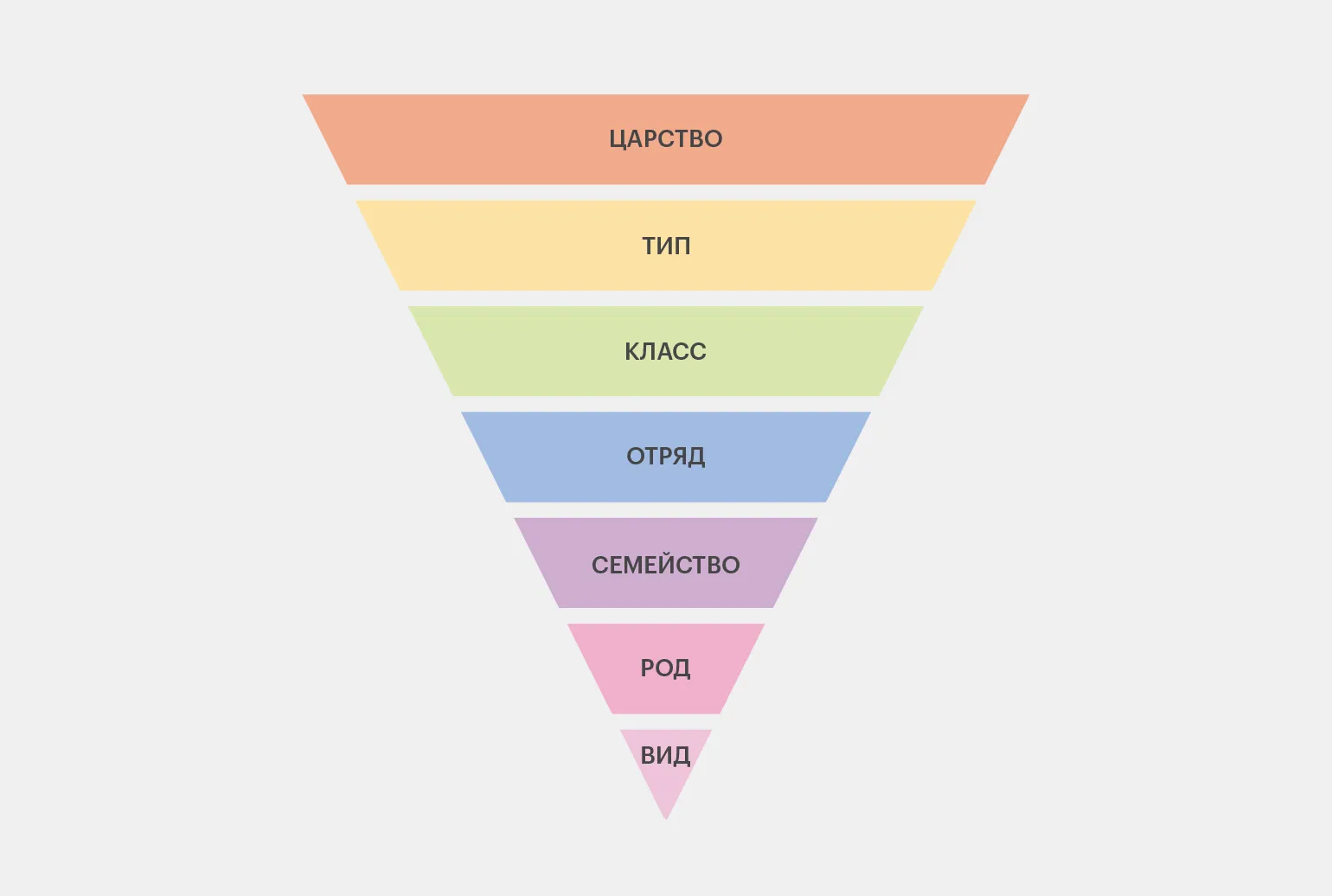
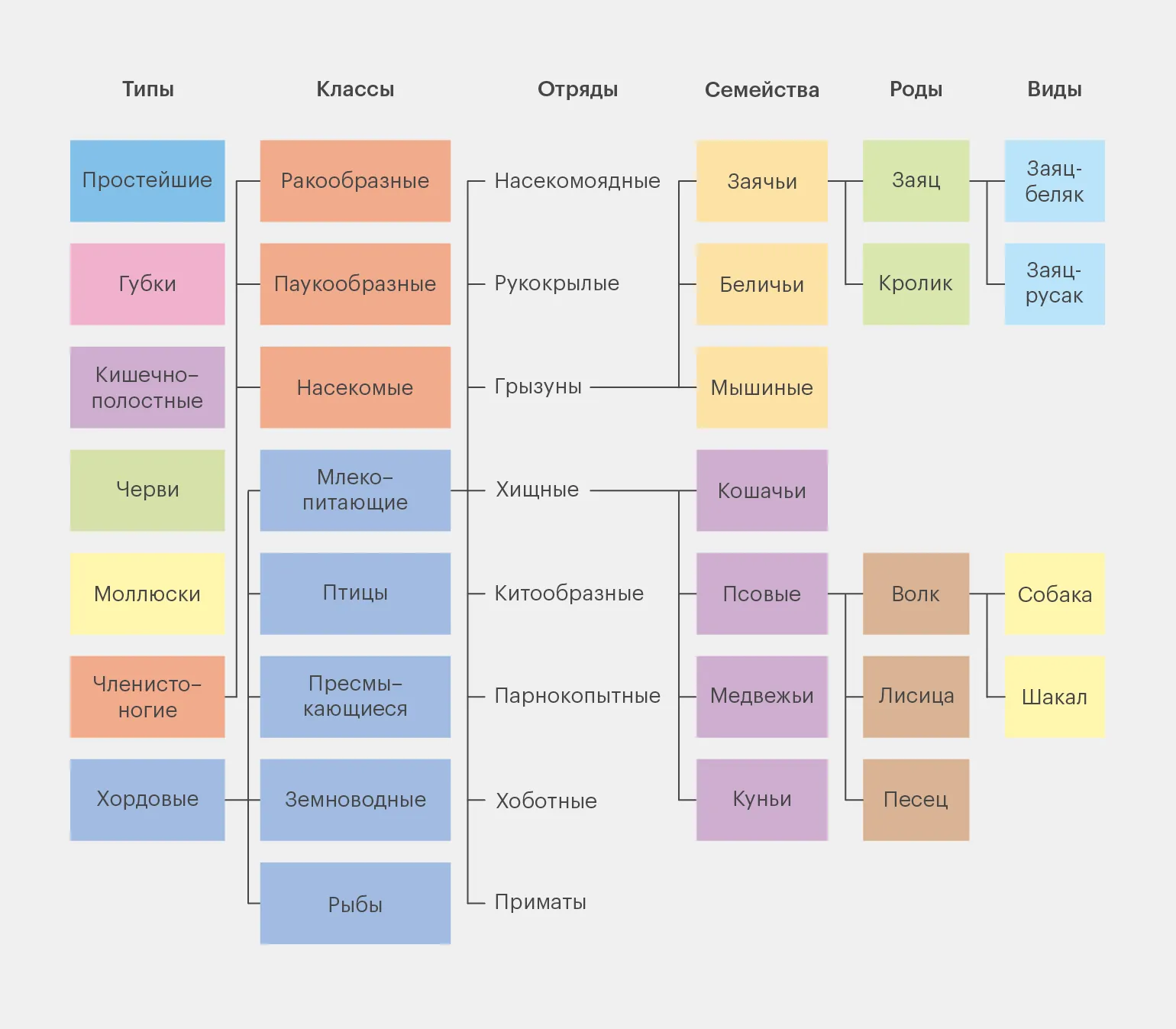
The mind mapping method is based on the visualization of connections between verbal elements. This approach involves creating a diagram with a central theme at the center, and branches representing related ideas and subtopics. Using mind maps promotes better understanding and retention of information, as well as helps organize thoughts and structure knowledge. This method can be useful for both individual learning and group work, allowing for the effective generation and development of ideas.
A principle is a fundamental rule or foundation upon which a system of beliefs or actions is built. In various fields, such as science, philosophy, or art, principles serve as guiding concepts that help make decisions and shape approaches to problem solving. Understanding principles allows for a deeper understanding of how systems operate and facilitates more effective interaction with them. Principles can be universal, applicable across different contexts, or specific to a particular field. It is important to consider that adherence to principles promotes stability and predictability of results.
Allan Paivio argues that words or text are remembered much better if they are organized logically and clearly. For example, words that belong to the same category or have a common association are easier to remember than random, unrelated words. Words such as "tiger," "hare," "crane," and "turtle" are united by the concept of "animals," which serves as a kind of "key" for retrieving information in memory. When working with texts, a clearly defined main theme, summary, and outline contribute to effective memorization. These elements structure the content and activate connections between individual sections of the text, significantly facilitating the memorization process. Using such methods can improve not only the effectiveness of learning, but also improve information processing skills.

To improve SEO and make the text more informative, I suggest the following option:
Read also:
We recommend that you familiarize yourself with additional Materials that will help deepen your knowledge on this topic. These articles contain useful tips and recommendations that can be useful for both beginners and experienced users. Don't miss the opportunity to expand your horizons and gain new insights that will help you in your work.
Rosenshein Principles for Teachers: What They Are and How to Apply Them
The Rosenshine Principles are a set of pedagogical strategies designed to improve the effectiveness of learning. These principles help teachers organize the learning process in a way that makes it more structured and understandable for students. The main goal of these principles is to improve the quality of education and develop critical thinking in students.
A key aspect of applying the Rosenshine principles is an emphasis on active student participation in the learning process. Teachers are encouraged to create an environment in which students can independently explore topics, ask questions, and seek answers. This promotes deeper learning and the development of analytical skills.
It is also important to take into account the individual characteristics of students. Rosenshine's principles emphasize the need for a differentiated approach to instruction. Teachers should adapt their methods based on the skill level and interests of their students, enabling each student to achieve their best. Implementing these principles in the educational process requires teachers to continually develop themselves and be open to change. The use of modern technology and interactive teaching methods can significantly increase student engagement and make classes more interesting and productive. Thus, Rosenshine's principles are an important tool for teachers seeking to improve the quality of learning and develop students' essential skills. Their application will help create a more effective and motivating learning environment. A principle is a fundamental idea or rule underlying a system, concept, or behavior. In various fields, such as science, philosophy, or business, principles serve as the basis for decision-making and action. They help organize thoughts, define goals, and direct efforts toward achieving desired results. Understanding principles allows for a deeper understanding of processes and phenomena, as well as the effective application of knowledge in practice. While principles may vary depending on the context, their universality makes them essential for success in any field.
According to dual coding theory, concrete and figurative information significantly enhances memorization. This emphasizes the importance of using visual examples and detailed descriptions for effective learning. The more vivid and clear the images, the easier it will be to retain information in memory.
Allan Paivio proposed the summation hypothesis, which explains how information is memorized more effectively. According to this hypothesis, memorization becomes more productive when the verbal and figurative subsystems of the brain are simultaneously activated. In experiments, participants were able to name the objects presented in the pictures while viewing a series of images. In this process, the brain uses dual coding, registering both visual and verbal information. Research shows that images are easier to remember than words and contribute more to the summation effect. This highlights the importance of using visual elements in learning and memorization, as they can significantly improve retention.
According to Paivio, people are less likely to create mental images for words, which leads to poorer retention of verbal information compared to images. Abstract concepts are particularly difficult to visualize, activating only the verbal perceptual system. As a result, dual encoding of information does not occur, making memorization of such material more difficult. This highlights the importance of using visual elements to improve retention and effective learning.
A principle is the foundation upon which any action or system is built. It defines the basic rules and approaches aimed at achieving a goal. Principles can range from moral and ethical to scientific and practical. Understanding principles allows for informed decisions and consistent action. In various fields, such as economics, psychology, or management, principles play a key role, providing stability and predictability. Understanding and applying these principles helps not only in professional work but also in everyday life, enabling success and harmony.
Allan Paivio's "coat hanger" hypothesis relates to the effects of concreteness and imagery. This hypothesis posits that concrete words can serve as effective cues for recall. Paivio calls these "coat hangers." For example, when a person hears the words "monkey" and "bicycle," a vivid image of a monkey riding a bicycle comes to mind. This visual representation helps quickly recall the second word—"bicycle"—when the first is mentioned. Paivio experimented with various combinations of concrete and abstract words and concluded that concrete cues significantly improved recall, providing a greater advantage than the concreteness of the words being recalled. This effect confirms the importance of visual associations in cognitive psychology and may be useful in a variety of areas, including learning and memorization. Not only individual words but also key moments in a text can act as "coat hangers." A study conducted by Mark Sadoski of Texas A&M University demonstrates the importance of climax for reading retention. In the experiment, fifth-graders were asked to read a story with a vivid climax and then highlight the most memorable scenes. Children who described the climax were later able to recount the entire plot more fully and accurately, compared to those who did not focus on it. Sadoski explains this phenomenon by the fact that some students were able to visualize events while reading. The image of the climactic scene became a "coat hanger" on which they could hang other episodes of the story, significantly improving their ability to recall information. This highlights the importance of focusing on key points in a text to enhance understanding and retention.

According to Allan Paivio, the targeted use of the "coat hanger" strategy facilitates the memorization of both concrete and abstract information. For example, visualizing an abstract concept, such as "justice," as a judge in a robe significantly improves its memorization process. This principle underlies many mnemonic techniques that allow you to associate abstract information (for example, the name of a new acquaintance, an important date, or a foreign word) with concrete concepts or vivid mental images. Such "coat hanger images" are easily remembered and facilitate subsequent retrieval of the necessary information from memory. Using this strategy can significantly improve learning efficiency and enhance memorization skills.
Rework this text, preserving its core theme and content while optimizing it for SEO. Avoid adding unnecessary characters or emojis, and avoid using structured sections. Provide clean text without additional elements.
Read also:
Researchers have identified effective methods for improving memory and memorization. In today's data-saturated world, it's important not only to acquire information but also to remember it. Scientific research shows that using various techniques, such as association, repetition, and visualization, significantly contributes to better assimilation and long-term retention of knowledge. These strategies help activate different areas of the brain, making the memorization process more productive. Applying these techniques to everyday life can significantly improve information retention and memory.
How Dual Coding Theory Is Applied to Teaching
Teaching practices based on dual coding theory are widely used in both face-to-face and online education for children and adults. Research by Allan Paivio and his colleagues effectively generalizes and confirms many of the patterns known to educators in practice. Clearly, students retain information better when it is accompanied by examples, and visual materials such as illustrations and diagrams contribute to a deeper understanding and memorization of complex topics. Implementing these approaches into the educational process is key to improving the quality of learning and achieving sustainable results.
It is important to remember that dual coding theory is often simplified to the principle of simultaneous presentation of verbal and visual information. However, the original article on this theory focuses on the principles of text organization. According to Paivio and Clark, the learning process should combine visual elements with concrete examples and analogies that are as close as possible to students' experiences. Furthermore, verbal material should have a clear structure, which can be achieved, for example, by creating a lecture outline on the board. This ensures better retention of information and promotes more effective learning. Visual elements play a key role in learning and can take various forms, including infographics, diagrams, flowcharts, animations, and videos. These elements not only make the learning process more engaging but also promote better information retention. Such content can be prepared in advance or created in real time, for example, by drawing a mind map or diagram during oral explanations. Using visual aids helps students better understand and remember material, making learning more effective. Larisa Milyaeva, Senior Lecturer in the Department of English Language and Professional Communication at the Financial University under the Government of the Russian Federation, recommends that students create their own sketches to summarize and reinforce the material they are learning. Valentina Bratash, a researcher at St. Petersburg State University, also emphasizes the importance of sketching in the educational process, noting the need to prepare students for this method. She emphasizes that when evaluating sketches, one should focus not on artistic skills, but on the content and the student's ability to analyze and structure information. Using sketches as an educational tool promotes deeper knowledge acquisition and develops critical thinking skills in students.

Reading is an important aspect of our lives that enriches our intelect and broadens our horizons. It helps develop critical thinking, improves vocabulary, and promotes emotional development. Reading books, articles, and scientific research allows you to deepen your knowledge in various fields. Furthermore, reading is an excellent way to relax and unwind, allowing you to take a break from everyday worries. It is important to choose a variety of sources of information to form a more complete picture of the world. Therefore, devote time to reading to enrich your thoughts and gain new ideas.
An unusual practice of using drawing in non-artistic activities
Drawing is not only a means of self-expression but also an effective tool that can be used in various non-artistic fields. In recent years, there has been a growing interest in integrating artistic methods into educational and professional processes. The use of drawing in such contexts promotes a deeper understanding of the material, improves memorization of information, and develops creative thinking.
In educational institutions, drawing can serve as a means of visualizing complex concepts, which is especially relevant in the sciences, such as mathematics and physics. Students who create visual representations of learning material more easily absorb information and make new connections between different topics.
Furthermore, drawing can be a useful tool in the business environment. In meetings and strategy sessions, the use of diagrams and graphs helps teams better organize their thoughts and find optimal solutions. Visual elements make presentations more memorable and understandable, leading to more productive discussions and decision-making.
The therapeutic aspects of drawing should not be forgotten either. In the context of psychological support and personal growth, drawing helps people cope with stress, express emotions, and improve overall psycho-emotional well-being. Thus, the use of drawing in non-artistic disciplines opens new horizons for the development of both individuals and teams.
Richard Mayer, the author of the theory of multimedia learning, offers detailed recommendations for the effective combination of oral explanations, images, and text. His principles, based on dual-coding theory, are primarily applicable to structuring content in slide-based courses and educational presentations. These approaches help optimize information comprehension and improve learning outcomes. In this article, we have examined the key aspects of his recommendations in detail.
When applying the theory, it is important to consider the characteristics of individual students
Cognitive learning theories are relatively new and continue to evolve. New research prompts scientists to reconsider previously established principles and recommendations. Different theories sometimes complement or clarify each other. For example, within the framework of cognitive load theory, there is a redundancy effect. It indicates that, under certain conditions, a combination of different formats for presenting information can overload working memory, which negatively affects comprehension and memorization. Richard Mayer also confirms this. However, research shows that the influence of this effect largely depends on the level of knowledge of students. For less experienced students, it is important that a diagram is linked to the corresponding text, as this facilitates comprehension of the information. While more experienced learners may be able to perceive the same diagram without the additional text, which in this case may be distracting and increase cognitive load.
Therefore, when developing educational materials, it is important to take into account the level of preparation of students and optimize the presentation of information to increase its effectiveness.
The profession of Methodologist from scratch to PRO
You will improve your skills in developing curricula for online and offline courses. Master modern teaching practices, structure your experience, and become a more sought-after specialist.
Find out more