
Contents:
- Who participated in the study
- What training formats are being chosen in 2024
- Do Russian companies need AI?
- How educational content is being developed
- How training effectiveness is being assessed in 2024
- What technical services are being used in corporate training in 2024
- Are Russian trends similar to foreign ones?
Every spring, the Digital Learning community, in partnership with Equio, conducts a study aimed at analyzing the state and trends of the Russian corporate training market. This study helps identify companies' current employee training needs and determine key development areas in corporate training in Russia. The study results serve as an important tool for all market participants, enabling them to improve the quality of educational programs and adapt them to the requirements of modern business.
In 2024, the study covered fewer questions and was more modest in scope compared to previous years. Nevertheless, the initiators emphasize that the study results still provide an opportunity to assess current trends and changes in the market. The data obtained can be compared with the figures for 2022 and 2023. The organizers presented the results of the study on June 18, allowing analysts to gain a deeper understanding of market dynamics.
Who participated in the study
In May 2024, 100 members of the Digital Learning community completed a survey designed for researchers. Respondents included employees of various companies representing a wide range of industries and sectors. This provided valuable insight into current trends and needs in the field of digital learning. The results of this survey will help to better understand how approaches to education are developing and what technologies are becoming most in demand in the modern educational process.
- up to 100 people — 14.4%;
- from 100 to 1000 people — 22.7%;
- from 1000 to 3000 people — 19.6%;
- from 3000 to 5000 people — 12.4%;
- from 5000 to 10,000 people — 8.2%;
- from 10,000 people — 22.7%.
Various business sectors were represented in the survey, but IT specialists were the most common, making up 17.5% of the total number of participants. Representatives of the manufacturing and financial sectors came in second place, with 14.4% each. The smallest number of respondents came from the energy and oil and gas industries, as well as from pharmaceuticals and retail.
Which learning formats are people choosing in 2024?
The situation with learning formats has remained stable over the past three years, as Pavel Bezyaev, founder of the Digital Learning community, noted in a survey. Despite talk that online learning has become boring and that in-person learning will soon become more popular, reality shows that no such changes have occurred. Online formats continue to remain relevant and in demand, which confirms the need to adapt educational programs to modern requirements.
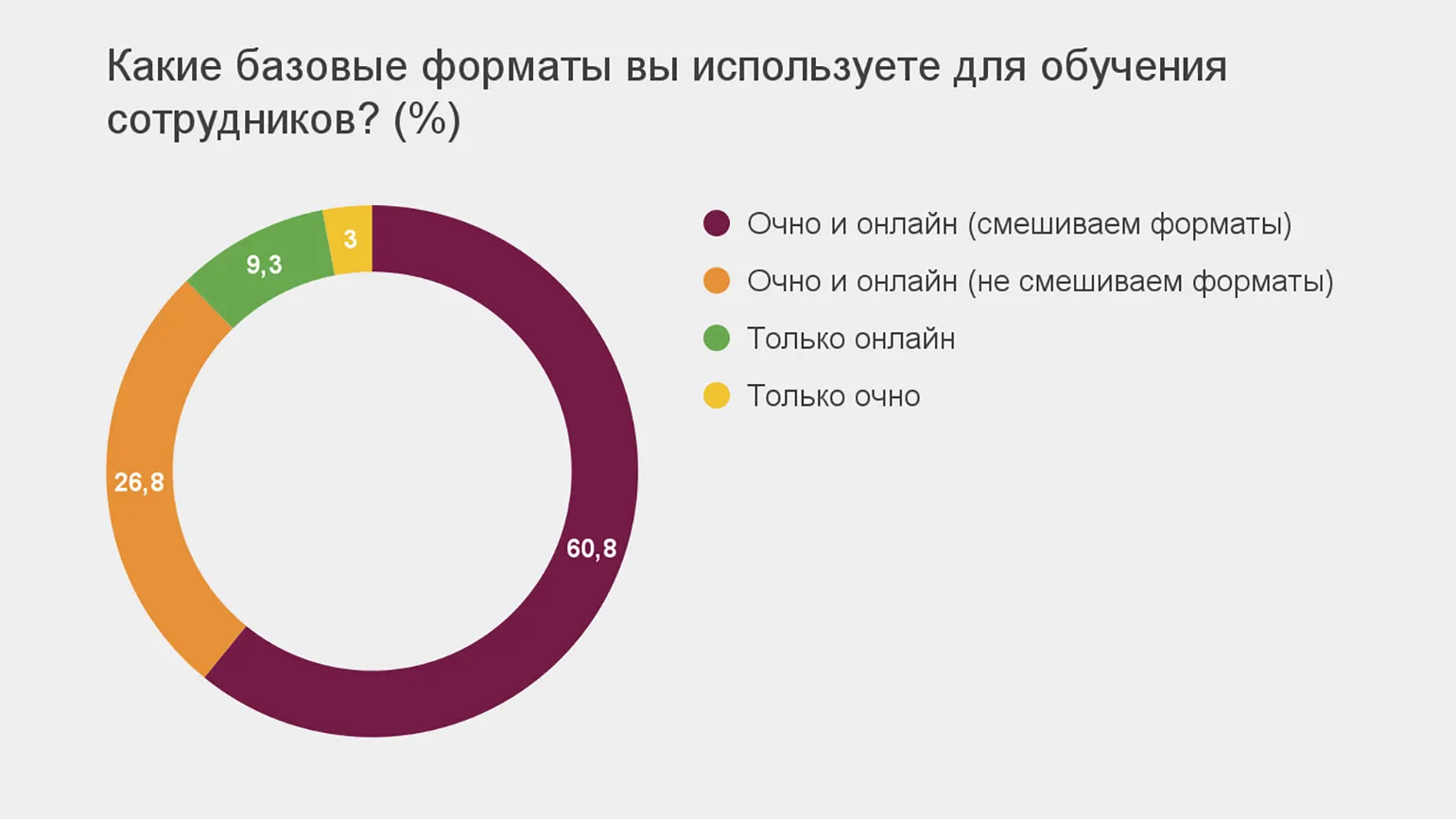
More than 60% of respondents noted that their companies integrate elements of online and offline training within a single program. Another 25% of respondents use both formats but do not combine them, choosing either in-person or online programs. Only 9% have switched entirely to a virtual format, and the share of those who prefer exclusively "live" training is even smaller. These data indicate the stability of practices in Russian companies, which, according to Pavel Bezyaev, indicates no need for change.
Last year, there were changes in content delivery formats. The most noticeable trend was the decline in popularity of slide-based courses, which ranked first last year and fell to third place in 2024. Respondents could select multiple answers, indicating that a third of respondents do not use slides even as a tool. This indicates a shift in audience preferences toward other formats for delivering information. Synchronous activities, such as webinars and master classes, rank first among online learning formats. Asynchronous video courses follow, providing flexibility in learning. Rounding out the top five are a combination of synchronous and asynchronous approaches, as well as longreads, which allow for deep immersion in the material. These training formats are in demand due to their effectiveness and convenience, allowing each participant to choose the most appropriate way to gain knowledge.
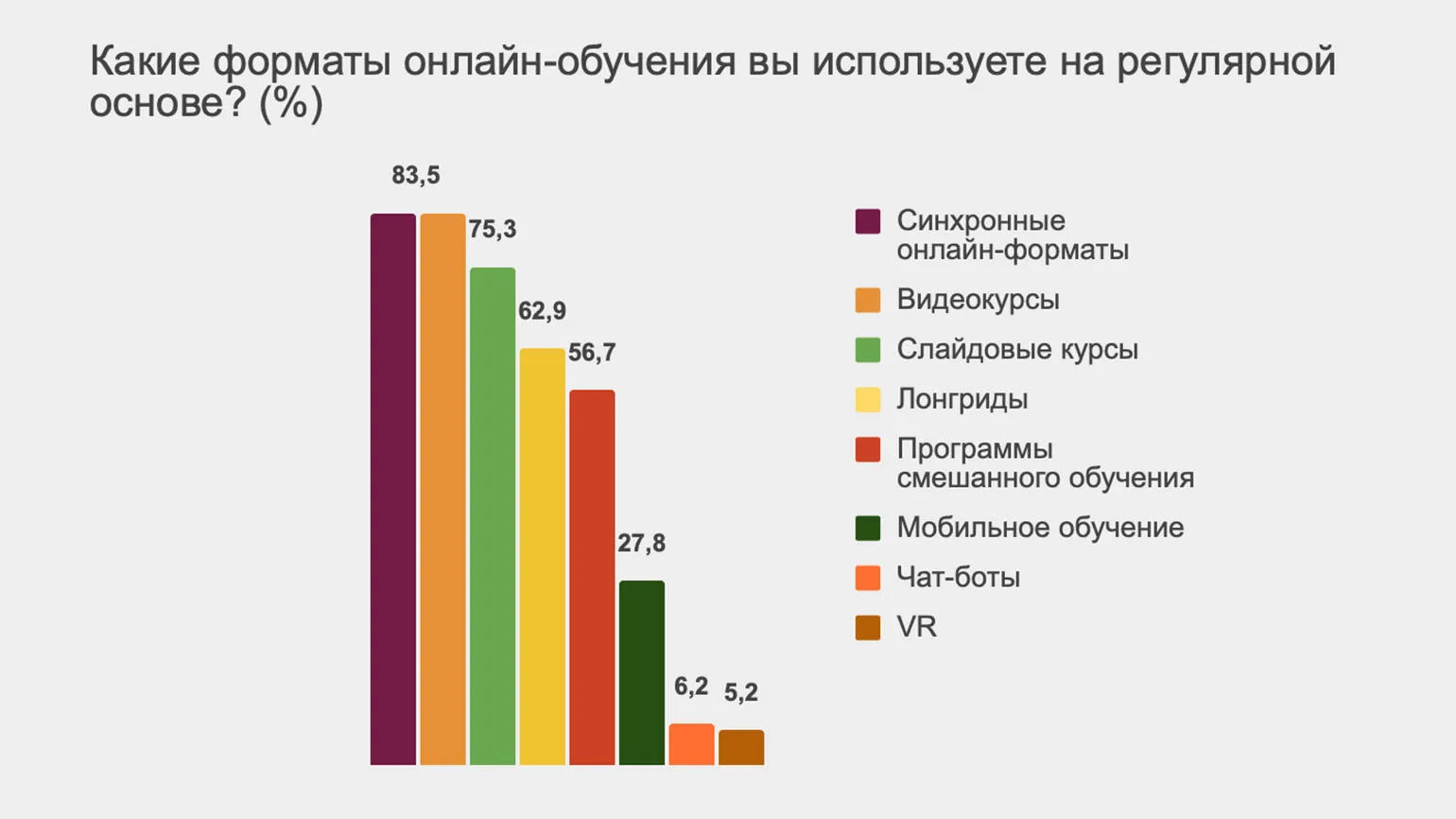
Interest in longreads continues to grow, as confirmed by Alexey Vagin, CEO of Equio, and Ekaterina Berger, Director of Business Development at iSpring. Experts attribute this trend to the emergence of new tools and designers that simplify the creation of interactive educational materials. Ekaterina Berger emphasizes that within a year, longreads could become one of the top three most popular corporate training tools. She notes that this format is especially convenient for small and medium businesses, as it is the starting point for course development. Having mastered longreads, companies can move on to creating more complex educational programs.
Learning formats that were discussed with interest in the Russian market several years ago and continue to be actively discussed abroad remain among the underdogs. Chatbot-based courses, as well as VR and AR courses, have yet to reach even 7% popularity. Mobile learning also ranks low in the rankings. However, experts emphasize that context is essential to properly interpreting this data. Alexey Vagin noted that mobile learning is a leading approach at his company. "It all depends on the specifics of the industry participating in the survey." For example, for courier services or retail, mobile training is critically important, since this is the only way to effectively convey information,” he added.

Reworked text:
Required Check out additional materials:
Blended learning for employees is a combination of traditional training and digital methods, which can present certain challenges. Key issues include lack of employee motivation, difficulties integrating different training formats, and the need for technical support. To overcome these challenges, it is important to create a clear training structure that takes into account the individual needs of employees and the specifics of their work. Active support from management is also necessary, which will help increase team interest and engagement. The use of modern technologies, such as online learning platforms and progress tracking tools, can significantly simplify the process. It is also important to regularly collect employee feedback to adjust approaches and improve the quality of training. Thus, by approaching blended learning strategically, you can effectively develop employee skills and improve overall company productivity.
Do Russian companies need AI?
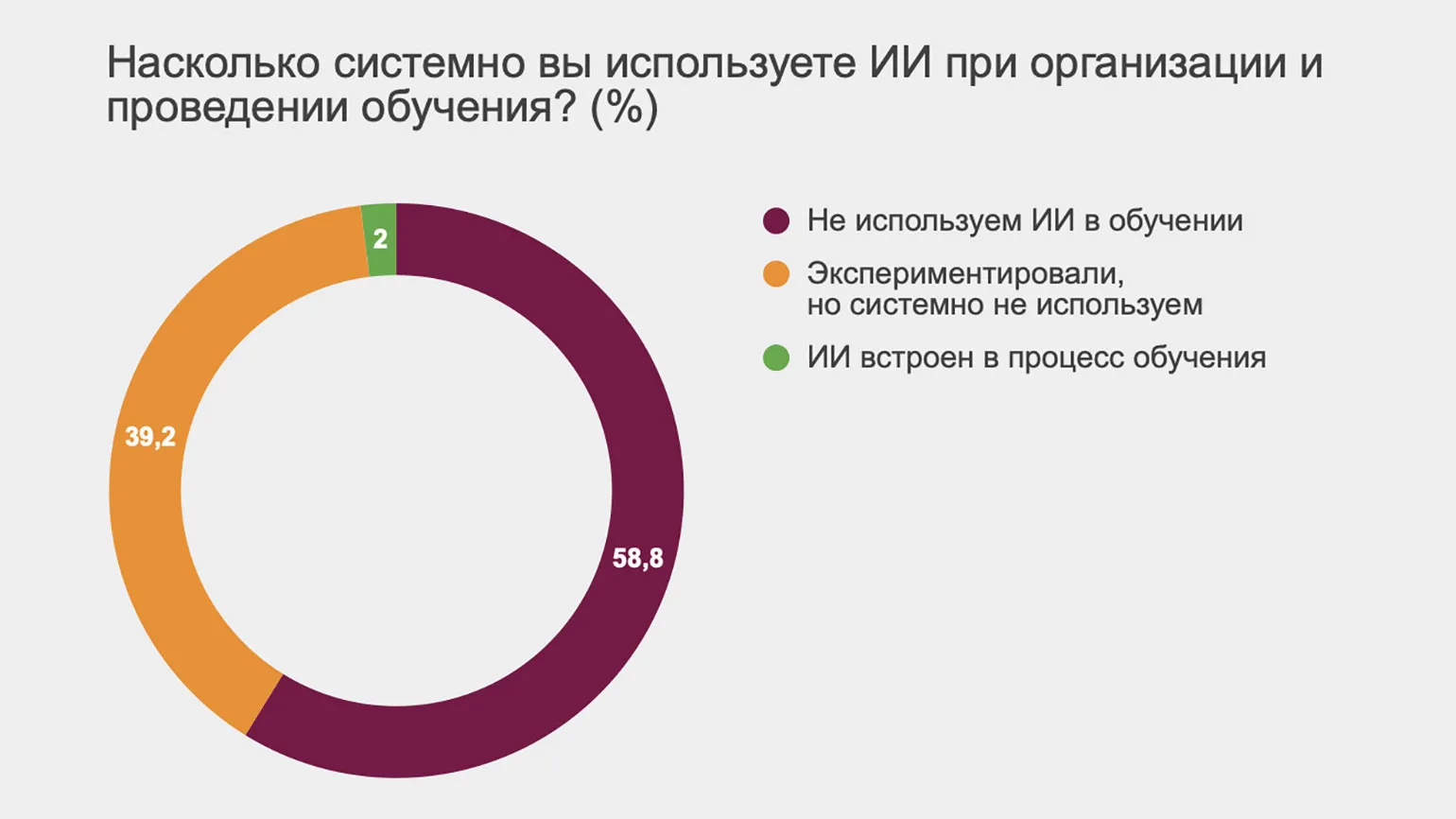
In 2023, the topic of artificial intelligence continued to develop rapidly, but only 13% of respondents were able to implement its tools in their work. According to a survey, the number of companies beginning to embrace AI technologies has increased significantly: nearly 40% of experiment participants are already using it in their processes, and 2% have fully integrated artificial intelligence into training. However, most organizations are still not ready for full engagement with AI, highlighting the need for further training and adaptation to new technologies. These data support the opinions of international experts regarding the current state of learning and development (L&D). According to Ross Stevenson, CEO of Steal These Thoughts and a specialist in corporate learning, most L&D professionals are in the research and experimentation phase with AI and will continue this practice until at least mid-2025. It is important to note that interest in artificial intelligence in Russia appears to be lower than in other countries. This may indicate the need to intensify efforts in this area to improve competitiveness in the international arena.
Artificial intelligence in learning platforms has yet to generate much interest among users. According to survey results, only 15% of respondents consider AI functionality a key element, while 20% expressed a desire to see such capabilities in their LMS. This suggests that the introduction of AI into the educational process requires more active discussion and demonstration of its potential to improve learning.
The study's authors also asked about the regularity and systematicity of the use of artificial intelligence in the content development process.
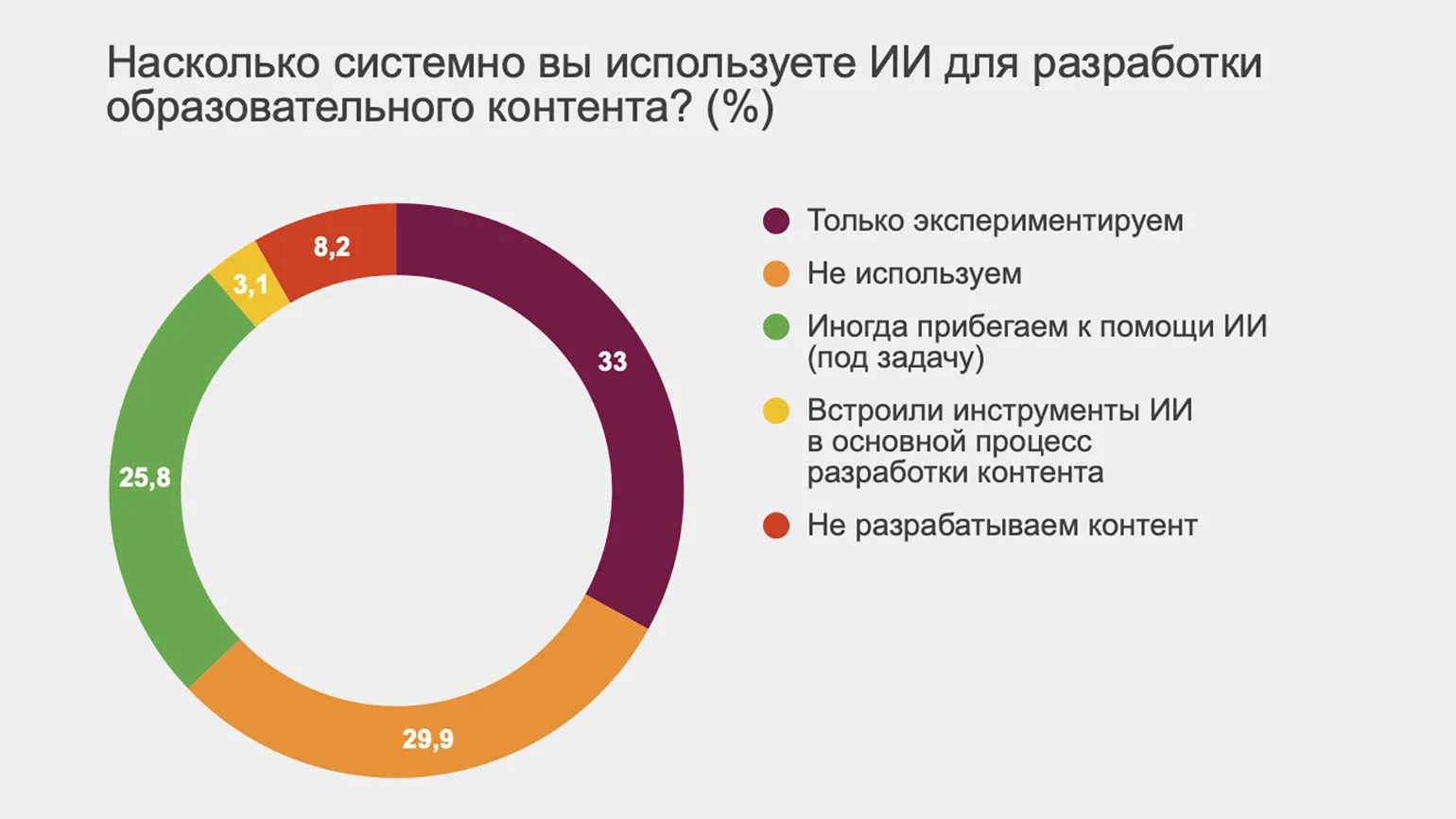
A third of surveyed users are just beginning to explore new opportunities related to artificial intelligence. A quarter of respondents turn to AI only when it is necessary to complete a specific task. However, 29% of survey participants said they do not use AI for content creation. However, due to the wording of the question, it is difficult to determine whether they are applying AI technologies in other areas or are not interested in such tools at all.

Read also:
AI is radically transforming Jobs and skills are changing, requiring employees to adapt to new conditions. First, the automation of routine tasks frees up time for more creative and strategic work, which increases overall productivity. Second, the need for skills related to data analysis and AI technology management is growing. This requires employees to continuously learn and improve their skills. Third, AI is facilitating the emergence of new professions and roles that did not previously exist, opening up additional opportunities for career advancement. Preparing for these changes is becoming a key factor in successfully adapting to the modern labor market.
How Training Content is Developed
For the third year, the survey has been examining who exactly develops training content for Russian companies. According to the research, the situation in this area appears unusual. In 2022 and 2023, 90% of respondents reported that their organizations create content in-house, and only rarely use content from third-party providers. This underscores the importance of developing training materials internally for companies, which can help them better tailor content to their business and employee needs. For several years now, the study's authors have emphasized that the constant creation of in-house courses and programs is losing its relevance, as the market is already saturated with a variety of offerings to suit every taste and budget. However, calls for purchasing ready-made content have yet to find widespread acceptance. This year, the number of companies producing their own content increased to 97%. This indicates that many continue to believe in the need to develop unique educational materials, despite the abundance of ready-made solutions.
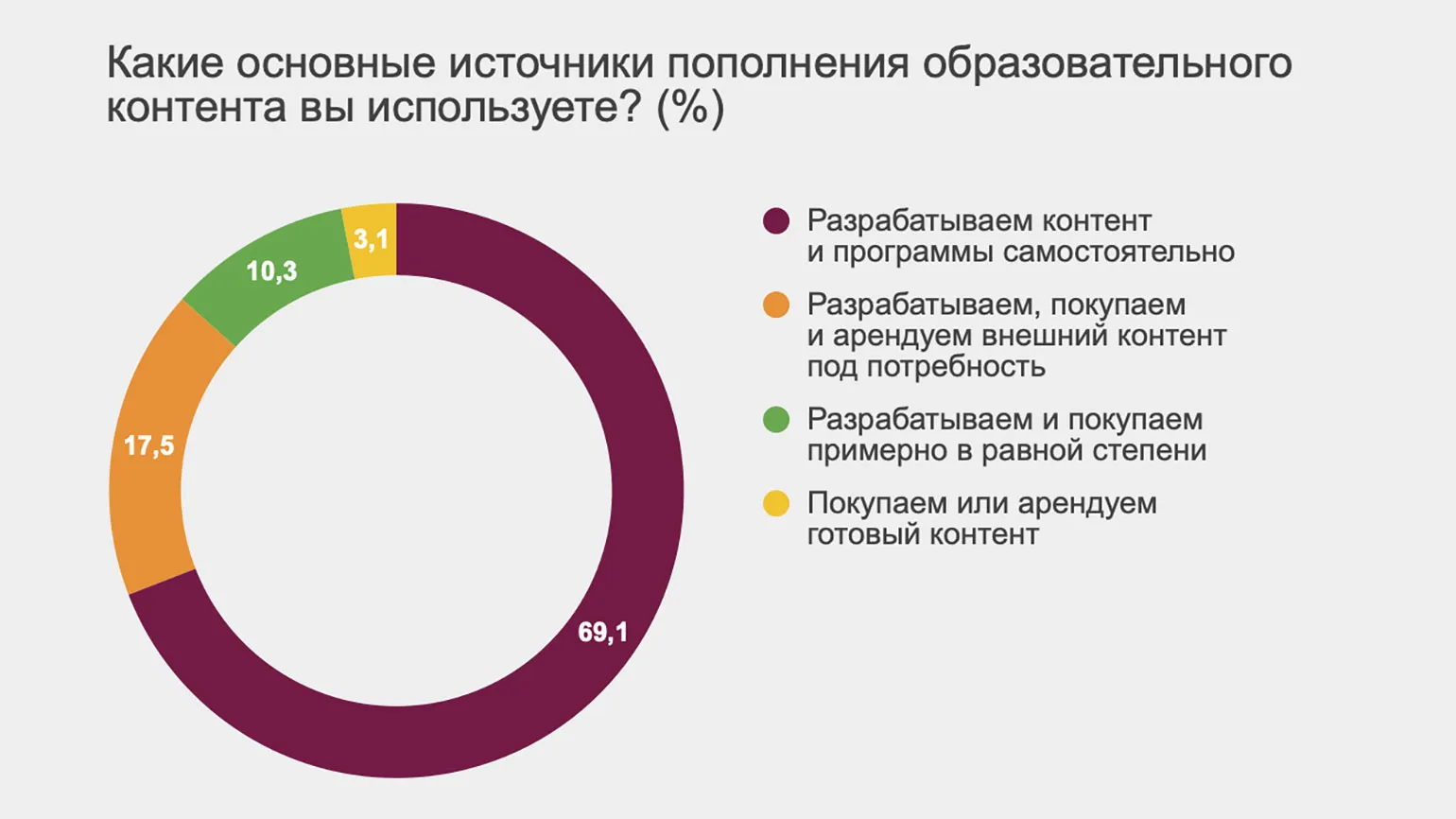
Numerous factors could explain this result. One interesting explanation was offered by Pavel Bezyaev, who noted that businesses perceive in-house content as free. He cited a situation from his own practice as an example: when he offered his consulting services, an employee at a Russian company suggested he become a full-time employee, as the specialist's services would then be free. At the same time, the cost of an external consultant would need to be justified to management. "This doesn't align with business thinking, but some people actually follow this logic: everything done in-house is perceived as free," the expert commented.
Despite this, there has been some progress in the content sector—the number of companies partnering with online schools is increasing. Previously, EdTech industry representatives often expressed dissatisfaction with the complexity of interactions in the B2B market. Businesses strive for customized solutions, which, as a rule, proves to be disadvantageous for both parties. Furthermore, as Pavel Bezyaev noted, massive online courses were long dismissed as insignificant for businesses, as there was little difference between courses offered by schools and content from bloggers on social media. This context highlights the need for a deeper understanding of the value of online education and its impact on business.
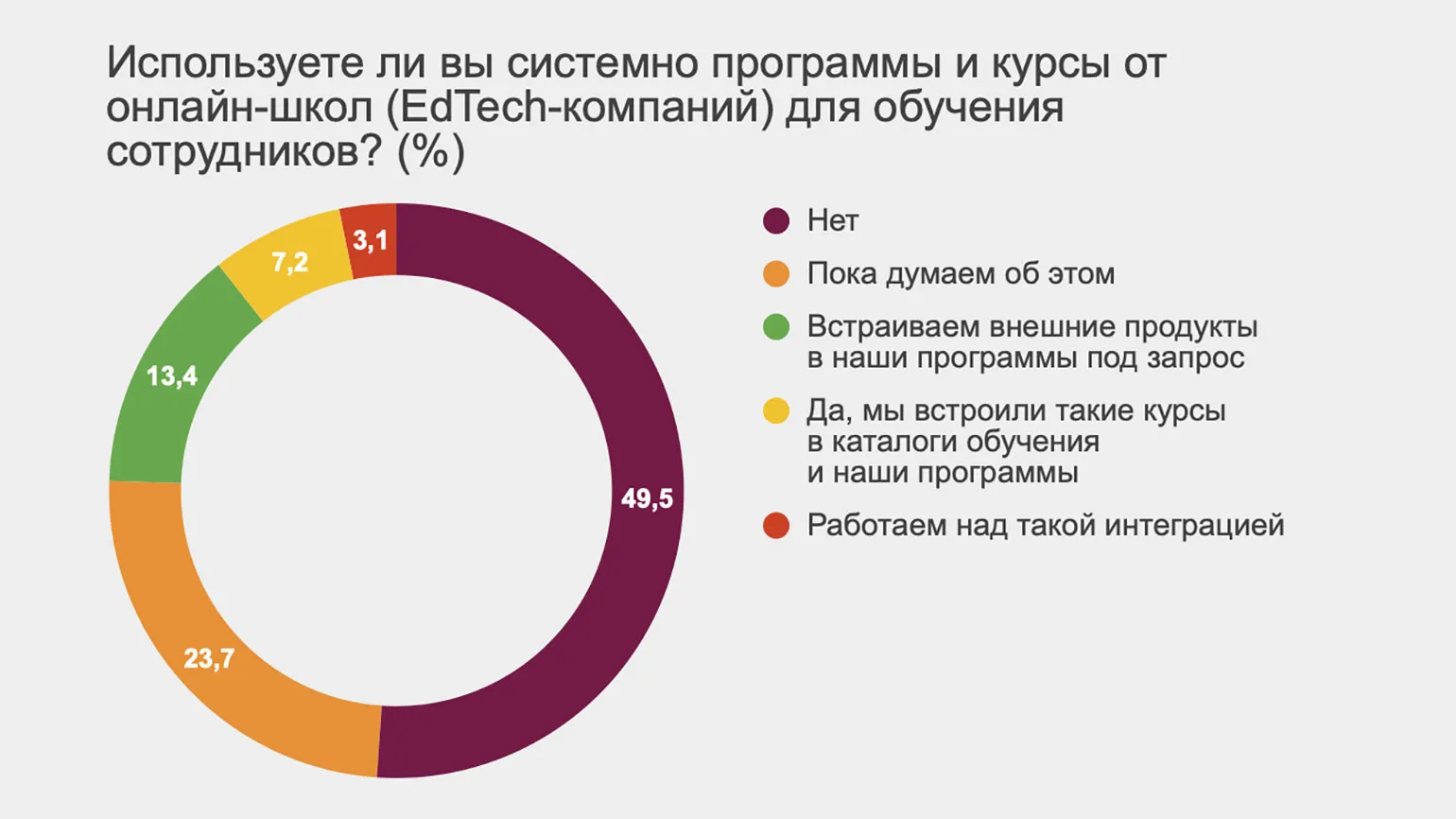
The situation in the field EdTech is gradually changing. In 2022, not a single survey participant had collaborated with EdTech companies, while in 2023, 5% of respondents had begun such collaborations, and 14% had begun using online schools periodically. In 2024, 7% of organizations had already integrated third-party courses into their employee training, more than 3% were in the process of developing such collaborations, 13% were acting on specific requests, and approximately 25% of respondents were considering engaging EdTech providers in their educational processes. These data confirm the growing interest in innovative educational solutions and the importance of integrating technology into corporate training.
How is training effectiveness assessed in 2024?
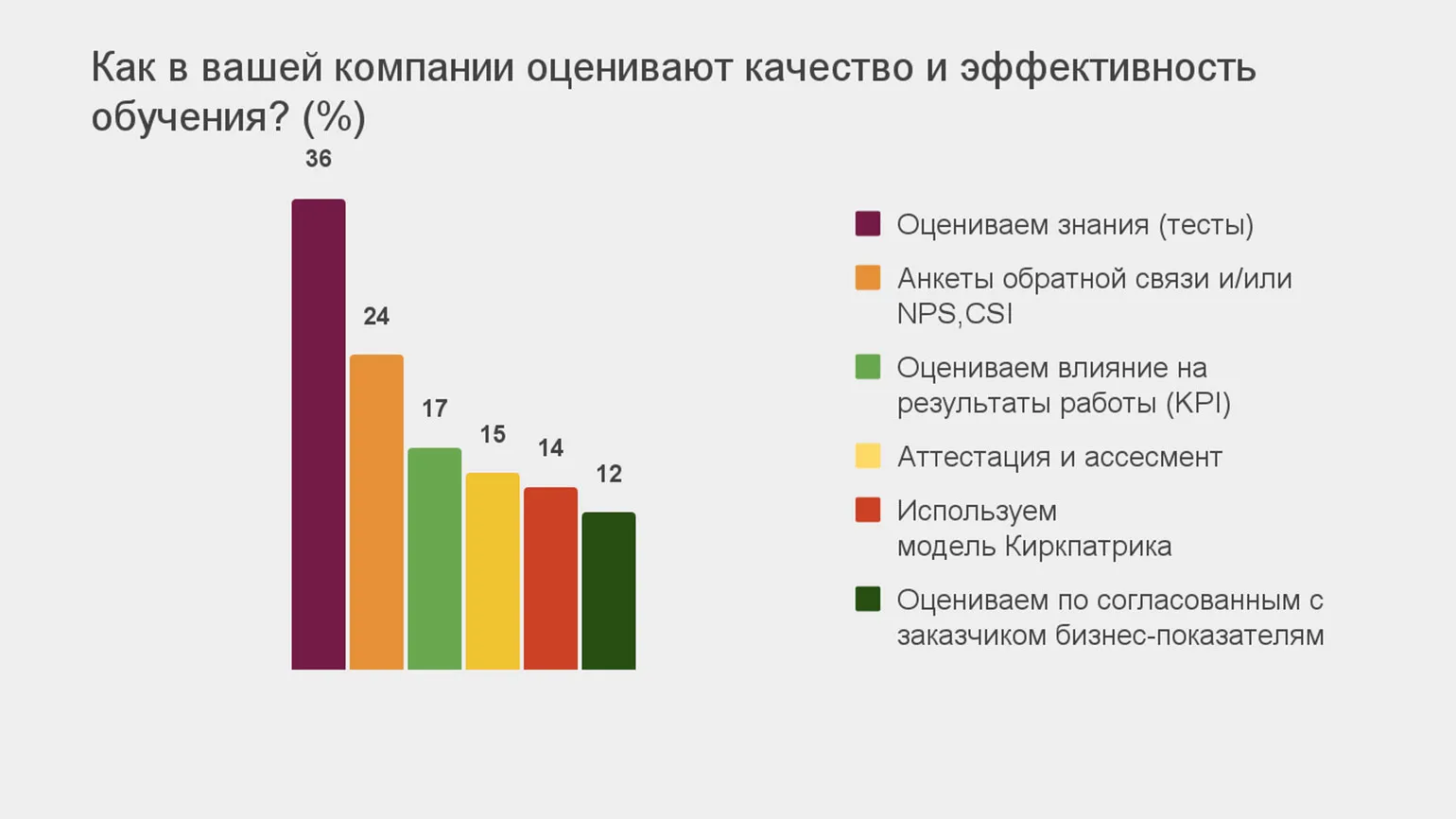
Assessing the effectiveness of corporate training remains a pressing issue both in Russia and abroad. Despite constant discussions about the need for T&D departments to collaborate with the business, assessment methods remain unchanged. Feedback questionnaires and tests remain the leading assessment tools. In 2024, the situation has not changed significantly: over 80% of organizations still use vanity tests and metrics, allowing respondents to select multiple answers from a list. This robust approach to assessing training effectiveness highlights the need for new methods that can more accurately reflect the true contribution of corporate training to business development.

Please note the following recommendations:
When reading materials, it is important to consider their quality and relevance. Choose sources that provide verified information and experts in their field. Regular reading improves your knowledge and broadens your horizons. Pay attention to articles that cover the latest trends and developments. This will help you stay informed and make informed decisions. Don't forget to share interesting findings with colleagues and friends to deepen your knowledge together.
Changes in the Structure and Objectives of Personnel Training in Russian Companies: Key Findings
Modern companies in Russia are faced with the need to adapt their personnel training processes to new conditions. In recent years, significant changes have been observed in both the training structure itself and its objectives.
Firstly, the emphasis is shifting from traditional training methods to more modern approaches, such as online courses and flexible formats. This allows employees to learn at their own time and pace, which contributes to increased learning effectiveness.
Secondly, companies are beginning to use individualized training programs that take into account the needs and abilities of each employee. This approach promotes deeper knowledge acquisition and increased employee motivation.
Thirdly, more and more organizations are recognizing the importance of practical learning. Internships and projects that allow employees to apply their acquired knowledge in practice are becoming an integral part of the educational process.
Fourthly, the use of technologies such as artificial intelligence and data analytics helps companies more accurately identify training needs and evaluate results. This allows for the optimization of programs and their effectiveness.
Finally, the development of soft skills such as communication, teamwork, and critical thinking is becoming an important task. These skills are essential for successful operation in a rapidly changing market and contribute to the creation of a more cohesive team.
Thus, Russian companies are reconsidering their approaches to personnel training, which allows them to more effectively respond to the challenges of the time and increase competitiveness in the market.
What technical services are used in corporate training in 2024
The authors of the study paid attention to companies' preferences in choosing LMS (distance learning systems). Two years ago, corporate training platforms were used mainly for their intended purpose, and users did not expect special features from them. However, in 2023, respondents emphasized the need for tool flexibility, advanced analytics, and a user-friendly interface. This indicates that companies are striving for more effective training solutions that can adapt to their specific needs and provide a deeper understanding of learning processes.
A year later, the situation with learning management systems (LMS) has remained virtually unchanged. Platform functionality remains a top priority for users, particularly in the areas of adaptive and personalized learning. Respondents emphasize the need for LMS improvements to enhance usability and improve the user experience. There is also a demand for advanced analytics capabilities that will allow for more effective tracking of learning progress and results.
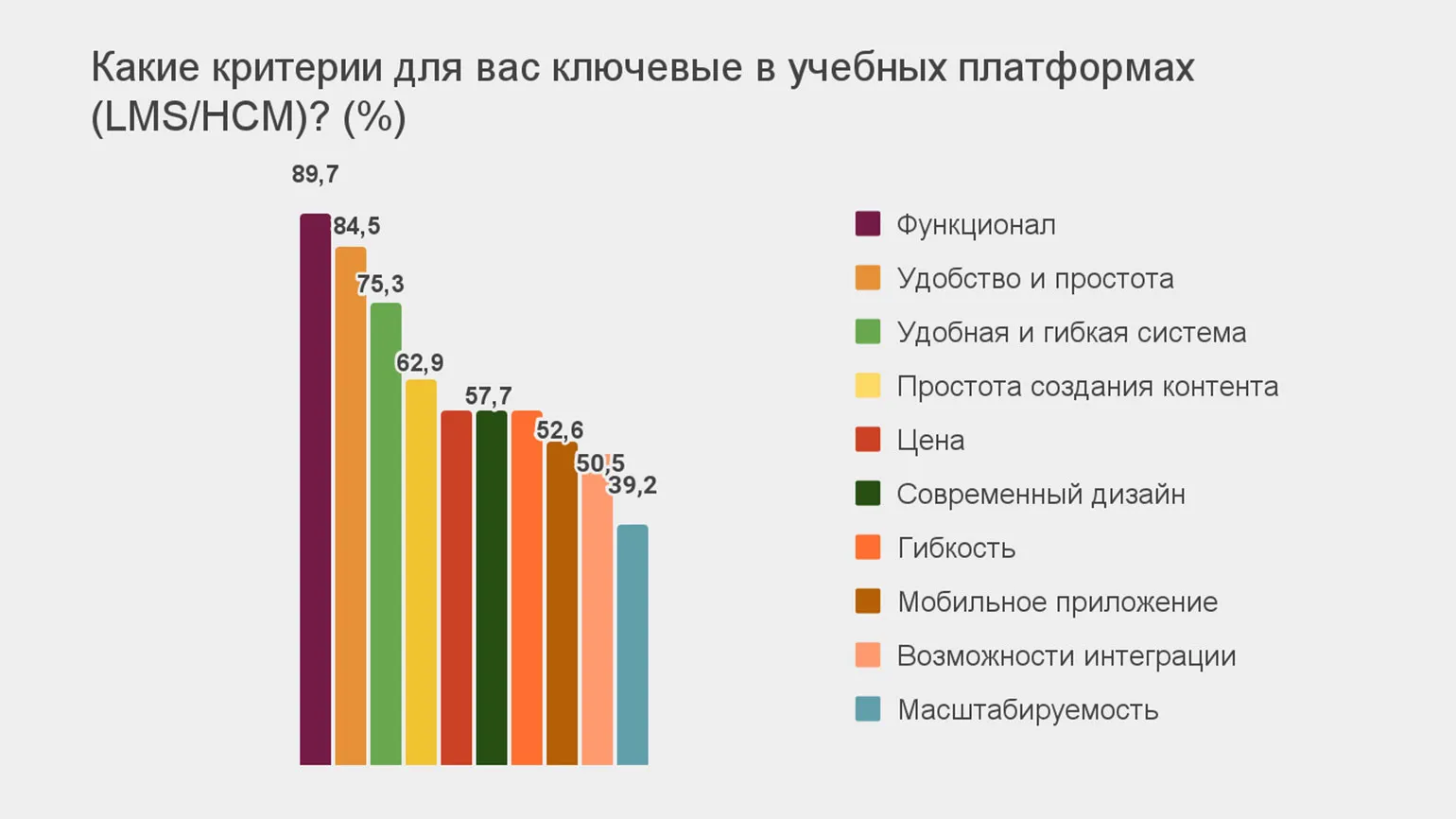
The report's analytics situation raises questions, as the authors themselves acknowledge. Pavel Bezyaev noted interest in corporate training, but only 15% of respondents rated "xAPI and CMI5 support" as key for an LMS. These tools provide advanced analytics, highlighting their importance. Alexey Vagin suggested that respondents may have selected the "comprehensive" option, which could have biased the results. However, experts agree that the full value of analytics tools has not yet been realized in this field. This highlights the need to raise awareness of the importance of advanced analytics in corporate training.
The survey authors emphasized the importance of security in corporate training. Currently, this aspect is not a priority for market participants, and this situation has persisted for two years.
The share of respondents planning to change their training system this year remains low—only 17%. In 2023, this figure was slightly higher, due to Russian businesses actively seeking replacements for foreign solutions. As a result, the domestic LMS (learning management system) vendor market demonstrated significant revenue growth during that period, reaching 4.49 billion rubles compared to 2.11 billion rubles in 2020. However, according to the current survey, this growth may be less noticeable in 2024. Currently, LMS systems are mainly updated when companies undergo fundamental changes in their tasks. It's important to note that respondents' key factors when choosing a new platform remain price and vendor support, ranking among the top three reasons for switching systems.
Rework your text with SEO in mind and add information without deviating from the main topic. Keep the text clean and structured without unnecessary characters and sections.
Read also:
Experts have identified the best Russian-language LMS platforms. These learning management systems offer a wide range of features and tools that facilitate effective learning and skill development. Russian-language LMS platforms provide a user-friendly interface, accessible materials, and the ability to interact between learners and instructors. They are becoming indispensable assistants for educational institutions and companies seeking to improve the quality of training. Choosing the right LMS platform can significantly improve the learning process and make it more structured and accessible.
The situation with additional training services shows interesting trends. Zoom remains the most popular video conferencing solution among Russian users, despite a decline in the number of active users. In 2022, 65% of respondents used Zoom, but in 2023, this figure dropped to 32%. However, the platform is regaining ground, and is currently used by 50% of respondents. At the same time, the popularity of Russian video conferencing systems is growing. For example, the MTS-Link platform, formerly known as Webinar, increased its user share from 18% in 2023 to 32% in 2024. Most respondents prefer to use two or more services, which may be explained by the need to use one tool in a corporate environment and the other out of habit.
Ekvio conducted a study involving representatives of 300 client companies. The purpose of the survey was to identify in-demand functional tools for the future. Participants were asked to rate these tools both by popularity and by clients' willingness to invest in their development. The survey results will help understand market needs and direct efforts to create the most relevant and in-demand solutions.
The top three are as follows:
- Tools for assigning "functional managers and temporary mentors" - this does not refer to top management, but rather to ordinary employees who could interact as part of training.
- The ability to create a digital employee profile - a profile typically indicates the position, functions, interests, workload, and performance indicators. These can look different (and Alexey Vagin emphasizes that there are no standards yet, everyone has their own idea), but the main thing is that profiles demonstrate a person's strengths and weaknesses.
- Functionality for creating questionnaires and tests in longreads - this point is related to the popularity of the format and the desire to make the content diverse.
Alexey Vagin noted that these options significantly outperformed other proposals in terms of the number of points. Less significant tools include HR functionality for employee engagement, including birthday greetings, blog creation, and a reminder system, as well as auditing, organizational structure systematization, and knowledge base management. The least popular offering was the implementation of new video conferencing services, proctoring, and xAPI support. Currently, clients show little interest in other online learning solutions, other than the MTS Link platform and Zoom. There are no leaders yet that could attract further attention. The xAPI tool also has not received the acclaim it deserves, despite its capabilities for statistics collection, data storage, and information reuse. Unfortunately, its popularity remains low, as noted by the head of Equio.
Are Russian trends similar to foreign ones?
A comparison of domestic and foreign trends in corporate training shows that the differences between them are not as great as it might seem at first glance. Both approaches strive to improve efficiency and develop the professional skills of employees. It is important to note that both in Russia and abroad, the emphasis is on adapting training to business needs and the implementation of modern technologies. This allows companies not only to improve the qualifications of their employees but also to increase their overall competitiveness in the market.
Despite optimistic expert forecasts, the penetration of artificial intelligence in international and Russian markets remains limited. According to the 2023 Mind Tools report, only 16% of surveyed professionals outside of Russia use AI tools, a figure that has not only remained unchanged but actually decreased compared to last year. Mobile learning, which is also expected to grow in popularity, is used by only 53% of respondents. Overall, technologies remain the same as they were ten years ago. The report's authors note that this state of affairs is due to the conservatism of businesses and corporate training professionals. Changes are encountering resistance due to habit: many believe there is no point in changing anything if current methods are working satisfactorily. Digital Learning research data indicates a similar situation in Russia, with changes occurring primarily against the backdrop of serious economic crises.
Revised text:
Please note the importance of regular reading. Reading books, articles, and other materials helps expand your horizons and improve your skills. It develops your thinking and helps you better understand the world around you. Furthermore, reading is an excellent way to relax and take a break from everyday worries. A variety of genres and topics ensures that everyone can find something to suit their taste. Reading not only enriches knowledge but also stimulates creative thinking. Don't miss the opportunity to deepen your knowledge and enjoy engaging stories.
- "These systems are incredible": Josh Bersin on new platforms for corporate training
- What is happening with corporate training in 2024 and what awaits it next: LinkedIn report
- How to become a successful learning and development team in 2024: insights from British analysts
- How to assess the readiness of the L&D department to work with generative neural networks