
Contents:

Psychologist, methodologist and senior lecturer of the academic education center "iSpring Institute" offers professional services in the field of psychology and educational methods. We focus on developing effective educational programs and psychological support for students and teachers. Our experienced specialists help develop skills and achieve goals in learning and personal growth.
Older generations can benefit a lot from the experience of zoomers. Young people have developed a clear internal system of guidelines that significantly influences their approach to work and learning, interactions with a team, and career choice. These values and attitudes help Zoomers approach their future more consciously and develop in a rapidly changing world.
I recently conducted a survey among applicants and students of the iSpring Institute to find out the value attitudes of young professionals. The results of this study allowed me to identify eight key ideas regarding the organization of the work environment and the design of training for Generation Z. These ideas will help adapt educational processes and work conditions to the needs of the new generation, ensuring more effective interaction and development.
What the survey about Zoomers' values revealed
The survey, based on Milton Rokeach's "Value Orientations" method, surveyed 119 applicants and students of the iSpring Institute, whose ages ranged from 16 to 22. Participants were presented with a list of core life values, including terminal (life goals) and instrumental (means to achieve goals) categories. They were asked to rank these values by importance, from 1 (most important) to 18 (least important). This survey provides a deeper understanding of young people's priorities in choosing life guidelines and goals, which is important for shaping educational programs and supporting students in their development.
The study results showed that Generation Z (Zoomers) prioritize health, self-confidence, strong relationships, and personal development. While career and achievements also matter, they are only seen as important if they do not compromise basic well-being and quality of life.
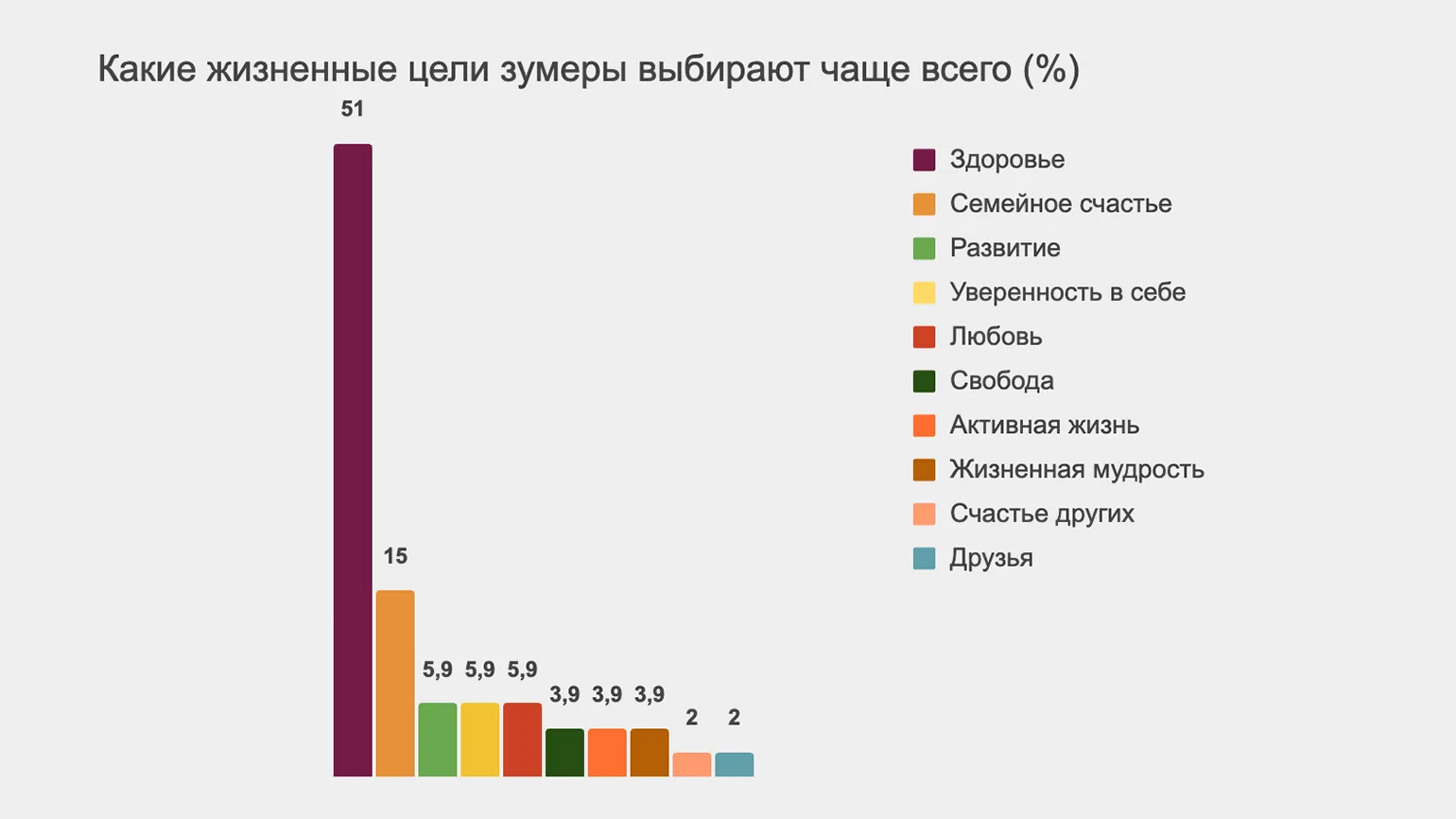
In our survey, values such as "pleasure," "interesting work," "beauty, nature, art," and "material security" received less than 2% of the votes. This suggests that respondents may be placing greater emphasis on other aspects of life, opening a new perspective for analyzing priorities and motivations in modern society.
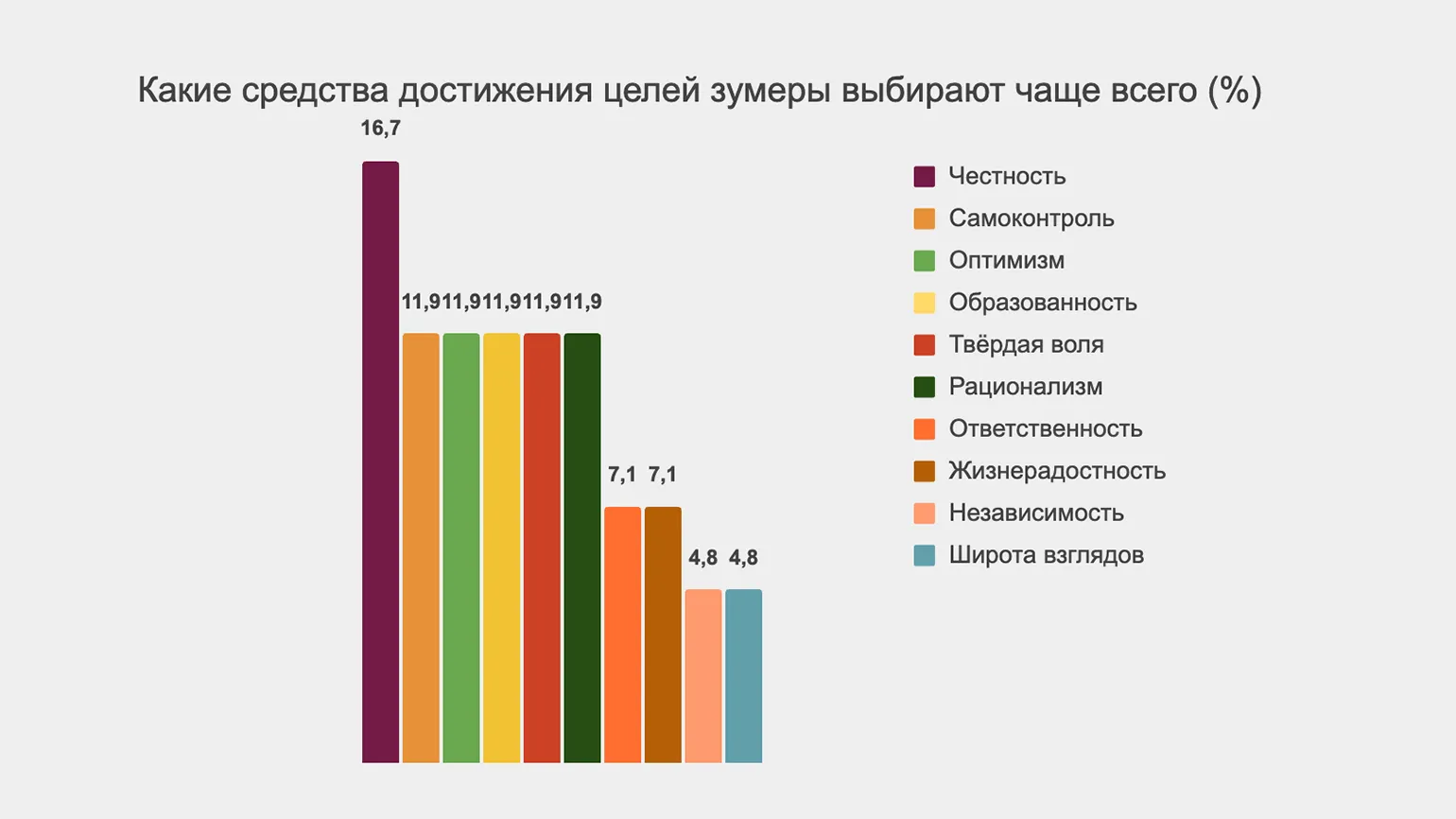
Values that determine methods for achieving goals include honesty, rationality, and self-control. Generation Z (zoomers) value independence, the ability to focus, and maintain optimism. Young people view these qualities as the foundations of mature behavior. Honesty allows them to build trusting relationships, rationality helps them make informed decisions, and self-control facilitates the achievement of their goals. Zoomers strive to develop these qualities to successfully cope with the challenges of the modern world.
What to Consider When Organizing a Work Environment and Designing Training for Zoomers
The values of the younger generation significantly influence their behavior and expectations in the workplace. It is important for employers to take these attitudes into account in order to effectively attract and retain young professionals. Key aspects to consider include creating flexible working conditions, opportunities for career advancement, and an emphasis on work-life balance.
Furthermore, L&D specialists are advised to develop training programs that not only meet modern requirements but also take into account the interests and preferences of young employees. It is important to implement interactive and practice-oriented training methods, as well as provide access to modern technologies and resources.
Successful employers and training professionals must actively engage with young employees to understand their needs and expectations, which will help create a motivating and productive work environment.
According to the study, 51% of participants identified health as a key life value. For Generation Z, health is not just an abstract concept, but a concrete goal. Young professionals evaluate work based on its impact on their physical and emotional well-being. Stress, excessive workload, and lack of balance are becoming significant factors that reduce the attractiveness of even the highest-paying positions.
Career and financial stability remain important, but their value should not outweigh the importance of internal well-being. Employers who fail to consider this aspect risk losing interest from applicants. For many candidates, a comfortable and supportive work environment is becoming the main criterion when choosing a place to work. In today's world, where work-life balance is becoming increasingly important, companies that create such conditions attract more talented professionals.

In practice, this means that the value of health is becoming an important factor in employee motivation. In today's world, young professionals like Zoomers often prefer expanded voluntary health insurance programs or subscriptions to psychological counseling over traditional rewards like hot air balloon rides. This highlights the changing priorities and values of new generations, who are increasingly concerned about their physical and psychological health. Companies that take these preferences into account can increase employee satisfaction and loyalty.
Zoomers strive for development and learning, but they are not willing to sacrifice their weekends or evenings after work for courses and training. Learning that causes stress or disrupts their usual routine will be perceived negatively. Flexible, asynchronous learning formats and microlearning, which are seamlessly integrated into work processes and focused on practice, are ideal for young professionals. It's also important to integrate a chatbot into the training process, which can quickly answer employee questions, such as "What to do if?" This approach not only improves training effectiveness but also employee satisfaction, which in turn has a positive impact on their productivity and loyalty to the company.
Generation Z, or Zoomers, rarely engages in work processes or training without a clear and understandable context. It's important for young professionals to understand the reason for performing a particular task, how it benefits the team, the client, and the product, and how it aligns with the company's overall goal. If a task has clear meaning and personal significance for a Zoomer, they demonstrate activity and initiative. Otherwise, when the connection between the task and its value is unclear, engagement significantly decreases, even if the employee fulfills all formal requirements. Understanding how tasks impact overall success can be key to increasing the motivation and productivity of young people in the workplace.
In practice, this means that employers need to reconsider their approach to formulating tasks. It's important to clearly define not only "what needs to be done," but also "why it needs to be done." This isn't about complicating workflows, but rather about increasing transparency and understanding of goals among employees. This approach promotes more effective task execution and improved teamwork.
For effective training, it's important to maintain the connection between tasks and value, which can be achieved using core principles of curriculum design. A key element is formulating clear, tangible, and measurable learning outcomes that employees can easily apply. Regular feedback also plays a vital role in maintaining engagement, demonstrating to employees their progress and their progress toward achieving their goals. This not only increases motivation but also promotes deeper learning, which ultimately improves the overall effectiveness of training.

Reworked text:
Pay attention to our content. We offer high-quality materials to help you get the information you need. We constantly update our content to stay on top of the latest news and trends. Our articles are written with current user requests in mind, which helps improve their visibility in search engines. We strive to provide useful and interesting materials that will meet the needs of our audience. Don't miss the opportunity to check out our new publications and stay up to date with the most important developments in your field. Outcome-Based Learning Design: Three Key Concepts for Methodologists Outcome-Based Learning Design is essential in the modern educational process. Methodologists must understand the basic concepts of learning design to create effective educational programs. One concept is backward design, which begins with defining the final learning outcomes and then develops content and teaching methods. The second concept is a differentiated approach that takes into account the individual characteristics of students and their needs, allowing you to tailor learning to each individual. The third concept is formative assessment, which helps track student progress and make adjustments to the learning process based on their feedback. Mastering these concepts will enable methodologists to create higher-quality and more effective educational programs.
Generation Z, or Zoomers, does not perceive strict vertical hierarchies as positive or inevitable. For them, position in the corporate structure and subordination do not guarantee agreement with management. Zoomers strive for a culture of open dialogue, where they can ask questions, receive clarification, and be heard. Authority in the eyes of this generation is built on qualities such as competence, consistency, and honesty. As a result, the effectiveness of uniform top-down instructions and corporate slogans without context is significantly reduced, which negatively impacts employee engagement. It is important to consider the needs and expectations of Zoomers to create a more productive and motivating work environment.
Communication in the format of "I'm the boss, you're nobody" is unacceptable for most, especially Generation Z. Zoomers will not tolerate this approach and will strive for equal interactions. It's important to incorporate a communication style based on mutual respect into training programs. It's essential to explain the expert's position, present well-reasoned arguments, and consider the opinions of each participant. This will not only enhance the effectiveness of training but also create an atmosphere of trust and collaboration.
Zoomers, as a generation, show low interest in "voluntary-compulsory" training and formal education. A mandatory fire safety course in an LMS, presented as a folder of PDFs, fails to convince young employees of its value. As a result, such training is often postponed indefinitely. Effective training methods for Zoomers require a more interactive and practical approach to engage their attention and stimulate their desire to learn.
Zoomers absorb information better through real-life examples, such as the incident where a vase of flowers left on a windowsill caused a fire in the office. Mini-games that teach the proper use of fire extinguishers and help them find fire exits in simulated crisis situations can increase employee engagement. This approach not only promotes fire safety awareness but also improves emergency response skills. Employment format, benefits, and external conditions are important, but they are not the determining factors for young employee engagement. For Generation Z, the key aspect is the emotional climate in the workplace. Trust, respectful communication, and a sense of belonging play a primary role in their motivation and job satisfaction. Creating a positive atmosphere and supporting open dialogue contribute to the formation of strong bonds within the team, which, in turn, increases productivity and reduces turnover. Emotional engagement is becoming an important element of talent management strategies in companies seeking to attract and retain young professionals. True employee motivation is fostered in an atmosphere where it is safe to express opinions, there is a strong connection with the manager, and support from colleagues is ensured. In such an environment, young professionals feel valued and important, which contributes to their engagement and productivity. The absence of these factors, even in the presence of attractive working conditions, can lead talented young employees to leave the company in search of a more supportive and open work environment. Therefore, it is important for employers to create a culture of trust and mutual support to retain young talent and increase their motivation.
In practice, this means focusing on team building at the initial stage. It is necessary to carefully select candidates who share similar values, and actively develop a corporate culture based on communication and feedback. Building a cohesive team will be crucial for successfully achieving the company's long-term goals. By paying due attention to these aspects, organizations can ensure sustainable growth and improve team effectiveness.
During the onboarding phase of new employees, a mentoring system plays a key role, including a personal mentor or buddy from among more experienced colleagues. It is also important to develop individual development paths for each employee. Effective immersion in the corporate culture should occur not through lengthy texts about the company's values, but through practical interactions. For example, it's important to demonstrate that in the company kitchen, it's customary to wash up after one's own dishes, and that if work issues arise, it's important to communicate them politely and constructively rather than expressing dissatisfaction in chats. This approach promotes faster and more successful integration of new employees into the team and creates a positive atmosphere within the company.
Team building is significantly enhanced by in-person collaborative activities such as team building, puzzle building, brainstorming sessions, and collaborative workspace design. For example, our office has a special Harry Potter-themed room where one of the most successful and cohesive teams works. Such activities not only foster stronger bonds between employees but also create an inspiring atmosphere, which positively impacts team productivity and creativity.
If teams operate entirely remotely, online whiteboard collaboration is an effective way to foster team cohesion. Peer-to-peer training, where employees share their experiences and impressions, for example, from participating in professional conferences, can also be useful. Such methods help to strengthen team spirit and improve the effectiveness of interaction in a remote work environment.

Rework the text, taking into account keywords and phrases that can increase its visibility in search engines, and avoid adding unnecessary information or related elements. Here is the updated text:
Read also:
Working with Zoomers in small teams requires a special approach. Understanding the unique characteristics of this generation will help create a harmonious work atmosphere and increase productivity. Zoomers, or members of Generation Z, value openness, flexibility, and innovation. It is important to provide them with the opportunity to express themselves and participate in decision-making.
To effectively interact with Zoomers in small teams, it is necessary to use modern technologies and tools. This will help them work more comfortably and productively. Regular feedback and support for their ideas contribute to increased motivation and engagement.
Creating a friendly and supportive environment also plays a key role. Zoomers value collaboration and team spirit, so it is important to encourage joint projects and discussions. Flexible work schedules and the possibility of remote collaboration can be additional advantages for this generation.
Therefore, the key to successfully working with Zoomers in small teams lies in openness, innovation, and creating a supportive work environment.
Access to a variety of career and educational opportunities is sometimes not perceived as an advantage. For Generation Z, this can lead to feelings of overwhelm and a fear of making mistakes. It's important to recognize that having a multitude of options opens doors to personal and professional growth, but also requires the ability to choose and manage your decisions. Understanding your strengths and interests will help young people confidently navigate this vast environment of opportunities.
The widespread media rhetoric about "success" and images of the "perfect life" on social media increase internal tension and complicate the decision-making process. As a result, many young professionals often postpone making decisions or begin to doubt decisions they've already made. This phenomenon negatively impacts their professional development and can lead to a slowdown in career advancement. Openly discussing these issues and working on self-esteem can help young professionals overcome doubts and confidently move towards their goals.
Information overload has become an everyday reality. Although the younger generation, known as Zoomers, copes better with this situation than previous generations, by the end of the day they still experience fatigue and anxiety from the many conflicting opinions. Information noise can negatively impact psycho-emotional well-being, regardless of age. Therefore, it is important to find a balance between information consumption and emotional well-being.
In practice, this means that young employees need support, not pressure. They value help in setting goals, clear guidelines, and the opportunity to safely test various scenarios. This approach promotes the development of their professional skills and increases their confidence in their actions, which in turn leads to more effective task performance and growth within the company.
In the face of information overload, Zoomers and other generations especially appreciate attention to cognitive load in the learning process. For example, if a slide-based course is text-heavy, learners will likely only read the beginning and end. If a learning task requires searching through multiple pages of material, this may lead to employees abandoning the training before it's complete. Therefore, it is important to optimize the content of the courses, making it more structured and accessible in order to increase the level of engagement and success in learning.

Read also:
The creation of digital educational content is based on the principles of multimedia learning that significantly improve the information comprehension process. These principles include the use of a variety of formats, such as text, images, audio, and video, to accommodate a variety of learning styles. It is important to consider the cognitive characteristics of users to avoid overloading them with information and to promote better retention.
Effective multimedia content should be structured and logical, which helps learners easily navigate the material. Including interactive elements, such as quizzes or assignments, makes the learning process more engaging and active. The use of visual metaphors and graphics can simplify complex concepts and improve comprehension.
Furthermore, it is important to ensure that the content is accessible to all users, taking into account different skill levels and needs. Optimizing multimedia content for search engines is also important, as this increases the visibility and accessibility of materials to a wide audience.
By following these principles, you can create high-quality digital learning content that is not only informative but also engaging for users.
Generation Z has grown up with constant digital feedback. The habit of instantly enjoying and gratifying social media and digital services carries over into their professional lives and educational processes. This generation strives for quick responses and instant comfort, which influences their approach to learning and work. They expect prompt feedback from teachers and employers, highlighting the need to adapt educational and work processes to new demands.
Long processes, delayed responses, and impersonal communications are perceived by Generation Z as a sign of indifference or disorganization. This negatively impacts their engagement and interest in what is happening. Given the importance of speed and personalized communication for this audience, companies must strive for more effective and adaptive ways of interacting. Improved communication and prompt responses to requests can significantly increase the engagement of Zoomers and their interest in the organization.
In practice, this means that regular, specific, and timely feedback should be a top priority, not just an additional benefit. Automated feedback using artificial intelligence is an effective tool for achieving this goal. It allows you to highlight the strengths of completed work or assignments, analyze mistakes, and point out key aspects of the course that will help fill existing knowledge gaps. This approach not only improves the quality of learning but also promotes a deeper understanding of the material. Using game mechanics in learning, such as rewards for completing certain actions, can significantly increase user engagement and maintain motivation. These mechanics are designed to maintain optimal dopamine levels, which contributes to the improved learning process. However, it is important to properly integrate gamification into the educational process, avoiding excessive emphasis on entertainment elements in order to maintain the main focus on the learning objectives.

Reworked text under SEO:
Read also:
Our content covers a wide range of interests. We invite you to explore additional materials that will help deepen your knowledge and expand your understanding of the issues discussed. Our articles thoroughly explore relevant topics, providing readers with valuable information and practical advice. Don't miss the opportunity to learn more and access other useful materials on our website.
Gamification in Learning: Five Manipulative Tactics to Avoid
Gamification is a method that uses game elements to increase student engagement and motivation. However, despite its benefits, this approach includes manipulative techniques that can negatively impact learning. By avoiding such methods, you can create a more effective and ethical educational environment.
First, it is important to avoid manipulative rewards. Frequent rewards for completing simple tasks can lead to dependence on external incentives and reduce interest in the learning process. Instead, it's better to focus on students' intrinsic motivation.
Secondly, it's important to avoid creating artificial competition. Comparing students with each other can cause stress and lower self-esteem. Instead, encourage cooperation and teamwork.
A third tactic to avoid is overly complex game mechanics. Complex rules can confuse students and distract them from the main learning goal. Simplicity and clarity of game elements will help maintain attention and create a positive experience.
The fourth negative aspect is ignoring the individual needs of students. Each student has their own preferences and level of preparation, and a one-size-fits-all approach may not work. It is important to adapt gamification to different groups and take into account the characteristics of each student.
Finally, avoid manipulating time limits. Creating pressure during assignments can cause anxiety in students and reduce the quality of learning. It is better to provide sufficient time to master the material and complete assignments.
By following these recommendations, you can make the gamification process in education more effective and ethical, promoting the development of genuine motivation and interest in learning.
Generation Z actively analyzes and considers not only logical arguments but also their inner feelings. Psycho-emotional state plays a key role in choosing a profession, a workplace, and the degree of involvement in educational and professional tasks. It's important to consider that for this generation, emotional comfort and psychological well-being have become integral aspects of career decision-making. An interest in psychology and self-observation fosters heightened awareness of atmosphere, tone, and communication style. When interacting with members of Generation Z, it's important to consider the emotional context and pay attention to the conditions under which decisions are made. Understanding these aspects helps establish more effective rapport and improve communication. The emotional openness of Generation Z, which older generations often perceive as complaints, can actually be a valuable resource for employers. Unlike older colleagues, who may hide their dissatisfaction, which sometimes leads to burnout or even serious health problems, Generation Zers are willing to openly share their experiences and opinions. This allows employers to quickly identify and resolve problems, improving the work environment and increasing overall team productivity. The openness of Gen Zers can be an important tool for creating a more effective and healthy workplace. Organized feedback, presented in the form of weekly pulse surveys, as well as working with feedback on training within individual courses, helps Gen Z feel valued and heard. This also provides managers and learning and development (L&D) specialists with the opportunity to quickly identify and address emerging issues. Effective communication and regular feedback collection help improve the quality of educational programs, creating a more comfortable and productive learning environment. Implementing a feedback system includes not only criticism but also praise. At one conference, the idea was voiced: "Learn to praise employees better than artificial intelligence." This is truly relevant – it is important not only to organize the feedback process but also to recognize employee successes, their progress, and achievements. During the learning process, praise can take the form of regular constructive and positive feedback, which helps create a motivational atmosphere and improve productivity.
Generation Z rejects the standards of the "ideal employee" and is unwilling to conform to universal norms. Standardized behavior and imposed corporate standards are perceived as pressure, which can negatively impact motivation and productivity. Representatives of this generation value individuality and diversity, strive for authentic leadership, and seek true meaning in their work. To effectively engage with Generation Z, organizations must consider their unique values and approaches, creating conditions for self-expression and participation in decision-making.
Young professionals seek a work environment that allows them to maintain their individuality and act in accordance with their personal values. Respect for personal boundaries and acceptance of differences are becoming key factors when choosing an employer. Companies that create an inclusive environment and embrace diversity attract talented employees who are eager to contribute.
In practice, this means that Generation Z will value a personalized approach to shaping their career within the company. Important elements of this approach include psychological and career-oriented testing during the recruitment process, as well as individual meetings with the team manager. During these meetings, employees can discuss their strengths and weaknesses and connect their career ambitions with opportunities for professional growth within the company. This approach contributes to a more motivated and satisfied workforce, which, in turn, has a positive impact on the overall performance of the organization.
This attention to young employees helps them feel valued and important within the team. This allows them to see that the company values not only their professional skills but also their personal qualities, which, in turn, increases their motivation and engagement in the work process. Support and interest from colleagues and management contribute to a positive atmosphere, which is key to the successful adaptation of a new specialist at the company.
How to cope with the costs of "vibe culture"
Generation Z places an emphasis on emotional comfort and creating a positive atmosphere in the workplace. This request is understandable, but excessive attention to maintaining a "positive background" can lead to management risks. This includes vague career expectations, avoiding constructive criticism, and a reduced focus on achieving results. It is important to find a balance between creating a comfortable environment and maintaining productivity to ensure the successful development of both employees and the company as a whole.
Employers should strive to maintain employee support and trust, while finding a balance between comfort and structure. An emotionally safe work environment should be complemented by clear goals, transparent standards, and the opportunity to discuss difficult issues without fear. Creating such an environment promotes increased productivity and employee satisfaction, which in turn positively impacts the company's success.
Generation Z, or Zoomers, developed their personalities in an environment of economic stability and widespread internet access. This gave them the opportunity to explore diverse life and success scenarios, as well as access resources that facilitate personal and career development. Thanks to this, Zoomers have high financial and psychological literacy, which positively impacts their ability to adapt to modern challenges. The internet has become a key tool in their education and self-development, allowing them to effectively plan their careers and personal lives.
Millennial parents have provided their children with reliable support, but their example has demonstrated the negative aspects of sacrificing personal well-being for career success. As a result, Zoomers often put their own interests first. They strive to work and study in a comfortable, empathetic, and meaningful environment, not settling for less. This approach emphasizes the importance of creating a work environment that aligns with their needs and values, which in turn can contribute to increased productivity and job satisfaction.
Reading is an important aspect of our lives, as it broadens our horizons and increases our knowledge. Regularly reading books, articles, and other materials helps develop critical thinking and improves communication skills. It's important to choose a variety of sources to gain a more complete understanding of the world. Reading not only entertains but also inspires, allowing us to discover new ideas and solutions. By reading, you enrich your inner world and develop your personality.
- What insights about the Zoomer generation did the experience of the "non-University" project provide?
- Zoomers are not enthusiastic about microlearning and prefer to study in full-fledged online courses.
- The reasons why Zoomers do not want to study and work have been named.
- Zoomers are interested in STEM, but do not intend to work in this field.