
Contents:

Senior lecturer and graduate of the Skolkovo Mentor School, with experience as a methodologist for the PlaySkills project at the Gamification Laboratory of Sberbank. Specializes in the development and implementation of educational programs that use game elements to increase engagement and learning effectiveness. She has deep knowledge of gamification and pedagogical technologies, which allows her to create innovative approaches to learning.

Candidate of Historical Sciences, Associate Professor and Honorary Worker of Higher Education, is a methodologist of the PlaySkills project in the Gamification Laboratory of Sberbank. His expertise in history and pedagogy enables him to develop effective game-based learning methods that enhance the educational process and engage students. The PlaySkills project aims to introduce innovative approaches to learning using gamification elements, which promotes skill development and increases interest in the learning material. An interactive simulator, also known as a game simulator, is a teaching tool created using a unique methodology. It is designed to develop and correct various skills. Such simulators allow users to immerse themselves in simulated situations, which promotes more effective learning and the practical application of knowledge in real life. Interactive simulators are widely used in educational institutions, training centers, and vocational courses, providing an interactive approach to learning. An interactive simulator has many useful features. It allows users to improve their skills through hands-on learning, providing an interactive experience. The simulator helps develop critical thinking and problem-solving by offering scenarios that require active participation. In addition, it provides instant feedback, which promotes faster assimilation of the material and error correction. This approach makes training more effective and engaging, which helps increase user motivation. Interactive simulators can also be adapted to different skill levels, which makes them a universal tool for training in various fields.
- diagnostic - determines the level of skill development;
- educational - develops the cognitive and functional components of the skill;
- motivational - maintains interest in learning through a system of achievement motivation;
- mentoring - allows you to personalize the training route with the help of a system of recommendations, additional materials, and so on.
In corporate training, game simulators are becoming an effective tool for developing soft skills. They allow not only to objectively assess employee competencies, but also to turn the learning process into an engaging and interactive event. The use of game simulators helps increase employee motivation, improves the acquisition of knowledge and skills, and also creates an environment for safe practice in various situations. This approach allows companies to significantly improve the training of their employees, which ultimately has a positive impact on overall productivity and team spirit.
Types of interactive training devices
Interactive training devices are currently very popular and can be classified according to several criteria. The main types of interactive training devices include simulators, which allow users to immerse themselves in realistic scenarios, as well as learning platforms that offer interactive tasks and tests. There is also a category of game-based training devices that combine learning and entertainment, promoting more effective learning. These tools are widely used in educational institutions and corporate training, helping users develop a variety of skills and knowledge.
- By purpose: partial (aimed at developing a single skill) and multi-purpose, or complex (aimed at developing several skill manifestations).
- By form: auditory, textual, and visual.
A dialogue simulator is one of the most popular training tools designed to assess and develop communication skills. These simulators can be partial or multi-purpose, as well as auditory, textual, or visual. The basis of a dialogue simulator is a branching scenario in which the user and the character interact. The user's responses are evaluated according to the following criteria: correct, partially correct, and incorrect. Choosing a specific answer affects the outcome of the dialogue and the development of the plot, allowing the user not only to improve communication skills but also to immerse themselves in a variety of scenarios.
The comprehensive audiovisual trainer Bodyswaps from the UK demonstrates the effective use of dialogue simulations based on self-reflection and virtual reality methods. This project allows users to immerse themselves in interactive scenarios, significantly enhancing learning and skill development. An example of a partial auditory trainer is Dialog Simulator, which is effectively integrated into e-learning courses and allows users to practice spoken dialogues. In corporate training, dialogue simulations in the form of chatbots, for example, in Telegram, are increasingly being used, making training more accessible and interactive. These technologies help improve the effectiveness of learning by allowing users to develop communication skills in real-life situations.

Reading is an important aspect of our lives because it not only develops mental abilities, but also enriches vocabulary, improves communication skills and promotes knowledge of the world. It's important to choose a variety of sources, including books, articles, and research, to gain a comprehensive understanding of a topic. Reading also helps improve concentration and attention, which is beneficial in everyday life. Pay attention to current topics and innovations to stay informed and expand your knowledge. Regular reading promotes personal growth and the development of critical thinking, making this process especially valuable. Effective Telegram Salesperson Communication Skills Training Telegram salesperson communication skills training is becoming increasingly relevant in modern business. The platform provides unique opportunities for customer interaction and helps build brand loyalty. To achieve maximum effectiveness, it is necessary to develop a structured training approach. The first step is to create training materials that will help salespeople master the basic principles of communication. It is important to include aspects such as active listening, asking clarifying questions, and providing quality feedback in the training. This will allow salespeople to better understand customer needs and find an individual approach to each of them. The next step is conducting practical classes. Role-playing and simulations of real-life conversations help salespeople practice their skills in a safe environment. Using real-life case studies and situations will make training more relevant and useful.
Analyzing training results is equally important. Regular feedback from trainers and salespeople themselves will help identify strengths and weaknesses in their communication skills. This will help adjust the training program and tailor it to the needs of the team.
The introduction of technologies such as chatbots and automation can also significantly streamline the training process. They will help salespeople quickly obtain the necessary information and improve their skills in real time.
Thus, training salespeople in customer service skills on Telegram requires a comprehensive approach, including theory, practice, and ongoing analysis. This will help build a strong team capable of effectively interacting with customers and increasing sales.
What are the advantages and disadvantages of interactive training simulators?
Interactive training simulators offer significant advantages over traditional teaching methods. This is confirmed by the research results presented in Tatyana Panina and Lidiya Vavilova's manual "Modern Methods of Activating Learning," as well as the practical experience of the authors of this article. Gamifications in training are useful because they promote deeper student engagement in the process, enable the application of theoretical knowledge in practice, and develop critical thinking. Furthermore, they create a safe environment for mistakes, allowing students to learn from their mistakes without the risk of negative consequences. The use of interactive training equipment stimulates motivation and interest, which significantly increases the effectiveness of training.
- they take into account the individual characteristics of users: work pace, interests, level of training, etc.;
- reduce the time for skill training;
- increase motivation for learning;
- increase the objectivity of assessment;
- allow you to quickly check the level of skill development;
- reduce the workload of the teacher or T&D specialist.
There are certain limitations and disadvantages of training equipment that are worth considering. Firstly, training equipment can take up a significant amount of space, which becomes a problem for people with limited space. Secondly, some training equipment requires a significant financial investment, which may be unaffordable for many. In addition, a lack of variety in training on the same training equipment can lead to a rapid decline in motivation and interest. There is also a risk of improper use of training equipment, which can lead to injury. Finally, not all simulators are suitable for different skill levels, which may limit their use for beginners or experienced athletes.
- high development labor costs and the need to engage highly qualified specialists (including methodologists);
- high development costs;
- technical limitations for use (interactive simulators have software and other requirements, such as at least an internet connection).
The effectiveness of the simulator may not justify the costs if the developer does not have a high level of methodological training. In addition, an important aspect is the involvement of experienced scriptwriters and programmers to create a high-quality tool. If the development of a visual simulator is planned, the participation of professional illustrators will also be required. These factors significantly influence the final outcome and its success in learning.
How to Develop an Interactive Simulator
There is a clear algorithm in the pedagogical design of game simulations, which includes several key steps. In this article, we will examine in detail the necessary stages for the effective development and implementation of game simulations in the educational process. Understanding these steps will help create more effective and engaging learning tools that promote the development of students' skills and knowledge.
At this stage, it is important to form a basic competency matrix model, which is an organized set of key skills necessary for the successful and effective completion of learning tasks. Within this model, each skill is detailed into its constituent elements - indicators and manifestations, which allows for a more accurate assessment of the level of competence and identification of areas for further development. Properly defining and structuring these skills facilitates more effective learning and improves the quality of professional performance.
Effective communication skills include several key indicators, such as establishing and maintaining contacts, perceiving information, responding, and diplomacy. Each of these indicators can be further developed, highlighting specific manifestations in mental and practical activity that can be observed and measured. For example, the indicator "information perception" may include manifestations such as the ability to ignore external stimuli and remember information through understanding the context. These aspects play a significant role in improving the quality of communication and establishing effective communication processes.
The developed competency matrix must consider educational techniques, which are a set of methods and techniques aimed at developing specific skills. For example, this may include active listening, contextual memorization, or associative memorization. These techniques help effectively train and strengthen essential competencies, ultimately promoting deeper learning and improved practical skills.
A competency matrix does not necessarily need to be developed from scratch, as various models already exist for key soft skills. These models include Reuven Bar-On's model of social and emotional intelligence, Lominger's model of managerial competencies, and models related to employee job responsibilities and skill development levels. These resources can be found in human resources literature. Using existing models saves time and effort and ensures a more accurate alignment with modern labor market requirements and employer expectations.
A properly developed competency matrix is a key element in creating an effective training simulator. It helps identify the necessary skills and knowledge that users must master, which in turn facilitates more targeted and effective training. When creating a matrix, it is important to consider the specifics of the topic being taught and the goals of the simulator. This will allow the content to be tailored to the needs of users and improve the final learning outcomes.
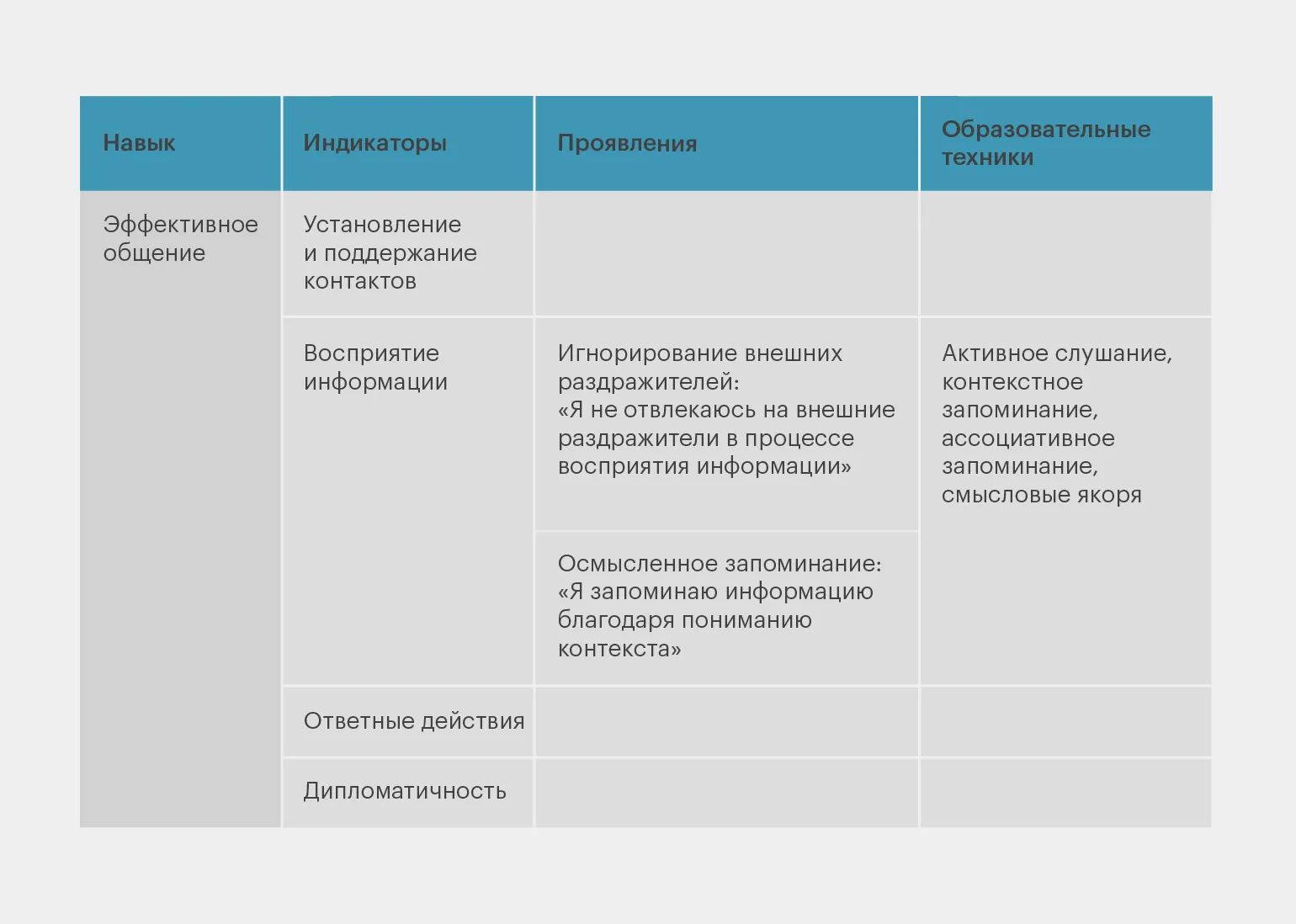
This stage is critical for defining the indicators and characteristics of the skill that the future simulator will develop or shape. Correctly defining these aspects will help create an effective tool for training and improving user skills.
There are no methodological restrictions on the number of skill manifestations to be trained. However, novice game simulator developers are advised to begin by creating a partial simulator, focusing on training one specific skill manifestation. After gaining the necessary experience, you can move on to developing more complex and comprehensive tools that cover several skill manifestations simultaneously. This approach will allow you to master the basic principles of development and improve the quality of the created simulators.
The choice of specific skill manifestations depends on the level of its development in trainees. Various methods can be used for diagnostics, such as testing, solving trial tasks, interviews, and game-based psychometric assessments. It is also important to consider the wishes and goals of the training customer, namely, what problem the simulator should solve and what exactly the employees need to learn. An effective training approach requires careful assessment and a clear understanding of the client's needs.
The training context represents situations, both formal and informal, in which specific skills are developed and practiced. Choosing the right context is key to effective training, as it influences the practical application of knowledge and skills in real-world situations. Creating a suitable training atmosphere promotes better assimilation of the material and adaptation to various scenarios.
At this stage, it is necessary to consider the specifics of the skill and the characteristics of the target audience to create engaging training. The context must be relevant and interesting for participants. For example, business negotiation skills do not necessarily need to be developed exclusively in an office setting. Modern research shows that soft skills can be successfully developed in non-standard or even fictitious settings. This could be a zombie apocalypse or space travel scenario. Such approaches not only promote deeper assimilation of the material but also increase participant motivation, making the learning process more effective.
Sommer Mitchell of the University of South Florida emphasizes the importance of using pop culture in the educational process. She argues that such examples can lower the barrier to entry into new topics, as students find it easier to understand and remember complex concepts when they are related to familiar cultural elements. Interest in the subject also plays an important role: discussing popular TV series or films makes classes more engaging and reduces the likelihood of boredom. Furthermore, an "unreal" context helps reduce bias and allows for a more objective approach to topics. Mitchell believes that it is justified to study complex social mechanisms and interpersonal relationships using works such as "The Walking Dead" or "The Hunger Games." This approach not only makes learning more interactive, but also teaches students to critically perceive entertaining content, analyze it, and identify logical errors.

Be sure to check out our other materials.
Four scenario tricks for methodologists Online Courses
Online course instructors often face the need to create engaging scenarios that will help retain learners' attention and increase their motivation. Let's look at four effective tips that can significantly improve the quality of scenarios.
The first thing to pay attention to is the use of interactive elements. Incorporating tests, surveys, and assignments into the learning process promotes active student engagement and makes learning more dynamic.
Second, it is important to consider a variety of formats. Combining video, audio, and text materials allows you to appeal to different learning styles and maintain learners' interest. This also helps them better absorb information.
The third tip is creating personalized content. Consider the interests and needs of your audience to offer them a unique learning experience. A personalized approach promotes a deeper understanding of the material.
The fourth tip is the use of storytelling. Telling engaging stories makes the material more memorable and creates an emotional connection with learners. This not only helps with information retention but also helps foster a positive attitude toward learning.
These scenario tips will help online course designers create more engaging and effective educational programs that foster successful learning.
To effectively develop a training simulator structure, two key aspects must be considered: competency-based and compositional. The competency-based aspect involves defining the necessary skills and knowledge that users should develop while using the simulator. This can include both theoretical elements and practical tasks aimed at reinforcing the acquired knowledge.
The compositional aspect involves organizing the content and teaching methods. It is important to create a logical and consistent structure that will allow users to easily navigate the materials. This can be achieved by grouping topics by difficulty level or skill type, which will ensure a smooth transition from the basics to more complex concepts.
Thus, a well-thought-out simulator structure that takes into account both competency-based and compositional aspects will ensure more effective training and help users achieve their goals.
A competency-based structure is based on a competency matrix. This is a list of key skill manifestations that your simulator will develop. As an example, consider the decomposition of the simulator structure created by our team as part of the PlaySkills soft skills assessment and development project. This approach ensures the targeted development of the necessary competencies, which contributes to the effective training and development of users.
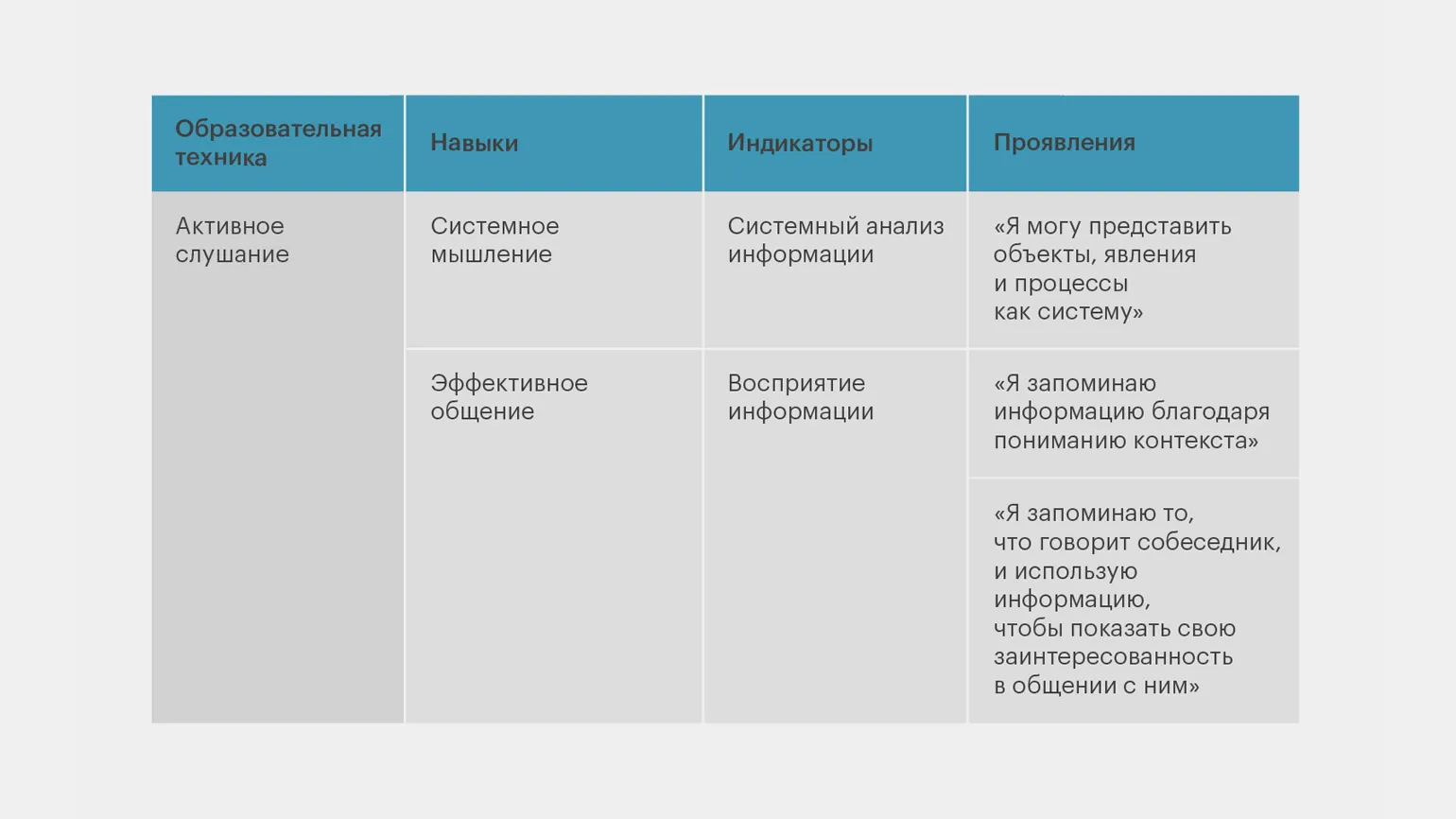
The interactive simulator's compositional structure clearly demonstrates the key stages of its user progression. It represents a scenario of an educational program implemented through a game simulator. This approach ensures effective learning, improving user engagement with the educational content.
The simulator scenario on the Bodyswaps platform includes several key elements. These elements create an interactive and engaging learning experience, allowing users to develop essential skills in a variety of situations. Each scenario is carefully designed to simulate real-world interactions, enhancing learning effectiveness and knowledge retention. Using such structured scenarios helps training participants better prepare for real-world challenges, improving their confidence and professional competencies.
- Listening to a dialogue, recording positive and negative aspects.
- Conversation with a choice of given answer options.
- Conversation without given answers.
- "Body change": observing your own participation in a dialogue.
- Semantic and behavioral analytics in simulation.
- Feedback from a live trainer on the results of training (in corporate training programs).
A task is an activity that allows the user to develop and improve specific skills. As part of the learning process, as in other educational activities, various types of tasks are used in simulators. These tasks may include tests, exercises, practical tasks, and other formats that promote deep learning and the development of essential competencies.
- by interaction method — individual and group;
- by focus — creative, analytical, research, experimental, and others;
- by difficulty level — simple, medium, advanced;
- by answer method — closed (choosing from predetermined answer options) and open (the user formulates an answer and enters it in the designated field).
The choice of activity depends on the educational technique used. For example, to develop effective communication skills, you can use the contextual memorization technique to help the user learn to avoid being distracted by external stimuli. In one of our simulators, the user is asked to listen to a short text. During the process, they are distracted by pop-up notifications, a timer, extraneous sounds, and other factors. After completing the listening session, the user must select from the proposed list the wording of the topic that most accurately reflects the content of the text. This tests concentration and the ability to focus on a task, which is an important aspect of effective communication.
When using an alternative technique, such as attention training, the task can vary. In one of our simulators, a running stopwatch is displayed on one side of the screen, and an animation on the other. The user must simultaneously monitor both elements and then determine how many seconds pass before the image changes or how often it changes. This practice helps develop concentration and improves the ability to quickly perceive information.
The mechanics in the simulator are the set of actions that users perform to achieve results. This can include selecting or entering answers, moving objects, and other interactions. Mechanics directly depend on the type of task and can be divided into instrumental mechanics, where the user interacts with interface elements, and game mechanics, which encompass gameplay capabilities, including the tasks facing the user and the actions they can perform. These two types of mechanics are often combined, creating a more varied and engaging user experience.
Mechanics and tasks can be combined in a variety of ways, without adhering to strict rules. The table below provides examples of the most popular combinations to help you find optimal solutions for your projects.
Attention tasks in the Mozgotren trainer use point-and-click mechanics, which helps develop the skill of focusing on a task and minimizing the influence of external stimuli. These exercises effectively train visual memory. Minecraft is a striking example of a successful combination of instrumental and game mechanics that promote creativity. It not only entertains but also stimulates creative thinking, allowing users to create unique worlds.
Read also:
Minecraft is becoming an increasingly popular tool in the educational process. Here are seven reasons why it is worth considering using it in educational activities. First, the game promotes the development of creativity in students, allowing them to create unique worlds and solve problems in an interactive environment. Secondly, it promotes teamwork skills, as many tasks require collaboration. Thirdly, Minecraft helps develop critical thinking, as players face various challenges that require analysis and decision-making.
Furthermore, using Minecraft in education allows you to integrate academic subjects such as mathematics, history, and science into an engaging gameplay experience. This makes learning more interesting and accessible to students. It is also worth noting that Minecraft promotes the development of digital skills necessary in the modern world. Students learn to work with technology and programming, which is an important aspect of their future careers. Finally, the game allows you to tailor learning to the individual needs of each student, providing the opportunity to learn at their own pace and style.
These reasons highlight how Minecraft can be an effective tool in the educational process, contributing to the development of essential skills and knowledge in students.
Once the type of task and the mechanics of its implementation have been determined, you can move on to developing a specific situation and creating instructions. Instructions in this context are step-by-step instructions for completing a task that the user receives directly in the simulator. Properly formulated instructions contribute to the effectiveness of training and improve the user's comprehension of the material.
This game simulator presents instructions aimed at developing effective communication skills, focusing on the ability to ignore external stimuli. Players are invited to complete a series of exercises that will help improve concentration and interaction with interlocutors. The emphasis is on practical strategies for ignoring distractions and focusing on the content of the conversation. Participants will be taught various methods that will help them better understand, perceive, and respond to information. Effective communication requires the ability to stay focused, and this simulator offers useful tools for achieving this.
Describing a situation requires careful analysis and understanding of the context. It is important to consider all key aspects that influence the current state of affairs. It is necessary to consider in detail the factors contributing to the emergence of a given situation, as well as the consequences that may follow. An effective problem-solving approach involves examining data, identifying root causes, and analyzing possible courses of action. A key element is developing a strategy to improve the situation. Analyzing risks and opportunities will help you develop a balanced solution that will achieve positive results.
You work as an executive assistant in a large office and need to coordinate the agenda for an upcoming meeting with the director. While you are talking to him, a ton of messages from a friend containing funny memes arrives on your phone. You forgot to mute the notifications, and this distracts you from the important discussion.
Choose the best course of action from the list provided:
- Continue the conversation despite the incoming notifications.
- Look at your phone and reply to your friend.
- Ignore the notifications.
- Mute your phone and continue the conversation.
To successfully implement a performance appraisal system, it is necessary to determine an appropriate review method. A choice can be made between automated assessment, which is suitable for tasks with predetermined answers, and mentor assessment, which is applicable to open-ended tasks. An automated system allows for quick and efficient assessment of results, which is especially important for scalable educational platforms. At the same time, mentor assessment provides a more in-depth and qualitative assessment of creative tasks, allowing for the individual characteristics of each student to be taken into account. Determining the optimal assessment method will contribute to the improvement of the educational process and learning outcomes. The assessment system should include a grading system based on the level of skill development or the number of errors made. It is important to develop a valid scoring scale and establish thresholds for each level. For example, the following categories could be identified: 0-3 points – low level, 4-6 points – below average, 7-9 points – average, and so on. This will allow for more accurate assessment of students' achievements and progress, and will also facilitate targeted skill development.
This text describes an assessment system designed for a simulator that teaches the correct use of a feedback tool. The assessment system includes various criteria for assessing the effectiveness and accuracy of feedback. It helps users develop communication skills, improve the quality of interactions, and enhance overall team productivity. The use of this system promotes a deeper understanding of the feedback process and its role in the development of professional skills. The development and implementation of a simulator with such an assessment system are aimed at creating a comfortable educational environment where each participant can receive constructive recommendations and improve their communication competencies.
The user is faced with the need to choose one of two options for resolving a difficult situation and formulate appropriate feedback. It is important to consider that the correct wording can significantly impact further interaction and perception of the situation. When choosing an option, the context and consequences of each decision should be analyzed to ensure a constructive and positive outcome. Effective feedback should be clear and concise, and take into account the views of all parties involved in the situation.
The user is given one opportunity to solve the task, including choosing an option to complete the situation and responses. This limitation in attempts helps increase engagement and allows you to focus on making an informed decision.
When selecting responses for the final option, points are awarded according to established criteria. Each response is assessed depending on its relevance, quality, and relevance to the topic. This ensures objectivity and fairness in the evaluation process. It is important to keep in mind that correctly selected responses can significantly affect the overall result. Therefore, the process of selecting responses requires care and a conscious approach to achieve the best results.
- correct answer - 2 points;
- partially correct answer - 1 point;
- incorrect answer - 0 points.
After testing the simulator, it may be necessary to adjust the scoring system. For example, thresholds may need to be adjusted if tasks prove too difficult or too easy for users. This will ensure an optimal level of difficulty and improve learning effectiveness.
At this stage, it is important to select appropriate educational techniques, simulators, and additional materials that can be recommended to students based on their performance with the simulator. This will allow them to continue developing their skills. Recommendations should be consistent with your assessment system and reflect different skill levels. This way, students can effectively deepen their knowledge and improve their skills based on their individual achievements.
The recommendation system and final user comments require improvement after testing the simulator with the first real users. The effectiveness of these elements directly impacts user experience and satisfaction. Testing will help identify weaknesses and optimize functionality, which in turn will increase the product's appeal and its competitiveness in the market. Improving the recommendation system can significantly increase user engagement and promote retention.
Once the methodological development is complete, the technical stage of creating the game simulator begins. At this stage, the designer, illustrator (if a visual simulator is being developed), and programmer are involved. After the simulator is created, it must be tested and debugged. Only then can the finished product be launched. Proper organization of all these stages ensures the high quality of the game simulator and its compliance with educational goals.
Read also:
- How to quickly and affordably implement gamification in training
- What is Edutainment: How to combine learning with entertainment
- How to consider emotions when designing corporate training