Contents:

Course with employment: "The profession of a Methodologist from scratch to PRO"
Find out moreWhy cross-disciplinarity is important for Belarus
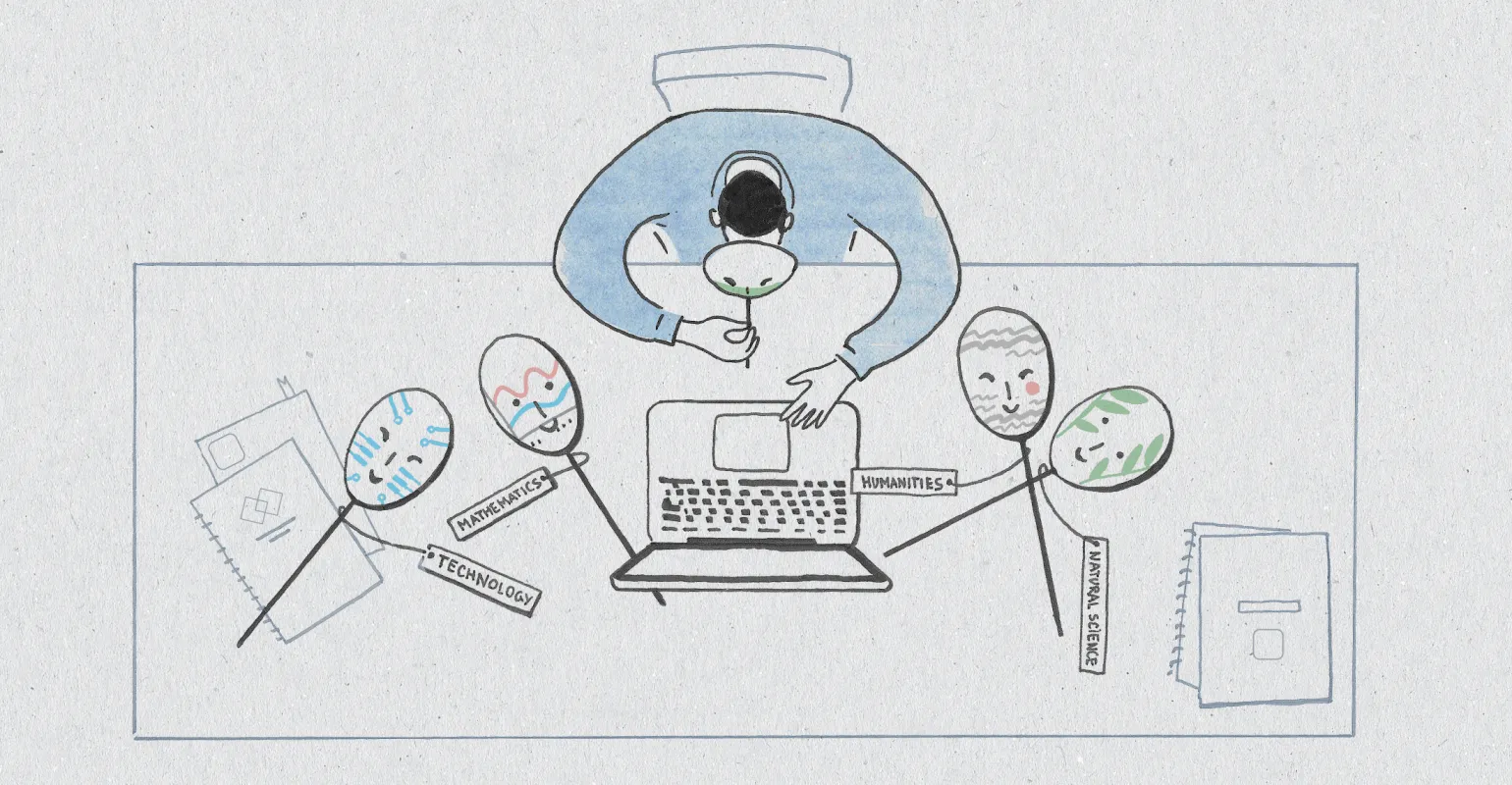
In the modern Belarusian business and educational environment, generalists capable of multifaceted analysis of work tasks and finding non-standard solutions are becoming increasingly in demand. Cross-disciplinarity is not just a fashionable trend, but a necessity caused by rapidly changing conditions of the labor market and the technologization of all sectors of the economy. As experts note, cross-disciplinarity is among the key skills that will be in demand in the labor market in the coming years.
For Belarus, with its strong traditions in education and a developed IT sector, the development of cross-disciplinary competencies is becoming a strategic resource for competitiveness. This is confirmed by the experience of companies such as the Belarusian Interbank Settlement Center, which provides its employees with the opportunity to participate in cross-functional projects as part of their training and development program.
Key advantages of a cross-disciplinary approach:
- Improved team efficiency: the ability of specialists from different fields to find a common language and understand interconnections accelerates the solution of complex problems.
- Innovation potential: breakthrough ideas and products are often born at the intersection of disciplines, which is especially relevant for the Belarusian IT sector.
- Adaptability to change: employees with a broad outlook adapt more quickly to market and technological changes.
- Graduate competitiveness: students with an interdisciplinary education are more in demand in the labor market.

Educational Initiatives for the Development of Cross-Disciplinarity
Multidisciplinary Bachelor's Degree
One of the promising areas for the Belarusian education system could be the development of multidisciplinary bachelor's degree models similar to the Liberal Arts program at RANEPA in Russia. The essence of this approach is to provide students with the opportunity to simultaneously obtain several specializations from different professional fields. For example, a combination of management with modern culture or information technology with economics.
According to Natalia Krasovskaya, Deputy Dean of the Faculty of Liberal Arts at RANEPA, the main goal of such a program is pre-adaptability, that is, preparing people for the constantly changing conditions of the labor market. "Even within the framework of the most well-thought-out curricula, it is difficult to predict which skills will be in demand in four, five, or six years. Therefore, the key principle of our program is pre-adaptability," the expert notes.
For Belarusian universities, such a model could be a response to the challenges of the time, especially considering that many applicants at 17 are not ready to consciously choose one profession for life. Multidisciplinary training allows you not only to gain diverse knowledge, but also to develop the soft skills necessary for a successful career.
Current training formats:
- Combined educational programs that allow you to obtain qualifications from different fields simultaneously.
- Project-based learning, in which students solve real-world problems at the intersection of disciplines.
- Integration of online courses from different subject areas into core educational programs.
Cooperation between universities and businesses in Belarus
The development of cross-disciplinarity requires close integration between educational institutions and the business environment. As the experience of Russian universities shows, such cooperation can be organized through core educational programs and additional educational events.
There are already successful examples of such interaction in Belarus. For example, in the IT sector, ties between companies and universities have long been established: basic departments operate, joint hackathons and project intensives are held. However, these efforts are not enough for the systematic development of cross-disciplinarity.
Promising areas of cooperation:
- Creation of interdisciplinary laboratories at universities with the participation of partner companies, where students could work on real projects that require knowledge from different fields.
- Development of cross-functional modules in educational programs, when specialists from companies give lectures or conduct practical classes in their field.
- Organizing "activity trials"—short-term immersions in various professional fields that allow students to gain a practical understanding of the specifics of the work and apply knowledge from various disciplines.
As Alexandra Kozulina, Vice-Rector for External Relations and Youth Policy at Omsk State Technical University, notes, "the main task of an industrial partner is to provide real-world cases that allow teams to work on relevant production challenges." Solving such challenges requires cross-functional interaction, which emphasizes the importance of collaboration between various specialists.
For the Belarusian context, the development of such forms of cooperation in traditional industries, which are undergoing digital transformation and are in dire need of specialists combining engineering and IT competencies, is especially relevant.

Developing Cross-Discipline in the Workplace
For Belarusian companies, developing cross-disciplinary skills in employees is not just an investment in human capital, but a necessary condition for maintaining competitiveness. As practice shows, modern leaders must have deep knowledge in the field of digital technologies, finance, effective communications, strategic planning and decision-making.
One of the effective approaches is the T-shaped specialist model - a professional with broad knowledge in several areas and deep skills in one specific area. This approach makes employees valuable to teams, as they can work effectively at the intersection of different disciplines.
Practical steps for Belarusian companies:
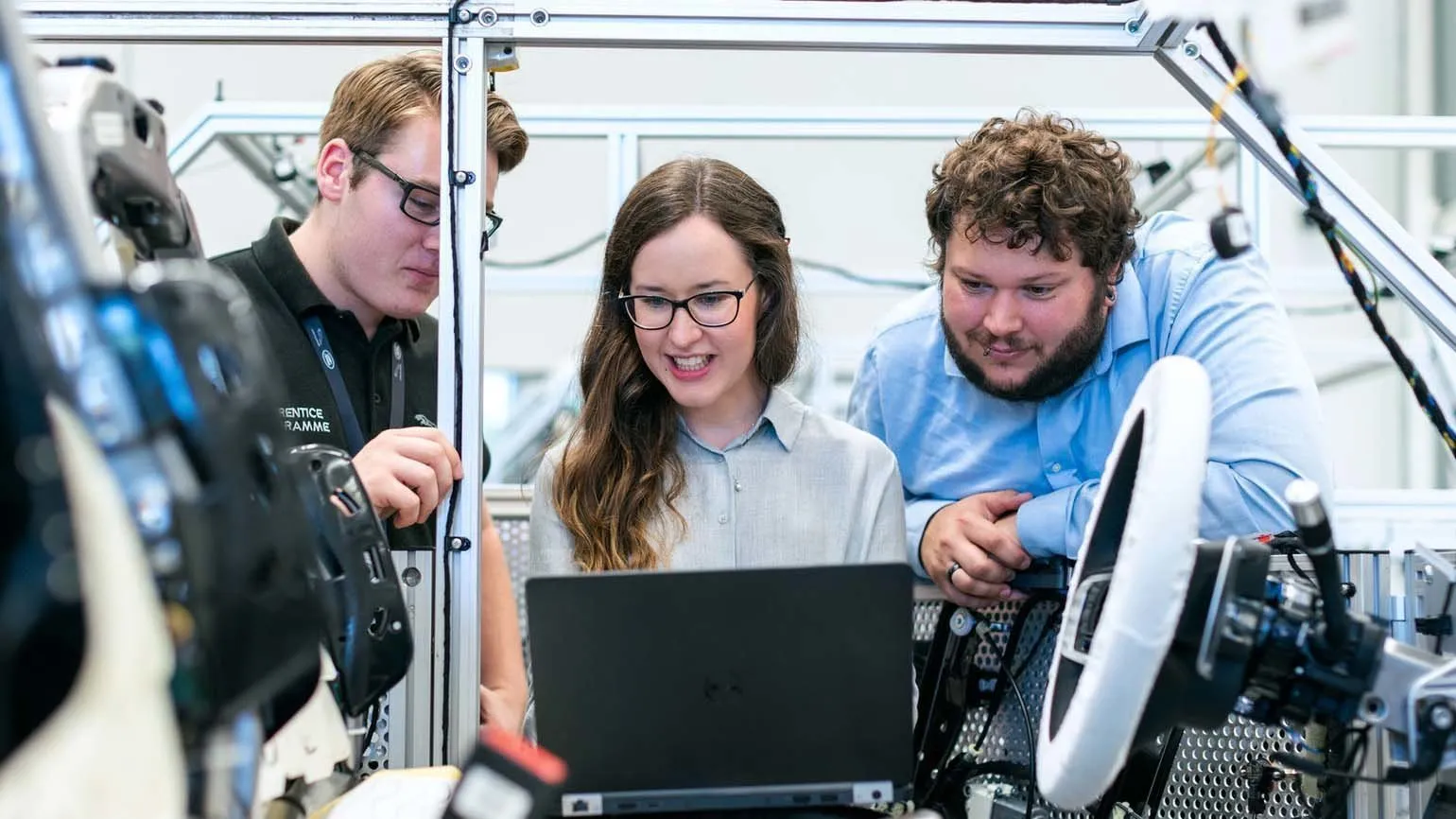
- Implementation of cross-functional projects in which employees from different departments collaborate to solve problems that require a variety of competencies.
- Creation of rotation programs that allow employees to temporarily work in other departments and acquire new skills.
- Organization of internal educational programs aimed at developing knowledge in related fields (for example, courses in economics for engineers or in digital technologies for humanities students).
- Encouraging mentoring and knowledge sharing between specialists from different fields.
A striking example of this approach in Belarus is the experience of Belarusian Interbank Settlement Center OJSC, which offers employees participation in cross-functional projects and provides training and development of personnel at the company's expense. This allows not only to improve the qualifications of employees, but also to create conditions for the natural exchange of knowledge and experience between specialists in different fields.
Cross-disciplinarity as a personal choice
Despite the obvious benefits of a cross-disciplinary approach, it is important to recognize that not every professional wants or should become cross-disciplinary. Some people are most effective as specialists, delving deeply into a single subject area.
As Asya Soskova, an expert in professional self-determination, organizational development, and talent management, notes, “the ideal scenario for organizations is to provide a variety of growth opportunities.” Employees with a predisposition to cross-discipline should be offered options for broad development, while professionals who prefer in-depth study of their specialty can focus on deepening their knowledge and skills.
How to support diverse professionals:
- Create individual development trajectories taking into account the inclinations and abilities of each employee.
- Value the contributions of both generalists and specialists, forming balanced teams.
- Develop a culture of continuous learning in the organization, encouraging all forms of professional development.
- Explain the practical benefits of expanding competencies, linking them to employees' personal and professional goals.
To motivate employees who are not striving for interdisciplinarity, you can use the approach described in the "Think Big" research project: provide opportunities to master the languages of various disciplines, interacting with them respectfully and with interest. This approach allows us to show “mono-specialists” the depth and richness of other fields of knowledge, demonstrating how much new and interesting they can learn.

Conclusion
The development of cross-disciplinarity in Belarus is a complex task that requires the joint efforts of educational institutions, businesses, and the specialists themselves. As international and gradually emerging local experience shows, the most successful approaches are those that combine:
- Updating educational programs to make them more flexible and multidisciplinary.
- Deepening cooperation between universities and employer companies.
- Creating opportunities for continuous interdisciplinary learning in the workplace.
- Respect for individual professional development trajectories.
For Belarus, with its strong educational potential and dynamically developing IT sector, cross-disciplinarity can become a key competitive advantage in the global market. However, this requires a systemic vision and a willingness to experiment in education and corporate practice.
As Russian biologist A. A. Oskolsky noted, "any serious interdisciplinary innovation requires scientists to have an impeccable level of qualification in their own disciplines." This principle is also true for the Belarusian context: cross-disciplinarity is not the opposite of specialization, but its natural development and enrichment.