Contents:

Course with employment: "The profession of a Methodologist from scratch to PRO"
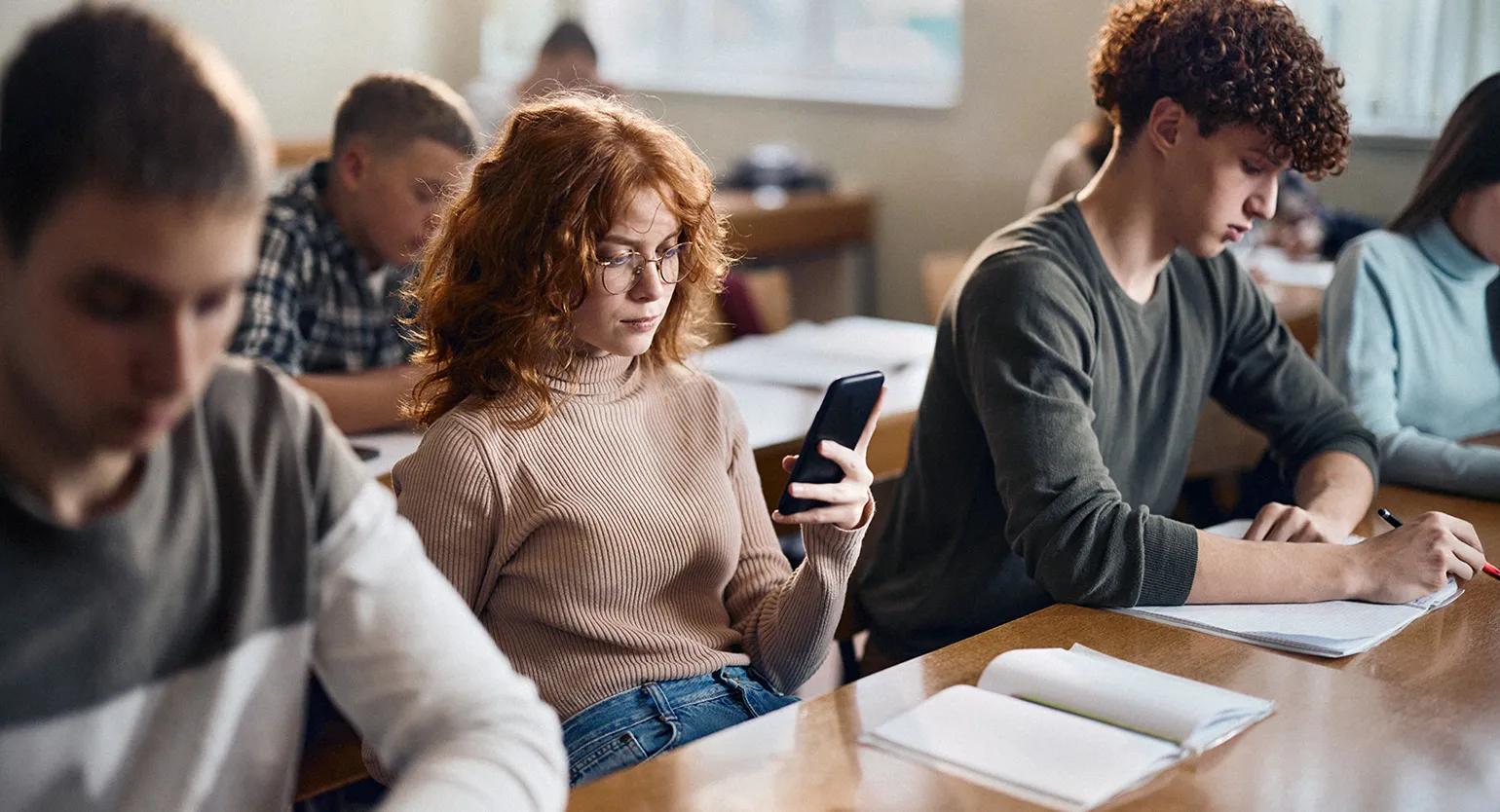
Find out moreA common situation often arises in university classrooms: soon after the lecture begins, the teacher notices how students become distracted from his words and immerse themselves in their smartphones. This phenomenon is becoming a challenge for the educational process, as students' attention is shifting from lecture material to mobile devices. To increase student engagement and renew their interest in learning, it is necessary to find new approaches to delivering information and incorporate modern technologies into teaching.
Lectures often lose out to social media content for student attention, and the reason is obvious. However, the question arises: is it possible to attract students' attention in such a competitive environment?
Alexey Karuna, business coach, methodologist, and author of the Telegram channel "Olds Are Not Trending Here," shared his ideas for teaching the younger generation at the webinar "How to Keep Students' Attention: The Experience of Reels, Telegram, and Memes," organized by Direct Academy. The speaker discussed why traditional teaching methods fail to capture students' attention and suggested using social media and messaging tools to increase engagement. Although Alexey's experience focuses on corporate training, his advice can also be applied to higher education. In this context, it is worth paying attention to several key ideas.
How the principles of perception have changed
According to Alexey Karuna, the traditional lecture format often causes boredom among students not because it is outdated, but because it does not sufficiently take into account the attention characteristics characteristic of Generation Z. This generation is characterized by a short attention span and a preference for interactive learning formats. To make lectures more effective and interesting for students, it is necessary to adapt the content and teaching methods, using modern technologies and active engagement methods.
In modern society, the term "clip thinking" is widely used, which describes short-term attention and difficulties in assimilating large amounts of information. However, Alexey believes that the definition "fragmented attention" is more accurate. This phenomenon is associated with how people perceive and process information in the context of active interaction with the digital environment, especially with social networks and instant messengers. Fragmentation of attention is a result of the constant flow of information that surrounds us in the online space. Thus, changing ways of perceiving information require us to adapt and develop new strategies to effectively consume content.
Users' brains adapt to rapidly changing cues that evoke emotional responses and prompt immediate action. These actions can include liking, sharing, commenting, clicking links, and subscribing to notifications. It's important to understand that frequent interaction with such cues creates behavioral patterns, making content more engaging and likely to retain audience attention. Effectively using these cues in content can significantly increase user engagement and overall activity on the platform.
Modern social media platforms like TikTok demonstrate the importance of capturing viewers' attention from the very first seconds. Popular videos often begin with a compelling "hook"—an element that is unusual or evokes provocative emotions. If a video doesn't engage a user within the first three seconds, there's a high chance they'll simply scroll past the content. This highlights the need to create engaging and original content that can hold audience attention.
Alexey Karuna explains the demand for mobile learning and microlearning through the concept of fragmented attention. This applies in particular to courses available on Telegram, which offer short and concise chunks of educational information. Learners receive content directly in the messenger via push notifications, allowing them to study the material anytime and anywhere, without requiring significant time investment for deep dives. This approach makes learning more accessible and effective in the modern fast-paced world.

Meme culture is an important aspect of information perception and processing in modern society. For Generation Z, memes aren't just a source of humor; they're an effective communication tool that conveys complex ideas and emotions through short, vivid visuals. Instead of lengthy texts, memes offer concise and memorable wording, making them particularly appealing in a fast-paced information environment. Memes are becoming a means of self-expression and a way to shape public opinion, reflecting current topics and trends.
Alexey Karuna notes that social media and messaging apps effectively attract and retain users' attention through the use of "hooks," short formats, and visual images such as memes. The speaker believes these elements can be integrated into the educational process while maintaining academic depth and without significant changes to course materials. This makes learning more engaging and accessible for students, improving their engagement and retention.
Read also:
Digital technologies have significantly changed our perception of boring tasks. With the development of automation and artificial intelligence, we have become less tolerant of routine work that requires significant time and does not bring satisfaction. Modern innovations simplify repetitive tasks, allowing us to achieve results faster and focus on more creative and interesting aspects of life. However, this dependence on technology also leads to a decreased tolerance for tasks that seem inefficient or time-consuming. As a result, we expect faster solutions and strive to avoid routine processes, which changes our work habits and attitudes towards everyday responsibilities.
How to Add Attention Hooks to a Lecture
Alexey Karuna reveals the effectiveness of attention hooks, relying on the physiological foundations described by Academician Ivan Pavlov in the first half of the 20th century. Pavlov introduced the concept of the orienting reflex, which explains the involuntary reaction of animals to new external stimuli. For example, when hearing an unfamiliar sound, an animal freezes and listens, because its nervous system focuses attention on this stimulus, giving it primary importance in the information processing process. Understanding these mechanisms allows for more effective engagement and retention of audience attention in various fields, including marketing and communications.
A similar mechanism operates in humans, whereby new and unexpected stimuli instantly attract attention and distract from current activity. Working memory resources are redistributed to quickly process new information and evaluate its significance. If a stimulus is insignificant, involuntary attention to it quickly dissipates. However, if the stimulus is highly significant, the mind shifts voluntary, purposeful attention to it. This process plays a key role in how we perceive the world around us and make decisions, which is important to consider in the context of marketing and the psychology of perception.
Read also:
Human working memory: structure and Working memory is a key component of cognitive processes, providing temporary storage and manipulation of information. It plays a vital role in a variety of tasks, including learning, problem solving, and decision making. Unlike long-term memory, working memory is limited in the amount and duration of information it can store. Working memory has several components. The primary component is the central executive, which coordinates the actions of other systems. Two sub-storages are also distinguished: the visual-spatial representational field and the phonological loop, which are responsible for processing visual and auditory information, respectively. These elements work together to enable a person to effectively manage their attention and memory resources. Working memory has a limited capacity, ranging from 4 to 7 pieces of information at a time. This limitation necessitates the use of strategies such as grouping information or simplifying it for more efficient processing. Understanding the structure and capacity of working memory has significant implications for a variety of fields, including education and psychology. Optimizing teaching methods to account for the specific needs of working memory can improve learning.
The structure of a traditional lecture differs significantly from the format of social media videos because it does not take into account attention-grabbing mechanisms. Typically, a lesson begins with an introduction that includes context, an overview of the new topic, and definitions of key concepts. This approach does not create a "hook" that could capture students' involuntary attention, which, in turn, does not contribute to the development of voluntary (targeted) attention. An effective lecture should be designed to immediately capture students' interest and create conditions for active engagement in the learning process.
To effectively stimulate and retain students' attention, Alexey suggests changing the approach to conducting lectures. It is important to create an interactive and engaging atmosphere where students can actively participate in the discussion of the material. Using a variety of teaching methods, such as group assignments, discussions, and practical examples, will help make lectures more interesting and informative. This approach promotes deeper knowledge acquisition and increases students' motivation to learn.
- Start with an engaging element. This could be a curiosity-provoking question ("Why do you think 70% of the information you hear in today's lecture will be forgotten within 24 hours?"), an unexpected fact or popular myth, or a story related to the topic being studied.
- Break the information into short chunks. In corporate training, the speaker shared, he usually divides the lecture material into 5-7 minute chunks. This fragmentation isn't always suitable for an academic environment, but Alexey recommends, whenever possible, breaking the material intended for a whole class into several shorter chunks—even if longer than 5-7 minutes—so that each chunk covers a subtopic or answers a specific question.
- Add dynamics. Between blocks of theoretical information, it's worth including calls to action that will also act as "hooks," drawing the audience's attention back. For example, ask students a question and encourage them to discuss it in pairs or vote on a particular answer. It would also be good to dilute the presentation of theoretical material with illustrations or memes on the topic, short examples from practice.

Read also:
Creating and packaging educational content for a mixed-age audience requires a special approach. It's important to consider the different levels of perception and interests of each age group. Here are five key rules that will help you develop effective educational material.
The first rule is to consider the level of knowledge and experience. Different age groups have different levels of preparation, so it's important to adapt the content so that it is understandable and accessible to everyone. Use simple and clear explanations, avoiding complex terminology.
The second rule is a variety of formats. Different people perceive information differently, so including a variety of formats, such as text, video, infographics, and interactive elements, will help maintain attention and increase interest in the material.
The third rule is audience engagement. Ask questions, conduct polls, and use game elements. This not only makes learning more engaging but also promotes better assimilation of the material.
The fourth rule is flexibility and adaptability. Educational content should be easily modified depending on audience feedback. Regularly analyze the effectiveness of your material and make changes to keep it relevant and useful.
The fifth rule is a clear structure. Structured content makes information easier to digest. Use headings, subheadings, and lists to organize the material so your audience can easily navigate the content.
By following these rules, you can create high-quality educational content that will be interesting and useful for audiences of different ages.
How Microformats Can Support Traditional Learning
Microlearning is a technique in which learners receive information in small doses and on a regular basis. Such microformats include short articles, mini-exercises, 5-10 minute videos, cheat sheets, and checklists. This method has become popular in employee training and self-education, especially with the use of mobile apps. Microlearning allows for more effective knowledge acquisition, adapting to the modern pace of life and user preferences.
Alexey Karuna suggests considering the possibility of integrating microlearning via messaging apps into the academic environment. This approach aligns with the information consumption style characteristic of Generation Z. Interaction via messaging apps creates a sense of dialogue on an equal footing, which is an important aspect for Generation Zers. Microlearning promotes more effective assimilation of material and allows students to gain knowledge in a convenient format.

This text is intended to draw attention to important information. We recommend that you familiarize yourself with additional materials that may be useful for a deeper understanding of the topic. Reading these resources will help you expand your knowledge and gain up-to-date information.
Vibes and Meanings: How Generation Z Values Influence Their Professional Practices and Educational Process
Generation Z, or Zoomers, exhibit unique values and approaches that are noticeably reflected in both their work and education. These young people strive for meaning, social responsibility, and innovation. They value flexibility and diversity, which is reflected in their professional choices and educational preferences.
Zoomers actively seek opportunities for self-expression and personal growth. This generation prefers to work in teams that value collaboration and creativity. They expect employers not only to provide competitive pay but also support in skill development and opportunities for professional growth.
In education, Zoomers prefer modern learning methods, such as online courses and interactive platforms. They value the accessibility of information and the ability to study at a time convenient for them. This desire for flexibility and individualized approaches is driving the creation of new teaching formats that meet their needs. Thus, Generation Z's values are an important factor influencing their work and educational choices. Understanding these aspects will help employers and educational institutions adapt their approaches to attracting and supporting next-generation talent. Microformats can be effectively applied in traditional university education. Alexey Karuna identifies three main approaches to their use. First, microformats allow for the organization of course and curriculum information, making it easier for students to find the information they need. Second, they can assist in the organization of events and lectures, facilitating access to the schedule and materials. Third, microformats can be used to improve interactions between instructors and students, for example, through the integration of reviews and ratings on educational platforms. The use of microformats in universities not only improves the convenience of the learning process but also contributes to the visibility of educational institutions in search engines.
- As mentioned above, divide the educational material into mini-blocks and combine passive information acquisition with active student engagement. This method is applicable not only to lecture materials. For example, if a course includes a long test, you can divide it into chunks of 1-2 questions and send them to students on different days.
- Send students questions and materials for review and reinforcement. After class, it is useful to send a question for reflection on the topic covered in the student chat, as well as its summary in the form of a reminder, card, or checklist. Students will return to such material more readily than to lecture notes.
- Include regular reminders in the learning environment. For this, a shared chat with students is also necessary – for example, you can send a question or meme related to the course topic every day. An advanced option is to add a chatbot that will automatically ask students questions and tasks, collect and evaluate their answers.
How to Use Memes in Teaching
Memes are based on associations and cultural codes, and according to experts, an effective meme can replace an entire page with detailed explanations. For example, when teaching students about cognitive biases, you can use the meme "Expectations vs. Reality." In this case, students independently comprehend and expand on the meaning of the concept, which contributes to better understanding and memorization of the material. Using memes in the educational process not only makes it more interactive but also helps introduce an element of humor and engagement, which significantly increases student interest in the subject.
Memes rely on familiar structures and shared context, allowing students to absorb information easily and understandably. They feel like the instructor is speaking their language, fostering a culture of dialogue in the learning process. This makes learning more alive and relevant, increasing student engagement and interest. Using memes in educational content can significantly improve the effectiveness of communication between instructor and audience.
Each meme is a miniature story, complete with characters, conflict, and unexpected plot twists. Such stories are more engaging and memorable than dry arguments. Memes serve as visual images that can act as "anchors" for cementing learning material in memory. Research by Allan Paivio, the author of dual-coding theory, confirms that images and concrete concepts are remembered more effectively and aid in the recall of abstract information to which they are associated. Thus, using memes in the educational process not only makes learning more engaging but also promotes better assimilation of the material.
The speaker presents several effective methods for integrating memes into the educational process. Memes can be a powerful tool for increasing student engagement and improving material assimilation. Using memes in teaching helps create a more relaxed and friendly atmosphere, which, in turn, promotes better understanding and retention of information. Applying humor through memes can simplify complex topics, making them more accessible and interesting for students. Furthermore, memes can stimulate discussion and active participation, encouraging students to share their thoughts and opinions. Incorporating memes into the educational process not only promotes educational goals but also develops creative thinking in students.
- Use a meme as an entry point to the learning topic. A thematic unit can begin with an image or phrase that will make students smile and indicate what will be discussed in the lesson. For example, the topic of Maslow's hierarchy of needs can be illustrated with a picture depicting Wi-Fi as a basic human need.
- Link key ideas of the material with appropriate memes. Abstract concepts and terms associated with vivid images will be easier for students to remember.
- Encourage students to create their own memes related to the learning topic. According to Alexey Karuna, this is a very effective way to test how deeply students have understood the material, because it is impossible to come up with a good meme about something you don't understand. Furthermore, the meme created by the student will become their own "anchor" for reinforcing and recalling what they have learned.
- Use memes to collect feedback. At the end of the lesson, you can ask students to choose a meme that best reflects their impressions and mood. Of course, it is most convenient to do this online, but Alexey Karuna also uses this method in face-to-face classes, using cards with memes from the board games Memeclub and Memogram.

Teachers shouldn't worry about students reacting negatively to outdated memes. Alexey notes that Generation Z students value not the meme's relevance, but rather that the teacher considers their interests, respects their communication culture, and strives to establish contact on a level they understand. This creates an atmosphere of trust and openness, which has a positive impact on the educational process.
When discussing the use of humor and memes in educational materials, experts recommend caution. It's important to consider that jokes that are understandable to one age group may be inaccessible to another, and may even be perceived as inappropriate. Higher education teachers often note the need to "filter" their statements when communicating with younger audiences to avoid misunderstandings. This underscores the importance of tailoring content to the specific audience to ensure effective interaction and avoid awkward situations. The use of humor should be justified and correspond to the level of understanding of the audience, which helps to create a comfortable educational environment.
Study also:
- What insights about the Zoomer generation did the experience of the "non-University" project provide?
- Experiment: memes helped high school students understand biology
- Unusual practice: a teacher asks to come up with memes as homework
- Zoomers are not enthusiastic about microlearning and prefer to study in full-fledged online courses
- 11 ingredients for engagement in learning: a recipe from the University of Arizona