Table of Contents:

Course with employment: “Profession Methodologist from Zero to PRO"
Learn moreWhat is the Tuckman Model?
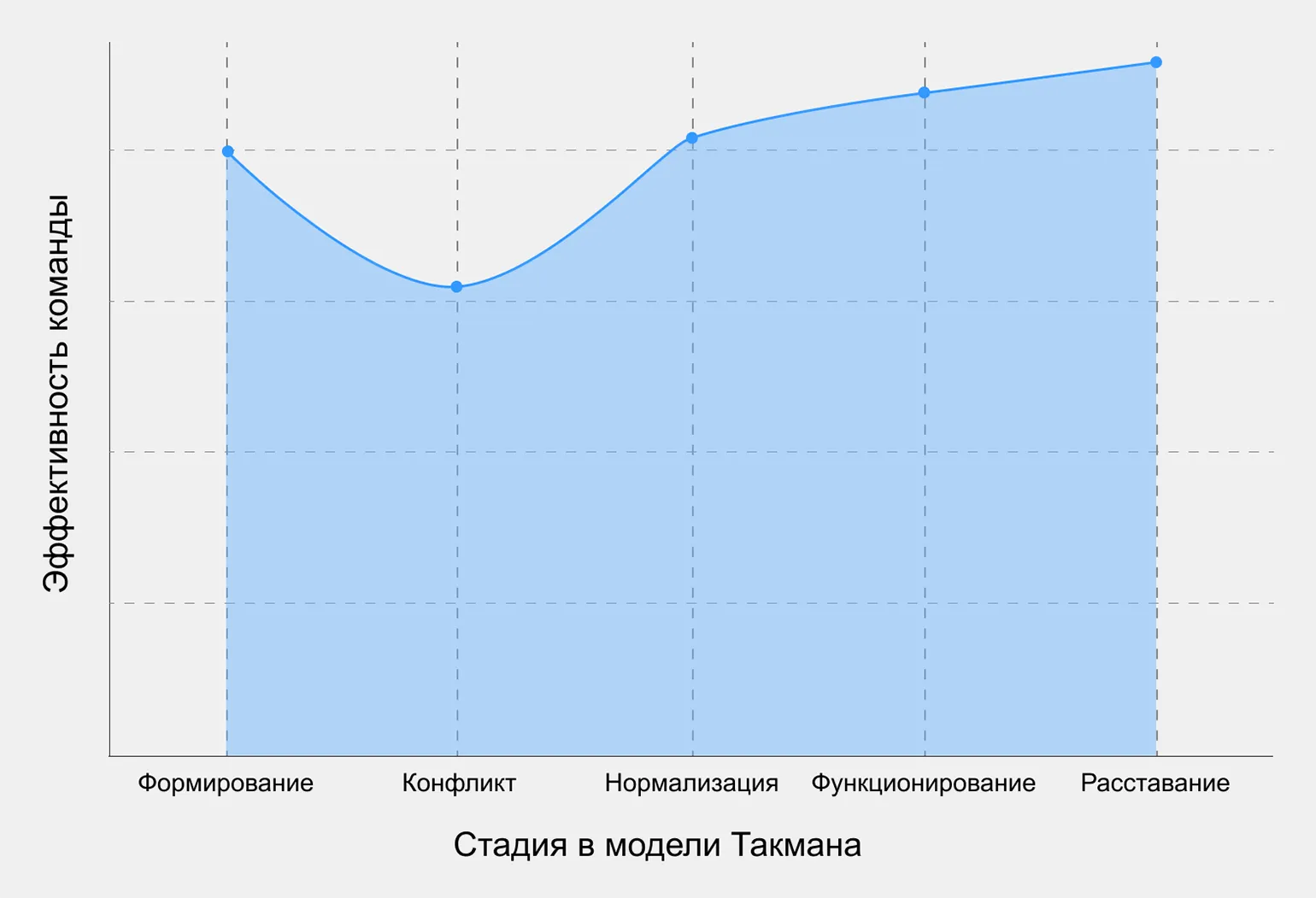
In 1965, psychologist Bruce Tuckman presented the team development model, in which he identified four key stages necessary for achieving team effectiveness. This model helps us understand how teams are formed and develop during the work process. In 1977, Tuckman, co-authored with Mary-Ann Jensen, expanded his model by adding a fifth stage. Understanding these stages helps managers and team members better cope with emerging difficulties and optimize interaction processes.
Let's examine each of these topics in detail.
At this stage, program participants get to know each other, the instructors, and the training route. Learning goals and rules of interaction are established. Even if participants consciously chose a specific course, the level of uncertainty still remains high. Students exercise caution in trying to demonstrate their best qualities and avoid conflict. The familiarization stage is important for creating a comfortable educational environment and promotes more effective learning in the future.

At this stage, the main task is to determine the learning objectives, Establishing rules for the successful completion of the program, as well as forming a team structure, are key elements that will help ensure effective learning and interaction among participants. Well-defined learning objectives will allow participants to understand what they are expected to achieve, and clear rules will help create an organized and productive atmosphere. Forming a team structure facilitates the optimal distribution of roles and responsibilities, which in turn improves group dynamics and enhances the quality of learning.
Participant behavior is an important aspect for understanding the dynamics of any group. Each participant brings their own unique contribution, which influences the overall atmosphere and interaction. It is important to consider that behavior can vary depending on many factors, such as personal characteristics, social conditions, and the purpose of participation. Participants can be both active and passive, which also affects the course of the event. Effective behavior management facilitates more productive interactions and the achievement of shared goals. Understanding these characteristics helps facilitators create a more comfortable environment for all involved.
- communicate politely and formally;
- exercise caution in their judgments;
- focus on themselves.
The second stage of the process is the most difficult. At this stage, conflicts and disagreements arise, as well as a struggle for influence among participants. However, the intensity of these clashes can vary. The conflict stage sometimes takes the form of a "grinding-in" format, when each participant strives to demonstrate flexibility and understanding, even if they hold an opposing point of view. This helps reduce tension and establish a dialogue, which can ultimately lead to a more constructive resolution of disputes and stronger team dynamics.
The main goal of this stage is to resolve conflicts, establish rules of interaction, and clearly distribute roles and responsibilities among group members. Effective conflict resolution helps create a healthy atmosphere for cooperation, which, in turn, increases team productivity. Agreeing on the rules of interaction helps avoid misunderstandings and promotes more harmonious collaboration. Distribution of roles and responsibilities ensures clarity of tasks and helps each member maximize their strengths.
Participants exhibit different behavioral characteristics that can significantly impact the dynamics of the group. Some of them exhibit leadership qualities, striving to take responsibility and coordinate the actions of others. Others, on the contrary, may be more passive, preferring to follow the opinion of the group. The emotional intelligence of participants also plays an important role, since the ability to recognize and regulate emotions contributes to effective interaction. In addition, different communication styles and levels of involvement can cause conflicts or, conversely, promote cooperation. Understanding these characteristics of participants' behavioral reactions helps create a more productive atmosphere in the group and achieve common goals.
- show their true selves;
- defend their positions more confidently;
- unite into mini-groups based on common interests.
At this stage, the group overcomes internal differences and begins to work more effectively. Team members become accustomed to each other, establishing productive working relationships. Mutual understanding increases, which facilitates more cohesive teamwork aimed at achieving shared goals. This process strengthens team spirit and increases overall productivity, which is a key factor in successfully completing tasks.
The main goal of this stage is to strengthen team relationships. This is an important stage that promotes a trusting atmosphere and increases the level of interaction and collaboration among team members. Strengthening team relationships improves communication, increases work efficiency, and achieves shared goals. Developing trust and mutual understanding among team members is key to the successful completion of projects and tasks.
Participants exhibit various behavioral characteristics that can influence the overall interaction process. Their reactions and actions depend on a variety of factors, including personal characteristics, social norms, and the context of the situation. For example, some participants may demonstrate active initiative, while others prefer to remain in the background, observing what is happening. It is also worth noting that the emotional state of participants can significantly influence their behavior, causing both positive and negative reactions. It is important to consider these characteristics to effectively manage interactions and achieve desired results. Analyzing the behavior of participants allows us to better understand the dynamics of the group and optimize interaction processes.
- the level of trust and mutual understanding increases;
- conflicts arise rarely and are resolved constructively;
- participants accept the rules of work and roles in the team;
- team spirit appears, people are more willing to cooperate and help each other;
- motivation and involvement in the overall process increase.
At this stage, the group turns into a close-knit team. Participants begin to better understand each other, adhere to common rules and demonstrate coherence in work. Interaction becomes more flexible, which contributes to effective communication and problem solving. This stage is key to building team spirit and achieving common goals.
The main goal of this stage is to move together towards a common goal.
The behavioral characteristics of the participants in the process play a key role in its success. Participants can exhibit different types of behavior that affect the dynamics of the group and the final result. It is important to consider how each member interacts with others, their motivations, and how they make decisions. Emotional state, level of engagement, and communication skills also significantly affect the overall atmosphere. Analyzing members' behavior patterns helps identify the group's strengths and weaknesses and optimize interactions to achieve better results. Understanding these aspects allows for effective process management and improved teamwork.
- members demonstrate a high level of trust and responsibility;
- motivation and engagement in achieving common goals are also high;
- the team effectively solves problems without strict external control;
- conflicts are minimal, decisions are made jointly;
- team members complement each other, each demonstrating their strengths.
The project completion stage occurs when the work is completed or the team is disbanded. Members discuss the results, exchange feedback, and prepare for new challenges. The key is to create a positive atmosphere during the separation process, which promotes good relations between team members and opens up opportunities for future collaboration. Paying attention to this aspect can significantly improve team spirit and increase the chances of successful interaction on future projects.
The main goal of this stage is to successfully complete the joint work and summarize the results. At this stage, it is important to systematize the results, evaluate the achieved goals, and identify key points that will help in the future. Effective completion of a project not only helps to consolidate successes but also to create a positive experience for future initiatives.
Members exhibit a variety of behavioral characteristics that can significantly impact group dynamics. It is important to consider that each member has a unique set of characteristics, such as level of engagement, communication style, and approach to problem solving. These factors can both facilitate and hinder effective interaction between members. For example, active members are more likely to take initiative and can influence others, while more reserved members may have valuable opinions, but do not always express them. Diversity in approaches and opinions contributes to a deeper analysis of the situation and the making of informed decisions. Analyzing the behavioral characteristics of participants allows you to optimize interaction processes and increase the overall productivity of the group.
- complete work processes and present the achieved results;
- experience satisfaction with the work performed or, conversely, disappointment (depending on the result);
- ideally, show gratitude to each other and recognize the contribution of each team member;
- prepare for a new project or a transition to a new team;
- motivation may decrease due to the approaching disbandment.
What is the SSDL model
The SSDL (staged self-directed learning model) model is an effective motivational design tool used to systematize the learning process. Developed by journalism professor, educator, and author of several books on educational methods, Gerald Grow, this model helps students more consciously manage their learning, increasing motivation and engagement. The SSDL model emphasizes a step-by-step approach, allowing the educational process to be tailored to individual student needs and fostering deeper learning.
SSDL promotes students' development of independent learning skills, moving from teacher dependence to complete autonomy. This model includes four key stages: dependence, interest, engagement, and self-direction. At each stage, the teacher's role changes: starting with direct guidance and control, moving to support and consultation, allowing students to gradually take responsibility for their learning process. This approach not only builds self-confidence but also promotes a deep understanding of the material being studied, which ultimately leads to successful self-realization in the educational environment.
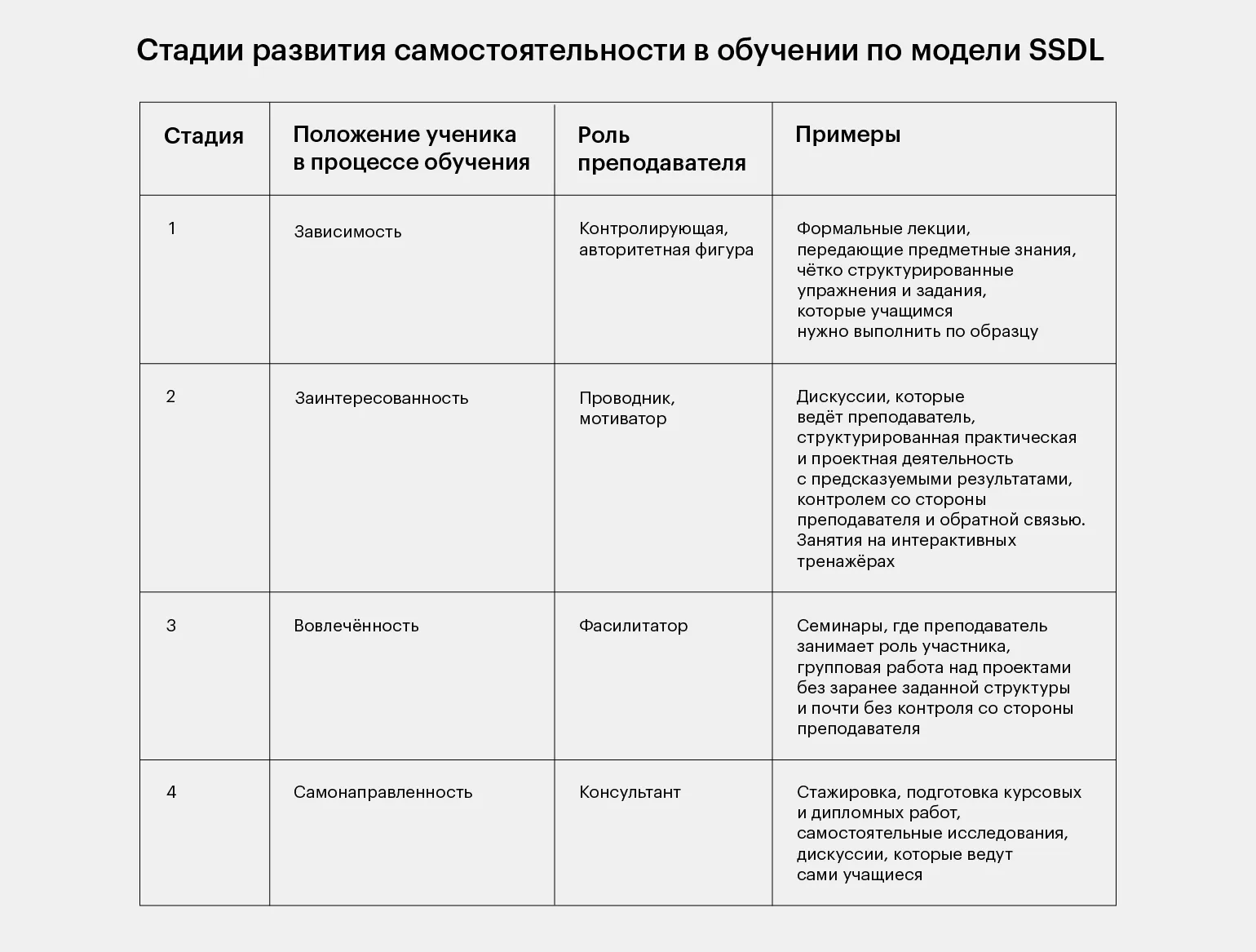
SSDL is a particularly effective tool in adult learning because it emphasizes the development of skills for independent search and application of knowledge. This approach promotes active involvement of learners in the process, enabling them to better adapt to change and effectively solve real-world problems. Using SSDL in educational programs helps adult learners develop critical thinking and confidence in their abilities, which makes learning more productive and meaningful.
How to Connect the Tuckman Model and SSDL
The Tuckman model analyzes group dynamics, while the SSDL model focuses on the dynamics of the development of independence in learning. Both approaches demonstrate the transition from a dependent state of participants to autonomy. The Tuckman model considers this process at the team level, while the SSDL model emphasizes individual development. Comparing these models allows us to better understand how group interaction influences the development of independence in each member.
The self-directed level in the SSDL model includes the fourth and fifth stages of the Tuckman model. A self-directed learner not only independently sets goals and strives to achieve them, but also evaluates their performance and summarizes their findings, similar to how a team does during the separation stage. This allows students to develop critical thinking and improve their learning effectiveness.
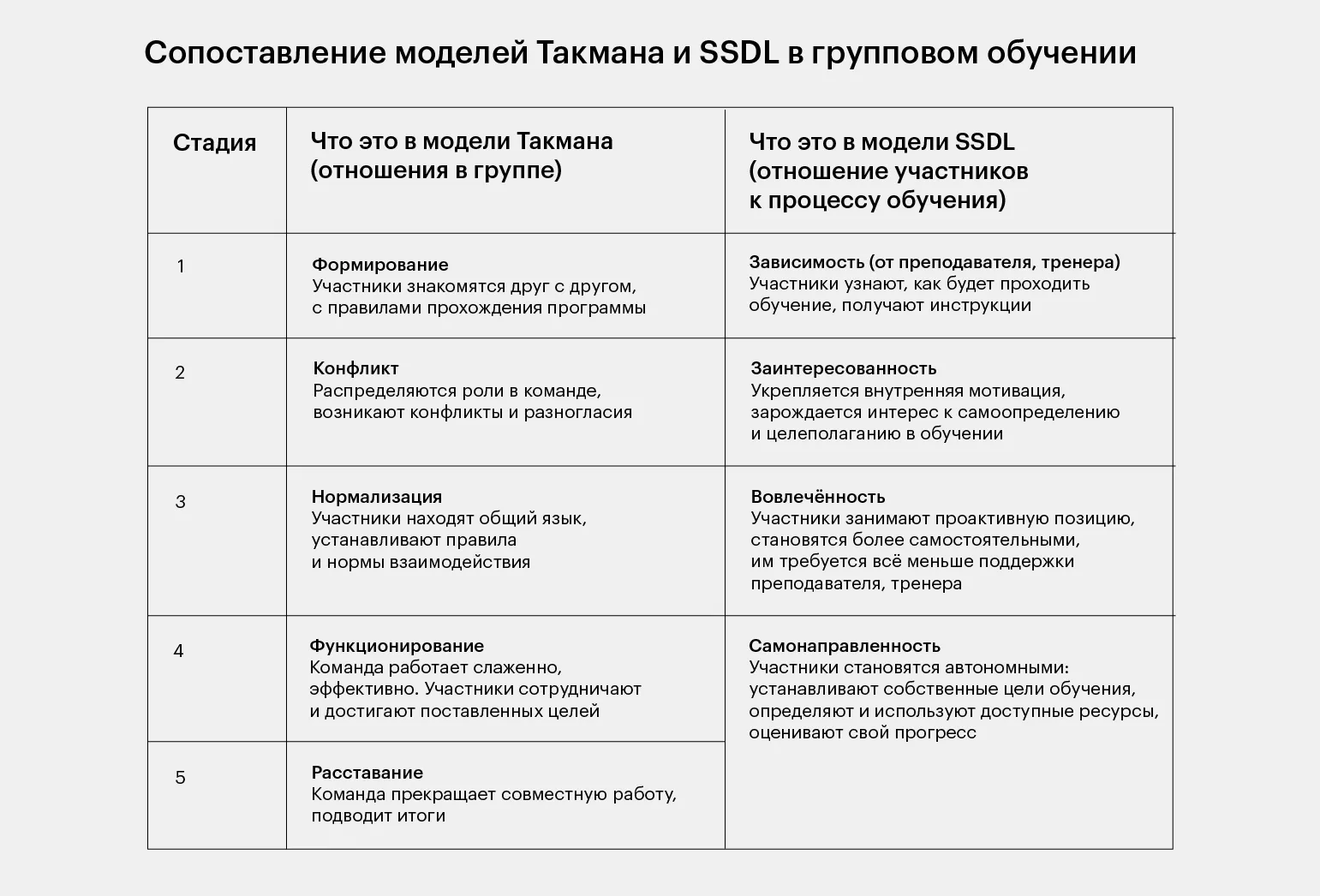
I use both models together to Developing trainings and long-term programs that involve teamwork on projects and shared tasks. Understanding the stages of group formation that training participants will face allows me to select appropriate motivational support methods for each stage. This also helps regulate the level of involvement of the trainer or teacher in the learning process, which in turn contributes to more effective learning and the achievement of program goals.
How to relate all this to the Kolb cycle
The task of the methodologist is to develop a holistic program that will enable team members to successfully achieve a level of self-direction and autonomy. An effective program includes careful planning and implementation of strategies that promote the development of self-management skills and responsibility. The methodologist must take into account the individual characteristics of the participants, their needs and goals in order to create the most comfortable and productive educational environment. The program should be adaptive and aimed at developing participants' self-confidence and the ability to make independent decisions.
When discussing training, the Kolb cycle is often used - an instructional design tool that relates to experience-based learning. This cycle allows for the development of a clear sequence of stages within the training, ensuring more effective assimilation of the material and the active involvement of participants. Using the Kolb cycle helps organize the learning process in such a way that each stage contributes to a deep understanding and the application of acquired knowledge in practice.
- Concrete experience - participants encounter a new experience. Within the framework of training, this can be an assignment, a role-play, a case study, or something else.
- Reflection (reflective observation) - after receiving a new experience, participants analyze what thoughts, questions, feelings, and experiences it evoked. Most often, this stage of the training serves the purpose of problematization: participants formulate questions that will be answered in the next stage.
- Abstract conceptualization - as a result of reflection, new ideas, theories, and approaches are formed. Participants can arrive at them on their own, or a subject matter expert (teacher, business coach) conveys them as ready-made knowledge.
- Active experimentation - at this stage, participants move from theory to practice, applying new knowledge.
Combining the Kolb cycle, the Tuckman model, and SSDL represents an effective approach to designing training for managers dedicated to working with difficult employee behavior in a team environment. It is important to consider how these theories interact with each other to create a deeper understanding and practical application in real-world situations.
The Kolb cycle, which describes the process of learning through experience, can be applied during training. It begins with concrete experience, when managers encounter real-life examples of challenging employee behavior. This is followed by reflection, where participants analyze their reactions and actions in similar situations. After this, generalization occurs, during which theoretical conclusions and strategies are formulated. The cycle concludes with active experimentation, where managers can apply new knowledge in practice and adapt it to the specific conditions of their team.
The Tuckman model, which describes the stages of team development—formation, storming, norming, and performance—is also important for understanding group dynamics. In the context of training, managers can explore how challenging employee behavior affects each of these stages and what strategies can be used to overcome them. For example, during the storming stage, when conflicts and resistance arise, managers can apply various methods to resolve conflicts and improve interactions.
The SSDL (Systems Development Life Cycle) methodology helps organize the training process and develop training. It includes the stages of planning, analysis, design, implementation and evaluation. Using SSDL, training can be structured to meet the specific needs of managers and take into account their experience working with conflict situations in teams.
Thus, integrating the Kolb cycle, Tuckman's model, and SSDL into the design of manager training creates a holistic approach to training that helps effectively cope with difficult employee behavior and improves overall team productivity.
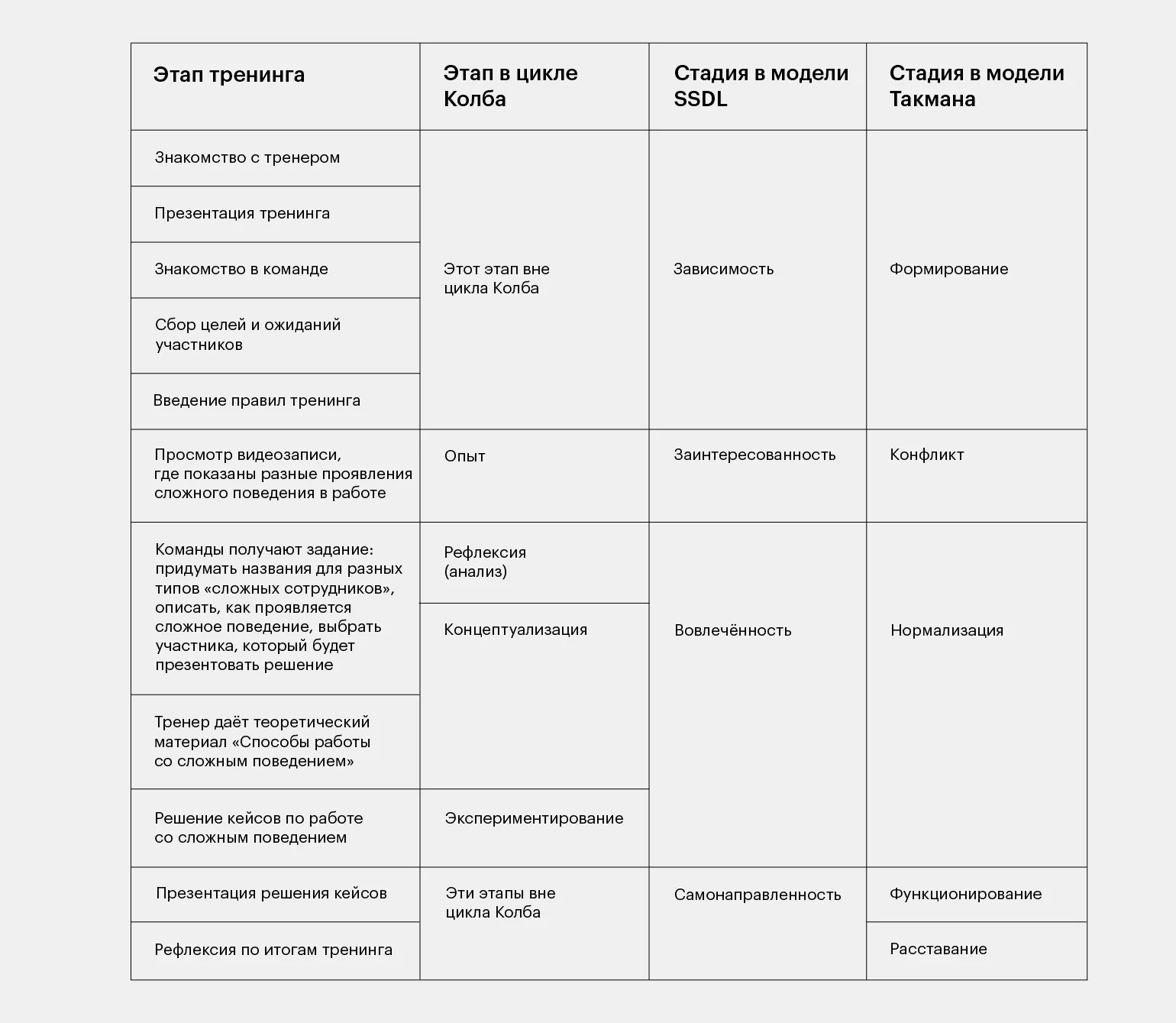
Creating such a diagram allows the methodologist to develop effective tools to support participants at each stage of their learning. Understanding these processes is key not only for the methodologist but also for the trainer, whose role transforms depending on the current stage. The trainer must adapt their strategy for interacting with participants to ensure the most effective training and support. This promotes deeper engagement of participants and improved learning outcomes.
The tables presented show the distribution of responsibilities between the methodologist and trainer depending on the stage of the Tuckman model that the group is going through. An example is the training dedicated to working with difficult behavior.
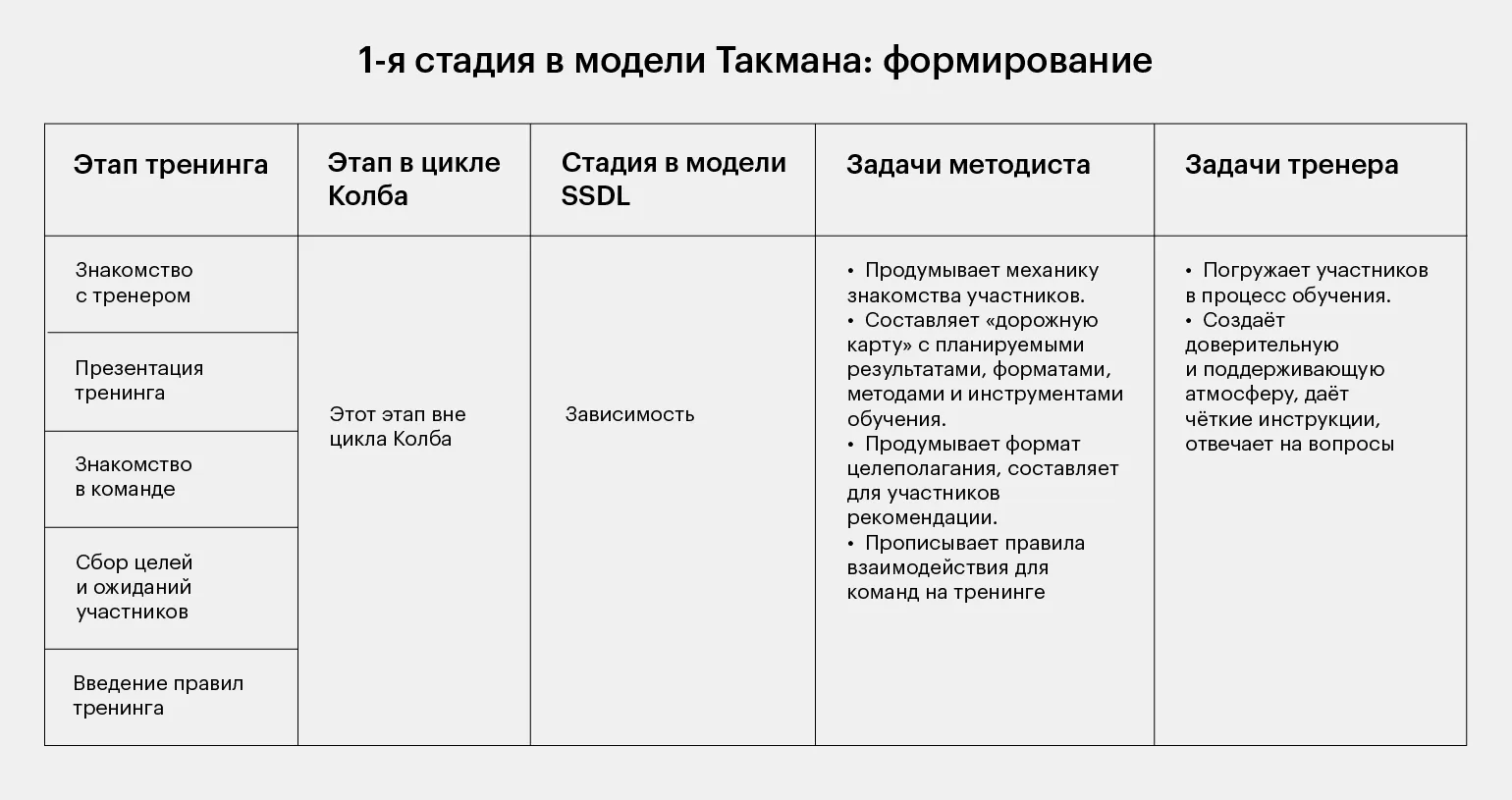
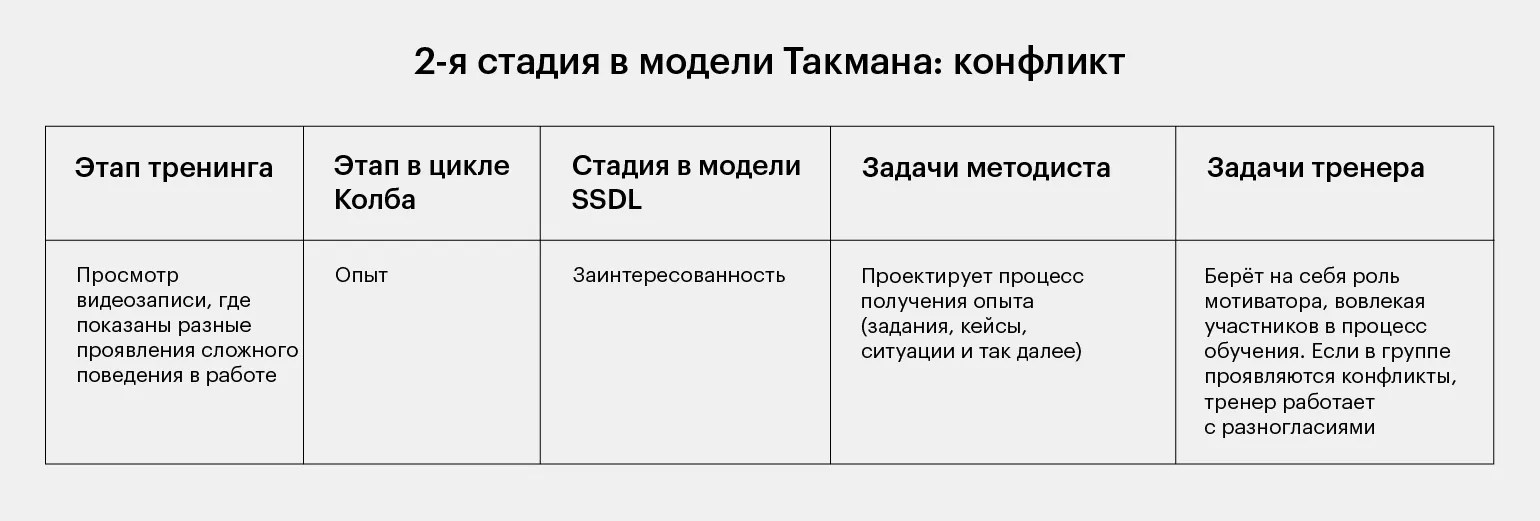
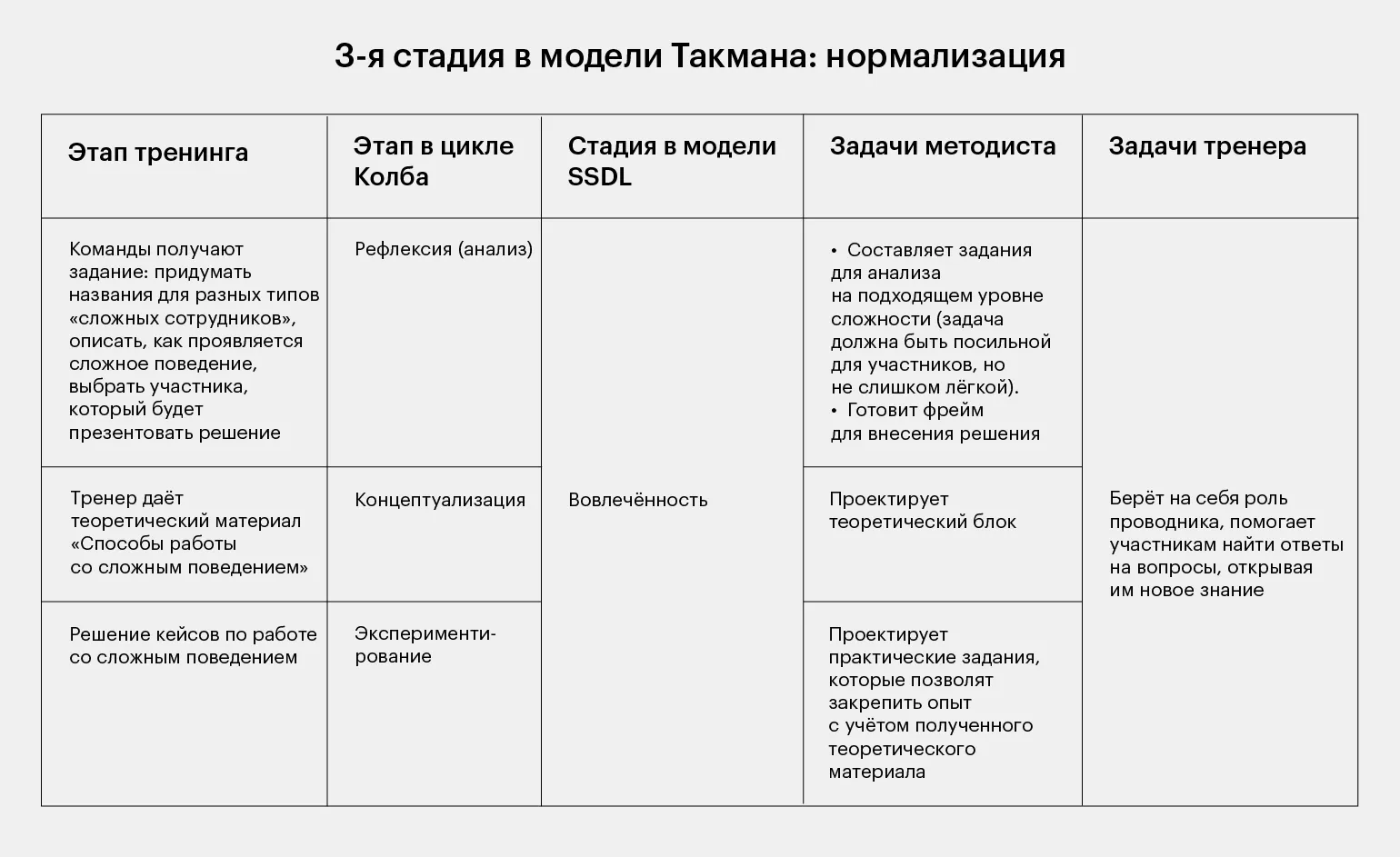

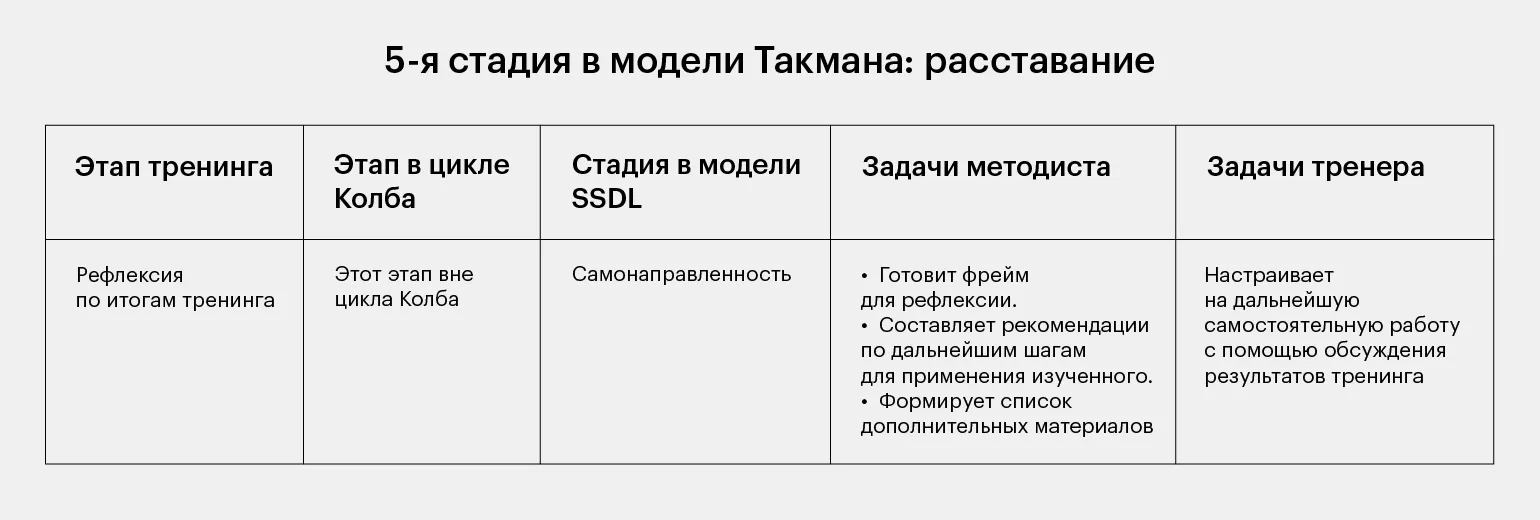
The program guides participants from maximum support and clear frameworks for interaction to independence and autonomy. At the end of the training, teams have the opportunity to independently choose the method of presenting their solutions to the case. At the parting stage, participants are offered a frame – a structure for reflection that sets the direction of their thoughts, but they draw their own conclusions. This approach promotes the development of critical thinking and confidence in participants.