
The competition is an effective tool for corporate training, as we have already mentioned. It contributes to the development of employees' skills, increases their motivation and engagement. The competitive element creates interest in learning, which contributes to better assimilation of the material. Furthermore, competitions help identify team strengths and facilitate knowledge sharing among participants. Using competitions as part of corporate training allows companies not only to develop employees but also to strengthen team spirit, which ultimately leads to increased overall productivity.
Competitions are an effective tool for developing a variety of employee competencies and identifying best practices within the company. Participation in the competition not only contributes to employee development but also creates incentives for learning and professional growth. Furthermore, successful practices identified during the competition can be scaled up throughout the organization, contributing to overall performance improvement and effective knowledge sharing.
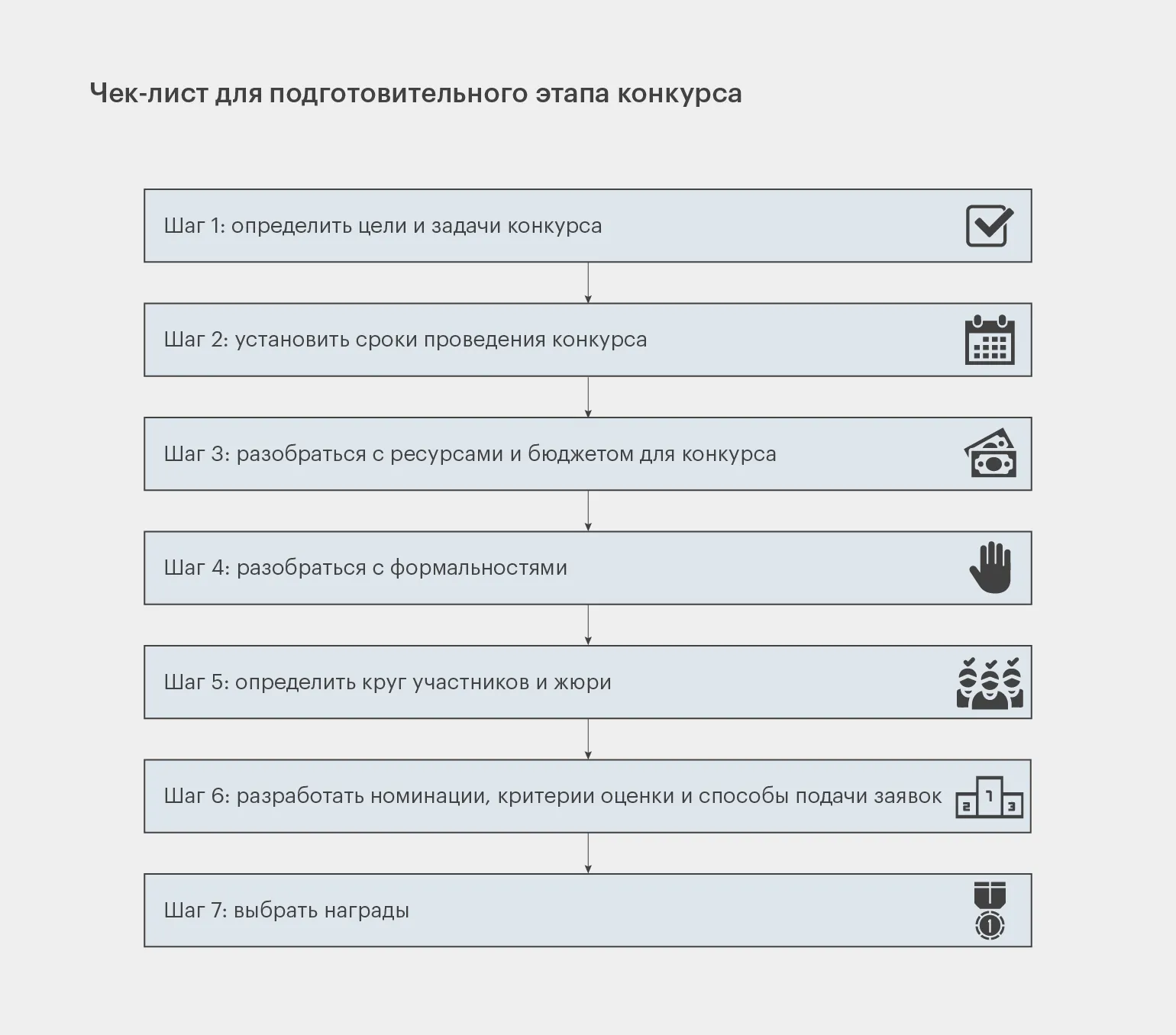
To prepare an effective event, it is important to carefully plan and organize all stages. Proper preparation will help achieve the desired results and maximize the benefits for participants. It is essential to consider every detail, from choosing the venue to creating the program. Each event requires an individual approach, so it is essential to analyze the target audience and its needs. High-quality organization also includes the correct allocation of resources and time, which is the key to a successful event.
Preparatory Stage
For T&D specialists, this stage is the most time-consuming and labor-intensive. However, the effectiveness and success of the competition depends on it, as all subsequent stages will be determined by the quality of preparation. It is important to pay attention to every aspect to ensure high results and meet the expectations of participants.
The development of the competition mechanics directly depends on the set goals. This affects the number of employees involved, the organization of the qualifying rounds, the format for presenting competition entries, and the evaluation process. It is also important to consider the approach to awarding the winners, which should be consistent with the overall goals of the event. Proper organization of all these aspects will help increase participant interest and make the competition more effective.
When organizing the competition, it is necessary to take into account the current situation in the company and the workload of the employees who may participate. For example, the end of the quarter is not the best time for the application stage, as employees are focused on reporting during this period, which can lead to a low number of participants. Proper planning of the competition's timing will help attract more employees and increase interest in the event.
Each stage of the competition requires a significant investment of time from both participants and T&D specialists and jury members. When developing the event mechanics, it is important to consider its feasibility in terms of time resources. This will allow for an adequate setting of the deadlines and ensure the successful organization of the competition.
The budget determines the prizes awarded to the winners and also helps determine the scale of the competition stages and the final awards ceremony. The larger the budget, the more attractive and valuable prizes can be offered to participants, which increases interest in the competition and its prestige. Ensuring sufficient funding also allows for a higher-quality and more memorable event, which in turn can attract more participants and spectators.
The budget plays a key role in choosing the technical tools for organizing the competition. Depending on your budget, you can use free Google services to collect applications and summarize results, develop a custom app, or create a chatbot to simplify interactions with participants. The right choice of tools will help you effectively manage the competition and increase its appeal to participants.
To allocate a budget and justify the competition, some companies require preparing competition regulations. It is recommended to clarify this with the HR and legal departments before beginning planning. This will help avoid misunderstandings and ensure compliance with all necessary procedures. A properly drafted competition regulation will not only assist in budget allocation but also in establishing transparent criteria for participants, which will improve the efficiency of the entire process.
When engaging external experts as judges for a competition, it is important to consider the need to sign a non-disclosure agreement (NDA). This is because the competition may involve working case studies, and participants may submit projects that contain or may contain commercial secrets. Signing an NDA will help protect intellectual property and maintain the confidentiality of information, which is key to ensuring a fair and secure competition environment.
The competition can be organized for a small department of 10-50 people, or for the entire company, including large-scale events for over 300,000 employees. Such cases are common in large corporations, confirming the effectiveness and appeal of such events in a corporate environment.
If the competition has a significant number of participants, it is recommended to organize several nominations and hold qualifying rounds. The optimal number of finalists in each nomination should not exceed 10-15 people. This figure will help effectively plan the competition funnel and ensure a higher-quality selection of winners.
200,000 people participated in the professional skills competition held by Pyaterochka. The competition consisted of four stages: the first two rounds were held in the format of testing and quizzes aimed at assessing professional knowledge. The third and fourth rounds were organized as a business game that simulated real-world work processes. Each stage significantly reduced the number of participants, bringing the determination of the winner closer.
To ensure the objectivity of the competition and increase participant engagement, it is essential that employees with similar skill levels compete in the same category. Newcomers should not compete with experienced professionals. It is also important that employees belong to the same professional competency group: salespeople should compete with salespeople, and managers with managers. Otherwise, instead of the expected benefit, you may experience a negative reaction from participants.
When forming the competition jury, it is important to consider the level of expertise and authority of its members in the relevant professional field. It is important that the jury members are familiar with the team and have a reputation that inspires confidence in the competition audience. The quality of the evaluation of the competitors directly depends on the level of knowledge and experience of these experts. Therefore, the correct selection of the jury is a key factor in the successful conduct of the competition and ensuring a fair evaluation of the works.
Carefully developing nominations and clear evaluation criteria is a prerequisite for ensuring the transparency of the competition. Participants will be able to easily understand which projects meet the requirements for participation and which do not. This facilitates a fair and objective selection of the best works, which in turn increases the credibility of the competition and its reputation. Correctly formulated criteria help avoid misunderstandings and make the evaluation process more structured and understandable for all stakeholders.
In the case of the Skillbox professional skills competition for methodologists, we excluded a number of unrealized projects at the selection stage, since it was impossible to evaluate their results. This requirement was built into the evaluation criteria. This will make it easier for the jury members to evaluate the applicants, simplifying the justification for the winner's selection and eliminating any doubts about the objectivity of the decision.
Clearly defining the competition rules, including a detailed description of the nominations, evaluation criteria, and application procedures, significantly simplifies the communication campaign. This promotes more active employee engagement. Clear instructions and transparent terms help create a positive image of the competition and motivate employees to participate, which in turn strengthens corporate culture and fosters team spirit.
Don't forget about the Audience Choice Award when discussing nominations. This award will not only add intrigue to the competition but will also engage team members who don't plan to actively participate but want to support their colleagues. The Audience Choice Award fosters a team spirit and increases interest in the event.
Determining prizes for competition winners is an important step in the planning stage. Awards can significantly impact the event's budget, so their selection should be carefully considered in advance. Prizes also serve as a powerful incentive for employees to participate. Announcing specific awards is an important part of a communications campaign that helps increase participant interest and engagement. Properly chosen prizes can not only increase participation but also enhance the overall atmosphere of the competition, which in turn will positively impact corporate culture.
When choosing prizes for a competition, it's important to consider a balance between tangible and intangible motivation. Intangible incentives, such as pride, certificates, and peer recognition, play a significant role, but they don't always fully motivate employees to participate. Participation in a competition requires time and effort, and to increase engagement, it's worth considering adding tangible prizes or other valuable gifts that can be meaningful to participants. This will not only increase employee engagement but also make the competition more appealing.
It's important to consider the balance between the costs involved in preparing for and participating in the competition and the scale of the prizes offered to the winners. For small departmental competitions held during the workday, awarding the winners with a certificate and a small gift will be sufficient. However, for large international competitions, more significant prizes should be provided that will match the level of the competition and motivate participants to actively strive for victory.
Here are some recommendations for choosing prizes:
When choosing prizes, it's important to consider the interests and preferences of your target audience. Prizes should be attractive and relevant to encourage participation. Consider using unique and original prizes that will make your promotion stand out from the crowd. Also, keep in mind that valuable prizes can increase participant engagement. Don't forget to offer multiple prizes at different price points to attract a wider range of participants. Choosing the right prizes will not only increase interest in your event but also improve your company's image.
When organizing a competition involving teams, it's important to determine in advance whether the prize will be awarded to the team as a whole or to each participant individually. This decision can significantly impact participant motivation and the competitive atmosphere. A team prize promotes group cohesion and teamwork, while individual awards can encourage personal achievement. Choosing the right awards format will help create a more engaging and productive event.
If budget is limited, offering employees a bonus in the form of an extra day off or the opportunity to choose a flexible work schedule for the month is a smart solution. Such non-material incentives can significantly increase employee motivation and satisfaction, which in turn will have a positive impact on the overall team atmosphere.
Providing recognition badges, titles, and statuses in corporate messengers does not require significant financial investment. These elements can effectively increase employee motivation and create a positive corporate culture. Investing in a recognition system helps strengthen team spirit and improve productivity.
Effective ways to reward winners include presenting a personalized certificate or trophy, as well as providing a variety of company gifts. You can also develop branded merchandise to symbolize success in the competition, and reward winners with valuable prizes. These approaches help increase participant motivation and strengthen the company's image.
The Miele Stars competition offered ambitious solutions, including a trip to the Miele plant in Petersdorf as the grand prize. This is a unique opportunity for participants not only to see the production process but also to learn more about the high quality standards the company adheres to.
The awards ceremony is an important moment that includes recognition from colleagues and management. It is an opportunity to express gratitude to those who supported and assisted on the path to success, and to share the joy of victory. Recognition of achievements helps strengthen team spirit and increase motivation within the team.
Remember to organize the awards ceremony in advance. Proper planning of this process will help create a festive atmosphere and ensure its successful completion. Consider all the details, including choosing the location, time, and format, to ensure the awards ceremony is top-notch and leaves a positive impression on all participants.
Selection Stage
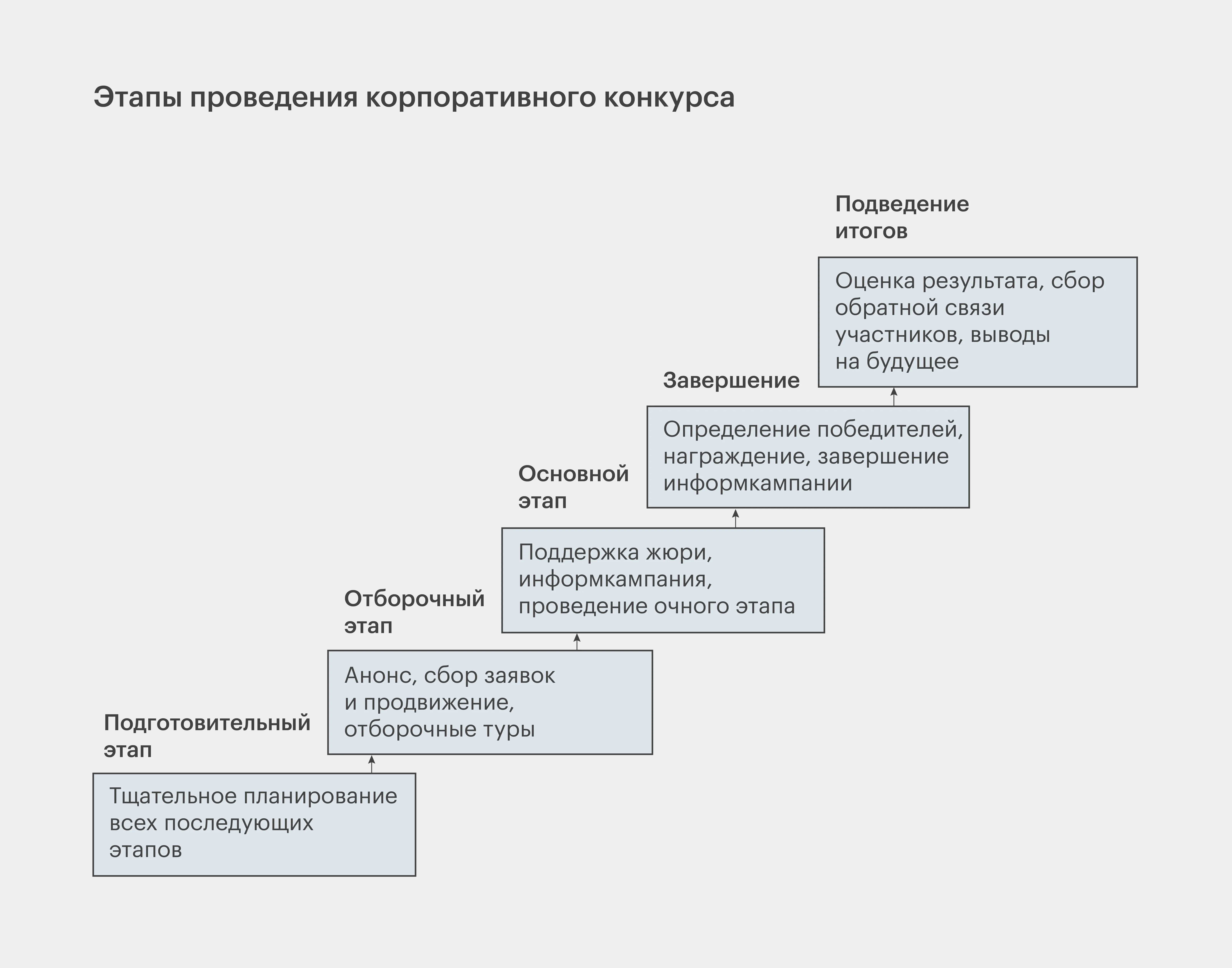
At this stage, the key objective is to attract a sufficient number of participants and finalists in all nominations.
The selection stage is a key element in informing employees about the competition. It is important to draw attention to the competition and its theme, as well as to encourage employees to actively participate. Effective communication ensures a high level of interest and engagement, which contributes to the success of the competition and the achievement of its goals.
At the stage of announcing the competition, it is crucial to clearly convey to the team the main goal of the event, as well as the criteria by which participants and projects will be selected. It is necessary to indicate the timing of all stages, the composition of the jury, and also explain in detail the application procedure. This will ensure the transparency of the process and help participants prepare for the competition more effectively.
The second key aspect is motivation for participation in the competition. It is important to consider how to create a positive image of the competition and what measures can be taken to motivate participants. Creating an engaging atmosphere, offering rewards and recognition, and actively engaging your audience will help increase interest and add value to participation.
For an effective communications campaign, it's important to utilize all available resources. This includes corporate social media, email newsletters, and organizing corporate events and meetings where you can announce the competition. Proper integration of these channels will help increase audience engagement and attract more participants.
The format and method for submitting entries are often determined during the planning stage. This could include a Google form, a written application, an application via a chatbot, or a dedicated digital application for the competition. It's important to consider several key points to ensure a smooth application process. First, choose the most convenient and accessible submission option that will be understandable to participants. Also, ensure that the instructions are simple and clear to avoid misunderstandings. Ensure technical support is available should applicants have any questions. Pay attention to the application deadlines to ensure participants have sufficient time to prepare. These measures will help make the application collection process more efficient and organized.
- People tend to put off registering for participation until the last minute. Therefore, it is important to remind participants of the deadline several times during the selection process.
- It is a good idea to announce the receipt of the first application for the competition and provide real-time updates on how the number of applicants increases.
- You can also encourage participants to submit applications in the following ways: a direct offer from a manager or T&D manager, posting an incentive on the corporate portal, or an announcement at a corporate event, etc.
If the competition includes qualifying rounds, it is important to announce each stage in advance and provide informational support. This will allow you to highlight highlights, engage participants, and highlight the finalists. Regular updates will help generate interest and maintain audience activity throughout the competition.
Short breaks are recommended between competition stages, as work processes remain a priority for participants. These breaks will help maintain focus and increase productivity, allowing participants to better complete tasks and avoid fatigue. Regular breaks promote more efficient task completion and improved work quality.
Initial screening stages often serve as a candidate filter, so they are typically conducted in the form of tests, quizzes, or key performance indicator (KPI) assessments for a specific reporting period. These methods help to identify the most suitable candidates who can meet the company's requirements.
Main Stage
After the selection of contestants is complete, the main stage of the competition begins. The success of this stage largely depends on how carefully you prepared and conducted the preliminary stages. It's important to note that the main stage can be either noticeable to viewers or completely invisible. Let's look at this in more detail.
Clear organization and competent process management during the preparation phase will help avoid numerous problems later. When every step is thought out, participants can focus on completing their tasks, which increases the overall effectiveness of the competition. In some cases, the main stage becomes vibrant and spectacular, attracting the audience's attention, while in other situations, it takes place in a quiet but productive atmosphere.
Therefore, it is important not only to conduct the selection process but also to devote sufficient attention to all aspects of the main stage to ensure its successful completion and a positive reception from the audience.
If the competition is conducted in the format of evaluating written works, such as descriptions of completed projects or business ideas, then this part of the competition remains behind the scenes. The organizers forward the submitted works to the jury members, who then carefully analyze them. This approach ensures an objective evaluation and allows the jury to focus on the content and quality of the submitted materials.
At this stage, key tasks for organizers include establishing clear event goals, identifying the target audience, developing the program and format, and selecting a suitable location and time. It is also important to ensure effective event promotion to attract the maximum number of participants. Communication with partners and sponsors is essential, as is ensuring technical equipment and logistics. All these aspects play a significant role in the successful implementation of the project and the achievement of the planned results.
- ensure the minimum number of applications required for the competition to take place (we have described several life hacks on how to increase the number of applications in the section on the selection stage);
- monitor the deadlines for submitting works, reminding about deadlines in advance (in practice, each reminder usually results in a new application);
- check the submitted works before sending them to the jury, returning them for revision if they do not meet the specified criteria;
- inform employees about the progress of the competition to maintain interest in it (announce the dates of the next stages, highlight outstanding and unusual applications, etc.).
If the competition includes oral presentations or is organized as an in-person tournament, its implementation will require greater involvement from the training departments. In this case, it is necessary to consider the preparation of the participants, the organization of the performance space, and the development of evaluation criteria. It is also important to provide technical support and prepare the necessary materials for the participants. Professional preparation and coordination of all aspects of the competition will significantly impact its success and effectiveness.
- Plan in-person events, consider the location and time, provide technical support, and select and prepare the event host in advance.
- Inform competition participants about the date, time, and format; explain what they will need to prepare for the in-person presentation and when; ensure that all participants know what they must provide and when.
- Agree with managers on the participation of each employee. As a rule, in-person rounds of the competition are held during working hours, so it is highly desirable for the manager not only to know about their subordinate's participation, but also to support them.
- Think about the mechanics in case one of the competitors is unable to attend the in-person event: are you prepared to exclude them from participation, organize online participation or a separate round for them?
- Organize support for the competitors. Each participant should know where to turn with questions or for support.
It is important to ensure that competition participants are informed about all available training activities related to the competition. This not only contributes to the educational goals of the competition but also increases participants' confidence. Support activities play a key role in the preparation of competitors, allowing them to better understand the format and requirements of the competition. Ensure that information about such activities is accessible and easy to understand so that each participant can take advantage of all the opportunities to increase their chances of success.
If you plan to hold a competition accompanied by a presentation master class or a public speaking workshop, it is important not only to organize these activities but also to provide participants with the opportunity to participate. This is necessary to ensure full interaction, similar to that which occurs during the in-person portion of the competition. Participation in such activities can significantly improve the level of preparation of applicants and make the competition more interesting and meaningful.
If the competition includes an assessment of specialized skills, it is recommended to notify employees in advance about available topical courses at the corporate university. If there is no corporate university, you can use thematic collections of external resources, as well as provide links to internal procedures and regulations containing the necessary information. This will allow competition participants to prepare and increase their chances of success.
Competition Completion
This stage includes several key components, each of which plays an important role in the overall process.
At this stage, the main task is to be completely confident in the justification of the decision made. Evaluating the results of a quiz or test, where the participant with the highest score is the winner, is quite easy. However, organizing the evaluation of the jury's work is much more difficult, since it can be influenced by subjective factors. It is important to develop clear evaluation criteria to minimize the influence of personal preferences and ensure fairness in the process. Proper organization of the evaluation contributes to more objective results and increases confidence in the results.
Support the jury in the process of evaluating candidates. This is important for forming an objective opinion of the applicants and their professional qualities. Assisting the jury in this process will help ensure fairness and transparency of the selection process, which will ultimately lead to higher-quality results. Evaluating candidates requires attention and an understanding of the criteria by which they will be assessed. Ensure you provide the necessary information and resources to the jury so they can make informed decisions.
Jury members are often not involved in the evaluation criteria development process, which may raise questions about the selection of winners. Your primary task is to provide them with the necessary support and familiarize them with the details of the participant evaluation process.
The more detailed and accurate the evaluation mechanism, the easier it is to determine the winner, which increases the jury's confidence in the selection process. This emphasizes the importance of advance preparation. For example, when organizing a competition among Skillbox methodologists, we first tested the developed evaluation form in a focus group, which allowed us to make the necessary changes and improve the evaluation process. This approach ensures fairness and transparency of the competition and increases participants' confidence in the results.
When planning the jury's evaluation time, it is important to consider their workload. Don't expect managers to evaluate a large number of projects, say, one hundred, in one day. It's best to set a deadline and then add a buffer of one or two days to ensure a high-quality evaluation. This approach will avoid rushing and ensure a more thorough analysis of the submitted works.
Each jury member can be assigned to evaluate one or two nominations, but it is important to ensure that each project receives at least three or four evaluations. This will ensure the objectivity of the competition results and improve the quality of the evaluation of the submitted projects.
Ask the jury for detailed comments when evaluating the participants' work. Contestants highly value such feedback, as it promotes transparency in the evaluation. In addition, these comments will serve as useful material for an information campaign when publishing the competition results on corporate social media. This approach not only improves the quality of the evaluation but also increases audience engagement in your competition.
In the second stage, it is necessary to summarize the scores given by the jury members and determine the winners based on the resulting data. This process requires careful analysis and accuracy to ensure the fairness and objectivity of the results. After summing up the results, it is important to ensure that all scores have been recorded correctly. This will ensure transparency in the selection of winners and strengthen the credibility of the event.
After receiving the scores from the jury members, it is important to organize a meeting of the competition organizing committee to summarize the results and determine the winners. This will allow the results to be systematized and ensure transparency of the process. Discussing the results with the team will help identify the strengths and weaknesses of the competition and prepare recommendations for future events.
Before the meeting, it is important to check the evaluation forms to ensure they are correct and complete. This will help avoid misunderstandings and ensure an effective discussion.
It is recommended to allocate several days for the summing up stage to ensure the accuracy of the winner's selection. This will allow all results to be thoroughly checked and ensure their accuracy.
Participants should be notified of the winner in advance, as this will allow for a more efficient organization of the awards ceremony. Knowing whether the winner will be present will help in planning the event and ensuring its success.
To ensure the successful implementation of the planned project, it is important to consider all aspects, including the awards ceremony, which will be held at the start. This depends on the allocated budget and available time. The scale of the competition must be matched to the format of the final ceremony to ensure a positive experience for both participants and spectators.

Awarding procedures may vary depending on the context and objectives of the event. It's important to remember that awards can be both individual and collective, and come in various forms: from diplomas and medals to cash prizes and gifts. The awards process typically includes several stages, such as selecting nominees, evaluating their achievements, and organizing the presentation ceremony.
To enhance the significance of the awards ceremony, it's important to create an atmosphere of celebration and recognition, which helps motivate participants. It's also important to define the evaluation criteria in advance to ensure the process is transparent and fair. For example, in the corporate sphere, awards may be given for sales achievements, innovative ideas, or teamwork. In educational institutions, awards may be related to academic success or athletic achievements.
Thus, well-organized awards procedures not only help boost morale but also strengthen the corporate culture or educational environment, creating incentives for further achievement.
For small competitions, it's enough to send a newsletter announcing the winner and posting a photo or video of the award ceremony. This approach effectively informs participants and creates a positive image for the event.
Medium-sized competitions are often held as part of corporate events such as general meetings, training sessions, annual team gatherings, and corporate parties. The announcement of winners and the awards ceremony can be organized both online and offline, allowing the event to be tailored to any conditions and participant preferences. This approach promotes employee engagement and strengthens team spirit, making corporate events more memorable and effective.
Large-scale competitions require a special approach to awarding the winners. For example, the "Best in Profession" competition held at Sheremetyevo Airport among air traffic controllers culminates in a specialized awards ceremony and concert program. This event not only highlights the significance of professional achievements but also creates a festive atmosphere, enhancing the prestige of the profession. Holding such ceremonies helps draw attention to the importance of the qualifications and skills of aviation professionals.
Plan the conclusion of the competition's communications campaign as a separate stage. It is important that information about the competition does not disappear from the media space. If you have been regularly posting updates on corporate social media or sending out newsletters, devote attention to the final stage. This will create a solid foundation for future training and development (T&D) activities. The conclusion of the communications campaign allows you to summarize the results, thank participants, and maintain interest in subsequent events.
Award procedures can vary depending on the objectives and format of the event. They often include formal ceremonies at which awards are presented to winners or participants. Such events can take the form of gala gatherings that highlight the importance of the awards and achievements. The awards ceremony can also be accompanied by speeches from the organizers and guests, which gives the event additional significance.
There are also less formal awards formats, such as corporate events, where awards are presented in an informal setting. This creates a more relaxed atmosphere and promotes team spirit.
It is also important to consider that awards procedures may include a pre-selection of nominees as well as open voting, which makes the process more transparent and fair. Depending on the scale of the event, awards can be both symbolic and tangible, further emphasizing the significance of the achievement.
Properly organized awards procedures not only recognize successes but also motivate participants to further achievements, creating a positive image for both the organizers and the recipients.
Event organizers often encounter cognitive biases, assuming that all participants actively follow news about the event. However, the reality is that some employees may miss important information. Nevertheless, they will be interested to learn about the final results of the competition and the outcome of the event. Therefore, it is important to ensure that this information is accessible to everyone so that everyone can stay informed and involved in the process.
The final campaign announcements provide an effective platform for recognizing the winners' achievements. This is not only a way to celebrate their successes, but also an important element of non-material motivation that helps strengthen team spirit and increase participant engagement. Such initiatives help create a positive atmosphere and inspire new achievements.
At the conclusion of the competition, it is important to inform the team about the educational goals achieved as a result of the competition. It is also worth indicating where they can find the competition materials, especially if one of the main objectives was to share experiences and identify best practices. This will help participants better understand the results and use the knowledge gained for further development.
Effective presentation of the informational recognition of the winners helps increase the visibility of this event among employees, including those who did not follow the competition, as well as new employees who were not involved in the previous stages. The more visible and attractive this recognition is, the higher the likelihood that it will generate interest in participating in future events. This creates a positive company image and encourages employee engagement, which in turn contributes to the development of corporate culture and strengthens team spirit.
Summing Up
After the prizes are awarded, the competition concludes for the participants, but not for the organizers. The organizers must summarize the results, as is customary in any project. A retrospective analysis of the competition's organization provides an opportunity to evaluate the results and draw conclusions about the successes and shortcomings of organizational decisions. This approach will help improve the competition process and increase its effectiveness in the future.
At this stage, it is important to consider the following:
- evaluate whether the competition has achieved the objectives it set at the start: have employees' competencies improved, has the demand for training programs increased, have new useful practices and approaches to solving work problems been identified;
- collect feedback from participants, finalists, winners, and jury members (what they liked and what, in their opinion, should be changed next time);
- evaluate the impression the competition itself and the awards ceremony made on the audience;
- evaluate how much interest the competition generated among the target audience (what was the percentage of participants and spectators);
- organize a meeting of the project team to record the results, as well as successful and unsuccessful decisions.
Read also:
- How to teach negotiation skills using an online tournament
- Development marathons in corporate training: what kind of format is this?
- How to design corporate training programs
- Why and how to develop teachers from among your employees
- Why companies invite lecturers who are astronauts and art historians
Training and Personnel Development Manager
You Learn how to build corporate employee training programs and evaluate their effectiveness. You can start a career in the HR department and implement a working personnel development system in the company.
Find out more