Contents:

Course with employment: "The profession of Methodologist from scratch to PRO"
Find out more
- Candidate of Pedagogical Sciences (PhD), game practitioner and game technologist with 24 years of teaching experience.
- Developer of numerous games, including the modular multifunctional game library "Children of the World", which received a grant from the President of the Russian Federation in 2018 and was awarded a Cambridge diploma.
- Scientific Director of the international network laboratories "Innovative Technologies in Multicultural Education" of the Yelabuga Institute of the Kazan Federal University.
- Member of the network expert community of the Agency for Strategic Initiatives of the Russian Federation.
- Author of more than 200 articles, 48 books and eight patents in the field of pedagogy, including game pedagogy.
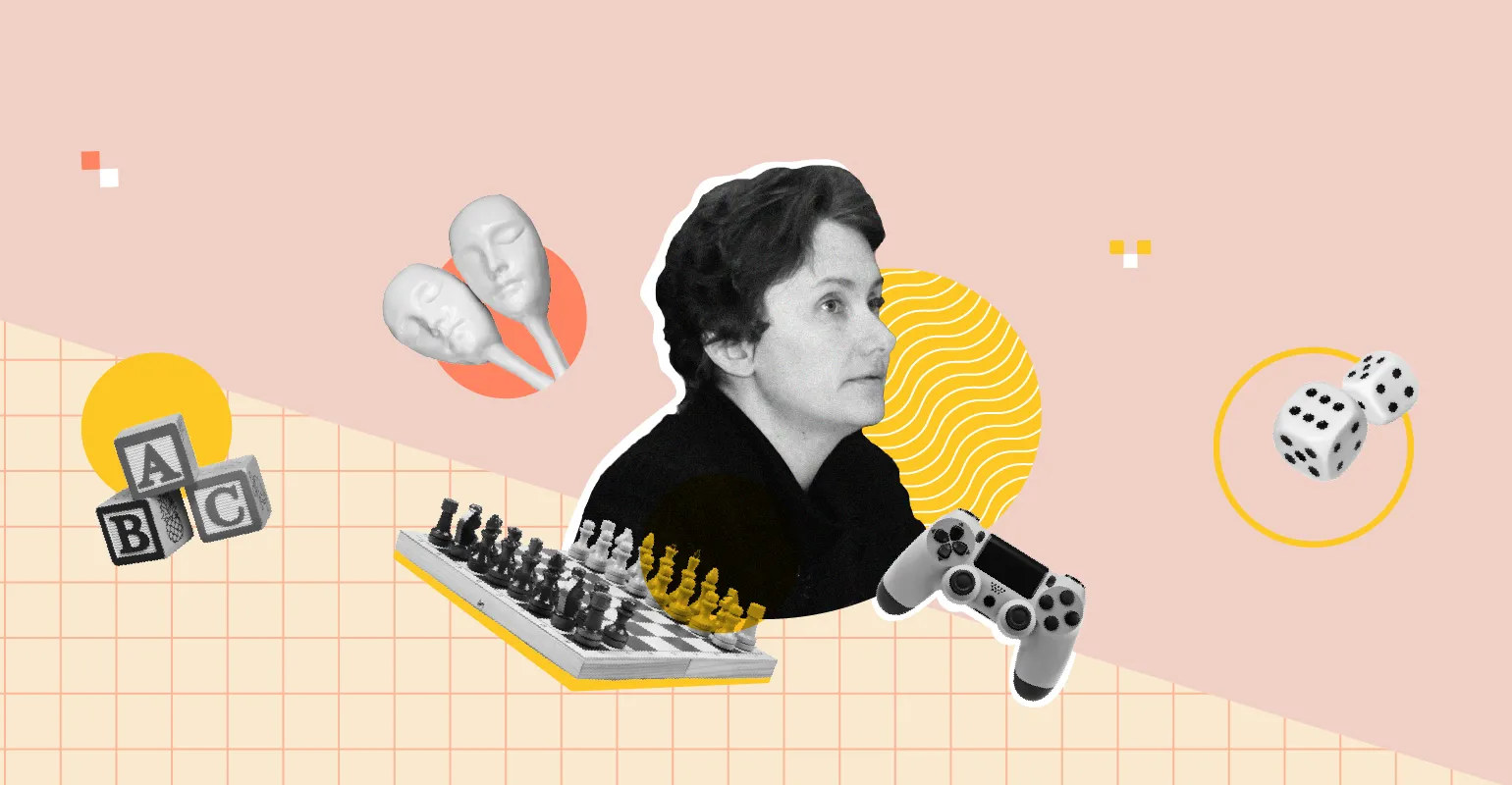
Photo courtesy of Ekaterina Kudryavtseva.
Why gamifiers are very
Game pedagogy, also known as edutainment, is the integration of educational processes and gaming methods. It aims to create an engaging and productive educational environment. Gamification techniques in teaching include a variety of approaches that use game elements to enhance student motivation and engagement. Gamification of educational processes, in turn, involves the application of game mechanics in non-game contexts to enhance learning and increase interest in the educational material. All these concepts are interconnected and serve a single goal - to make the learning process more effective and engaging.
Game technologies and mechanics are key tools in the field of game practice. According to European experts, gamification involves the systematic creation of a unique gaming reality in which serious processes can develop, presented in a game form. In the context of game pedagogy, this means that not only individual games are integrated into lessons, but the entire course is transformed into a format reminiscent of a computer game or a real-life activity, such as a quest. This approach helps increase student engagement and make the learning process more engaging and effective.
Successful gamification requires more than just being a game designer; it also requires knowledge of psychology and screenwriting. Above all, it's important to be able to implement a project while minimizing risks for the target audience. It's also essential to closely monitor game participants and analyze whether they are achieving their individual and group goals. This will allow you to create more effective and engaging game elements that will foster engagement and achieve results.
What specific goals and objectives do you have in mind?
The client may have long-term goals and objectives, while game participants face current problems and challenges. The developer must consider the interests of both parties. Therefore, it is essential for the organizer of such events to possess two key competencies: that of a game designer, who creates new games, and a game practitioner, who consciously and systematically applies existing games to achieve specific goals. Furthermore, the organizer must be a qualified psychologist, capable of functional observation and drawing accurate conclusions based on it. This will ensure harmonious interaction between all participants and maximize the effectiveness of the plan.
A gamifier is truly a serious profession that goes beyond that of a simple game practitioner. At first glance, this work may seem exclusively related to entertainment, but in fact, it requires deep knowledge and skills in psychology, design, and pedagogy. Gamifiers create effective game mechanics and integrate them into various fields, such as education, marketing, and corporate training. Their task is not only to entertain but also to motivate, engage users, and facilitate the achievement of specific goals. Thus, gamification becomes a powerful tool for increasing process efficiency and improving audience engagement.
Although a game may seem easy and entertaining, a gamifier must have a deep understanding of their field. It is important to master a variety of technologies and methodologies, as well as be able to effectively combine them. A gamifier must be able not only to reflect but also to initiate reflection in game participants. Empathy, a basic understanding of cognitive science, and the ability to apply this knowledge in practice also play a key role. They act as a tracker, but they operate within the context of the gameplay they themselves create. A true gamifier immerses participants in an engaging action that becomes a crucial part of their experience in the moment.
Gamification is a complex and multifaceted process that requires a systematic approach and interdisciplinary knowledge. Successful gamification requires a deep understanding of various fields. Someone who decides to become a gamifier based only on superficial knowledge or a few courses risks creating ineffective and even dangerous gamification elements that can negatively impact the target audience. It's important to develop skills and experience to create truly effective gamification solutions.
I've had the opportunity to observe the work of many gamification experts from around the world, but the only professional I can confidently single out is Yu Kai Chou. In my game practices, I often use one of his most popular tools—motivation octalization. I also expand on his concept by incorporating our team's developments, such as the "Self-Actualization Pyramid," the "Emotional Ferris Wheel," and the "Motivational Trigger Paradigm." The primary goal of a gamifier is to improve the gameplay experience through play and create more effective real-life solutions. We improve testing and other practices using tools that have been successfully tested in a game format.

How old Game pedagogy?
Games have accompanied humanity since ancient times, but their conscious use in educational processes has only become relevant in recent decades. This is due to changes in approaches to teaching, which emphasize active student engagement and the development of critical thinking. Games provide a unique opportunity not only for entertainment but also for developing skills needed in real life. Educators are increasingly realizing that game-based methods can significantly increase student motivation and engagement, promoting deeper learning. Thus, the integration of games into the educational process is becoming an important tool in modern education.
Game pedagogy is not a new field, as it may seem at first glance. Games with educational purposes have existed throughout history; it's just that awareness of their educational potential has evolved in parallel with the progress of society. With each generation, there is a growing understanding that play can serve as a powerful tool for learning and development, integrating elements of knowledge and skills into an engaging experience. Animals have a distinct juvenile period during which they exhibit playful behavior, imitating the actions of adults. Similarly, in early human development, play served as the primary means of transmitting behavioral skills necessary for hunting, gathering, and other vital activities. Early games focused on developing accuracy, as children imitated the actions of adults during hunting. Girls' play with dolls also has ancient roots and prepares them for motherhood by developing essential skills and social roles. These play practices emphasize the importance of learning through play in the development of both animals and humans, allowing vital skills to be acquired in a safe and engaging environment. As humanity evolved, new games emerged, among which blocks occupy a special place. These simple elements became the basis for a variety of construction games that promote the development of creative thinking and motor skills in children. Games with blocks are not only entertaining but also educational, allowing players to build a variety of structures and develop their imagination.
The next stage in the evolution of video games is directly related to the development of consciousness and various aspects of thinking, including mathematical, logical, critical, and strategic thinking. This change opens new horizons for players, allowing them not only to have fun but also to improve their cognitive skills through interaction with game mechanics. Games are becoming more than just a means of entertainment; they are a tool for training the mind and developing analytical skills, making them an important element of the educational process and personal growth.
Those interested in games are highly recommended to read "Homme der Gambler," a classic work by Johan Huizinga. In this book, the author argues that play is the foundation of human existence and plays a key role in the formation of society, government institutions, religious systems, and even scientific research. Huizinga analyzes how play elements permeate all areas of life, emphasizing their significance in the cultural and social context. This work will be a useful source for a deep understanding of the nature of the game and its impact on humanity.
Educational games have been known to humanity since ancient times. They have played an important role in learning and developing skills in children and adults. Classic examples of such games include chess, which develops strategic thinking and logic, and board games like Monopoly, which teach financial literacy and planning. In ancient Rome and Greece, various games were used to teach rhetoric and mathematics. Modern educational games continue this tradition, offering interactive platforms and applications that make the learning process engaging and effective. These games promote critical thinking, creativity, and teamwork, making them an integral part of modern education.
Chess is one of the most ancient games and serves as a powerful tool for developing strategic thinking. By playing chess, players learn to analyze situations, plan ahead, and make informed decisions. This intellectual game improves concentration and memory, and also helps develop logical thinking skills. Chess is not only a fun activity but also an important element of the educational process, promoting the development of analytical skills.
Lotto, which became popular in the 18th century, as well as various variations of word games, are educational games. These games help improve vocabulary, develop logical thinking, and communication skills. Educational games such as lotto and word games can be used both in educational institutions and at home, helping children and adults learn in a fun way.
In 1761, John Spilsbury created the first jigsaw puzzles by cutting up geographical maps to increase sales. This marketing ploy quickly turned into a popular educational game. Interestingly, many games arose in response to real needs and challenges faced by people. Puzzles became not only entertaining but also an educational tool, promoting the development of geographical thinking and logical analysis skills.
There are many examples illustrating the importance of educational games. The key point is that both individual educational games and the approach to learning through play were known long before the term "game-based education" was coined. This systemic approach to education emphasizes the importance of game-based learning, allowing children to develop skills and knowledge in a fun way. Games promote a deeper understanding of the material and actively engage students in the educational process. Despite its long history, game-based education has gained particular popularity in recent years. This is due to modern approaches to learning that emphasize interactivity and participant engagement. In a rapidly changing world, where traditional teaching methods often prove ineffective, game-based education offers new opportunities for acquiring knowledge and skills. Nowadays, game-based education is used not only in children's education but also in educational programs for adults. This creates a more dynamic and productive learning environment where participants can interact, develop critical thinking, and solve practical problems. Thus, game-based pedagogy is becoming an important tool for improving the quality of education in various fields.
In the 21st century, humanity is facing a high level of turbulence in all areas of life, which characterizes a VUCA world. VUCA is an acronym that reflects the acceleration of events we observe in modern society. These aspects were embedded even in folk tales, but today they manifest much more rapidly. While in traditional fairy tales we are accustomed to a slow start, in real life we observe a rapid change of events, where the plot and resolution happen instantly, and we merely "skim" everything else. This phenomenon requires us to adapt and adopt a new approach to perceiving information and events, making the topic of change management and developing agility in a VUCA world relevant.
A highly eventful world encourages people to think and act more practically, which implies simplifying approaches. At the same time, it requires systems thinking, which adds complexity. This "simple complexity" also manifests itself in gameplay, where players are faced with the need to make deliberate decisions, combining simple actions into complex strategies. Thus, game mechanics become a reflection of real-life situations where a balance must be found between simplicity and complexity.
Game pedagogy and its alternative forms have gained significant popularity due to their unique capabilities. A game is an autonomous, variable activity that can be carried out both individually and in a group. It provides participants with a safe environment for experimentation, allowing them to test various solutions without real-world risks. This makes game-based education an effective tool for learning and development, promoting creative thinking and decision-making.
Why not everything called a game is actually a game?
Game-based pedagogy and its substitutions is an important topic for discussion. By substitution, we mean the use of other methods and approaches in teaching and education that do not correspond to the basic principles of game-based pedagogy. This may include traditional teaching methods that ignore the playful aspect necessary for effective motivation and engagement of students. It is important to understand that game-based pedagogy is based on the use of games as a learning tool, which promotes the development of creativity, critical thinking, and social skills. Substituting these methods can lead to less effective results in the educational process and a decrease in interest in children.
Sometimes, so-called quasi-games are offered instead of full-fledged games. A striking example are didactic games, which are popular among teachers, but do not meet the classic definition of a game. When a child comes to kindergarten or school, they expect an engaging game process. However, instead, they may be offered a multiple-choice test or a test that uses game elements. As a result, he feels cheated, since instead of a real game he gets something else. It is important to understand that for a complete play experience, it is necessary to take children's expectations into account and provide them with the opportunity to participate in real games that develop their creativity and social skills.
A fun test or a cheerful quiz is not considered a game in the classical sense, because their main purpose is to assess students' knowledge and skills. Unlike games, which are intended to be entertaining and freely choose actions, tests and quizzes have strict frameworks and rules. They do not provide opportunities for creative expression and do not imply an element of competition or cooperation, which are typical of games. Thus, despite the elements of entertainment, such activities remain an assessment tool and not a full-fledged game process.
Tasks that have only one correct answer, in which it is necessary to choose between "right" and "wrong", cannot be considered games. Such tasks do not contribute to the child's development, but on the contrary, form stereotypical thinking. They limit creativity and introduce a habit of acting according to clichés, which can lead to a fear of making mistakes. Instead, it is important to create an environment that encourages free thinking and experimentation, which will help the child develop their skills and self-confidence.
The game is multivariate, which means there are no mistakes and the possibility of replaying, which makes it attractive. The first principle of play, identified by Huizinga, is democracy. When this principle disappears, the game loses its essence and turns into a ritual, losing its playful characteristics.
In a real game, mistakes are impossible, since any wrong move can lead to immediate elimination. A high degree of responsibility for one's actions makes the gameplay tense and exciting. Each decision requires careful analysis and a strategic approach, which increases the interest and involvement of players.
In the game, you have endless choices, and among them there is no single correct option, which excludes the concept of a real mistake. You choose one of the options and observe the result. If something goes wrong, it is not perceived as a failure, but as a learning opportunity: "You chose the wrong path, but you can go back and try again." The game process is free of evaluation and criticism, which creates a comfortable atmosphere for experimentation and self-improvement.
In corporate training, a game environment is often used to teach employees certain algorithms of actions and their practice. However, should this be called a game? This approach helps engage participants in the process, increase their motivation, and improve the assimilation of the material. Gamification in training helps create a more comfortable and productive atmosphere, where employees can safely practice new skills and make decisions in a relaxed environment. This is an effective method that combines learning and entertainment, which makes it attractive to organizations seeking to improve the skills of their employees.
When the physiologist Pavlov conducted his experiments with dogs in the laboratory, using light bulbs of different colors, he was not playing with the animals. His goal was to study conditioned reflexes. Dogs were trained to associate certain colors of light bulbs with food or punishment. These experiments became the foundation for understanding the behavior and learning of both animals and humans. Pavlov sought to identify patterns that help us understand how habits and responses to external stimuli are formed. No, of course, that's impossible. Your example isn't a full-fledged game, but rather a form of automation. While this may involve creating a gaming environment using game mechanics and techniques, it isn't a full-fledged game. It's the full-fledged gameplay, which combines elements of interaction, strategy, and emotional engagement, that truly captivates people. A true game can significantly enhance the educational process thanks to its unique features. First, it promotes critical thinking and analytical skills, allowing players to make decisions under pressure from limited time and resources. Second, game mechanics motivate students, making learning more engaging and interactive. Furthermore, games often require teamwork, which helps develop communication and group skills. They can also be adapted to varying levels of difficulty, allowing you to meet the individual needs and abilities of each student. Thus, real play becomes a powerful tool for education, allowing knowledge and skills to be effectively transferred in a fun way.
Play serves several key functions, among which self-knowledge is of primary importance. For children, it is a process of identity formation, and for adults, it is a deepening understanding of their own experiences and feelings. A second important function of play is socialization, which is relevant for both children and adults, promoting interaction and the development of social skills. A third function is emotional engagement, allowing participants to experience a wide range of emotions and find ways to express them. Finally, play serves as a source of entertainment, providing an opportunity to relax and have fun. These functions of play make it an important tool in personal and social development.
Play is an important aspect of human socialization, providing an opportunity not only to receive an emotional charge and pleasure but also to gain vital experience. The practical focus of play lies in the fact that the skills acquired through game interaction can be successfully applied in real life. After completing the game, the person returns to everyday life, where he needs to use the acquired skills to solve various problems and interact with others.

How Self-Awareness and Diagnostics Work in Games
Games can teach adults many useful skills and qualities. Firstly, they develop critical thinking and decision-making. During the game, participants encounter various situations that require analysis and quick response. Secondly, games help improve communication skills, as players often work in teams and must exchange information. Games also help develop creativity, allowing them to find unconventional approaches to problem solving. Finally, games can serve as an excellent way to manage stress and improve emotional well-being, which is also important for the overall well-being of an adult. Thus, games can be a powerful tool for personal growth and the development of skills useful in everyday life.
Games are not just entertaining; they promote the development of self-analysis skills. They help the player formulate important questions for themselves, especially if a person approaches the game mindfully. This is the key function of self-awareness, which is activated during the game. When a player begins to ask themselves questions, they are motivated to find answers and continue playing. Thus, play becomes a tool for personal growth and a deep understanding of one's own thoughts and feelings.
Play plays an important role for adults today, as it helps them understand their knowledge, skills, and abilities, as well as identify areas that require improvement. It helps shift a person from a state of comfort or stress to an active search for new solutions and opportunities. This process of self-discovery through play promotes the development of competencies and stimulates personal growth, which is especially relevant in a rapidly changing world.
Play is a unique diagnostic tool, acting as a catalyst and litmus test. It can be used to create conditions in which a person can recognize their existing skills and abilities, as well as identify competency gaps. Furthermore, play promotes the development of missing skills and allows for the safe application of acquired experience in real life. This makes play an effective means for personal and professional growth.
The task of a game practitioner is to organize conscious play that takes into account the goals and needs of the participants. It's important not only to create a gaming environment but also to ensure a smooth transition for players from the gameplay to real life. A game practitioner should help participants become aware of their actions and emotions so they can use the experience to achieve their goals outside of the game.
Games can help people identify their weaknesses and skill deficiencies. Thus, they can be used as an effective motivational tool for learning. Training can be organized in a traditional format, which ensures deeper assimilation of the material and the development of necessary skills. The use of game elements in learning can increase interest and engagement, which contributes to better outcomes.
Gamification in the educational process does not necessarily have to be ubiquitous. It is important to integrate game elements in those areas where they bring the greatest benefit. Games are especially effective for understanding the motives and drivers of human behavior. This tool is useful not only for students, promoting their self-knowledge, but also for teachers, allowing them to better understand their students and their needs. Proper use of gamification can significantly enhance the educational experience and increase student engagement.
Sure, here's the revised text:
An example would be a situation where you want to demonstrate your skills or experience in a specific area. This could be a project you successfully completed or a problem you solved. It's important to clearly describe the actions you took, the skills you used, and the result you achieved. This approach not only illustrates your capabilities but also helps potential employers or clients understand your value and experience. Case studies are a powerful tool for building trust and validating your qualifications.
The game allows you to determine the emotional state of the group during the lesson, which helps adapt the delivery of the educational material. If most students are not yet ready to actively perceive information or are stressed after the previous lesson, the game will help quickly identify this state. This way, the teacher can effectively tailor the lesson to the students' emotional needs.
At the end of the lesson, it is important to assess the emotional background of the participants to identify changes in their perception. This is critical because people leave the session not only with new skills and knowledge, but also with information that can become part of their existing knowledge. Emotional engagement plays a key role in this process: the more deeply the information "hooks" the students, the greater the likelihood that they will retain it and apply it in the future.
If a participant leaves the meeting in a positive mood, they are more likely to return to the information received and think about it carefully. This can lead to the information becoming part of their knowledge. This approach promotes deep assimilation of the material and increases the likelihood of applying new knowledge in the future.
A game can be an effective tool for identifying leadership qualities among students in a new group. A teacher, coming to the first lesson, can organize an active and engaging game session during which students will interact with each other. This will allow them to observe their behavior, ability to collaborate, and show initiative.
For example, team games can reveal who takes the initiative, who supports others, and how students react to various situations. The teacher can assign roles or tasks that require participants to demonstrate leadership qualities, such as decision-making, team motivation, and distribution of responsibilities.
Thus, the game not only helps establish contact between students but also allows the teacher to quickly assess the balance of power in the group, identify a leader, and understand how best to organize the further learning process.
The game "Multkontakt," published by Bilingua as part of the "Children of the World" game library, allows you to have fun in just a few minutes. It is suitable for various age groups, including schoolchildren, students, and adults. There are many variations of this game, making it a universal tool for entertainment and learning.
To conduct the game, the organizer will need cards with images of fairy-tale characters, the number of which should correspond to the number of participants. Each player must either draw or select a card to better identify with the character. Then, participants must line up in order of height, not their own, but the expected height of their characters, as quickly as possible. It is important that participants do not speak or make any sounds. However, sharing their cards is permitted and even encouraged. This game develops team spirit, creativity, and the ability to work in silence, making it great fun for all ages. A leader is shown through their actions and decisions. They inspire and motivate the team, demonstrating confidence and determination. A leadership position requires the ability to listen and consider the opinions of others, as well as make responsible decisions in difficult situations. It is important for a leader to maintain open communication, create an atmosphere of trust, and foster the development of their employees. Demonstrating leadership also includes a willingness to learn and adapt to change, which allows one to effectively manage a team and achieve goals.
The first to realize that until it is determined where the tallest and shortest characters should be, the jostling will not stop. The leader will take responsibility for organizing the process: with a simple gesture, he will indicate where the tallest participants will be located and in which direction the height decrease will occur.
People with inflated self-esteem will likely also be identified during this process.
Each group, as a rule, has its own "brownie" or "cat Bayun", who strives to take a place next to the "giants". Sometimes the opposite situation is also observed: the Leshy and Yaga, located after the brownie, demonstrate low self-esteem. These group dynamics reveal how personal characteristics and social roles influence participants' interactions and sense of self.
Diagnostics is essential for leaders in corporate settings. It helps identify key issues, optimize processes, and improve team performance. Using these tools, leaders can make informed decisions that drive business growth and improve the work climate. Effective diagnostics not only identify current weaknesses but also develop strategies to address them, ultimately leading to increased productivity and the achievement of corporate goals.
Games play an important role in business training due to their ability to effectively engage participants and promote active learning. They create a dynamic atmosphere in which participants can develop teamwork, communication, and decision-making skills. Using game-based methods in training not only makes the learning process more engaging but also significantly enhances retention. Thus, games become a powerful tool for achieving business goals and developing professional competencies.

How to use a game to identify promising and ineffective managers
In a corporate environment, games are found Successful application in various aspects. They are used to enhance team cohesion, improve communication, and develop leadership skills. For example, team building activities with game elements help build trust among employees and develop collaboration skills.
Furthermore, game methods can be used for employee training. Gamification of processes, such as learning new programs or improving job skills, makes the process more engaging and effective. This helps speed up the assimilation of information and increases employee motivation.
Another example is the use of simulations to practice complex situations, such as project management or customer interaction. This helps employees practice their skills in a safe environment, significantly reducing risks and increasing confidence in real-world situations.
Thus, introducing games into corporate culture becomes an effective tool for achieving business goals and improving the overall climate within the team.
Games can be an effective tool for determining employee fit for their positions within the company. The mismatch between managers and their roles is a serious problem for modern organizations. Using game-based techniques helps identify employees' strengths and weaknesses, which helps optimize staffing and improve overall team effectiveness.
A manager may possess numerous diplomas and certificates confirming their qualifications, but this is irrelevant if their soft skills don't match the requirements of the tasks they perform. Effective team and project management requires not only professional knowledge but also developed personal qualities, such as communication skills, conflict resolution, and emotional intelligence. Without these skills, even the most highly qualified specialist may fail to cope with their responsibilities, which will negatively impact work results and the team atmosphere. Therefore, not only education but also the ability to interact with people is important.
The lack of essential cross-professional skills, such as systems thinking, makes it impossible to effectively apply even the most valuable knowledge. Knowledge alone does not ensure success if its owner is unable to integrate it into practical tasks. Systems thinking allows one to analyze complex situations, see interrelations, and make informed decisions. Without this skill, the effectiveness of knowledge is significantly reduced, which emphasizes the importance of developing cross-professional competencies for success in any field.
Why would a person participate in a "diagnostic" game, the results of which can affect their career? This is undoubtedly a risk, although we argued that a real game lacks real risks, which makes it attractive. Participation in such games can provide unique opportunities for self-analysis and professional skill development. It allows you to assess your strengths and weaknesses and identify areas for growth. Despite the possible consequences, such challenges can serve as an incentive to reach new heights in your career.
A person enters the game with their own interests, including individual tasks and goals, without realizing what goals were set by the game organizer at the initiative of the client. As I mentioned earlier, the client may have long-term goals, while the participants may have short-term ones. The developer must take both into account and implement them. Your question concerns this very situation.
Participants in group games are ordinary people who temporarily join forces to achieve individual goals within a shared framework. This interaction creates an engaging, dynamic process, where each player strives to realize their own interests while simultaneously working for the common good. Group games foster team spirit and collaboration skills, making them a valuable tool for personal and social growth.
An employer company approaches a specialist in game practice, game technology, or gamification with a specific task. For example, it is necessary to identify employees with a certain personality type or select candidates for promotion. The specialist develops or adapts a game methodology that will be interesting to the participants. To do this, they first research the personal motives of employees and relevant incentives. Gamified testing can be an effective tool for this, allowing them to collect the necessary data and increase employee engagement.
People actively participate in the game, having fun and developing new skills. During this time, a game practitioner closely monitors the process, drawing conclusions that meet established requirements.
The game "Multkontakt" is an excellent example of how students can perceive the learning process. Participants believe they are competing in intelligence, and for them, this is truly the case. However, the teacher has an entirely different goal – to identify leaders among the students. This multifaceted approach not only develops critical thinking but also reveals the strengths of each participant, making the game a valuable tool in the educational process.
Corporate games take place in an atmosphere of relaxation and comfort, making them attractive to participants. People feel satisfied with the process and receive valuable feedback from the game practitioner. The specialist helps uncover positive aspects and prospects for personal development, which contributes to increased motivation and team spirit. The client, in turn, also receives important answers to their questions, making such events beneficial for both employees and the organization as a whole.
Pre-pandemic, organizations in Europe held corporate gaming events, which have become a popular tool for team building. Companies organized employee retreats, including those of mid-level and senior management, to comfortable country hotels. Employees often brought their families, creating an atmosphere of relaxation and shared time. Corporate events were held not with traditional animators, but with professional game practitioners who developed game scenarios aimed at solving corporate problems. This approach contributed not only to entertainment, but also to the effective development of team spirit and improved communication within the team.
Why a Passion for Gaming Can't Replace Motivation for Learning
Game mechanics can be an effective tool for creating extrinsic motivation for learning, especially when a person lacks intrinsic motivation. Using games as an incentive to attend classes allows students to focus on the process and enjoy learning. Online course developers strive to integrate game elements to make learning more interesting and engaging. However, it is important to understand that extrinsic motivation can be temporary and does not always lead to deep learning. Therefore, despite the appeal of game mechanics, it is necessary to combine them with other approaches that can promote the development of intrinsic motivation in students.
It turns out that this is not true motivation for learning, but rather its imitation. I have a counter question: why do educational course developers strive for this?
Today, education faces competition from entertainment content. If a student loses interest during an online lecture, they might switch to watching TikTok or YouTube videos or become engrossed in a favorite game. At such moments, their attention slips, and they become distracted from the learning process. To prevent this, educational institutions strive to integrate game elements into their learning, which helps maintain student interest and engagement. Successful learning requires genuine and conscious internal motivations, not superficial imitation. Imitation may speed up the process, but ultimately leads to short-term goals and a lack of deep understanding. Instead of developing a resourceful state that fosters further growth and development, the student experiences only temporary relief, like Famusov in the play "Woe from Wit," who says, "It's signed, so off your shoulders!" This emphasizes the importance of genuine motivation in the educational process, without which it is impossible to achieve true success and satisfaction from the acquired knowledge.
For education to effectively compete with the entertainment industry, it is essential for individuals to first experience themselves as individuals and the center of both gaming and non-gaming reality. They must be taught to find inner motivations based on an analysis of their own self. In this context, play can be a powerful tool for promoting personal development. However, such a process requires time and patience to achieve significant results.
Play is an effective tool for solving many current problems and can be a response to modern challenges. However, to achieve positive results, systematic organization and professional implementation of game processes are necessary.
Reworked text:
Study additional information:
- What do we know about education in the ancient era?
- Who is a tutor and what does he do?
- We are witnessing the birth of a new paradigm.
- What is a human-centered school?