
Contents:

Independent screenwriter and developer of e-courses with experience in the field of education since 2012. Created over 200 courses from scratch, covering various topics and audiences. The author of the Nova Academy Telegram channel, where he shares knowledge and resources on creating effective educational programs.
In modern corporate training, courses are most often presented in two formats: slide courses and longreads. Both formats are text-based, but there are significant differences between them. In this article, we will take a detailed look at the features of each format and their advantages for effective employee training.
- what each format is and what features they have;
- how to choose the most suitable format for a corporate course depending on the training objectives and the target audience.
What is a slide course?
Slide courses do not have a single, generally accepted definition. Typically, this term refers to a sequence of slides that the learner views one after another. Essentially, this is a familiar presentation containing educational content, such as text, illustrations, infographics, tests, and simulators. Slide-based courses are often compared to quest-based courses, which offer non-linear progression, storytelling, and character interaction. However, from a development perspective, this comparison is not entirely accurate: slide-based courses can be either linear or non-linear. It is important to note that an interactive course with a choice of paths can be implemented in any format, including longreads and slides. This makes slide-based courses a versatile teaching tool, capable of adapting to various educational needs and learning styles.
I propose reconsidering the definition to take into account the specifics of the course layout and its display on the user's screen. In this context, a slide-based course is a format in which information is presented on individual slides. The learner can navigate between slides using the "forward" and "back" buttons or other contextual navigation buttons. This approach ensures ease of perception and allows for structured material, which facilitates more effective learning.
On this page, you will find an example of a slide-based course. This course offers a unique opportunity to learn about teaching materials and methods presented in slide format. Review the content to better understand how this course can improve your knowledge and skills in your chosen field.
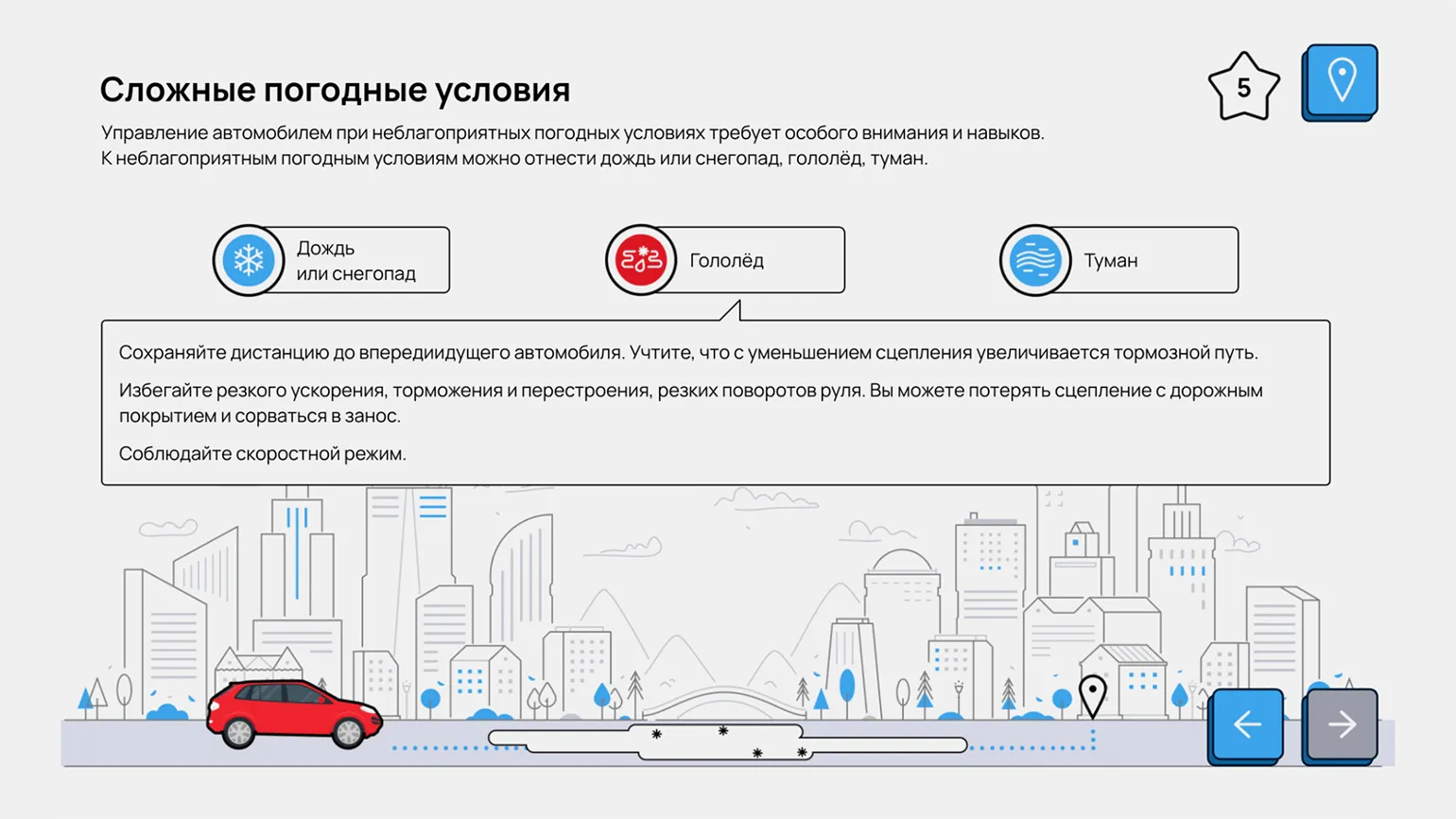
Slide-based courses are most often created using specialized tools such as iSpring Suite, CourseLab, and Articulate Storyline. However, it is worth noting that access to an Articulate Storyline subscription is currently limited in Russia. These tools allow developers to create interactive and visually appealing learning materials that promote effective learning. Choosing the right builder affects the quality and ease of perception of the course, so it is important to consider the functionality of each of them.
What is a longread course
According to Wikipedia, a longread is a format of journalistic articles for digital platforms, which is characterized by a significant amount of text. It is structured into sections using multimedia elements such as photographs, videos, and infographics. However, in the modern context, longreads have begun to be used not only for media articles. They are also used to create full-fledged courses that include theoretical information, assignments, and practical exercises. The content of such courses can be varied and doesn't always include a lot of text—sometimes they can be quests or comics. It's important to note that longreads are an effective tool for in-depth study of a topic and audience engagement.
A longread is an educational course format optimized for on-screen viewing. In this format, information is presented as vertically scrolling content, allowing learners to easily digest the material. The development and layout of longreads take into account the specifics of user experience, ensuring ease of navigation and access to information.
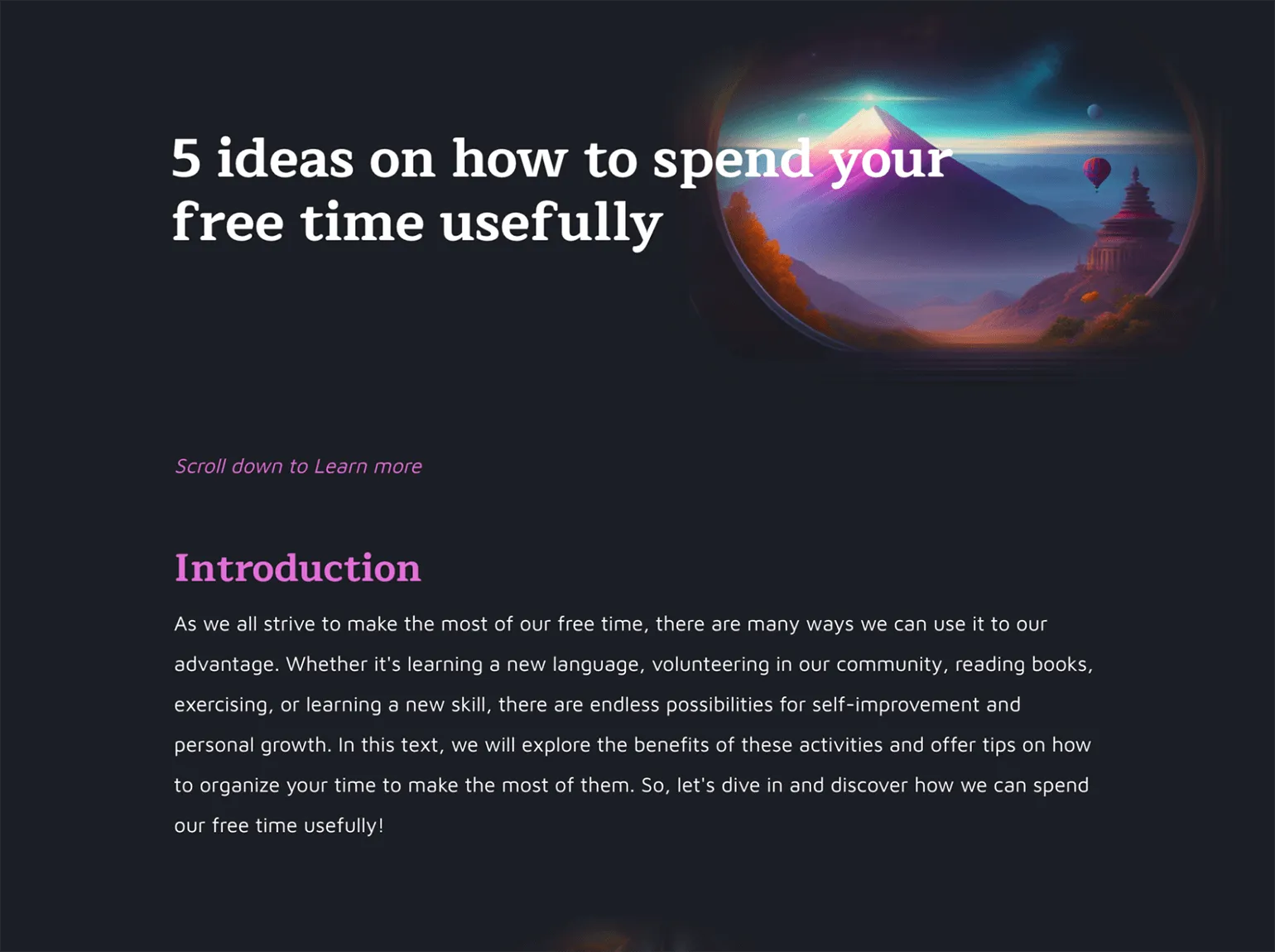
Specialized builders such as iSpring Page, Course Editor, Scroll, and Articulate Rise are widely used for creating longreads. However, it's worth noting that in Russia, the availability of a paid subscription to Articulate Rise is limited. Tilda can also be used in the corporate segment, although its use is less common. The choice of builder depends on specific tasks and preferences, so it's important to consider the functionality and availability of tools for creating high-quality content.
Read also:
Creating Online Courses: A Review of Builders for Effective Development
The importance of online education is growing every year, and creating high-quality online courses is becoming increasingly important. To achieve this, you need to choose the right builder that will simplify the development process and allow you to create an attractive and functional course. In this article, we will look at the best platforms for creating online courses that will help you bring your ideas to life and attract students.
There are many builders on the market offering various course development tools. Some specialize in ease of use, while others offer extensive customization options. When choosing a platform, it is important to consider factors such as functionality, available templates, integrations with other services, and cost.
The most popular online course builders offer an intuitive interface, allowing you to create courses without the need for coding. You can add text materials, videos, quizzes, and interactive elements, making learning more engaging. It is also important that the platform provides the ability to analyze learning outcomes, which will help you evaluate the effectiveness of the course.
The benefits of using online course builders include not only the ease of development but also the ability to scale. You can easily update course content and add new modules as needed. This allows you to keep the material current and adapt to changes in educational requirements.
Choosing the right online course builder can significantly impact the success of your project. Before making a decision, thoroughly research the available platforms and choose the one that best suits your needs and goals. Creating online courses has become an accessible and effective process thanks to modern technology, and you can take advantage of this to share your knowledge with a wider audience.
Key Differences Between Longreads and Slide-Based Courses
Longreads and slide-based courses have a number of key differences that are important for educational developers to consider. Longreads are long, detailed texts that provide a deeper understanding of a topic and a comprehensive understanding of the material. These formats are well suited for comprehensive subject study. Slide-based courses, on the other hand, emphasize visual elements and conciseness, making them more suitable for presentations and quick information absorption. Each of these formats has its advantages and disadvantages, and the choice between them should depend on the course objectives and the needs of the target audience. It is important for developers to consider these differences to create the most effective educational product. The same content presented in slide format and as a longread is perceived differently. Slides have a fixed aspect ratio and a clear arrangement of objects, ensuring a consistent display on all screens, with the exception of differences in the size of elements. However, slide-based courses designed for viewing on a computer may be inconvenient for smartphone users, as elements will be too small for comfortable viewing. Therefore, it's important to consider the content presentation format depending on the device to ensure the best user experience.
Longreads don't have strict pagination, allowing for flexible content layout depending on the device. Regardless of whether you're using a computer, laptop, tablet, or smartphone display, or the screen orientation, longreads automatically adjust to the device's parameters. This makes them easy to read and understand in a variety of settings, improving user experience and interaction with the content.
The screenshots below demonstrate the difference in how the same longread appears on a computer and a smartphone. The comparison shows how adaptive design affects the perception of content depending on the device.


The layout of slide courses provides more possibilities compared to longreads. Slide builders offer developers a clean format where learning content and design elements can be arranged freely. These platforms often offer template libraries that are highly flexible: users can move and delete elements, change colors, and add their own components. This allows for the creation of unique and responsive learning materials, making slide-based courses effective for teaching.
The templates built into longform builders are somewhat rigid. They typically consist of a set of fixed text and graphic elements, such as headings, subheadings, body text, images, cards, and quotes. The course content is formed from these elements, and their modification is limited. For example, you can choose the font, color, and size of a heading, but its position relative to other elements will remain unchanged. Creative changes, such as adding a colored border or icon to a heading, are limited. Therefore, if you are looking for flexibility and a personalized approach to content creation, it is worth considering alternative solutions that allow you greater control over the design and structure of your materials.
The longread course builder doesn't allow you to create unique templates. Users are limited to the templates offered by the platform developers. This can be challenging if you need to place text between two images and there's no suitable template. In such cases, you'll have to use alternative layout methods, which can complicate the content creation process.
Fixed templates for creating courses have their advantages and disadvantages. On the one hand, they significantly speed up the development process, as they don't require the author to think through the design and align elements on the screen—all of this is already provided by the builder's creators. On the other hand, unlike slide-based courses, customization of a longread's layout may be limited. This may require additional costs or specialized skills, such as coding to integrate the necessary objects. Therefore, it's important to carefully weigh the pros and cons of using fixed templates when creating educational content.
Longread builders offer predefined sets of exercises for learners. Sets may vary depending on the platform, but most often include popular assignment types such as multiple-choice, fill-in-the-blank, and matching. This allows you to quickly create tests on various topics and integrate them into courses. However, if you require a custom assignment format not supported by the builder, adding it will be impossible. Unlike longread builders, slide-based course creation platforms offer users greater freedom in choosing assignments. These tools offer a high degree of customization, allowing you to develop unique assignments in a variety of formats. The builder's capabilities depend on the developer's creativity and the platform's functionality, which is typically quite extensive. These platforms are ideal for creating interactive and engaging educational materials, which promotes more effective learning and student engagement.

Tasks on the platform can consist of several stages, and the system takes into account the user's previous actions. For example, in a logic problem, the second stage depends on the choice made by the student in the first stage. Standard tools for creating longreads do not allow for the implementation of such mechanics, which limits the possibilities for interactive learning.
How to choose the most suitable format for a course
Courses can be created in various formats, which is a positive aspect. However, it is important to consider several key factors in order to choose the most effective solution. This will reduce the time and other costs of course development, while increasing its effectiveness for students. Analyzing the needs of the target audience, choosing appropriate educational technologies and teaching methods will help create a high-quality and in-demand course.
The choice of online course format depends, first of all, on the tasks it is intended to solve. Corporate courses can be classified into four categories depending on these tasks.
- Motivational courses. Their goal is to motivate learners to apply new knowledge, change the target audience's attitudes toward the course topic, and maximize engagement. Welcome courses for new employees are also considered motivational because, among other things, they are designed to motivate newcomers to work for the company. These courses offer little or no practical training, but a wealth of information in the text, examples, and illustrations. Open-ended questions are often used to engage learners and promote reflection. For the layout of such courses, I would recommend using a longread format. It allows for a deeper dive into the topic, as the content is presented seamlessly rather than broken up into small fragments, as in a slide-based course. Exercises with complex mechanics are also unnecessary, so the built-in exercise creation tool is sufficient. Moreover, it will take less time to develop a longread course than to layout slides.

- Skill-based courses. The goal of such training is to develop a new skill, whether flexible or hard. These courses are built on the principle of "less theory, more practice," since only practice helps develop a skill during the learning process. Therefore, for such courses that do not contain extensive text, a slide format is ideal. Furthermore, skill development may require designing exercises with complex mechanics—for example, problems in which the student must calculate values using a formula. In other cases, gamification may be necessary. For example, a manager needs to practice decision-making skills in a team, and the course would be useful to demonstrate how their actions during a training scenario affect employee satisfaction. This would require a special scale that grows or shrinks depending on the student's decisions, and it is not possible to add such a mechanic in the longread constructor.
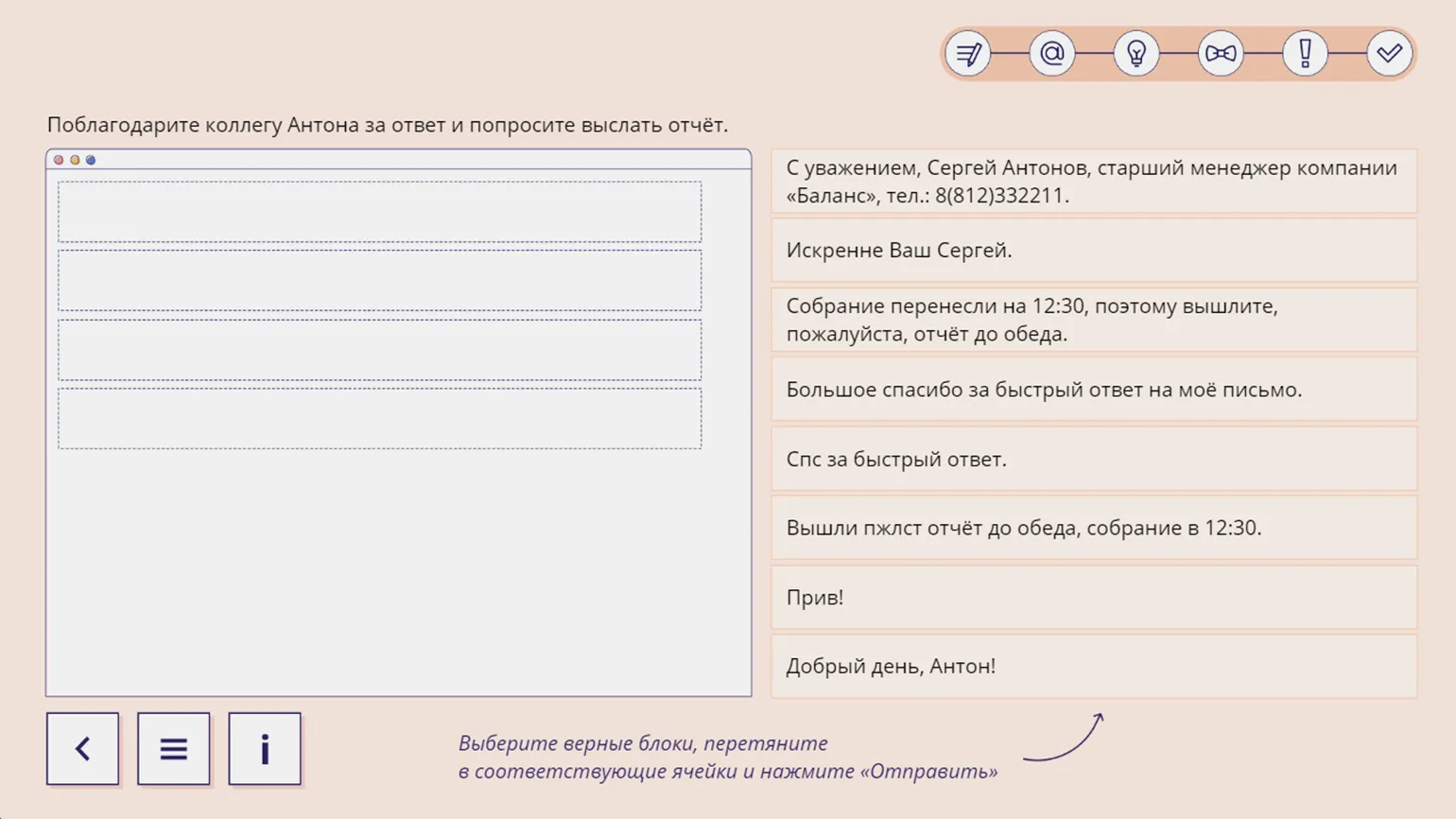
- Information courses. The goal of such a course is to impart new knowledge to students. Practice in such courses is aimed at memorizing or understanding new information. A longread is ideal for this type of course. It can be put together fairly quickly, whereas a slide-based course requires careful design considerations for each slide and the configuration of all transitions. Traditional test formats, available in any course design tool, are sufficient for exercises. And finally, interacting with a longread to obtain information is familiar to most people - in the same way we, for example, read articles on the Internet and browse social media feeds.
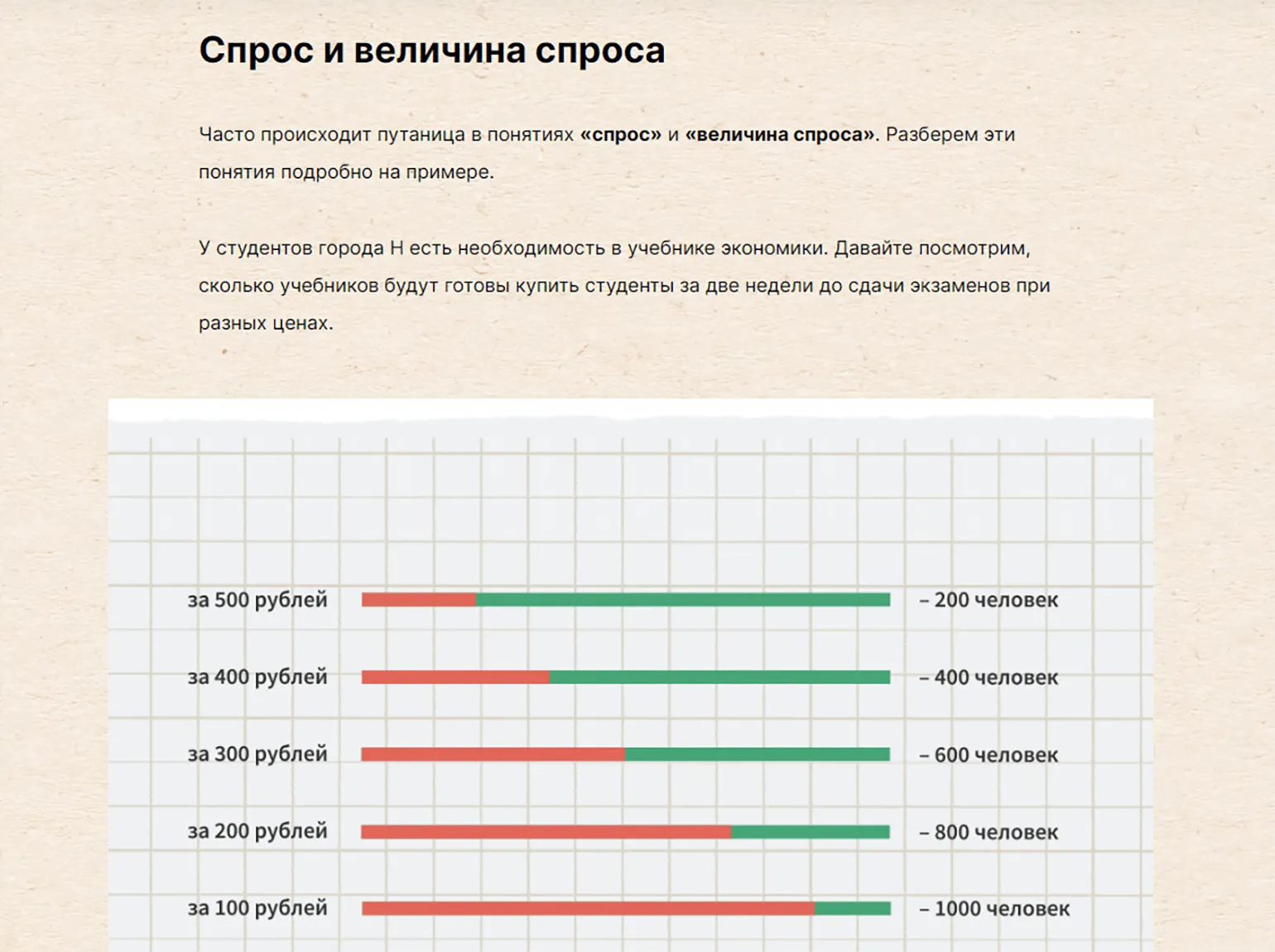
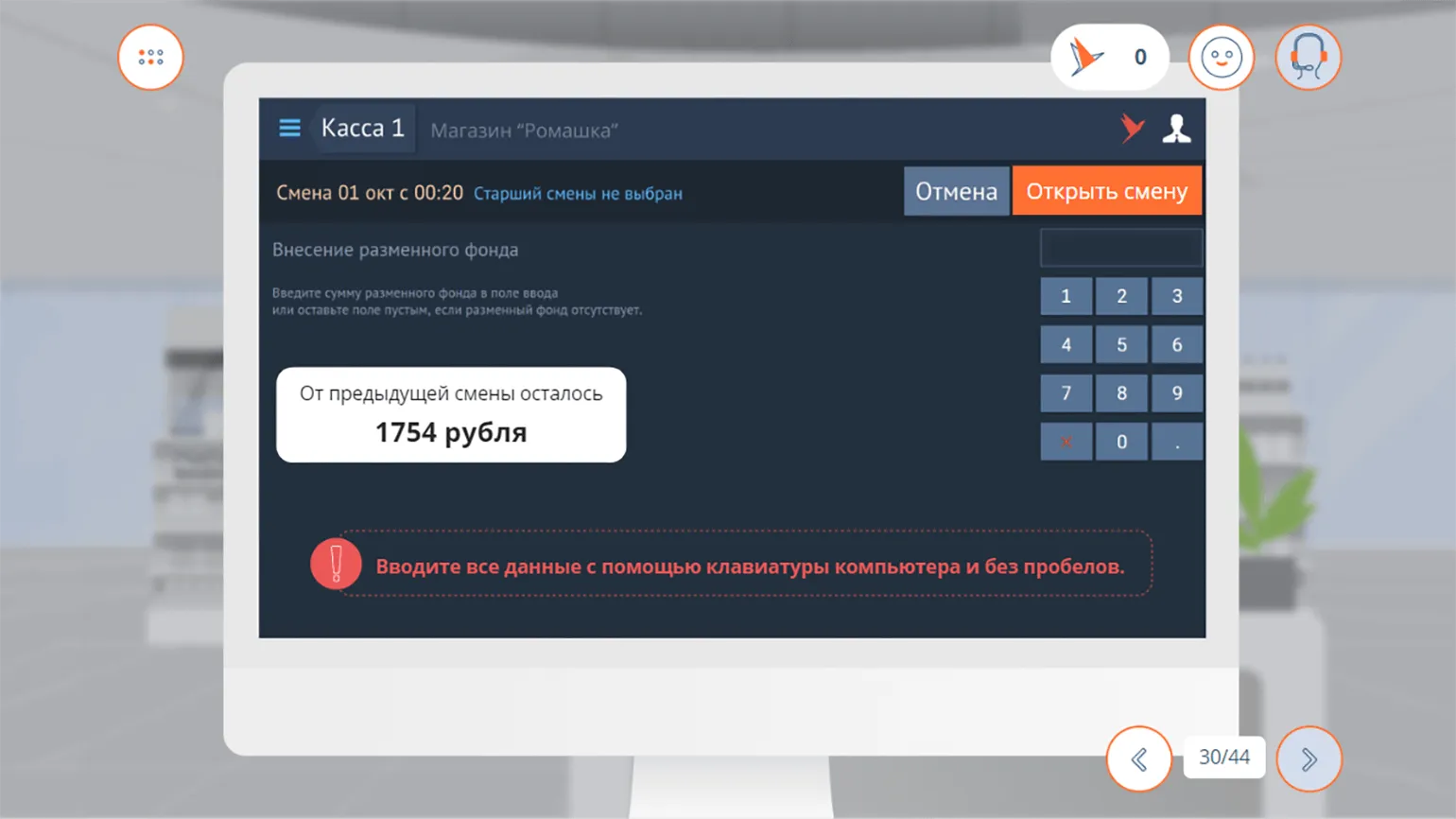
- Simulators. The purpose of a simulator is to practice a specific skill. This could be, for example, working with software or communicating with a client. In such courses, practice and the ability to recreate a work situation as closely as possible to reality are important. Therefore, I would recommend using a slide course format here. This allows the course developer to use the flexible design to recreate the software interface the student will be working with on slides. And in the dialogue simulator, you can build a non-linear development of events, that is, the next actions or the character's remark will depend on the student's choice.
When choosing a course format, it is necessary to take into account the characteristics of the target audience. It is important to understand the preferences and needs of potential listeners to ensure maximum learning effectiveness. Consider the age, level of preparation, and interests of the audience to adapt the course content and choose the most appropriate format. This will not only increase participant engagement but also improve the assimilation of the material. The correct choice of course format helps create a comfortable educational environment and achieve the set goals.
- Students' habits. When working on projects, I sometimes encounter a situation where the client chooses a slide-based course simply because their employees are accustomed to slide-based courses. Indeed, when I began developing courses, slide-based courses were used exclusively in the corporate environment, and longreads began to be used relatively recently. Therefore, it makes sense to find out whether the target audience has established preferences for course formats and take them into account.
- Technical means for completing Online course. If most of the target audience takes the course from a phone, then it is worth considering longreads - such a course will automatically adjust to the mobile screen. This applies primarily to courses for employees whose workplace does not require a computer - for example, for salespeople in retail or for couriers.
- Time to complete the course. In my experience, if the target audience has little time for training (for example, this often applies to managers), then the longread format is an excellent choice. It is read faster due to the scrolling of the screen, and the student can quickly skim or scroll through already known information.
When choosing a training format for each course, it is necessary to be flexible. It is often advisable to combine different approaches. For example, among my clients, there are companies that prefer to train employees using longreads. However, if I see that this format does not fully meet the requirements of the educational process, I recommend separating the theoretical and practical parts. Theoretical information can be presented in the form of a longread, and Implement practical tasks and exercises in a different format. This approach allows you to solve training problems as effectively as possible and increases employee engagement in the process.
If the audience uses smartphones for training, this does not mean you should completely abandon slide-based courses. This format can be used effectively, but it is necessary to adapt each slide for comfortable display on a small screen. It is important to consider the features of mobile layout, including the correct placement of text, images, buttons, and other elements. Creating a user-friendly and intuitive interface will increase user engagement and improve the quality of training.
Learn more about education by subscribing to our Telegram channel. We share relevant information, useful tips, and interesting news in the field of education. Don't miss the opportunity to stay up to date with the latest trends and events.
Read also:
- How to create longread courses
- What is a course map and what types are there?
- SCORM: what is this course format and why is it still popular, although outdated
- 10 design mistakes that will ruin your online course