Contents:

Learn: The Profession of a Methodologist from Scratch to PRO
Learn MoreWhat is Mobile Learning
Since the early 2000s, many definitions of mobile learning have been found in the literature. These definitions often reflect the capabilities of technologies that were at the peak of popularity at a certain time and quickly lose relevance in the context of the rapid development of digital technology. In this regard, it is appropriate to focus on a definition that conveys the essence of mobile learning, without delving into technical aspects. Mobile learning is a process that allows you to learn anytime, anywhere using mobile devices. This approach opens up new horizons for the educational process, providing access to knowledge and resources in a convenient form. Mobile learning is the process of learning using mobile devices, which provides the opportunity to learn anytime and anywhere. With mobile technologies, users can access learning resources, create content, and interact with other participants in the educational process. This definition was proposed by UNESCO in the document "UNESCO Policy Guidelines for Mobile Learning", published in 2013. Mobile learning promotes flexibility and accessibility of education, making it an important tool in the modern educational landscape. Currently, there are many types of mobile devices, including laptops and smartwatches. However, in the context of mobile learning, the main focus is on smartphones, as they are the most widespread gadgets in the world. In addition to smartphones, tablets are actively used in education - portable computers with touchscreens that provide convenient access to educational resources and applications. Mobile devices play a key role in the modern educational process, allowing users to study anywhere and anytime.
The concept of "mobility" in education has a dual nature. On the one hand, it implies that students are not limited to physical presence in the classroom. Learning can take place anywhere convenient—at home, in a cafe, or even on public transportation, making it remote and more accessible. This flexibility allows students to tailor their learning to their needs and schedule, which promotes more effective learning.

Mobile learning is not always associated with The student's mobility. This concept also encompasses the use of portable devices for educational purposes. For example, using smartphone or tablet apps to search for additional information, complete exercises, or take tests during a school lesson, a university seminar, or an in-person training session can also be considered mobile learning. In this case, we are talking about a blended format that combines traditional teaching methods with modern technologies, providing students with new opportunities to master the material. The understanding of mobile learning was not immediately established. In the early stages of its development, some researchers encompassed any learning that takes place outside of a traditional classroom, regardless of the use of mobile devices. For example, reading notes while traveling or practicing a language abroad could be considered mobile learning. However, this approach did not gain popularity. Currently, theorists and practitioners agree that mobile learning should include interaction with others and content via mobile devices, regardless of the location of the teachers and learners.
How mobile learning emerged and developed
The history of mobile learning demonstrates the evolution of technologies and changes in the perception of educational processes. Important stages in the development of mobile learning include the transition from traditional methods to digital platforms, the introduction of smartphones and tablets into the educational process, and the growing popularity of online courses and self-paced learning apps. These changes have contributed to a more flexible and accessible education, allowing students to study at a time and place convenient for them. Mobile learning continues to evolve, adapting to new technological trends and the needs of learners.
The idea of mobile learning appeared long before the advent of smartphones and the first laptops. In 1972, American scientist and innovator Alan Kay presented the concept of a device called the Dynabook (originally KiddiComp), which was conceived as a personal computer for children. This device was intended to feature a graphical interface, a keyboard, and virtually indefinite battery life, enabling learning anywhere. The Dynabook's effectiveness was based on educational theories such as John Dewey's ideas on "learning by doing" and Jean Piaget's cognitive constructivism. Unfortunately, the technology of the time did not allow for the Dynabook's concept to be realized. With the development of technology, mobile learning has become a reality, opening up new horizons for education and access to knowledge.

In In the 1980s, the first laptops and pocket personal computers (PDAs, or personal digital assistants) began appearing in the West. These devices typically featured notebook, calculator, and calendar functions for managing tasks and events. Some Western educational institutions were already experimenting with using the first mobile devices in the educational process, for example, for note-taking. The integration of technology into education has opened up new horizons for students and teachers, facilitating more effective assimilation of information and organization of the educational process.
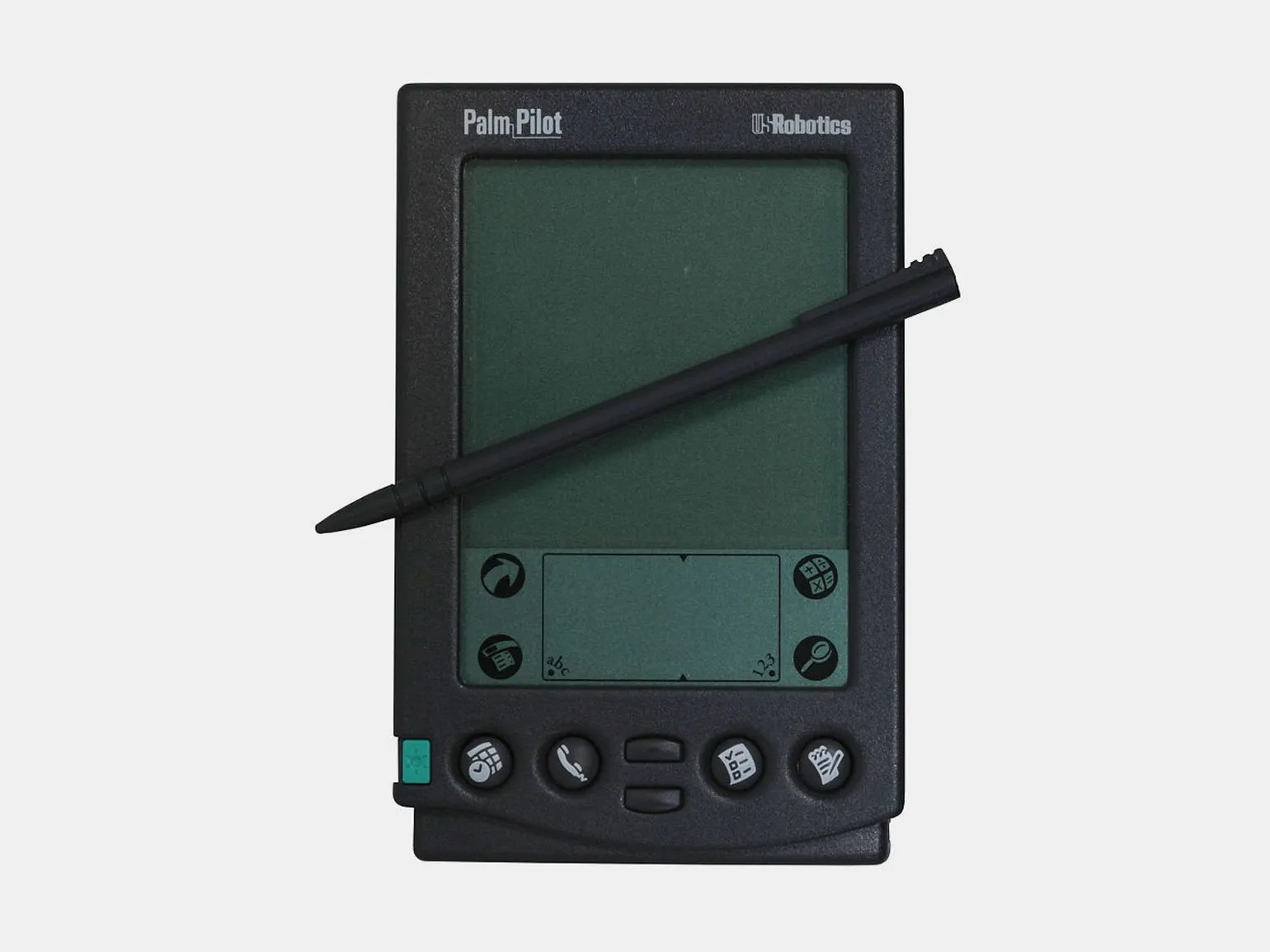
The 1990s saw one of the most significant technological breakthroughs—the internet became accessible to ordinary users. New generations of personal digital assistants (PDAs) began to be equipped with web browsers and Wi-Fi modules, opening up new possibilities. Users could conduct e-mail correspondence and read e-books, significantly changing the approach to communication and access to information. This became the basis for the further development of mobile technologies and the formation of the modern digital world.
Pocket-top computers, unlike laptops, are smaller and lighter, and are also more accessible and easier to use. This is why they became the first devices to gain widespread use in the educational sphere, especially in developed countries, where the latest electronics were readily available. The use of pocket-top computers in education began to be actively discussed and researched in Europe and the United States in the early 2000s. One of the significant events in this field was the MLearn conference and workshop, organized by the University of Birmingham in 2002. This event was the first of its kind and continues to be held annually, emphasizing the importance of handheld gadgets in the educational process.
In the early 2000s, third-generation technology—3G—emerged and was rapidly implemented on the mobile communications market. Until then, users could only exchange voice calls and text messages. However, with the introduction of 3G, new opportunities opened up: users could exchange photos, audio, and video files, as well as visit websites and send emails. This meant that internet access became possible not only at fixed points but also on mobile devices. As a result, mobile phones evolved into smartphones—multifunctional gadgets with full-fledged operating systems. Smartphones quickly replaced PDAs without a cellular module and became an integral part of everyday life, providing users with convenient access to information and communications anytime, anywhere.
In her article "Methodology for Using Mobile Technologies in Teaching Foreign Languages: Stages of Development and Current Trends," Anna Avramenko notes that since 2005, researchers' attention has shifted from pocket PCs to smartphones and their educational capabilities. The author emphasizes that during this period, the teaching community began to perceive mobile learning as a new teaching model and actively explored it from technical, methodological, and social perspectives. In this context, the international conference Mobile Learning was launched this year, which has since been held annually in Europe, promoting the exchange of experiences and ideas in the field of mobile learning.
Read also:
Unusual teaching practice: how and why people are taught with the help of SMS
Modern technologies are opening up new horizons in education, and one such innovation is the use of SMS for learning. This method is becoming increasingly popular due to its accessibility and convenience.
Text messages can be used to convey important information, reminders about assignments, and even conduct short tests. This form of learning is especially relevant for people with limited internet access or those who prefer to receive information in a compact and quick format.
SMS learning can be applied in various fields: from employee training to educational programs for students. It allows for a more flexible learning process and promotes better assimilation of the material, as information is presented in a digestible form and at the right time.
The main advantages of SMS learning are its accessibility, ease of implementation, and the possibility of a personalized approach. Text messaging helps maintain communication between learners and teachers and motivates students to complete assignments regularly. Thus, SMS learning is becoming an important tool in modern education, allowing the learning process to be adapted to the needs of different groups of people. In 2013, UNESCO released its "Policy Guidelines for Mobile Learning," which emphasized the significant benefits of mobile devices in education. These include ensuring equal access to educational resources, personalizing the learning process, creating communities, supporting the connection between formal and informal learning, and improving the quality of communication. The document also highlights projects in various countries aimed at equipping schools with tablets, converting traditional textbooks to electronic formats, and integrating gadgets into flipped and blended learning. At the same time, UNESCO emphasized the importance of a safe, reasonable and responsible approach to the use of technology in the educational sphere.

Modern mobile devices are becoming the basis for thousands of educational applications that are designed for both formal and informal learning. These applications allow you to quickly create content, add interactive elements, engage students, and tailor the learning process to individual needs. In addition, they use modern technologies, such as augmented reality, which makes learning more engaging and effective. However, how actively is mobile learning used in real practice?
Mobile Learning in Formal Education
Despite the existence of individual initiatives to integrate mobile technologies into school and university education, this approach has not yet become widespread, with the exception of a few of the most technologically advanced countries. There are several reasons for this. Firstly, insufficient infrastructure and access to modern devices in educational institutions hinder the implementation of mobile solutions. Secondly, many teachers and educational institutions lack the necessary knowledge and experience to effectively use technology in the educational process. Thirdly, there are concerns about the impact of mobile devices on students' attention span and motivation. Therefore, the successful implementation of mobile technologies in education requires a comprehensive approach, including teacher training, infrastructure improvements, and the development of adapted curricula. Technological barriers are the first group of obstacles to effective mobile learning. A stable internet connection is essential, but it is not always available in all regions. Furthermore, mobile devices themselves may not be suitable for the educational process. Smartphones, with their small screens, make it difficult to read and understand information. Therefore, according to sanitary regulations and rules, the use of mobile phones in Russian schools is prohibited. Tablets are a more suitable solution, as their screens are larger, but they are more expensive and not always accessible to all students. Not every school can afford such devices, limiting the availability of high-quality mobile learning for all students.
Teachers' digital competencies and attitudes toward technology play a key role in the educational process. According to an education monitoring study conducted by the National Research University Higher School of Economics, most teachers use only basic digital tools that largely replicate traditional analog methods, such as using electronic textbooks instead of printed ones. Biases also influence the integration of technology into teaching: in an HSE survey, 18.4% of teachers stated that they do not see any real benefit from using technology in the educational process. This underscores the need to improve digital literacy among teachers and foster a positive attitude toward innovation in teaching, which in turn can facilitate a more effective use of technology in the educational environment.
Students' digital skills play a key role in their educational process, especially when it comes to their readiness to use mobile devices for learning. Modern schoolchildren and students have indeed grown up with gadgets, but not all of them have the necessary skills to effectively search for information online. This situation is exacerbated by the phenomenon of phubbing, when students are distracted by their smartphones during class, scrolling through social media feeds and ignoring the teacher. It is important to develop digital literacy so that students can use technology not only for entertainment, but also to enhance their education.

Read also:
Smartphones at school: allowed and prohibited moments
Smartphones are becoming an integral part of the lives of modern schoolchildren. However, the use of mobile devices in the educational process is highly controversial. It is important to understand that smartphones can be both useful and distracting. Permitted uses of smartphones in school include accessing educational resources such as online textbooks, language learning apps, and math calculators. Teachers may allow the use of smartphones for completing assignments, searching for information, and participating in interactive lessons. However, there are also restrictions. Using smartphones for messaging during lessons, posting on social media, and playing games is prohibited. These activities distract students and interfere with the learning process. Smartphones in school can be a powerful learning tool if used wisely. It is important to establish rules that will help optimally integrate mobile technology into the educational process while ensuring focus and discipline. In educational institutions, the problem of mobile phone use is often solved radically—by imposing a ban on their use. According to UNESCO data presented in its 2023 report, "Technology in Education: On Whose Terms?", one in four countries worldwide has already adopted such measures. The report also cites studies from Belgium, Spain, and the United Kingdom, which confirm that bans on mobile phone use in educational institutions contribute to improved student performance. Overall, this document focuses not on the benefits of technology in education, but on the pitfalls and challenges that arise with its integration.
The extensive use of mobile technology can negatively impact human relationships, increasing stress levels and creating a feeling of overload. The widespread use of mobile devices can threaten privacy and a sense of security. Mobile learning requires significant financial investment and teacher training. From an educational perspective, this can lead to a compromise of the learning process, reducing it to self-education and superficial acquisition of knowledge, when a deep understanding of the subject becomes less important.
Mobile Learning in Continuing Education
There are segments of education in which mobile learning is actively developing. One such area is self-education. People seeking to master a new skill or improve their knowledge of a foreign language often use mobile devices for learning. Statistics from the educational app market confirm this, showing that language platforms such as Duolingo, Babbel, and Lingokids, as well as the Udemy online course, are among the most popular services worldwide. These applications offer users convenient and accessible ways to study, which contributes to the growing interest in mobile learning.
Mobile learning apps are increasingly adopting a microlearning approach, breaking content into bite-sized chunks so that each lesson takes no more than 5-10 minutes. This allows users to learn anytime, anywhere. In addition, interactive tasks and gamification elements, such as activity-based points, leaderboards, and other game mechanics, are being actively implemented. These methods not only make learning more engaging but also promote better retention.
In the education sector, tutoring and solution apps are becoming increasingly popular among students and their parents. The Photomath app helps students understand math problems and equations by providing step-by-step explanations. Meanwhile, Brainly is an excellent resource for homework help across various subjects, allowing users to receive answers and explanations from the community. These tools make the learning process more accessible and effective, promoting better learning.
In Russian educational app rankings on the App Store and Google Play, a clear trend is observed: the majority of apps are focused on supplementary education for both children and adults. These apps offer a variety of learning opportunities, developing users' skills and knowledge in various fields. With the rapid development of technology, such resources are becoming an important tool for self-improvement and professional development.
Read also:
Educational apps are growing in popularity in Russia, with users actively downloading them. These apps help improve skills, expand knowledge, and advance education. Among them, the most popular ones offer a wide range of learning opportunities. Successful educational apps include interactive courses, video lessons, and tests, making the learning process more engaging and effective. Users value these apps for their accessibility, practicality, and variety of materials. In the context of the digitalization of education, such platforms are becoming indispensable tools for self-development and professional growth.
Mobile Learning in the Corporate Environment
Mobile technologies are actively used by companies for internal employee training. This is due to a number of factors. Firstly, mobile learning provides access to educational materials anytime and anywhere, which significantly increases the flexibility of the learning process. Secondly, the use of mobile devices allows for the integration of a variety of content formats, including videos, presentations, and interactive tasks, making learning more engaging and effective. Thirdly, mobile technologies facilitate the rapid updating of information, which is critical in a constantly changing market. As a result, companies, by implementing mobile solutions in training, achieve employee skills development and improved productivity.
Learning becomes more flexible thanks to mobile technologies. Unlike traditional in-person classes, mobile learning and distance education do not require the physical presence of employees in a specific place and at a strictly defined time. This significantly simplifies the training process and facilitates the development of distributed teams. To participate in training, employees only need to have a smartphone, making the process accessible at any time. Mobile learning is especially relevant in industries such as hospitality, retail, and manufacturing, where most employees are not located in offices. Mass training programs and chatbot-based training, which help employees develop soft skills and learn about the company's products and services, are popular. The implementation of mobile learning contributes to employee development and professional development, which ultimately impacts the efficiency of the entire business. Mobile learning can be successfully integrated with microlearning, which is becoming especially important in the corporate environment. Employees often lack time to study during the workday and tend to learn on the go. This approach delivers content in small chunks, allowing for a focus on reinforcing the material learned through repetition and practical assignments. Course developers strive to minimize the gap between theory and practice. After completing a training course, employees can easily access short instructions or checklists directly on the job, helping them apply new skills and knowledge. This makes the learning process more effective and targeted, tailored to the needs of the modern workplace.
It's worth noting that while microformats are often used in the context of mobile learning, they are not the same. Microlearning content is not always delivered and consumed exclusively through mobile devices. For example, a learner might watch a video on a large computer screen or use paper instructions. At the same time, mobile learning is not limited to short lectures and bite-sized chunks of information. Lengthy video lectures, reading ebooks, and listening to educational podcasts on a smartphone can all take up significant time. However, it should be taken into account that the effectiveness of extensive training content on mobile devices raises questions.

Read also:
Microformats, or microlearning, are becoming increasingly popular in corporate training due to their effectiveness and convenience. Microlearning provides short, easily digestible chunks of information that allow employees to learn at their own pace and at any time.
The main benefit of microlearning is that it promotes employee engagement. Short lessons consisting of videos, quizzes, or interactive tasks minimize the time spent on training while maintaining a high level of retention. This is especially important in the rapidly changing corporate world, where new skills and knowledge are constantly required.
To successfully implement microformats in corporate training, several factors must be considered. First, the content must be structured and relevant. This means updating materials in line with the latest trends and industry requirements. Second, it is necessary to consider the preferences and needs of employees to make training as effective as possible.
It is also important to integrate microformats into existing company educational programs. This can be done through online learning platforms or mobile apps that provide easy access to resources at any time.
Thus, microformats can significantly improve the corporate learning process, increase employee skills, and ultimately contribute to the success of the company.
Mobile learning fits perfectly into the modern concept of learning and development (L&D), which focuses on continuous learning, active student participation, and knowledge sharing. Thanks to mobile technologies, learning content becomes available anytime and anywhere, which gives employees more opportunities to manage their learning process. Mobile platforms also improve communication and simplify the process of self-creation of content. For example, an employee with expertise in a certain field can easily record an educational video on their smartphone and share it on corporate social networks. This not only increases engagement but also contributes to the creation of a culture of knowledge sharing within the company, which is an important aspect of successful learning and development.
How effective is mobile learning?
In the UNESCO report "Technology in education: on whose terms?" The article examines the key reasons why assessing the effectiveness of technology in education is challenging. Key challenges include the diversity of educational contexts, differences in teaching methods, and the variability of evaluation criteria. This necessitates a more in-depth analysis and adaptation of technologies to specific educational goals and conditions. Understanding these factors will help create more effective and targeted approaches to implementing technology in education.
Long-term studies are necessary to accurately assess the impact of a specific educational intervention. However, technologies quickly become obsolete, making the data less relevant. Furthermore, modern educational applications are complex and multifunctional tools, making it difficult to identify and measure specific features and characteristics that influence learning and its effectiveness. It is important to conduct research that takes these aspects into account to provide a deeper understanding of how various elements of educational technology contribute to the learning process.
UNESCO highlights the influence of companies producing digital products. Many of them are investing in their own research into the effectiveness of their technologies. In pursuit of commercial interests, such companies often select and publish only data that confirms the positive impact of their applications and services. This creates a distorted picture of the true effectiveness of digital solutions and can mislead users.
The context of technology use plays a critical role in its effectiveness. If a tool has shown positive results in one case, this does not guarantee similar success in other settings. This pattern applies to all teaching methods and tools. It is important to consider the unique characteristics of each situation to achieve maximum effectiveness when using educational technologies.
When mobile learning is useful
The use of mobile devices in education is especially beneficial in settings where effective communication and collaboration are essential. These devices were originally designed for quick and convenient communication, and their role in the educational process is no less significant. Modern applications provide powerful tools for collaboration, which is especially relevant for participants located remotely. For example, task trackers can be used to organize teamwork on an educational project. Each participant can track progress on their smartphone, update statuses, and provide feedback in real time. This not only increases the level of interaction but also promotes more effective assimilation of the educational material. Using mobile devices for educational purposes opens up new opportunities for student participation and engagement, which ultimately leads to improved learning outcomes.

Applications can be an effective tool for Applications are a valuable tool for reviewing educational material and practicing skills, but should not replace traditional teaching methods. Instead, they can serve as a valuable supplement. Such applications include digital flashcards and platforms with interactive exercises and tasks. According to UNESCO, successful examples of the use of such products show that young students have been able to improve their mathematics performance using these technologies. This category also includes applications for learning foreign languages. The report "Technology in Education: On Whose Terms?" mentions that the Quizlet app helped schoolchildren in Korea and students in Japan and Saudi Arabia significantly improve their vocabulary. The use of such technologies can enhance learning effectiveness and make the process more engaging and dynamic. Kirill Prudnikov, Head of Pedagogical Practices Programs at Skillbox, supports the use of applications in the educational process. The 4C/ID learning design model is currently popular. It includes four key components: the task the learner needs to solve, supporting information (knowledge to be learned), procedural information (instructions and cues), and partial practice (skill practice). If learning requires automating certain aspects of learning tasks, apps that allow for practice at any time can serve as effective training tools. In this context, digital technologies do not replace the curriculum but are integrated into the learning environment. More information about the 4C/ID model can be found in the book "Ten Steps to Integrated Learning" by Jeroen van Marienboer and Paul Kirschner, recently published in Russian with the support of Skillbox. Kirill emphasizes that the use of technology in education should be purposeful. It is important for teachers to understand the purpose of introducing digital tools. As an example, he cites the popular app Kahoot!, which offers games, quizzes, and surveys. These tools can help teachers engage students, but Kirill observes that the impact of their use is often short-lived—students quickly become bored with such activities. In addition, many teachers used this application not with a clear educational purpose, but simply for the sake of the technology itself, which can reduce its effectiveness in the educational process.

Reworked text:
Also study:
Creating an interactive simulator for development Soft skills training requires careful planning and consideration of various aspects. First, identify the target audience and their needs. This will help you select the most relevant skills, such as communication, teamwork, critical thinking, and time management.
The next step is content development. Use a variety of training methods, including scenarios, role-playing games, and interactive tasks to ensure user engagement. It is also important to include gamification elements, such as levels, points, and achievements, to increase motivation and interest in learning.
The technical implementation of the simulator can include the use of online learning platforms such as Moodle or custom developments in HTML5 and JavaScript. Ensure the resource is responsive and accessible across various devices so users can learn at their convenience.
Remember to regularly update the content based on user feedback and analysis of their successes. This will help keep the training tool current and increase its effectiveness in developing soft skills.
Mobile devices can be effectively used for educational purposes, especially in the context of information sharing. Elena Tikhomirova, CEO of the eLearning Center and author of the "Live Learning" Telegram channel, emphasizes that information sharing differs from learning. Information sharing assumes that the student merely receives information without delving into the details, and merely takes it into account. In contrast, learning requires full attention and deep engagement with the material. To fully grasp a topic, it is necessary to focus, for example, on reading a textbook or listening to a lecture. However, smartphones do not provide optimal conditions for such activities. Reading long texts on a small screen is difficult, and watching videos often interferes with note-taking on the same device. Furthermore, there is a risk of being distracted by notifications from social media or instant messaging apps. Therefore, while mobile devices are useful for quickly accessing information, they are not always suitable for deep learning.
Anastasia Miklyaeva, Professor in the Department of General and Social Psychology and Deputy Director for Research at the Institute of Psychology at the Herzen State Pedagogical University of Russia, noted that a study of student motivation and satisfaction with learning during lockdown revealed a significant decrease in these indicators in the online format compared to traditional learning. The drop in motivation and satisfaction is particularly noticeable among students using smartphones for studying, as opposed to those who prefer laptops or computers. Anastasia emphasizes the importance of choosing the right device for learning. Mobile phones are convenient for quickly searching for information and familiarizing themselves with it in any setting. However, for deep immersion in the educational material and its high-quality assimilation, laptops or desktop computers are more effective.
To choose between deep learning and simple information, Elena Tikhomirova recommends considering the volume and content of the educational material. For example, a delivery courier needs to master an order management app, learn how to politely communicate with customers, and handle conflicts. In this case, training on a mobile device would be optimal. However, when it comes to a risk management course for executives at a manufacturing company, the situation is different. Such a course would likely contain a significant amount of information that cannot be simplified without losing key aspects. The extensive tables and diagrams required for study are difficult to grasp on a small screen. Furthermore, such content requires not only simple comprehension but also in-depth analysis. Therefore, although it is technically possible to adapt such a course for mobile devices, its learning effectiveness will be low. Learn more about the latest trends in education by subscribing to our Telegram channel. Here you will find current news, useful tips, and interesting materials to support your studies and professional development. Join our community and stay up to date with the most important events in the field of education.
Read also:
- What is e-learning, or e-learning, and why is this concept outdated?
- What is digitalization of education and why is it needed?
- Scientists have explained how to make distance learning no less effective than in-person learning.
- 10 myths about the work of an online course methodologist.
Profession Methodologist from scratch to PRO
You will improve your skills in developing curricula for online and offline courses. Master modern teaching practices, structure your experience, and become a more sought-after specialist.
Find out more