
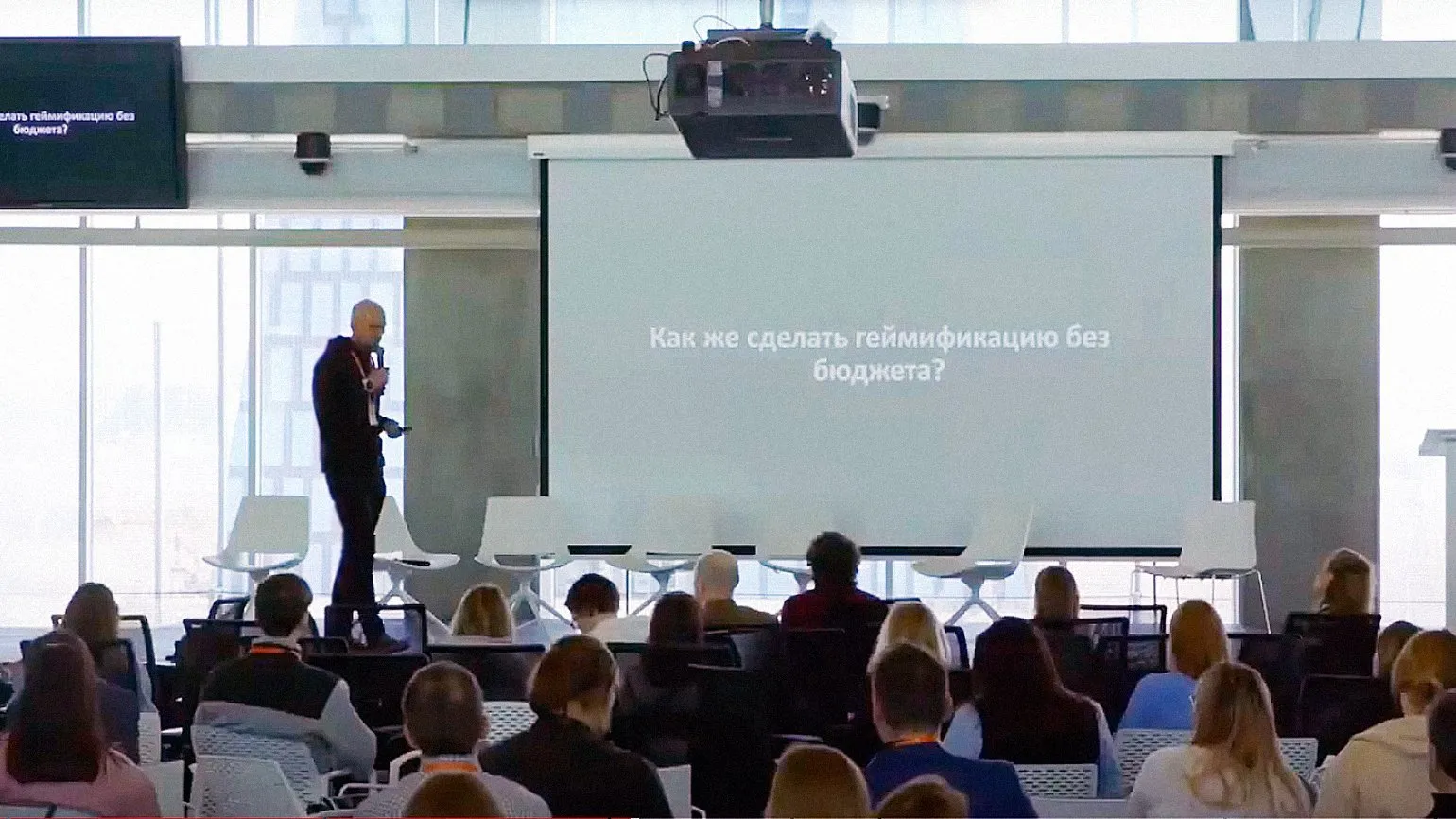
The Digital Learning Community Conference was held in person again after a three-year break. This year, corporate training specialists and representatives of EdTech companies gathered to discuss key topics related to the development of e-learning ecosystems. The main focus was on the competencies of methodologists, gamification issues and methods of assessing the quality of training. The conference opened with a panel discussion on "What's Happening in Modern Learning Today." The moderator, Oleg Zamyshlyaev, founder of Mozlab, Tellsy, and the Future Learning Telegram channel, invited participants to engage in a dialogue about current trends in education. During the discussion, participants shared their opinions and experiences, allowing for a deeper understanding of current challenges and prospects in learning.
- What tasks in corporate learning and EdTech solution development are they continuing to work on?
- What processes had to be stopped?
- What areas have they just begun working on?
- And what other changes in the market are they expecting?
What are they continuing to do?
The event discussed various aspects of developing IT platforms and digital tools for corporate learning. Speakers represented both EdTech companies and L&D departments of large corporations, sharing their experiences and best practices in this field. The focus was on modern trends, technologies, and approaches that promote effective employee training and the development of corporate culture.

At the Post Bank Corporate Academy, under the leadership of Elena Lbova, the automation of all educational processes continues. This initiative is aimed at optimizing educational programs and increasing the effectiveness of employee training. Automation improves the quality of educational content, making it more accessible and user-friendly. The introduction of modern technologies in training contributes to the development of employee skills and knowledge, which in turn has a positive impact on the bank's overall productivity.
Of course, please provide the text you would like me to edit and optimize for SEO.
Everything that can be converted to an online format without loss of quality, as well as everything that can be optimized for the work of training managers, is being transferred to remote solutions. This improves the effectiveness of training and makes it more accessible to a wider audience. Remote technologies are becoming an important tool in education and professional training, providing flexibility and convenience for participants.
Webinar Group's online meeting service, Meetings, has become the most popular product in recent weeks. According to CEO Alexander Alpern, many Russian customers are looking for an alternative to Zoom and Teams, which has driven high interest in this service. Therefore, the company is paying special attention to product support, including training employees to effectively use Meetings.
Demand for employee training tools developed by Russian companies has increased significantly. Import substitution of software used by corporations in HR processes and training has become a key focus area in the Skolkovo Foundation's EdTech/HR-Tech sector, according to Natalia Tsarevskaya-Dyakina, director of the department. Growing interest in local developments underscores businesses' desire to be independent of foreign solutions and to improve the efficiency of training and personnel management processes.
We organize events that bring together HR managers and representatives of corporate universities with startup founders. Each participant is given 5-10 minutes to present their ideas. For two hours, participants exchange contacts, discuss collaboration opportunities, and launch pilot projects. This is an excellent opportunity for startups to establish connections and secure new contracts.
Corporations, as Tsarevskaya-Dyakina noted, are shifting from investing in startups to acquiring products they are interested in through mergers and acquisitions (M&A), which involves acquiring the entire team. According to her, most investments will be suspended indefinitely.

At the beginning of the pandemic, Post Bank developed a unique program training to support managers, as Elena Lbova reported. This program included a series of events and training materials that helped managers maintain internal resources under stress and convey confidence to their teams. Such initiatives contributed to strengthening corporate culture and increasing employee resilience during challenging times.
In today's world, programs to enhance managerial flexibility are becoming increasingly important. The bank continues to actively develop such initiatives, as Lbova noted. These programs not only serve as a tool for adapting to changing market conditions but also contribute to improving the company's internal efficiency.
What was stopped
Alexander Alpern noted that training is currently not a priority for most companies, as they are focused on solving the main problems affecting their business. In an environment of constant change and uncertainty, organizations often ignore the importance of employee development. However, investing in training can be key to long-term success and competitiveness, allowing companies to adapt to new challenges and market demands.
Webinar Group is also currently not devoting sufficient attention to employee training, with the exception of training related to the Meetings service, which is seeing growing demand.
Not all participants agree with Alexander Alpern's opinion. Rostelecom's Director of HR Development, Ekaterina Barabanova, emphasized: "We continue to operate as usual. Training is proceeding in accordance with previously planned programs."

The crisis is characterized by a number of unique signs, as noted by Alexander Ryabinin, Technical Director of Labmedia. In a volatile market, it's important to consider these characteristics to develop effective strategies. Properly diagnosing a crisis allows companies to adapt and minimize risks, which is especially important in today's economic realities. Successfully overcoming periods of crisis requires management flexibility and a willingness to change. It's important to learn how to quickly respond to changes and provide solutions as quickly as possible. This is possible through the use of off-the-shelf products—pre-developed and tested systems that deliver results without delaying development processes. A similar situation was observed at the beginning of the pandemic: many companies suspended their projects that were still in the documentation stage. In the current climate of uncertainty, investments in new projects are also being frozen, as most entrepreneurs are unwilling to wait long for results.
What are they starting?
Ekaterina Barabanova shared Rostelecom's ideas in this area, noting that this is a practical solution aimed at strengthening the loyalty of both customers and partners. This initiative demonstrates the company's desire to create sustainable relationships with users, which in turn contributes to business development and increased competitiveness in the market.
The crisis will eventually end, and memories of your partnership approach will remain. It is important to think about how your company can be useful to customers, potential employees, or other stakeholders, even if hiring is currently frozen. To maintain a position in the market, it is necessary to build a community around yourself. Ekaterina emphasizes that the key is the kind of communications your company builds with this community. Effective interactions will help strengthen ties and build trust, which will be beneficial in the future.
Barabanova noted that Rostelecom actively offers support to its partners in the small and medium-sized business sector, including training initiatives. She highlighted several solutions that may be of interest to clients, such as retraining programs, career counseling for students, free English lessons, and resume preparation assistance. These measures are aimed at developing skills and increasing the competitiveness of specialists, which is especially relevant in today's labor market.

Please note the following materials:
Businesses are increasingly turning to education as an important tool for branding and recruiting. Employee training helps improve their skills and job satisfaction, which, in turn, has a positive impact on the company's image. Investments in education help create a unique corporate culture that attracts talented professionals.
Furthermore, companies that offer training become more attractive to job seekers, as it demonstrates concern for their staff and a commitment to their development. In a competitive labor market, the availability of educational programs is becoming an important advantage, helping to attract and retain the best talent.
Thus, education not only develops employees but also strengthens the business's position in the market, creating a positive image and facilitating effective recruiting.
What to expect
Platforms for training and course creation, as well as digital tools such as video conferencing services, are becoming essential for everyone. With some traditional suppliers leaving Russia, it is especially important that the development and support of necessary products be carried out by Russian teams. Ekaterina Barabanova noted that previously such decisions were considered additional, but today they have become mandatory for successful work in the educational sphere.

However, she emphasized that companies won't test any solution just because it's domestic. Developers must carefully consider customer needs to offer a truly effective and in-demand solution.
Import substitution requires a deep understanding of the needs and problems it solves. For example, if you're replacing Zoom, it's worth paying attention to key features, such as the ability to simultaneously split into rooms and return participants. If your alternative lacks these important capabilities, don't limit yourself to offering simple broadcasting platforms. Solutions already exist, such as Webinar.ru, which offer more extensive functionality and can fully replace popular tools.
Alexander Alpern expresses a different point of view. He believes that the loss of access to familiar services can be an incentive to abandon outdated methods that have been used out of habit. Perhaps Russian developers should not simply copy popular foreign products, but instead strive for more innovative solutions. For example, in the field of digital payments, Russia achieved leadership thanks to the absence of checkbooks, which allowed it to bypass this stage of development. Natalia Tsarevskaya-Dyakina emphasized that expectations of import substitution are not always linked to products becoming cheaper than foreign equivalents. Customers often require unique solutions that are not available in foreign software. In pursuit of such solutions, companies are willing to collaborate with multiple Russian developers and integrate various tools into a single system. Tsarevskaya-Dyakina recommended that IT companies take this trend into account, emphasizing the need to create customized solutions that meet specific business needs. Import substitution in Russia is not simply a replacement for foreign goods, but a strategic step toward creating a powerful ecosystem based on the integration of various products. It is important for Russian companies and vendors to unite to develop comprehensive solutions. Collaboration and technology integration will not only improve the quality of services offered but also increase competitiveness in the market. The call for collaboration between suppliers is more relevant than ever: only joint efforts will help enter new markets and meet customer needs. Digital tools in training will continue to be relevant, a view shared by all experts. The primary reason for their development is the cost-effectiveness of this format. For example, Elena Lbova noted that last year, Pochta Bank saved 960 million rubles by eliminating traditional in-person training and, consequently, business trips for one of its programs. The use of digital technologies in training not only reduces costs but also increases the availability of educational resources for employees.
Ekaterina Barabanova from Rostelecom emphasizes the importance of cost-cutting solutions. She notes that such developments can significantly improve business efficiency and facilitate sustainable growth. In today's market, cost optimization is becoming a key factor in achieving a competitive advantage. Innovative technologies not only save resources but also improve the quality of services provided.
It is important to pay more attention to metrics and establish closer collaboration with businesses. It is essential to improve your analytics and focus on business results. This will help you convince businesses of your value and the significance of your solutions. In a constantly competitive and changing market, it is crucial to demonstrate how your actions contribute to achieving business goals and improving overall efficiency.
According to experts, text and images will become the main "quick and accessible" content formats. Therefore, teams developing educational courses will see an increased demand for specialists such as copywriters, illustrators, and UX designers. These professionals play a key role in creating high-quality and engaging content that promotes effective learning and user engagement.
Alexander Ryabinin noted that demand for online learning technologies in engineering specialties is expected to grow. He emphasized that the primary focus should be on face-to-face training, but the increased general interest in these specialties will make online tools more in demand. Such tools will serve as an effective supplement to traditional classes, allowing students to deepen their knowledge and skills. It is important to adapt online formats to student needs so that they become not only auxiliary but also full-fledged learning tools.
Yuri Uskov, head of iSpring, spoke optimistically during the discussion. He noted that "empty spaces" will appear in the economy, creating opportunities for growth. However, he was unable to specifically indicate in what areas this growth should be expected.
Of course, I am ready to help you with the text editing. Please provide the original text to be revised.
Currently, there is a lack of clear analytics on promising market segments. The market situation is creating uncertainty, and many people are confused. They are unsure of their actions and have difficulty making decisions. However, these difficulties are temporary, and the situation will become clearer over time. It is important to remain attentive to changes and adapt to new conditions in order to effectively respond to any challenges. Uskov noted that new hiring opportunities have currently opened up for his company. This is a unique chance to attract highly qualified specialists who have been left unemployed by Western companies leaving the market. Elena Lbova concluded the discussion by urging colleagues in any professional field to start with the end result in mind. She emphasized the importance of having a clear vision of the desired outcome, even if long-term plans remain uncertain. Lbova suggested focusing on achieving small results in the short term: "Undoubtedly, a vision of the future is necessary, but at the moment we can only move in small steps, since no one can predict what will happen tomorrow."
Read also:
- Experts named five foreign trends in corporate training in 2022
- Renting courses for corporate training: is it worth it?
- 9 ideas for cost-effective corporate training
- How to create content for asynchronous learning
Training and Personnel Development Manager
You will learn how to build corporate training programs for employees and evaluate their effectiveness. You will be able to start a career in the HR department and implement a working personnel development system in the company.
Find out more