
Contents:
- Elena Dolina
- About the essence of the business coach profession
- About myths and misconceptions
- About how to become a coach
- About training and development of coaches
- About charisma and stardom of coaches
- About the wrong coaches
- About coaching qualities
- About the coaching market in the era of a pandemic and online

Elena Dolina
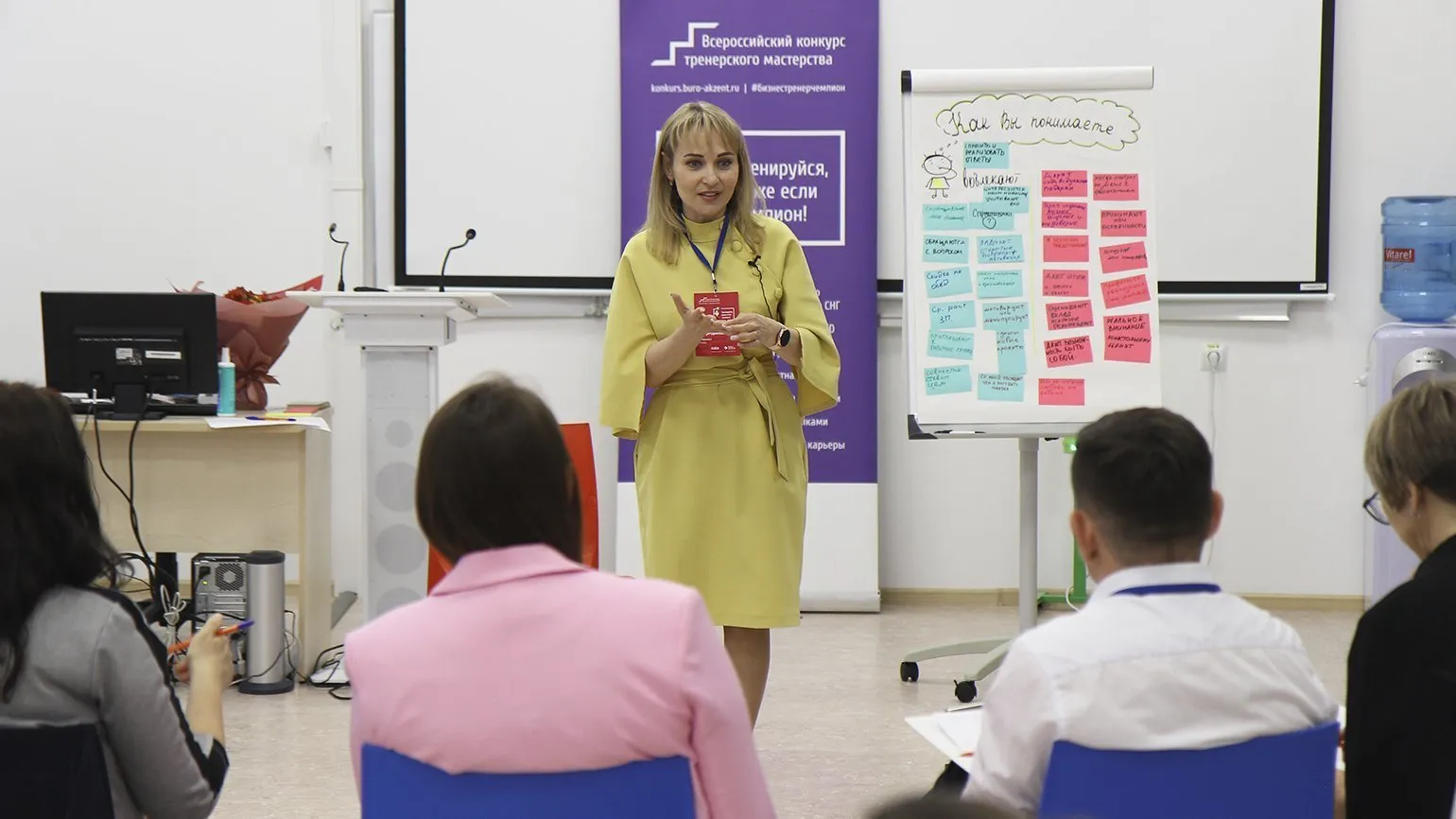
The general director of Buro Akzent and the curator of the professional competition "Coaching Mastery", which has been held since 2005, has significant experience in management and training. He also manages projects aimed at the comprehensive development and training of executives. As a business trainer and certified business coach accredited by the European Coaching Centre, he helps professionals achieve high results and develop their skills.
Elena provided clarifications.
- why a business trainer is not the same as a teacher or motivational speaker;
- what ideas about this profession do not correspond to reality;
- how do people most often become trainers and where do they study it;
- is it really so important for a business trainer to have charisma;
- why reviews like "He's just a god!" — not the sign of a good coach;
- How business coaching survived the transition to online due to the pandemic.
About the essence of the business coach profession
Many choose their profession believing that in this field they can quickly and easily earn significant sums.
This is not true. It is important to understand that in order for your work to be highly valued, including financially, you must go a long and serious way. Money is rather a consequence of the fact that you have become an expert and achieved success in your profession. Creating value and recognition of your skills takes time, effort, and constant development. Only by becoming a true specialist can you count on a decent reward for your efforts.
The coaching profession requires a deep understanding of your motivation and goals. Understanding the reasons why you have chosen this path is fundamental to a successful career as a coach. This knowledge helps not only in developing professional skills but also in building trusting relationships with clients. The ability to clearly articulate your mission and vision allows a coach to more effectively achieve results for both themselves and their clients. Coaching requires a genuine desire and dedication, which is not available to everyone. Not everyone is capable of sharing their knowledge and caring about the success of others. When a person is ready to coach, they feel caring and responsible for their clients. This desire to influence the team's success and see each member grow is an important aspect of effective coaching. Successful mentors understand that their contribution can significantly change the lives of others, and this is what motivates them to take action. It is important to focus on how to help others become better, rather than on how to look more glamorous, successful, or smart. This is the core principle that allows us to create meaningful connections and make a positive difference in the lives of others. By supporting others, we not only contribute to their development but also grow as individuals. By focusing on helping, we can improve society as a whole and make the world a more harmonious place.
In sports, a successful coach plays a key role in preparing athletes for Olympic success. They not only teach them technique and tactics, but also instill the mental toughness necessary to achieve high results. A good coach creates the conditions for the maximum development of talent, which ultimately allows athletes to realize their potential and win medals on the international stage.
Teacher is a term more often used in an academic setting and implies the transfer of theoretical knowledge. Unlike more general titles such as "teacher," the word "lecturer" emphasizes professionalism and a deep understanding of the subject. Teachers play a key role in the educational process, developing critical thinking and analytical skills in students. Their task is not only to teach but also to inspire further study of a topic, which contributes to the development of a scientific approach and research skills in students.
A coach is a specialist who is focused on the training process. The primary goal of business training is to change employee behavior in the professional environment. To achieve this, it is necessary to organize an effective training process and provide new tools. As a result, participants will be able to apply acquired knowledge in practice, which will lead to improved work skills and more effective performance. Business training promotes teamwork, increases motivation, and improves overall company performance. Clients expect employees to effectively delegate tasks, negotiate, communicate with colleagues, and successfully resolve conflicts. This is not just theoretical knowledge, but practical skills that must be demonstrated in the work environment. A business trainer focuses on developing these skills, ensuring increased productivity and improved teamwork. A motivational speaker differs from a coach in their role and approach. While a coach focuses on practical skills and tactics, a motivational speaker inspires listeners, helping them overcome internal barriers and achieve goals. Motivational speakers use a variety of techniques to influence the emotions and thinking of the audience, creating an atmosphere conducive to personal growth. Their primary goal is to spark interest and a desire to take action, while coaches guide and teach specific skills. Understanding the differences between these two roles will help you choose the right professional to achieve your goals.
Those who focus solely on flashy presentations are hardly true coaches. It's important to understand that if your goal is to conduct a training session, you don't necessarily need a famous speaker. In this case, you need a competent trainer who can teach people the necessary skills. If you want to open a conference with an inspiring talk by an astronaut for an audience of 150-300 people, you need a motivational speaker with a compelling story of overcoming challenges. However, this is not true coaching. Coaching is about learning and development, not simply entertaining the audience.
A coach must be clearly aware of their actions, understand the purpose of their work, and strive to achieve specific results. Understanding these aspects allows you to create effective training programs and achieve high athletic results. Understanding the end goal helps select the right teaching methods and tailor the training process to the individual needs of athletes.
A coach's work is divided into two main components. The first is understanding which program will achieve the desired result. This may be an existing solution or the need to develop a program tailored to specific needs. The second is the ability to teach adults, ensuring effective learning and retention. These two key areas define the evaluation criteria in our coaching skills competition.

About Myths and Misconceptions
At first glance, a coach's job may seem easy and attractive, as if it were a constant holiday where it's enough to simply perform well and earn money. However, in reality, a coach's work includes many complex tasks and responsibilities. This includes not only preparing athletes for competitions, but also constantly developing their own skills, analyzing results, creating training programs, and maintaining team morale. A coach must be not only an expert in their field, but also a psychologist who knows how to find an approach to each athlete. The importance of this profession is difficult to overestimate, since it is the coach who shapes the success and achievements of their trainees.
A career in the creative field may seem appealing and exciting, but in reality, it's associated with high levels of stress. This work requires significant mental and physical effort, as well as self-management. Behind the scenes, the serious preparation and internal resources required to successfully conduct trainings and events are not visible. While this profession may resemble a celebrity show, it requires constant attention to one's appearance and the ability to maintain confidence and professionalism, regardless of one's personal state. These aspects are essential for maintaining a reputation and achieving success in this field.
Business coaches often experience burnout. This condition is characterized by a loss of motivation, decreased productivity, and a feeling of fatigue. The causes of burnout can be varied, including high workloads, emotional stress, or a lack of support. It's important to understand that burnout not only affects the quality of the coach's work but can also negatively impact clients. To avoid this, business coaches should pay attention to their psycho-emotional state, implement self-regulation practices, and find a balance between work and rest. Preventing burnout not only improves personal well-being but also enhances the effectiveness of their work with clients.
Many corporate coaches conduct the same training programs daily, which limits their creative potential. They often have to travel across regions to conduct large-scale training sessions, and the choice of program isn't always a matter of personal preference—they are simply obliged to lead it. Freelance coaches also often face the inability to refuse work, even if they are unwell. In such circumstances, it's important to find ways to diversify their training sessions and adapt them to the needs of participants to maintain interest and engagement.
Clients vary in their approaches and perceptions and are not always willing to accept a coach's recommendations. Even with careful explanations and reasoning from a specialist, situations may arise where clients ignore advice that could improve results. It's important to find common ground and establish trusting relationships to achieve the best project outcome.
Sometimes clients demand the impossible—for example, delivering 15 topics in four hours to a hundred people and still guaranteeing results. In such situations, no amount of reasoning helps.
In a public profession, there's constant concern about reputation, especially in a niche market where everyone knows everyone. Every public outing is accompanied by thoughts of possible negative reviews and client dissatisfaction. There's a fear that the results won't meet expectations, which could negatively impact one's image. It's important to remember that reputation is a key aspect of success, and it's essential to strive for high standards to minimize risks and maintain a positive image.
When choosing this profession, it's important to consider all aspects and be prepared for potential difficulties. Understanding all aspects of the profession will help you better cope with challenges and achieve success.
Our company is regularly contacted by client managers aspiring to become trainers. However, after becoming familiar with the reality of the trainer's profession, many of them change their minds and decide to continue working with clients.
How to Become a Trainer
Many successful salespeople begin their careers with outstanding sales results and then decide to pass on their knowledge and experience to others. The transition from the role of a salesperson to a professional sales trainer is a natural step for those who strive to develop their skills and share them with colleagues. This transition not only allows for a deeper understanding of sales processes but also opens up new opportunities for career growth and personal development. An important aspect of this path is the ability to adapt your methods to different audiences, which contributes to the effectiveness of training and coaching.
Many professionals begin their careers as managers, developing their staff, and then move on to training others, initially within their own company. This is a common scenario. Much less common is the case of a person choosing the path of a trainer immediately after graduation. Most often, this transition occurs through practical experience in their field, which allows them to accumulate the necessary knowledge and skills to successfully teach others.
I am skeptical of trainers who lack their own sales experience but offer training in this area. Effective selling requires practical skills and a real understanding of the market, which is impossible to achieve without personal experience. A true trainer should not only share theory but also demonstrate successful cases from their own practice. This builds trust and confidence in students that they have received knowledge from a professional who really knows how to sell.
I do not trust those who have no management experience but still conduct training for managers. Before sharing knowledge, it is necessary to go through your own trials and gain practical experience. Only with real expertise can you effectively transfer knowledge to others. People appreciate it when a trainer has faced difficulties themselves and can share their own lessons. This builds trust and increases respect for the specialist.
We recently conducted a survey among trainers, in which one of the key questions was their basic education. The results demonstrated the importance of specialized training for successful coaching. Basic education plays a significant role in developing the professional skills and competencies necessary for effective work with clients. Understanding the fundamentals of theory and practice allows coaches to more successfully adapt to the various situations and needs of their clients. Furthermore, having the appropriate education can increase client trust and strengthen the coach's reputation in the marketplace.
About 80% of respondents have a basic education in pedagogy or psychology. However, coaches also include specialists with technical, medical, or other education. These professionals come to coaching through alternative paths, which diversifies the approaches and methods of training and development.
A fundamental or academic education in psychology is not a prerequisite.
To successfully work as a business coach, you do not need to have a deep knowledge of psychology. However, psychological skills contribute to more effective interaction with people and an understanding of their motivations. To develop such skills, you can study literature on psychology and pedagogy and attend short courses. It's also important to work on yourself, understand your inner states, and strive to become a healthy and mature individual. This will create a solid foundation for a successful career in business training.

About Coach Training and Development
Many coaches master their craft by learning from colleagues and mentors. Learning from experienced professionals helps them develop skills and apply best practices in their work. Mentoring plays a key role in the development of professionals, allowing them to pass on valuable knowledge and experience.
Approximately 75% of coaches begin their careers without formal coaching education, relying on practical experience. They master the profession by conducting their first classes under the supervision of more experienced colleagues or by studying the methods of other coaches and literature on the topic. Only after several years, when they have already accumulated experience, some of them decide to take specialized coaching courses to systematize their knowledge. This path is typical for many, including me—I started with practical work and then deepened my knowledge in theory.
I haven't come across any information about long-term university coach training programs, but specialized coaching schools have been operating for many years, offering robust educational programs that can last from six months to a year. There are also short-term courses that allow you to quickly acquire the necessary coaching skills and knowledge.
Systematizing your accumulated experience is key for further development. Creating a structured knowledge base allows you to effectively utilize your existing skills and developments, which promotes growth and improved results. Properly organizing information helps avoid repeating mistakes and optimize processes, which ultimately leads to increased productivity and innovation.
Master trainers with years of experience delivering corporate and open training programs often recognize a lack of methodological knowledge. They face challenges when developing new programs and do not always have a complete understanding of available training tools and formats. This can hinder the creation of effective training materials and programs, which in turn impacts the quality of training and participant satisfaction. Deepening their knowledge of methodology and modern training approaches will help trainers not only improve their skills but also increase the effectiveness of their programs.
Coaching is a process of continuous development that knows no boundaries. We must strive to stay one step ahead, constantly updating our knowledge and skills. A successful trainer not only teaches but also inspires, creating an environment for growth and self-improvement. It is important to keep up with new trends and methods to stay relevant in your field.
The last year has shown that we have been catching up more than we have been ahead. However, a trainer must always be aware of current trends and innovations. He constantly seeks out useful reading materials, studies the experience of his colleagues, and values feedback from experts. Regular self-assessment and analysis of his progress are necessary to identify areas requiring attention and improvement. This allows him not only to develop professional skills but also to increase the effectiveness of his team.
At our competition, even participants who do not make it to the finals find value in the jury's comments about other colleagues. This allows them to learn a variety of opinions and adopt interesting ideas for their work. Thus, the competition becomes a platform for the development of not only the participants but also the organizers and jury members. We always strive to improve, analyzing the feedback received and finding new ways to enhance the quality of the event.
About the charisma and star quality of the trainers
You don't necessarily need a sparkling sense of humor or powerful energy to engage the audience. The important factor is how you structure the program. Proper content organization and logical structure of materials will help retain audience attention. Use clear transitions between topics and create coherent blocks of information so that audiences can easily absorb the material presented. This approach will make your program more engaging and effective.
For a trainer, charisma and public speaking skills are key. The ability to effectively convey information makes lectures engaging and helps retain audience attention. A good trainer is able to engage audiences, which significantly improves the quality of training and facilitates better assimilation of the material.
A good corporate trainer can be measured, calm, and structured. These qualities help them methodically guide people to achieve results. Effective training requires the ability to organize the learning process and maintain participant motivation. A calm approach helps create a trusting atmosphere in which participants can openly exchange opinions and ask questions. Structured training ensures clarity and consistency, which promotes better absorption of the material and increases the effectiveness of training.
Often, charismatic trainers distract attention from the participants themselves, preventing them from developing the necessary skills. For effective learning, it is crucial that each participant is actively engaged in the process. This is the only way to achieve real results and develop lasting skills.
The ability to step back at the right time is a key skill. Constantly striving to be the center of attention and demonstrating one's achievements can distract participants from active participation. It is important to create an environment in which participants can engage in discussion, share their experiences, and gain new insights. This promotes deeper interaction and effective knowledge sharing, which ultimately leads to better results.
A trainer's work is considered successful when they transition from an active leadership role to an organizational one during the training. This allows participants to show initiative and develop their skills and confidence. This approach not only promotes deeper learning but also creates space for each participant to realize their potential. The trainer, fulfilling their role as facilitator, helps the group interact effectively and achieve their goals.
If training participants avoid mentioning mystical experiences in their feedback, but instead focus on the results achieved and teamwork, this demonstrates the trainer's high level of professionalism. This approach demonstrates that the trainer creates an effective atmosphere for learning and development. It is important for the trainer to remain energetic and engaging, as this helps maintain the interest and engagement of the group.
About the wrong trainers
It is important for a business trainer to always ask the client questions about how the training relates to current business objectives. This allows for a more precise training program adjustment and makes it as effective as possible. Without considering the company's actual needs, training may be useless and fail to produce the desired results. Collaborating on defining training goals and objectives contributes to greater effectiveness and improved business processes.
The company plans to implement the acquired skills, but there is a difference in expectations between the trainer and the client. The trainer completes the training considering their mission accomplished. At the same time, the client expects immediate changes without any additional effort on their part. It is important to understand that successful acquisition of knowledge and behavioral changes by employees requires the active participation of the company after the training. If a trainer fails to emphasize the need for teamwork to achieve sustainable results, this indicates a lack of understanding of the systemic learning process.
Some trainers choose their profession to assert their own value through the successes of others, even if they don't realize it. This can negatively impact their approach to teaching and interacting with clients. It is important for trainers to understand their role and strive for the genuine development of their clients, rather than using their achievements for their own self-affirmation. A true professional understands that their clients' success is a reflection of their competence and willingness to support them on their path to goals.
Manipulative individuals often assume a position of authority, as if they possess absolute truth. This behavior is evident in their interactions with others, causing negative emotions and discomfort in adults. Such arrogance and lack of respect for the opinions of others not only spoil the communication atmosphere but can also lead to serious conflicts. It's important to recognize that healthy relationships require mutual respect and openness to dialogue. Working with adults is an equal interaction. We interact with people with unique experiences and formed worldviews. In some respects, they may have deeper knowledge and understanding than the trainer. It's important to respect their expertise and incorporate this experience into the training process. This creates a productive atmosphere where adults can share their views and actively participate in discussions, which facilitates more effective learning and development. Some trainers use harsh and inappropriate manipulation, believing this will help participants achieve insights. I do not support such approaches, as I consider them unprofessional and harmful. One careless word can cause serious trauma for a person and leave a deep mark for years to come. It is important to remember that coaching practice should be based on respect and support, not psychological violence.
About coaching qualities
Broad-mindedness, a systematic approach, and logical thinking play a key role in solving complex problems. These qualities contribute to the effective analysis of information, which increases the likelihood of finding optimal solutions. By developing broad-mindedness, you can consider various options and approaches, which enriches the decision-making process. A systematic approach helps organize thoughts and ideas, and logic provides a structured approach to analysis. These aspects are important not only in personal life but also in professional activities, where critical thinking and analytical skills are in demand.
A trainer must possess a broad perspective, encompassing not only knowledge of their field but also an understanding of psychology and the fundamentals of business processes. With constant change in various fields, it is essential to continually learn and update one's knowledge. An important aspect of a trainer's work is the ability to effectively interact with a group, establish communication, conduct dialogue, and provide feedback. The trainer must also help participants reflect and gain insights, which is a key element of successful coaching.
It is important to be flexible in the process, adapting to changing conditions. The ability to adapt to changing circumstances allows for effective problem-solving and achieving goals. Flexibility is a key aspect of successful management and personal effectiveness, facilitating a quick response to challenges and new opportunities.
Sometimes, coming to a training session with a pre-prepared plan, you realize that it does not meet the needs of the group. In such cases, it is important to quickly make a decision and adapt the program to make it more effective and useful for the participants. A flexible training approach allows for better alignment with the interests and level of training of students, which facilitates deeper learning.
Modern companies strive for up-to-date expertise, the implementation of innovative formats, and new approaches to motivation and communication. In a rapidly changing market, it is essential to adapt to new employee demands and expectations. Effective motivation strategies and modern interaction methods are becoming key to increasing productivity and creating a comfortable working atmosphere.
A modern trainer must possess the skills to work not only in traditional formats but also in blended formats. Unfortunately, many lack the strength and desire to master new approaches. Some continue to rely on methods that have been effective in the past and may continue to be effective for some time. However, to achieve future success, changes must be made today. Embracing new technologies and adapting to changing conditions will help trainers remain competitive and provide high-quality training.
You are currently an experienced and in-demand professional with a large number of orders booked for months or even a year in advance. You work intensively and lack time for your own training. This can be a dangerous situation, as high demand for your services can slow your development. While other professionals continue to learn new technologies and develop, you risk falling behind and losing your competitive edge. Therefore, it is important to find time for training and professional development to stay afloat in a rapidly changing market.
About the coaching market in the era of a pandemic and online
The last year has had a significant impact on our activities, changing work processes and throwing some employees off their usual rhythm. These changes have affected both individual approaches and team dynamics, requiring adaptation. Not everyone has adapted to working online. Some have made the transition successfully, while others are only now beginning the process with some delays. For some, this has been a challenging task, while others were reluctant to change their approach because they did not understand the value of online work. However, the transition to a remote format offers new opportunities and benefits that are worth considering. Many initially struggled with adapting their programs designed for an in-person format. Attempts to adapt a similar format to an online format have encountered significant challenges. Online learning requires a redesign of the program in terms of instructions, exercises, and timeframes. This is due to the peculiarities of information perception and interaction among participants, making a simple broadcast of the offline format ineffective. To successfully implement online courses, it's essential to consider these aspects and make appropriate adjustments to the program's structure and content.
This format has unique characteristics, both methodologically and technically. Within this approach, we modify our communication style with the group, utilize various tools to influence participants, and adapt the structure of the classes. This includes considering time constraints, activity rotation, group size, and the balance of time allocated for trainer and participant presentations. Proper organization of the process allows for more effective interaction and engagement, which in turn contributes to successful learning.
The online format lacks the opportunity for physical interaction, as occurs in in-person classes, where the trainer can move around the room distributing learning materials. Therefore, it's important for the trainer to skillfully use digital tools such as Padlet, Kahoot, and Miro to engage participants. At the same time, it's important to recognize when it's best to forego additional platforms and simply connect with people. It's important to recognize that the variety of tools and flexibility in online learning are becoming key factors for successful interaction.
Voice control, energy, and the ability to interact with participants via a screen are key skills for a trainer. Without them, a trainer can become a boring "talking head," which will reduce the effectiveness of training and audience engagement. Trainers must actively develop these skills to create a dynamic and interactive atmosphere in their classes, which in turn will improve learning and increase participant interest.
Achieving effective collaboration among colleagues in new formats requires significant effort. It is important to create an environment conducive to adaptation to change and ensure productive teamwork. Investing time and resources in training, support, and motivation of employees will help improve overall work efficiency.
Many specialists continue to use outdated methods and, instead of online training, conduct traditional webinars, limiting themselves to simply conveying information and minimal interaction with the audience. We offer the "Online Trainer" course, which has been successfully running for a year now, and we are currently in our fifth cohort. I often wonder, "Has everyone learned this yet? How relevant is our course?" However, we continue to receive requests from trainers who are unfamiliar with digital tools and don't understand how online training differs from traditional formats. They try to adapt their programs without considering the specifics of the online format. This underscores the importance of modern approaches to training and the need to master new technologies for effective interaction with the audience.
Many companies, especially those with numerous geographical divisions, will continue to actively use online platforms. This allows them to optimize processes, increase the effectiveness of communication, and provide access to information anytime, anywhere. In the context of modern technology, online formats are becoming an integral part of business strategies, promoting the development and expansion of opportunities for interaction with clients and partners.
This allows for significant cost reductions and provides the opportunity to train many people across the country.
Currently, there is a clear trend towards conducting in-person training for certain categories of employees and on specific topics. For example, public speaking skills are difficult to effectively develop online, despite some specialists' attempts to adapt this process. Strategic company sessions are also more often held in person, as the synergy and teamwork in the offline format create a unique atmosphere distinct from online interactions. In-person trainings allow participants to delve deeper into the process, improve communication, and increase overall team effectiveness.
Read also:
- 6 Tips for Choosing a Business Trainer
- Corporate Training Continues to Change
- 12 Tools for Online Educational Events
- How to Motivate Adults to Learn
How to Start a Business: From Idea to Implementation
You'll learn how to run a business in Russia in 2024. Learn how to choose in-demand niches, create a financial model, and forecast risks. During the training, launch a business and start making money.
Find out more