Contents:
- What tasks does an interior designer solve?
- Stages of developing a design project
- Soft and hard skills that a designer needs to develop to achieve success
- Advantages and disadvantages of the profession
- How to become an interior designer. Prospects of the profession
- How much does an interior designer earn in Belarus
- Design trends in 2024. New trends that have changed the idea of a minimalist interior
- Useful resources from the editors of Skillbox.by

Text prepared by interior designer, graphic designer Svetlana Gnatyshina
A person spends half of his life in premises of various types and purposes. And the space of some of them catches your eye at first sight. This is possible thanks to designers who develop the style, layout, select furniture, decorations, color palette and work out engineering systems. These professionals always take into account the preferences of their clients, offering ergonomic and functional solutions. And most importantly, designers make calculations, based on which builders must implement the project within the budget.

Learn how to create visualizations in 3ds Max and Corona Renderer on the Residential and Commercial Interior Designer course.
Learn more.What tasks does an interior designer solve?
Interior design is a complex and multi-stage process of developing a home's interior layout project, which includes surveying, remodeling, and developing a lighting plan, finishing, interior partitions, and furniture arrangement. Each train of thought is captured in the form of sketches and 3D visualizations.
A professional designer is more than just an artist who plays with light, colors, and shapes. They interact with space using knowledge from the following areas:
- Architecture. The designer is responsible not only for the beauty of the interior, but also for the ergonomics and functionality of each item used in it. The specialist creates the layout, develops ventilation, lighting, and socket placement schemes, thinks through the acoustics and selects finishing materials.
- Graphic design. The ability to see a solution is extremely important, but no less significant is the skill of conveying the idea to the client. For this reason, the designer must master programs for constructing 3D models and developing illustrations. SketchUp and 3ds Max + VRay — for layouts, ArchiCAD — for design documentation, AutoCAD — for hand drawings, CorelDRAW Graphics Suite and Adobe Illustrator — for interior collages.
- Psychology.This profession involves constant communication with the client and contractors. The designer must learn to negotiate with anyone and about anything, be able to explain clearly and, if necessary, gently defend their point of view.
- Jurisprudence.The specialist must have up-to-date knowledge of the legislation in the field of permitted redevelopment in order to create a legally competent project. The ability to identify load-bearing walls will also be relevant here.
- Documentation.The profession of an interior designer involves a large amount of design documentation that must be created and taken into account during the process of author's supervision.
- Accounting. Developing estimates is an important stage of an interior designer's work. It is for this reason that a specialist must have at least a superficial command of accounting skills. This skill will help him calculate a detailed estimate for construction and avoid going over budget.

Stages of Design Project Development
The designer meets with clients, works with design programs, selects interior items and building materials, and manages the construction process. Let's take a closer look at the main stages of an interior designer's work:
- Negotiating.The interior designer meets with the client, learns about their needs and wishes, develops an optimal design concept, develops an estimate, and shows finished sketches. To perform this work, it is important to have increased stress resistance, empathy, and excellent communication skills.
- Measurement work.Interior design is impossible without measurement work. A specialist personally takes measurements using special tools, which are recorded in a measured drawing. To perform the work efficiently, the designer must understand building materials and the rules for the placement of utility lines.
- Preparing the layout. Having received the design project sketches, the client makes amendments. Taking them into account, the interior designer develops drawings and 3D visualizations. In the process, the designer bases his/her decisions on the client’s lifestyle, principles of ergonomics, and current building codes and regulations. At this stage, an estimate is also drawn up and the realistic timeframe for implementing the design project is estimated.
- Project presentation. The designer shows the final design project to the client. It includes all the details in the form of furniture, color combinations, and materials; 3D visualizations demonstrate the depth of space, lighting, and textures. The specialist must have design skills. At this stage, the client checks the project's compliance with their wishes.
- Preparation of working documentation.In the documentation for builders, the interior designer reflects the layout and interior zoning, the placement and dimensions of partitions, the size of tiles, wallpaper and other significant details. Documentation for the construction team contains all the necessary technical and visual instructions.
- Author's supervision. During the implementation process, the design project inevitably changes, which is impossible to foresee in advance. All changes are agreed upon between the designer and the foreman. To perform author's supervision, the specialist must convey his idea to the builders. If during the work it is discovered that a necessary material is missing, the designer is obliged to promptly replace it and reflect this in the project.
Organizing the work process for a construction team without a finished design project is a risk of getting a low-quality result that will not meet your expectations. An interior designer will help avoid this problem - s/he will think through every detail of the space and monitor its implementation in practice.
Soft and hard skills that a designer needs to develop to succeed
The profession of interior designer is suitable for creative people with an out-of-the-box mindset, who know how to generate new ideas, have excellent communication skills and are able to be flexible in communicating with the client. Certain professional skills are no less important in work. We will tell you about the basic soft and hard skills that a designer needs to develop to achieve success in his or her career.
Soft skills:
- Good taste, understanding of harmony and symmetry;
- Creative thinking and artistic ability;
- Ability to perceive the spatial relationships of objects, to form an image based on a verbal description;
- Perseverance, meticulousness, attention to detail;
- Communication skills, ability to find a way out of conflict situations;
- Ability to continuously develop;
- Ability to work on several projects simultaneously.
Hard skills:
- Knowledge of the basics of the theory and methods of modeling design;
- Knowledge of modern building materials, technologies and designs;
- Ability to perform survey work, develop drawings, create collages, visualize the finished project and prepare documents;
- Ability to develop an estimate, calculate the feasibility of certain expenses;
- ability to carry out author's supervision.
Advantages and disadvantages of the profession
Any profession has its advantages and disadvantages. Interior design is no exception. Let's consider the main pros and cons.
Pros:
- opportunity to realize creative potential;
- demand in the labor market and decent earnings;
- opportunity to work freelance;
- useful contacts, communication with interesting people;
- Variety of projects, opportunity to improve skills on complex projects;
- Career growth - there is an opportunity to open your own design studio.
Cons:
- the need to defend a point of view or adapt to the wishes of the customer;
- the need to constantly learn, follow modern trends in design;
- high competition and the need to independently search for clients;
- irregular working hours;
- the need to multitask.
How to become an interior designer. Profession Prospects
It is impossible to master a profession comprehensively on your own. You can find a suitable program at a university, and as an alternative, you can choose distance courses on an educational platform or in a design studio. When choosing them, the editors of Skillbox.by advise paying attention to the relevance of the curricula and the opportunity to work on real projects.
— The design market in Belarus is developing rapidly - people are increasingly turning to interior designers for help, and housing with a thoughtful design is valued higher in the real estate market. That is why the demand for this profession will only grow, - shares Skillbox marketing specialist Maria Tkacheva. — On the Skillbox interior design course, you'll be mentored by practicing specialists. You'll master the necessary skills and be able to add four case studies to your portfolio, including the opportunity to work on your own project. Upon completion of the course, Skillbox will assist with employment.
Aspiring designers can take on their first commissions while still studying, participate in group projects, and gain experience to establish a name and eventually become a solo designer. Career advancement in interior design depends on the specialist's motivation and hard work. To reach new heights, a designer should take on more complex orders, constantly learn, and skillfully delegate routine tasks.
There are different ways to build a career:
- Freelancing.This path is chosen by designers who prefer to search for clients themselves and invest money in advertising. The main advantage of this choice is the lack of control over pricing, the ability to work at a convenient time and manage a large number of orders. The main disadvantage is instability at the beginning.
- Working in a design studio.By joining a design studio, a newcomer will gain experience and be able to add good projects to their portfolio. Studios value their reputation and enter into official contracts, so companies entrust them with projects much more often than freelancers.
- Working in a large company. The organization hires an employee who studies its corporate style and creates design projects for new branches. Often, a designer is hired to work with offices and representative offices of an organization.
How much does an interior designer earn in Belarus?
According to rabota.by, today in Belarus there are more than 2,000 vacancies in the field of interior design. More than 500 companies are looking for specialists on minsk.gorodrabot.by. Freelancers can use exchanges and social networks to find clients.
According to rabota.by, the average salary of an interior designer is 3,000 Belarusian rubles. However, freelancing rates for a specialist's services may vary. Newcomers to the field can expect to earn from 1,000 Belarusian rubles per month, designers with up to three years of experience earn up to 3,000 rubles, and experienced specialists earn over 5,000 rubles. Very often, experienced designers receive a percentage of completed projects, and the level of income depends on the complexity of the projects and the volume of orders.
Design trends in 2024. New trends that have changed the idea of a minimalist interior
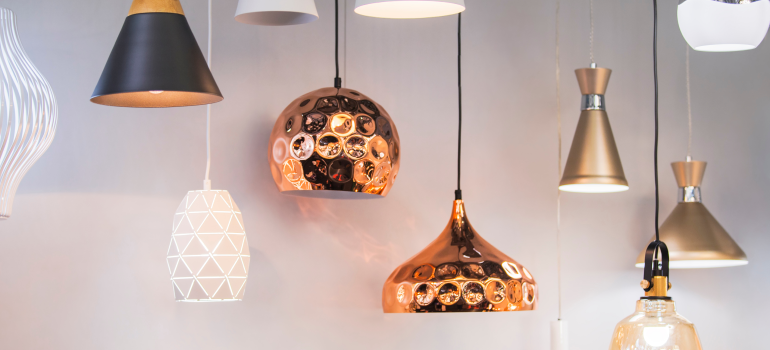
When creating a project, the designer must take into account current trends in interior design. Modern home design involves rejecting excessive consumption and clutter. Multifunctionality and compactness, unusual shades, eco-friendliness, and a connection to nature are trending. When choosing the optimal style, designers are pursuing a happy medium. They emphasize natural light, compactness, modularity, and smart technology solutions. Harmony and balance are the main goals of interior design in 2024. Modern homes are often designed in a minimalist style with the addition of warm colors, textiles, and eco-textures. The role of smart technologies in space, as well as modular and transformable furniture, has also increased significantly. The ability to competently select details to create a unified picture is an art that a professional interior designer must master to perfection.
Useful resources for studying the field of interior design from the editors of Skillbox.by
In order for you to get to know the field of interior design better, the editors of Skillbox.by have prepared useful resources for study.
Literature:
- D. Gaines "Homebody" - the author tells how to create an interior that will reflect character and preserve history, how to combine different styles to form a harmonious and ergonomic space for living.
- K. Hoppen "Golden Rules of Design" - in the book, the author shares his thoughts on the rules for choosing and placing objects in the interior. He convinces the reader that every detail plays an important role.
- E. Henderson "Style" - a designer's guide that will help you transform any room without spending a lot.
Internet resources:
- Interior Design - here you can find detailed reviews of interiors from professional designers.
- Blog|Useful articles about interior design — simple and clear about the reality of working with clients and projects.
- Interior Design Blog — here you'll find interior design life hacks, reviews, decorating ideas, and practical advice from experienced designers.
Master the profession of "Interior Designer" with Skillbox
You will learn how to develop design solutions and redevelopment, create stylistic concepts and collages in Photoshop. Learn how to develop working drawings for a project in Archicad/AutoCAD/Revit and create visualizations in 3ds Max and Corona Renderer. Learn how to select materials and furniture, manage project documentation, and supervise construction work. Add four case studies to your portfolio, including the opportunity to work on your own project.
Remove access