Contents:

Try 4 top professions in design. Free ➞ In 5 days, you will get acquainted with illustration, UX/UI, web and graphic design. Add 4 cool cases to your portfolio and decide which direction to develop in next.
Find out more
Brief information about the topic.
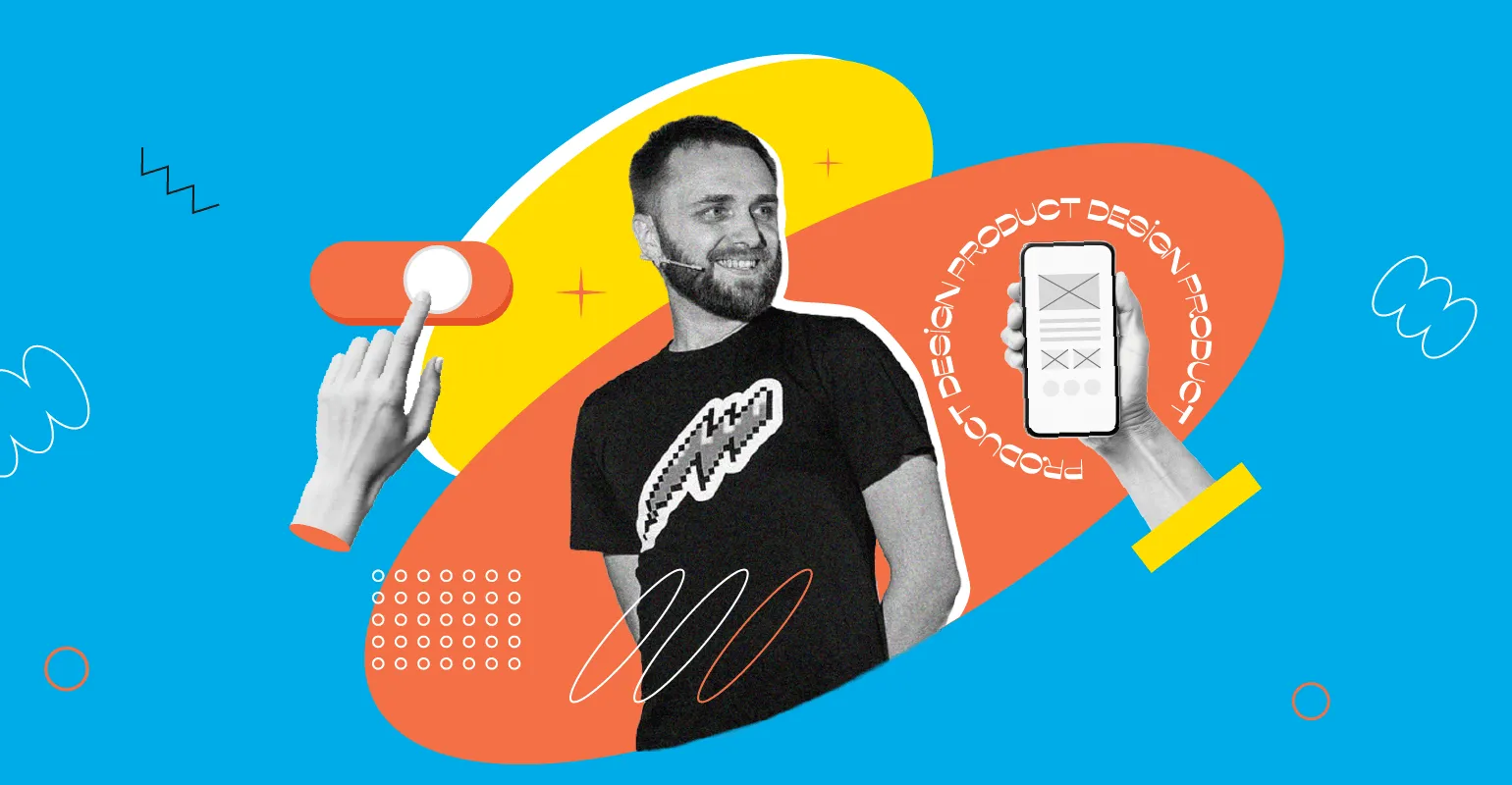
Dmitriy Smirnov began his career in the field of information technology, holding the position of system administrator. At Renaissance Insurance, he worked as a project manager, where he successfully managed projects to develop electronic CASCO and OSAGO policies. He has approximately 12 years of design experience. Dmitry created his own brand of electronic products and currently serves as co-owner and CTO of this business. At Tinkoff, he rose through the ranks from a line designer to the head of the web design department, demonstrating his professional growth and design expertise. Dmitry also teaches the Product Designer course at Skillbox, where he shares his knowledge and experience with students. In his free time, he develops the Untitled podcast, dedicated to design and related topics.
All images and cover art courtesy of Dmitry Smirnov.
In the interview, Dmitry shared his thoughts and experiences. He discussed key moments in his career and the challenges he faced on the path to success. Dmitry emphasized the importance of determination and continuous learning. He also noted that the support of the environment plays a significant role in achieving goals. This conversation provides valuable information and inspiration for those who strive to develop in their professional field.
- Is a product designer a creative or technical profession?
- How does the product design department work?
- Why is it better to make many mistakes at once than one?
- How to distinguish the right client from the wrong one?
- What does the one and a half release rule mean?
- How many specialists got jobs at Tinkoff after product design courses?
What a product designer should be able to do?
Product design is a field in which design and product are inextricably linked. It encompasses not only visual aspects but also functionality, usability, and user satisfaction. The core of product design is creating a solution that meets market demands and provides a positive user experience. Thus, it can be said that product design is a synergy between aesthetics and effectiveness, where success depends on the harmonious combination of both elements.
A good designer plays a key role in successfully solving a company's business problems. They must have a deep understanding of all aspects of the business, acting not only as a designer but also as a marketer and, sometimes, as a developer. A product is a process that begins with an idea, passes through a stage of uncertainty, and ends with profitability and the creation of value for users. A product designer is a person with a wide range of skills and the ability to solve problems comprehensively. Unlike a highly specialized designer who can only work with tools like Figma, a product designer covers a broader range of responsibilities and actively participates in the creation of successful solutions.
The question of the relationship between technology and creativity in the product design profession remains relevant. Product designers must have a deep understanding of technology to create functional and effective solutions. However, without a creative approach, it is impossible to imagine unique and attractive products that will stand out in the market. Technology enables the implementation of ideas, while creativity helps find original solutions and create value for users. Thus, a successful product designer finds a balance between these two aspects, which allows them to develop innovative and high-quality products.
The value of a product designer lies in the ability to balance creative and technical aspects. The specificity of the product is an important factor. For example, at Tinkoff, creativity is expressed in unique product solutions and unconventional approaches. We value designers who are able to integrate design system elements and the team's accumulated experience to create effective solutions. This process requires deep analysis and significant time for discussion. Therefore, a product designer is not just a creator, but a technical specialist who uses tools like Figma to implement their ideas, while possessing a keen mind and passion for their craft.
The value of a product designer lies in the ability to find a balance between the creative and technical aspects of their work. A product designer not only creates visually appealing solutions but also ensures their functionality and usability. Successful product design requires a deep understanding of user needs and current technologies. In this context, the designer acts as the link between aesthetics and usability, making their role key in the process of creating successful products. An effective product designer is able to adapt to market changes, implementing innovative ideas and technologies, which ultimately contributes to business development and customer satisfaction.
Should a product designer be able to draw by hand? This question generates much debate in the professional community. While drawing can be a useful skill for a product designer, it's not always essential. In modern design, the emphasis is shifting to digital tools and software that allow for more efficient prototyping and visualization of ideas. However, the ability to draw by hand can help a designer better understand concepts, express their thoughts, and quickly sketch out ideas. Ultimately, a successful product designer must combine creativity and technical skill, whether using traditional drawing methods or modern technology.
I don't have any skills in this area. My strengths are drafting and geometry.

The value of a product designer lies in the ability to find harmony between creativity and technical aspects. The main task of a product designer is to create functional and aesthetically pleasing solutions, which requires a deep understanding of both user needs and the capabilities of technology. Effective product design enhances the user experience, increasing customer satisfaction and, ultimately, increasing sales. It's important for a designer to not only generate original ideas but also be able to implement them with due consideration for all technical nuances, making them an indispensable member of the development team. This balance between creativity and technique is key to successful product design.
How the Tinkoff Design Department Works
The Tinkoff Design Department comprises a significant number of specialists. The team consists of professionals working in various design fields, including graphic, UX/UI, and product design. This allows us to ensure high-quality design and implement innovative solutions that meet modern requirements and standards. It is important to note that the team is constantly growing and developing, following the latest design trends.
The team has over fifty specialists, including web designers, mobile designers, and brand designers. Nikita Prilepsky, who heads this department, and I jointly teach the Product Designer course at Skillbox.
We interact through various communication channels, including email, instant messengers, and video calls. This allows us to quickly exchange information and effectively resolve emerging issues. It is important to maintain an open dialogue so that each participant in the process can contribute their ideas and suggestions. This approach fosters improved teamwork and productivity. We also organize regular meetings to discuss current tasks and plans, which helps strengthen collaboration and build rapport among team members.
There are key areas in which we constantly collaborate. The first relates to brand and visual identity, as well as our strategy and overall visual appearance. The second area encompasses digital design, which defines our online presence. These aspects form a holistic understanding of the product and its ultimate goals. This understanding takes into account all of the product manager's knowledge and business requirements, with the customer experience being an important element, which is integrated into the overall picture.
A product designer must think beyond their product and consider external factors. The value of a product can increase significantly when refining specific features of a mobile app. While such tasks are typically handled by other teams, it is important to ensure a consistent customer experience throughout the entire interaction cycle, for example, within the context of a specific service. This contributes to the creation of a more cohesive and user-friendly product, which in turn increases its appeal to users.
Effective collaboration between team members is paramount in teamwork. Teamwork requires each team member to be able to listen, share opinions, and accept constructive criticism. Key aspects include clear communication, assignment of roles and tasks, and a shared vision of the project's goal. It is important for the team to have a high level of trust and mutual understanding, which facilitates more productive collaboration and the achievement of goals. Effective information sharing tools and regular meetings help maintain team spirit and improve overall team effectiveness.
Division of responsibilities is a key aspect of effective teamwork. Each team member should focus on their role, which contributes to increased productivity and the quality of the final product. However, achieving this can be challenging, as all team members are actively involved in the development process and sometimes overlap with areas outside their responsibilities, including design. Proper task distribution not only helps avoid conflicts but also improves collaboration between different specialists, which in turn has a positive impact on the work results.
A professional designer's correct response is to adequately perceive ideas. If someone suggests a solution, the designer should ask them to explain how they arrived at this conclusion. If a finished mockup is presented, it is important to remind them that this is the designer's work. However, there are exceptions when the solutions of developers or product managers can be quite high-quality. Therefore, a successful product designer must be an attentive listener, open to ideas, and able to adapt to different approaches. This not only improves teamwork but also creates more effective and attractive products.
The key is action. Many prefer to take one "sure" step a month rather than risk five steps with an uncertain outcome. However, this approach is wrong. It is better to take five steps and gain valuable experience for the company. The more mistakes you make, the clearer you will understand which paths should not be taken. Every step, even if unsuccessful, allows you to better understand the market and improve the effectiveness of future decisions. Mistakes are an essential part of the learning process. The more mistakes you make, the better you understand what actions to avoid in the future. Every misstep becomes a valuable lesson that guides you toward better decisions. Accepting mistakes as part of the journey promotes personal and professional growth and helps develop critical thinking and analytical skills. Ultimately, recognizing your mistakes is a step toward success. The first step in our work begins with a thorough analysis of the proposal received from a business representative. We examine its details, evaluate its goals and objectives, and determine how it fits into the company's overall strategy. This stage involves gathering information, discussing key points, and forming an initial understanding of the project. Based on this analysis, we can move on to the next stage, which involves developing an action plan and identifying the necessary resources for project implementation. This consistent approach allows us to effectively manage projects and achieve goals.
A business representative approaches us with a potentially profitable idea, as well as a specific audience ready to receive it. They have a clear understanding of the product, its value, and its unique selling proposition (USP).
The first step is to create a flowchart that helps us understand how to implement the idea: how to satisfy user needs and how to organize monetization. In the second stage, we eliminate uncertainties and conduct minimal research (CustDev) to verify whether the user need truly exists and whether the project's audience is large enough for its commercial success. If the CustDev results are positive, we analyze the required resources and begin development.
When it becomes clear that project analytics are incomplete or inaccurate, it is important to take steps to improve them. First, it is necessary to audit existing data to identify gaps and errors. Then, it is worth defining key metrics that will provide a more complete picture of the project. After this, additional data should be collected through surveys, interviews, or analysis of external sources. It is also important to establish a system for regularly monitoring and updating analytics to avoid similar problems in the future. This approach not only improves the accuracy of analytics but also promotes more effective project management.
We conduct research and draw on our team's experience. We have preliminary estimates based on a comprehensive market analysis. Our team consists of highly qualified specialists who have accumulated valuable experience, including lessons learned from past mistakes. Even without significant preliminary preparation, they are capable of creating a high-quality and in-demand product. It is important to find your niche in the market, while conversion optimization can be carried out at a later stage. In such circumstances, our skills and ability to quickly respond to changes become key factors for success.
In some cases, quickly finding a niche in the market is key, while conversion optimization can be postponed until later. In such situations, our skills and ability to quickly respond to changing conditions come to the fore. We are ready to act effectively even in conditions of high uncertainty, which allows us to successfully compete and find optimal solutions to achieve our goals.

The more mistakes you make, the clearer you understand which paths should be avoided. Experience gained through mistakes serves as a valuable lesson on the path to success. Every misstep brings you closer to realizing the right direction and helps develop decision-making skills. Learn from your mistakes and use this experience to achieve your goals.
In some cases, establishing a market position is critical, while increasing conversion can be addressed later. In such situations, our skills and ability to quickly respond to changes in the face of uncertainty come to the fore. This allows us to effectively adapt to consumer demands and quickly find optimal solutions to achieve business goals.
How to distinguish the "right" client from the "wrong" one
Many clients already have a ready-made idea of what the final solution should look like. This may be the result of personal experience, studying similar projects, or simply their own ideas. It is important to understand that even if the client has a clear vision, a detailed analysis of their needs is necessary. Communication with the client will help clarify details, identify potential shortcomings, and improve the overall quality of the project. In this process, it is important to maintain a balance between the client's vision and professional recommendations to achieve the best result.
Indeed, such situations do happen. If the client doesn't share their thoughts on how they arrived at their idea, it becomes necessary to discuss whose solution is more effective. It's important for the designer to understand the client's reasoning behind proposing a particular solution. This requires a high degree of empathy and the ability to analyze their thoughts and logic. Perhaps the client has a valuable solution, in which case it's worth considering agreeing with it.
I always recommend approaching the designer with a specific problem. This allows them to thoroughly examine all the constraints and conduct research into the market niche for which we are developing the product. This approach helps the designer create an optimal solution, which can then be presented to the entire team. It is important that the designer understands all aspects and nuances so that the result meets the expectations and needs of the target audience.

If the client is confident in his ability to independently determine what is Whether you're looking for a problematic or successful solution, it's important to approach the situation with understanding. In this case, it's worth offering a constructive dialogue. Start by listening to the client's opinion, asking clarifying questions to better understand their point of view. This will help identify their expectations and preferences.
After that, you can offer your recommendations, based on your professional experience and data analysis. Explain why your opinion may differ from theirs and what factors influence the final decision. It's important to convey that you strive to achieve the best possible outcome for the client, using your knowledge and experience. This approach will help maintain trust and establish productive cooperation.
Listening and engaging in dialogue are important aspects of communication. You should actively listen to the other person and ask questions to understand how they came to their conclusions and opinions. This not only helps deepen understanding of the topic, but also fosters a trusting relationship. Discussing different points of view opens new horizons and allows you to find a more comprehensive solution to the problem.
The right client is not just an ideal consumer, but one who aligns with your business goals and values. This is a person who not only buys your products or services but also shares your ideas, actively engages with your brand, and contributes to its development. The right client understands your products, values them, and is willing to recommend them to others. It's important to remember that such clients aren't always easy to find, but their presence can significantly improve business performance and strengthen your brand's reputation. Determining the "right" client requires analyzing the target audience, studying their needs and preferences, and actively interacting with them to build long-term relationships. Determining which client is the "right" and which is the "wrong" is quite difficult. The right client is considered one with whom you have entered into a cooperation agreement. The subsequent stages of work are generally similar, regardless of the type of client. When interacting with a client, it is important to focus on several key aspects. First and foremost, you must carefully listen to their needs and wishes to better understand how you can help. Effective communication helps build trust and demonstrate professionalism. It is also important to consider the importance of providing transparent information about the work process, deadlines, and potential risks. Ensure the client is always updated on the current status of the project. It's equally important to maintain feedback to promptly respond to questions and comments. Focusing on these aspects will help create a positive experience and increase client satisfaction, which in turn promotes long-term collaboration and business growth.
The first step is to conduct a briefing with the client. This will help define the target audience they are targeting: age, gender, income level, and spending habits of potential clients. This information allows for a deeper understanding of the competitive landscape. It is important to understand both direct and indirect competitors, as well as their promotion channels. This analysis will help formulate an effective strategy for the successful promotion of a product or service.
Skillbox has direct competitors, such as GeekBrains. Despite their similarities, each of these platforms attracts its own unique audience. This indicates that the online education market is still unsaturated and has significant potential for growth. Skillbox's indirect competitors include, for example, design courses offered by the Higher School of Economics.
An obvious example of a competitive environment is Unified State Exam preparation courses. There are many formats: online courses, offline courses, tutors, and Yandex search queries. All of these options compete with one another. To stand out from the competition, you need to invest in the channel that will attract the largest number of customers. It is important to analyze your target audience and choose effective marketing strategies to attract students, which will increase the visibility and popularity of your courses.
It is important to recognize the importance of analyzing both direct and indirect competitors. Understanding the competitive environment allows you to develop effective strategies for success in the marketplace. Direct competitors offer similar products or services, while indirect competitors may meet similar consumer needs in different ways. By analyzing both types of competitors, companies can identify their strengths and weaknesses and find new opportunities for growth and development. As a result, a deep understanding of the competitive environment contributes to the formation of more effective business strategies and increased competitiveness.

Analysis of competitors, both direct and indirect, is an important part of strategic planning. Understanding their strengths and weaknesses allows you to not only identify key growth opportunities but also develop effective marketing strategies. Direct competitors are companies that offer similar products or services, while indirect competitors may satisfy the same consumer needs but with alternative solutions. A comprehensive analysis of these two groups allows you to identify market trends, optimize your offering, and improve customer service, which ultimately contributes to increasing market share and enhancing competitiveness.
Not all cases are created equal
Reminiscing about work that is especially dear to you is always pleasant. These are the moments when you feel that your efforts and diligence truly matter. Such projects leave a deep mark on your professional life, shaping your experience and skills. They can be associated with teamwork, achieving complex goals, or creating something unique. It is important to cherish such moments, as they not only enrich your career but also inspire you to further achievements.
I haven't yet created my best work. However, I can say that completing any task as a team brings immense satisfaction.
We have a practice of creating a plan for newcomers during their probationary period. After three months, they, together with their manager, present the results of their work to the team. When employees realize how much they have accomplished during this time and are recognized for their efforts, a true transformation occurs. These inspired employees become more productive, creating successful products, and the team they work with sincerely thanks everyone who contributed to their development. This is true teamwork, bringing satisfaction and results.
Completing tasks completed by a team brings great satisfaction. It demonstrates the well-coordinated work and high level of professionalism of the participants. Each successfully completed task strengthens team spirit and contributes to further development. An effective team is able to cope with any challenges, which makes the work process not only productive but also enjoyable.

Negative cases really exist and can manifest themselves in various situations. They represent examples of unsuccessful experiences or unfavorable results that can impact the perception of a project or service. Analyzing negative cases is important for identifying the causes of failures and preventing them in the future. This approach allows for improving the quality of services provided and increasing customer satisfaction. Considering negative cases also helps develop more effective strategies and solutions, which ultimately leads to a better overall result.
For any designer, the worst thing is when their work goes unnoticed. This is comparable to a journalist writing an article that will never be published, or a composer creating a sonata that no one will hear. Losing the opportunity to present their ideas and creativity to a wider audience negatively impacts motivation and inspiration. Every designer strives to be appreciated for their work, as recognition and feedback are important aspects of the creative process.
Sometimes, an interesting situation occurs in design companies. Teams are working on projects ahead of schedule, creating mockups six months before their implementation. However, after this time, when the time comes for implementation, specialists often refer to previously created mockups and conclude that they are outdated. As a result, they are forced to start the process over again, creating new solutions that meet modern requirements and trends. This approach emphasizes the importance of adapting design to a rapidly changing world, where relevance and freshness of ideas are key.
Designers often experience burnout due to constant stress and pressure. To avoid this, we have implemented a methodology known as "one and a half releases" at our company. This means that after completing one release, while the development team refines it and prepares it for launch, we begin working on half of the next project. This approach allows us to maintain a stable pace of work and minimize stress, which contributes to increased creativity and productivity of the team.
Have there been cases when significant results were expected from us at a low price?
In my freelancing practice, such situations occur frequently. Clients often ask for multiple logos to be created simultaneously, for example, "Create four versions for us." I explain that this will require more time and effort, and therefore the cost will quadruple. This is because each version requires an individual approach and significant labor.
Hearing this, the client may reconsider their requirements and re-express them. Sometimes, the proposed solution doesn't meet the client's expectations. In this case, it's worth saying something like, "Okay, let's figure out what exactly you don't like. I'll make changes, and if you're still not satisfied with the result, we can either end the collaboration or charge you for the next stage of work."
Designers play a vital role in the tender process. Their job is to develop visual and functional concepts that meet the project's requirements. During the proposal preparation stage, designers create presentations, visualizations, and mockups that help better convey ideas to the client.
Furthermore, designers analyze technical specifications and help formulate unique proposals that distinguish a company from competitors. They can also participate in the development of branding and communication strategies, which increases the chances of successfully winning a tender.
It is important for designers to work closely with other team members, such as project managers and marketers, to ensure the integrity and professionalism of the proposal. Thus, their participation in tenders not only improves visual perception but also contributes to a deeper understanding of the client's needs.
When participating in tenders, it is important to consider their type. Private tenders allow you to participate even with a high price if your proposal is based on high quality. In contrast, public tenders often depend on a low price, making participants hostage to this criterion. Without the support of influential individuals, the chances of winning such a tender are significantly reduced.
Completing a task completed by a team brings significant satisfaction. Effective collaboration and teamwork on projects create a sense of achievement and success. Each completed task is a testament to the team's professionalism and ability to handle challenges. Satisfaction with completed work not only strengthens team spirit but also promotes further development and efficiency in the future.
We focus not on pleasing, but on ensuring efficiency and financial effectiveness. Our goal is to create solutions that truly work and generate profit.
A product designer must have an understanding not only of their role but also of all other professions related to digital product development. This knowledge allows them to effectively collaborate with the team, consider user needs, and create harmonious solutions. A deep understanding of various aspects of the work, including UX design, programming, and marketing, contributes to the creation of a more holistic and successful product. Thus, a product designer becomes a link between various specialists, which ultimately improves the quality of the final result.
Profession Graphic Designer PRO
You will learn how to create corporate identity elements and graphics for business. You will put together a portfolio that reflects your style and confirms your skills as a designer. You can start a career in a studio or as a freelancer.
Find out more