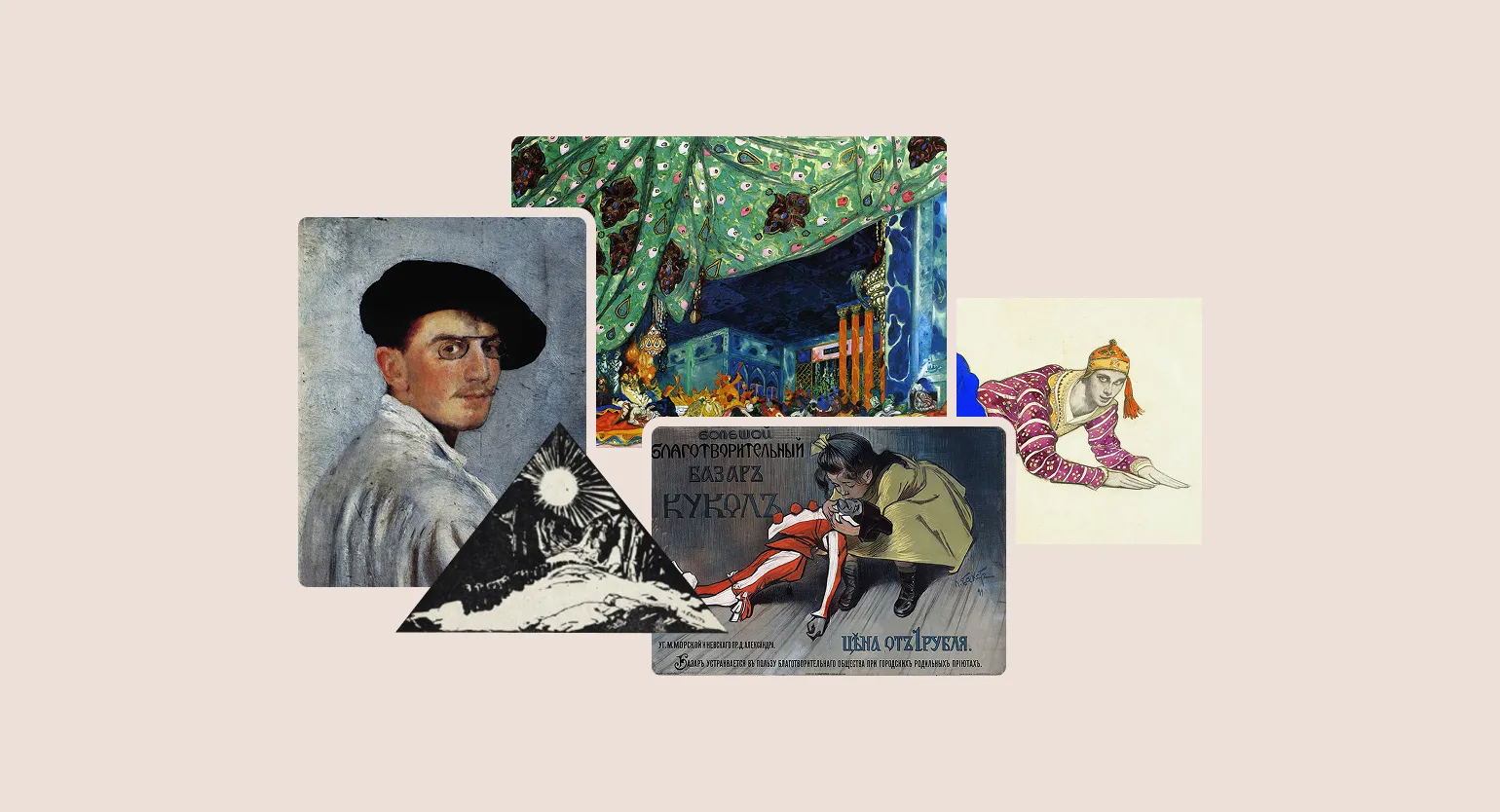
Contents:
- The Childhood and Early Years of Leon Bakst
- Leon Bakst: Contribution to Russian Art Nouveau and Art
- Innovations in theatrical costumes and sets of Leon Bakst
- The influence of Leon Bakst on modern fashion
- Leon Bakst and his contemporaries: Influence on art
- Problems with the nervous system and lung diseases: the story of Leon Bakst
- Leon Bakst in World Museums: Art and Influence

Top 4 design professions: a free course in 5 days
Find out moreThe Childhood and Early Years of Leon Bakst
Born in 1866 in Grodno, Leon Bakst is one of the key figures in the art world of his time. His real name was Leib-Chaim Izrailevich Rosenberg. Later, he adopted the pseudonym Bakst, borrowed from his grandfather's surname. At an early age, his family moved to St. Petersburg, which became the starting point for his career as an artist. Bakst became known for his unique style, which combined elements of Russian and European art. His works not only reflected the trends of his time, but also had a great influence on the development of painting and theater.
From an early age, Bakst faced tragedies. His mother gave birth to ten children, and only four of them survived to adulthood. Throughout his life, the artist remembered his older sister, who died from burns as a child. This event had a profound impact on his psyche, causing him to watch with horror the sight of children playing near samovars. This tragic childhood experience shaped his perception of the world and was reflected in his work, imbuing it with emotional depth and personal history.
Family troubles had a significant impact on Bakst's personality. His parents divorced, and he, along with his sisters and brother, faced financial difficulties. His mother and aunt supported themselves by giving lessons, while his younger brother wrote theater reviews for a local newspaper. Bakst's uncle also indulged in graphic work of all kinds, highlighting the difficult circumstances in which the family grew up. These circumstances left their mark on his creative path and contributed to the development of his artistic worldview.
In 1883, despite the lack of family support, Bakst entered the Imperial Academy of Arts, where he studied as an auditor until 1887. His work "The Lamentation of Christ" provoked a mixed reaction at the Academy: critics noted that the characters in the painting did not conform to established canons due to their pronounced Jewish features. Unfortunately, this significant painting has not survived to this day, making its study and discussion particularly important for understanding Bakst's work and his place in art history.
Inspired by the art of various eras, Bakst admired both antiquity and the masters of the European Renaissance. His deep love of nature, especially in countries such as Italy, Greece, and France, is reflected in his work. The artist skillfully combined elements of classical art with modern trends, creating unique works that continue to inspire viewers. His works are a striking example of the synthesis of cultural traditions and individual artistic vision.

Lev Bakst shares his impressions of a trip to Greece, describing a sunny spring morning and a quietly sailing crowded ship. He focuses on the majestic islands, olive groves, and classical cliffs, which became a source of profound inspiration for his work. Greece, with its unique nature and rich cultural heritage, left a vivid imprint on the artist's heart, prompting him to create new works of art reflecting the beauty of this region.
Bakst sought authentic art and strove for free expression. He strove to overcome superficial stereotypes to achieve depth in his work. In his letters, he shared his reflections on the difficulties of finding freedom in art and how great art requires considerable effort and dedication. His works reflect a desire for sincerity and true creative expression, making them important in the context of the development of artistic thought.
Bakst drew inspiration from masters such as Rembrandt and Velázquez, striving to achieve similar freedom and splendor in his works. His work vividly illustrates this philosophy and persistent pursuit of high art. Bakst's works not only delight but also demonstrate a profound understanding of painting traditions, making his contribution to art particularly significant.
In his letter to Alexandre Benois dated August 8, 1893, written in Paris, Leon Bakst shares his thoughts and experiences, reflecting the atmosphere of the time and his creative nature. This letter is an important part of their correspondence, allowing for a deeper understanding not only of Bakst's personality, but also of the artistic movements that were forming at the end of the 19th century. In this context, the letter can be considered a valuable source of information about the life and work of one of the outstanding artists of his time.
Read also:
Style: A Visual Guide to Eras
Visual style is a method of exploring and presenting historical eras through the prism of visual images. It allows for a deeper understanding of the cultural, social, and artistic aspects of different periods. Each era has its own unique characteristics, which are reflected in architecture, painting, fashion, and other art forms.
This guide offers the attentive viewer the opportunity to trace the evolution of style, from ancient civilizations to the modern era. Each era is characterized by distinctive visual elements that not only define its uniqueness but also influence subsequent generations.
Studying visual style helps us understand how society's tastes and preferences have changed, as well as how historical events have shaped cultural trends. Visual images become an important tool for analyzing and interpreting historical processes.
Thus, this visual guide to eras serves not only as an educational resource but also as inspiration for those interested in art and history. He opens new horizons for understanding the influence of style on culture and society as a whole.
Léon Bakst: Contribution to Russian Art Nouveau and Art
Léon Bakst, the renowned illustrator and artist, had a significant influence on the development of Russian Art Nouveau. His work reflects unique ideas and aesthetic concepts that arose from close interactions with prominent artists such as Sergei Diaghilev and Alexandre Benois. Bakst became a key figure in the world of theater and ballet, contributing to the creation of stage costumes and sets, which made his work particularly sought after in the early 20th century. His artistic style, combining elements of Symbolism and Art Nouveau, continues to inspire generations of artists and researchers.
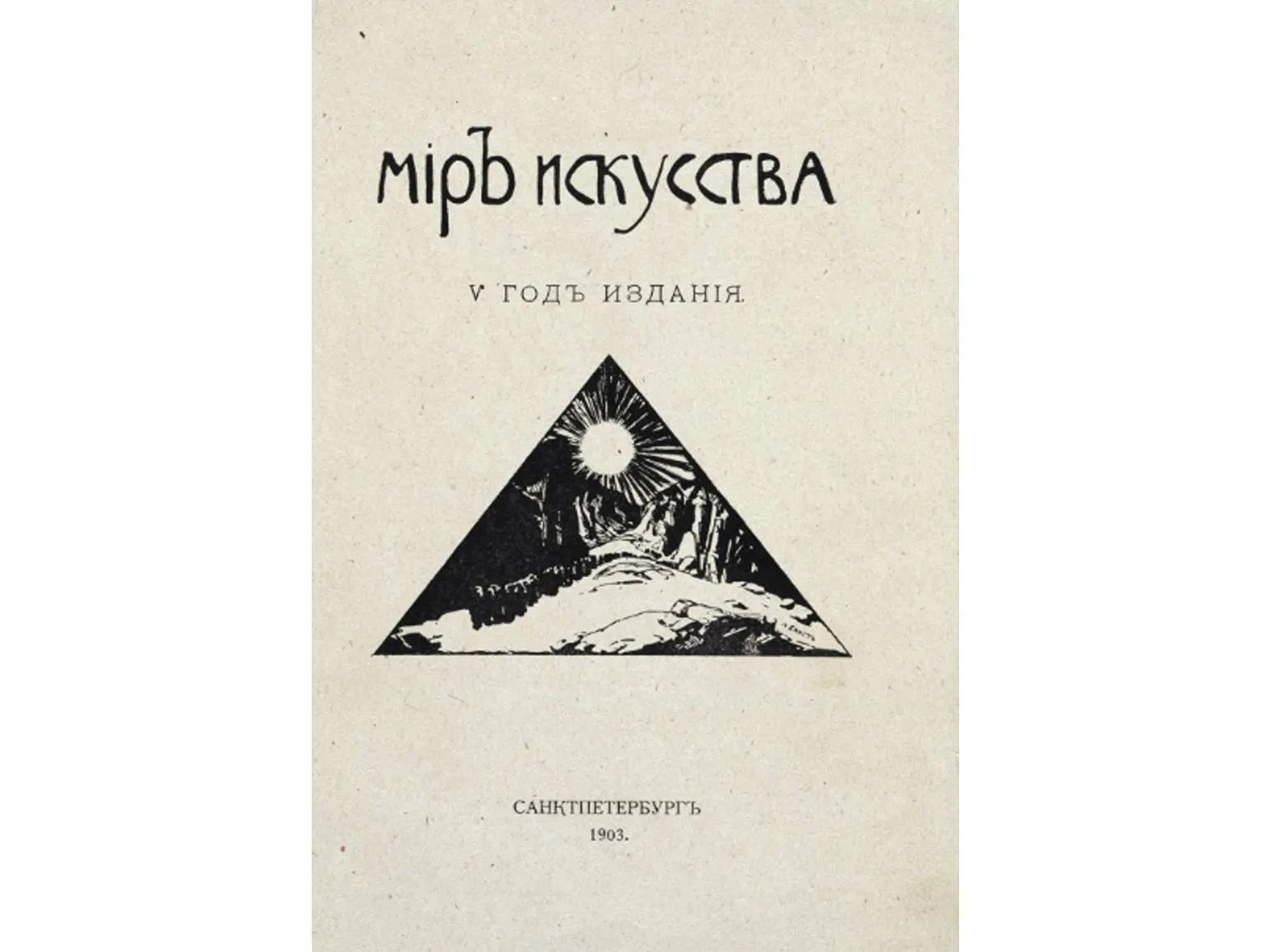
In 1898, the artist Leon Bakst received a commission to design a symbol for the Symbolist magazine "World of Art", which marked his active involvement in the cultural life of the era. In 1903, he became the editor-in-chief of this significant publication, which allowed him to significantly influence the development of Symbolism and art in general. Creating a symbol for the "World of Art" magazine was a significant step in his career and contributed to the formation of a new artistic direction.
Bakst's creative legacy includes numerous illustrations, encompassing works by both contemporary writers and literary classics. His collaborations with such prominent authors as Lermontov, Gogol, and Gippius make his work significant in the context of literary illustration. Bakst masterfully conveys the atmosphere and ideas of his works, highlighting his unique style and deep understanding of literature.
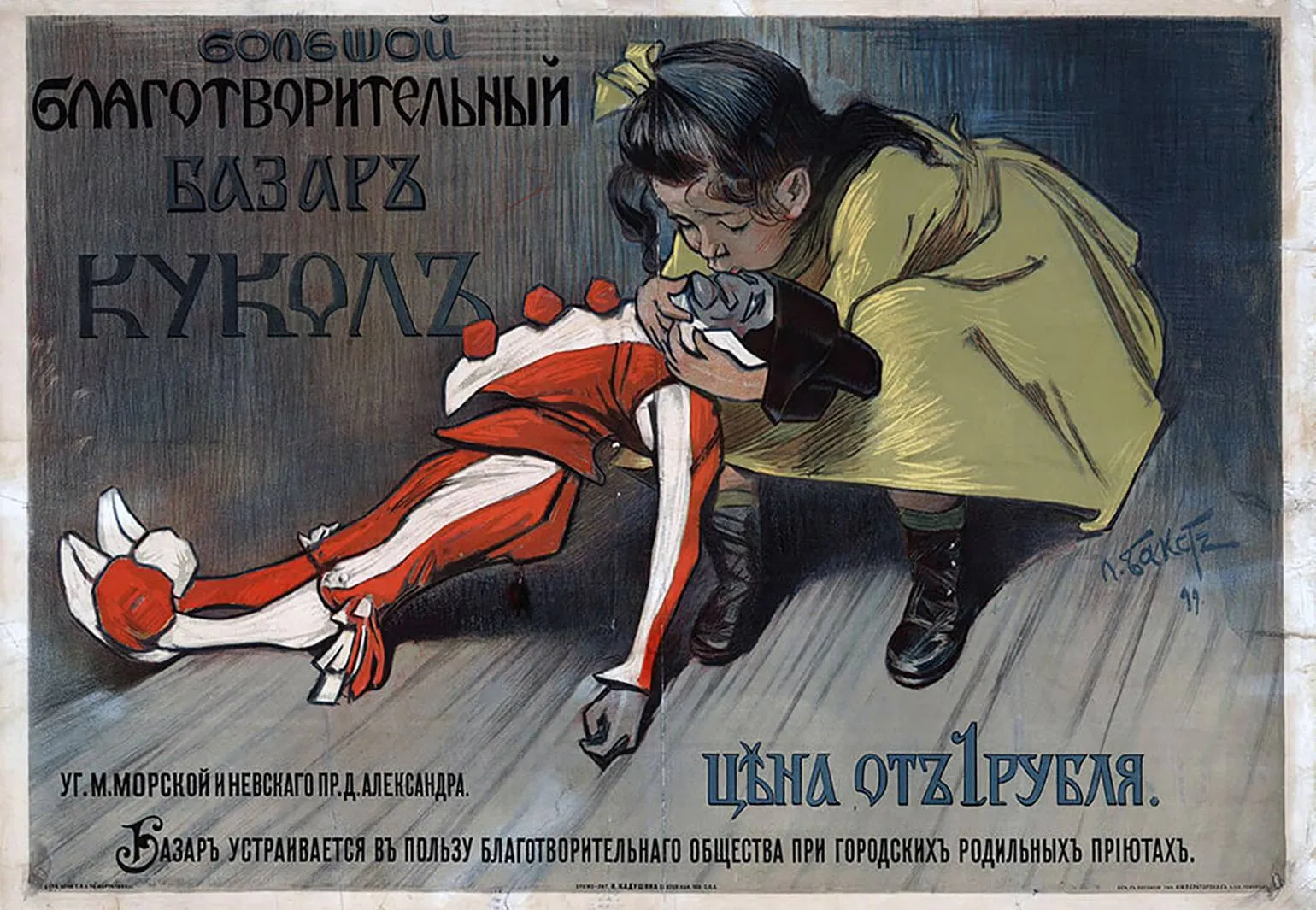
Bakst's style is distinguished by its lightness, refined fonts, and floral motifs, lending his work a unique character. His oeuvre encompasses not only works of art but also advertising materials and portraits of significant personalities of his time. Bakst skillfully combined elements of art and design, which makes his works relevant and in demand in the modern world.
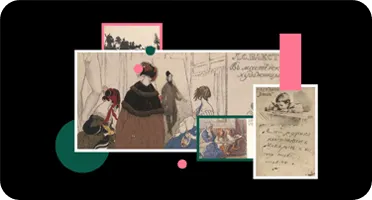
Illustrations to the works of Nikolai Gogol, especially to the story "The Nose", have become iconic in the art world and have received critical acclaim. One striking example is the work created in 1904, which is now in the Tretyakov Gallery. These illustrations not only visualize literary images, but also deepen the understanding of Gogol's works, making them more accessible to the modern viewer.
In addition to creating illustrations, Bakst also designed vignettes and covers for various publications, including the renowned magazine "Russian Ballet." His works remain important for the analysis of contemporary design and typography, continuing to inspire designers and artists. Studying Bakst's work opens new horizons in understanding visual culture and aesthetics.
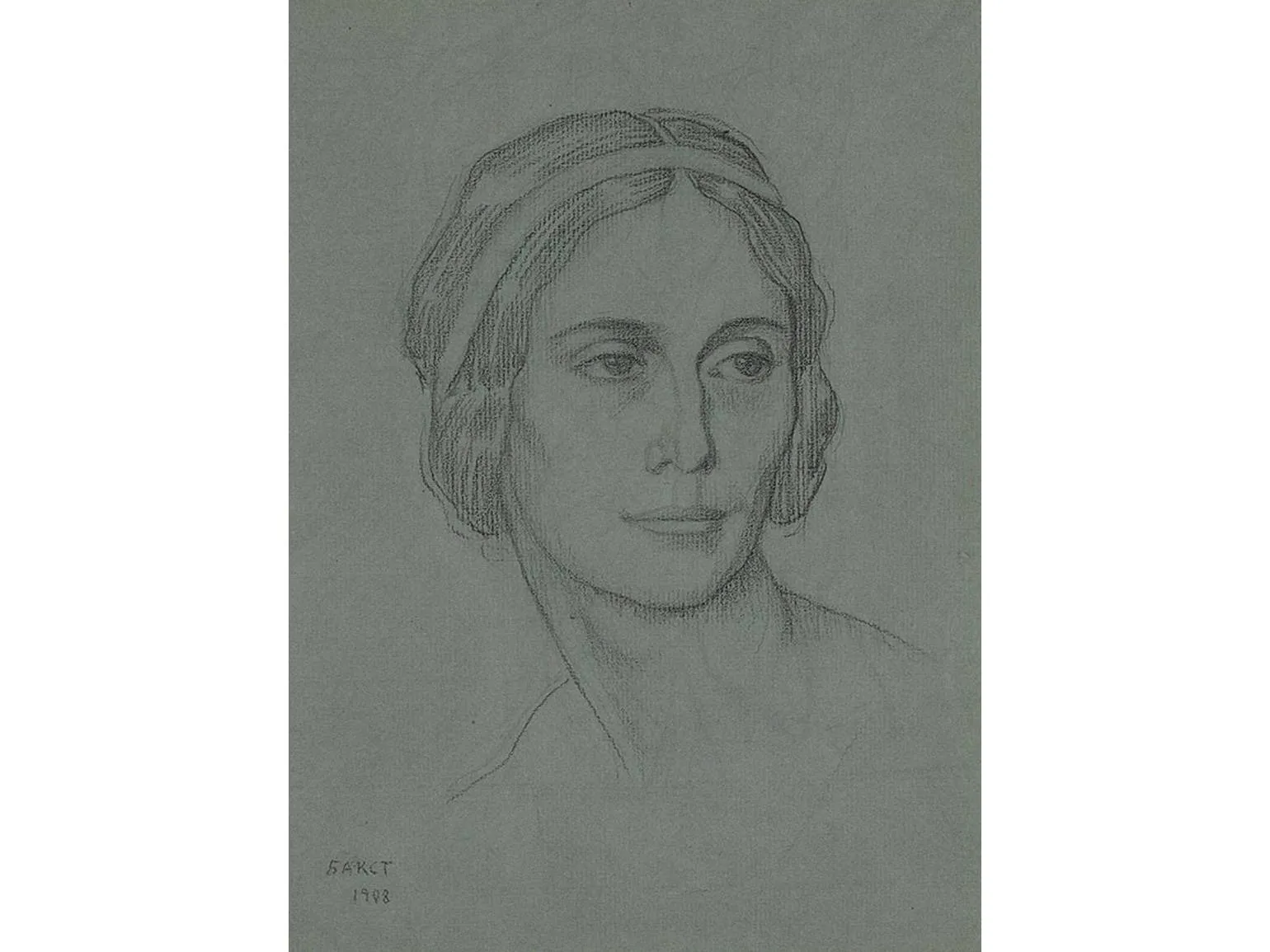
Bakst created portraits of famous people, including the ballerina Anna Pavlova and the impresario Sergei Diaghilev. In his works, he masterfully captured various aspects of their lives and work, emphasizing the individuality and uniqueness of each of them. These portraits not only demonstrate Bakst's artistic mastery but also provide a deeper understanding of the history of ballet and theater of the early 20th century.
Bakst, thanks to his significant contribution to art, has become an icon of Russian Art Nouveau. His work left a profound legacy that continues to inspire contemporary artists and designers. Bakst's influence can be seen across various fields of art, including painting, graphics, and theater design. His unique style and innovative approach to form and color resonate in the work of many modern masters, confirming the relevance of his ideas and aesthetics.
Explore the history of Russian Art Nouveau and its influence on contemporary art. This style, which emerged in the late 19th and early 20th centuries, left a significant mark on artistic culture. Russian Art Nouveau was distinguished by a unique combination of traditional elements and innovative approaches, making it an important part of artistic heritage. Understanding its characteristics and influence on contemporary artistic trends allows for a deeper appreciation of the development of creative movements and their relevance today.
Innovations in theatrical costumes and sets of Leon Bakst
Léon Bakst, an outstanding illustrator of the early 20th century, had a significant impact on theatrical art through his unique costumes and sets. His works, including costumes for the productions of Cleopatra (1909) and Scheherazade (1910), demonstrate a harmonious combination of oriental motifs and vibrant colors. These elements stand out against the backdrop of traditional Western theatrical forms, making Bakst's work particularly significant in the history of theater. His innovative approach to costume design not only enriched the visuals of his performances but also inspired many contemporary artists and designers.
Lévan Bakst's set designs became pivotal in the history of theatrical art, as he was the first to focus on both female and male characters. His costumes departed significantly from traditional tutus and dull colors, offering audiences vibrant, modern designs, including elements of nudity that were perceived not as vulgarity, but as a bold artistic device. Bakst was able to transform theatrical props into vivid images, which significantly influenced the development of scenography and the aesthetics of the theater as a whole.
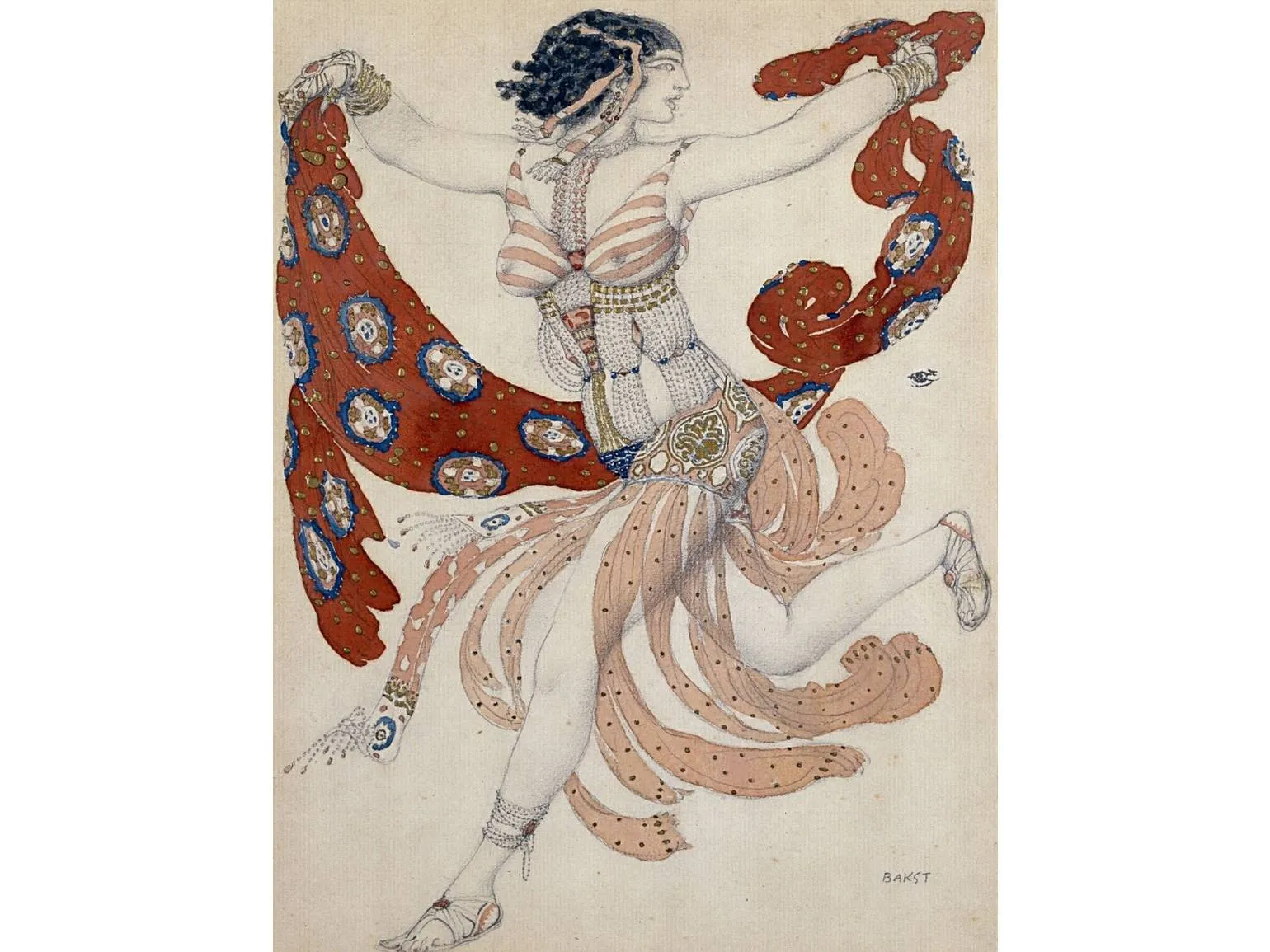
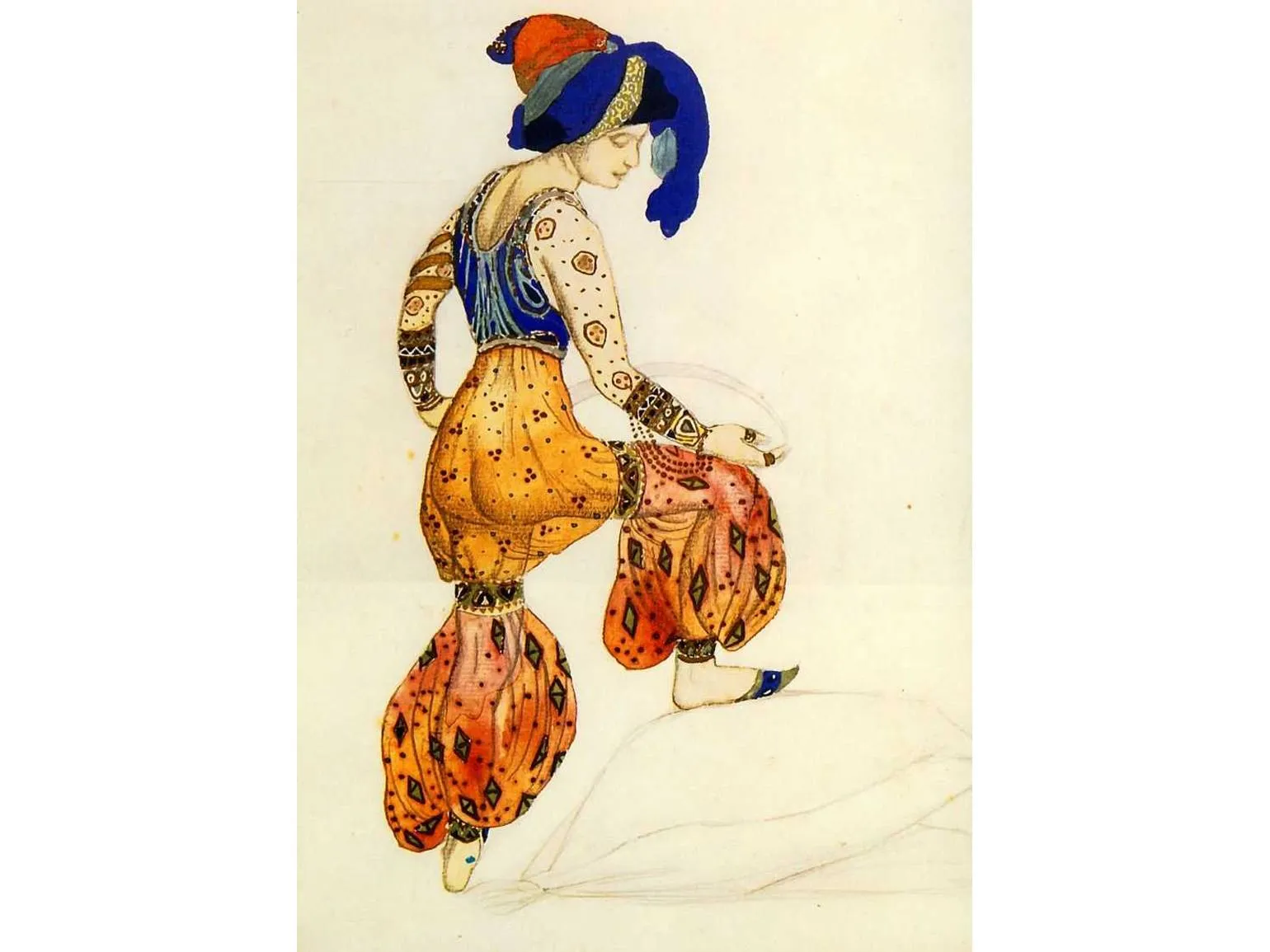
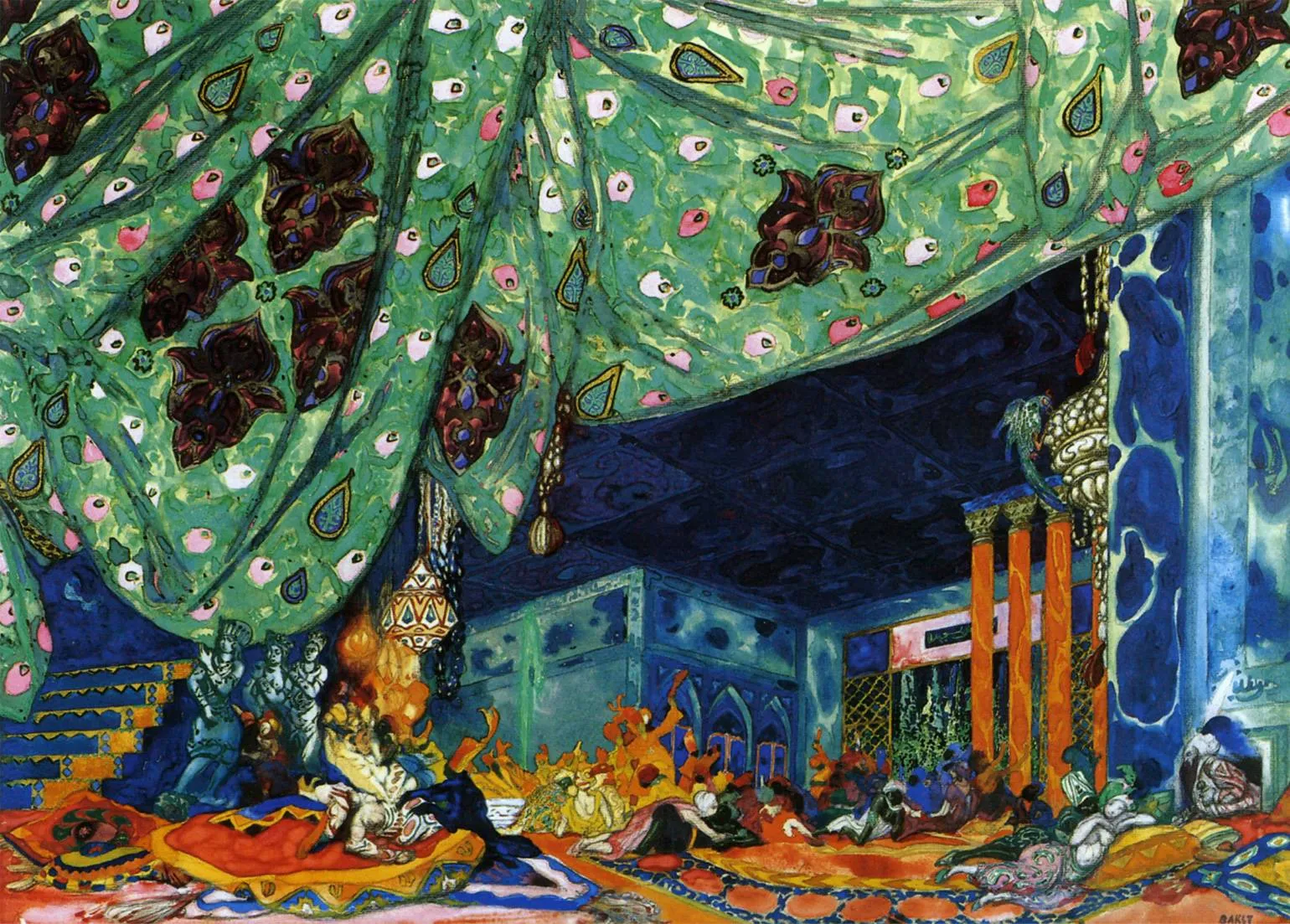
Bakst did not limit himself to creating costumes; he also designed sets that were significantly different from traditional flat images. By introducing multi-layered and spatial structures, he achieved depth and volume, radically changing the approach to theater design. This innovation had a significant influence on subsequent generations of set designers and became the foundation for new ideas in theater design. Bakst's works continue to inspire contemporary artists and designers, emphasizing the importance of innovative solutions in the art of scenography.
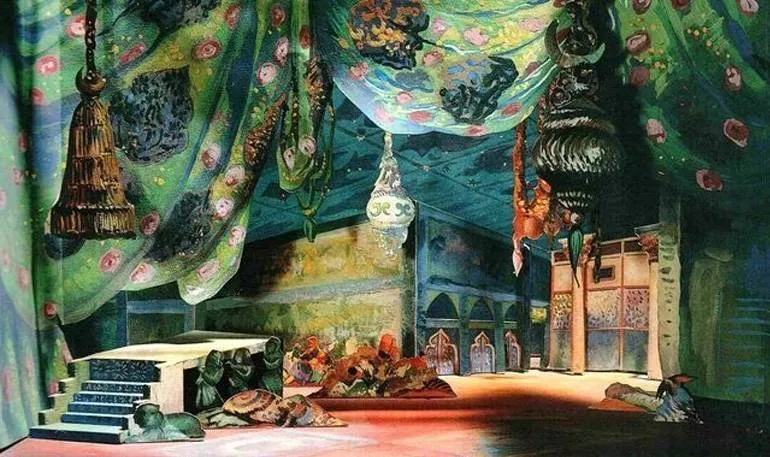
The images created by Bakst were distinguished by meticulous attention to detail. Hairstyles played a significant role, emphasizing the costumes and creating a unique atmosphere. Bakst's works impressed audiences both in Russia and abroad, creating vivid visual impressions and memorable images.
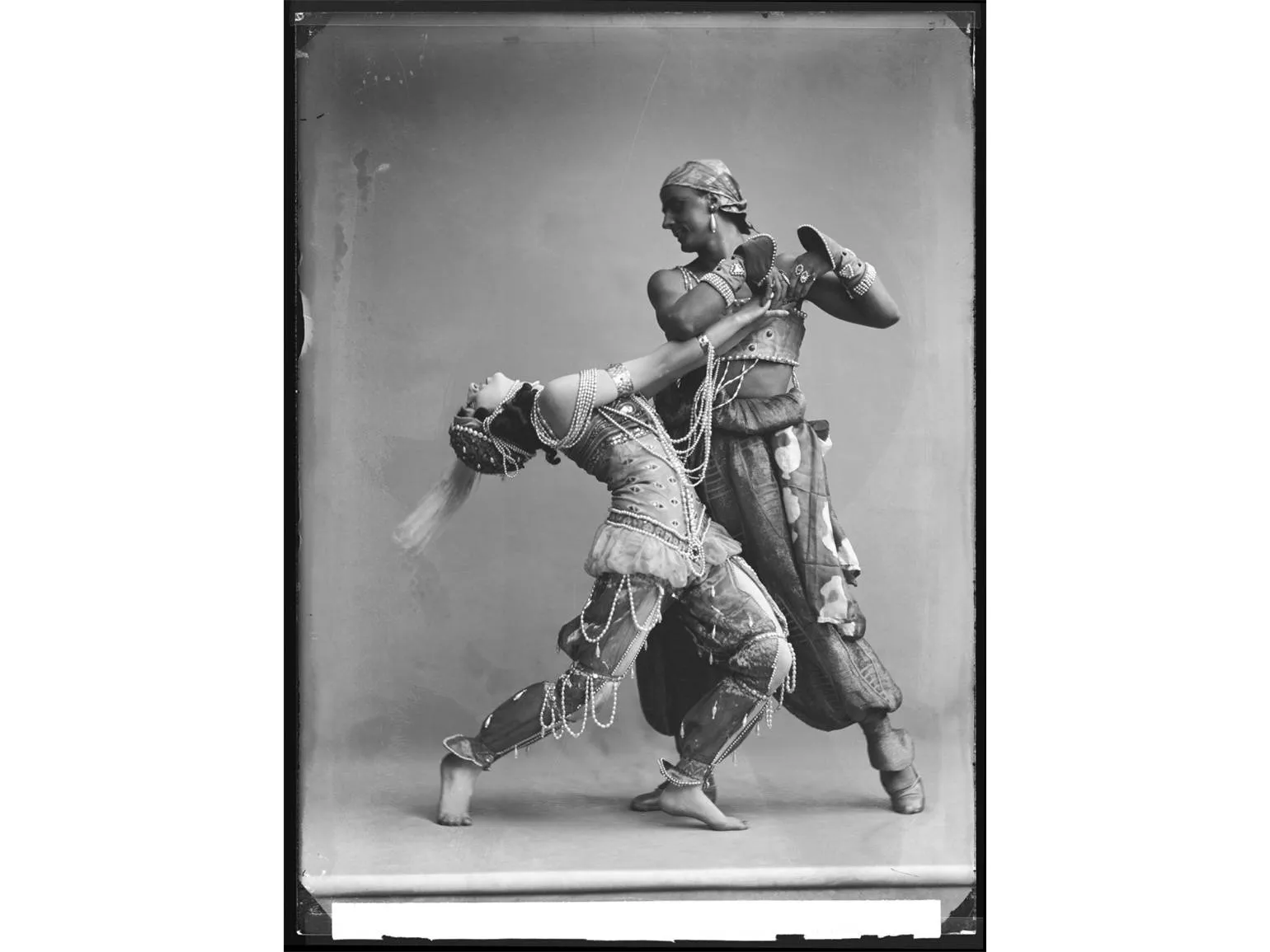
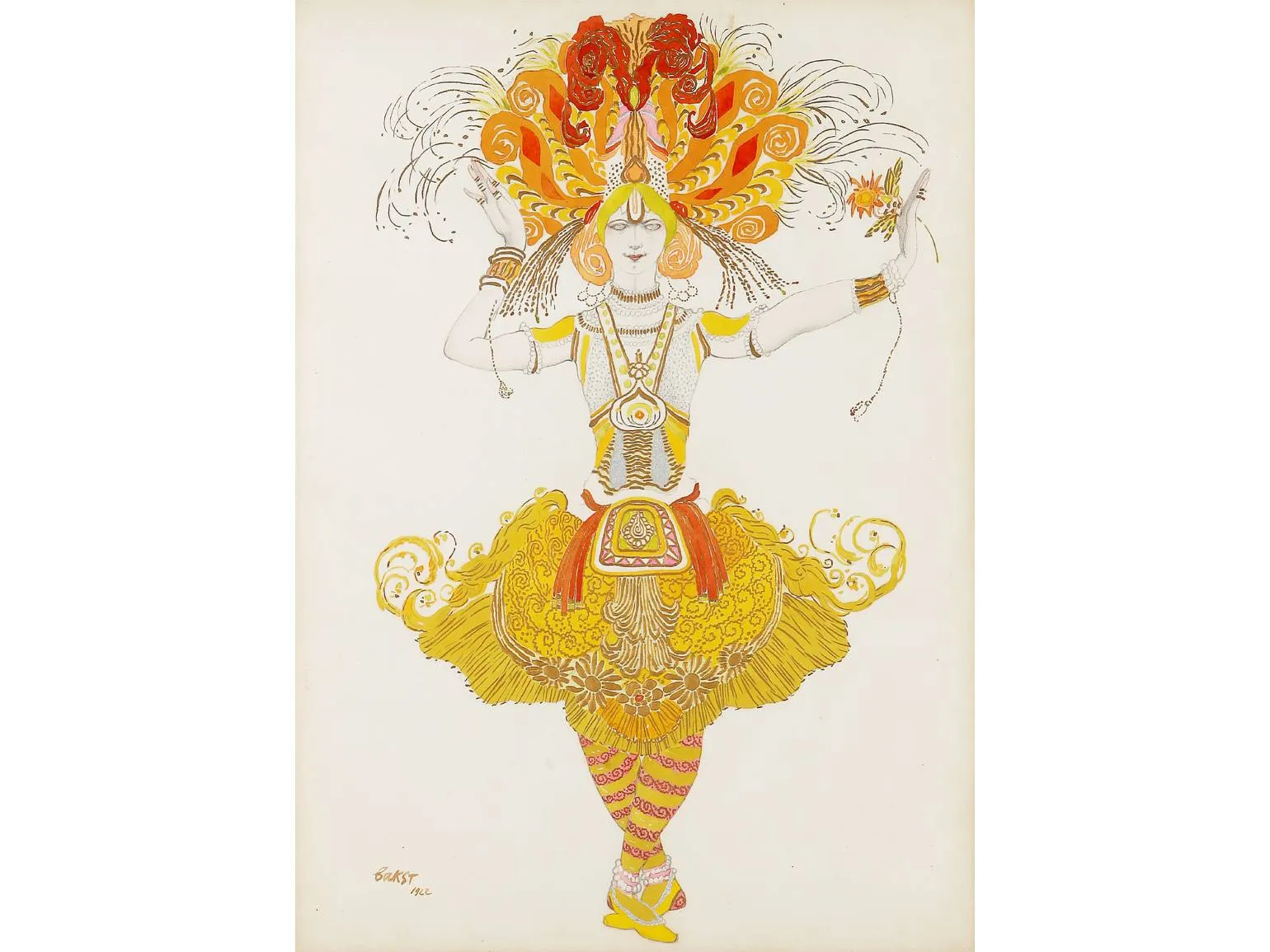
Bakst's works were exhibited not only in St. Petersburg, but also in Paris, as well as in North and South America, receiving positive reviews from critics and audiences. In his letters, he shared his impressions of how his costumes created a real sensation on the stages of France, becoming the subject of discussion among famous artists of the time, including Van Gogh and Bonnard. These successes confirm Bakst's significance as an influential figure in the arts, who left a noticeable mark on world culture.
In one of his letters to his wife, Bakst expressed his emotions about the unexpected triumph: "Such a resounding success, I confess, I did not expect." This statement underscores his significant influence on theatrical art and the high recognition he received among his colleagues. Bakst became an iconic figure who played a vital role in the development of theater, and his work continues to inspire many contemporary artists and theater professionals.
Bakst's costumes and sets were not just separate elements, but a harmonious whole, helping to fully immerse the audience in the atmosphere of the performance. His works changed the perception of theater, giving it new meaning and depth. Bakst became a source of inspiration for future generations of artists and theater professionals, setting high standards in the fields of stage design and visual art.
The Influence of Leon Bakst on Modern Fashion
Léon Bakst, the famous artist and designer, played a key role in shaping the fashion of the early 20th century. His costumes for the Russian Seasons, especially after the success of the ballet Scheherazade in 1910, became a truly revolutionary step in the world of fashion. Bakst's works combined elements of Russian folklore and contemporary art, creating a unique style that had a profound impact on the theater and fashion industries. With his innovative approach to costume design, Bakst not only changed the concept of theatrical clothing but also inspired designers to create new trends in fashion. Bakst's work had a significant impact on the fashion world, inspiring numerous couturiers and fashion houses who sought to acquire his unique designs. Bakst's clothes stood out for their freshness and originality, attracting the attention of many designers eager to collaborate with this talented artist. The influence of the Russian Ballets Russes on Paris had a profound impact on the style of European women, who began to adopt elements of Bakst's costumes. This was evident in trends such as short hairstyles, oriental motifs, and bright colors. Thus, Bakst became not only an artist, but also a key figure in the development of 20th-century fashion, changing ideas about style and aesthetics.

Bakst's influence on Paul Poiret was significant. Although Poiret was famous as an independent couturier, his name is often associated with fashion houses, like other famous designers. He actively used Orientalist motifs inspired by Scheherazade, including harem pants, tunics, and turbans. Poiret also commissioned sketches and color palettes from Bakst, highlighting their creative collaboration and the influence of Eastern aesthetics on early 20th-century fashion. This synergy not only enriched Poiret's style but also contributed to the formation of new trends in the world of haute couture. The House of Jeanne Paquin drew inspiration from the renowned artist Léon Bakst. Paquin, one of the leading fashion designers of her time, commissioned Bakst to create original fabric designs and decorative elements that embodied his unique style. The success of Sergei Diaghilev's ballets significantly contributed to the popularity of her atelier, making it the center of the fashion industry of the time. Paquin's collaboration with Bakst demonstrated how art and fashion could intertwine, creating new trends and inspiring designers around the world.
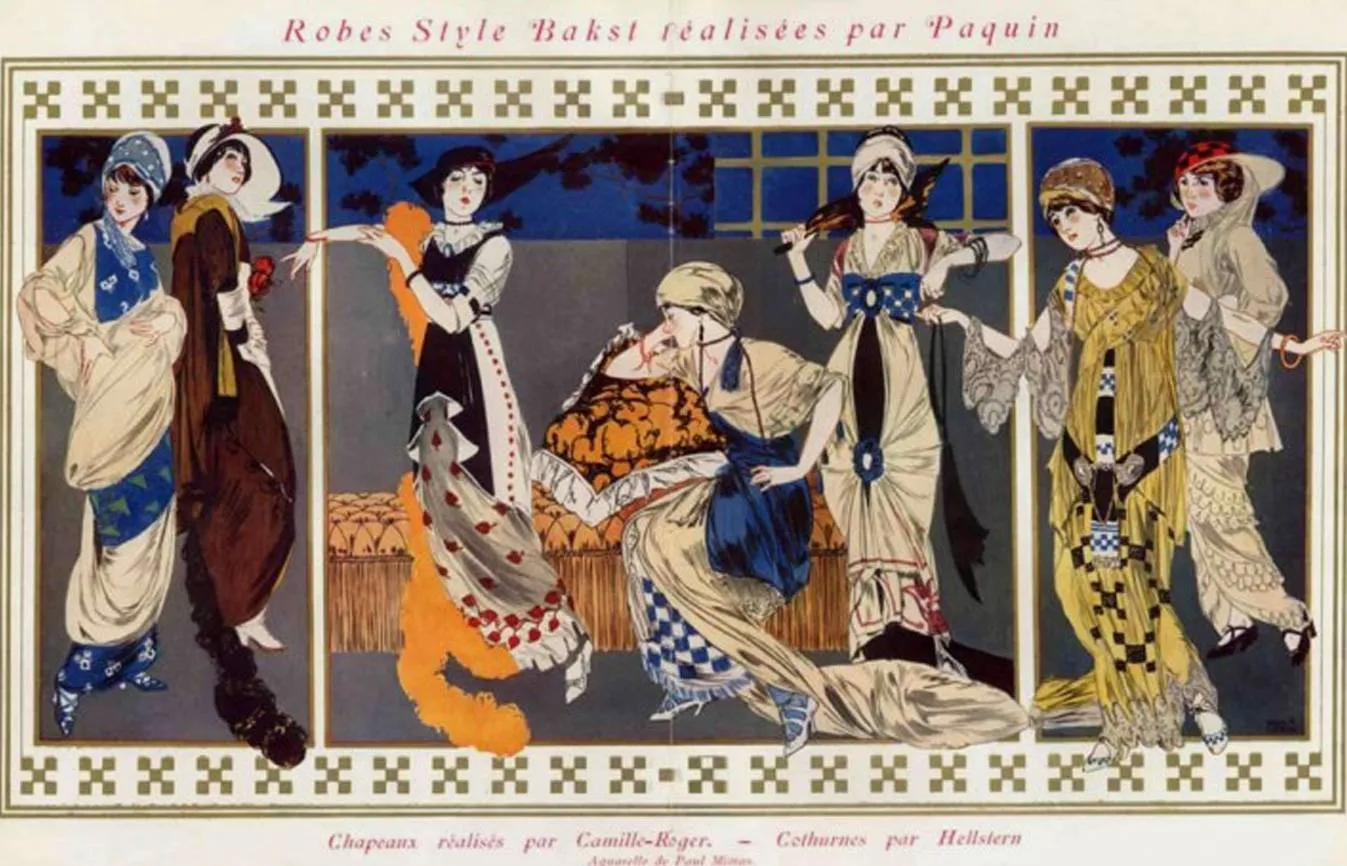
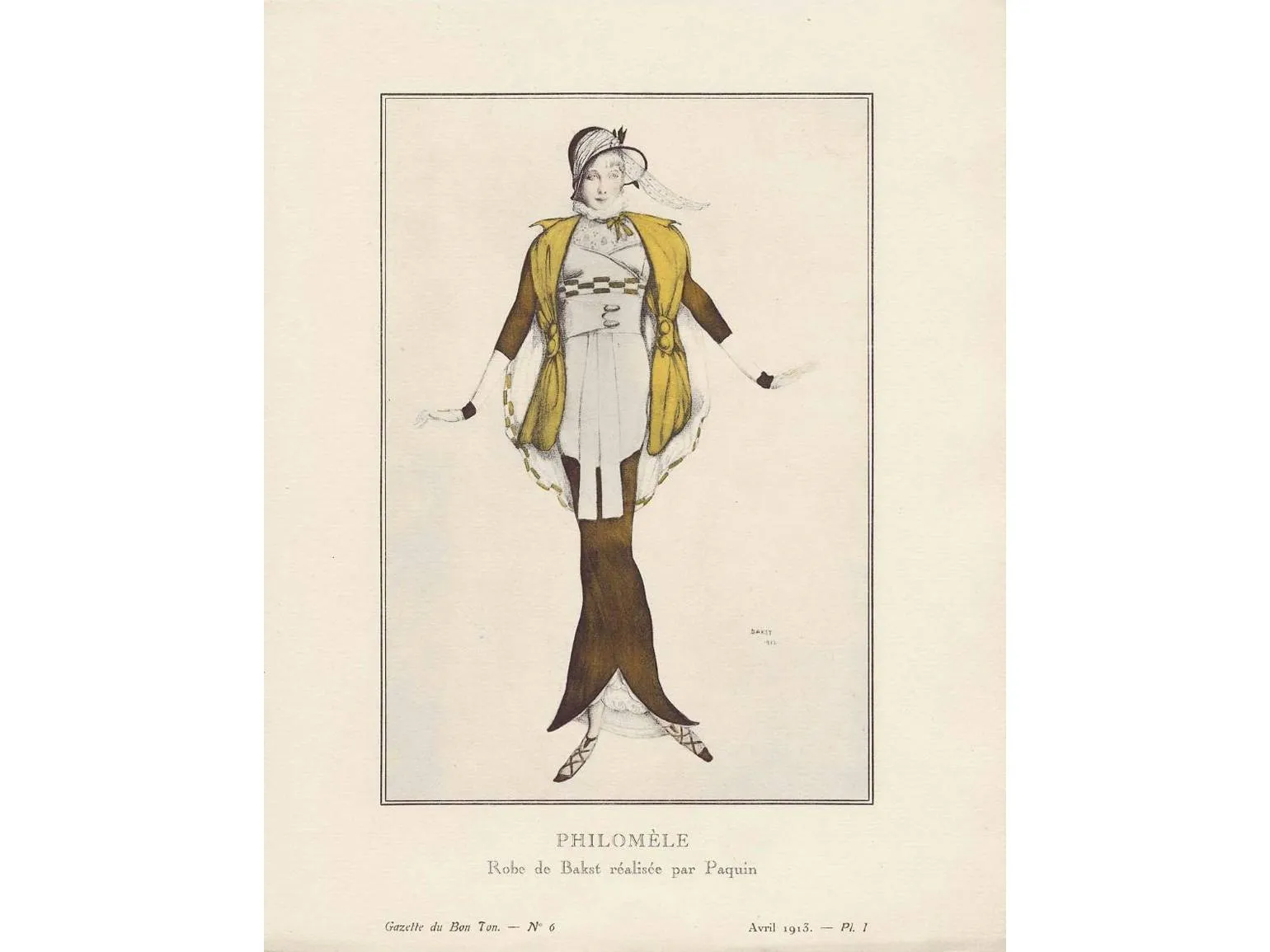
Bakst became an object of interest for famous designers, including Jacques Doucet. Doucet not only created unique clothes, but was also an active collector of modern art. His collection includes several works by Bakst, underscoring the artist's importance in the worlds of fashion and art.
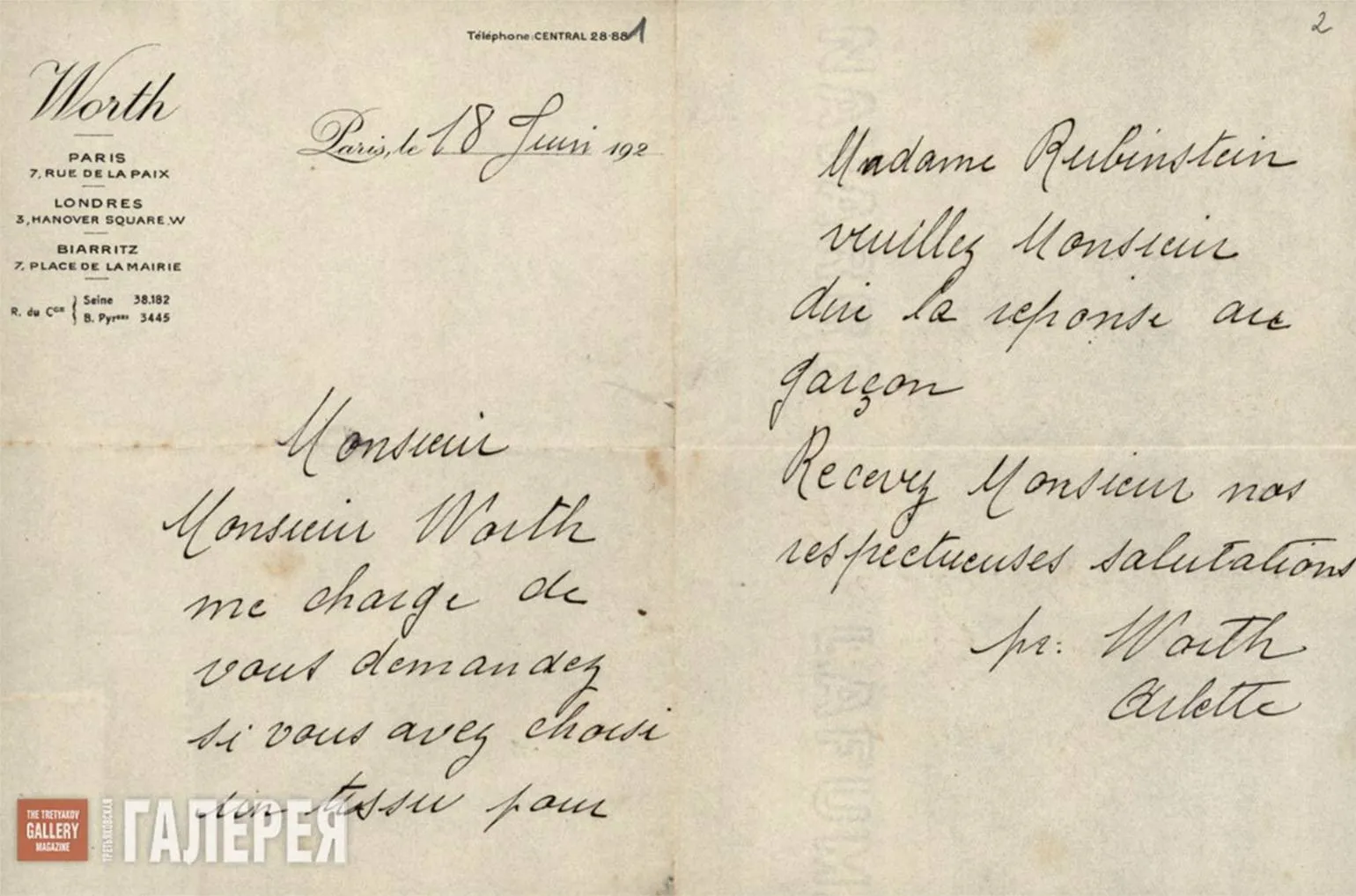
Bakst's work continued to inspire such outstanding artists as Dom Worth, Jeanne Lanvin, and later Coco Chanel. Their interaction with his style manifested itself in his reinterpretation of the concept of "Russian exoticism" and the use of vibrant color combinations, which Bakst successfully introduced into the fashion industry. His influence on fashion remains significant and relevant, shaping aesthetic trends and new approaches in clothing design. As a result, Bakst's works not only enriched the fashion of his time, but also left an indelible mark on the history of fashion design.
Bakst's influence on world fashion became a subject of discussion in various European publications. In particular, The World Magazine of September 28, 1913, emphasized his noticeable impact on spring fashion collections. Bakst, as an artist and designer, made a significant contribution to the formation of the aesthetics of his time, which was reflected in changing trends in fashion.
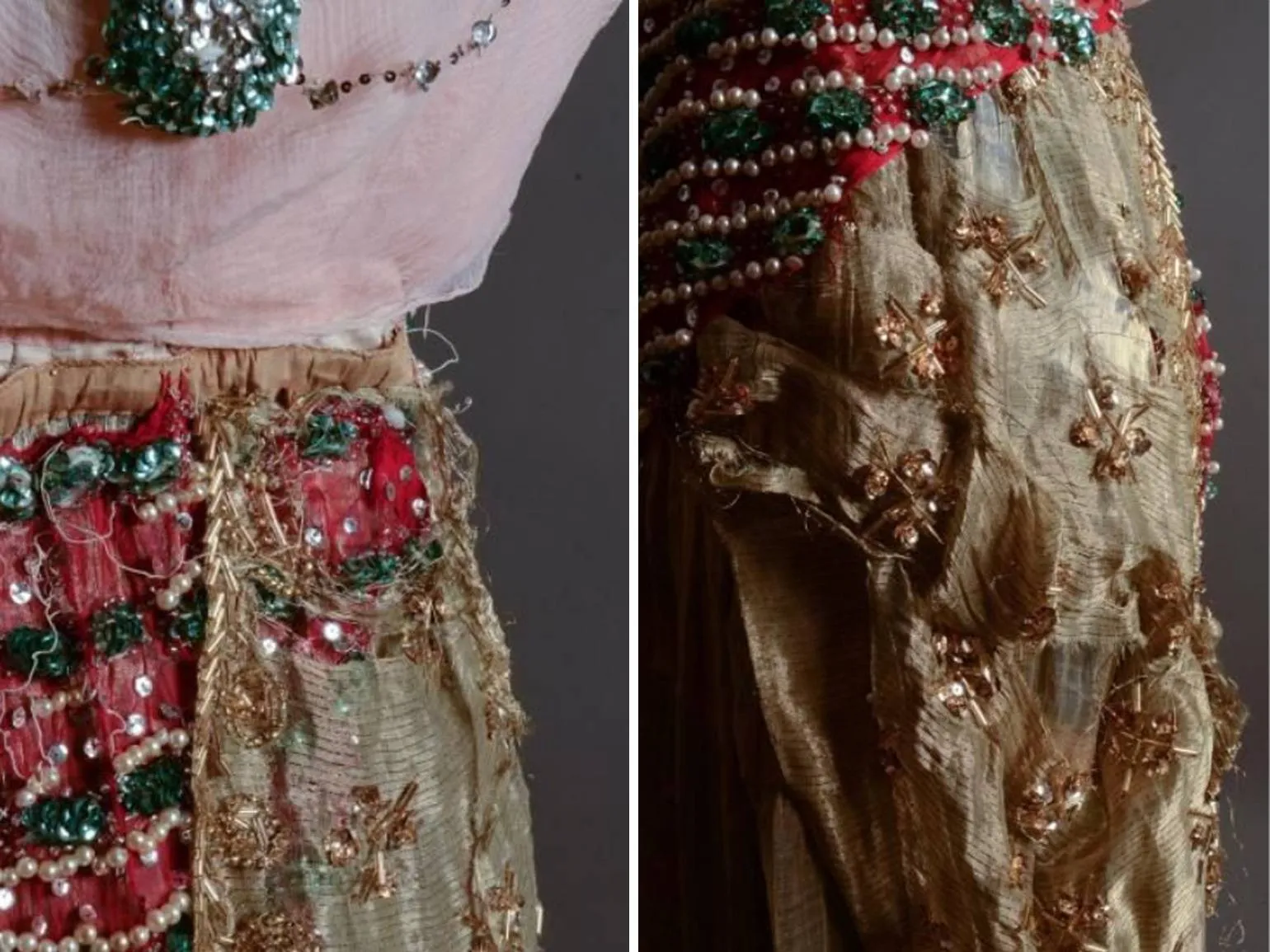
Léon Bakst noted in a letter to his wife on March 17, 1903: "Mekka presented his spring fashion suits, but, frankly, I have no time. If he insists, I will create autumn models for him. We will come up with something together, won't we?" This statement illustrates Bakst's creative approach to fashion and his willingness to work on new images. In this context, we see how the designer combined his ideas with his clients' requests, which underscores his professionalism and desire for innovation in the world of fashion.
Louis Réau, in his article about Bakst, published in 1927, noted that Bakst was the first Russian artist to have a significant influence on Western culture. His work and innovative approaches opened new horizons for interaction between Russian and European art, promoting cultural exchange and mutual understanding.
Léon Bakst and His Contemporaries: Influence on Art
Art history often does not preserve the names of artists during their lifetime, but Léon Bakst was a notable exception. His talent was recognized both in Russia and abroad – in Europe and the United States. This underscores the significance of his work and its influence on his contemporaries. Bakst not only left a bright mark on art but also became a symbol of cultural exchange between Russia and the West, which makes him a particularly important figure for the study of 20th-century art history.
Few people know that Bakst was not only a gifted artist but also possessed an outstanding mind. He avoided the use of loud metaphors, despite their prevalence in that era. In her letters, Zinaida Gippius emphasized that Bakst impressed with his depth of thought and intellectual abilities, which were rare among the artistic elite at the time.
Zinaida Gippius was an outstanding Russian writer and poet, one of the most prominent figures of the Silver Age. Her work spans various genres, including poetry, prose, and drama. Gippius was not only a talented author but also an active participant in the literary life of her time. She closely associated with other renowned writers, such as Andrei Bely and Maxim Gorky, which contributed to the development of her artistic world.
Zinaida Gippius is known for her profound psychological portraits and philosophical reflections on life, love, and art. Her works often explore themes of human passions and the inner world, making them relevant today. Gippius was also one of the first women in Russian literature to address issues of gender identity and social justice.
Despite difficult historical circumstances, Gippius continued to create and left behind a rich literary legacy that continues to inspire new generations of readers and writers. Her work remains relevant and in demand, testifying to its enduring influence on Russian literature.
Before his death, Bakst discussed the production of The Martyrdom of Saint Sebastian with the renowned dancer Ida Rubinstein. Despite her independent nature, she openly expressed admiration for Bakst, declaring: "I love you with all my heart and admire you as the greatest artist of our time!" This statement underscores not only his outstanding talent but also the strength of his personality, which left a significant mark on the world of art. Bakst's work, his unique style, and his influence on modern ballet continue to inspire new achievements.
Ida Rubinstein is a prominent figure in the world of art and culture, known for her multifaceted work as an actress, dancer, and choreographer. Born in 1885 in Russia, she quickly gained popularity thanks to her unique performances and unconventional approach to art. Rubinstein was one of the first to introduce elements of modern dance into ballet, which made her work especially significant.
Throughout her career, Ida Rubinstein collaborated with renowned composers and artists, which contributed to the creation of unforgettable theatrical productions. Her talent and charisma attracted the attention of audiences, and her performances left a deep mark on the history of the theater. Rubinstein actively performed on the stages of Europe and America, which contributed to her international fame.
Her contribution to the development of dance art cannot be underestimated. Ida Rubinstein became a symbol of creative freedom and innovation, inspiring future generations of artists. Her legacy lives on today, and interest in her work continues unabated.
Bakst expressed deep admiration for the work of his contemporaries, especially innovators such as Mikhail Vrubel. He noted that he valued Vrubel not only for his paintings, but also for the fact that the artist always remained true to his inner voice. This desire for self-expression and originality became an important aspect of the art of the time, inspiring many followers. Bakst emphasized that it was this sincerity in creativity that makes Vrubel's work truly unique and significant in the context of the artistic movement.
Léon Bakst is an outstanding artist and theater designer, known for his contribution to early 20th-century art. He was born in 1866 in St. Petersburg and became one of the key figures of the Russian avant-garde. Bakst became famous for his vibrant and expressive theatrical productions, as well as his magnificent costumes and sets for ballets and operas. His works were distinguished by bold colors and original forms, earning him a significant place in the history of theatrical art.
In addition to his theatrical work, Léon Bakst also dabbled in painting and graphic design, creating works that reflected his unique style and understanding of beauty. Bakst's influence is felt in contemporary art, and his works continue to inspire artists and designers. A key aspect of his work is the interplay of various artistic styles, making his work relevant to this day. Bakst left a noticeable mark on the history of art, and his legacy continues to generate interest among researchers and art lovers.
Read more:
Mikhail Vrubel: the art of multi-colored crystals in painting
Mikhail Vrubel is an outstanding Russian artist, known for his unique style and vibrant colors that evoke the beauty of crystals. His paintings combine elements of Symbolism and Art Nouveau, creating captivating images imbued with profound meaning. Vrubel's works are distinguished by a rich palette and expressive forms that transport the viewer to a world of fantasy and dreams.
Crystals, as symbols of versatility and change, are an important element in Vrubel's work. He masterfully conveys their diversity, using color and light to create a sense of mystery. In his paintings, one can see how the interplay of light and shadow creates unique structures comparable to natural minerals.
Vrubel also draws attention to the human inner world, reflecting emotions and experiences through the prism of crystalline aesthetics. His works provoke reflection on the eternal themes of life, love, and suffering, imbuing the painting with a special depth and significance.
Thus, Mikhail Vrubel's work is not only vibrant colors and crystalline forms, but also profound philosophical ideas that remain relevant to this day.
Bakst emphasized the unique atmosphere among outstanding masters such as Somov and Lalique. He noted that in their company, he felt part of the aristocratic world of true artists. This sense of unity and depth in art was rare and valuable to him.
Léon Bakst is an outstanding Russian artist and set designer, known for his contribution to 20th-century art. Born in 1866, Bakst became one of the leading representatives of the Russian avant-garde and symbolism. His works are distinguished by vibrant colors, dynamic forms, and original compositions.
Bakst also became renowned as a talented theatrical designer, creating sets and costumes for many renowned ballets, including the Ballets Russes in Paris. His collaborations with such artists as Sergei Diaghilev played a key role in popularizing Russian ballet abroad.
The influence of Eastern culture is clearly visible in Bakst's works, making his work unique and memorable. His paintings and set designs continue to inspire contemporary artists and art connoisseurs, confirming his status as a key figure in the history of Russian art.
For me, Serov will always remain a guide and a reminder of the importance of staying on the chosen path.
Léon Bakst was a prominent Russian artist, set designer, and illustrator, born in 1866. He became a key figure in the art world of the early 20th century, known for his vibrant and expressive works. Bakst was one of the founders and leading exponents of Russian ballet, particularly in collaboration with Diaghilev. His work is distinguished by bold colors, dynamic compositions, and a profound understanding of theatrical art. His most significant works include sets and costumes for ballets such as Scheherazade and Petrushka. Léon Bakst had a significant influence on the development of stage design and continues to inspire artists and theatergoers worldwide. His legacy remains relevant and continues to be studied in the context of Russian and world art.

Read also:
Ten Famous Paintings by Valentin Serov You Must Know
Valentin Serov is one of the most significant artists of Russian painting, whose works have left a deep mark on art. His paintings reflect a unique style and mastery, which makes them a must-see. This review presents ten works by Serov that are iconic and important for understanding his work and European art in general. Each of these paintings carries not only artistic value but also historical significance, allowing for a deeper understanding of the cultural context of the time. Getting acquainted with Serov's works will enrich your perception of Russian painting and inspire further research into his legacy.
Nervous System Problems and Lung Diseases: The Story of Leon Bakst
Léon Bakst, a talented artist and set designer, often experienced emotional distress. In 1905, seeking relief from his nervous ailments, he went to Baden-Baden for treatment. This resort became a place where Bakst could not only restore his peace of mind but also continue his creative work, which later influenced his art.
In his letters to his wife, Bakst shared details of his visits to the doctor, who carefully monitored his regimen. He wrote: "Dear Lyuba, I am living according to the schedule set by the doctor. He considers me impressionable and nervous, and I completely agree with this. The doctor strongly recommends that I follow a diet, do gymnastics at Friedrichsbade, and take baths and rubdowns every morning."
This strict program was an important step in his quest to restore his health. However, over time, it became obvious that internal anxieties and stress continued to negatively affect the artist's condition.
In 1918, the artist Leon Bakst experienced a great loss: his sister Rosalia, a famous writer and translator, died of starvation in St. Petersburg. This tragedy had a significant impact on his emotional state and creative process, undermining his spiritual strength and inspiration.
After the loss of Rosalia, Bakst made attempts to bring his loved ones from Russia to France, hoping to ease his mental pain. The arrival of his family became a source of comfort for him and allowed him to restore some of his emotional balance. He continued to support Rosalia's children until the end of his days, thereby demonstrating his devotion and care for his family.
In July 1924, after reaching an agreement with the publisher Zinovy Grzhebin, Bakst suffered a nervous breakdown. Doctors urged him to ensure complete calm and avoid stressful situations. Despite some improvement in his health, he caught a cold during a walk, which led to pneumonia.
On December 27, 1924, the world lost an outstanding artist. In the last months of his life, Bakst was actively engaged in creating sketches for theatrical productions both in Europe and in the United States. His contribution to art, especially theater design, left a significant mark on world culture. Bakst continued to inspire many artists and theater figures, even at the end of his life.
According to the memoirs of contemporaries and art historians, one of the artist's final projects was costumes for ballet and opera performances. Among his works, costumes for the "Russian Seasons" (Ballets Russes) and other theater companies stand out. These costumes not only reflect the author's unique style and artistic vision, but also make a significant contribution to the development of theatrical art of their time.
Bakst continued to actively accept commissions from theaters in Paris and London until his death. Among his works were unique numbers for Anna Pavlova's troupe, as well as designs inspired by both Russian and French music. His work left a significant mark on theatrical art, uniting various cultural traditions and setting new standards for stage design.
His life was rich in creative achievements and personal tragedies, which makes his story particularly poignant and significant in the context of cultural memory. The creativity with which he approached his works reflects not only his inner world, but also the complex experiences that shaped him as an individual. These aspects make his contribution to culture particularly valuable and relevant to modern society.
Léon Bakst in World Museums: Art and Influence
Léon Bakst, an outstanding artist and designer, had a significant impact on the art world through his unique work. His works can be found in renowned museums around the world, underscoring his importance in art history. Let's take a closer look at the collections held in these cultural institutions and how they reflect Bakst's creative legacy. Each of his works demonstrates mastery and an innovative approach to design, making them essential for the study and understanding of 20th-century artistic development.
The Tretyakov Gallery in Moscow displays sketches of Léon Bakst's theatrical costumes, highlighting his outstanding approach to design and meticulous attention to detail. These works not only exemplify his unique artistic style but also exerted a significant influence on modern theatrical design, setting new standards in the creation of stage images. Bakst, one of the leading artists of his time, managed to combine traditional elements with innovative solutions, which makes his works relevant to this day.
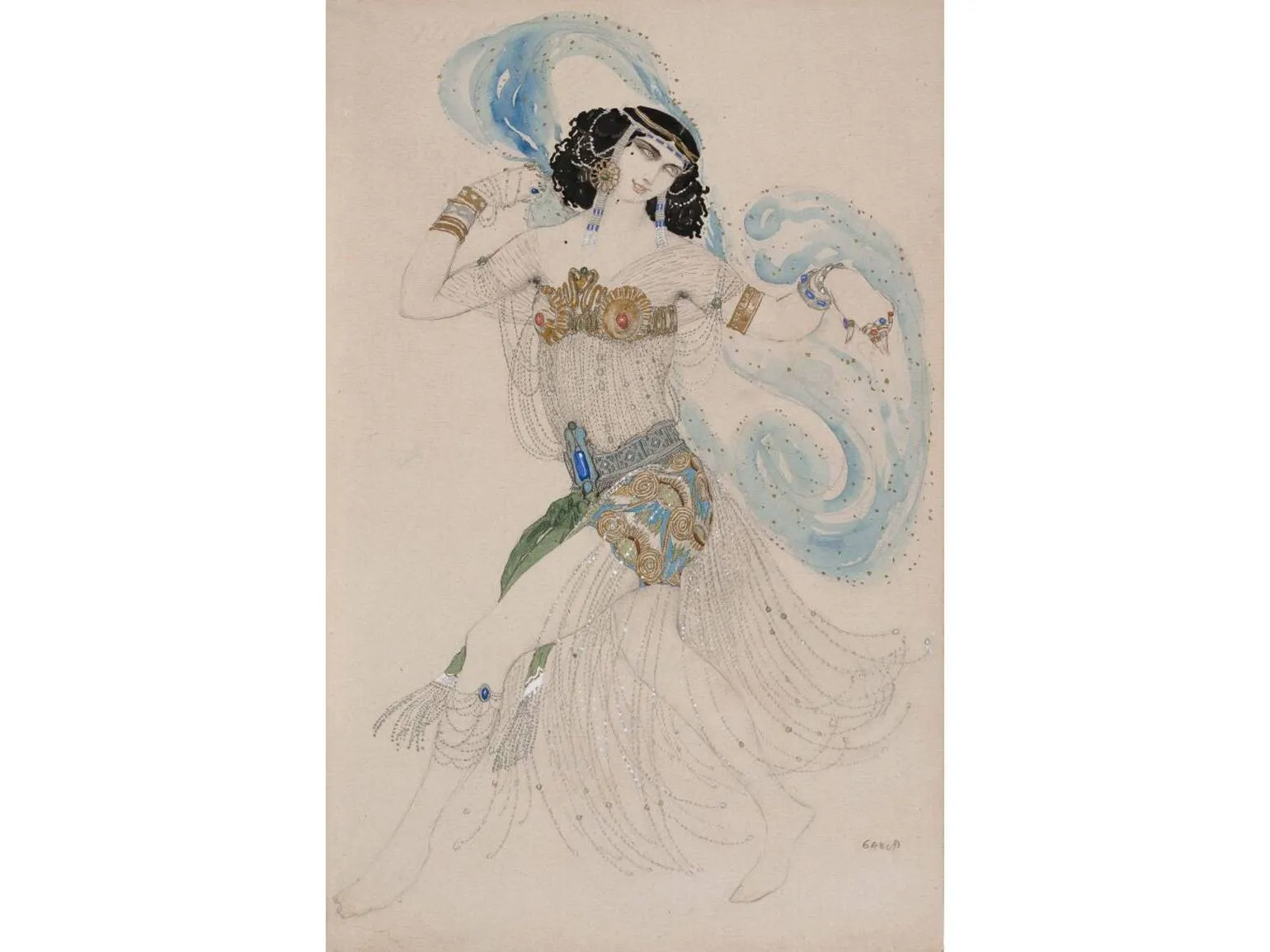
The Russian Museum in St. Petersburg presents a unique collection of covers for the magazine "World of Art," as well as commercial illustrations and portraits of the artist's contemporaries. These works not only demonstrate the artist's multifaceted talent but also reflect his interaction with the cultural environment of the time. Each of these works contributes to a deeper understanding of the artistic context and the significance of the "World of Art" in the development of Russian culture.
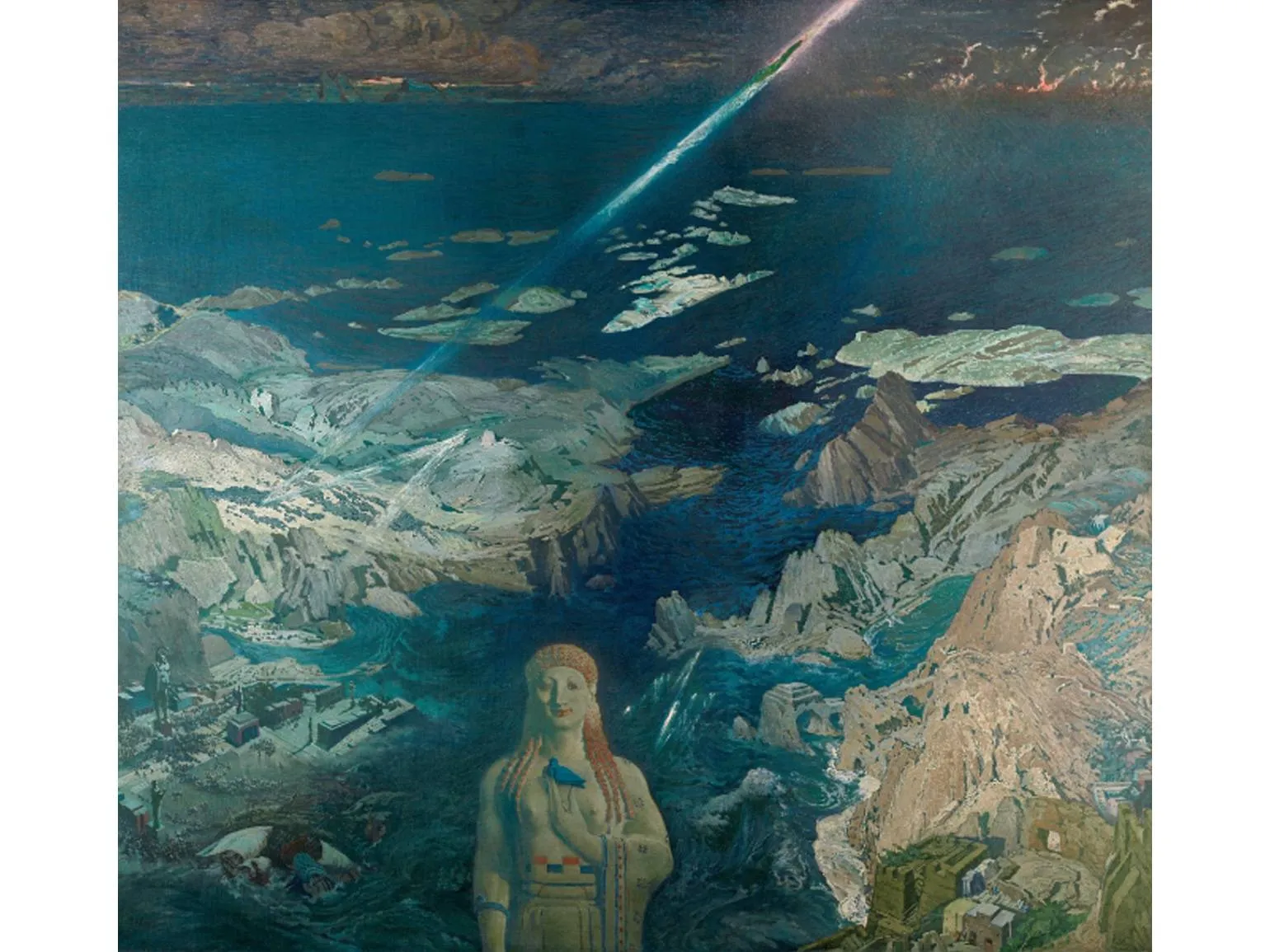
The Metropolitan Museum of Art in New York displays not only the sketches, but also the finished costumes created on their basis. This clearly demonstrates the influence of Leon Bakst on theatrical art and his significant contribution to the development of costume design. His works are an important stage in the history of the theater, reflecting a unique style and innovative approach to the visual perception of stage images.
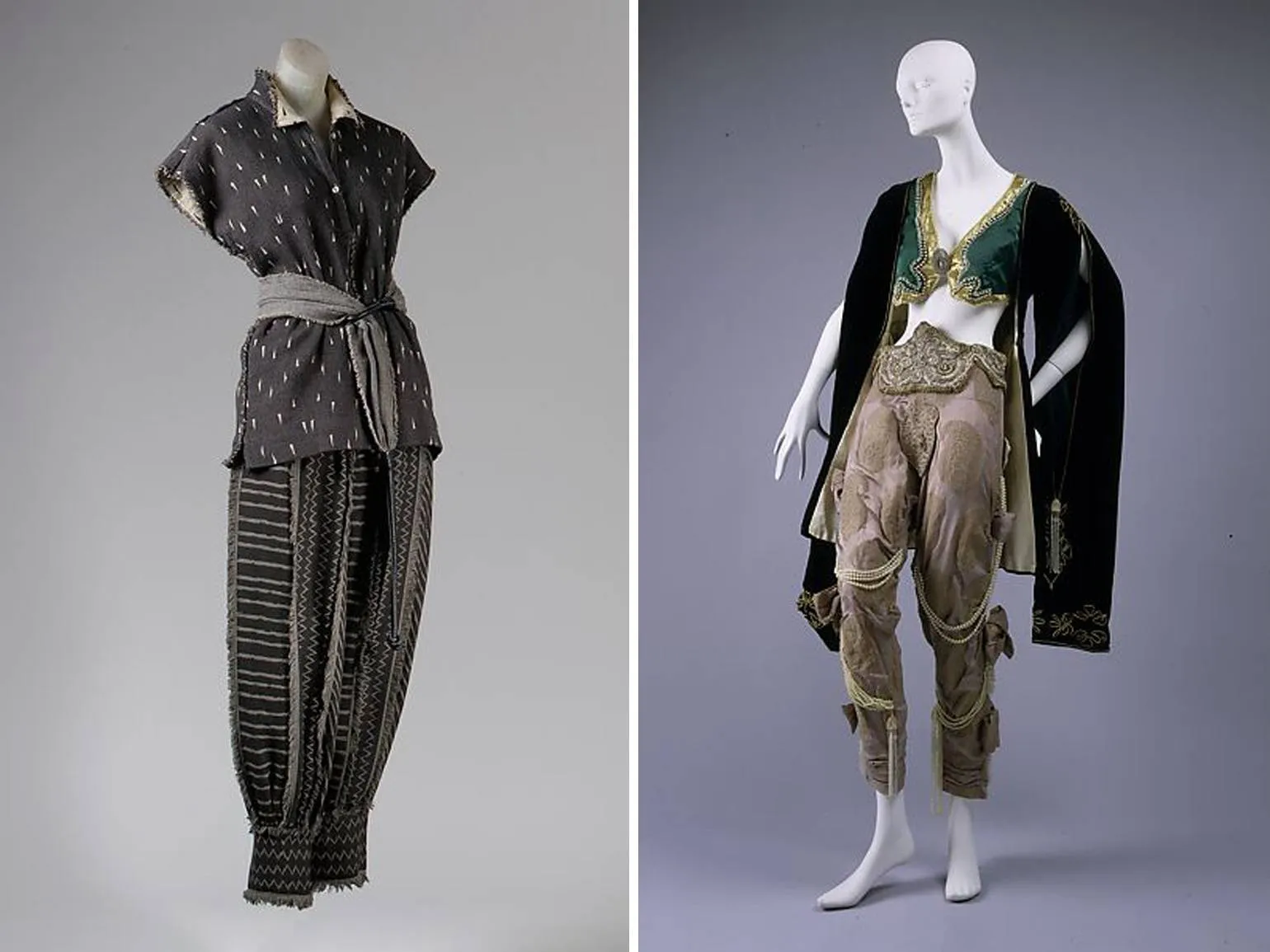
Bakst's works continue to influence contemporary designers and artists. His unique style, as well as his original approach to color and form, remain relevant and in demand in contemporary art. Inspiration drawn from his work contributes to the development of new ideas and concepts in design and painting.

Read also:
Don't miss the opportunity to visit eight significant exhibitions of 2025. These events provide a unique platform for discovering new trends, art, and innovation. Visiting exhibitions is a great way to broaden your horizons and gain inspiration from the work of artists, designers, and scientists. Be sure to book your tickets in advance to avoid missing these important events. Stay up-to-date on current topics and discoveries that will shape the future in various fields.
Subscribe to our Telegram channel to stay up-to-date with the most interesting news in design and art. We regularly publish fresh content to help you expand your knowledge and gain inspiration. Don't miss the opportunity to be part of our creative community.
Graphic Designer PRO: 5 Steps to a Successful Career
Want to become a graphic designer? Learn 5 key steps to creating a stylish portfolio and launching your career!
Learn more