Contents:

Try your hand at 3D design. Go to Telegram and take a free course on 3D modeling in Blender for beginners. Create your first projects for your portfolio and get useful gifts.
Learn morePieter Bruegel the Elder continues to intrigue viewers and researchers, often misleading them. Some consider him a peasant, attributing this to his fascination with depicting the lives of ordinary people. Others often confuse his paintings with the works of Hieronymus Bosch. There are also those who misinterpret the meaning of Bruegel's works, which highlights the complexity of his artistic legacy. It is important to delve into his work to understand the true ideas and motives he imbued in his paintings.
In this article, we will examine the artist's enigmatic biography in detail, examine his similarities and differences with the work of the first Surrealist, and attempt to understand the true meaning of his works from his "Brussels" period. Get ready for a fascinating immersion into the world of art.

Here it is
Pieter Bruegel, a renowned Flemish artist, was probably born between 1525 and 1530 near Breda, which was once part of the Duchy of Brabant. The exact year of his birth remains unknown, which gives rise to much research and debate among art historians. Bruegel became an outstanding representative of Renaissance painting, and his works continue to inspire artists and art lovers around the world.
Little is known about Bruegel's childhood and life, however, contrary to popular belief, he was not a peasant. Bruegel grew up in a wealthy family, which gave him the opportunity to receive an artistic education and become part of the intellectual elite among the humanists of the Northern Renaissance. This background had a significant influence on his work and choice of subjects, which reveal the complex social and cultural aspects of the time.
Brueghel moved to Antwerp, which was the commercial and cultural capital of the region, as a young man. This provided him with significant opportunities for a successful career, especially for a talented man from a wealthy family. By 1545, he had become a student of the renowned artist Pieter Coecke van Aelst. Bruegel spent more than five years in van Aelst's workshop, where he mastered not only painting but also the technique of engraving, which significantly influenced his future work.
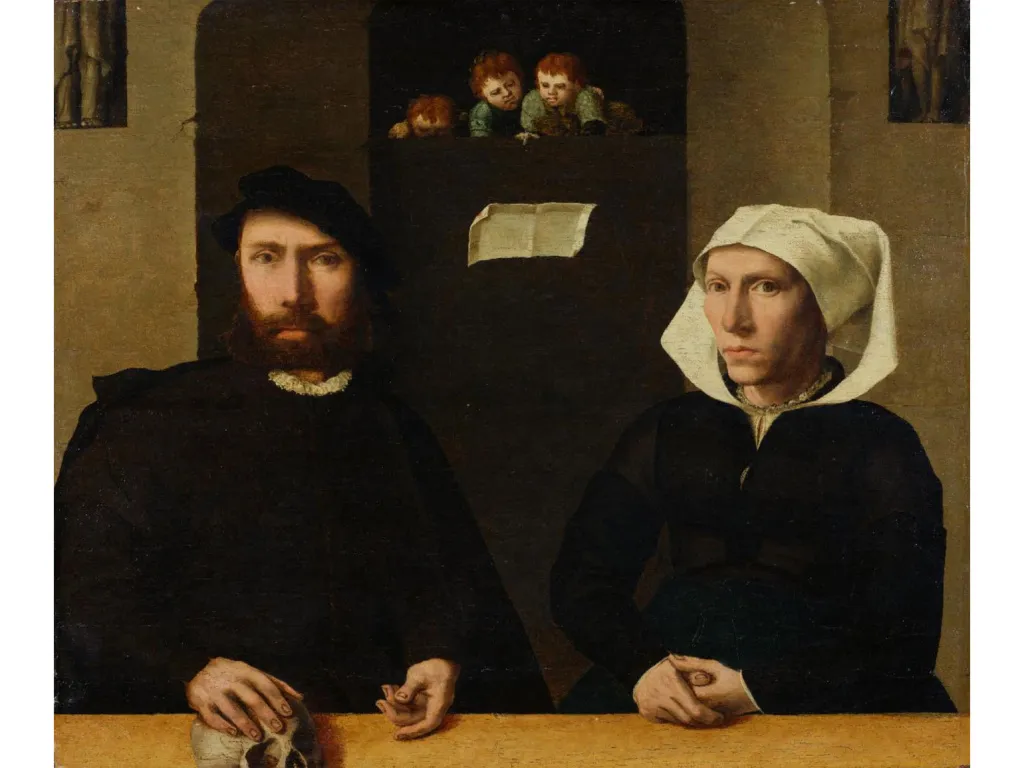
Brueghel and van Aelst were likely friends, and the young artist had a close relationship with his mentor's wife, Maria Bessemers, known in art circles as Mayken Verhulst. This woman played a significant role in Bruegel's life. Early in her mentorship, she taught him the techniques of watercolor and tempera on linen and developed his interest in depicting peasant life. Verhulst, originally from Mechelen, represented an artistic tradition that, unlike Antwerp, emphasized popular subjects rather than classical mythology. This influence significantly affected the work of Bruegel, who became known for his realistic and picturesque depictions of peasant scenes.
Holding an Eel by the Tail
In 1550, Pieter Coecke van Aelst died, which became a significant event for the art of that time. After this, Bruegel worked for some time in an engraver's workshop, but already in 1551 he decided to go on a long journey through Italy. This decision was quite logical, but it was accompanied by serious risks: the journey could take about a year, and along the way, travelers were faced not only with robbers, but also with dangerous mountain landslides. Fortunately, Bruegel was able to avoid these dangers, which allowed him to continue his artistic career and make a significant contribution to European art.
He arrived in Italy around 1552 and reached Naples, and then visited Sicily. By 1553, he was already living in Rome, where he witnessed the construction of St. Peter's Basilica under Michelangelo's direction. Thanks to his ability to easily find a common language with people, he stayed with the talented miniaturist Giulio Clovio, who later became the patron of another outstanding artist, El Greco. This period of his life became an important milestone in his artistic career, as his interactions with masters of art and architecture had a significant influence on his future work and the development of his style.
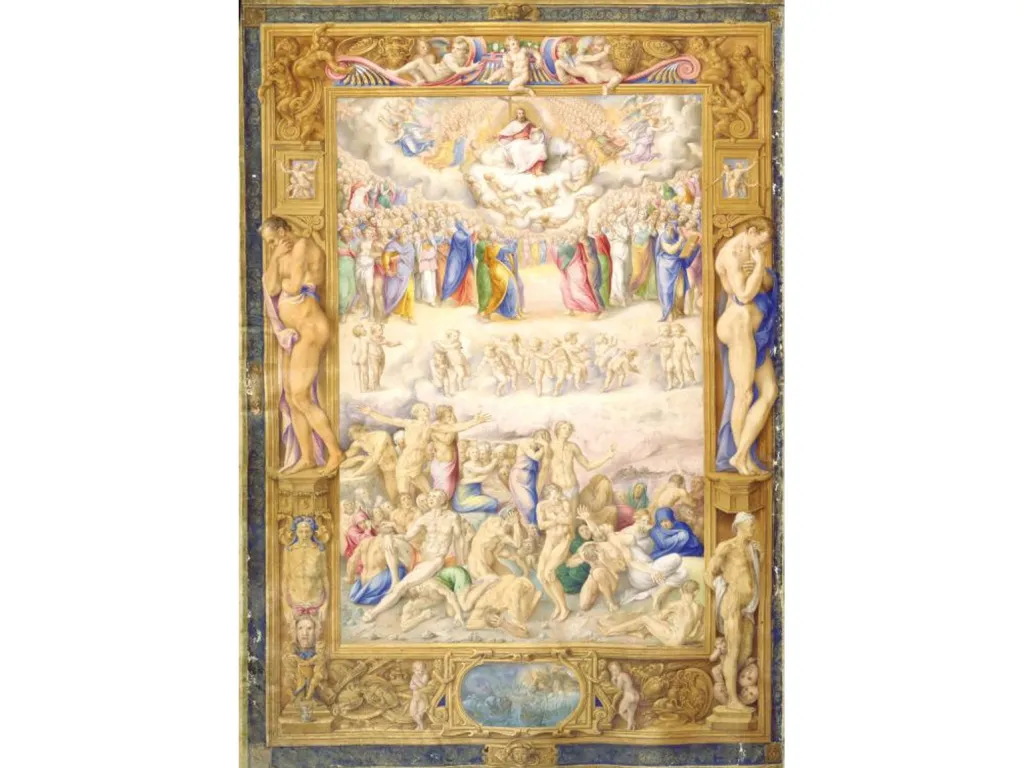
An inventory of Clovio's property indicates that he owned a collection of works of art, including paintings and drawings by Bruegel. Among these works is a miniature of The Last Judgment, created in collaboration with Bruegel. It is also worth noting that Bruegel designed a medallion depicting ships on a stormy sea. These works highlight not only Clovio's artistic skill but also his close creative ties with Bruegel, making them important objects for the study of the art of the period.
During this period of Bruegel's work, one of the few religious paintings appears - "Landscape with Christ and the Apostles on "Lake Tiberias." This work serves as a rare example of the Italian influence on his art. Bruegel's style would later become so distinctive that it would be difficult to discern any traces of the influence of such masters as Michelangelo and Raphael.
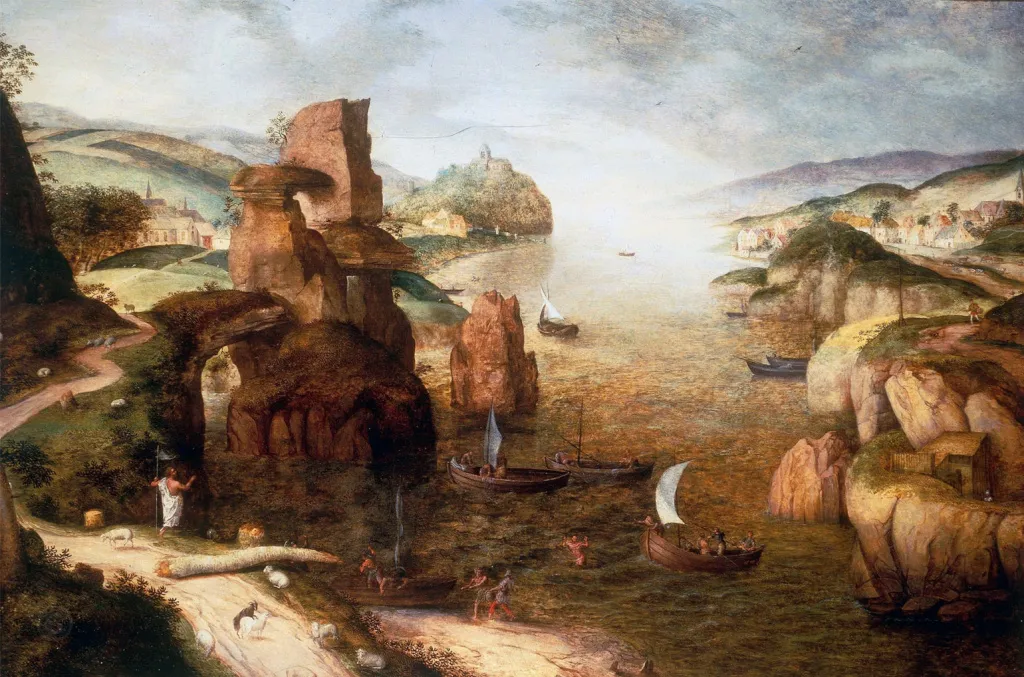
This painting features a "guest artist"—the figures of the saints were created by Maerten de Vos, also from Antwerp, who was working in Italy at the time. This fact highlights two significant aspects of Bruegel's work. First, it demonstrates his ability to collaborate with other artists, which enriches the artistic context of the work. Second, it demonstrates the influence of Italian art on Bruegel, which makes his work more diverse and rich. This interaction between artists of different cultures creates a unique visual language that continues to attract the attention of viewers and researchers.
The artist actively participated in the unusual painting practices of his time, which encouraged colleagues in the workshop to share the space of their canvases. This tradition continues to influence contemporary musical practice, where interaction and collaboration between artists become essential elements of creativity. Bruegel recognized the importance of connections and acquaintances in the creative community. While they do not make an artist great, they open up new horizons for self-realization. During his Italian travels, Bruegel frequently interacted with the renowned cartographer Abraham Ortelius and the sculptor Jacques Jongelich. Ortelius deepened Bruegel's knowledge of geography, which contributed to his mastery of landscape painting. Jacques Jongelich, in turn, introduced Bruegel to his brother, Nicolaes Jongelich, who became one of the artist's key patrons and commissioner of the "Seasons" series. These connections played a significant role in the development of Bruegel's career and his artistic legacy.
Sailing with the Wind
In 1555, Bruegel returned to Antwerp, enriched by cultural and social experience. Here he met Hieronymus Wellens de Cock, a prominent engraver and leading publisher in Northern Europe in the second half of the 16th century. This acquaintance became crucial for Bruegel, as de Cock became his main client for almost ten years. His interaction with de Cock allowed the artist to strengthen his financial independence and establish himself as a talented artist. However, this also limits his capabilities, tying him to graphics for a long time.
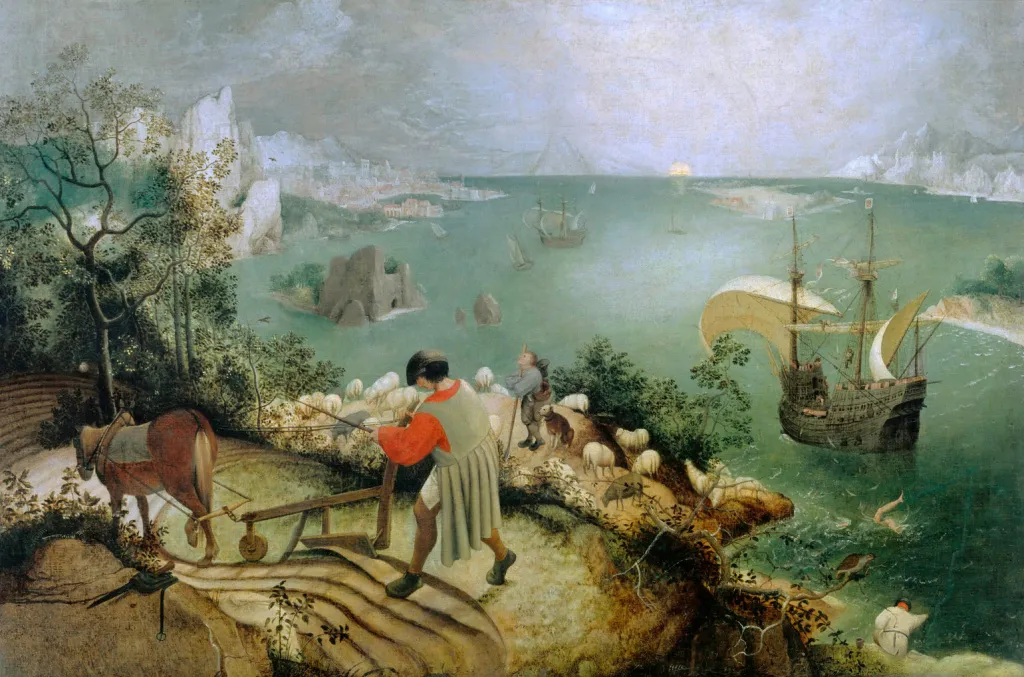
By the end of the decade, Bruegel begins to confidently master the space of painting. During this period, he created one of his most famous works, "The Fall of Icarus," which became a milestone in his career. This painting exemplifies the artist's mastery of conveying human emotion and the contrast between everyday life and tragedy. "The Fall of Icarus" not only demonstrates Bruegel's technique but also highlights his unique worldview, making this work significant in the history of painting. Rejecting traditional approaches, Bruegel places the protagonist of the mythological story, Icarus, in the corner of the painting at a moment when his body is almost completely submerged, leaving only his feet above the surface. The focus is on nature and the peasants, who are indifferent to the tragedy unfolding around them. Bruegel's decision tones down the pathos of the scene and paves the way for a new, simpler art, focusing on the mundane and everyday life.
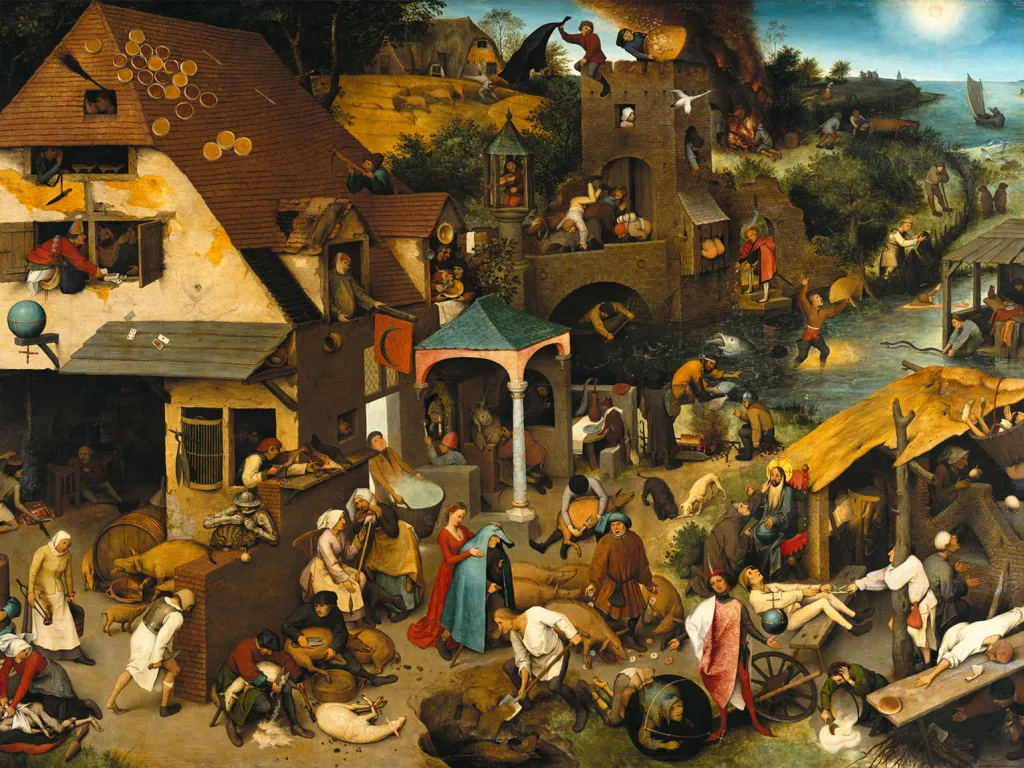
This apparent simplicity is transformed into complex and detailed scenes. In 1559, Pieter Bruegel created his famous work "Netherlandish Proverbs," previously known as "Flemish Proverbs." In this work, he masterfully combines more than one hundred folk proverbs on a single canvas. The painting clearly reflects the influence of Hieronymus Bosch, whose work was extremely popular during the period, and many artists sought to imitate his unique style. Bruegel not only preserved the traditions of folk art but also introduced elements characteristic of Bosch into his works, thereby creating a unique visual language that continues to delight viewers to this day.
Bruegel transcends mere imitation, using Bosch's compositional structure while freeing it from complex symbolism. He fills his paintings with simple yet comical and touching scenes. His characters, seemingly ready for battle, are armed to the teeth: they bite columns, work with iron, shear pigs, make roofs of pies, and even urinate on the moon. Bruegel creates a vibrant world in which every action is filled with meaning and irony, which makes his works unique and memorable.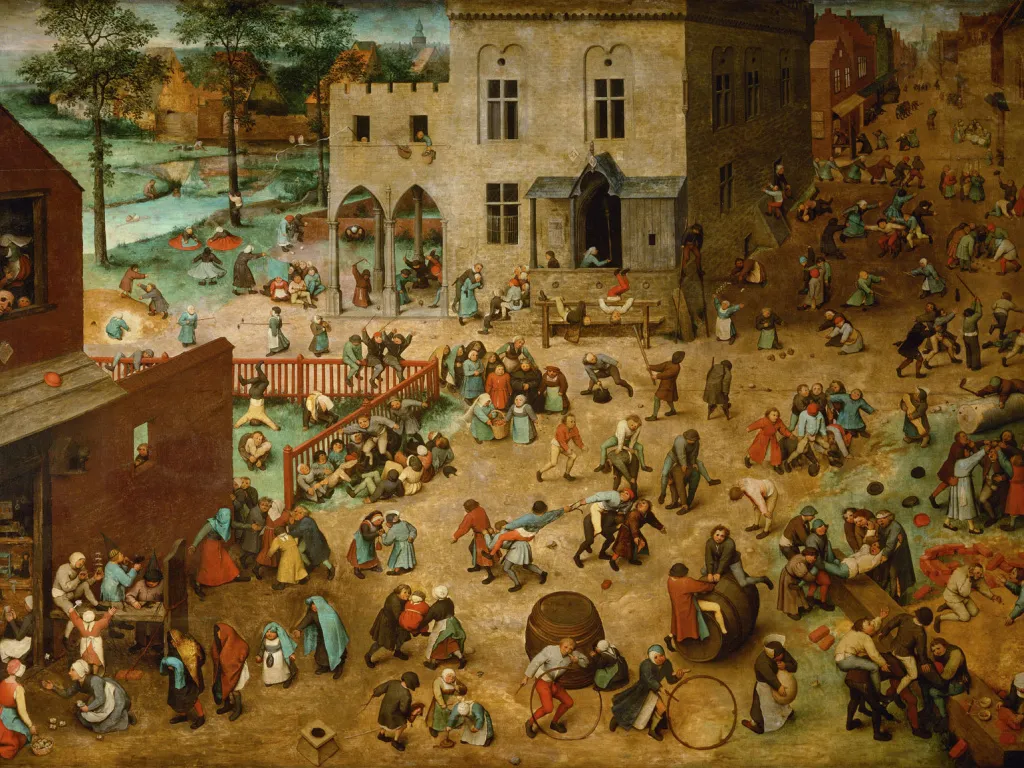
In In his painting "Children's Games," Bruegel conveys a profound meaning that becomes apparent upon closer examination. The artist depicts more than 200 children engaged in more than 90 different games. Their seriousness and attention to the process emphasize the pedagogical and humanistic value of the work. Bruegel seeks to encompass and systematize the world around him, emphasizing the importance of play as a means of shaping young participants into real adults. This work emphasizes how play contributes to personal development and socialization, turning children into responsible members of society.
However, the artist's work will soon go beyond the traditional humanistic approach. In the near future, he will make a decision that will bring him happiness and love, but will also open the door to real horror.
The Die is Cast
In 1563, the artist Pieter Bruegel decides to marry Mayken Coeck, the daughter of his longtime acquaintance Mayken Verhulst. The widow agrees to the marriage, but sets a condition: Bruegel must move to Brussels. This step opens a new, most productive chapter in the master's creative biography. However, it begins with the dark painting "The Triumph of Death", which reflects the artist's deep philosophical reflections on life and death.
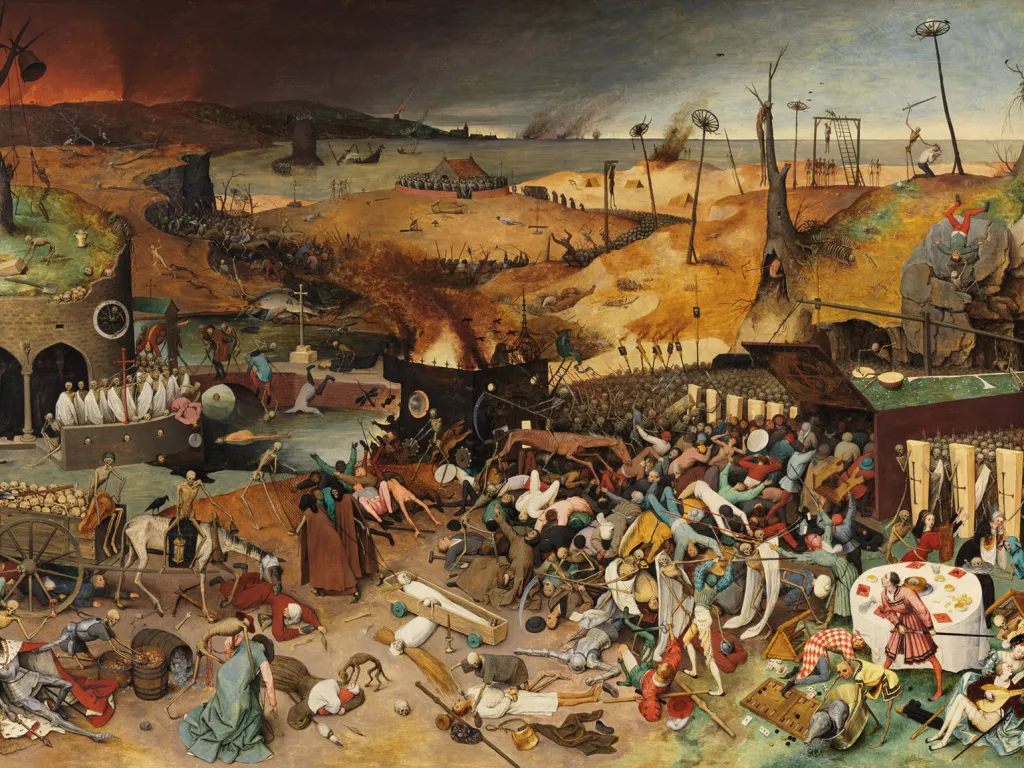
Unlike Born from Hieronymus Bosch, who lived in the relatively peaceful era before the Reformation, Pieter Bruegel worked during a period of significant social and political change. In 1556, the Duchy of Brabant, like other territories that would become the Netherlands and Belgium, came under the control of the Spanish Habsburgs. This period was not only characterized by economic hardship but also witnessed a struggle for independence, which influenced Bruegel's work. His works reflect the complexity and contradictions of human nature, as well as the pressing social issues of the time. The new rulers, being staunch Catholics, began persecuting Protestants. Between 1561 and 1563, when Pieter Bruegel worked on his work "The Triumph of Death," he reflected the mood of the intellectual elite, who expected more sacrifice and suffering in the future. This work became a symbol of the anxiety and uncertainty of the era, demonstrating how religious conflicts impacted the society and culture of the time.
In this painting, the artist's style significantly echoes that of Bosch, which he believed most effectively conveyed apocalyptic sentiments. Later, having witnessed the cruelty of Spanish soldiers, Bruegel would develop his own unique style, allowing him to express what was impossible to convey in words. This experience would become a key moment in his work, opening new horizons for depicting human suffering and social catastrophes.
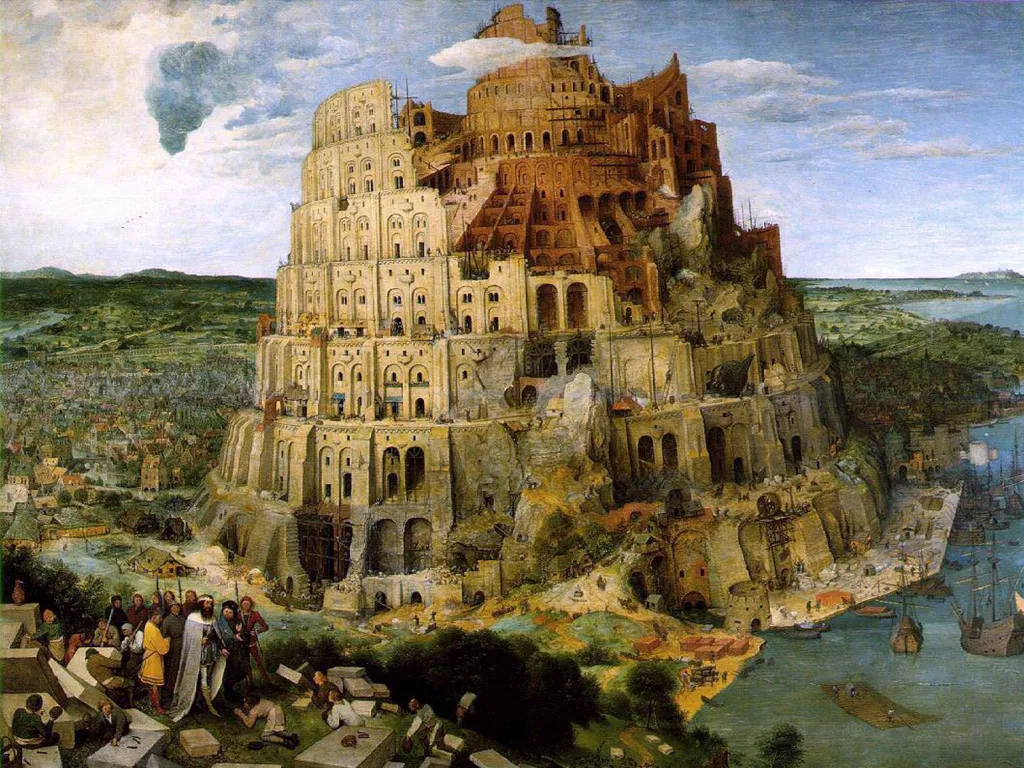
Expectations Large-scale upheavals once again returned Bruegel to significant themes. In 1563, he created "The Tower of Babel," which reflects a premonition of future conflicts. At the same time, the artist masterfully demonstrates the greatness of human ambition, which evokes admiration, although it is often followed by inevitable retribution.
While the influence of politics on Bruegel's work cannot be underestimated, the significant role of family happiness and the birth of children in his life should not be forgotten. These events inspire the artist to focus again on ordinary people and the joys of everyday existence. Bruegel's move to Brussels also influenced his career, as his main client, Hieronymus Cock, began to exert less influence on him. The commercial success of his paintings allowed the master to devote more time to painting, which, in turn, was reflected in the quality and diversity of his artistic legacy. Bruegel continues to be one of the most brilliant representatives of his time, creating works that inspire and touch viewers.
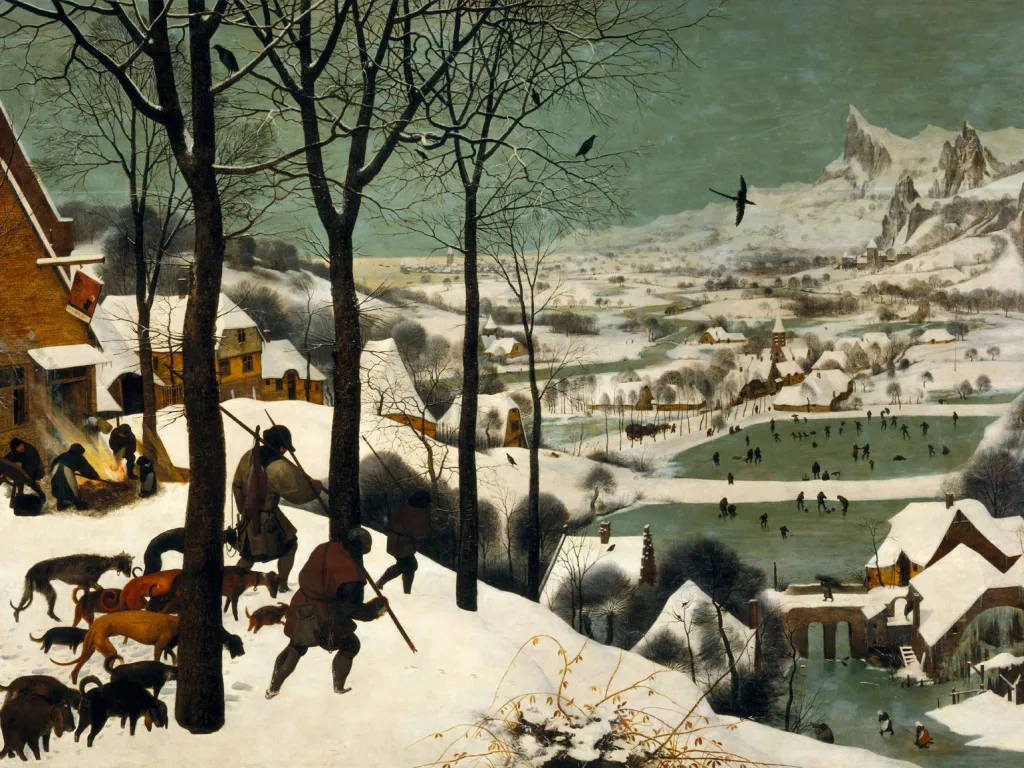
Nicolas Jongelik commissioned a large cycle of paintings from Bruegel, "The Seasons." One of them depicts hunters in the snow, watching from a hill as ordinary townspeople and peasants relax on a skating rink. Despite the small size of the figures, the painting conveys a unique, timeless sense of life, familiar to anyone who awaits the arrival of winter.
In later years, according to the observations of art historians, Bruegel unexpectedly goes through a new stylistic an evolution that reflects the influence of his travels to Italy. This change in style reflects not only the artist's personal artistic explorations, but also the enrichment of his work with new ideas and techniques borrowed from Italian art.
The artist continues to create subjects that reflect the lives of ordinary people. In his works, figures become larger and occupy a central place. The faces and clothing of the characters are carefully detailed, lending them a realistic quality. In some details, references to the art of the Italian Renaissance can be seen, emphasizing the deep connection between the traditions of the past and contemporary art.
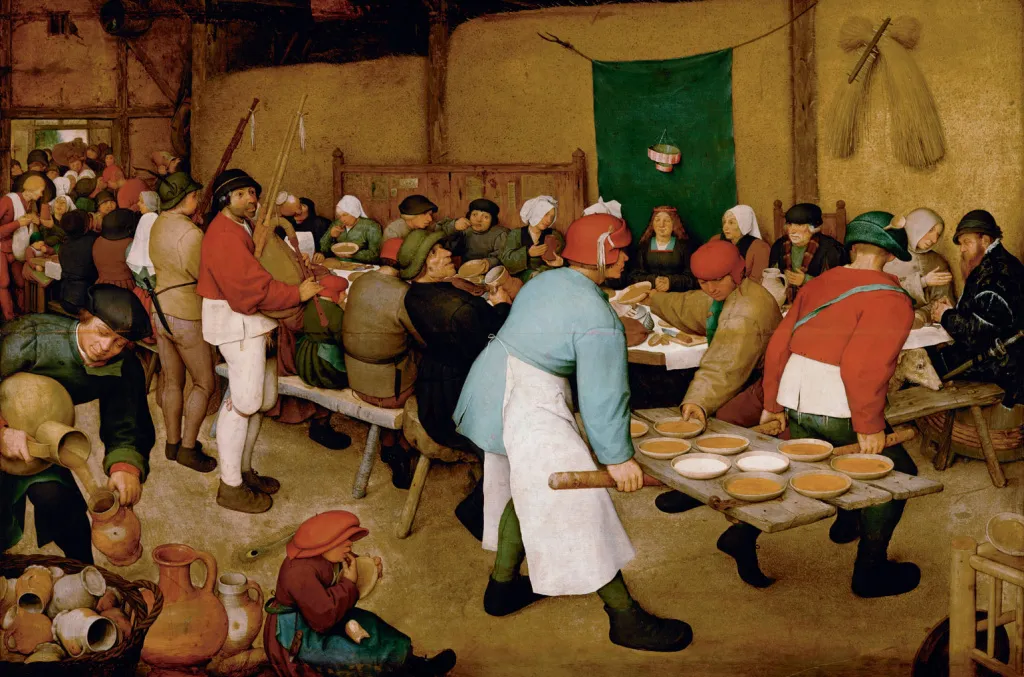
In the painting "Peasant Wedding," Bruegel masterfully captures the authentic atmosphere of a folk festival. In the background, the artist places a green cloth with a bowl in the center and also depicts a girl with traditional facial features, hairstyle, and headdress. This element of the composition allows the attentive viewer to grasp the stylistic interplay and a deeper understanding of the context of the work. Bruegel not only captures the everyday joys of peasant life but also creates a multi-layered story rich with cultural references.
In 1568, playful symbolism gives way to serious and veiled allegories, reflecting the dark events in the history of Brussels and the life of Pieter Bruegel. The outbreak of the Dutch Revolution in 1566, also known as the Eighty Years' War, marked the region's desire to separate from the Spanish Empire. This period became an important stage in the development of culture and art, where the reflection of social conflicts and political instability finds expression in the works of Bruegel, who became a symbol of the era.
On August 22, 1567, Fernando Álvarez de Toledo, known as the Duke of Alba, entered Brussels with an army and began brutal repression against rioters and Protestants. He arrested the most respected citizens of the city and created a "Council of Riots", which was popularly nicknamed the "Bloody Council". All those arrested were later executed. These events became a significant milestone in Dutch history, demonstrating the brutality of Spanish rule and fueling public protest.
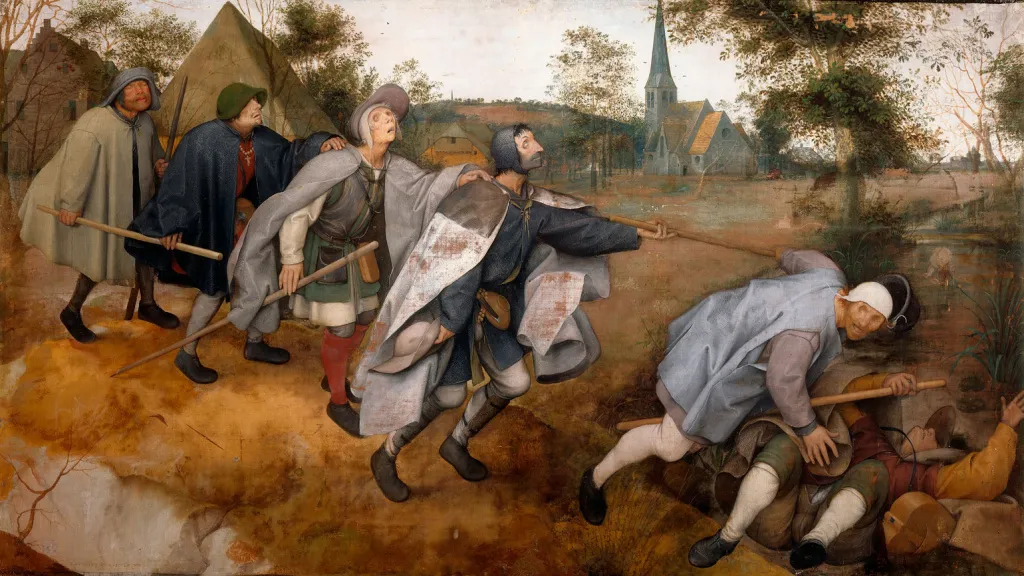
The Duke of Alba imposed high taxes and executed Protestants, bringing manufacturing and trade in the city to a standstill. The intellectual elite fled Brussels in search of safe haven in Amsterdam. Under these difficult circumstances, Bruegel created his famous painting, "The Parable of the Blind." This work not only continues the Dutch tradition of depicting this subject but also serves as a powerful political statement. The symbolism of blindness in the painting emphasizes that if the blind lead the blind, they will all inevitably fall, which can be interpreted as a criticism of the current political situation.
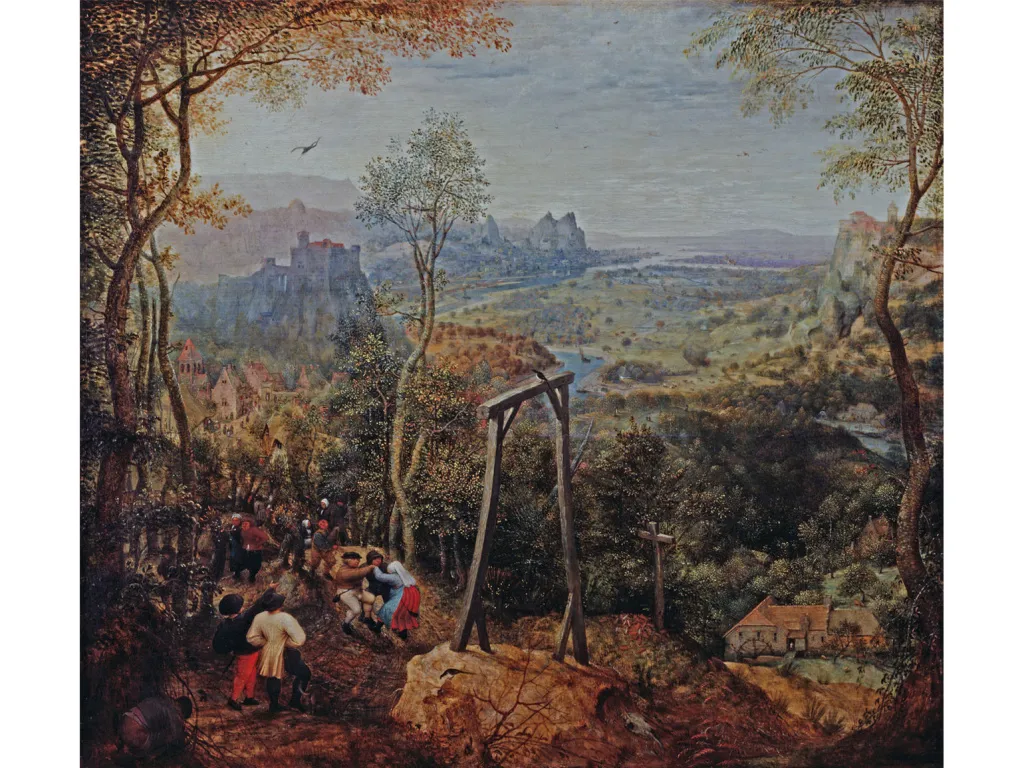
Brueghel, a master of art, always looked for positive aspects even in the darkest circumstances. His painting "The Magpie on the Gallows" is a prime example of this approach. The focus is on the eerie symbol of its time, yet around it, people dance and celebrate life. Birds calmly perch on the crossbar, and a magnificent landscape opens up in the background. This serves as a reminder that violence and persecution will eventually end, while nature and the human love of life remain unchanged. Bruegel shows that even in the darkest times, light and hope can be found.
Pieter Bruegel the Elder died on September 5 or 9, 1569; his age at death varied between 39 and 44, which adds to the mystery of his life. He was buried in the church of Notre-Dame de la Chapelle in Brussels. All three of his children, two sons and a daughter, chose the path of the artist, and they were taught painting by Maiken Verhulst. Bruegel left behind not only striking works of art, but also a legacy continued in the work of his descendants.
Read also:
- Kazimir Malevich: Six Cities of the Artist
- Sleep: 15 Most Famous Paintings by Salvador Dali and Their Meaning
- What Picasso Wrote About: 10 Paintings on 5 Main Themes
Graphic Designer PRO Profession
You will learn how to create corporate identity elements and graphics for business. You will build a portfolio that reflects your style and confirms your design skills. You can start a career in a studio or as a freelancer.
Find out more