Try 4 top professions in design. Free ➞ In 5 days, you'll get acquainted with illustration, UX/UI, web, and graphic design. Add 4 compelling case studies to your portfolio and decide which direction to take next.
Learn moreIn the "History of One Design" section, we explore outstanding design objects, their background, significance, and influence on the evolution of visual culture. We analyze how these works shaped the perception of design and the ideas behind their creation. Each object becomes part of the cultural context, reflecting the trends and innovations of its time.
The poster "Beat the Whites with the Red Wedge" by El Lissitzky is an iconic work of the Russian avant-garde and one of the most famous symbols of this movement. It was created during a period when the European art scene was experiencing rapid development and searching for new forms of creative expression. This poster not only reflects the political mood of its time, but also demonstrates Lissitzky's innovative approach to graphic design and visual communication.
Lissitzky developed his style at the intersection of Futurism, an artistic movement emphasizing progress, mechanization, and industrialization, and Suprematism, an avant-garde movement focused on abstraction and non-objectivity. This synthesis of ideas allowed him to create unique works that reflect the spirit of the times and the desire for innovation in art.
Appearance
During the Civil War, a department of the Political Directorate of the Western Front initiated a commission for a poster from the avant-garde art association Unovis, which stands for "Affirmers of the New Art." This commission was a significant event in the context of the cultural policy of the time, emphasizing the importance of art in mobilizing public consciousness and supporting revolutionary ideas. The poster created by Unovis not only reflected the aesthetic innovations inherent in the avant-garde but also served an important social function, calling for unity and support for the new order.
At that time, propaganda posters were actively used in political struggle and propaganda. They predominantly depicted enemy figures in a negative light: they appeared unkempt, pathetic, or repulsive. In contrast, heroic images of those supported by the poster artists emphasized their dignity and strength. Such visual strategies helped shape public opinion and strengthen political positions.
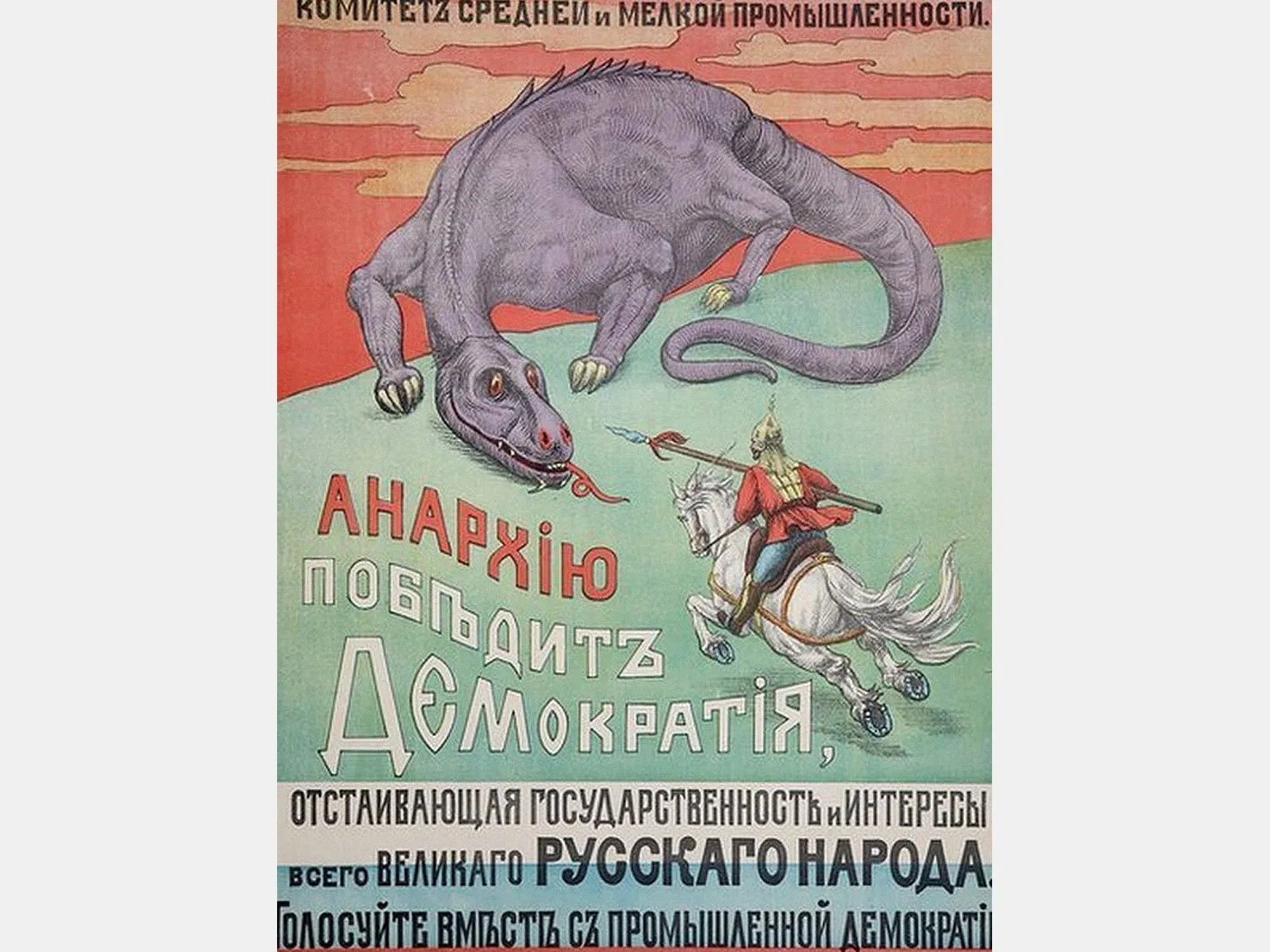
The artistic avant-garde, being a new mode of visual expression, proved too complex for the general public to perceive, which made it unsuitable for use in the illustrative language of posters. However, the poster "Beat the Whites with the Red Wedge" became an exception to this rule, successfully combining elements of the avant-garde with accessibility and a powerful message, which allowed it to have a significant impact on the mass consciousness.
Geometry
"Beat the Whites with the Red Wedge" is a composition of geometric shapes in three primary colors: red, white and black. The background of the picture is divided into two contrasting parts. On the dark left side there is a white circle, while on the light side there is a dynamically moving red triangle, which, like a wedge, penetrates the white circle. This visual interplay of colors and shapes creates tension and attracts attention, emphasizing the opposition between the presented elements.
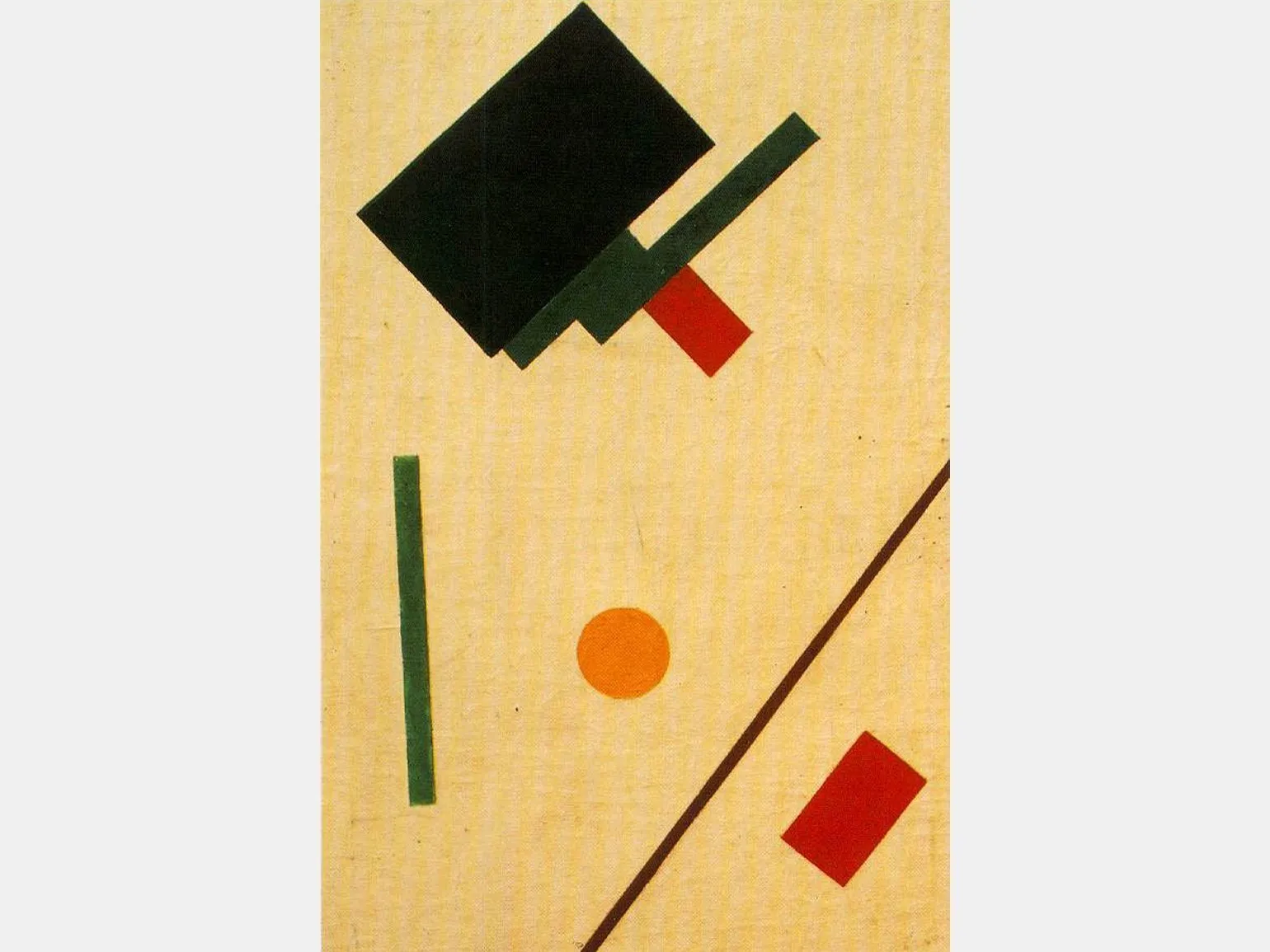
Since 1915, Suprematists began actively experimenting with non-objective forms on a flat surface. Squares, circles, and triangles of various colors and sizes are combined into laconic and harmonious Suprematist compositions. From this perspective, the compositional basis of El Lissitzky's poster was not revolutionary. However, the content of his work radically changed the concept of non-objectivity and its principles. El Lissitzky brought new meaning to Suprematism, demonstrating how abstract forms could evoke deep emotions and ideas, expanding the horizons of artistic perception.
Idea and Energy
Suprematist figures, devoid of specific objects from the real world, acquire new meaning in Lissitzky's works. The circle and triangle become metaphors symbolizing the White and Red Armies. The use of the wedge shape in army formations has a long history, dating back to the time of the Crusades. These geometric elements not only reflect the idea of abstraction, but also serve as important signs linking art and military affairs. Thus, Lissitzky creates a unique dialogue between form and content, where visual language becomes a means of conveying deep historical and social concepts.
Suprematist compositions do not possess the dynamism of Platonic abstractions, which seem motionless in the ocean of the absolute. They convey a pure idea, while Lissitzky's poster radiates energy - aggressive and focused. These works focus on conveying emotional charge and conceptual depth, making them significant in the context of contemporary art and design.
Lissitzky's work features a clearly defined directional vector, with the red triangle penetrating the center of the white circle. The words "wedge" and "red," like jet streams from the nose of a triangular rocket, add dynamism to the compositional elements and evoke associations with engineering structures, bringing them closer to futuristic ideals.
The direction of the red wedge's movement is crucial: it should be from left to right, which corresponds to the natural movement of the human eye when reading. Research shows that if a poster is reflected in a mirror and the wedge is placed on the right, much of its visual energy will be lost. This underscores the importance of proper composition in design and information perception. The correct direction can significantly enhance visual perception and attract the audience's attention.
Form
One of the most significant works of the avant-garde, the poster, speaks to the importance of change in art. Artists of the new era reject traditional forms, such as paintings in expensive frames, displayed in secure spaces with limited access. The poster, as an art form, becomes mass-produced and accessible, reflecting the spirit of the times and democratizing artistic expression. This testifies to the avant-garde’s desire for new forms and ideas that become part of everyday life.
Art for the elite is a concept that displeases the avant-garde. Their works, such as posters, are created in mass editions and intended for a wide audience. Everyone is equal before the poster—from children to highly educated art connoisseurs. However, the poster, as an art form, is short-lived: it can be damaged by wind, rain, or vandalism.
Reception and Reinterpretation
The classic stable form of a circle, complemented by an asymmetrical wedge detail, disrupts the balance of the entire image. This creates a sense of unfinished business and dynamism, making this combination a popular modernist technique. This approach has its roots in the artistic experimentation of El Lissitzky, who sought to rethink traditional forms and introduce elements of movement and change. As a result, such compositions become emblematic of contemporary art, emphasizing the interplay of the static and dynamic, as well as the traditional and the innovative. Alexander Rodchenko's poster "Lengiz: Books on All Branches of Knowledge" is one of the most famous examples of his artistic reinterpretation. This poster not only reflects Rodchenko's conceptual ideas but also serves as a striking example of the interaction between art and information. It embodies the core principles of constructivism, making it an important object of study in the context of the development of graphic design and visual communication. Rodchenko's works, including this poster, continue to inspire contemporary designers and researchers, emphasizing the importance of visual art in the dissemination of knowledge.

Dmitry Kozlov, a researcher of El Lissitzky's work, argues that the architectural form of Soviet sports facilities, especially round stadiums with triangular staircase wedges, is a visual embodiment of Lissitzky's "red wedge" concept. This form not only symbolizes the sporting spirit but also reflects the ideological principles of the time in which it was created. Kozlov emphasizes that such architectural solutions are a striking example of the combination of art and functionality, which makes them significant not only from an architectural perspective but also in the context of the cultural history of the Soviet Union.
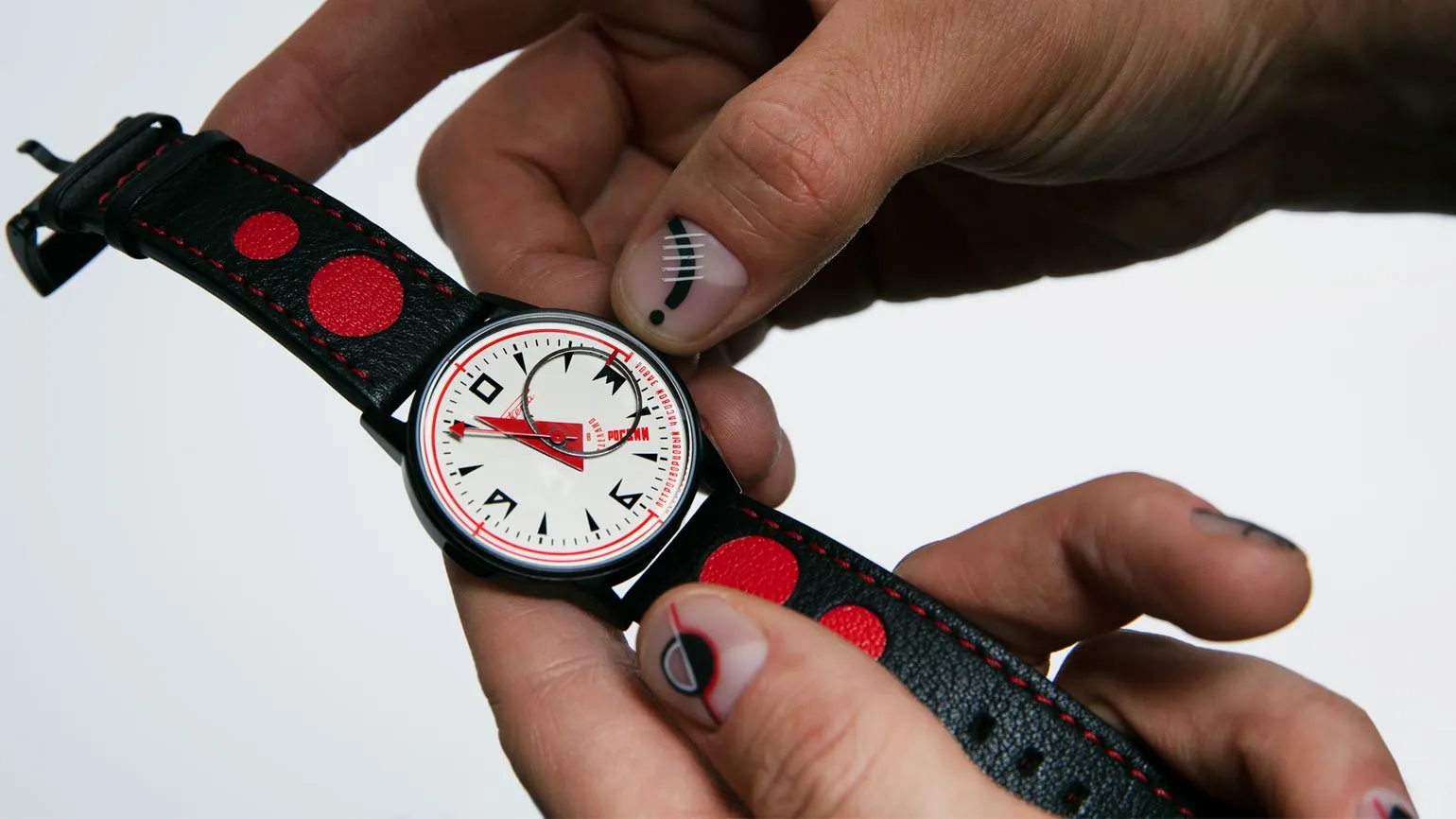
The red wedge piercing a white circle is widely used in modern clothing, watch, and music cover design. This vibrant, contrasting element has become a symbol of creativity and uniqueness, bringing freshness and dynamism to visual style. Using the red wedge in various design areas helps attract attention and emphasize a product's individuality.
Profession Graphic Designer PRO
You will learn how to create corporate identity elements and graphics for business. You will put together a portfolio that reflects your style and confirms your design skills. You can start a career in a studio or as a freelancer.
Find out more