

Free test: which digital profession is right for you? Find out the answer in 15 minutes and try your hand at a new specialty.
Learn moreIn this article, you will receive information on how to effectively use SEO to increase the visibility of your content in search engines. We will discuss key optimization techniques that will help improve your site's position in search results. Learn about the importance of keywords, meta tags, URL structure, and internal linking. We'll also look at how quality content impacts rankings and what tools can help you analyze and monitor your SEO. Optimizing your content is the key to successful online promotion.
- What is erudition and how does it differ from intelligence?
- Why does erudition matter to modern people?
- What tests can test erudition?
- Several non-obvious ways to develop erudition.
We've created the "How Are You?" Telegram channel, where we share knowledge about self-development, psychology, effective learning, and career building at any age in a convenient format. Subscribe to our channel to receive valuable tips and relevant materials on these important topics.
What is erudition?
Erudition is the ability to effectively connect, analyze, and apply knowledge from various fields in appropriate situations. It allows people to maintain a conversation on any topic and share interesting details and stories, which makes their communication more rich and meaningful. With high erudition, a person can easily find connections between different concepts, which contributes to a deeper understanding of the world around them and improves communication. Erudition plays a significant role in personal development and professional success, as it promotes critical thinking and expands the horizons of perception.
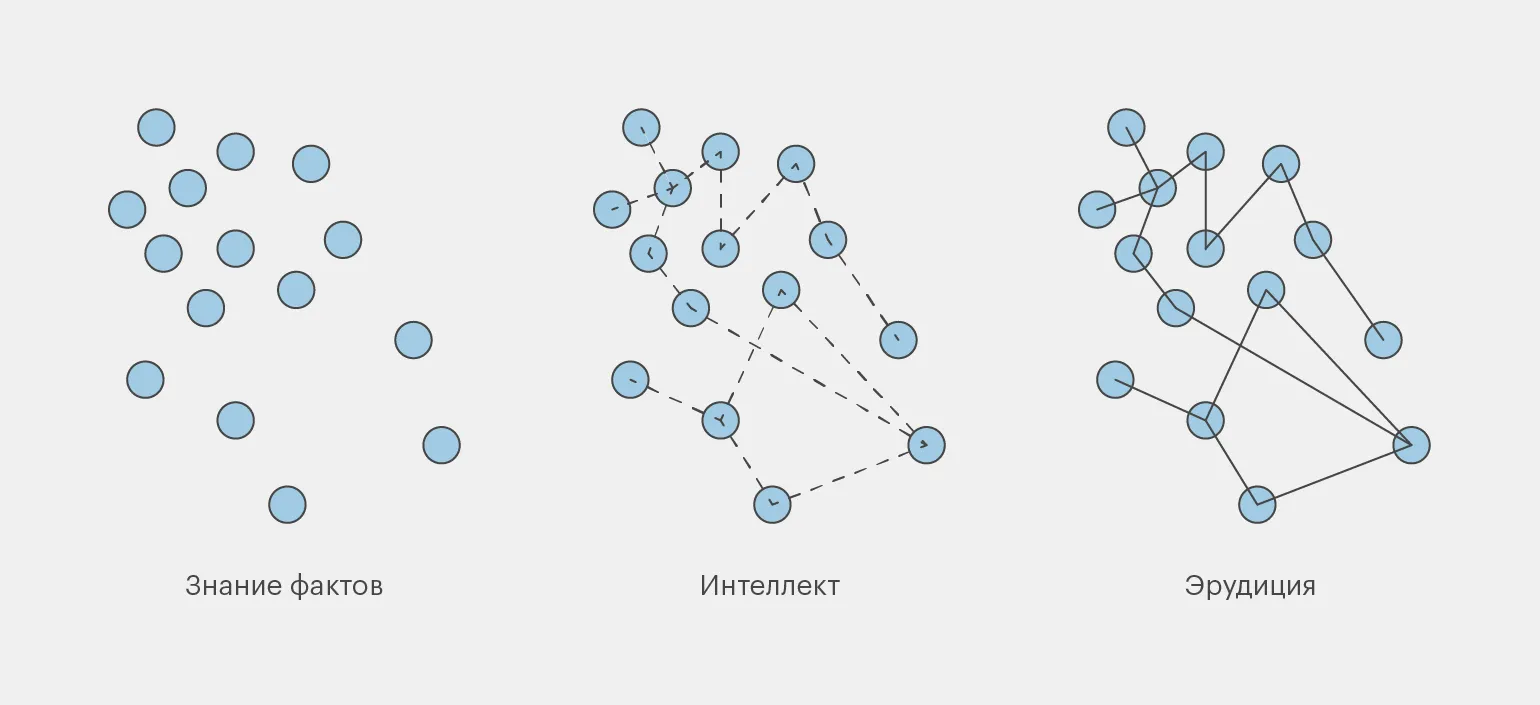
Erudition is a quality that develops throughout life, not something a person comes into this world with. It is formed through education, reading, observation, and interaction with others. Erudition extends beyond academic knowledge and encompasses life experiences that enrich our perception of the world. Developing erudition opens new horizons, fosters critical thinking, and improves communication skills, making a person more adaptable and successful in various areas of life. Erudition is often defined as the ability to manipulate unfamiliar facts, but this is not entirely accurate. Knowing a large amount of information does not always equate to erudition. You can easily memorize a list of country capitals, biographies of famous writers, or scientific terms, but this knowledge will remain just a collection of facts unless you develop the ability to connect them and apply them at the right time. Erudition is the ability to generalize, analyze, and use knowledge to solve various problems and form informed judgments. Erudition develops in a context where a person is able to apply their knowledge in real-world situations and understands the relationships between various facts in a given field. This allows for a deeper understanding of the subject and the effective use of acquired knowledge. Erudition not only broadens one's horizons but also promotes the development of critical thinking, which is an important aspect in education and professional life.
Many people confuse erudition with intelligence. Intelligence is the ability to quickly process information, analyze, and draw logical conclusions. This is precisely what IQ tests assess: speed of thought, memory, and attention. A person with a high level of intelligence is able to quickly assimilate and process information, but may lack in-depth knowledge in various fields. An example is the character Sheldon Cooper from "The Big Bang Theory," who demonstrates outstanding intellectual abilities but struggles with the humanities and social interactions. This highlights the importance of distinguishing between intelligence and erudition, which, although interrelated, represent different aspects of human cognition.
Why erudition is needed
In the modern world, access to information is carried out A matter of seconds. Many believe that in these conditions, knowledge and erudition have lost their significance compared to the past. However, despite the ease of obtaining data, deep knowledge and the ability to analyze information remain important skills. Erudition helps not only in understanding the context but also in making informed decisions. Therefore, in the information age, the value of knowledge does not diminish, but rather increases.
Modern technology allows us to store essential information externally, but possessing erudition has its advantages. Deep knowledge in various fields not only helps with memorization but also significantly influences the development of critical thinking and overall life perspective. It facilitates the selection of highly skilled professions, improves communication skills, and assists in making informed decisions. In a rapidly changing world, erudition is becoming an essential tool for successful adaptation and achieving goals.
Let's look at the reasons why it is important to develop one's erudition. Erudition broadens one's horizons, helps one better understand the world around us, and makes more informed decisions. Having extensive knowledge improves communication skills and allows one to confidently participate in various discussions. Furthermore, a high level of erudition increases competitiveness in the labor market, opening up new career opportunities. Deepening one's knowledge also promotes personal growth and the development of critical thinking, which is especially valuable in modern society. By cultivating your knowledge, you not only enrich your own inner world but also become a more engaging conversationalist.
A person with a broad perspective has advantages in learning, decision-making, and interacting with colleagues from various fields. Mark Maron, author of the Harvard Business Publishing blog, shares the results of a study conducted among a thousand leadership development professionals. The study confirms that a broad perspective promotes more effective learning, enables confident decision-making, and facilitates communication with representatives of various professional fields.
Modern leaders must possess high levels of social and emotional intelligence, analytical skills, and deep knowledge of digital technologies, finance, effective communications, strategic planning, and decision-making. In a rapidly changing world, the demands on leaders are becoming more diverse and complex. The need for a comprehensive approach to team management and development is increasing, which requires leaders to possess a wide range of competencies. This requires them to constantly learn and adapt to new conditions. Thus, successful leadership today requires not only knowledge of specific fields but also the ability to integrate this knowledge into practical work.
According to the World Economic Forum, cross-disciplinarity is one of the most important skills that will be in demand in the labor market in the coming years. This skill allows specialists to effectively integrate knowledge from various fields, which facilitates innovation and the solution of complex problems. In a rapidly changing world, cross-disciplinary approaches are becoming essential for professional success and career advancement.
Learn also:
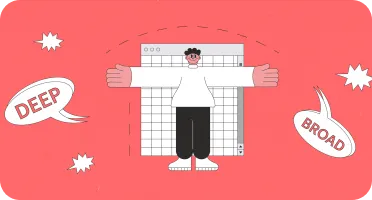
A T-shaped specialist is a professional with broad knowledge in several areas and deep skills in one specific area. This approach to career development makes T-shaped specialists valuable to teams, as they can work effectively at the intersection of various disciplines. Their versatility allows them to easily adapt to project changes and perform various roles, which is especially important in a dynamic labor market.
The key characteristics of T-shaped specialists include interdisciplinary communication, critical thinking, and teamwork. They can not only perform their primary tasks but also understand and support related areas, which facilitates more productive interactions with colleagues. This makes them ideal candidates for working in cross-functional teams that require collaboration between different specialists.
Developing T-shaped skills can significantly improve a specialist's competitiveness in the labor market, as employers increasingly seek versatile employees who can quickly adapt to new conditions and contribute to various aspects of a project. Therefore, a T-shaped approach to training and career development is an essential element for achieving success in the professional field.
Erudition plays a key role in professional development and improving interpersonal relationships. Extensive knowledge in various fields helps a person confidently conduct conversations, establish rapport with different people, and build trusting relationships. A high level of erudition not only allows for effective communication but also expands one's social circle, which, in turn, facilitates the creation of strong connections and strengthens social skills. In today's world, where communication and networking skills are of paramount importance, erudition is becoming an essential tool for achieving personal and career success.
A study conducted by the University of Western Australia found that men from countries with high levels of gender equality, such as Finland and the United States, are more likely to view highly educated women as attractive for long-term relationships. Women in these countries also place high value on men's intelligence and education. This underscores the importance of education and equality in forming relationships where partners value each other for their intellectual and educational achievements.
Creative thinking can be effectively developed through the study of various disciplines and fields. The more knowledge a person gains, the broader their horizons, which leads to the emergence of new associations and ideas. American psychologist Joy Paul Guilford emphasized this approach, emphasizing the importance of a multifaceted education for stimulating creative thinking. Studying different subjects enriches the mind, promotes the formation of unconventional solutions, and helps find original approaches to problem solving.
This method promotes the development of convergent and divergent thinking through the diversity of knowledge. This allows for unconventional solutions and the generation of innovative ideas. Using diverse approaches and information sources opens new horizons for creative thinking and effective problem solving. Developing such skills is important in today's world, where the ability to adapt and think outside the box is becoming a key factor in success.

Be sure to check out the additional materials:
Creativity is the ability to generate new ideas and approaches, as well as find original solutions in various situations. Developing creativity requires constant practice and openness to new experiences. To improve it, it is useful to engage in creative hobbies, such as drawing, writing, or music. It is also important to surround yourself with an inspiring environment, interact with creative people, and engage in brainstorming sessions. Reading books and exploring different fields of knowledge helps expand your horizons and stimulate creative thinking. Regular meditation practice and journaling can help develop creative skills by allowing you to become more aware of your thoughts and ideas. Creativity plays an important role not only in the arts, but also in business, science, and everyday life, promoting innovation and improving the quality of solutions.
Erudition Tests
Unlike IQ tests, erudition tests do not have a universal scale or scoring standards. These tests provide a general idea of the degree of awareness in various topics, rather than measuring an objective level of erudition. Erudition tests typically assess knowledge in areas such as history, science, culture, art, and social phenomena. Results may vary depending on a person's life experiences and interests, making such tests interesting tools for self-knowledge and broadening one's horizons. Erudition tests can be useful for identifying areas in which one can deepen one's knowledge.
- knowledge from various fields: history, science, art, literature, geography;
- the ability to see logical connections between facts;
- the ability to distinguish reliable information from fiction;
- the level of general culture and outlook.
There are many tests that will help you assess the level of your erudition and identify areas of knowledge that require improvement. These tests can be useful both for self-assessment and for identifying areas for further study. By taking them, you will be able to better understand your strengths and weaknesses in various subjects and areas. Take the time to take tests to develop your erudition and expand your horizons of knowledge.
- How erudite are you? This test is not timed and consists of 20 questions on chemistry, physics, literature, geography, and other subjects.
- 20 questions from the game "What? Where? When?" that brought in money for viewers. Intellectual games are a great way to test your erudition. This test contains questions from the game show that experts couldn't answer correctly.
- Tests of humanities erudition from "Arzamas". This selection includes seven tests on history, literature, painting, cinema, and music.
How to develop erudition
Developing erudition is a long and continuous process that requires constant attention to expanding your horizons and deepening your knowledge. There are many effective methods that can be integrated into your daily life to improve your erudition. Reading books of various genres, exploring new topics through online courses, participating in discussions, and sharing ideas with others helps expand your horizons. Regularly attending lectures, seminars, and cultural events is also beneficial, enriching your life experience. Developing a habit of continuous learning and self-improvement not only increases your knowledge but also develops critical thinking and analytical skills.
To successfully assimilate knowledge, it's necessary to understand learning mechanisms and use effective methods for acquiring information. Barbara Oakley, an engineering professor and popular science author, emphasizes the importance of actively engaging with the material. By asking questions and seeking answers, we not only deepen our knowledge but also develop critical thinking. This approach allows you to apply the acquired knowledge in a variety of situations, which is a key aspect of effective learning.

Expanding your social circle with people from different fields and with diverse life experiences is an effective way to improve your erudition. This not only facilitates the acquisition of new knowledge but also develops empathy and deepens understanding of the world around us. Each individual brings unique life experiences that can be a valuable source of lessons. Being attentive and open in communication with different people enriches life and promotes mental health. Communicating with people from different cultures and professions helps better understand the diversity of human experience and develop critical thinking, which in turn has a positive impact on personal growth. Traveling is not only a way to relax but also an effective way to expand your horizons. Learning about different cultures, traditions, and interacting with people from around the world helps you gain a deeper understanding of the world around you and the diversity of human experience. Traveling opens up new horizons, which contributes to personal growth and development. Every trip is a unique opportunity to learn something new and enrich your knowledge of the world. Knowledge is not just knowing facts, but also the ability to analyze, compare, and draw informed conclusions. Critical thinking plays a key role both in the professional sphere and in everyday life, especially when complex decisions need to be made. Developing these skills contributes to a better understanding of the world around us and improves quality of life.

For a better understanding and assimilation of information, we recommend that you familiarize yourself with additional materials. This will deepen your knowledge and expand your horizons. Read also:
Critical thinking is the ability to analyze information, draw informed conclusions, and make informed decisions. It is an important skill that helps people evaluate facts, arguments, and alternative points of view. Developing critical thinking involves a number of strategies, such as active listening, questioning, analyzing sources of information, and considering different perspectives. To improve critical thinking, it is helpful to regularly practice analyzing texts, participating in discussions, and learning from your own mistakes. It is also important to develop self-analysis and reflection skills, which will allow you to gain a deeper understanding of your own beliefs and biases. Thus, critical thinking not only improves the quality of decisions but also contributes to personal and professional growth.
Critical thinking can be developed through regularly analyzing information, asking questions, and seeking alternative points of view. These methods are described in detail in the book "Critical Thinking: Tools for Managing Your Learning and Life" by Richard Paul and Linda Elder. These authors are experts in psychology and cognitive science, and their work provides useful tools for improving analytical skills and making informed decisions. By developing critical thinking, you will be able to process information more effectively and make informed decisions in various life situations.
Free test: which digital profession is right for you?
IT, design, marketing or management? Find out the answer in 15 minutes. And then try your hand at a new specialty for free.
Find out more