
Thinking about a new profession, but don't know where to start? Find out what's right for you: IT, design, game development, management, or marketing. Take a free career guidance course.
Learn moreSet his own rules
In 1986, footballer Jean-Marc Bosman signed a contract with the Belgian club Liege. After the contract expired, he decided to change his career and responded to an offer from the club from Dunkirk in France. However, Liege did not agree to release the player without compensation and set an inflated release clause. The French team was unable to meet these demands. As a result, Bosman was offered a new contract with Liege, which included a significant discount on his salary, reducing it by four times. This case became a landmark in the history of football, as it led to changes in the rules of transfers and free agency, which had a profound impact on the sports market in Europe.
Bosman did not put up with the rudeness and filed a lawsuit. The footballer's argumentation was clear: if the contract has expired and he has no obligations to his previous club, then he has every right to move to a new club without having to pay compensation.

In addition to appealing to the Belgian federation, Bosman also filed a lawsuit against the European Football Federation (UEFA). His complaint against UEFA concerned the fact that, despite being Belgian and a citizen of the European Union, he was considered a foreign player under the rules in force in France at the time. This circumstance limited his opportunities, as there was a strict limit on the number of foreign players on team rosters.
Both legal battles lasted for several years, during which the plaintiff and defendant filed numerous appeals. Ultimately, the case ended up in the main European Court. In the highest instance, Bosman won a decisive victory, receiving compensation. However, this amount was not enough even to cover the legal costs.
The rules in European football have changed significantly, and one of the most significant innovations was the "Bosman Rule". This legislation includes two key provisions: firstly, footballers from European Union countries are not considered foreign players when transferring to clubs in other European countries, and secondly, players have the right to leave their club without compensation at the end of their contract. These changes have had a significant impact on clubs' transfer policies and the freedom of movement of footballers in Europe.
Jean-Marc Bosman became a symbol of the fight against the outdated system in football and won. Although he did not stand out as an outstanding player, his actions forever changed the rules of the game and left a lasting mark on the history of football. Bosman became a catalyst for changes that affected the careers of many footballers and led to a fairer playing field in the world of professional sports.
The Killer with Prosthetic Legs
Oscar Pistorius is an outstanding athlete who embodies the unlimited potential of man and the fortitude to overcome adversity. At the age of 11 months, his legs were amputated, and since then, he has been using prosthetics for mobility. His story is an inspiration to many and serves as an example of how to achieve success despite significant physical obstacles. Pistorius became a renowned athlete, representing his country in international competitions and winning numerous awards. His achievements underscore that perseverance and determination can overcome any limitations.
In college, Oscar Pistorius aspired to play rugby, as the sport requires a great deal of endurance. To prepare for rugby, he devoted a lot of time to running. However, during one of his first matches, he suffered a knee injury, which ended his rugby career. Instead of giving up, Oscar decided to focus on running various distances, in which he excelled. This choice became a key moment in his sports career and opened new horizons for achieving success in athletics.

Oscar Pistorius's perseverance led him to outstanding achievements, including six gold medals medals at the Summer Paralympic Games. At the 2012 London Olympics, he became the first able-bodied Paralympian to participate in the relay, marking a significant step in the integration of athletes with disabilities into mainstream sports. Pistorius demonstrated that fortitude and perseverance can overcome any obstacle, inspiring millions around the world.
The idol of millions instantly became an outcast. On February 14, 2013, Valentine's Day, he shot and killed his fiancée with a firearm. This tragic incident shocked the public and changed his life forever. The event caused widespread resonance and discussion in both the media and social media, becoming a symbol of the loss of trust and the destruction of ideals.
In court, the athlete claimed that the incident was unintentional murder. During the hearing, he explained that after hearing a suspicious noise, he grabbed a gun and fired towards the suspected burglars. However, as it turned out, there were no burglars in the house, and the bullets struck his girlfriend. This case raises important questions about firearm safety and responsibility.
Oscar Pistorius was sentenced to five years in prison, but he was released after just one year. He was to serve the rest of his sentence under house arrest.
The prosecutor, nicknamed Bulldog, did not trust Pistorius's version of events and insisted on a guilty verdict. There were too many inconsistencies in the testimony, which raised doubts about its credibility. As a result, the case was retried.
The Supreme Court upheld the prosecutor's arguments, and the athlete was again behind bars. The court found his crime to be premeditated. The convicted runner will be able to be released only in 2023.
Violinist on Skis
Vanessa May is a famous violinist and composer who decided to change her life and try her hand at alpine skiing. Simply playing music was no longer enough for her, and she chose the path of a professional athlete. After years of dedicated training, Vanessa surprised everyone by successfully passing the national selection in Thailand, earning her the opportunity to compete in the Sochi Olympics. This move marked a significant milestone in her career, demonstrating that striving for new heights and a willingness to embrace change can lead to unexpected success. In the snowy Russian subtropics, the violinist found herself in a difficult situation. At the official competition, she seemed to have forgotten her new role as a skier and performed poorly, finishing 67th among all competitors. However, answering journalists' questions after the competition, she showed no signs of frustration. The skier confidently reiterated an important Olympic principle: it's not winning that counts, but taking part. This approach emphasizes the value of sportsmanship and the desire for self-improvement.
"I'm enjoying this moment. The best skiers in the world are competing here, and I'm an old skier, for whom the main thing is just to get to the finish line," May noted ironically about her performance.
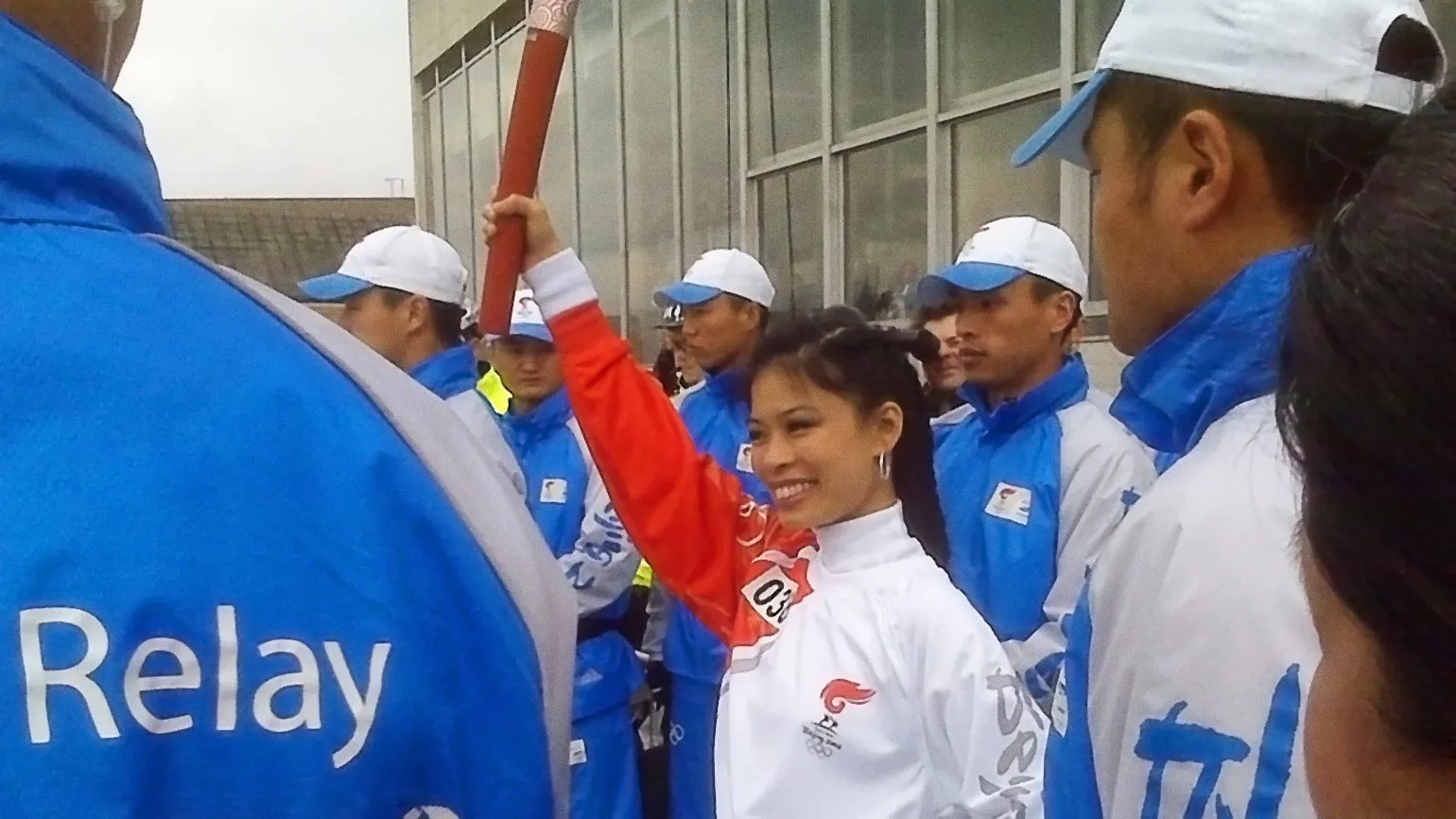
At the next Olympics, Vanessa intends to demonstrate her professional skills in skiing, confirming her competence and uniqueness as an athlete. She strives to go beyond statistics and show that she is a true master of her craft.
The path to the next Olympics turned out to be more difficult than May expected. Soon after the Sochi Games, she was disqualified. The International Ski Federation found evidence of manipulation of the results of the qualifying competitions, as a result of which May was able to fraudulently qualify for the Olympic Games.
The violinist filed an appeal, and the Court of Arbitration for Sport (CAS) confirmed the falsification of the qualifying results. However, it turned out that May herself was not involved in this case. As a result, her disqualification was lifted, which paved the way for her return to sport.
Last year, May announced her decision not to participate in the Olympics. The reason for this was accumulated injuries. In addition, she is considering the possibility of switching from alpine skiing to cross-country skiing. Lately, horizontal skiing has become more attractive and interesting for her.
Management and Marketing in the Sports Industry
You will learn how to organize a world-class event. Learn how to work with sponsors, monetize tickets and merchandise, promote sports clubs, and manage athletes' careers. You'll become a sought-after specialist in sports management and marketing.
Find out more