
Contents:
- How people used to look for the meaning of life
- What is the meaning of life from a psychological point of view
- Why people look for the meaning of life
- Why people lose the meaning of life
- What to do if you have lost the meaning of life
- How to find the meaning of life
- Where psychologists suggest looking for the meaning of life

Is the job suitable for you in IT? Take the test and try yourself in different IT areas. No programming experience required.
Learn moreHow people used to look for the meaning of life
The meaning of life is an inspiring idea, a higher motivation, an individual contribution to something greater, a mission that gives a person the strength to move forward and continue living, faced with injustice and failure.
Meaning is born in active actions and live contacts - where we feel significance. Therefore, it is important to stay involved in life: it has many worthy reasons to continue coping and trying again.
At the same time, everyone has their own meaning. Thus, Aristotle believed that the highest goal of life is the search for and achievement of happiness. He associated the latter with the development of intellectual and moral abilities. And Socrates and his student Plato argued that the only happiness and life's purpose for man is to know the truth and oneself. Not all the great minds of Antiquity appealed to high abstract values. For example, another contemporary, student, and friend of Socrates, the philosopher Aristippus, saw pleasure as the only universal meaning. The wise man enjoys, and the ignorant suffers—so believed the ideological father of hedonism, born in Cyrene, a city of luxury and wealth. In the Middle Ages, the meaning of existence was associated with religion: the main purpose of being is to serve God and save the soul. And in the 20th century, philosophers said the following:
- Søren Kierkegaard (philosopher, poet, theologian) believed that a person needs to clearly understand what he should do and find an idea for which he is ready to live and die.
- Albert Camus (philosopher, journalist, writer) emphasized the importance of accepting life's uncertainty and found meaning in the very process of searching for it in the surrounding absurdity.
- Martin Heidegger (philosopher) believed that meaning lies in the awareness of one's own mortality and immersion in the present moment (yes, "being in the moment" was not invented in the 2020s).
What is the meaning of life from a psychological perspective?
In psychology, as in philosophy, there is no universal answer. Meaning is a subjective concept. It depends on a person's beliefs and values and includes:
- worldview— understanding the content and direction of life, one's place in the world;
- goalsfor which a person lives, changes views and habits;
- guidelinesthat help to get through difficult periods;
- valuesthat set the direction for personal development.
It is important to define your values, not your goal. Goals have an end point, but values do not. They reflect the personal qualities that are important to us and help us understand how we want to relate to ourselves, people, and the world. Values act as internal supports in an anxious and lost state: if you don’t know what you want to do, you can push off from what you consider unacceptable.
Psychologist's commentary
— Everyone has their own set of values. But they all influence our actions and, ultimately, our lives. Therefore, it's important to understand what's valuable to you and learn to shape your own guidelines.
The presence or absence of meaning also depends on physical and mental health. In particular, mental disorders can provoke a loss of interest in the world and despair in response to the realization of the meaninglessness or overwhelming difficulty of life.
Despite this, some people with similar conditions fully feel the meaningfulness of what is happening and find support in it. And at the same time, people without any special needs or mental disorders may suffer from a lack of a sense of meaning in life.
Why do people look for the meaning of life?
To live more comfortably.
When a person understands why he exists, what he strives for, when he feels fulfilled by important things, he wins additional "points" in mental and physical well-being.
Meaningfulness gives a feeling of satisfaction. People who have a "big" goal are more likely to experience joy and self-esteem. And also – sufficient motivation for action, physical activity and the formation of healthy habits.
Scientists have traced the connection between the meaning of life and physical and mental well-being. They surveyed more than 1,300 participants over 21 years old to what extent they agreed with statements assessing the meaning of life.
The wording in the questionnaires sounded like this: “I understand the meaning of my life,” “I have a clear sense of purpose in life,” “I am looking for what gives me meaning in life.” Respondents who realized why they live turned out to be happier and healthier than participants “actively searching.” And a lack of success in finding meaning in life was associated with deterioration in physical and mental health, as well as cognitive function.
Another large study examined the impact of meaning in life on cognitive decline. Participants from 14 countries were followed for nine years: as a result, the lack of a sense of meaning in life correlated with an increased risk of cognitive impairment by more than 20%.

But the quality of life is not always directly related to a sense of meaning. Some are “filled” by communication and personal connections, others - by career achievements or material well-being. The ultimate goal of life's “quest” is not important for everyone: sometimes the main thing is a sense of joy in everyday life.
Why people lose the meaning of life
The loss of meaning is sometimes associated with an existential crisis. Its development provokes the awareness of one's own mortality and the unpredictability of the future. As a result, large-scale disappointments, loss of self-confidence, rejection of religion or other significant beliefs that no longer help understand how the world works occur.
Experiencing such states is normal, it is a natural part of human life. There are normative crises. They arise regardless of a person's life circumstances and come simply because the time has come. Thus, a midlife crisis does not evoke the happiest feelings.
It would seem that everything has worked out: a happy family, a stable job, weekend trips to the dacha and vacations once every six months. But the "lucky one" is not motivated or happy by an orderly life. Questions creep into the head: "Have I accomplished so much?", "Why did I achieve all this?", "What's next?"
Having collected the standard checkboxes of public approval, the hero of this example probably wondered: did I really need all this? Does life boil down to collecting a set of achievements? Rethinking the precepts you have followed for decades is not easy. And sometimes it is impossible without the help of loved ones or a psychologist. And understanding the meaning of life or searching for a new one is also an important step in overcoming psychological crises.
There are other reasons for the loss of meaning.
- Traumatic experience: death of a loved one, separation, physical, psychological or sexual violence.
- Change in living conditions: for example, being forced to move to another country and having to leave your beloved home, job and family.
- Stability: long-term calm well-being and the effect A positive "Groundhog Day" makes you ask, "What's the point of all this?"
What to do if you've lost the meaning of life
Loss of meaning sometimes leads to feelings of helplessness and despair, and increases the risk of developing depression and social isolation. You can cope with this period in a few steps:
- Get over the loss and say goodbye to old meanings;
- Accept the uncertainty and volatility of life;
- Be patient and give yourself time to search;
- Enlist the support of loved ones and (or) a psychologist;
- learn to see new opportunities, try yourself in new activities.
Many people go through a loss of meaning in life, but then find new guidelines. This gives them the strength to move forward.
Psychologist's commentary
— When I felt meaninglessness, I searched for a long time for a new direction of development and completely unexpectedly came to psychology. I went to study at Moscow State University, then discovered the specialization "Psychodrama". Life has become vibrant again.
I realized that it was important to me to help people on their path to self-confidence and change. Now it aligns with my values and fills my life with meaning. But this journey began with a feeling of complete emptiness. This is the hidden gem of a period of loss of meaning: it opens up an unlimited number of opportunities to try. What was previously labeled "not mine" can suddenly turn into a favorite thing and a calling.
How to Find the Meaning of Life
Unfortunately, there is no instruction manual for a happy and fulfilled sense of self. But there are a number of recommendations.
- Give up time frames. The process can take a day, a month, or a couple of years. And any scenario is normal: finding meaning is not a race, but an intimate, personal experience in which there is no place for haste and competition.
- Find your passions and interests. Remember what brings satisfaction and joy. If nothing at the moment, look at previous years.
- Learn meditation practices. They help you to deeper understand your feelings and thoughts. Or, conversely, stop dwelling on dark and destructive images.
- Start investing in relationships with people.Communication, support, and interaction with society help you feel important.
- Ask for feedback.In moments of feeling worthless, you can turn to loved ones. They will help you remember your achievements and positive qualities.
- Try helping others. The search for the meaning of life is often associated with serving society. This could be support for loved ones, a social profession, or volunteer work (both physical and intellectual). In addition, volunteering reduces the feeling of loneliness, stimulates the production of endorphins and helps to overcome depressive states.
Where do psychologists suggest looking for the meaning of life?
There are many ways.
For example, existential psychologist Irvin Yalom identifies four universal problems of humanity:
- death;
- freedom (the need to make decisions independently and bear responsibility for them);
- loneliness (isolation);
- meaninglessness.
The meaning of life according to Yalom is to resist these realities. A person strives for immortality, learns to make choices, make mistakes and make decisions again. Tries to find meaning and purpose in everything, avoid isolation and looks for reasons to feel involved in something bigger. To be part of the whole.
In the process of such active resistance to the laws of life, defense mechanisms are activated in the psyche, which reduce stress and anxiety from thoughts of the inevitability of death and loneliness. Or from the awareness of the vastness and chaos of the world and one's own tiny size in it.

Protections may vary. For example, when faced with meaninglessness, there are two types of defense:
- Compulsive activity - attempts to constantly keep busy in order to dull the aimlessness of one's own life;
- Nihilism - a conscious disregard for the concept of meaning in general, devaluing one's own and others' motivating values.
Another vector of the search for meaning was outlined by the Austrian psychiatrist and psychologist Viktor Frankl, who survived the concentration camps of World War II. He described his experience in the book "Man's Search for Meaning." According to the psychiatrist, it was the presence of the meaning of life that helped people cope with extreme conditions and adversity.
Frankl created logotherapy. It is based on two postulates: firstly, the meaning of life is unique, and secondly, it is associated with responsibility to oneself and others. Everyone has their own goals and values, but everyone must find their own global task and contribute to the good of the world.
"... we must not ask about the meaning of life, but understand that this question is addressed to us - daily and hourly life poses questions, and we must answer them - not with talk or reflection, but with action, correct behavior. After all, to live ultimately means to be responsible for the correct fulfillment of the tasks that life sets before each one, for fulfilling the demands of the day and the hour. These requirements, and with them the meaning of existence, vary from person to person and at different moments in life. This means that the question of the meaning of life cannot have a general answer."
Viktor Frankl, "Say Yes to Life!"
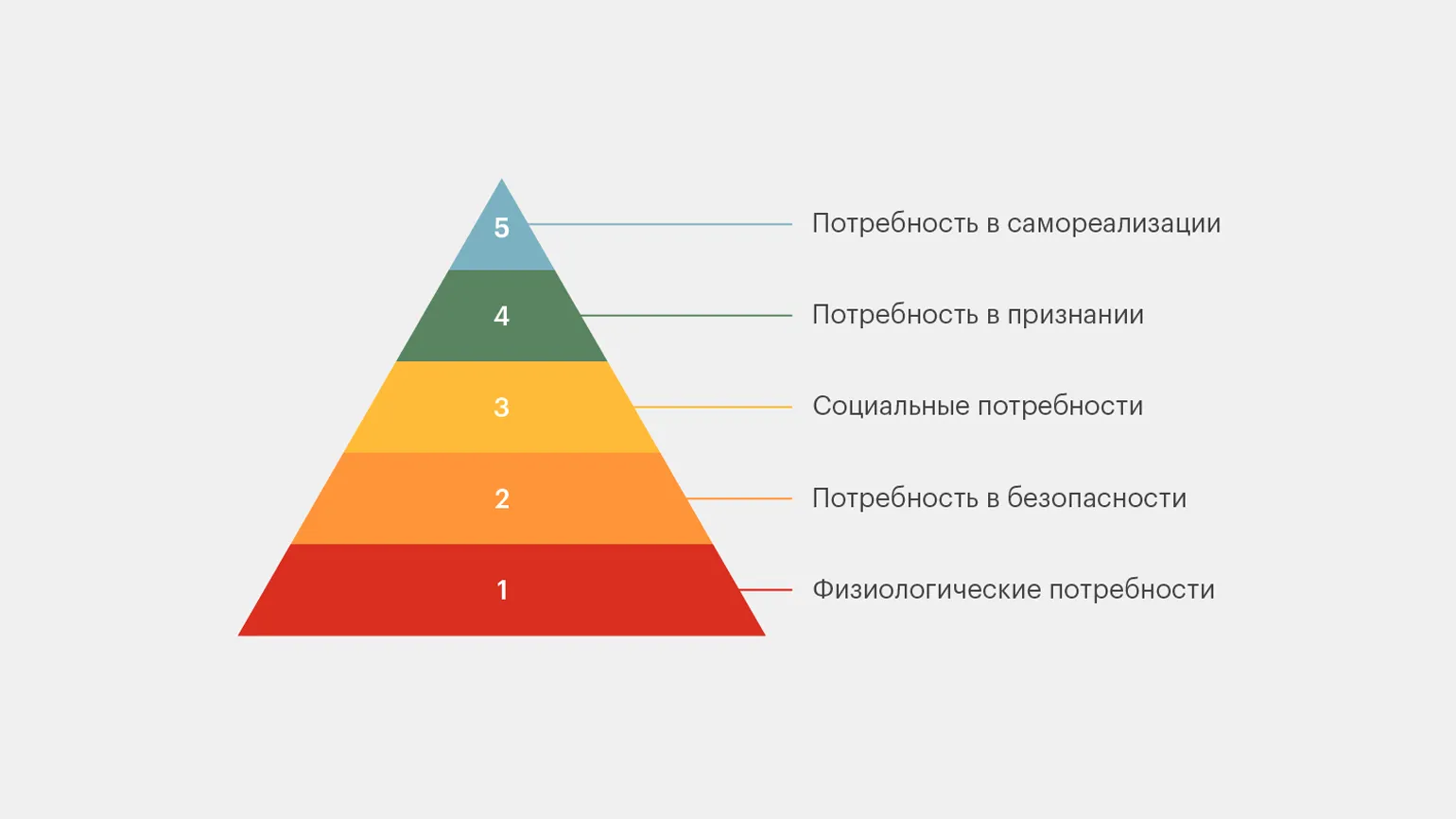
Abraham Maslow's hierarchy of needs also, to some extent, visualizes the theory of the meaning of life. According to the American psychologist and founder of humanistic psychology, meaning lies in the realization of potential and the achievement of self-actualization. The latter includes awareness of values and goals, as well as the desire for personal growth and development.
And then there is the flow theory of the American psychologist Mihai Csikszentmihalyi.
The feeling of flow occurs when a person is completely absorbed in an activity and experiences enjoyment from the process. According to Csikszentmihalyi, finding the meaning of life is finding activities that lead to a state of flow, bring pleasure and help you feel happy (yes, “being in the flow” was also invented a long time ago). In other words, it is about finding something you love and allowing yourself to do what you like and what fulfills you.
Psychologist's commentary
— Whichever path is closer, it is easier to follow it with the support of loved ones. Or a specialist psychologist: working with him, you can examine your life from different perspectives, study personal limitations in the face of new prospects. The latter often harbors new meanings.
The meaning of life is an important guideline that drives a person and helps them develop as individuals. Over the course of a lifetime, it can be transformed many times or even lost completely. But it's important to remember that it's never too late to try to find new meaning.
Free career guidance
Take a short test and find out which profession is right for you, and then try your hand at your chosen specialty. At the end of the course, you will have a session with a career guidance specialist. It will help you decide on your career path.
Find out more