
Thinking about a new profession, but don't know where to start? Find out what suits you: IT, design, game development, management or marketing. Take a free career guidance.
Learn moreIn this article, you will get a complete overview of the topic. We will cover the key aspects that will help you gain a deeper understanding of the subject matter. You will be able to learn about the most important points, as well as practical recommendations that will be useful in your work. Read on to find important details and tips that can significantly improve your knowledge and skills in this area.
- What is touch typing?
- Why is it worth learning?
- How to learn touch typing?
What is touch typing?
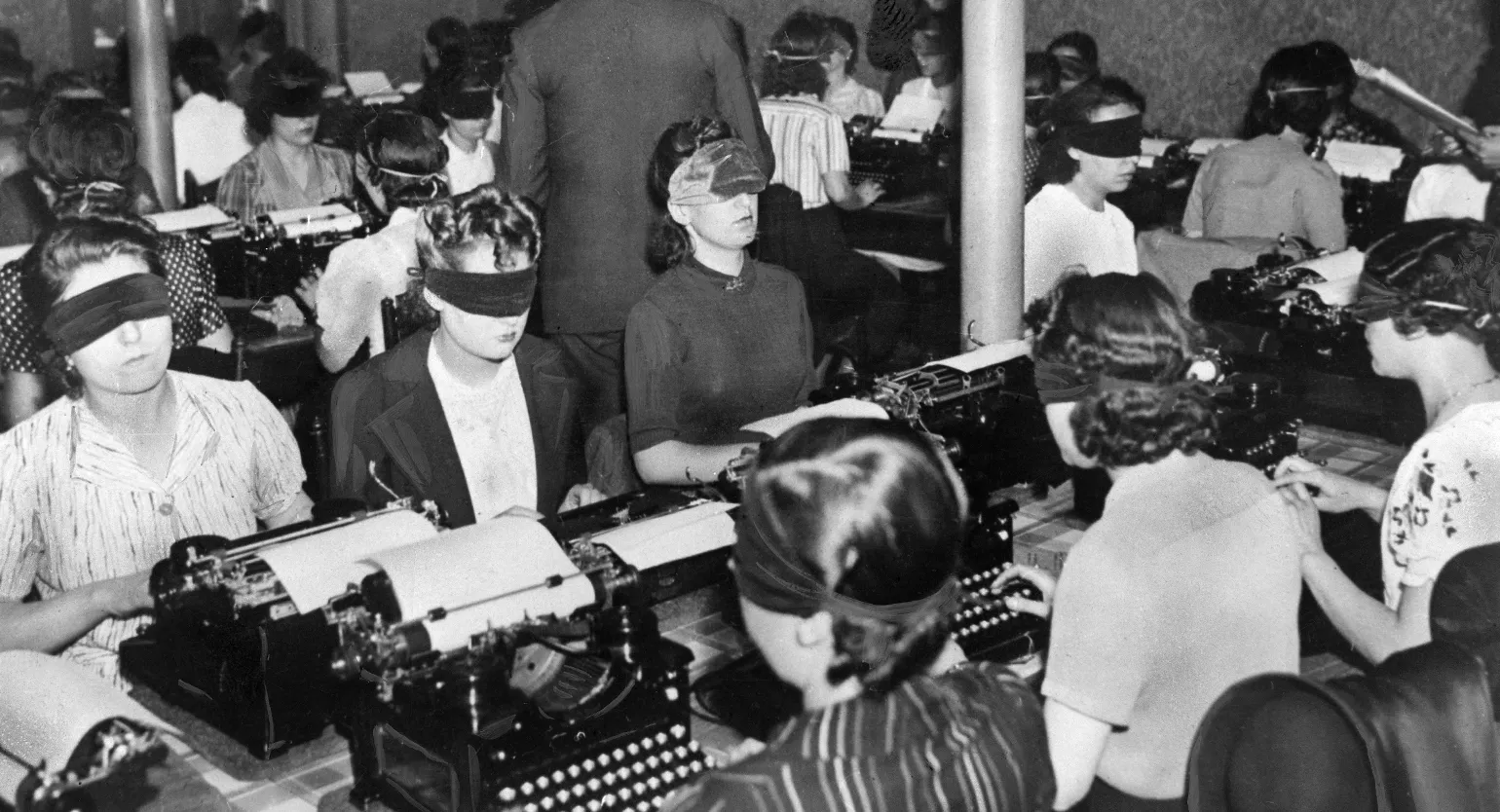
Touch typing is a typing method in which a person doesn't have to look for keys, but uses their layout, having memorized it. This method allows you to use all your fingers, which leads to increased typing speed and accuracy. Mastering touch typing significantly improves your productivity with text documents, making the process more efficient and comfortable.

Reworked text:
Please note the following recommendations to improve your experience. Proper use of keywords and content optimization will help you better engage with your audience and increase visibility in search engines. Be sure to consider current trends and the preferences of your target audience to ensure the maximum effectiveness of your content. Stay up-to-date with SEO updates to stay competitive.
Also read:
Speed reading is a method of increasing the speed of reading text without significantly losing comprehension and information retention. This skill allows you to effectively process large amounts of information, which is especially useful in today's world, where information is received in vast quantities.
Mastering speed reading involves a number of techniques, such as improving concentration, developing peripheral vision, and using various text perception strategies. Practicing these methods helps not only increase reading speed but also improve memory and attention.
To learn speed reading, you should start with reading simple texts and gradually move on to more complex ones. Regular practice, using special apps, and participating in courses can also significantly accelerate the learning process. It's important to remember that speed reading is a skill that requires time and dedication to achieve noticeable results.
Why is this skill important?
The touch typing method was developed in the 19th century and significantly increased the productivity of typists and secretaries. This skill is especially useful for professionals who work with texts, such as copywriters, editors, journalists, and programmers. Mastering touch typing allows you to speed up the typing process, improve accuracy, and reduce the level of timidity. In today's world, where speed and efficiency are of great importance, the ability to type quickly and accurately is becoming an important competitive advantage.
Learning this method has many benefits. Firstly, it significantly increases the efficiency of task completion. Secondly, this method promotes the development of analytical thinking, which is useful in various areas of life. Thirdly, mastering this technique opens new opportunities for personal and professional growth. Each of these benefits makes learning this method an important step towards achieving success.
- Typing speed. The speed of formulating thoughts is 60-80 words per minute. The average speed of typing using the classic method is about 30-40 words per minute, while touch typing allows you to type 100 words per minute. So, theoretically, having mastered touch typing, you can non-stop write down your own thoughts (if you suddenly decide to keep a diary) or take notes from a lecture at school.
- Reduced neck strain. When a person touch-types, they do not need to look at the keyboard. Because you can look straight ahead, the neck will be less involved and the strain on it will be reduced.
- Can help with dyslexia. People with dyslexia may find it easier to type on a computer than to write with a pen. Muscle memory and the ability to quickly correct errors allows a person with dyslexia to feel more confident and write text faster.

Check out additional materials:
Dyslexia is a specific disorder that makes reading and writing difficult, despite a normal level of intelligence and appropriate preparation. People with dyslexia may have difficulty comprehending written information, which can impact their academic performance and daily life. Key signs of dyslexia include difficulty recognizing words, spelling problems, and slow reading. It's important to understand that dyslexia is not a manifestation of low intelligence or a lack of effort. It's a neurobiological condition that requires a specific approach. People with dyslexia can be successful students and achieve high results with the necessary support and adaptations. Various methods and strategies can assist with learning, including the use of visual aids, specialized programs, and individual tutoring. If you have dyslexia, it's important to develop confidence in your abilities and find appropriate learning strategies. Emotional well-being and support from family and teachers also play a key role in overcoming the challenges associated with dyslexia. With understanding and support, you can successfully adapt to life with this condition and realize your potential.
How to Learn Touch Typing
First, you need to focus on developing muscle memory, and then move on to improving the accuracy and speed of exercises. Developing muscle memory is a fundamental step that allows you to gain confidence in your movements and automate them. After this, you can begin practicing skills aimed at improving the accuracy and speed of task performance. This is a consistent process that ensures effective mastery of the technique and improved results in the long term.
To effectively master the skill of touch typing, it is necessary to ensure a minimum number of distractions. An important aspect is choosing a comfortable posture, which promotes better concentration and increases productivity while typing. A comfortable posture not only helps you concentrate but also reduces the risk of fatigue and discomfort while working.
Your chair should provide back support and be a comfortable height, allowing your arms to be bent at a 90-degree angle above the desk and your feet to rest on the floor. Your head should be an arm's length from the monitor to prevent neck strain. The keyboard should be positioned so that your wrists remain straight and as relaxed as possible. A well-organized workspace improves concentration and reduces fatigue, which is important for productivity.
The home keys are the center row of the keyboard on the popular QWERTY layout. These keys include A, S, D, F, J, K, L, and period, and play a vital role in typing. The placement of the home keys allows the user to find the starting positions for their fingers, which promotes more efficient and faster data entry. Mastering the home keys is an important step in learning touch typing, significantly improving keyboard performance. The left hand plays a vital role in our lives, providing many functions and capabilities. It is involved in various activities, such as writing, drawing, lifting objects, and performing everyday tasks. Many people underestimate the importance of the left hand, yet it is an integral part of our body and helps maintain balance and coordination. It is important to consider the health and functionality of the left hand to avoid injury and ensure its proper development. Regular exercise and stretching can significantly improve its strength and flexibility, which is especially important for those involved in sports or creative activities. By paying attention to our left hand, we promote overall well-being and improve our quality of life.
- "F" is the little finger.
- "Y" is the ring finger.
- "B" is the middle finger.
- "A" is the index finger.
The right hand is an important part of our body, playing a key role in everyday life. It enables us to perform many actions, such as writing, working with tools, preparing food, and interacting with the world around us. The right hand consists of several main parts: the hand, forearm, and upper arm, each of which performs its own functions.
The functionality of the right hand depends on many factors, including physical fitness and health. Strengthening muscles, joint flexibility, and motor coordination are essential for maintaining its functionality. Sports, physical therapy, and regular exercise help prevent injuries and improve overall fitness.
Taking care of your right hand includes maintaining proper posture, using comfortable furniture and tools, and taking regular breaks while working at a computer to avoid strain. Proper use of your right hand also helps prevent various illnesses and pain.
In conclusion, the right hand plays an irreplaceable role in our lives. Its health and functionality can be maintained through regular physical activity and self-care.
- "O" is the index finger.
- "L" is the middle finger.
- "D" is the ring finger.
- "F" is the little finger.
For correct hand placement on the keyboard, pay attention to the raised marks on the "A" and "O" keys. These marks will help you place your index fingers in the correct position, while the rest of your fingers take their places on the keys in the middle row. Correct hand position promotes more efficient typing and improves overall typing speed.
After pressing different keys, your fingers should return to their original position. This is important for maintaining proper typing technique and preventing fatigue. Correct finger placement promotes more efficient work and reduces the risk of injuries associated with prolonged keyboard use.
Keys are assigned to specific fingers according to the diagram provided. This helps improve typing technique and increase typing speed, as each finger is responsible for a specific group of keys. This approach helps develop muscle memory and makes typing more efficient. Proper distribution of keys between the fingers allows you to avoid unnecessary movements and improve overall productivity on the keyboard.
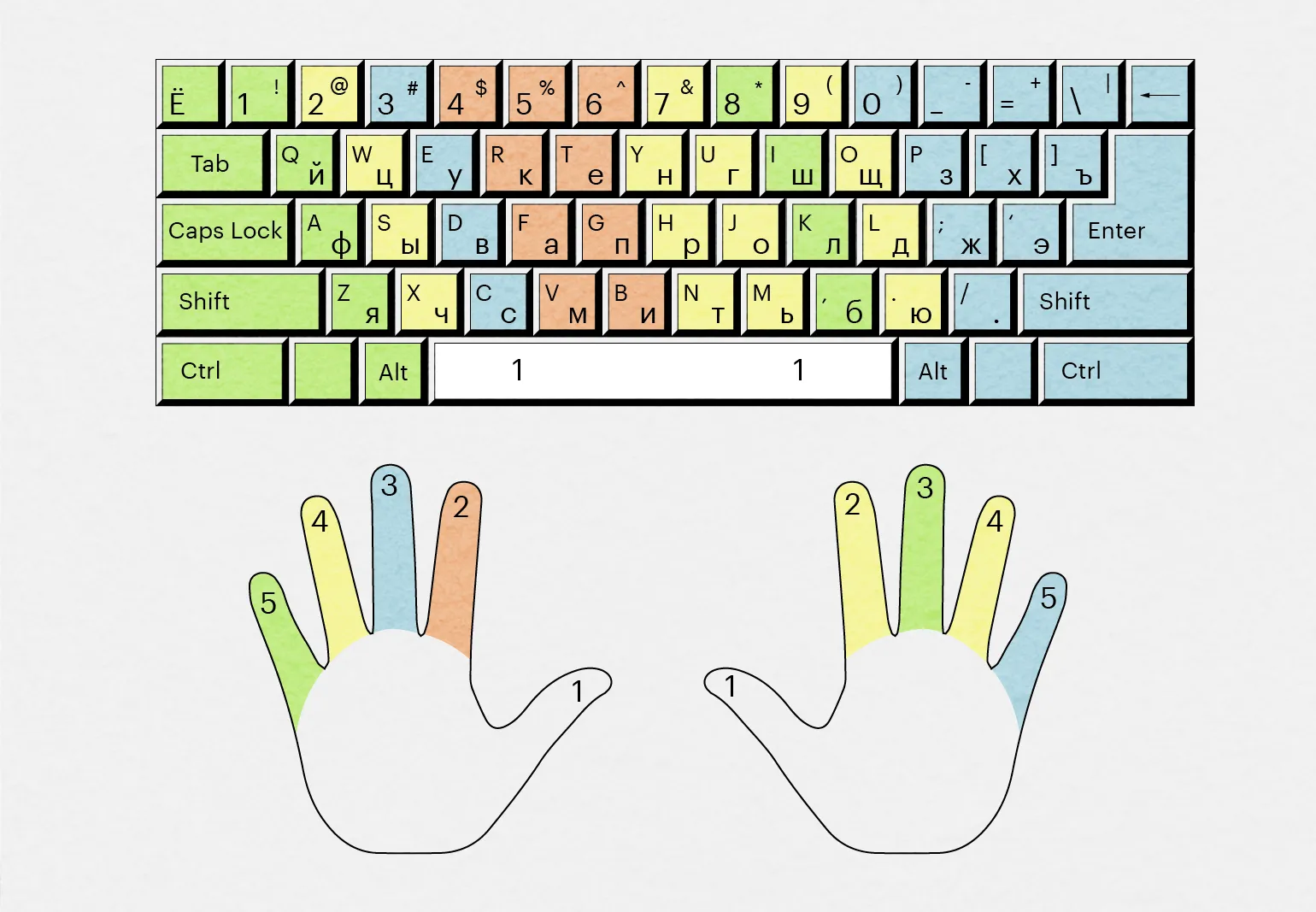
This is the most common scheme, but it is often adjusted depending on specific needs and circumstances.
One of the platform users Habr has created its own unique control scheme and claims it is more convenient. If during training you find that some keys are more convenient to press differently than the standard scheme, this is completely normal. The main thing is to develop the skill of using all fingers. This approach will significantly increase the effectiveness of your training and improve overall productivity.
The space bar is conveniently pressed with your thumbs, regardless of which hand you use. It is also recommended to familiarize yourself with basic hotkeys to improve your computer efficiency. Knowing hotkeys will significantly simplify various tasks and speed up your work, eliminating unnecessary movements.
Don't worry, it may seem difficult at first, but with practice you will memorize the correct hand position. We recommend printing out the diagram and keeping it in a visible place during your first few sessions. This will help you master the technique faster and improve your skills.
Start by typing the letters on the top row of the keyboard, then move on to the bottom row. Be sure to return your fingers to their starting position after each press. This will help you develop proper typing technique and improve your speed. Regular practice will help you master the key layout faster and improve your typing accuracy.
Ignoring the keyboard at the initial learning stage can be difficult. To make this process easier, we recommend covering the keys with stickers or masking tape. You can also consider purchasing a keyboard overlay or a keyboard without labels or a Russian layout. This will help you focus on learning and speed up the process of memorizing the key layout.
Regular practice is the key to achieving success in touch typing. It is better to practice 15 minutes every day than to dedicate two hours once a week. Short sessions help maintain concentration and make it easier to find time for practice. This approach helps develop skills faster and improve typing speed. Systematic practice creates a lasting habit, which ultimately leads to noticeable results.
Also, try to use every available opportunity to practice touch typing. For example, you could start touch-typing while chatting with friends on instant messaging apps. This will not only help you improve your typing speed and accuracy, but also make your communication more effective. Practice regularly, and you'll soon notice significant improvements in your typing skills.
You can memorize the key layout in just a few weeks of regular practice. After that, it's recommended to continue practicing to improve your typing accuracy and speed. This practice will not only speed up your typing but also reduce the number of errors, which in turn will make the process more efficient. Regular practice is the key to mastering keyboard typing.

Read also:
Mnemonics are a set of simple and effective methods for memorizing information. These techniques help improve memory and facilitate the learning process. Using mnemonics, you can remember large amounts of data, dates, facts, and lists. Various approaches, such as associations, visualization, and the use of rhymes, facilitate better assimilation of material. By mastering mnemonics, you will significantly improve your memorization ability and improve your academic or work performance. Among the most popular online trainers, several platforms offer a variety of exercises and training programs. These resources allow you to exercise at your own time and pace, making them ideal for people of all fitness levels. A user-friendly interface, a wide selection of workouts, and the ability to track your progress make online trainers attractive to users. Investing in health and physical activity, many choose these solutions to achieve their fitness goals. Typing Club is a free game that helps you maintain proper hand position while typing. Klava.org is an online service for practicing touch typing in Russian, Ukrainian, and English. You can also use this tool to practice programming languages.
When switching to touch typing, you may notice a significant decrease in speed. During this time, you will have a strong urge to use your index finger and look at the keyboard. However, it is important not to give up and keep practicing. With each practice, your results will improve, and you will quickly master the technique of touch typing. Regular practice will help you improve your speed and accuracy, which will ultimately make your writing more efficient.
To track your typing progress, you can use YouTube lectures. Start the video, set the timer for one minute, and start recording. Each time, record the number of words you typed in that time. Over time, you'll notice your typing speed improving. This method will not only improve your skills, but also make the learning process more fun and effective.
Study additional materials:
- What is multitasking and should you develop it?
- Music for work: helps increase productivity and concentration
- 6 ways to improve concentration

How to make money in IT
Take a simple test to understand which IT field suits you best. Master Python and Java, mobile and web development, data analysis, neural networks, testing, and cybersecurity. Write your first programs and create a personal career plan to start in IT.
Find out more