
Contents:

Learn: The Profession of a Methodologist from Scratch to PRO
Find out moreHow have organizations' plans for the use of AI changed?
From 2019 to 2022, the proportion of respondents increased significantly HolonIQ, which has successfully implemented AI-based solutions, reached 25%. The number of organizations planning to implement such technologies in the near future also increased, while the number of respondents not interested in using AI completely disappeared. This indicates a growing interest in artificial intelligence and its application in various fields.
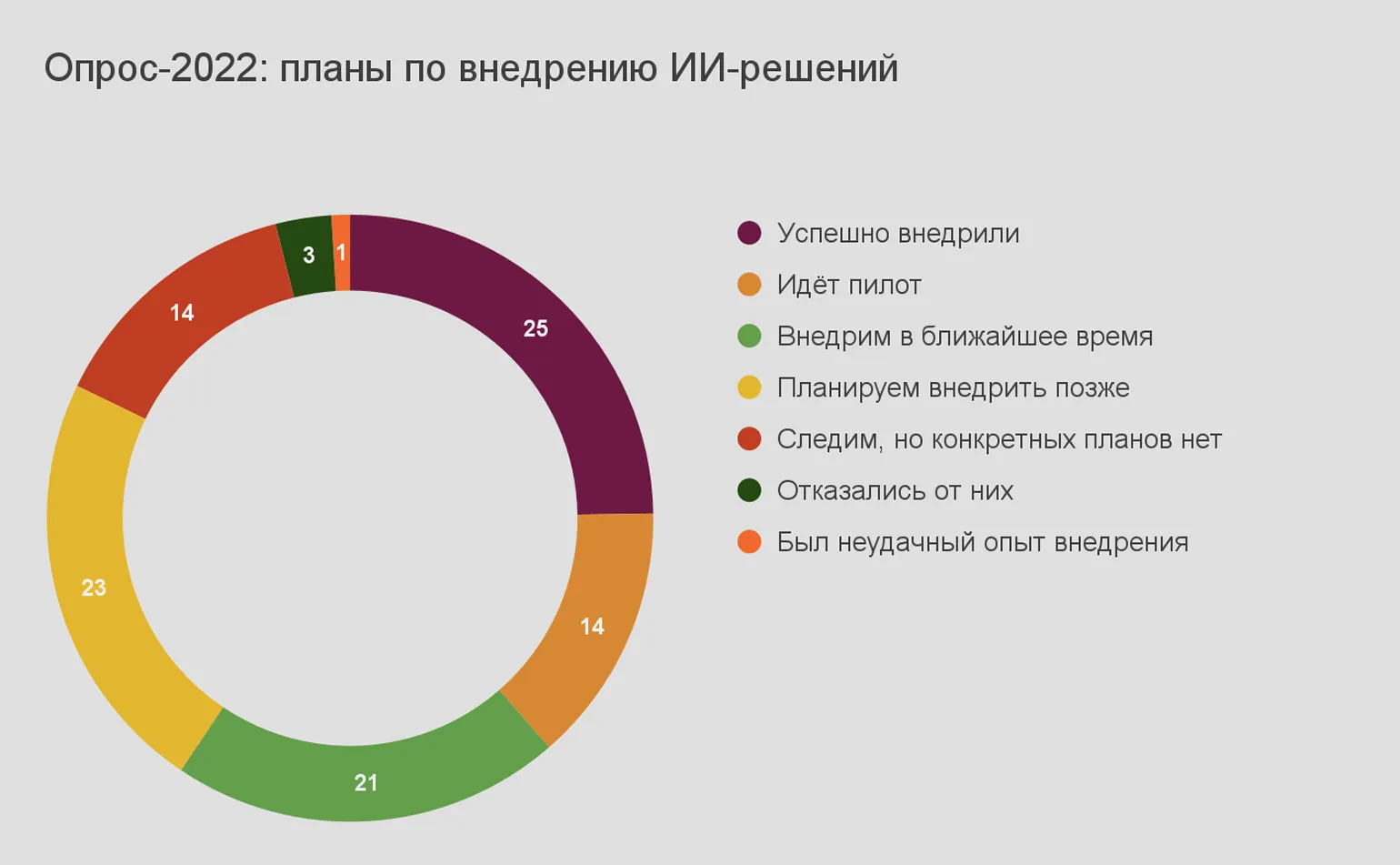
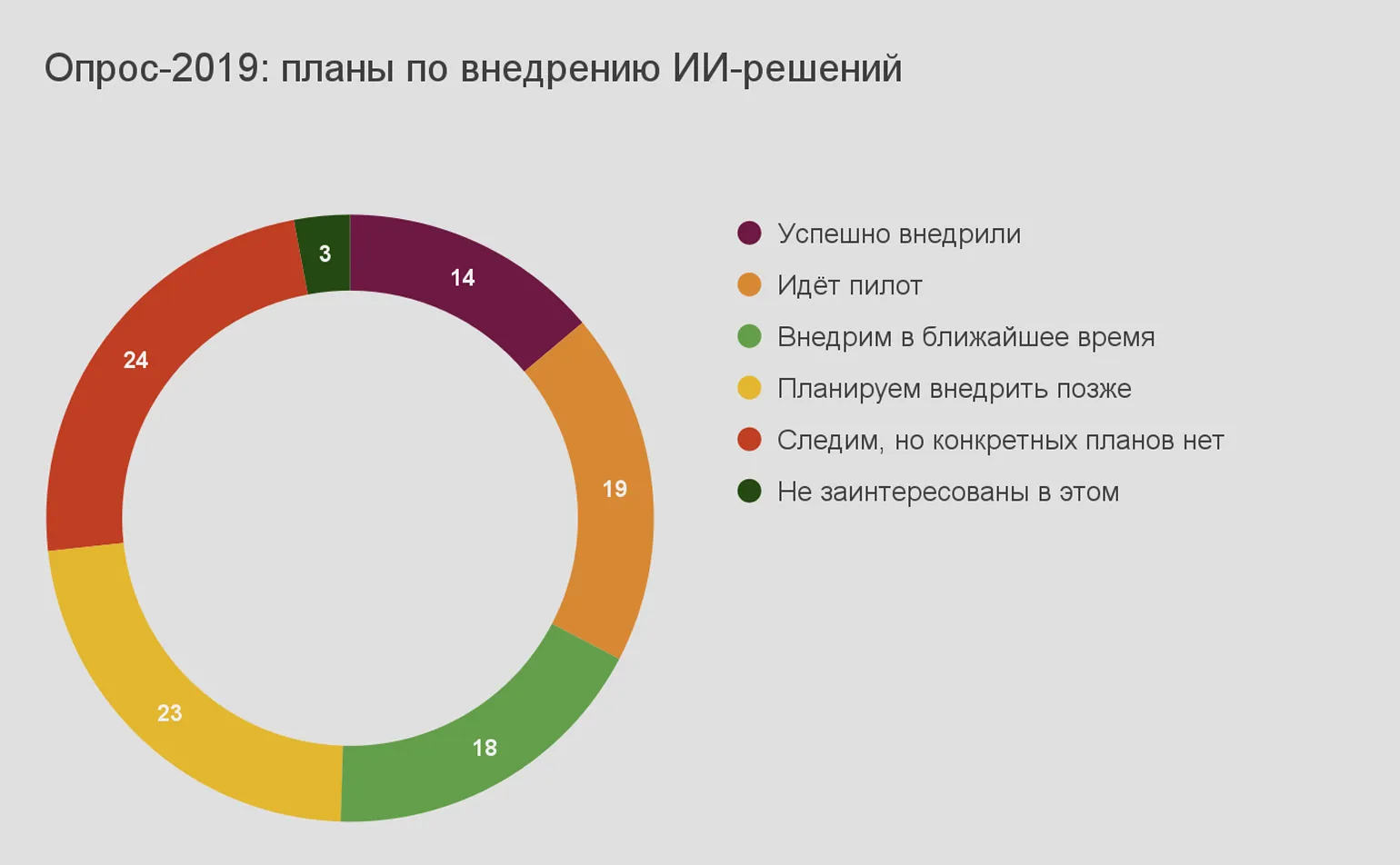
Not all users have a positive experience with artificial intelligence. Around 4% of respondents reported failures and decided to stop using AI.
At one of HolonIQ's webinars, possible reasons for disappointment in the use of artificial intelligence (AI) in higher education were discussed. The company's experts noted that many sector participants interviewed expressed the opinion that AI solutions, particularly in the field of learning analytics, did not provide the significant and rapid changes expected several years ago. It also turned out that before the implementation of AI, there was no clear understanding of how many resources this process would require.
Which AI-based solutions have proven promising for education
HolonIQ experts identify four key areas in the field of artificial intelligence that have significant potential for application in education. These areas will help improve the educational process, increase the effectiveness of learning, and adapt educational programs to the individual needs of students. The integration of AI into educational institutions can lead to the creation of more personalized and interactive learning materials, as well as the optimization of administrative processes.
- computer vision technologies,
- voice solutions,
- language models,
- analytics.
The survey found that in 2022, industry representatives considered the last two areas of application to be the most promising. Survey participants paid particular attention to analytical solutions, which received the highest rating - 8.6 out of 10. These solutions were also the most frequently implemented or were in the pilot testing phase, confirming their high potential: the share of such responses was 49%.
The survey was conducted before the introduction of ChatGPT, a language-model-based chatbot that has made a splash in the education sector. HolonIQ notes that respondents emphasize the importance of language and analytical technologies, as they can form the basis for the development of intelligent adaptive learning systems. These technologies can improve the educational process, providing a personalized approach to each student and optimizing teaching methods.

Reading is an important aspect of personal growth and development. It helps expand horizons, improve critical thinking skills, and enriches vocabulary. Immersing yourself in books and articles not only allows you to gain new information but also develops your imagination. Thus, regular reading contributes to a deeper understanding of the world around you and the formation of your own views. Don't miss the opportunity to discover new topics and ideas that can change your life.
Salman Khan, founder of the online platform Khan Academy, shares his thoughts on ChatGPT and its impact on education. He believes that artificial intelligence like ChatGPT can significantly transform learning by providing access to knowledge and resources for students worldwide. Khan emphasizes the importance of using technology to enhance education and believes that ChatGPT can be a valuable tool for teachers and students. He notes that the proper use of such technology can facilitate more personalized learning, allowing each student to progress at their own pace and receive support when needed. Salman Khan also expresses hope that such innovations will help overcome existing barriers to access to education, opening up new opportunities for learning and growth.
In recent years, computer vision technologies have gained significant importance in education, particularly in proctoring systems. However, despite their importance, respondents noted that these technologies, along with voice assistants, are perceived as less critical to the learning process. According to AI users' experiences, its greatest value is in the areas of assessment and feedback, as well as in the learning and support processes of students. AI is capable of analyzing academic achievements, providing personalized recommendations, and promoting a deeper understanding of the material. This makes it an indispensable tool in the educational process, improving the quality of learning and student satisfaction. The introduction of AI into educational systems opens new horizons for effective interaction between teachers and students.

Many Companies that are just beginning to test AI-based solutions identify improving the user experience as their primary goal. This was cited by 75% of respondents. This confirms the growing popularity of analytical tools aimed at personalizing the educational process and supporting students. Other significant motives for implementing AI include the desire to reduce costs, noted by 45% of respondents, and an ambitious desire to change the market, mentioned by 43% of survey participants.

Reworked text:
Study additional materials:
Artificial Intelligence in Education: Analyzing Practical Applications
Artificial intelligence (AI) is rapidly being integrated into the educational process, providing new opportunities for students and teachers. This technology helps tailor educational materials to individual student needs, improving the quality of learning.
The use of AI in education covers various aspects, including automated assessment, the creation of personalized curricula, and the use of intelligent tutors. By analyzing big data, systems can identify student strengths and weaknesses, allowing for more effective organization of the educational process.
Furthermore, AI helps improve interaction between students and teachers by providing tools for feedback and monitoring learning activity. This helps create a more engaging and productive educational environment.
Thus, artificial intelligence is becoming an important tool in education, transforming teaching and learning methods and opening up new horizons for the development of educational technologies.
What is becoming an obstacle to the implementation of AI?
Artificial intelligence is not used in all aspects of the educational process and does not solve all the problems facing the education system.
The experts surveyed highlighted testing and assessment, as well as language learning, as market segments where they expect a significant impact from artificial intelligence. Vocational and higher education, as well as corporate training, received high ratings, with almost 8 out of 10 points each. Meanwhile, the prospects for applying AI in school education were rated significantly lower, and the potential of technologies for early childhood education was even less optimistic, with only 5.6 points.
The implementation of artificial intelligence (AI) in projects faces a number of obstacles, despite its obvious advantages. One of the key factors is the need to prepare an organization for the integration of AI solutions. This includes mapping the available capabilities of AI tools, creating the necessary technical infrastructure, and establishing data collection processes. However, many organizations experience difficulties at these stages. According to surveys, the number of respondents reporting difficulties with AI implementation increased in 2022 compared to 2019. This highlights the importance of a strategic approach and careful preparation when integrating artificial intelligence.

Reading is an important part of our lives and helps develop thinking, broaden horizons, and deepen knowledge. In today's world, where information is available in huge volumes, it is important to choose quality sources and devote time to reading useful materials. This could be fiction or specialized articles on topics that interest you. To better absorb what you read, try to take notes and share your thoughts with others. This will not only improve your comprehension but also help you remember key points. Remember, reading is not only entertaining but also enriches your inner world.
Data Analytics in Education: Barriers to Implementation in Higher Education Institutions
The implementation of data analytics in the educational process of higher education institutions is a pressing task that contributes to improving the quality of education. However, there are significant barriers that hinder the successful integration of analytical tools in universities.
One of the main problems is the lack of qualified specialists capable of working with data. Many universities face a shortage of personnel with the necessary knowledge in the field of analytics and statistics. This leads to the fact that the implementation of modern technologies is difficult.
Furthermore, many educational institutions do not have the adequate infrastructure for collecting and processing data. The lack of modern information systems and platforms for data analysis limits the ability of universities to use analytics. Without high-quality tools, it is difficult to get a complete picture of the educational process.
Another barrier is insufficient financial support. Investments in analytics technologies can be significant, and many universities do not have the necessary resources to implement them. This limits the opportunities for the development and use of data analytics.
It is also worth noting that not all faculty and administrative staff are ready for the changes associated with the implementation of analytics. Resistance to change and a lack of awareness of the importance of data for the educational process can hinder progress.
In conclusion, despite the obvious benefits of data analytics in education, higher education institutions face many obstacles that must be overcome to successfully implement modern approaches to teaching and management. Comprehensive measures, including staff training, infrastructure development, and funding, are needed to ensure the effective use of data analytics in universities.
In recent years, there has been a significant shortage of professionals in the field of artificial intelligence. According to surveys, the share of organizations with employees or the ability to attract specialists with the necessary skills to implement AI has decreased from 37% to 28% since 2019. This trend highlights significant challenges in training staff to work with modern technologies. Furthermore, educational institution employees are reluctant to adopt AI solutions due to low levels of trust in these technologies. The level of distrust in AI-generated conclusions continues to grow: the share of responses indicating employee trust in such conclusions fell from 18% in 2019 to 12% in 2023. Similarly, the use of AI in decision-making and management has decreased from 7% to 3%. These data highlight the need to increase trust in AI and develop professional competencies in this area.
The survey authors attribute the results to several factors, including a global digital skills shortage and the increasing complexity of artificial intelligence tools. These aspects highlight the need to improve digital literacy and adapt to new technologies in the context of rapid development of AI.
The distribution of responses to the question about the most significant barriers to the implementation of artificial intelligence confirms the existing problems. Infrastructure and data deficiencies remain the same as three years ago, but other barriers have become more noticeable. This indicates the need to reconsider strategies and approaches to implementing AI in business processes.
The implementation of artificial intelligence in educational organizations faces several limitations. The main problem is insufficient technical infrastructure, which prevents the effective integration of AI technologies into the educational process. Many educational institutions do not have the necessary equipment and software to implement innovative solutions.
Furthermore, a shortage of qualified specialists also hinders progress. Teachers and administrators must have knowledge of AI to effectively utilize its capabilities. This requires additional investment in training and workforce development.
The lack of a clear strategy for implementing AI in educational processes is also a significant obstacle. Many organizations lack a clear understanding of how to integrate AI into existing programs and how to evaluate its effectiveness.
Another important issue is the ethical and legal aspects of using AI in education. Ensuring the privacy of student data and compliance with legislation in this area requires careful consideration.
Therefore, to successfully implement artificial intelligence in educational organizations, it is necessary to overcome technical, personnel, and legal barriers. This will create the conditions for more effective use of AI in education and improve the quality of the educational process.
Data provided by HolonIQ. This source of information is reliable and relevant for analyzing educational technologies and markets. HolonIQ offers in-depth analytics and forecasts, making it a valuable tool for researchers and education professionals. Using HolonIQ data helps better understand trends and changes in the education sector, as well as identify key opportunities for growth and innovation. Accessing this source allows companies and institutions to make informed decisions based on evidence and analytics.
The labor market situation in 2022 is largely driven by the fact that many organizations have begun developing their AI tools internally, rather than purchasing ready-made solutions or outsourcing. This was reported by 42% of survey participants. At the same time, demand for AI skills is rapidly growing, putting educational institutions in a challenging position as they struggle to compete for qualified IT talent. The optimal solution to this problem will likely be developing partnerships with other industries, which will leverage existing resources and improve the quality of AI training.
Learn more about education by subscribing to our Telegram channel. We share relevant news, useful tips, and interesting materials. Join us to stay up-to-date on the latest trends and developments in education.
Learn more about our content. We offer a variety of materials to help you understand the topics that interest you. Whether you're looking for tips, instructions, or inspiration, we have everything you need to succeed. Don't miss out on our articles and guides to help you expand your knowledge and skills. Read also:
- 7 global trends and risks in the development of EdTech technologies
- New book: "Artificial Intelligence in Education", Wayne Holmes and others
- New practice: how ChatGPT is used in schools and universities - with benefit
- 4 ways to use AI in corporate training now
Profession Methodologist from scratch to PRO
You will improve your skills in developing curricula for online and offline courses. Master modern teaching practices, structure your experience, and become a more sought-after specialist.
Find out more