Contents:

Learn: Educational Programs Methodologist
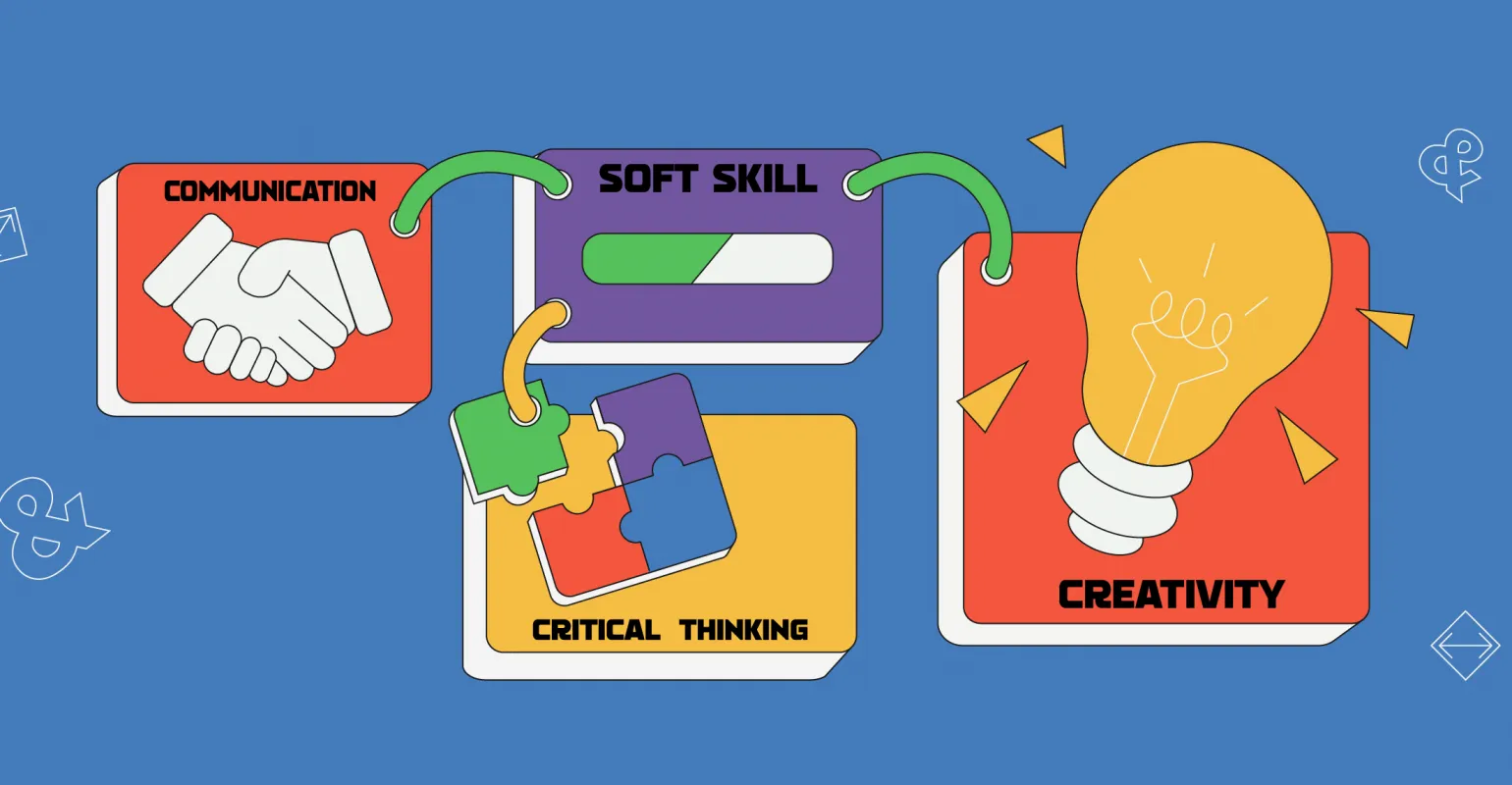
Find out moreAccording to hh.ru, Russian employers highly value certain soft skills in their potential employees. The most significant of these include:
- the ability to interact with people and negotiate;
- mental flexibility;
- customer focus and emotional intelligence;
- the ability to solve complex problems;
- creativity and critical thinking.
A joint study by WorldSkills and the Global Education Futures organization identifies the key skills necessary for successful professional activity in the 2020s. These skills include critical and creative thinking, collaboration, intercultural communication, and other soft competencies. The authors of the study emphasize that it is important for modern specialists to master this basic set in order to successfully adapt to the complex conditions and challenges arising in a rapidly changing world. Developing these skills will help not only in the professional sphere but also in personal life, ensuring better communication and interaction with others.
The increasing interest of experts in universal soft skills does not diminish the importance of specific professional knowledge, known as hard skills. However, in the context of digitalization, information overload, and the transition to new work formats, it is becoming increasingly clear that skills common to various professions play a key role. This emphasizes the need to develop adaptability, communication, and critical thinking, which are becoming essential for a successful career in the modern world. Soft skills help specialists quickly adapt to changing conditions and collaborate effectively in multidisciplinary teams.
Skills essential for professional life are developed through education. In Russia, this is reflected in the Federal State Educational Standards (FSES), which include universal competencies in the learning outcomes of higher education institutions. These competencies help students adapt to the demands of the modern labor market and successfully build a career. The development of such skills should occur not only in the classroom but also through practical activities, which promotes the development of critical thinking, teamwork, and other important skills.
In the report "Assessing Universal Competencies as Outcomes of Higher Education," researchers from the Institute of Education at the Higher School of Economics shared the experience of educational organizations in developing the necessary skills in students. During the research and discussions at the annual HSE April Conference, key approaches and methods were revealed that help universities adapt to the modern labor market demands. This study emphasizes the importance of developing universal competencies, such as critical thinking, teamwork, and effective communication, as necessary outcomes of higher education.
What are these universal competencies?
Soft skills, soft skills, skills of the future, and skills of the 21st century—all these terms refer to the same universal competencies. According to a report by the Higher School of Economics, it's impossible to compile a complete list of such skills, as their content varies depending on the level of education and the context of the discussion. However, experts identify several key skills that remain relevant: critical and creative thinking, teamwork, effective communication and interaction with others, as well as self-organization and a commitment to self-development. It's important to note that the list of these skills is constantly being updated, reflecting changes in the modern world.
The unifying element of the various lists is the presence of competencies. Competencies represent a set of knowledge, abilities, and skills that enable the effective performance of specific tasks. Competencies may vary in each list, but their presence is a key factor for successful performance of work and achievement of goals. The diversity of competencies in the lists allows for the consideration of various aspects of professional activity and improves overall productivity.
- they are not tied to one area, but are necessary for achieving success in a wide variety of professional fields;
- are classified as "complex constructs."
The last feature indicates that the skill can be broken down into separate parts, each of which can be further detailed. For example, according to the authors of the Higher School of Economics report, critical thinking encompasses the skills of analysis, synthesis, and identification of cause-and-effect relationships. Teamwork, in turn, includes communication and goal-setting skills. All these components must be taken into account when developing and assessing universal competencies. Breaking skills down into components allows for a more accurate assessment of the level of preparation and readiness for collaboration in various fields.
How is the development of universal competencies in universities?
Studying at a university represents a completely new life for school graduates. This is a period when students face increased responsibility, develop self-organization skills, and learn to effectively find and use information. Interaction with peers and teachers, as well as teamwork, become important aspects of this stage. The development of soft skills occurs naturally in the process of solving various problems that students face. It is important that students recognize the need for these skills and actively apply them in their learning activities.
For a number of universal competencies, this approach is ineffective. In particular, critical thinking, which the HSE report emphasizes, requires targeted and systematic training, rather than a formal approach that involves learning "in between times." Critical thinking is a crucial skill that requires specific development to ensure deep understanding and analysis of information.
This report examines international studies on the effectiveness of various critical thinking development programs. The results show that immersive formats, in which students are unaware of the course focus or assignments for developing critical thinking, are ineffective. The experience of international universities confirms that the development of critical thinking should be a purposeful process and, if possible, implemented within a separate course. This allows students to approach their studies more consciously and develop the necessary skills for analyzing and evaluating information.
The results of the international SUPERtest (Study of Undergraduate Performance) project emphasize that critical thinking is not developed automatically during university studies. From 2015 to 2018, the study covered universities in Russia, China, India, and the United States, examining the level of engineering students' knowledge in mathematics and physics, as well as their critical thinking skills. The study involved over 30,000 students who were tested three times: upon admission, at the end of their second year, and upon graduation. The expected progress in critical thinking among students from Russia, India, and China was not observed, calling into question the effectiveness of existing educational methods in these countries.
In Russia, there are a limited number of universities that develop universal competencies within individual subjects. These institutions strive to integrate key skills such as critical thinking, communication, and teamwork into their curricula. This allows students not only to deepen their knowledge in specialized disciplines but also to prepare for the demands of the modern labor market. The development of universal competencies is becoming an important aspect of the educational process, making such universities particularly attractive to applicants seeking comprehensive development and a successful career.
- At HSE, courses on soft skills (as well as digital literacy and entrepreneurship) are included in the curricula for all specialties.
- At Tomsk State University, a common module for all students is being introduced into all undergraduate programs, covering such disciplines as "Concepts of Modern Natural Science," "Logic," "Sociology," and "Critical Thinking," as well as teamwork on projects in thematic workshops. This is called the undergraduate core.
- A similar system is in place at ITMO University.
- The Ural Federal University has created a Center for the Development of Universal Competencies and is also implementing the undergraduate core.
- Kazan Federal University has a similar center.
- The Far Eastern Federal University offers training courses on soft skills development.
- The St. Petersburg Electrotechnical University (LETI) has a case lab for developing critical thinking, teamwork, conflict resolution, leadership, and communication skills.
According to Federal State Educational Standards (FSES), all universities must also develop universal competencies. However, as emphasized in a report by the Higher School of Economics (HSE), the majority of faculty at Russian universities are still focused on imparting knowledge in specific disciplines. This points to the need to reconsider approaches to education to ensure a more comprehensive development of students and prepare them for the demands of the modern labor market.
Some researchers believe that developing the skills of the future should not be the sole responsibility of universities. It is a shared responsibility of both universities and employers. At a session of the April Conference on the Development of Key Competencies, educational policy researcher Vera Maltseva emphasized the importance of this interaction. She noted that skills that ensure work readiness are often viewed as the responsibility of universities alone. However, the development of professional skills continues in the workplace, and the requirements for them are constantly evolving. Therefore, responsibility for the quality of education and its results should be shared between educational institutions and the labor market. Such cooperation will help create a more effective system for training specialists who meet modern requirements.
What hinders the development of 21st century skills during studies
At first glance, the obstacles to the implementation of universal competencies in Russian universities have an economic basis. Universities often lack the specialists, resources, and motivation to develop and implement such initiatives.
At a meeting of the University's "Thinking Clubs" project at 20:35, Yulia Koreshnikova, one of the authors of the HSE report, noted that the development of critical thinking at universities is being achieved only by individual, proactive faculty members. Moreover, the requirements of Federal State Educational Standards (FSES) remain largely formal, and most educational institutions have not created the necessary conditions for their implementation. Faculty members often face increased workloads, and university leadership lacks change agents capable of initiating the introduction of critical thinking and other universal competencies into educational programs. This also includes the development of assessment tools for these competencies and professional development for faculty. Critical thinking is becoming an important aspect of modern education, and its successful implementation requires active efforts from both faculty and university administrators.
There are more serious reasons why the skills of the future remain mere declarations. These aspects were highlighted during a discussion of the report by Viktor Bolotov, Academic Director of the HSE Center for Psychometrics and Measurement in Education. The main problems are the insufficient integration of modern skills into educational programs and the lack of clear criteria for their assessment. This means that many students do not acquire the necessary knowledge and skills to successfully adapt to the demands of a rapidly changing labor market. It is important not only to identify the skills of the future but also to create effective mechanisms for their implementation in the educational process, which will help prepare a new generation of specialists capable of meeting the challenges of the times.
In Russia, there are only a few universities that truly address the issue of assessing universal competencies. The reason lies in the lack of effective assessment skills. Many educational institutions claim to develop universal competencies, but fail to demonstrate the results of their work. It is important to prioritize assessment. A triad is needed: competencies, their development, and assessment. This task should involve psychologists, psychometricians, sociologists, philosophers, as well as specialists with a thorough understanding of the labor market and its needs. Effective competency assessment is a key element in the training of qualified specialists.
Assessing universal competencies is a complex task, as each is not a standalone characteristic, but a combination of multiple elements. Elena Kardanova, head of the report's authorship team, notes that it is impossible to adequately assess the level of development of critical thinking or teamwork skills based on only one component. To measure such complex skills, tests are needed that allow participants to demonstrate continuous actions similar to those they perform in real life. This will provide more accurate and comprehensive data on the development of universal competencies.
Creating tests that ensure high accuracy and reliability while being suitable for mass use is an important task in science. This problem is relevant not only in Russia but also abroad. Olga Zlatkin-Troichanskaya, a professor at the University of Mainz, discussed the international status of this problem at a presentation at the Higher School of Economics.
- All over the world, testing universal competencies is moving to the digital environment. There are two reasons for this. First, modern students use the internet to acquire knowledge, meaning that skill development itself occurs largely in the digital environment. Second, researchers and practitioners no longer rely solely on a final assessment of a graduate's knowledge or skills. Both future employers and teachers themselves would like to track the process—how a student behaves when solving a problem, what actions they take, and in what order. The digital environment makes it possible to record such details. Any new competency models, including professional ones, and their measurements are based on a holistic approach. That is, a set of small "sub-skills" should be assessed not separately, but as a whole. To use an analogy from medicine: it is impossible to measure the construct "ability to perform heart surgery" as the sum of individual small skills. Of course, a surgical procedure can be divided into individual elements, but they characterize the surgeon's skill not individually, but as a whole. The same applies to universal competencies. Therefore, they are measured not by multiple-choice tests, but by examples of real actions.
Educational Programs Methodologist
You will go through the full cycle of creating an educational product from scratch. Learn to design curricula for online and offline courses. Become a versatile specialist – you can launch your own project or get a job as a methodologist at a large company.
Find out more