
Contents:

Learn: Educational Methodist
Learn more«Learning through entertainment»

The creative association #Shashniki creates educational camps for children and teenagers based on the concept of edutainment, which combines education and entertainment. This approach incorporates gamification and game-based pedagogy, effectively engaging participants and maintaining their interest in the educational process. We strive to make learning engaging and memorable, providing a unique experience for every child.
This book is a comprehensive guide to creating edutainment programs, covering key conceptual principles, organizational aspects, and financial considerations. The authors analyze common difficulties and pitfalls that can arise during development, such as an imbalance between educational and entertainment components. Although creating a large-scale, fully immersive program in a gaming world requires significant resources and the efforts of a professional team, any creative teacher or trainer can integrate edutainment elements into their practice. This makes the book a useful tool for anyone who wants to diversify their classes and improve the educational process.

Check out more information:
This article features an interview with an expert in the field of game pedagogy that focuses on the principles underlying At the core of playful activity. The expert shares the view that there are no mistakes in play, and every situation is an opportunity for learning and development. Play-based pedagogy, as a discipline, explores how playful activity can be used to achieve educational goals. The expert emphasizes the importance of creating a safe and supportive environment where participants can experiment, explore, and learn from experience. In this context, play becomes not only entertainment but also a powerful tool for socialization and the development of critical thinking. Thus, play-based pedagogy opens new horizons in education, offering innovative approaches to learning through play.
"Find an idea"

Genrikh Altshuller devoted many years of his life to developing TRIZ—the theory of inventive problem solving. This universal concept, although originally created for engineering, finds wide application in various professional and everyday fields. TRIZ helps effectively solve problems using a systems approach and creative thinking, making it relevant for many fields of activity. The TRIZ methodology allows not only to find innovative solutions but also to optimize existing processes, which is especially important in a rapidly changing world.
The theory of inventive problem solving (TRIZ) was developed in the mid-20th century and remains relevant in modern education. This concept promotes the development of creative thinking and other cognitive skills in students. TRIZ effectively integrates with active learning methods, such as project-based activities and case analysis. Altshuller's techniques help find solutions to unconventional pedagogical and methodological problems, making them indispensable for modern educators. The book "Find an Idea" was first published in 1986 and has become a classic textbook on the theory of inventive problem solving (TRIZ). The 2022 edition includes the full text of the work, as well as a number of useful appendices. These include a list of inventive problem solving standards, the ARIZ-85B algorithm, a biography of the author, and a description of the TRIZ teaching methods used by Genrikh Altshuller himself. This publication is an indispensable resource for anyone interested in innovation and invention.

Read also:
TRIZ pedagogy, or the theory of inventive problem solving, is an effective tool for developing unconventional thinking in students. This approach is based on the principles of creativity and innovation, which help students find original solutions to complex problems. TRIZ pedagogy incorporates methods aimed at activating creative abilities and developing flexible thinking. Using TRIZ, teachers can develop students' analytical, synthesis, and critical thinking skills. Students learn to perceive problems from different perspectives, which significantly broadens their horizons and promotes a deeper understanding of the subject. The use of TRIZ methods in the educational process instills self-confidence in children, which is an important aspect of their overall development. Thus, TRIZ pedagogy not only develops innovative thinking but also prepares students to solve problems in a rapidly changing world. Using these methods in the educational process helps to create more creative and proactive young people, capable of finding solutions in the most unexpected situations.
"Wait, what did you say?"

Traditional teaching methods emphasize the transfer of knowledge from teacher to student. However, approaches that emphasize the active and independent role of the student are considered innovative. Nevertheless, such methods have deep historical roots, dating back to Socrates. The ancient Greek philosopher used heuristic conversations, in which he outlined a problem and asked students specially designed questions, encouraging them to find solutions independently. This method not only develops critical thinking but also promotes a deep understanding of the material, making it relevant in the modern educational process.
Dean of the Harvard Graduate School of Education, James Ryan, emphasizes the importance of asking the right questions, which not only facilitate problem-solving but also foster a deeper understanding of the world and ourselves. His work as a tutor and coach centers on reflection through questioning, which enables people to develop critical thinking and heighten their awareness. This approach helps uncover hidden aspects and stimulate personal growth, making it an integral part of effective learning and self-improvement.
Ryan dedicated his book to the practice of questioning, in which he identifies six key questions to ask yourself and others. These include: "I wonder why?", "I wonder what if...?", and "What really matters?" The author explains in detail how these questions can be useful in various situations and illustrates his ideas with examples from history and personal experience. These questions promote deep introspection and help you better understand the world around you, making them important tools for personal growth and development.

Explore also:
Phenomenon-based learning provides unique opportunities to solve real-world problems. This approach focuses on the study and analysis of complex phenomena, allowing students to gain a deeper understanding of the subject and develop critical thinking. During the learning process, students encounter real-world problems, which helps develop the skills needed to find effective solutions. The methodology is based on real-world case studies, making the learning more practical and applicable to real-life situations. Thus, phenomenon-based learning not only deepens knowledge but also prepares students for the challenges of the modern world, enabling them to confidently cope with various problems.
"Learning Spiral"

Mitchell Resnick, head of a research group at the Massachusetts Institute of Technology (MIT), argues that play and creativity play a key role not only in the education of children but also in the development of adults. He believes that these forms of activity contribute to the development of creative thinking and other important competencies necessary for success in a rapidly changing world. Integrating play and creativity into educational processes can significantly enrich the learning experience and prepare people for modern challenges.
Resnick's book is dedicated to developing creativity at any age. It presents a learning model, developed in collaboration with colleagues from MIT, consisting of four key components: projects, passion, collaboration, and play. The author not only explains the theoretical aspects of the model but also offers practical recommendations that will be useful for teachers, coaches, and methodologists. With these tips, professionals can effectively implement creative approaches into the educational process.

Be sure to check out the additional materials:
Implementing gamification into the educational process can be quick and cost-effective. Gamification uses elements of game mechanics to increase learner motivation and engagement. Several strategies can be used to effectively integrate gamification into learning.
First, define learning goals and select appropriate game elements, such as points, levels, or badges. This will help make the process more interactive and engaging.
Second, use accessible online platforms and tools to create educational games. Many offer free or low-cost solutions that are easily adapted to your needs.
Third, pay attention to feedback. Including assessment and recognition mechanisms for achievements helps increase student engagement.
Furthermore, it's important to consider students' interests and preferences so that gamification is not only effective but also engaging.
Therefore, gamification can be a powerful tool for enhancing learning while remaining accessible and cost-effective. By implementing these recommendations, you can quickly and effectively introduce gamification into the educational process.
"Innovative Learning Models"
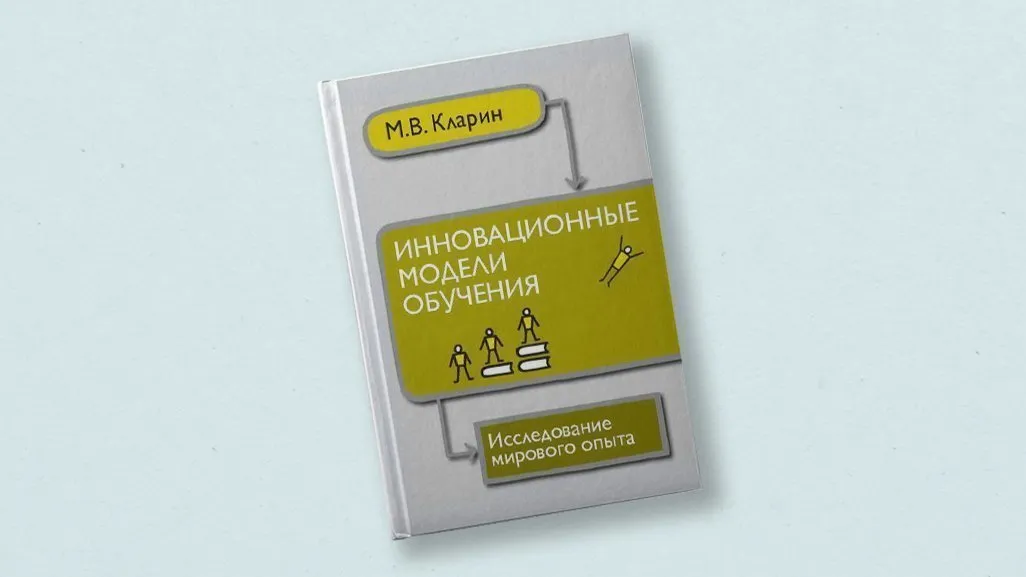
In conclusion, we strongly recommend that you read this monograph, which examines in detail innovative approaches in the field of education. This source provides valuable ideas and methods that can improve the educational process and increase the effectiveness of learning.
The author of this text is Mikhail Klarin, Doctor of Pedagogical Sciences and Corresponding Member of the Russian Academy of Education. He analyzes the emergence and development of various pedagogical trends and concepts both in Russia and abroad. The approaches considered include TRIZ, gamification, discussion methods and project work, as well as many others. Mikhail Klarin does not put traditional and innovative approaches in opposition, without dividing them into "bad" and "good". Each of these methods has its own area of application and can be effective depending on the specific educational situation.
The book pays special attention to the practical application of innovations in the field of education, covering all levels - from school to corporate training. The book examines modern approaches and methods that help effectively integrate new technologies and ideas into the educational process. Clarin argues that modern educators need to be knowledgeable about various approaches to education. This allows them to consciously select the methods that most effectively address specific educational challenges. Understanding the specifics of different approaches will help teachers adapt their practices and provide higher-quality learning for students. Thus, a deep knowledge of educational methods is becoming a key factor in the successful work of a teacher in modern conditions.
Study also:
- 5 books about teachers who are looking for their place in the world
- 5 useful books for those who teach children and want to do it even better
- 6 books on how to teach adults
Educational Program Methodologist
You will go through the full cycle of creating an educational product from scratch. Learn to design curricula for online and offline courses. You will become a universal specialist - you can launch your own project or get a job as a methodologist in a large company.
Find out more