
Contents:

Course with employment: "The profession of a Methodologist from scratch to PRO"
Find out more
Teacher iSpring Academy and Head of Training at Yandex Go for Business. He is the author of the popular Telegram channel "Let's Teach!", where he shares his knowledge and experience in education and technology.
Perplexity is a chatbot and search engine powered by artificial intelligence. It effectively analyzes information from various online sources and provides users with answers that match their questions. Perplexity also includes links to sources, increasing the reliability and transparency of the information provided. It is based on a text-based neural network, enabling a high degree of understanding of queries and the generation of precise answers.
Perplexity is an effective tool for developing and structuring educational content, as well as for its subsequent improvement. My colleagues and I use it in various aspects of our work. Here are some ways Perplexity can be used in educational processes.
Deep Information Search
Perplexity's founders position it as a search engine. This service's ability to conduct deep searches and effectively organize information is its key advantage. Perplexity not only finds data, but also structures it, providing users with easy access to the information they need.
When you search for information on "What are e-learning courses" in a traditional search engine, you will be presented with a list of links to various resources. This requires time to study and analyze each of them to get a complete understanding of the topic. In contrast, when you query ChatGPT, you will receive a general idea of the subject without citing the sources of information. This can lead to the appearance of so-called "hallucinations" - inaccuracies or fictitious data, especially if you are querying highly specialized topics with limited information in open sources. Therefore, when using ChatGPT, it's important to keep in mind that the information provided may not always be accurate and requires additional verification.
Perplexity, when running a similar query using the same set of sources, provides and summarizes information about the nature of e-courses. It highlights key aspects, including the types of e-courses, their structure, and features. This way, users can get a full understanding of what e-learning courses are and how they work.
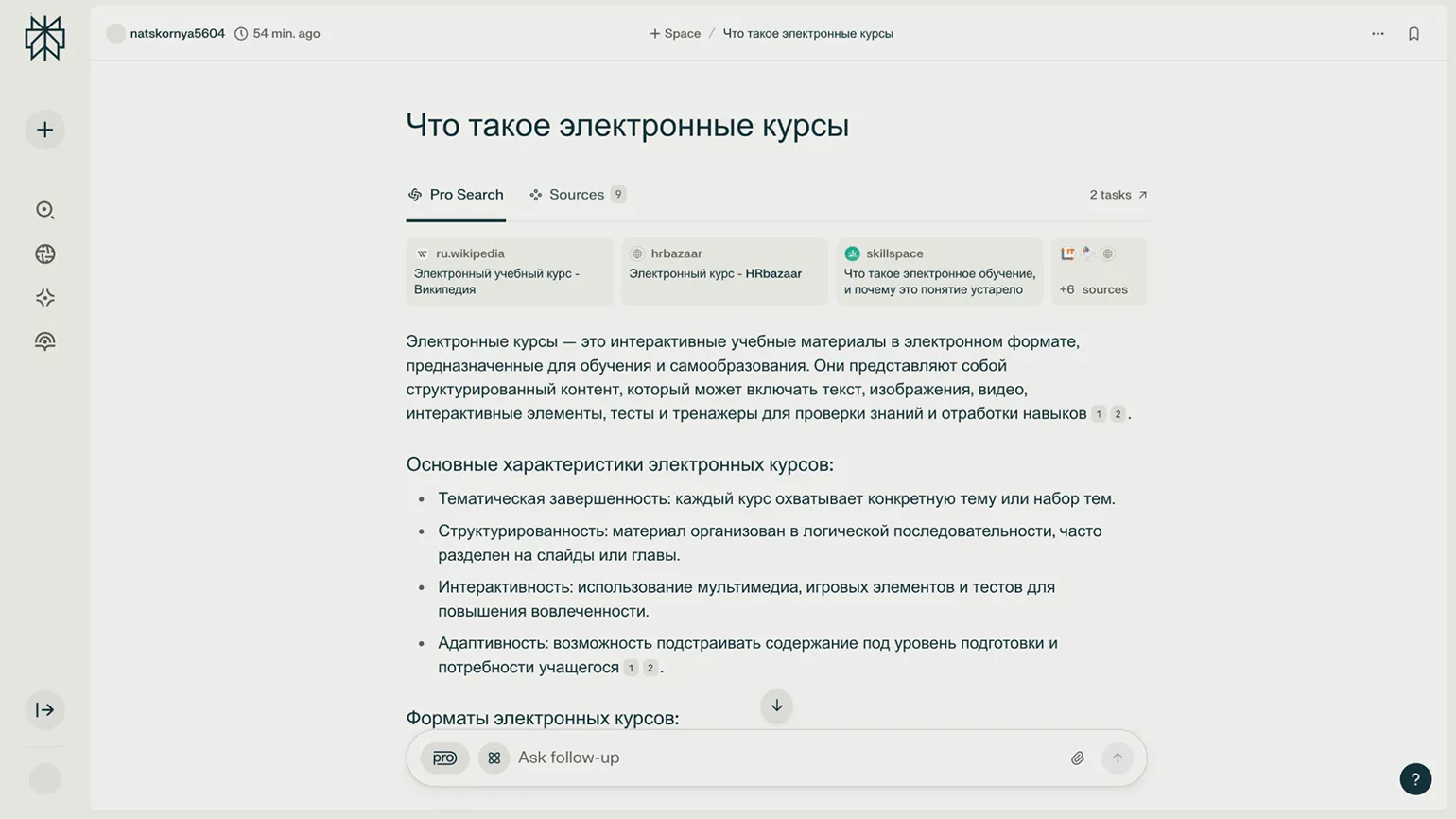
Perplexity offers a convenient A tool for in-depth study of a topic, providing the user with additional prompts after answering a question. For example, if you ask "What are e-learning courses," the neural network will suggest a number of related topics, such as "Advantages of e-learning courses over traditional ones," "Types of e-learning courses," and "How to create your own e-learning course." Clicking on the desired query will provide the answer and suggest other related topics. This approach allows the user to endlessly expand their knowledge and gather the necessary information on the topic of interest.
Fact-Checking
Perplexity provides links to the sources from which the information was taken. All sources are collected in a separate list on a tab and are also indicated in the notes to specific statements. This allows users to go to the original source website at any time, review the materials, and verify the accuracy and reliability of the answers provided by the neural network. This way, users can be confident that the information they receive is based on reliable data.
Perplexity offers users the ability to choose the types of sources to generate results. The Web option searches the entire web, Academic focuses on scientific publications, and Social finds discussions and opinions on social media. When preparing course materials, it is recommended to select the Academic option to direct the neural network to retrieve only scientific facts. Perplexity will honor this choice and provide the appropriate information.
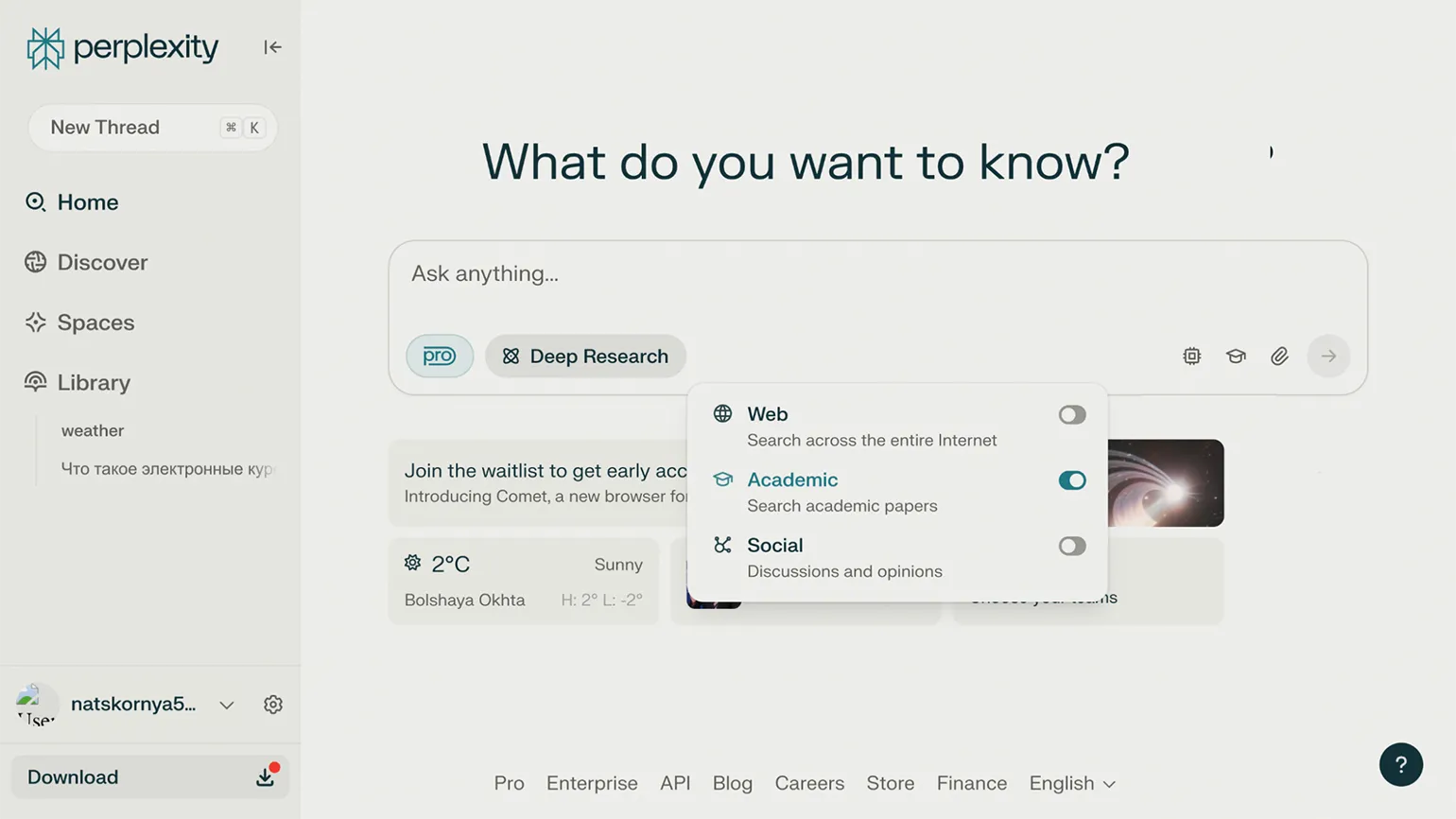
In situations where the highest quality of information is required, it is recommended to use the Pro Search option, which allows the neural network to analyze three times more sources, providing more Detailed answers compared to a regular search. A Deep Research feature is also available, which researches a query topic across hundreds of sources in just a few minutes. On the free plan, users can use advanced search capabilities several times a day, although the developers do not specify the exact number of available queries. Typically, this is between three and five times.
Regarding the relevance of information in search results, I recently confirmed that neural networks are processing fresh data. When I asked Perplexity for recommendations on creating animations for e-courses, my webinars, conducted just a month ago, were among the sources. This confirms the effectiveness of neural network technologies in updating content and their ability to provide users with the most current and relevant materials.
Creating text materials for a course
Nothing can completely replace the experience and charisma of a true subject matter expert, especially during the learning process. However, if you need information quickly and don't have access to a specialist, generative neural networks can be a great help. In my experience, neural networks can provide up to 70-80% of the information needed to create a course, with the remainder easily supplemented by an expert. Previously, methodologists relied on books, scientific articles, and YouTube lectures to collect data, which was time-consuming. Modern tools like Perplexity significantly speed up this process, allowing you to quickly find and process the necessary information. The use of neural networks in education is becoming increasingly relevant, as they help optimize the learning process and make it more accessible. Perplexity demonstrates a high level of quality when creating definitions, descriptions, lists, and other textual content for courses. I would rate this feature a 10 out of 10. The neural network is capable of processing a variety of queries, providing clear and understandable answers. For example, you can ask it to explain the basics of nuclear physics, highlight the seven key aspects of this discipline, and compare it to mathematics. Even if your request isn't formulated precisely, Perplexity will find logical connections and offer a reasoned and structured answer. This ability makes it an indispensable tool for educational purposes and the study of complex topics.
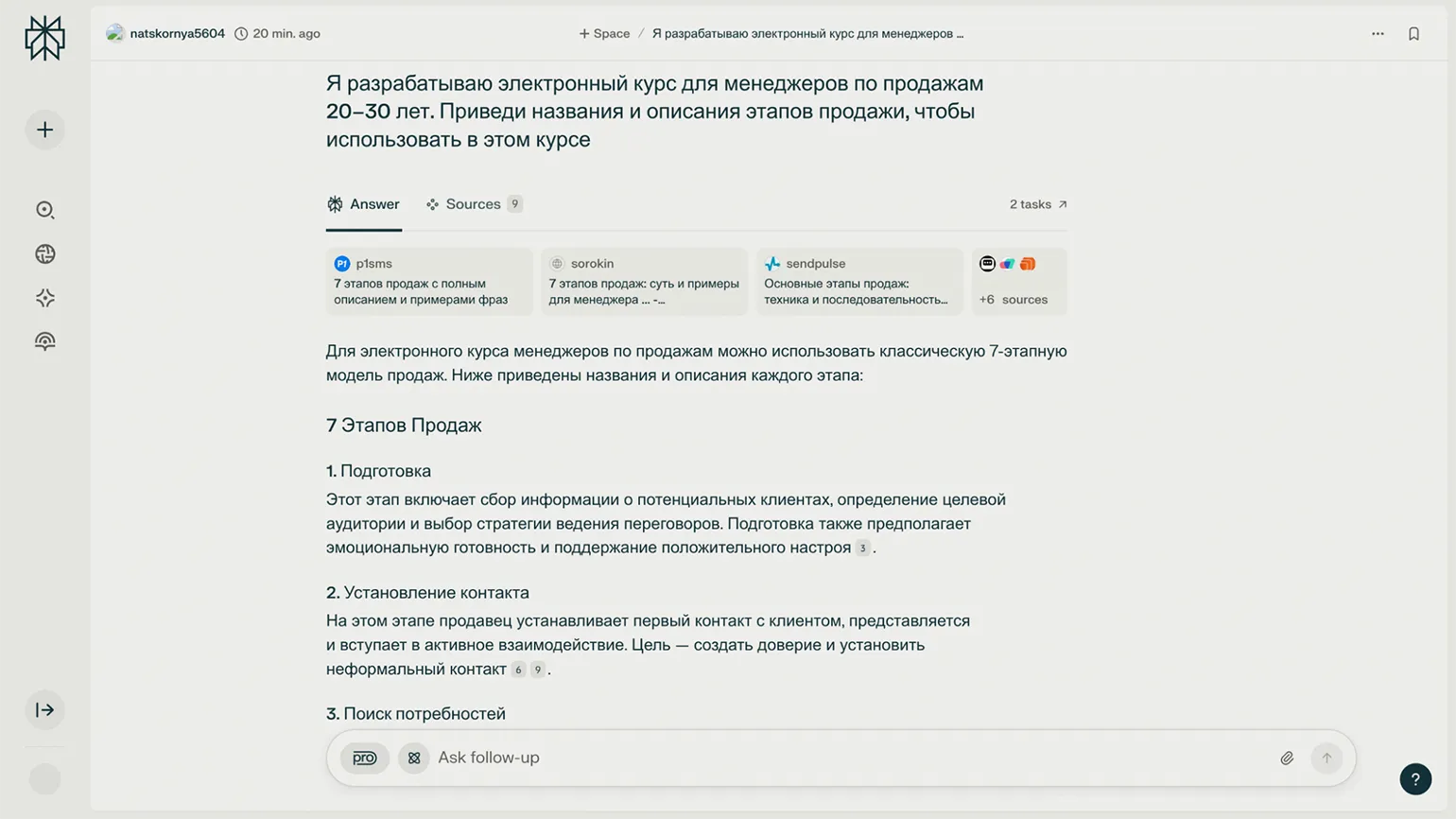
When designing soft skills training, it's important to consider the individual needs of participants. For example, for a basic sales manager course, the Perplexity platform offers a detailed structure of sales stages with useful links to resources. Participants can independently review the proposed materials, evaluate their suitability for their needs, and make any necessary adjustments. This approach allows you to tailor training to specific tasks and promotes more effective skill acquisition.
It is important to remember that there are areas in which content creation should not be trusted Neural networks, especially when it comes to medicine. For example, when developing training materials on the topic "How to properly give an injection," it is necessary to consult a qualified specialist. Only an expert can guarantee the accuracy and security of the information, which is especially critical in the field of healthcare.
Test Creation
Every specialist faces situations when they find themselves at a dead end during work. Cognitive resources are depleted, and mental abilities no longer function at full capacity. However, sometimes it is necessary to prepare at least a minimum set of test questions by the next deadline. At such times, it is important to find ways to restore concentration and creativity to successfully cope with the task.
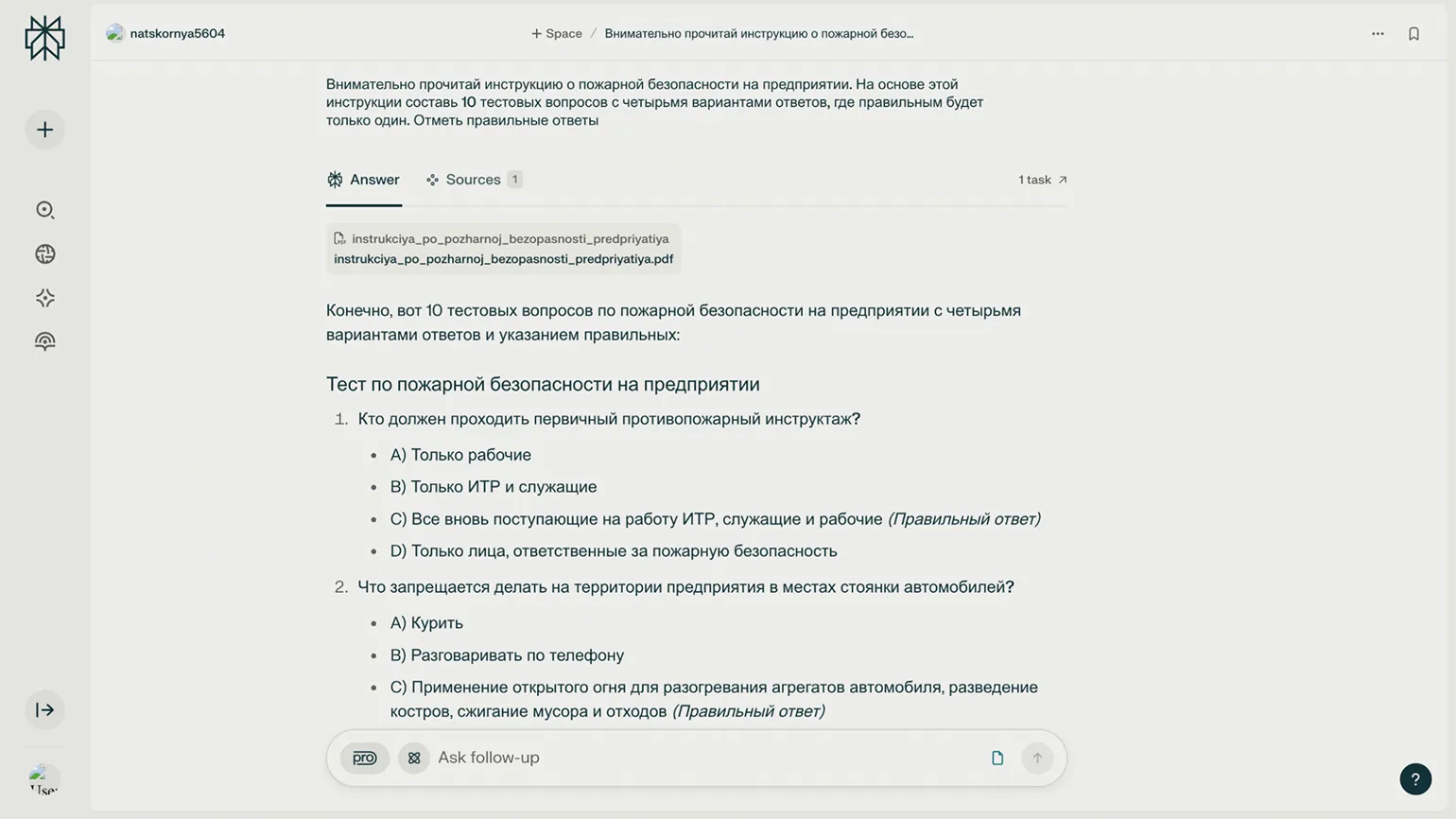
Perplexity is an excellent tool for test creation, demonstrating high accuracy thanks to neural network technologies. It is important to remember that fact-checking remains a necessary step in working with the obtained information. With Perplexity, you can generate an unlimited number of questions on various topics, adapted to any target audience and level of knowledge. When you upload a PDF document, the system uses it as a source for test development. The free version allows you to upload up to ten documents per day, significantly simplifying the content creation process.
Development of dialogue simulators
I used Perplexity to create not only individual dialogues for course, but also developing scenarios. To do this, simply ask the neural network to suggest different scenarios, for example, between a salesperson and a conflicting customer. The result can be a structure like "If you choose option a, then...; if you choose option b, then...". Although the phrases formulated sometimes do not reflect natural human speech, their logic is quite realistic. This tool allows you to effectively simulate various scenarios, which is useful for teaching and practicing in the field of communication.
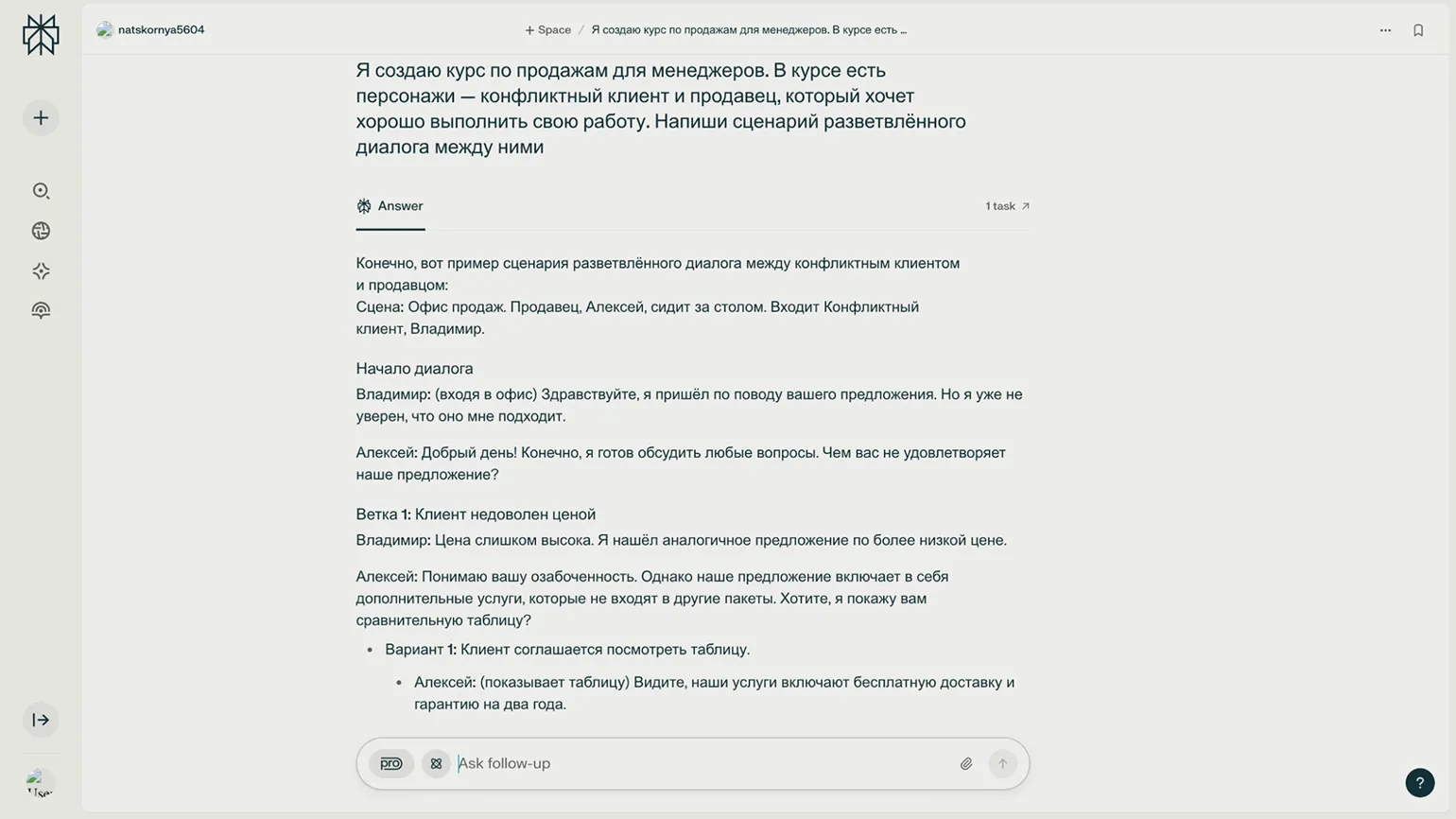
Perplexity offers effective solutions for revision scenarios, which is especially useful for beginning e-learning developers. Often, the correct answer in a dialogue is too long and complex. A neural network can easily correct this problem. Simply request three answer options in a similar style and with approximately the same length. This will make the scenarios more balanced and easier to understand, which will improve the quality of e-learning.
Recently, I had the opportunity to collaborate with a colleague, an experienced e-learning developer. While creating a dialogue simulator, she made an interesting mistake: all the incorrect answers in the tests began with the phrase "well." In contrast, neural networks are able to avoid such errors, which makes them more reliable tools in training. Using modern technologies such as neural networks in e-learning development can improve the quality of training and make it more effective.
Perplexity, like any other neural network, has its limitations. One of the main drawbacks is its inability to accurately model human behavior in all its complex aspects. In situations where rational arguments prove ineffective, the experience of a real sales manager is necessary. Only a deep understanding of human psychology and practical experience can help in such cases.
Working with Files
The document upload feature I already mentioned deserves a closer look. Perplexity not only generates tests based on uploaded materials but also offers many other capabilities. This system is capable of analyzing text, extracting key information, and providing users with valuable insights. Thanks to a wide range of functions, Perplexity becomes a powerful tool for working with documents and educational resources.
If you need to create a course based on several books or articles, start by finding PDF materials or preparing them yourself. Then upload the files to Perplexity and task the neural network with extracting key ideas. It will be able to summarize the information in simple language and structure it according to the requirements of your course scenario. This approach will allow you to effectively process information and make learning more accessible and understandable for students.
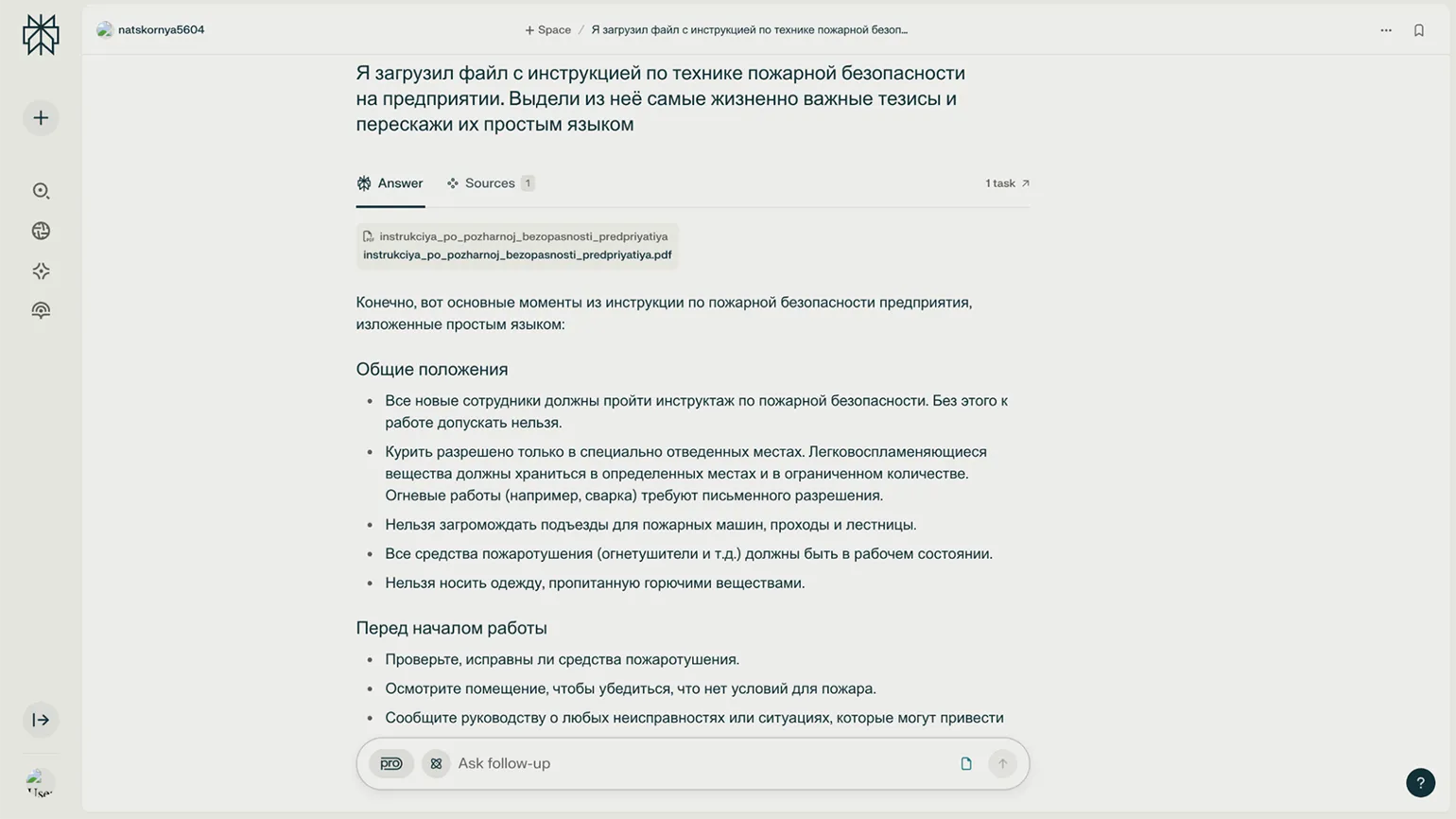
I recently uploaded to Perplexity A large file with information on research methods. I asked the neural network to generate a list of specific actions, and it provided me with a clear and structured list. This experience demonstrated how artificial intelligence can effectively process large-scale data and extract useful information for research. Using such tools can significantly speed up the process of preparing and conducting research, ensuring high accuracy and relevance of the results.
Idea Generation
Neural networks are capable of generating original ideas that are difficult to come up with on their own. Welcome courses for new employees often use the concept of travel, for example, "We are going to a new planet or an unexplored continent." However, if the prompt for Perplexity specifies that unconventional options are required, it can suggest, for example, a quest to find a rare crystal in the jungle. This is a great idea, especially for a jewelry company, as it creates an engaging experience and helps new employees better understand corporate values through a gripping story. Using creative approaches in employee training helps increase engagement and motivation, which, in turn, has a positive impact on the overall climate within the company.
One of my colleagues shared an interesting case study. He asked a neural network to suggest an idea for an Excel course. The network proposed a unique approach based on the concept of feudal fragmentation. In this concept, a ruler manages troops and resources, which requires careful strategic planning. Given the complexity of mental or paper calculations, using Excel becomes the optimal solution for effective data management. This approach can significantly simplify the learning process by demonstrating the practical application of Excel in complex scenarios.
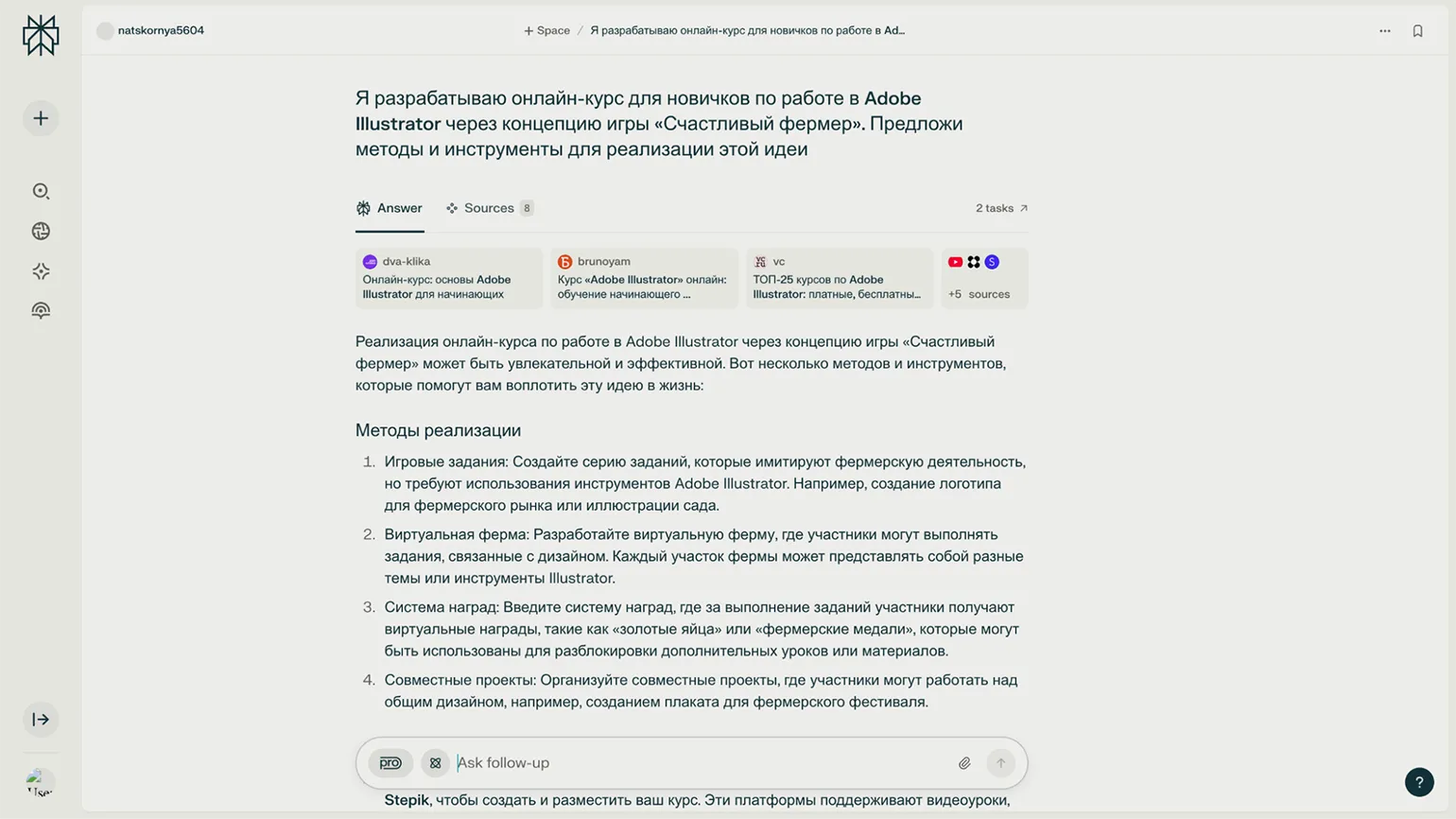
You can turn to Perplexity to refine your idea and receive recommendations on tools for its implementation. For example, if someone has developed a course on working in Adobe Illustrator using the concept of the "Happy Farmer" game, they can request the neural network to provide a detailed analysis and suggest specific tools and methods to help implement this concept. This approach will not only improve the course but also make it more attractive to the target audience, which will ultimately increase its popularity and effectiveness.
Improving Visual Content
Perplexity doesn't create visuals, but it does provide helpful recommendations for improving images. I often design slides with illustrations for courses, and if I'm not satisfied with something about a particular slide, I upload it to Perplexity. In response, I receive 5-6 tips that help me make the necessary changes and improve the quality of the presentation.

This slide was created by participants in the "iSpring.Challenge" e-learning development tournament held last year in Yoshkar-Ola. It impressed me, and I wanted to see how a neural network could improve it. I asked Perplexity to review this slide, which is about a course on emotional intelligence in a post-apocalyptic context, and suggest ideas for improvement.
The neural network suggested improving the readability of the text, which is somewhat controversial, but generally acceptable. However, the subsequent recommendations were a pleasant surprise. For example, Perplexity suggested adding a glow effect around the light sources to enhance the realism of the image. Another idea was to enhance the image with animation, such as a blinking light bulb or the movement of bubbles in flasks in the background. These suggestions are truly inspiring and open up new horizons for creativity.
There is a recommendation that states: "If possible, add more details to the character, such as a name badge or specialized clothing, such as gloves or goggles, to enhance the image of a scientist." The neural network successfully analyzes the character's image and the surrounding environment, suggesting changes that will help achieve a new level of depth and realism in the images. Thus, it can be effectively used to generate creative ideas for illustrations for educational courses. This allows you to create more memorable and attractive visual materials, which in turn can increase interest in learning.
In this section, we invite you to familiarize yourself with interesting materials that can expand your understanding of the topic. Here you will find useful articles, research, and practical tips that will help deepen your knowledge and skills. We regularly update the information so that you always have access to the latest data and recommendations. Stay up-to-date with news and trends to stay ahead.
- A large selection of services based on neural networks for teachers and methodologists
- How to use online whiteboards during distance learning
- 5 skills of educational designers that are already changing due to the use of neural networks
- 4 ways to use AI in corporate training now
- Battle: who will develop a better course - an educational designer with or without a neural network?
Profession Methodologist from scratch to PRO
You will improve your skills in developing curricula for online and offline courses. Master modern pedagogical practices, structure your experience and become a more sought-after specialist.
Find out more