Contents:
- Universities were the name given to any community
- Teaching was conducted everywhere in the same language
- Representatives of all classes could study
- Students generally lived in poverty
- Studying took longer than it does now
- Education gave a person status
- Students led a dissolute (sometimes even excessive) life
- Colleges were originally dormitories, not educational institutions
- There were women among medieval scholars and masters.

Learn: The Profession of a Methodologist from Scratch to PRO
Find out moreUniversities were the name for any community
In Ancient China, Byzantium, and the Arab Caliphate, there were institutions where adults could study science. However, these institutions did not award academic degrees and did not function like modern corporate structures.
The first universities began to emerge in European cities such as Bologna, Paris, and Oxford between the 11th and 13th centuries. Students gathered around those educated in monastic and episcopal schools, fostering the creation of an organized educational community. These institutions became the foundation for the further development of higher education in Europe, ensuring the transmission of knowledge and cultural traditions. Universities played a key role in the formation of an intellectual elite and the development of science, introducing new teaching methods and research.
The word "university" (Latin: universitas) originally denoted any association of people bound by an oath. In this context, it could be applied both to guild organizations of artisans and to urban communal entities. Over time, the term came to be associated exclusively with communities of students and teachers, which cemented its modern meaning. Universities became centers of education and scholarship, playing a key role in the development of society.
Medieval educational institutions (Latin: studia) united in corporations to protect their common interests. Many students came from other cities, making them vulnerable in their new environment. They needed protection from medieval customs, which could lead to the conviction of an innocent newcomer for crimes committed by a fellow countryman, as well as from high housing prices. Students often found themselves in conflict with local residents, which emphasized the need for them to unite to ensure safety and support. Thus, the creation of corporations played an important role in the lives of students, helping them adapt to new conditions and protect their rights.
Mutual advocacy in medieval universities formed a unique system of relationships. Despite a certain hierarchy, universities remained communities of equals. The emergence of the first universities was associated with their independence from the church and secular authorities. These educational institutions were self-governing organizations that independently decided on matters of student admission and the selection of rectors. In some universities, rectors were chosen by masters (teachers), in others by students. Universities carefully protected their rights, and the authorities willingly accommodated them, since the presence of educational institutions increased the prestige of the territories and contributed to the training of qualified personnel for public administration.
Over time, universities began to emerge at the initiative of rulers.
Teaching was conducted everywhere in one language
In the Middle Ages, the main academic degree was considered to be licentia ubique docendi, which translated from Latin means "the right to teach everywhere." A master who received this degree had the opportunity to travel throughout Europe and teach at universities in various countries. This degree opened doors to academic careers and facilitated the exchange of knowledge between universities, which played a key role in the development of science and education at the time.
The right to award recognized degrees to universities was typically granted by popes, although monarchs sometimes did so. Receiving such a charter became the starting point for the formation of an informal learning community that became known as a university. This process contributed to the development of higher education and the establishment of standards for educational institutions, which in turn played a key role in the educational system of Europe and the world.
Schoolchildren also traveled, and the image of itinerant scholars was established for them. They traveled between universities to attend lectures by renowned scholars. Before the advent of printing in the 15th century, new knowledge was much easier to gain from oral lectures than from books, which were few in number and expensive, especially for students. Lectures often took the form of readings from books, which made information more accessible and understandable. Schoolchildren's travels contributed to the expansion of their horizons and the exchange of knowledge, which was especially important during that period.

The freedom of movement of students and teachers did not encounter language barriers, since instruction at universities was conducted in Latin. This facilitated the international exchange of knowledge and cultures, allowing students and teachers from different countries to communicate freely and share ideas without language restrictions. Latin, as the universal language of science and education, played a key role in shaping the academic environment, where everyone had the opportunity to participate in the educational process and develop their skills.
Representatives of all classes could study
The doors of medieval universities were open to everyone, and formally education was not considered a privilege only for representatives of the upper classes. However, education required financial costs, since universities needed funds to exist. Masters charged tuition fees from students, although in some educational institutions created with government support, teachers received state funding. In any case, students needed money for living expenses, rent, and books. Universities weren't just for the wealthy. Students' expenses could be partially covered by the church, bishopric, or city of their origin, as well as by wealthy benefactors. For example, universities sent lists of candidates for papal benefices—a kind of "scholarship"—to Rome. In regions where secular power was strong, university members could count on support from the city commune, king, or emperor. This created conditions for education for a wider segment of the population, which contributed to the development of science and culture in society. While receiving tuition benefits, students often agreed to work for their benefactors after graduation. This could include parish or government work. Typically, such conditions were discussed in advance and formalized as a "targeted assignment."
Some universities offered free or partial tuition for low-income students.
Students actively sought ways to earn money, including copying books, which at the time were created entirely by hand. Some worked as secretaries. Such activities sometimes led to a suspension of their studies, but they could always resume their studies later.
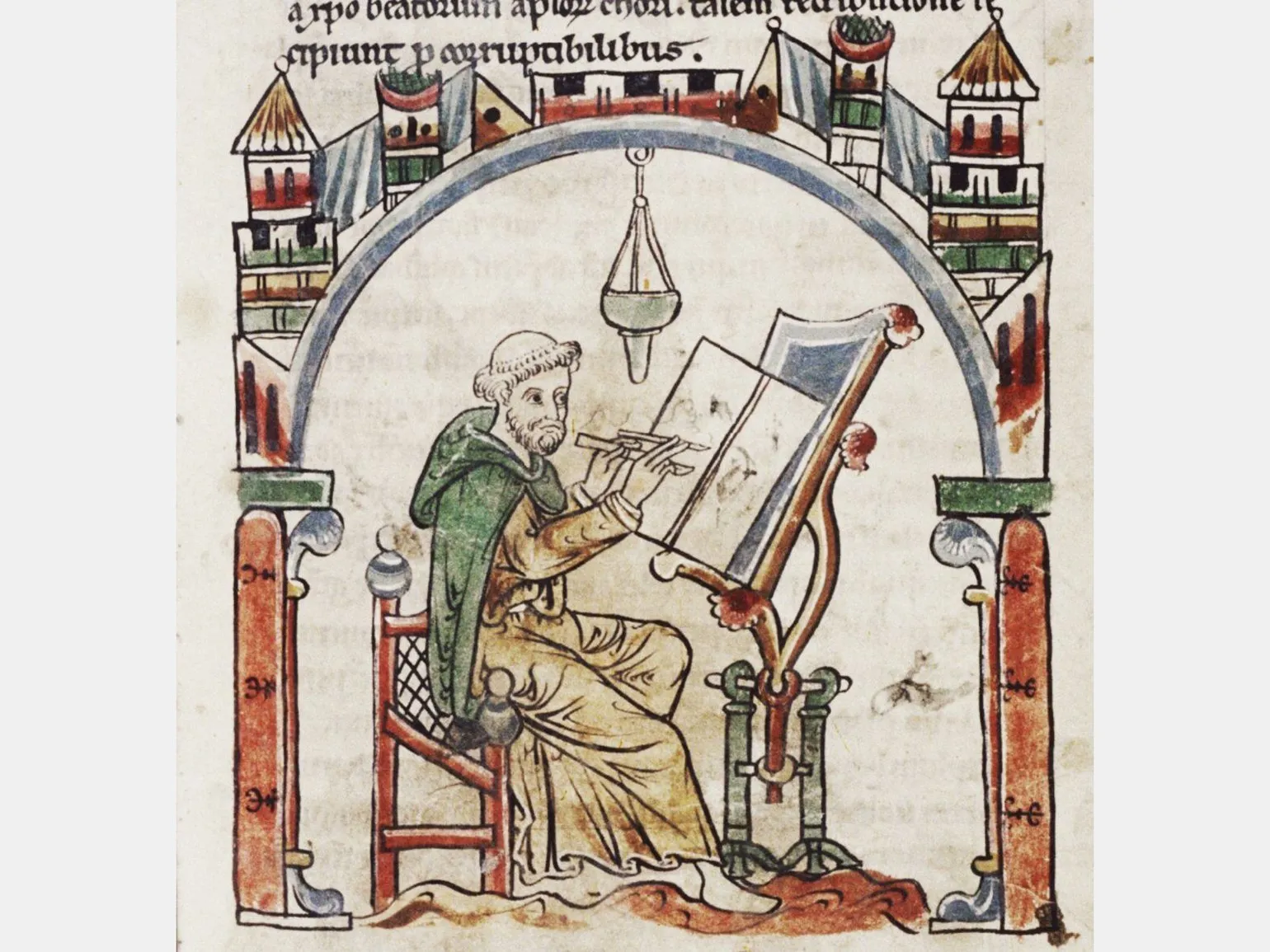
People from the poorest strata of society had the opportunity to get an education. This opened up new horizons and chances for improving their living conditions. Education became an important tool for social mobility, enabling people from disadvantaged backgrounds to achieve success and realize their potential.
Over time, the university corporation became inward-looking, and membership became hereditary. In the late 14th and early 15th centuries, the University of Padua began to grant privileges to the children of law doctors. These students were able to enroll in law school free of charge and take exams without paying. This approach contributed to the formation of a closed community, where privileges were passed down from generation to generation, limiting access to education for others.
Students generally lived in poverty.
Earnings did not always ensure a decent living. The concept of a "poor student" was a reality, not just a phrase. The students' poverty was evident in everything from the tiny, poorly furnished rooms shared by just a few people to sample letters to parents requesting financial support. In these letters, students often expressed doubts about living to receive a response. Similar templates existed for requests for tuition waivers.
Dear Dean and esteemed faculty! I ask you to waive the fees I owe to the faculty. Frankly, at the moment I have no valuables other than books and clothing worth at least 3 kopecks or 12 florins. However, as soon as I have items of such value, I will gladly and promptly fulfill my obligations.
Tuition waiver request form. The Statutes of the Faculty of Arts, University of Prague (1367) are an important document outlining the rules and procedures regarding students' tuition and financial obligations. In this context, the fee waiver application form is an essential part of students' formal application for financial support. Properly completing the application can significantly increase their chances of approval, so it's important to include all necessary details and adhere to established requirements. Students must detail the reasons for their request and provide all requested documents to support their financial situation. This not only helps the university make informed decisions but also promotes a fair distribution of resources among students.
The more free places were offered to professors' children, the fewer opportunities remained for students from poor backgrounds. As a result, the number of places for such students sometimes dropped to one or two per department. This created significant barriers to accessing education and limited opportunities for social advancement.
Some professors exploited students' financial situations to their own advantage. For example, they offered cash loans and then charged "interest" in the form of increased tuition.
Studying took longer than it does today
Medieval universities had four main faculties: liberal arts, theology, law, and medicine. The liberal arts faculty, which became the basis for the philosophy faculty, was considered the foundation for other areas of study. Students began with a bachelor's degree and could then continue their studies and obtain a master's degree, which gave them the right to teach. However, not all universities offered a full set of faculties. For example, Bologna did not have a theology faculty, since the university was founded as a law school.
Becoming a master of liberal arts required studying for five to seven years, depending on the chosen university. During this period, students studied the seven liberal arts. Students first mastered the trivium, consisting of grammar, logic, and rhetoric, and then moved on to the quadrivium, which included arithmetic, geometry, astronomy, and music. Logic played a key role in this education, as it was considered the foundation for understanding all sciences. However, studying the quadrivium was not mandatory at every institution. Having acquired this foundation of knowledge, students could pursue advanced studies in specialized fields in one of the three remaining faculties. The greatest amount of time, 12 to 15 years, was devoted to the faculty of theology. During this period, students successively received various academic degrees:
- cursor (bachelor-tutor);
- biblicus (commentator on the Bible);
- sententiarius (teaching from the book of "Sentences" of Peter Lombard - this was a collection that reconciled the opinions of authorities on controversial theological issues);
- bachelor "formati" (participating in all disputes);
- licentiate (holder of the right "to teach everywhere");
- doctor of theology.
Teaching theology was permitted only to qualified specialists who had reached the age of 35. This requirement emphasized the seriousness and importance of this profession, which made a career path in this field long and laborious.
In other faculties, training also takes a significant time, ranging from seven to nine years. This lengthy educational process allows students to delve deeper into the disciplines they study and gain the knowledge necessary for successful professional careers.
It's important to note that a graduate who completed a full university course at that time was comparable to a doctorate by today's standards. Only a few achieved this degree. Education in the Faculty of Liberal Arts effectively served as a secondary school, which did not exist in its traditional form at the time. Therefore, university education typically began at the age of 14 or 15, and sometimes even earlier. It was not uncommon for students to be over forty years old.

The reduction in the length of study at universities became possible thanks to financial opportunities and high social status of students. Some smaller universities began offering shorter programs of study to attract larger numbers of students. Only by the 15th and 16th centuries did shortening the length of study become a common practice in educational institutions. This change made education more accessible and contributed to an increase in the number of graduates.
Education Gave Status
More than half of students did not achieve the level of a Master of Liberal Arts, and the attrition rate was no less in the higher faculties. Nevertheless, even a bachelor's degree holder was respected, had high status, and could count on a successful career. A bachelor's degree opened doors to many professional opportunities and provided a competitive advantage in the labor market.
In the Middle Ages, it was believed that acquiring knowledge contributes to the development of high spiritual qualities, forming nobility not by origin, but by spirit. Education provided an opportunity to overcome social barriers and climb the social ladder. The French sociologist Pierre Bourdieu described this process as "social magic," which in a modern context can be seen as a form of social mobility. Education thus served as an important tool for changing social status and opening up new perspectives, emphasizing the importance of knowledge in shaping the individual and society.
In the 13th century, Robert de Sorbonne, who came from a poor peasant family, became the confessor of the French king. He was educated in Reims and Paris and founded a theological college, which later led to the formation of the University of Paris, known as the Sorbonne. In the 16th century, the leading Dutch scholar Erasmus, although illegitimate, studied at the Collège Montaigu, a college reserved for poor students at the University of Paris. These historical figures played a significant role in the development of education and science in Europe, emphasizing the importance of access to knowledge for all segments of society.
Bachelors and masters believed that academic merit surpassed birthright. At that time, all scholars and university members, who ranked higher than nobles in status, were called clerics.
Knowledge is a vital asset, exceeding in value any material wealth. It provides the poor with the opportunity to escape poverty and opens new horizons for the commoners, raising their status and ensuring recognition. Knowledge builds reputation and allows the noble to stand out from the lowly, creating the conditions for belonging to the social elite. In the modern world, where information and education are becoming key factors of success, the value of knowledge only increases.
The grammarian Mino da Colle and his work "Intellectuals in the Middle Ages," written by J. Le Goff, represent a significant contribution to the study of the intellectual history of the Middle Ages. This work examines various aspects of the cultural and educational life of that time. The author analyzes in detail the role of intellectuals and their influence on society, focusing on the interaction between science, philosophy, and religion. Le Goff emphasizes that medieval intellectuals not only preserved and developed knowledge but also shaped social and cultural norms. This work provides a deeper understanding of how the intellectual traditions that later influenced the Renaissance and the subsequent development of European civilization developed.
University figures often had an inflated opinion of themselves, sometimes bordering on arrogance. They described themselves as "the river that feeds the world," "the guardians of the keys to Christianity," "the guardians on the tower of Christendom," and "the king's eldest daughter." These metaphors emphasized their self-esteem and importance in the educational and cultural spheres, demonstrating a desire to occupy a central place in public life and uphold traditional values.
University members enjoyed significant privileges. They were not subject to ordinary jurisdiction, and their cases were heard in university courts. Students and masters were exempt from civic obligations, allowing them to focus on their studies and research. Their property was securely protected from outside encroachment. There were cases of people arbitrarily registering as students or professors to avoid legal proceedings or to avoid paying taxes. This underscores the importance of university membership in medieval society and how it contributed to the development of the intellectual community. The high status of universities led to professors emulating the aristocracy. Departments began to be adorned with canopies, and doctors, who had previously favored a modest style, began to wear gold rings, exquisite headdresses, and long robes trimmed with luxurious fur. Gloves became a symbol of their power. Towers even began to appear on the houses of the wealthiest teachers – a clear sign of belonging to the nobility.
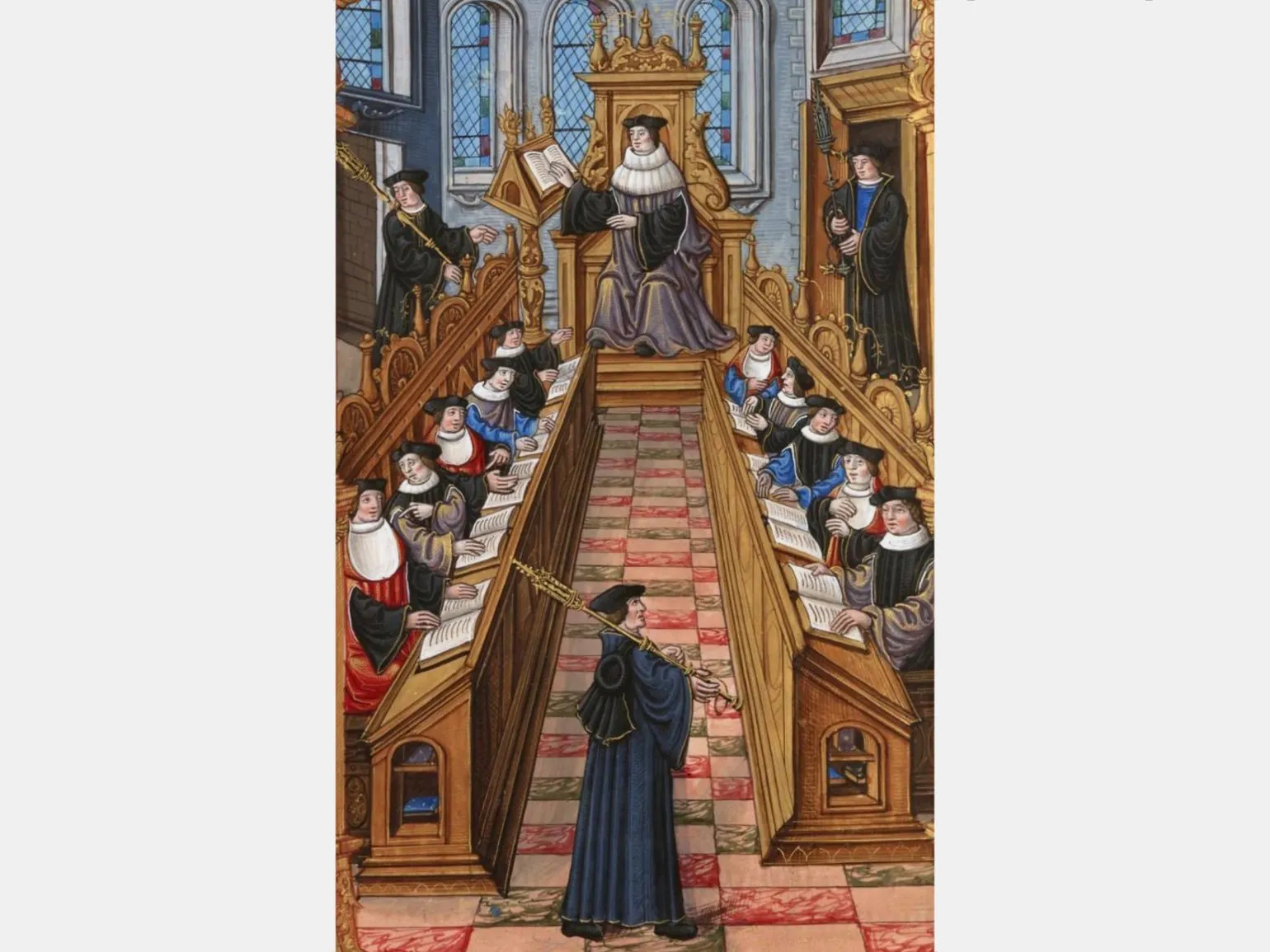
Getting a degree increasingly resembles aristocratic events such as balls, theatrical performances, and tournaments. This transforms the educational process into something more than just the acquisition of knowledge, creating an atmosphere of celebration and social interaction. Students not only study but also participate in cultural events, which contributes to the formation of networks and the development of skills needed for future professional life.
Students led a dissolute (sometimes even excessive) life.
"Gaudeamus igitur, Juvenes dum sumus!" - the famous lines from an old student anthem, which, according to legend, originated at the University of Heidelberg. These words are translated from Latin as "So let us rejoice while we are young!" or "So let us be merry while we are young!" The anthem became a symbol of student life, reflecting the spirit of youth and the pursuit of knowledge. It is often heard at graduation ceremonies and special events, emphasizing the importance of friendship and shared memories during the years of study.
The second option is more appropriate, given the list of actions that were prohibited for students in the Middle Ages. These prohibitions most likely concerned those behaviors that particularly irritated others. For example, the "Manual of the Perfect Student" of 1495 mentions many restrictions: students were forbidden to play with laymen on Sundays, skip classes, physically harm children, dirty books, incite riots, sing during ceremonies, and participate in comic performances in churches and cemeteries. These restrictions emphasize the need to maintain order and respect in the educational environment.
Fights between students and with local residents became an integral part of everyday life. Students, bachelors, and masters were a nuisance to the townspeople: they bullied passersby, staged fights and duels, made noise at night, and harassed women. Even debates often ended in fights. There were also more serious incidents.
In Paris, there are certain clergy and students, as well as their assistants, who have lost their minds, turned away from God, and are unconcerned about salvation. Taking advantage of the customs of academic life and relying on violence, they increasingly commit lawlessness and crimes. Both day and night, they brutally injure and kill people, kidnap women, insult young girls, break into inns, repeatedly commit robberies, and commit other vile acts abhorrent to God. These actions harm not only the victims but also undermine the moral foundations of society. It is necessary to pay attention to this problem and take measures to restore order and justice.
In her study, G. I. Lipatnikova cites a letter from a member of the episcopal court of Paris dated January 11, 1269. This document is an important source for studying the history of European universities from the 12th to the 15th centuries. It contains information about the legal and social aspects of university life at that time, which allows for a deeper understanding of the formation of educational institutions in Europe. The study of documents such as this letter helps to restore the historical context and illuminate the key events associated with the development of science and education in the Middle Ages.
The students' behavior can be explained by their personal circumstances. They were mainly young people living far from home, possessing a cocky character and inflated self-esteem. Even marriage did not deter them: upon entering university, they decided not to marry until they completed their studies, as they considered it too serious a matter and incompatible with the educational process. Students also felt a certain freedom, knowing they were protected by the organization or local authorities.
Alcohol and gambling combined to create something truly explosive. Interestingly, drinking was an integral part of academic life in the Middle Ages. For example, in the Sorbonne statutes, fines were often expressed in the amount of wine that had to be provided to opponents. This explains why, in the 14th century, there were approximately 60 drinking establishments in the area around the University of Paris. This context underscores the importance of alcohol in the cultural and social life of students at that time.
In the Middle Ages, people often consumed wine and beer, as high-quality clean water was quite difficult to find in cities at that time. Sitting in taverns, drinking and singing, was the only available way for students to spend their time. These establishments served not only as places for relaxation but also for socializing, exchanging ideas, and engaging in cultural exchange, making them an important part of public life.

Some students People enrolled in universities solely for the sake of an active social life. This phenomenon prompted the development of measures to prevent it. In 1231, Pope Gregory IX issued a special statute stipulating that those who called themselves students but missed classes would lose their right to privileges. This step emphasized the importance of the educational process and the need to adhere to academic standards.
Universities attempted to impose restrictions on drinking times, designating specific days or hours. However, none of these measures led to significant results in controlling alcohol consumption among students.
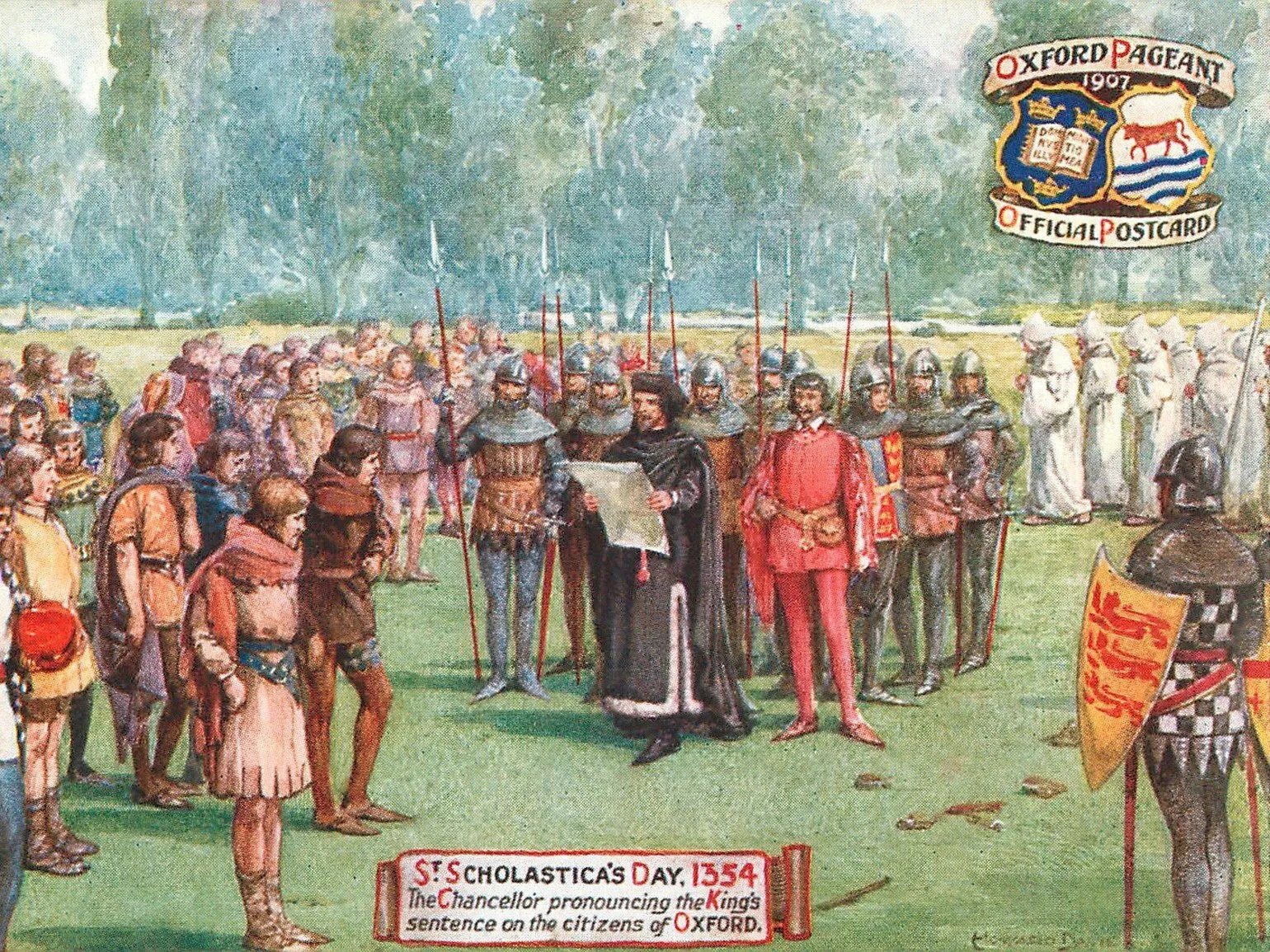
Citizens have always reacted strongly to conflicts. In 1229, residents of Paris killed several students, a resonant event. In Oxford in 1355, local discontent culminated in a massacre at the university, which occurred on the Feast of St. Scholastica. The clashes resulted in the deaths of approximately one hundred people on both sides, and the incident attracted the attention of King Edward III. Interestingly, in both cases, the tragedies began with conflicts in local taverns, which underlines how everyday disagreements can escalate into serious consequences.
Colleges were originally dormitories, not educational institutions.
Renting accommodation from local residents was often expensive for students. In response to this problem, dormitories began to form where students could live and provide support to each other. These institutions were called "colleges." Colleges became an important element of student life, providing not only affordable housing but also an opportunity for socializing, sharing experiences, and learning together.
Colleges were founded by church authorities to support their scholarship recipients, by monastic orders for their members, and by kings, nobles, and wealthy churchmen to help their fellow countrymen. In addition, successful graduates founded colleges to support poor students. One of the main motivations of philanthropists was the desire to secure the prayers of those who lived in the college for their souls.
Today we are familiar with the educational institutions known by the English name "colleges." These institutions play an important role in the education system, offering a wide range of programs and courses for students. Colleges provide the opportunity to obtain not only higher education but also professional skills, which makes them popular among young people. It is important to note that colleges can vary in type, specialization, and level of accreditation, which allows everyone to find the right educational institution for personal and professional goals.
Most likely, university life quickly became concentrated in the college. Teachers who delivered lectures began to move here, since universities initially did not have their own buildings and rented premises. Libraries began to form in colleges and opportunities for students to earn money began to appear. Thus, they could hardly be called simple dormitories, and the meaning of this term expanded significantly.
Among the medieval scholars and masters were women
In most universities, women were not allowed to teach, and students treated them with hostility. For example, the poems of vagantes—wandering student poets—often feature coarse and vulgar language. This contrasts sharply with the works of chivalric courtly literature, where idealized images of love and nobility reign. Vagantes expressed their freedom and rebellion against established norms, reflecting the general societal attitude toward women during this period.
There are exceptions worth mentioning. The most famous of these are two cases, both associated with Bologna.
Bettisia Gozzadini was one of the first women to become students and teachers in the world. She was born into a wealthy and noble family. According to legend, Bettisia attended the law faculty of the University of Bologna dressed in men's clothing. This decision may have been due to the fact that there was no special dress code for women, and all students were required to follow the established rules. Gozzadini became a significant figure in the history of education, paving the way for future generations of women in academia.
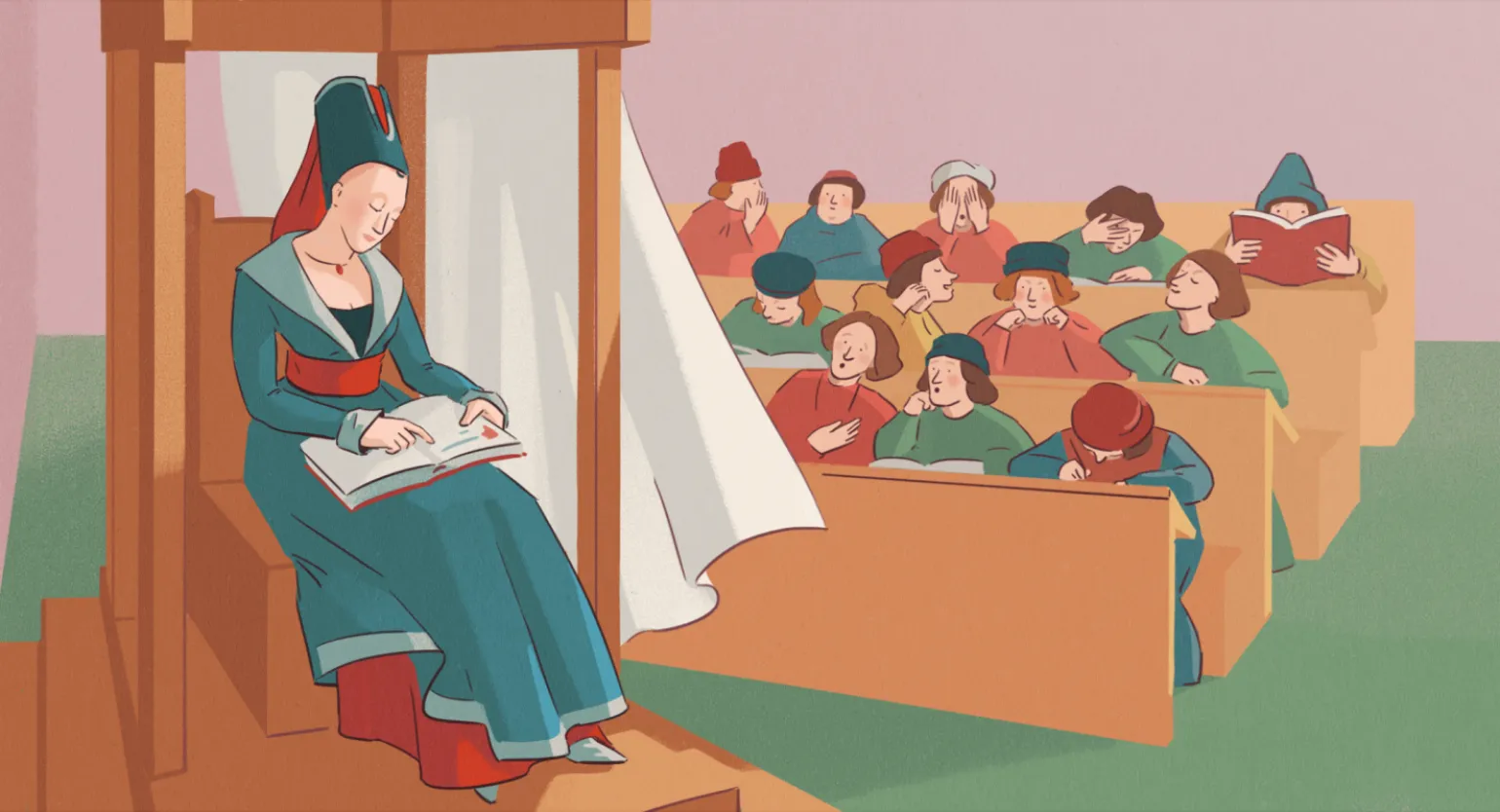
According to information from the Museum of the History of Bologna, Bettisia received her degree in 1237, after which she taught from her home for two years. She was later invited to lecture at the university. She initially declined the offer, but soon accepted. According to one legend, she hid behind a curtain during her lectures.
A century later, Novella d'Andrea, the daughter of the renowned professor Giovanni d'Andrea, taught law at the University of Bologna. Educated at her father's school, she taught classes in his absence. Legends also suggest that Novella lectured from behind a curtain, highlighting the rarity of women's presence at medieval universities. These stories demonstrate how unusual women's participation in academic life was at that time.
Primary sources of information play a key role in building knowledge and understanding various topics. They can include scholarly articles, books, studies, official reports, and online resources. Scholarly articles published in peer-reviewed journals are a reliable source because they undergo rigorous peer review. Books written by authoritative experts provide in-depth analysis and extensive coverage of a topic.
Studies and surveys can serve as sources of up-to-date data and opinions, helping to better understand current trends and public opinion. Official reports from government and international organizations provide reliable information and statistics needed to make informed decisions. Online resources such as blogs and specialized websites can offer fresh ideas and discussions, but it is important to verify their credibility and authority.
Using a variety of sources allows you to gain a more complete understanding of a topic and also expands your horizons of knowledge. It is important to critically evaluate each source to avoid the dissemination of inaccurate information. Thus, the correct selection and use of key sources of information contributes to high-quality learning and in-depth analysis.
- Dushin O. E. Medieval universities: at the origins of European higher education / Bulletin of St. Petersburg University. Philosophy and conflictology.
- Le Goff J. The other Middle Ages: time, labor and culture of the West. - Ekaterinburg, 2000.
- Le Goff J. Intellectuals in the Middle Ages. - St. Petersburg, 2003.
- Leonova T. A. Everyday life of medieval students / Pedagogical journal of Bashkortostan.
- Lipatnikova G. I. Documents on the history of European universities in the 12th-15th centuries. - Voronezh, 1973.
- Uvarov P. Yu. University / Dictionary of medieval culture. - M., 2003.
- A History of the University in Europe: Volume 1, Universities in the Middle Ages. Ed. by H. de Ridder-Symoens, W. Rüegg. - Cambridge, New York, Port Chester, Melbourne, Sydney, 1992.
- Eco U. Bettisia Gozzadini e Novella D’Andrea / Enciclopedia delle donne.
Profession Methodist from scratch to PRO
You will upgrade skills in developing curriculum for online and offline courses. Master modern teaching practices, structure your experience, and become a more sought-after specialist.
Find out more