Contents:

Learn: Educational Programs Methodologist
Learn moreThe Institute of Education at the Higher School of Economics conducted a study of the career opportunities of Russian teachers. The study focused on issues of workload distribution, teachers' opinions on professional prospects and alternative employment options. The results of the study were presented on April 30 at the IX Moscow International Education Fair (MIEF-2022). A video recording of the discussion is available in the official MIEF community on the social network VKontakte. The study highlights current issues and trends in education, as well as opportunities for professional development and career advancement for teachers in Russia.
The researchers combined information from various sources, which provided a more complete understanding of the topic under consideration. This interdisciplinary study facilitates in-depth analysis and the identification of new patterns. The combined use of data from different fields provides more accurate results and opens new horizons for further research. This approach not only expands existing knowledge but also improves the quality of scientific findings, which in turn can lead to practical applications and innovations in the relevant fields.
- official statistics from Rosstat,
- the results of a sociological survey of teachers from all regions of the country,
- data from large online companies, including Skyeng and Foxford.
The study analyzes the perception of work and professional prospects not only of school teachers, but also of tutors, online school teachers, and specialists combining different types of activities. The importance of this topic lies in the fact that understanding current trends and problems in the educational sphere allows us to better assess opportunities for development and career advancement. In a rapidly changing labor market, analyzing the opinions of various categories of teachers is becoming especially relevant for identifying their needs and expectations.
The researchers' main findings are key discoveries that can significantly impact various fields of knowledge. These results help deepen our understanding of nature, society, and technology. Research illuminates important issues such as new treatments, innovative technologies, and social trends. Discussion of these findings contributes to the development of science and education, and increases public awareness of significant problems. Researchers continue to study complex issues, striving to provide solutions that can improve the quality of life and well-being of society. Each new finding is a step forward towards a deeper understanding of the world around us and its patterns.
- how teachers seek work balance,
- who earns how much,
- what plans do teachers have for the future,
- do teachers have career growth?
How age affects a teacher's career
The study aims to identify the influence of a teacher's age on their choice of career path. It is important to determine how age factors can influence professional preferences and the choice of career directions for teachers. The results may help better understand the dynamics of teachers' career growth and professional development depending on their age.
The study's results confirmed the expected trends. Older teachers (45–59 years old) prefer to work in public schools, where their share accounts for 44%. Meanwhile, teachers under 44 are more likely to choose private educational institutions, online platforms, and tutoring. These data highlight differences in preferences between generations of teachers and indicate the growing popularity of alternative forms of education among young professionals.
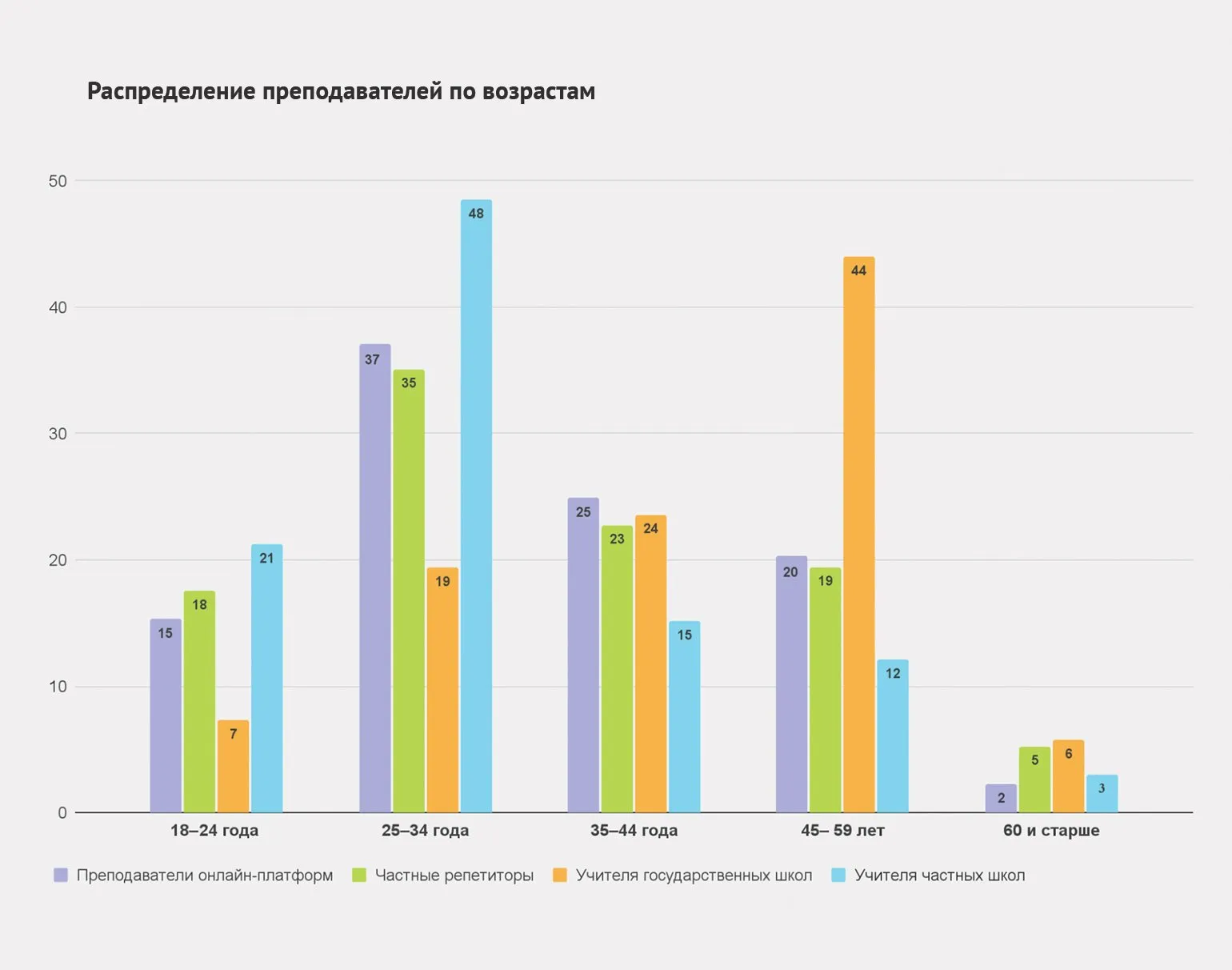
Among young professionals aged 25-34, only 19% work as teachers in public schools. Meanwhile, among newcomers aged 18-24, the share of those working in public institutions is only 7%. Young people are increasingly choosing private schools, where the highest concentration of teachers under 34 is observed.
Of course, I will help you rework the text to improve SEO and add the necessary content, while staying on-topic and without adding unnecessary information. Please provide the text itself that you want to change.
The age balance in municipal schools in Russia, which represent the bulk of the educational system, is significantly skewed towards more experienced teachers. This is confirmed by all available data, including the results of our research, which only underscores the existing trend. At the same time, we are seeing an increase in the number of young teachers choosing to work on online platforms, engage in private tutoring, or teach in private schools. It is in private schools that the greatest career growth peak is observed among teachers aged 25–34. This situation highlights important changes in the educational environment and requires the attention of educational institutions and government agencies.
Interestingly, in every age group, teachers choosing to work on online platforms outnumber tutors. This indicates the growing popularity of online education and the preference of teachers for modern teaching methods.

Explore also:
Young teachers are in great need in schools, however, if you analyze how they are received, it becomes Obviously, they are not always welcomed with open arms.
How Teachers Try to Find Work Balance
Research has shown how much time, on average, teachers devote to their work in various educational segments, as well as how their work time is distributed between different activities.
Tutors who are dedicated exclusively to their field have the lightest workload of all professions. On average, they work 32 hours a week, of which 22 hours are spent directly teaching students. This makes tutoring an attractive profession for those seeking a balance between work and personal life.
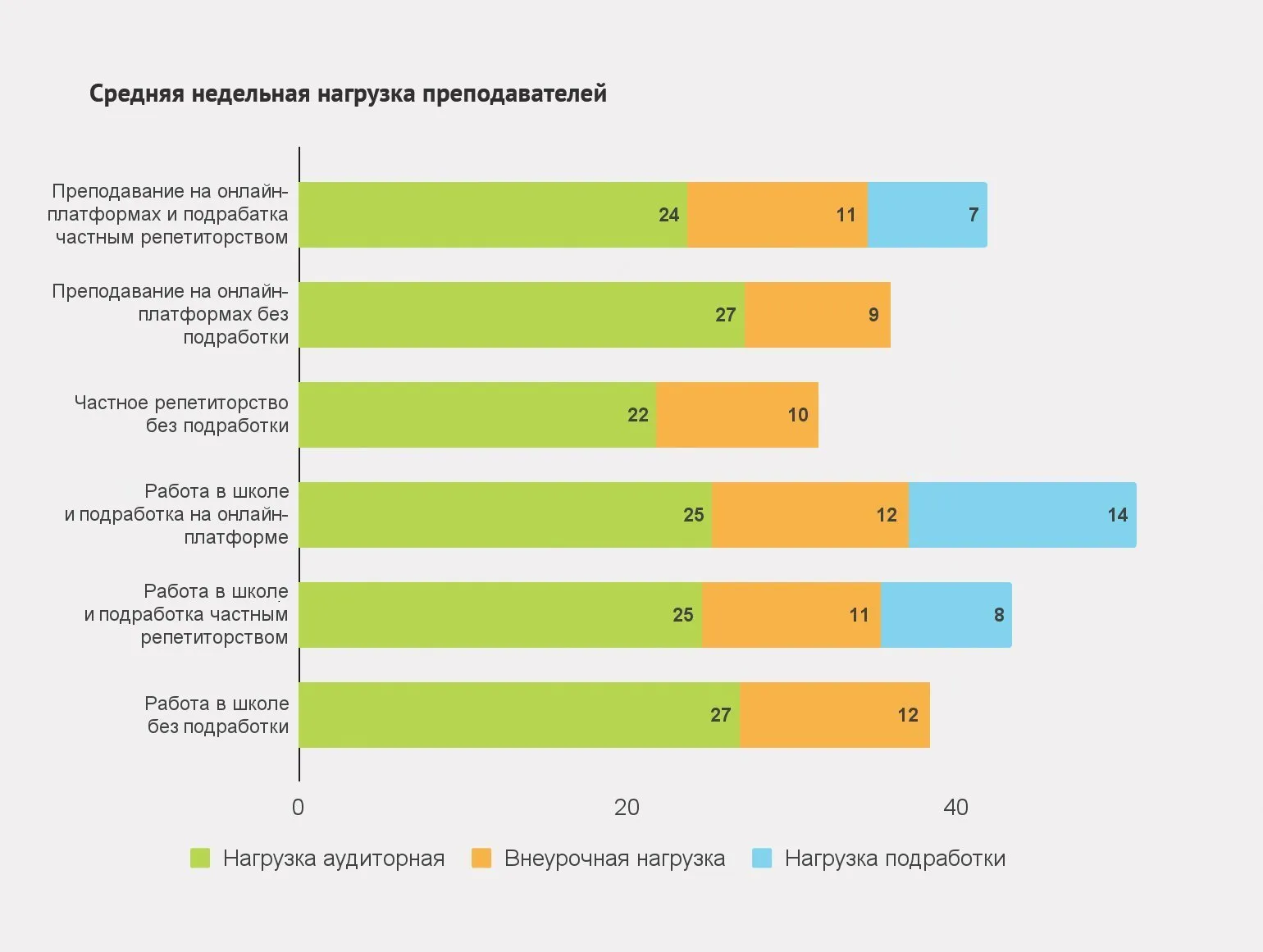
The average classroom workload of school teachers and online platform teachers is 27 hours per Week. However, in-school teachers have a larger workload outside of school hours, amounting to 12 hours, while online teachers have 9 hours. It is important to note that compensation for outside work is not provided for either tutors or online course instructors. In public educational institutions, such work is paid at a fixed rate, which does not take into account the actual number of hours worked.
The most workload was found among specialists who combine in-school teaching and work on online platforms. On average, their workload is 51 hours per week. This underscores the high level of engagement and the need for effective time management to achieve a balance between traditional and remote learning.
According to the study, more than 67% of teachers on online platforms are satisfied with their work schedule. Meanwhile, tutors were 66% satisfied, while among school teachers, this figure was significantly lower—only 25% expressed satisfaction with their weekly workload. These data highlight differences in satisfaction levels among different categories of teachers and can serve as a basis for further analysis of working conditions in the education sector.
Tutors and teachers working on online platforms can successfully balance their professional and personal lives. At the same time, school teachers face an increased risk of burnout due to significant workloads, according to Ekaterina Latypova, Academic Director of the Foxford Online School. High demands on teachers and constant pressure can negatively impact their psycho-emotional state, making it important to maintain a healthy work-life balance.
The risk of professional burnout is associated not only with the desire to achieve new career heights but also with the need to earn a living. This opinion was expressed by Irina Abankina, PhD in Economics and Chief Research Fellow at the Center for Financial and Economic Solutions in Education at the Institute of Economics of the National Research University Higher School of Economics. In today's economic climate, workers often face pressure, which can negatively impact their emotional well-being and productivity.
In this situation, we encounter an important aspect: the desire to earn money can negatively impact professional development, increasing the risk of burnout and overwork. This highlights the need to balance financial goals with maintaining psycho-emotional health.

Reworked text:
Check out our latest materials on the topic. We offer helpful articles and tips to help you gain a deeper understanding of the issues discussed. Don't miss the opportunity to gain valuable information that may be useful in your practice.
Read also:
Teachers are on the verge of losing their middle-class status: an analysis of the situation with teacher salaries. In recent years, there has been a significant decline in the real income of teachers, which is leading to their exit from the middle class. This trend raises serious concerns, as insufficient pay can negatively impact the quality of education. It is important to pay attention to the factors affecting teachers' salaries, including education funding, social guarantees, and additional payments. Solving this problem requires a comprehensive approach and cooperation between government agencies and educational institutions.
Who earns how much?
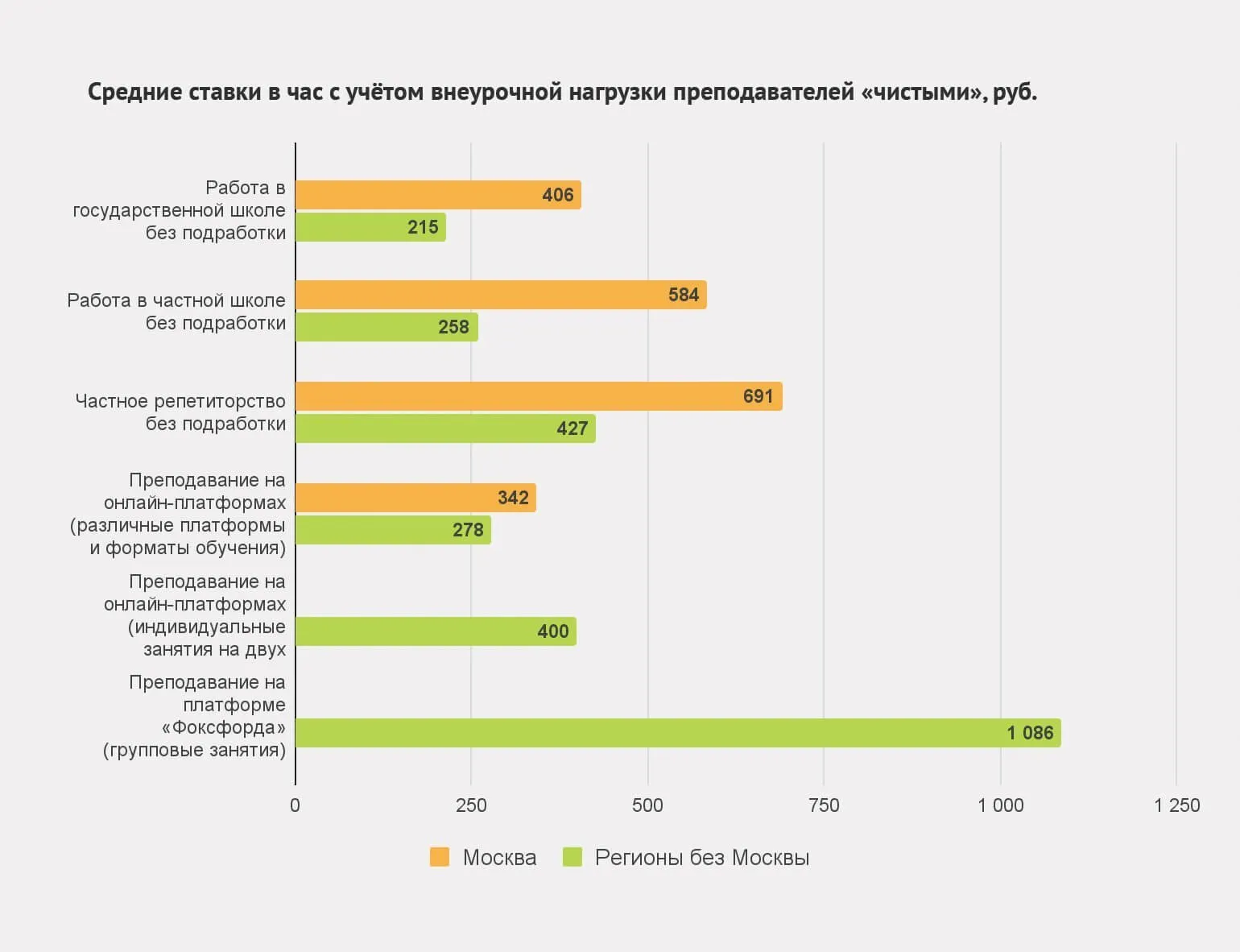
The desire of teachers to find additional sources of income is associated with low salaries. Research shows that the average hourly wage for school teachers is 215 rubles in the regions and 406 rubles in Moscow, including extracurricular workload. Given these figures, many teachers are seeking alternative income options to support themselves and their families. It is important to understand that additional sources of income can significantly improve the financial situation of teachers and raise their standard of living.
According to surveys, the average salary of Russian school employees is just over 44 thousand rubles per month, excluding additional income. At the same time, 90% of respondents express dissatisfaction with their earnings.
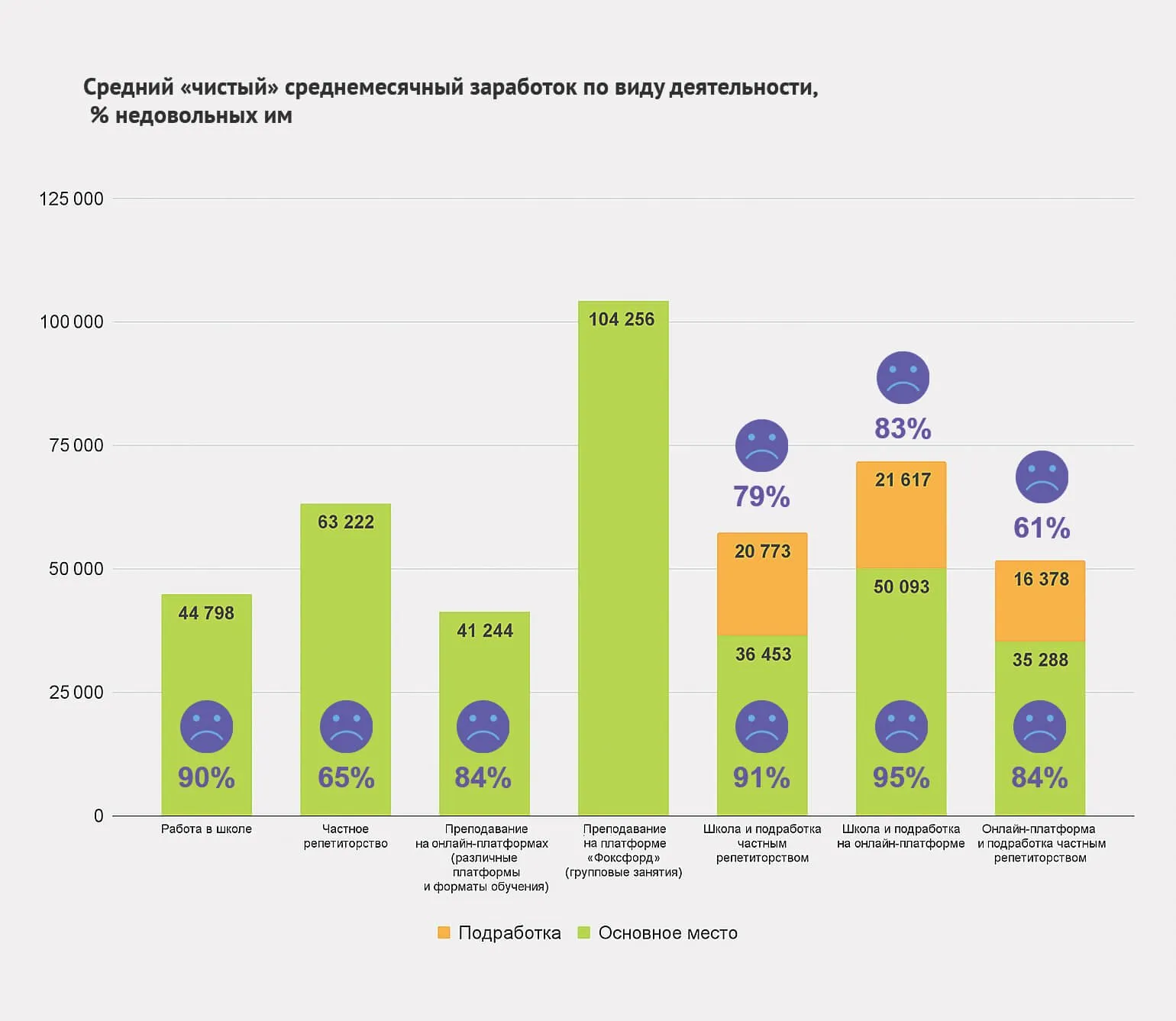
Working at school and Tutors earn an average of 56,000 rubles, while working in a traditional or online school earns around 70,000. Interestingly, the number of dissatisfied employees significantly exceeds the general population. This, as Irina Abankina notes, points to a serious problem. Changing the current situation will be difficult, as neither the government, nor businesses, nor parents are yet willing to increase investment in education.
Tutors are generally satisfied with their income, which averages around 63,000 rubles per month. However, those who combine their main job with private lessons earn significantly less—approximately 16,000–20,000 rubles. In surveys, teachers note that salary is the main advantage of tutoring. They also emphasize such important aspects as professional autonomy and optimization of personal time.
The wage gap between Moscow and the regions exacerbates the situation. In the capital, salaries are significantly higher, creating economic inequality. This leads to population migration, when people from the regions strive to move to Moscow in search of better living and working conditions. Such differences also impact quality of life, access to services, and social infrastructure.
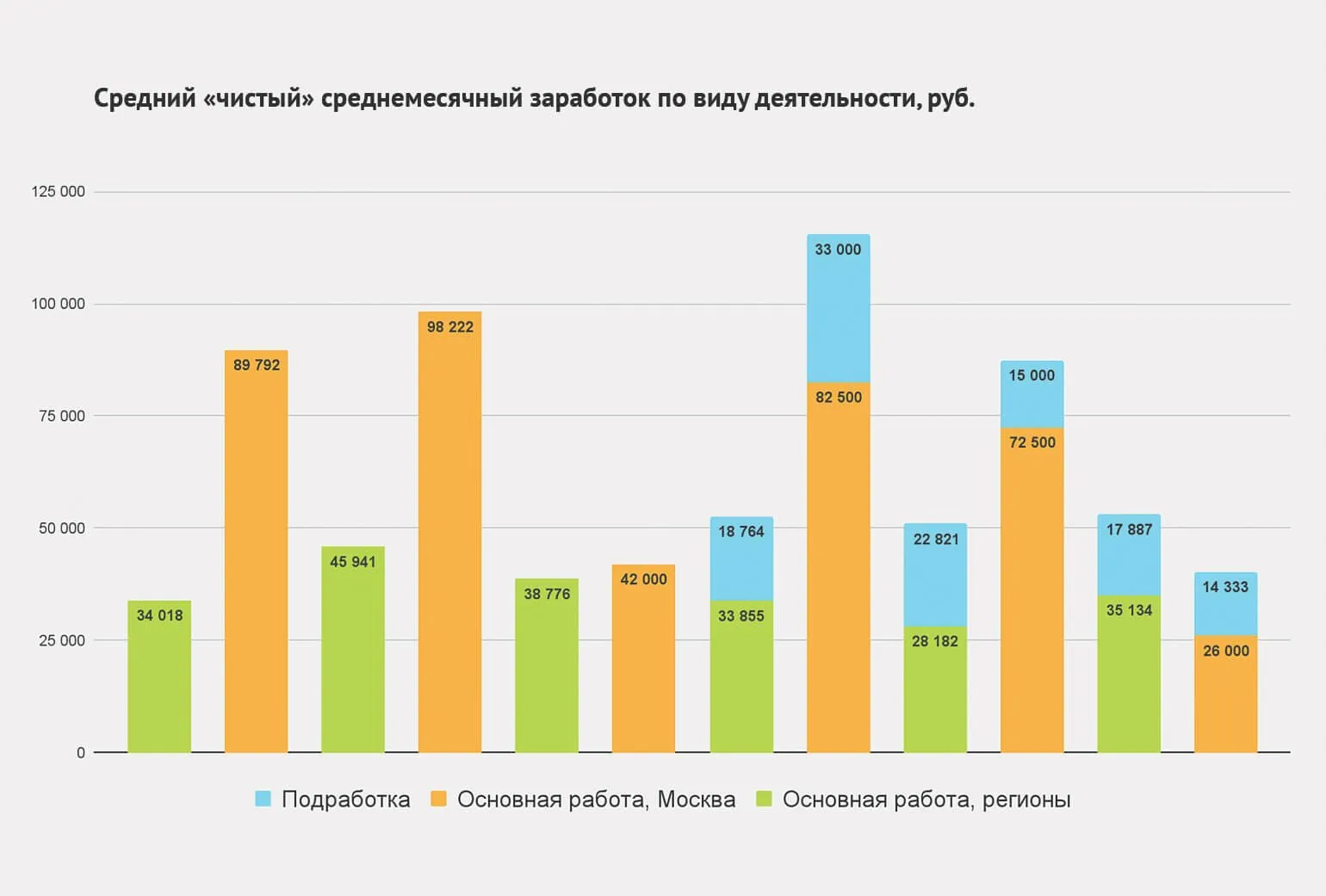
In the Russian capital, tutors continue to hold leading positions in terms of average monthly income, earning approximately 98,000 rubles net, excluding part-time work. Meanwhile, the average salary of school teachers is approximately 9,000 rubles less, highlighting the high demand for tutoring services in the education sector.
According to the study, the most profitable option for teachers is combining school work with tutoring. In this case, the average teacher income is 115,000 rubles. The lowest income is observed among those who simultaneously teach private lessons and work on online platforms. This approach can negatively impact a teacher's financial situation, so it is important to consider more effective options for combining different teaching modes.
The salary situation in the regions differs significantly from that in the capital cities. The lowest income is observed among regular school teachers who do not hold a second job, earning 34,000 rubles. Meanwhile, the highest salaries are earned by specialists who combine teaching with tutoring and working on online platforms, reaching 53,000 rubles. Overall, the salaries of regional teachers with additional jobs vary slightly, but are two to three times lower than in the capital cities.
Irina Abankina emphasized that combining different types of work can be a positive trend. This provides the opportunity to independently manage one's workload and not limit oneself exclusively to one's professional activities. This approach promotes a more harmonious work-life balance, which in turn can increase overall productivity and life satisfaction.
Working at a school requires significant effort, and any part-time job can become an additional burden. As the expert notes, working in an educational institution takes up all of their time, and any additional income often comes at the expense of their personal lives and interests. Meanwhile, in the capital, teachers have more opportunities to earn extra money, while those in the regions often lack such options. This creates an imbalance in working conditions and opportunities for professional growth between teachers in different regions.

Please note the following materials:
Recently, data on the number of school teachers who are engaged in Tutoring. These figures highlight teachers' growing interest in additional educational activities. Tutoring is becoming an increasingly popular way for educators to improve their skills and income. Many offer their students individual lessons, which not only deepen their knowledge but also improve their academic performance. Thus, tutoring plays an important role in the educational system, providing closer interaction between students and teachers.
How Online Platforms Came into a Teacher's Career
The researchers compared their data with information provided by private market players, such as the educational platforms Skyeng and Foxford.
The difference in rates in the educational market is noticeable. The average cost of a group lesson at Foxford is about a thousand rubles per hour, which is twice the average salary of a school teacher in Moscow and almost five times more than the salary of a teacher in the regions. However, high rates imply strict requirements for teachers. To be hired by Foxford, candidates undergo five interviews, confirm their qualifications, and compete with 14 other applicants, notes Ekaterina Latypova.
The average monthly salary of a Foxford employee exceeds 104,000 rubles.
Ekaterina Latypova presented the results of her research conducted within the company. According to the data, 83% of teachers are satisfied with their salary level, and 75% of them believe that their work provides security for the future. The speaker also noted that for some teachers, school remains their primary place of work, which underscores the importance of stability and professional growth in the educational field.
Alexander Laryanovsky, Managing Partner and Director of Business Development at Skyeng, hopes that in the future, online platforms will attract more teachers and significantly change the educational landscape. At Skyeng, the average cost of one lesson is approximately 450-500 rubles. Moreover, differences in teachers’ salaries do not depend on the region of their physical location. The highest salaries are received by teachers from the Altai Territory and the Volgograd Region, while the lowest salaries are recorded among teachers from the Chukotka Autonomous Okrug.

Alexander Laryanovsky explained that the difference in results is due to the achievement of key metrics and quality indicators. Teachers in Altai may be more proactive and strive for high-quality work, as they are more interested in increasing their income.
According to the study results, the main advantage of online platforms for teachers is not only the opportunity to earn higher salaries but also a significant reduction in the teaching and extracurricular workload compared to traditional teaching or tutoring. Teachers also note the savings in personal time as an important aspect. In addition, online platforms provide the opportunity to develop individual teaching methods, which promotes professional self-expression and the development of pedagogical skills.
Ekaterina Latypova highlighted the key advantages that shape a complete understanding of the teaching profession. It is important for teachers to have a balanced workload that ensures a decent salary. Furthermore, conditions for professional development are essential, which contributes not only to the teacher's personal development but also to improving the quality of education as a whole.
What are teachers' plans for the future?
Research shows that most teachers, regardless of their professional field, do not view their work solely within the framework of school education. A significant portion of tutors who specialize only in private lessons do not plan to return to school. This reflects a changing approach to education and the preferences of educators, who are increasingly choosing flexible work arrangements outside of traditional educational institutions.
Among educators who indicated school as their primary place of employment without a second job, only 16% intend to continue their work in the same format.
Many professionals seek to combine their primary work with tutoring, as it is the most attractive employment option. Few people are interested in working at multiple educational institutions, making tutoring an ideal solution for those looking to expand their professional horizons and increase their income. Combining these activities allows you not only to improve your financial situation, but also to develop teaching skills, adapt to different learning styles, and find an individual approach to each student.
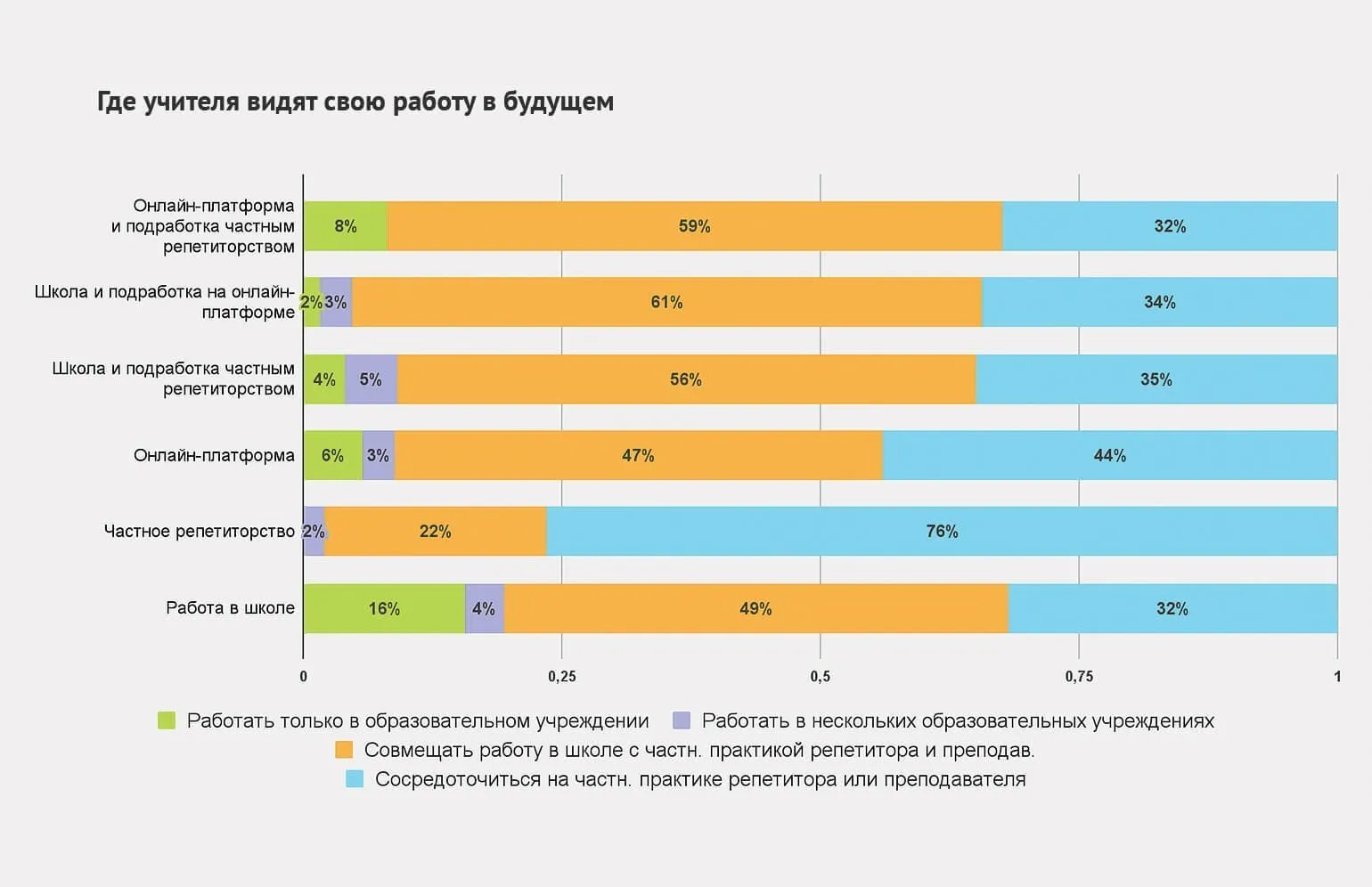
Teachers from various fields are increasingly considering working part-time in the future. One popular option is focusing on private practice as a tutor or teacher. For many, this is a goal, and in the private tutoring sector, this approach is becoming dominant. Private tutors are essentially individual entrepreneurs who do not want to work within organizations and want to focus on their own work. This demonstrates a growing interest in independent work in the educational field, which opens up new opportunities for professional growth and development.
Alexander Laryanovsky notes that teachers go through a certain cycle in their professional careers. They first begin their careers on online platforms, then move on to tutoring, after which they may return to the online environment again, but rarely return to teaching in schools. This is due not only to low salaries but also to other factors, such as a desire for a more flexible schedule and the opportunity to implement their own teaching methods. Teachers strive for greater autonomy and efficiency in their work, which makes the school system less attractive to them.
A good teacher does not necessarily have to be a successful salesperson. Tutors, on the contrary, are always forced to engage in self-promotion. Consequently, not all teachers can become tutors, which is impossible in the current conditions. The formal school system creates restrictions that force teachers to leave their familiar environment and seek new opportunities. This phenomenon reflects the future of education, which Laryanovsky discusses in his research.
Tutoring is becoming increasingly popular, indicating high demand from students and their parents. Ekaterina Latypova notes that this stems from the need for an individualized approach to each child. Parents strive to ensure their children's development is aligned with their interests and needs, which cannot always be met in the traditional school system. Thus, tutoring provides a unique opportunity for personal and academic growth, adapting to the needs of each student.

Be sure to check out additional materials and articles that may be useful for a deeper understanding of the topic. The knowledge gained will help you better navigate issues related to the material under consideration.
In an ideal world, tutors and teachers understand their roles and responsibilities, collaborating to achieve common goals. Instead of competing, they combine their efforts, creating optimal learning conditions. This interaction promotes a deeper understanding of the material by students and improves the quality of education. Tutors and teachers can exchange experiences and methods, which benefits both students and the educational process as a whole.
Do teachers have career growth and are they ready for it?
Many professionals working on online platforms and engaged in tutoring are confident in their career advancement. According to research, about a third of workers in various fields of employment hope to continue their careers in this direction. At the same time, almost half of respondents from these segments prefer to remain in the role of "just teachers." This highlights the importance of tutoring as a sustainable career path in the digital age.
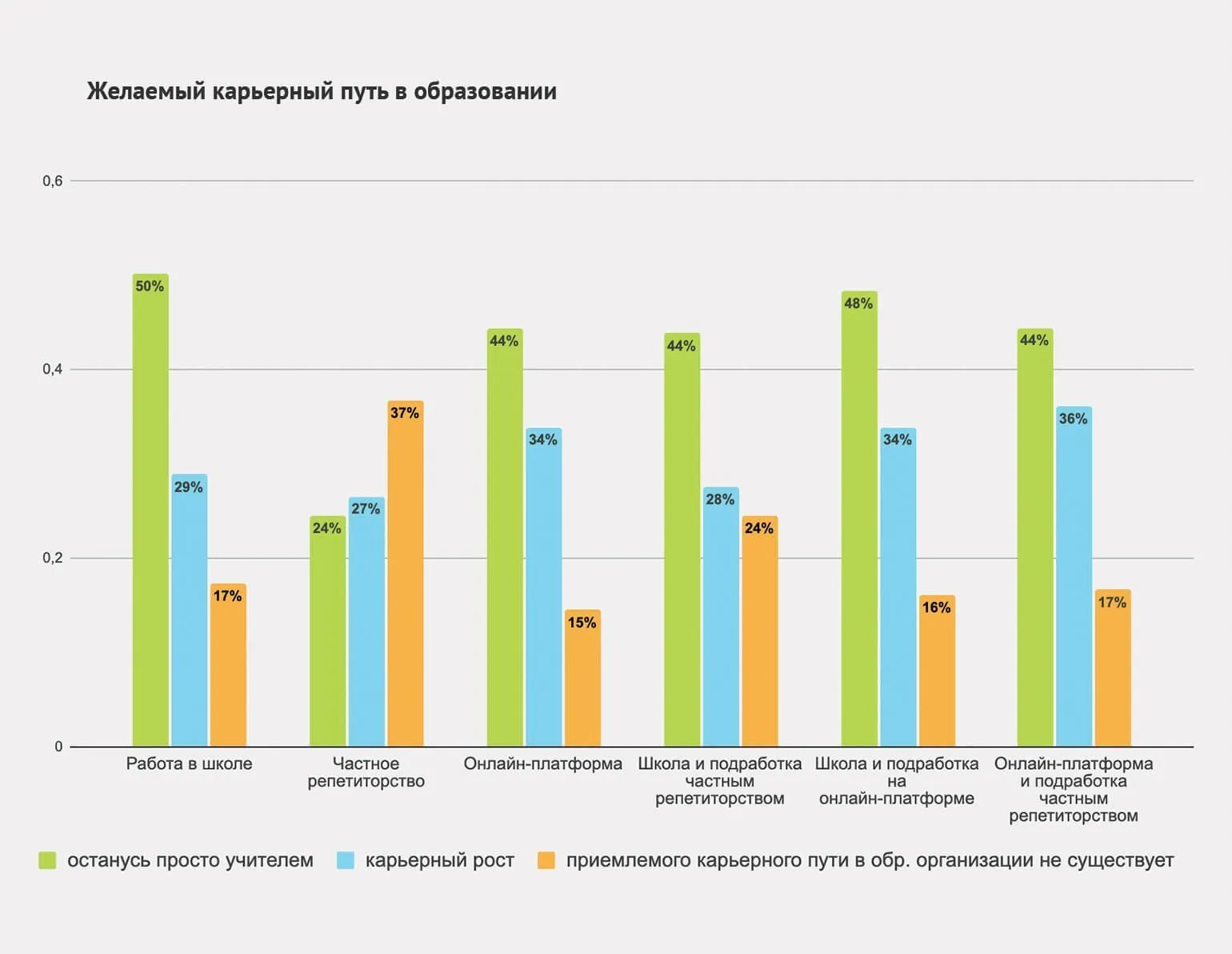
Only 15-17% of respondents said they do not believe career advancement in education is possible.
Tutors are an exception to this general rule, as 37% believe that building a career in an educational organization is impossible. This opinion may be due to various factors, such as low salaries, a lack of opportunities for professional growth, and a lack of stability in this field. However, tutors may consider alternative career paths by using their skills and knowledge to create their own educational programs or online courses.
Professional development is an integral part of any career, and research shows that educators actively use various tools to achieve it. Tutors and online platform instructors stand out among their colleagues in that they most often consult professional and scientific literature. They also actively participate in online courses, seminars, and webinars, which allows them to update their knowledge and skills in a rapidly changing educational environment. These approaches promote not only personal but also professional growth, which in turn positively impacts the quality of the educational process.
Kirill Zinkovsky noted that teachers engaged in private tutoring and working on online platforms actively participate in modern forms of professional development and growth. This demonstrates a tendency to adapt educational practices to the new demands of the time, which contributes to improving the quality of education and increasing the competitiveness of specialists in the field of education.

Alexander Laryanovsky emphasizes that research demonstrates the significant impact of training on income. Self-education for tutors and teachers of online platforms is becoming a key factor in increasing their profits. This indicates that teachers view self-development as a promising area and are committed to learning not only for career advancement but also to improve the quality of their teaching. Investments in their own knowledge and skills open up new opportunities and make them more competitive in the educational services market.
Educational institution employees are characterized by active collaboration with colleagues. Public school teachers are significantly more likely to participate in observing their colleagues' lessons and participate in joint learning within the team. This facilitates the exchange of experience and improves the quality of the educational process.
Educational conferences are gradually losing their popularity and fading into the background. Previously considered highly effective, events such as participation in reports and research today occupy an insignificant place in professional development. New communication formats are becoming more relevant and in demand. Irina Abankina emphasizes the importance of adapting to these changes and supporting new approaches to teaching and sharing experiences. In a rapidly changing educational landscape, it is necessary to pay attention to innovative methods and opportunities for professional growth.
Educational Programs Methodologist
You will go through the full cycle of creating an educational product from scratch. Learn to design curriculum for online and offline courses. Become a versatile specialist—you can launch your own project or get a job as a methodologist at a large company.
Learn more