
Contents:

Learn: The Profession of Methodologist from Beginner to PRO
Learn MoreCreating massive courses for continuing professional education is often fraught with challenges. One of the main problems is that a course initially aimed at beginners can attract students with varying levels of knowledge and experience. As a result, some of the material may seem boring to more experienced participants. Increasing the complexity of the course to accommodate these students can make it difficult for beginners. It is important to find a solution that will allow us to develop a course that meets the needs of all categories of learners. A modular learning structure, where each student can choose the difficulty level appropriate to their experience, may be an opportunity. This will allow us to create a more flexible and effective course that will satisfy the needs of both beginners and more advanced students.
At Skillbox, we faced an important challenge in our Web Design course, where students are learning a new profession. We found a solution using the 4C/ID model. This model, when properly adapted, facilitates a non-linear learning structure. This approach allows students to choose topics that interest them rather than following a strict lesson sequence. This non-linear learning makes the course useful for both beginners and those with a basic understanding of web design. This ensures flexibility and an individual approach to training, which is especially important in the rapidly changing field of web design.
We will share the experience that helped us achieve this goal.
- why we decided that the 4C/ID model would suit us;
- how we interpreted the 4C/ID model in our own way, adapting it to our needs;
- what difficulties we encountered with experts and purely technically (and, most likely, you should be prepared for this if you want to create a similar model).
What is the 4C/ID model?
4C/ID is a design model based on problem-based learning, consisting of four components. The acronym stands for 4 components and instructional design. The central idea of this model is that students gain knowledge through hands-on experience, allowing them to develop a holistic understanding of the material being studied. This approach promotes deeper retention of information and the development of critical thinking, making 4C/ID an effective tool in the educational process.
This model identifies four key components, which will be discussed in detail in the following sections.
Learning tasks within the 4C/ID method are a variety of tasks that focus on solving a single, complex problem. This main task is multi-component and is divided into a number of smaller tasks that range from simple to complex. An important aspect is that the main learning task should be as close as possible to real-world conditions to ensure effective learning and the development of the necessary skills.
Supporting information is a key element in the educational process, providing students with the necessary theoretical materials to solve problems. Within the 4C/ID model, this includes lectures, textbooks, articles and research, as well as examples that contribute to a better understanding of the material being studied. Proper use of supporting information helps students develop analytical and critical thinking skills, which in turn improves their ability to apply knowledge in practice.
Timely information is a valuable resource for students, essential for successfully completing learning tasks. For example, checklists, reminders, and case studies prepared for different stages of learning help facilitate the process of assimilation of material. Such materials facilitate a more effective organization of the learning process and improve the quality of education. Providing students with up-to-date information allows them to complete assignments more quickly and improve their skills.
Partial practice is an essential element in solving complex professional problems. It allows certain skills to become automatic and improves overall work efficiency. Partial practice includes regular exercises that can be performed daily to consolidate knowledge and skills. This is key to developing professional competencies and self-confidence. Regular use of partial practice promotes better assimilation of the material and prepares you for solving more complex problems.
You can find more information about this model and the development of courses based on it at this link.
To develop the Web Design course, we relied on the 4C/ID model, adapting it to our specific requirements and approaches. This allowed us to create a unique course structure that effectively combines theory and practice, providing a deep understanding of web design. Our interpretation of the 4C/ID model helps us focus on key aspects of learning, such as content, interaction, context, and evaluation, making the course as useful as possible for students.
Why We Were Inspired by 4C/ID
The Web Design course was initially developed as a classic program with traditional modules, lessons, and practical assignments. It was aimed at beginners who had no experience with design programs and did not know how to create banners. However, as the course progressed, it became clear that the course was also of interest to those who had already dabbled in design but lacked a systematic understanding. This confirms the growing interest in web design training among more experienced users seeking to improve their skills and gain structured knowledge in this field.
We decided to develop a universal course that would be interesting and useful for everyone. The key question was determining a program unit that would allow students to progress along individual learning paths. In traditional courses, this unit is the topic. However, for students already familiar with the material, this can be an ineffective option, as they risk becoming bored or, conversely, missing important aspects.
The 4C/ID model is task-based, which allows for an effective learning structure. In the traditional sense, it seems linear, but it was this aspect that inspired us to develop a non-linear course. How is this implemented? The student receives not just a standard set of modules with topics, but a collection of real-world assignments organized by difficulty level. Once a student has mastered certain skills, they can demonstrate their proficiency and move on to more challenging tasks, minimizing the risk to their learning. This approach promotes a deeper understanding of the material and increases motivation to learn. Students new to design begin their training with simple projects, such as advertising banners or social media covers, allowing them to grasp the fundamental principles of design. Meanwhile, more experienced students tackle more complex and authentic tasks, such as creating landing pages, allowing them to focus on new knowledge and skills without wasting time mastering aspects they are already familiar with. This approach ensures the efficient use of time and resources, allowing each student to develop at their own pace, deepening their knowledge and skills in web design. By offering tasks rather than topics, we simultaneously gain many additional benefits. This approach allows for a focus on specific goals, which facilitates more effective problem-solving. Tasks provide clear guidelines for the team, improving work organization and increasing productivity. Moreover, a focus on tasks promotes a deeper understanding of the target audience's needs, which in turn improves the quality of the final product. Thus, choosing tasks instead of topics opens up new horizons for development and process optimization.
- We "tie" learning to real life. All tasks are as close as possible to those students will encounter in their work.
- We provide tasks in a complex. This point is directly related to the previous one. If a course is built around topics, students, although they complete exercises, do not always understand how and when to use their new knowledge in their work. But with a task-based course, they immediately understand how a particular topic will be useful to them in the future, and they immediately try their hand at it.
- We save students time. Each person focuses on what specifically they need to learn.
- We develop responsibility for the result in students. Here, again, everything is like in real life - they can independently choose tasks within their capabilities and cases, while still having to adhere to deadlines and receive objective feedback.
- We teach how to learn. That is, to search for and analyze information, apply your knowledge in different conditions.

Read also:
Creating a course that will help a novice student achieve professional mastery requires careful planning and structuring of the content. To begin, it's important to identify the target audience and their needs. It's important to develop a curriculum that's gradual and logical, starting with basic concepts and progressing to more complex topics. The course should include both theoretical knowledge and practical assignments that allow students to apply the skills they've learned. It's important to use a variety of learning formats, such as video tutorials, text materials, and interactive tasks. This will not only make the learning process more engaging but also help students retain the information better. Regular feedback is key to learning. Students should have the opportunity to ask questions and receive answers, which will help them avoid misunderstandings and build their confidence. Additionally, using case studies and real-world examples will help students see the practical application of what they're learning. Don't forget the importance of assessing progress. Include tests and assessments so students can track their achievements and understand where they need to improve. It is also worth considering the possibility of creating a community for students, where they can share experiences and support each other in the learning process.
Thus, a properly structured course, based on the needs of students and incorporating a variety of learning formats, will help beginners achieve professional mastery.
How we interpreted the 4C/ID model for the course
Let's consider the process of developing a non-linear course step by step.
Step 1. Define the goal of your project. Before you start completing tasks, it is important to clearly understand what exactly you want to achieve. This will help you focus on the necessary actions and avoid unnecessary waste of time and resources. Make sure the goal is clear and measurable so you can track progress and make changes if necessary. Remember that a clear understanding of the end goal is the basis for the successful implementation of any project.
A key step in developing the 4C/ID is the formation of a bank of authentic tasks. This process resembles research familiar to methodologists, but has its own specific features. Creating such a problem bank allows for the effective assessment and development of students' competencies, providing realistic conditions for their practical application.
The problems included in the bank must meet three main criteria. First, they must be clearly defined and have clear goals. Second, it is important that the problems are measurable, which allows for their completion to be assessed. Third, the problems must be realistic and achievable within the specified timeframe. Compliance with these criteria ensures effective project management and contributes to the successful achievement of the set goals.
- They reflect the needs of real employers and will be frequently encountered by the student.
- They have a context - customers, goals, deadlines, and so on.
- They are complex - that is, their implementation requires skills and knowledge on various topics.
An authentic problem may at first glance resemble a regular one, but there is an important difference between them. A key aspect of an authentic task is the presence of an "artifact"—a tangible result of completion that demonstrates achievement and skill. This artifact can take various forms, including projects, research, or creative works, and serves as evidence of understanding and application of knowledge in real-world settings.
Every designer's work involves a number of essential steps, such as drafting a brief, communicating with the client, and selecting references. These stages are essential elements of the workflow and are necessary for creating a high-quality product, such as a landing page. However, the final result, which can be considered an artifact, is the finished landing page. It reflects all the previous stages and demonstrates the designer's professionalism.
To create the task bank, we used the following approaches and tools. We analyzed existing methodologies to determine the most effective ways to develop and systematize tasks. During the process, we took into account current trends and user requirements, which allowed us to create a structured and user-friendly task bank. Each task was carefully described to ensure clarity and understanding of its purpose. We've also implemented mechanisms for regularly updating and adding new tasks, which will help us maintain our bank's relevance and adapt to changing conditions.
- Job descriptions on major online recruiting platforms;
- Job descriptions in Telegram channels dedicated to the profession (for new digital professions, this is where the most up-to-date information is);
- Tasks on freelance exchanges (these are where you can find the simplest, most basic tasks).
We analyzed the collected array of tasks by frequency of their mentions and identified the most popular ones. This information was then reviewed by the course curators, who include designers and art directors from large agencies with extensive experience and expertise. They selected key tasks and ranked them according to importance, allowing them to focus on the most relevant and in-demand skills in the design field.
In the classic learning model, tasks are completed sequentially, ultimately leading students to solve a complex, authentic task related to the creation of an artifact. This final task allows them to integrate the acquired knowledge and skills, providing a deep understanding of the subject and its practical application.
We have chosen a unique approach to teaching by integrating learning tasks into real-world scenarios, including case studies and a final assignment. In the near future, we will add a simulator to the course, which will allow students to practice and develop skills on simple tasks of various types. This tool will become an important part of the training, providing an opportunity to consolidate theoretical knowledge in practice.
- Semi-disassembled - for example, a student already has a ready-made template, but needs to resize and crop it. This task is for people without any experience and does not require special knowledge.
- Simple - this level of tasks allows for independence. An example of this is a simulator exercise where the student is given a background, pre-created templates for captions and other banner elements, and they must correctly connect all the elements.
- Complex, medium-difficulty exercises – at this stage, the student will begin using more complex tools and apply several new skills simultaneously in their work.
We chose this sequence as part of our flexible learning strategy. Students who are confident in their abilities can immediately begin with more complex tasks, while those who have not yet fully mastered the material or want to improve their skills can begin with simple examples. This approach allows each student to develop at their own pace and better master the learning material. This promotes a deeper understanding of the subject and increases confidence in their knowledge.
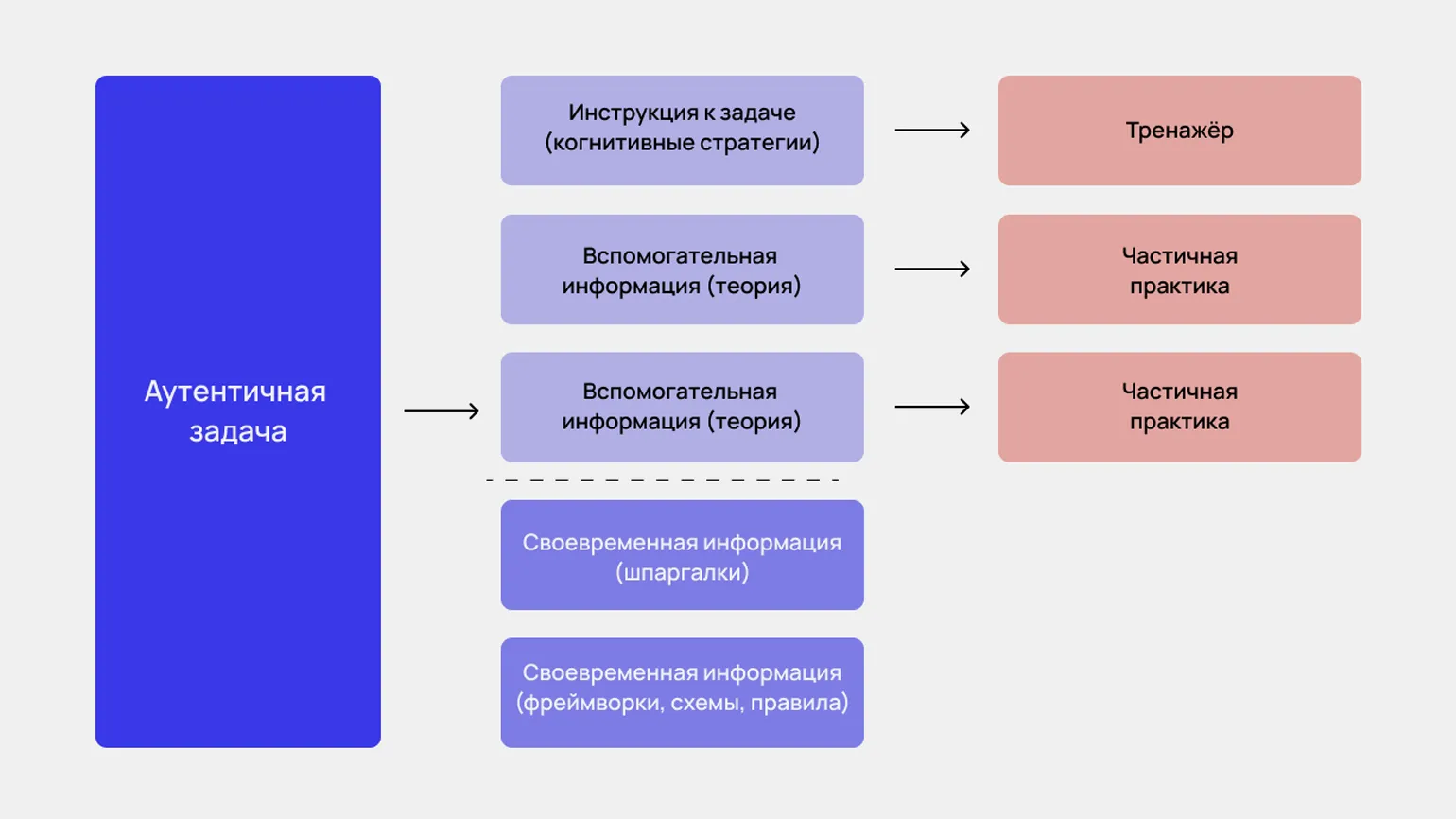
After collecting and sorting the problem bank by frequency and difficulty, the foundation of the future program is formed. The problems are structured like a nesting doll: the simplest ones are offered first in the Figma simulator, followed by more complex ones, with each subsequent problem incorporating elements of the previous one. As the complexity of the problems increases, the content required to complete them also develops. This approach allows for effective training of users, ensuring a gradual deepening of knowledge and skills.
When developing new problems, the content should not only increase in complexity but also include elements of repetition. This helps create a solid foundation for assimilation of the material. The methodologist must constantly consider how much new material should be added and how to optimally distribute it to achieve the best learning results. The right balance between novelty and repetition will help students better absorb information and consolidate knowledge.
The main challenge faced at the initial stage is the need to find a qualified curator and experienced subject matter experts for the course. Effective selection of such specialists is crucial for the successful development of the educational process and the achievement of high learning outcomes. High-quality leadership and professional expertise will help ensure the relevance and practical value of the course.
The expert mentor is a key element of a successful course. Their primary task is to integrate the work of various speakers, thereby creating a coherent educational program. The mentor conducts consultation meetings, helps colleagues understand the objectives of each lesson, and ensures alignment among all participants. Fulfilling this role requires not only professional knowledge but also a willingness to engage in long-term collaboration, which contributes to the creation of a high-quality and effective educational experience.
In our project, the expert mentors were replaced twice. Difficulties also arose with the remaining experts: in the initial stages of development, the idea generated great interest, but many were not prepared to work with this format. The difficulty was that simply listing the topics, as in a traditional course, was not enough. Furthermore, the course structure remained unclear to them. It was important to convey to participants that the new approach requires deeper immersion and interaction, which should ultimately lead to higher-quality learning.
At this point, we had not yet developed an LMS platform that would support the new course format. The project's structure forced us to create this platform, which we will discuss later. Previously, we could only briefly explain how the course would be organized and what its final product would look like. Once we presented the preliminary course layout to the experts, the development process accelerated significantly.
It is recommended to allocate sufficient time to prepare the team of specialists and find a qualified mentor. This will ensure higher quality work and efficient completion of tasks. Selecting the right mentor is crucial to the project's success, as they will be able to guide the specialists and oversee their activities. Therefore, it is important to think through this stage in advance to avoid possible problems in the future.

Read also:
Working with experts: a guide for methodologists
Effective interaction with experts is a key aspect for Methodologists seeking to improve the quality of educational programs. For successful collaboration, it is important to consider several key points.
First, set clear goals for collaboration. Determine what expertise you want to gain and how it can improve your projects. This will help focus attention on important aspects and avoid misunderstandings.
Second, choose experts who match your goals. Research their experience, achievements, and reputation in the field to ensure they can offer truly valuable insights.
Third, create open and constructive communication. Clearly formulate your expectations and listen to the experts' recommendations. Discussing ideas and receiving feedback will help improve the end result.
Also, don't forget to document all discussions and decisions. This will simplify the process of further work and help avoid confusion in the future.
Finally, monitor the results of the collaboration. Assessing the effectiveness of working with experts will help identify successful practices and areas for improvement, which in turn will lead to improved educational programs.
Working with experts can significantly accelerate the development of teaching materials and increase their relevance. The right approach to interacting with professionals in their field will ensure the successful completion of assigned tasks and the achievement of high results.
Step 2 is a key stage in the task completion process. At this stage, it is important to focus on the key actions that will help achieve the desired result. Ensure that all necessary resources and materials are prepared. This will minimize potential errors and increase the efficiency of the next step. It is also worth paying attention to planning and organizing the work so that all actions are clearly structured. Following this approach, you can significantly simplify the process and achieve success in achieving the ultimate goal.
The introduction of a grading system and gamification into the course has become a key solution, ensuring non-linear and personalized learning. These elements promote deeper student engagement and allow the educational process to be tailored to the individual needs of each participant. Grades help track progress, and gamification makes learning more interactive and engaging, which in turn increases student motivation.
Grades are commonly used to describe levels of professional mastery or career development, such as junior, middle, and senior. In our course, we use the term "grades" to describe the stages students progress through throughout their studies. Each grade represents a transition to a new level of experience and knowledge. Our course has three such stages. Students can advance from one grade to the next if they have achieved the required level of competence and confidence in their knowledge.
Each level of training presents students with a variety of tasks and case studies from various clients. These cases make the learning process more practical: students don't simply complete tasks, such as creating a social media icon, but also consider the context of the work. It is important to consider the client's wishes, their experience, the target audience, and the existing corporate identity. This approach provides a deep understanding of real-world working conditions in the industry and helps develop the necessary skills.
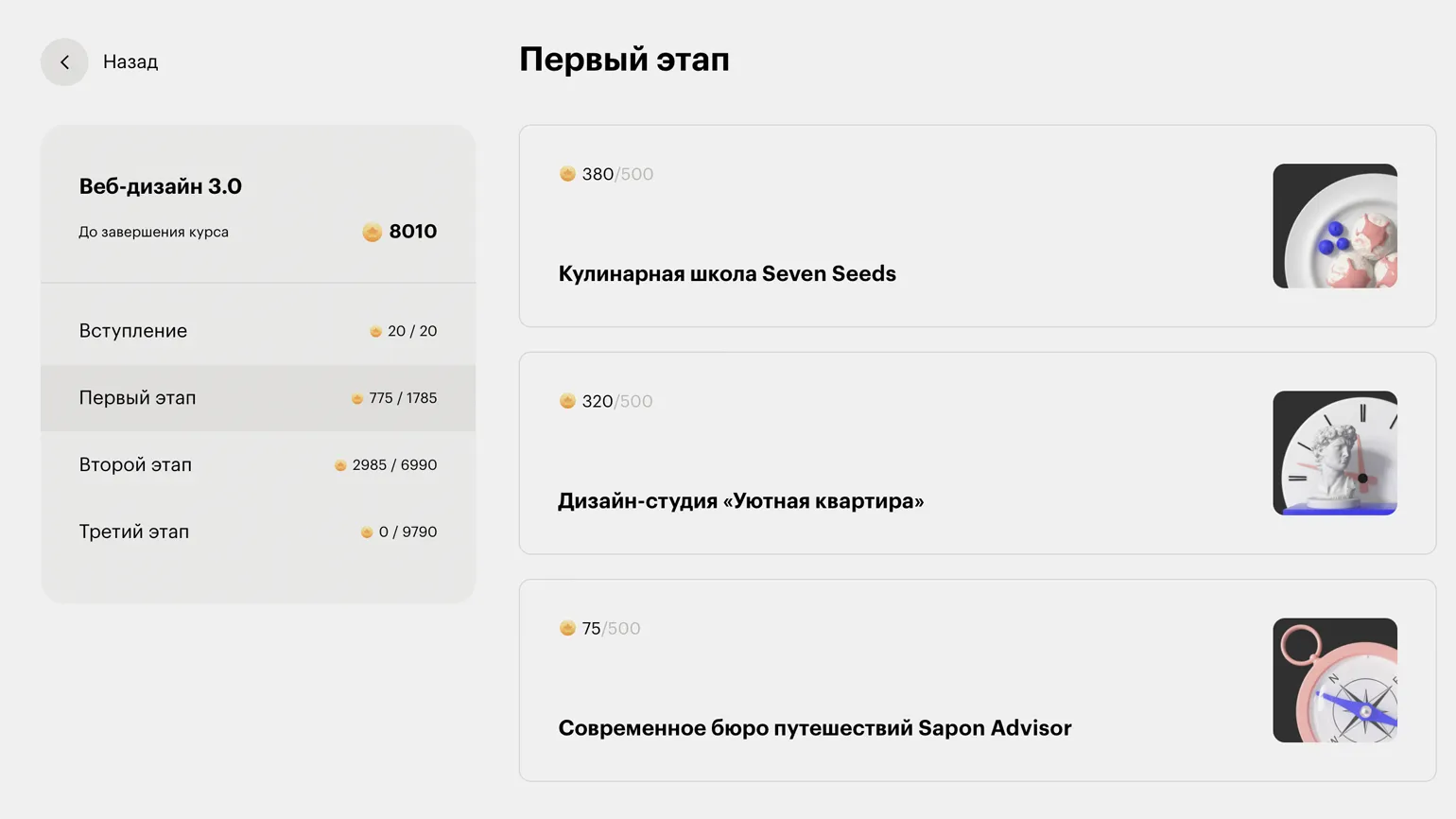
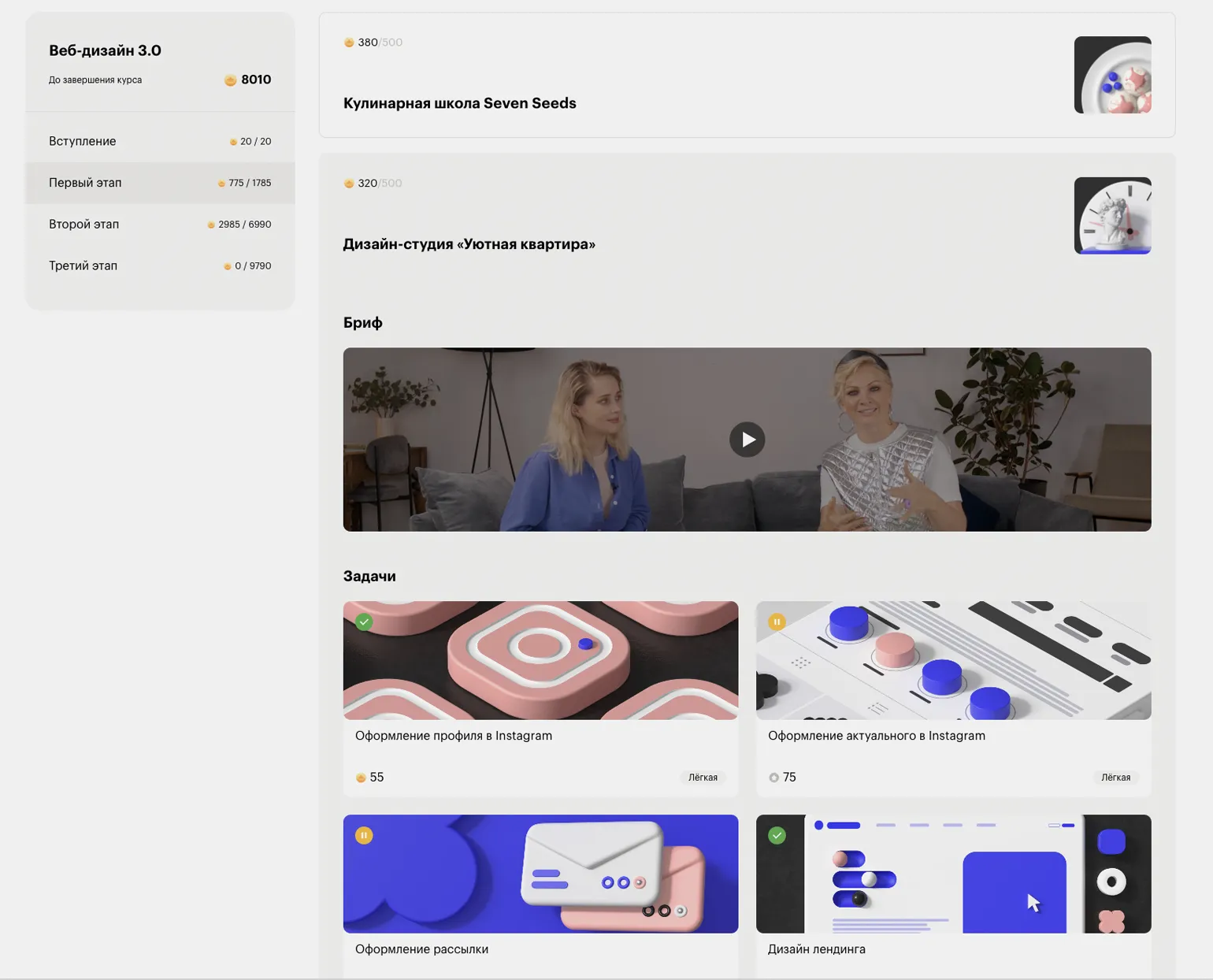
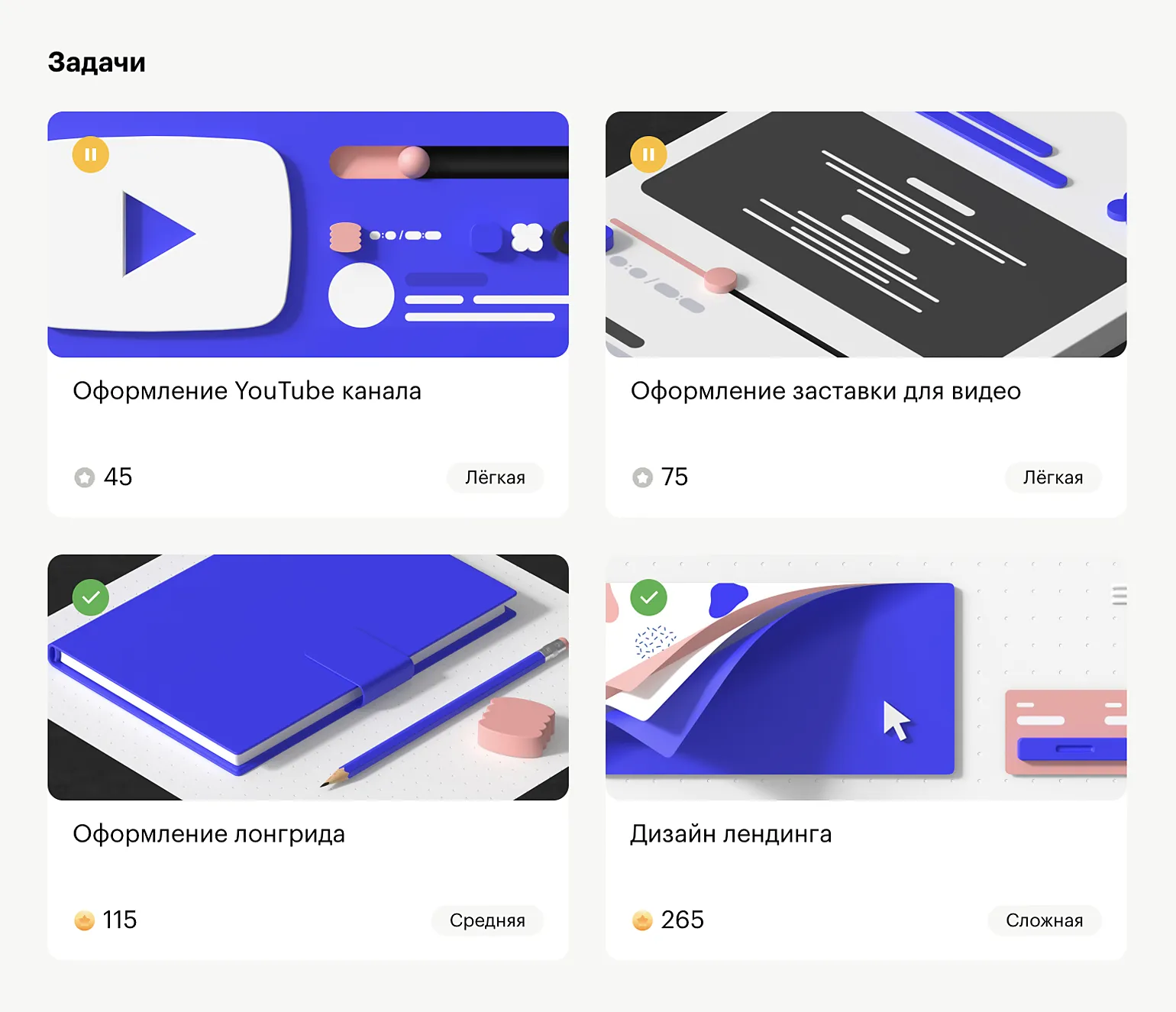
In the first class, students are faced with a choice between various clients, such as signature tours, culinary schools, and interior design studios. Each course has its own unique challenges, including social media profile design, website development, and corporate identity creation. Students must analyze the target audience, presentation methods, and source data to effectively apply the acquired knowledge while taking into account the specific needs of each client. This helps develop adaptability and creativity, which is essential in modern practice. The tasks may be similar in nature, such as designing a longread or creating a newsletter layout. Both processes require competent text formatting. However, the details differ significantly. Students not only apply their knowledge in various contexts but also expand their professional horizons by gaining new skills and experience. This approach fosters a deeper understanding of the specifics of each task and allows for the development of creative thinking. Students earn points for completing cases or tasks. Having earned the required number of points, they advance to the next level. This system allows for progress tracking and motivates for deeper study of the material.
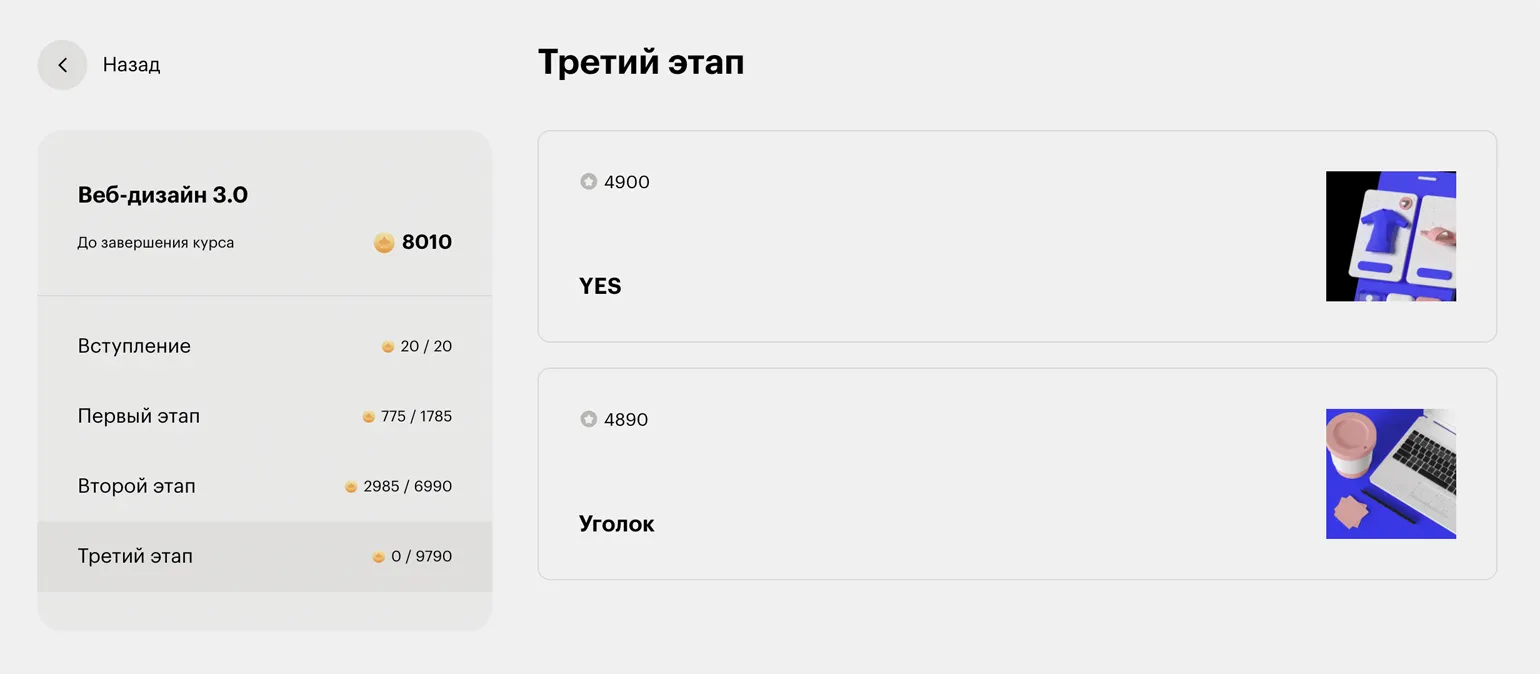
A beginner can start with a simple tasks, for example, creating an advertising banner. A more experienced specialist, however, can skip this task and immediately tackle more complex projects, thereby identifying their gaps in knowledge and skills. This approach allows you to quickly reach a new level of professionalism and move on to more interesting and complex tasks. This promotes development and growth in the fields of design and marketing, which is important for career advancement.
Of course, I am ready to help you with text editing. Please provide the text itself that needs revision.
Each task has a different number of points: simple tasks are worth 30 points, while more complex ones can be worth up to 100 points. However, points are not assigned automatically. If a student decides to cheat the system and immediately take on the most difficult tasks but complete them poorly, the instructor will not allow them to advance. This emphasizes the importance of high-quality completion of tasks and demonstrating a deep understanding of the material.
Each student has the opportunity to adapt their learning process according to individual preferences and goals. Depending on their interests and level of preparation, students can choose one of three strategies for completing the course. This allows for the most efficient use of time and resources, focusing on the tasks and cases that are most relevant to their development.
- Horizontal, which involves solving learning problems at one level. This helps students gain practice and master all the material in the grade.
- Vertical, which involves sequentially solving problems within a single case. In this case, they will have a complete, comprehensive work portfolio and the opportunity to complete the full client support cycle.
- Free, which involves solving the most "expensive" tasks and completing the course more quickly, choosing only what is interesting and important to them.
One of the key challenges was developing attractive cases. We focused on two main aspects: the quality of information presentation and its relevance to the target audience. Creating compelling case studies requires careful consideration of every element to effectively convey the value and results of our work.
- Create case studies that inspire and even captivate students. Beginners can struggle with ideas, inspiration, and, consequently, motivation. A beautifully designed project that's compelling makes their task a little easier.
- Case studies should also be appealing to professional designers. After all, successful course graduates ideally include their work in a portfolio—meaning it should be designed in a way that's embarrassing to show to potential clients (and for us, to show to future students).
Assignments like "create a landing page for a tire repair shop near my home" clearly didn't align with our interests and goals. We strive for more complex and creative projects that allow us to demonstrate our skills and experience in web development.
A case study should be not only visually appealing but also practical. Finding clients for the students was a real challenge, but ultimately, we managed to attract seven real-world projects. These projects spanned various fields, including developing robot bartenders and participating in the creation of an exhibition at the Moscow Transport Museum. This experience allowed students not only to demonstrate their skills but also to gain valuable practice working with real clients.
The only exception was the case study for the third and final grade. Together with the course curator, we decided that the ideal "big" assignment would be developing a marketplace concept. The question arose: where to find a serious, yet unknown, marketplace? We developed this case ourselves, creating a story, corporate identity, positioning, a description of the target audience, and even creating characters representing this business. This approach allows for a deeper understanding of the process of developing and implementing new ideas in e-commerce.
When creating a course using this model, it is important to pay attention to every detail. Successful development requires an experienced curator with a high level of professionalism, a deep understanding of the topic, and a creative approach. This will enable the creation of a high-quality and effective educational product that will meet the needs of students and meet modern requirements.
Step 3 is a crucial stage in any process, requiring a careful approach and precise execution. At this stage, it is necessary to analyze previous steps, evaluate the results achieved, and determine further actions. It is important to consider all details and nuances to ensure the successful completion of the task. Pay attention to possible risks and prepare alternative solutions. Effective execution of Step 3 can significantly impact the final result, so it is worth devoting sufficient time and effort to this stage.
We have implemented gamification into the assessment system, allowing us to evaluate student work using a point system. Students receive points in the form of attractive coins, which symbolize a "reward" for their efforts. This innovation makes the learning process more engaging and motivating, encouraging students to strive for high results.
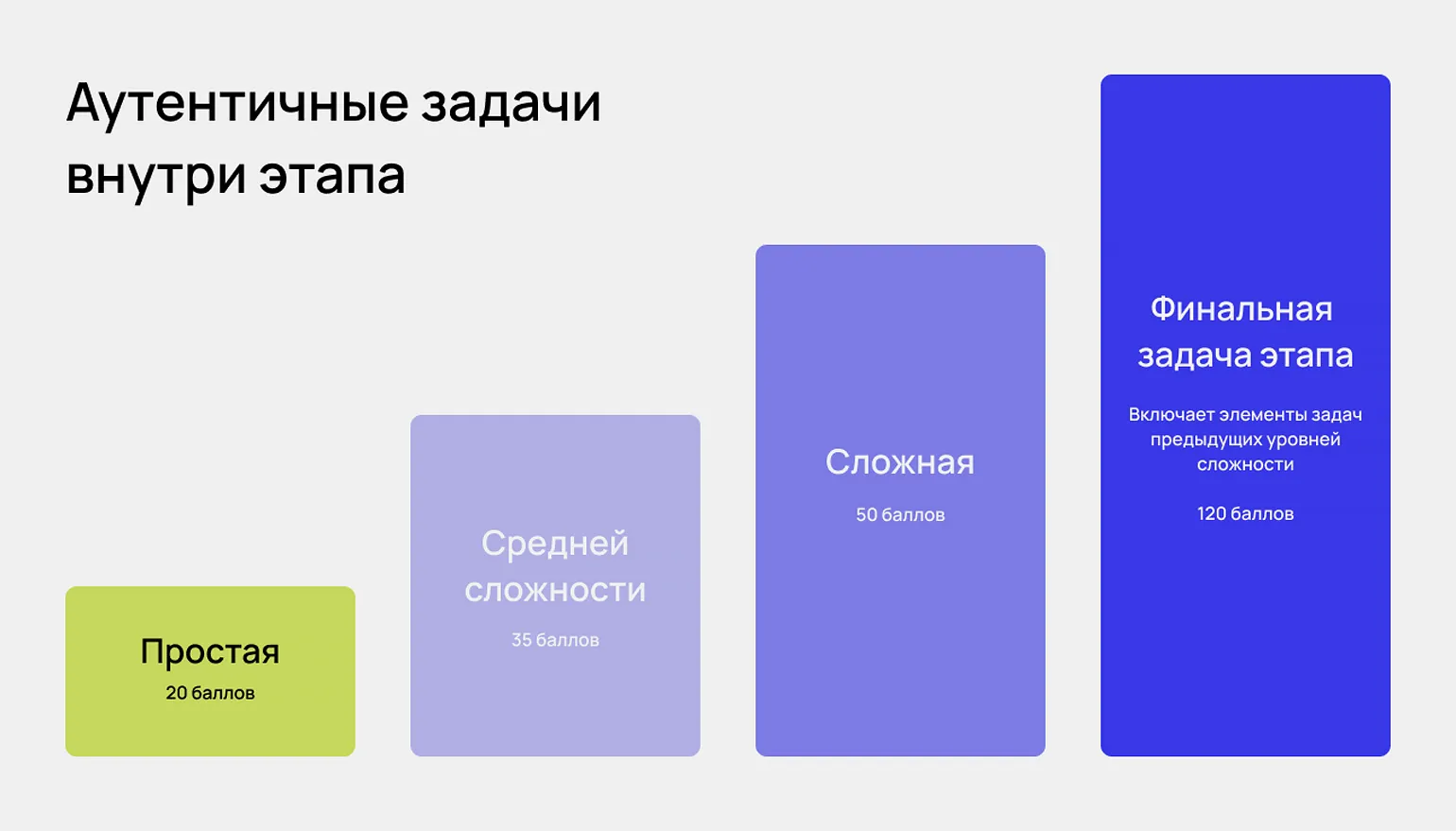
Currently, the scoring system works according to the standard principle: a student receives a certain number of coins for an accepted assignment. However, in the future, we plan to introduce a more flexible scoring model that will take into account both the quality of the assignment and the deadline for its submission. This issue is currently undergoing technical discussion and development.
If the completed assignment meets 80-90% of the quality criteria, the student receives recommendations for revision and can continue studying. If the result is below the specified bar and the student has chosen a task that is not appropriate for their level, the teacher indicates how many steps back the student should go and which lesson is recommended to review. This is necessary to ensure correct navigation and prevent a situation where the student tries to advance to a new level too quickly.
To successfully implement this system, we have developed clear criteria for the quality of work performed. However, in the field of design, this presents certain difficulties, since each person has their own idea of beauty, and not all aspects can be assessed objectively. Students and expert instructors have access to a detailed checklist containing universal assessment criteria and the most common errors. However, in practice, this checklist is rarely used. Despite positive feedback from students and instructors in surveys, viewing data shows that it is not popular. Perhaps the reason lies in its impressive volume.

Reworked text:
Be sure to check out the additional materials:
Formative Feedback in Online Courses Feedback plays a key role in student learning and development. To ensure effective communication and maintain student motivation, there are several principles to follow.
First and foremost, feedback should be specific and evidence-based. Point out specific areas for improvement, as well as aspects that were performed well. This will help students understand what exactly needs to be changed and how they can develop further.
It is also important to provide feedback in a timely manner. The sooner students receive information about their work, the easier it will be for them to make adjustments and learn the material. Regular and relevant feedback promotes a better understanding of the learning process.
Remember to take a supportive approach. Feedback should be constructive and inspiring. Support students by noting their achievements and progress. This will make them feel valued and stimulate further learning.
Formative feedback should be process-focused, not just outcome-focused. Pay attention to how students approach tasks and what strategies they use. This will help them understand the importance of the learning process and develop critical thinking.
Also, encourage students to ask questions and discuss the feedback they receive. This will create an atmosphere of openness and collaboration, which is an important aspect of online learning. Students should feel comfortable expressing their thoughts and concerns.
Finally, consider the individual characteristics of each student. Approach each student based on their level of preparation and personal goals. This will help create a more personalized learning experience and increase its effectiveness.
By following these principles, you will be able to effectively provide formative feedback in online courses, which, in turn, will positively impact the learning process and the success of your students.
Step 4 is an important stage in the process of achieving your goals. At this stage, it is necessary to pay attention to detail and carefully analyze the previous steps. It is important to evaluate what was done correctly and what may need improvement. It is necessary to identify key success indicators and set specific objectives for further progress.
To successfully complete Step 4, it is recommended to create a clear action plan. It should include not only short-term goals but also long-term prospects. Particular attention should be paid to the resources that may be needed to implement the plan. Tracking progress at this stage will help avoid possible mistakes in the future and make the process more efficient.
Don't forget about the importance of feedback. Communicating with colleagues and experts in your field will help you gain new ideas and improve your results. This stage forms the basis for the next step, and it is here that the foundation for the successful completion of the entire task is laid.
Each task we provide to the student is accompanied by training materials, which is standard practice. These materials are divided into several components that generally correspond to the 4C/ID model, but in our interpretation, they interact with each other. This approach creates an integrated learning environment where students can more effectively absorb information and apply their acquired knowledge in practice.
Supporting information is typically perceived as the theoretical basis of the course. Within our program, it is presented in the following format:
- Cognitive strategies.
Information that facilitates problem solving is presented in the form of diagrams and algorithms. These are not traditional lectures, but tutorials—video instructions that explain the operating principle and analyze examples. The teacher describes the problem in detail, the steps for solving it, as well as the knowledge and skills necessary for successful completion. Each instruction lasts no more than 15 minutes, which makes the theory as practice-oriented and accessible as possible.
The introduction of video instructions has become an effective solution for our educational process. These instructions allow students to better connect the problems with the topics we teach. They represent a combination of a detailed description of the practical work and an introduction to the module. The instructor not only demonstrates how to complete the task but also explains the positive and negative aspects of the work, as well as the criteria used for evaluation. This promotes a deeper understanding of the material and improves the quality of assignment completion.
- Mental models.
The knowledge needed to analyze the context and select the optimal methods and tools for problem solving is the foundation of effective learning. We offer classical lessons that combine theory and practice, which allows for a deeper understanding of the material. The teaching process uses standard formats, including presentations and screencasts, making the information accessible and understandable. These approaches help develop the skills necessary for successful solution of various problems.
Timely information provides the resources and materials students need to successfully complete current learning tasks. Such materials help solve problems effectively in real time, providing access to relevant and useful information. Students can use timely data to deepen their knowledge and improve their academic performance.
Traditional courses spend a significant amount of time studying materials; for example, an entire lesson can be devoted to explaining different file types. However, absorbing large volumes of information is difficult: students may think they've mastered everything, but quickly forget what they've learned. Lessons can be simplified by converting some of the content into convenient and accessible guides. This will allow for better absorption of the information and the ability to return to it at any time, significantly increasing the effectiveness of learning.
Timely information includes relevant data necessary for making informed decisions. It covers news, legislative changes, financial reports, and analytical reviews. It's important to have access to fresh sources of information to stay informed and adapt to changes in the environment. Effective use of timely information contributes to increased competitiveness and enables a quick response to market challenges.
- Cheat sheets, checklists. These are all things that don't need to be memorized (and are difficult) at first. For example, a student won't remember the image sizes for social media at first—they can be given as a cheat sheet. An expert can usually help determine what material to provide in this format.
- Cognitive rules—simply put, recommendations for choosing simple actions. For example, such a rule might be a table listing the functionality of a specific program with which the student is not yet familiar or is not fully familiar.
- Prior knowledge—what a person needs to know to complete even the simplest tasks. Suppose a student has to use a design tool they haven't used before. Then they will need help with this, instructions. Another option is a glossary to immediately prompt the student with definitions of unfamiliar terms. It's best to determine what specific prior knowledge the course audience might need during target audience research.
We provide knowledge-expanding materials that were previously included in traditional lessons. They can be used to learn about the origins of various concepts, the biographies of the authors of theories, and other interesting facts. These additional resources help to deepen the understanding of the topics being studied and enrich the educational process.
From the perspective of the 4C/ID model, this information is neither timely nor auxiliary; it represents additional material that is not required for comprehension. The best way to present this information is in a longread format. This will allow interested readers to delve deeper into the topic and also draw attention to important aspects of the content. This approach can increase audience engagement and improve the page's SEO position.
We are currently developing a Figma simulator for students, which includes a variety of engaging tasks. The main goal of this simulator is to provide students with the opportunity to practice before completing the main project, especially if they are unsure of their abilities. This will help them confidently consolidate and develop their design skills.
Our educational course includes two types of tasks that will be available to students. These tasks are designed to help students deepen their knowledge and skills in this area. The first type of assignment includes theoretical questions aimed at testing students' understanding of key concepts. The second type of assignment consists of practical tasks that allow students to apply their acquired knowledge in practice, which facilitates deeper assimilation of the material. Each of these types of assignments plays an important role in the learning process, providing a comprehensive approach to study.
- Visual tests. For example, we covered the topic of composition and show the student two pictures – they need to choose the one that is correct according to the rules of compositional construction or the one without an error. This, on the one hand, tests their understanding of the topic, and on the other, develops visual acuity. A total of about ten such questions can be in a test.
- Simulators. Students receive a template – a pre-created layout in which they need to correct, resize, remove, and so on. They do not need to waste time searching for ideas and inspiration, but they develop a specific small skill.
In our case, the choice of exercises for partial practice is limited by the scope of the course. In other cases, it can be more diverse and easier to develop.

Read also:
Creating an effective assignment for online course students: a guide for novice methodologists
When developing assignments for students When designing online courses, it's important to consider several key aspects. First and foremost, assignments should be clearly defined and aligned with the learning objectives. Determine what skills and knowledge students should demonstrate upon completing the assignment.
Form assignments so that they are understandable and accessible. Use clear and concise language, avoiding complex terms unless necessary. Make sure the instructions include all necessary steps and requirements for completion.
It's also important to provide a variety of assignment formats to engage students and maintain their motivation. These can range from written assignments to assignments that involve research or practical application of knowledge.
Don't forget about the assessment criteria. Clearly outline the parameters by which students' work will be assessed so they understand what to pay attention to when completing the assignment.
Finally, consider feedback. Provide students with the opportunity to ask questions and receive clarification on assignments. This will help them better understand the material and improve the quality of their work.
By following these recommendations, you can create assignments that will promote student learning and increase their engagement in your online course.
It's important to properly organize course materials and format them so they are understandable and user-friendly. Our LMS platform was originally developed for courses based on a different model, making it unsuitable for hosting courses designed according to the new logic. Therefore, we decided to create a new version of the LMS, which took about a year and a half to develop. This task became the main difficulty for us, but as a result, we received a platform that better meets modern requirements and allows for convenient and effective course completion.
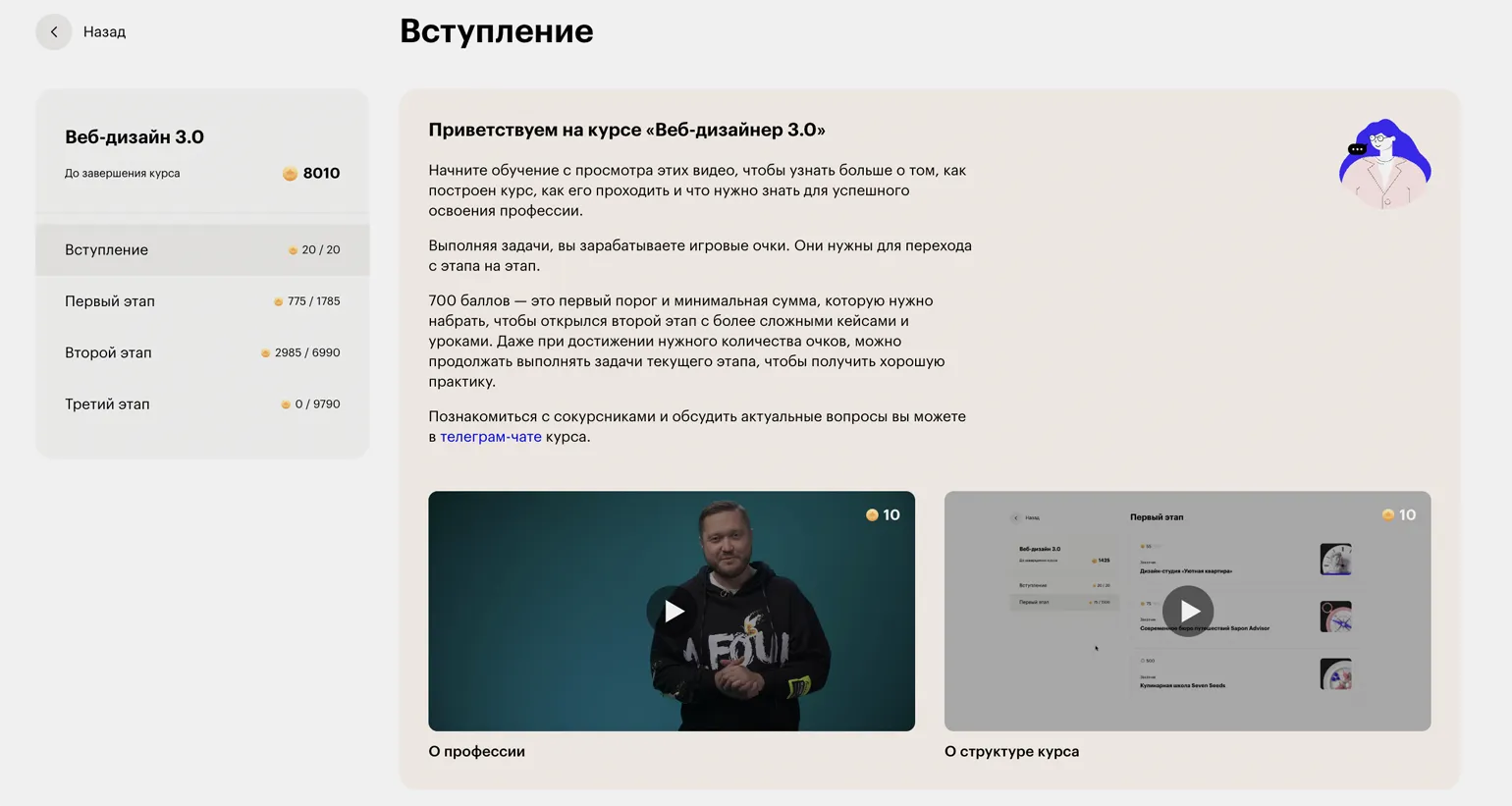
When a user first opens the new LMS, they encounter an onboarding page and a video guide explaining the course process and how to work with the learning materials. Afterward, they are taken to the case study page, each with an engaging video briefing designed to engage students with potential projects. The tasks come with a detailed explanation of the requirements for their completion, as well as traditional lessons for a deeper understanding of the material.

The second challenge was that the number of lessons in this course significantly exceeded the standard length. For example, the "Web Design 3.0" course has over 200 short lessons and video instructions, while traditional courses typically have around 80. This raised concerns about student acceptance of the course.
Research shows that not only does the course not slow down, but, on the contrary, students absorb the material significantly faster compared to the traditional version of the design course. This indicates the effectiveness of new teaching methods, which promote a deeper understanding and rapid mastery of key design concepts.
We planned to complete one level of training in three months, but several students managed to complete two levels in four months, indicating that their learning rate is one and a half times higher than expected. At this point, it is not yet known exactly what caused such accelerated progress.
What the students themselves say about the new format
It is too early to draw final conclusions from our experiment in creating a course, but preliminary conclusions can already be drawn based on student feedback. To this end, we conducted in-depth interviews with course participants. During the conversations, we were able to identify key aspects that influence students' perception and assimilation of the material. Let's consider the main points noted in the feedback.
- Students saw the connection between learning and reality. They understand the purpose of certain lessons and how this affects their future work. Thanks to this, they also get used to the realities of the profession more quickly, since they study the material in practice, and not in isolation from everyday life.
- Non-linearity has become an important part of the motivational strategy. People appreciate the freedom to study on a topic that interests them or is relevant at the moment, and the choice between assignments and clients. Of course, when a person is doing what they enjoy and in a convenient sequence, their desire to complete assignments increases. The simplified lesson format has helped students save time. At least they don't waste it—the lectures are highly focused and provide maximum benefit. This is confirmed by the fact that users don't fast-forward or speed up their viewing. Gamification has influenced student motivation. Although coin points can't yet be spent (except for accumulating them to advance to the next grade), people really enjoy earning and "saving" them. That is, not only the point system worked, but also the visual component.
What conclusions can be drawn?
The experiment with interpreting the 4C/ID model and implementing a new approach to learning management systems (LMS) can be considered successful. This approach has demonstrated effectiveness in improving the learning process and increasing student engagement. The results of the experiment confirm that integrating the 4C/ID model with modern LMS promotes a deeper understanding of the material and improves educational outcomes.
Designing this model is a complex and labor-intensive process. For developers, it requires significant effort, patience, and time, while an online school requires financial investment. However, this approach provides students with training that is as close as possible to real-life conditions. This is especially useful for people with diverse backgrounds, allowing them to effectively prepare for the job market with a high-quality portfolio.
Since the launch of our course, fellow methodologists from other Skillbox departments have begun actively using our design model. They are creating new educational programs based on our successful experience. This was made possible by the availability of a suitable LMS version that supports the implementation of new teaching methods and approaches. Our developments have inspired other teams, which contributes to the development and improvement of the educational process at Skillbox.
Read also:
- How to improve a ready-made training course: we analyze a real example
- How to make an online course capture the student's attention
- Designing learning from the outcome: 3 concepts you need to know
The Profession of Methodologist from Scratch to PRO
You will improve your skills in developing curricula for online and offline courses. Master modern teaching practices, structure your experience, and become a more sought-after specialist.
Find out more