
Contents:

Learn: The Profession of a Methodologist from Beginner to Advanced
Learn MoreThe principles of accessibility, consistency, and consistency are fundamental in classical didactics. Learning should proceed from the simple to the complex and from the known to the unknown. Each element of the educational material should build on previous knowledge, preparing the student to master new things. All educational elements should be logically connected, forming a holistic system where the parts harmoniously merge into a whole. This approach promotes more effective acquisition of knowledge and skills, ensuring a deep understanding of the subject.
In practice, this means that the learning process is divided into small fragments, which the student masters sequentially. A general understanding of the subject is formed only by the completion of the course. This approach to learning involves a hierarchical structuring of content, which promotes deeper learning and improved perception of information.
Charles Reigeluth, an instructional design researcher and professor emeritus at Indiana University (USA), emphasizes that the traditional approach to organizing learning was relevant in the industrial era. However, by the end of the 20th and beginning of the 21st centuries, there was a significant shift in the educational paradigm—from teacher to student. This transition has influenced the content of curricula. As a result, new educational approaches began to develop, such as goal-oriented, problem-based, and situational learning. Reigeluth notes that these new approaches require instructional designers to reconsider the methods of grouping and organizing learning content, which allows for better adaptation of the learning process to the needs and interests of modern students.
In 1979, Charles Reigeluth introduced elaboration theory as an alternative to the traditional hierarchical structuring of content. Over the following decades, Reigeluth published numerous works, deepening and developing this theory. In this article, we will analyze the essence of Reigeluth's theory, its practical applications, and consider the learning situations in which it can have the greatest impact. Elaboration theory focuses on how information can be organized and presented to facilitate deeper learning. These approaches help create more dynamic and interactive learning environments.
What is Elaboration Theory
Reigeluth illustrates his theory using the metaphor of a camera lens, which allows us to view the world. At the beginning, we see a panorama that takes in the entire landscape, focusing on the main elements of the landscape and their relative positions. Using the zoom function, we can zoom in to examine individual objects and their components in detail, and then zoom out to understand the role they play in the overall composition. This process continues until we explore all elements of interest to the required level of detail. Thus, the camera lens metaphor effectively demonstrates an approach to analyzing and understanding complex systems and their components.
According to Reigeluth, effective learning should proceed from the general to the specific. It is necessary to first form a general understanding of the subject, its key elements and interrelations, and then delve into the details. This approach allows the student to immerse themselves in the context from the very beginning and understand the significance of the material being studied. Studying details becomes more focused, as the student perceives them as integral parts of an already known whole, rather than as isolated fragments without connection to the overall context. This promotes deeper assimilation of information and increases interest in learning.

Mikhail Osipov, a methodologist, educational consultant, and author of the "Online Learning Laboratory" Telegram channel, explains that when introducing a new topic, teachers can use either an inductive method (from the specific to the general) or a deductive method (from the general to the specific). In his design theory, Reigeluth recommends using the deductive method, emphasizing the principle of increasing complexity and a detailed design of the sequence of actions within a lesson. This allows for more effective assimilation of the educational material and promotes a deep understanding of the topic by students.
Structuring material from the general to the specific, as Elena Chernobay, a professor in the Department of Educational Programs and a leading expert at the Center for Support of Digital Learning at the Institute of Education at the National Research University Higher School of Economics, emphasizes, is consistent with the fundamental principles of cognitive psychology. This approach ensures more effective assimilation of information, allowing students to first form a general understanding of the topic and then delve into the details. In this way, students can connect new knowledge with existing knowledge, which facilitates better understanding and retention of educational material. Proper structuring of information is a key factor in the educational process and can significantly improve the quality of learning.
Reigeluth's elaboration theory is based on the cognitive theory of schemas, first introduced by Jean Piaget. Schemas, in this context, represent structured units of information about various objects and phenomena, forming networks of facts and relationships stored in long-term memory. These schemas are formed based on personal experience and influence our thinking and behavior. They also play a key role in the learning process: new information is absorbed and remembered more effectively when it is integrated into existing schemas than when new connections between facts or concepts are created from scratch. The concept of schemas is an important aspect of working memory research and cognitive load theory, highlighting its importance in educational methods and approaches to learning.
Charles Reigeluth's method for organizing educational content aligns with cognitive psychologists' approaches to schema formation. A general structure is created first, then expanded and refined. In practice, this theory translates into strategies for structuring educational content. The author analyzes these strategies and their application in detail, taking into account learning objectives and content type. This approach enables the effective organization of information, which facilitates a deeper understanding of the material and improves the learning process.
In Russian pedagogical science, there are a number of approaches that emphasize the sequential presentation of educational material, including the principle of "from the general to the specific." Lev Semenovich Vygotsky, the founder of cultural-historical psychology, developed ideas about the importance of systems in learning, emphasizing the significance of context and the interrelations between components of knowledge. In his book "Educational Psychology" (1926), Vygotsky emphasizes that new knowledge should fit organically into an existing system of knowledge. This is consistent with the views of Reigeluth, who also emphasizes the need to develop a general picture before studying the specifics. Thus, a systems approach in education promotes deeper learning and the development of critical thinking in students. Elena Chernobay argues that the development theory clearly reflects the method of integrating didactic units (UDE), created in 1968 by RAE academician and mathematician-methodologist Purvya Muchkaevich Erdniev. This method emphasizes the optimization of the educational process, allowing for more effective organization of educational content. UDE promotes a deep understanding of topics and improves knowledge acquisition, making it an important tool in modern educational practices. The development of this methodology continues to influence theories and approaches in pedagogy, emphasizing the importance of a systems approach to learning.
The UDE methodology proposes combining educational material into larger units, which promotes better understanding and systematization of knowledge. This approach helps students identify connections between different elements of the educational content, which corresponds to the concept of learning from the general to the specific. In his work, Purvya Erdniev notes that teachers using this methodology have noticed that children are more interested in acquiring holistic knowledge rather than studying it fragmentarily. This method not only increases student motivation but also promotes deeper assimilation of the material, which makes it an effective tool in the educational process.
When is it useful to apply the design theory?
Charles Reigeluth emphasizes that the organization of content in a course is only meaningful if there are meaningful connections between topics. This emphasizes the importance of structuring learning material to ensure logical and consistent understanding of the information. Links between topics help students better understand and retain the material, ultimately leading to deeper learning. Proper content organization not only improves the learning process but also increases student engagement.

Presentation Sequence The order of topics has a significant impact on the effectiveness of their learning and the understanding of the relationships between them. If a course includes topics that are closely related, the correct order of study becomes critical. Conversely, if a course consists of isolated, unrelated topics, such as basic office software functions—word processing, spreadsheets, and presentations—the order of their study is not as important. Proper course structure will help students better absorb the material and apply it in practice.
When there are significant interrelations between course topics, it is important to consider the length of the content, as Reigeluth notes. If the material can be absorbed in an hour or even less, its structure can be freely formed, which will not significantly affect students' comprehension and retention of the information. However, in cases where the educational content requires longer study, the sequence of its presentation becomes critical. Incorrect organization of a large amount of material can hinder students' information absorption and the formation of long-term memory schemas. Therefore, for effective learning, it's not just the content of the course that's important, but also a logical structure that will help students better navigate the material and remember key concepts.
Maria Yunilainen, curator of the "Designing Educational Experiences" program at the School of Education and a refactoring methodologist at Yandex Praktikum, emphasizes the importance of Reigeluth's theory for mastering complex areas of knowledge. This theory can significantly improve the understanding and application of educational methods, which is especially relevant for teachers and education specialists. Using Reigeluth's theory allows for a more in-depth analysis of educational experience design processes and their adaptation to modern requirements. Thus, implementing these principles into educational practice can significantly improve the effectiveness of learning.
- when understanding of one part of the topic depends on understanding of others - for example, when studying human physiology, it is impossible to consider the circulatory system separately from the respiratory and nervous systems due to their interdependent functioning;
- interdisciplinary fields - such as ecology, which integrates knowledge from biology, chemistry, geography, sociology, and public policy;
- fields with many abstract concepts - for example, calculus, where the concepts of derivatives and integrals are not tangible.
Maria noted that elaboration theories are not suitable for teaching in the affective domain, which includes the development of the emotional and social aspects of personality. This issue was also discussed by Reigeluth in his works. Effective learning in the affective domain requires the use of methods focused on emotional perception and interaction, which is essential for developing a harmonious personality.
According to Maria, the elaboration theory was created to more effectively achieve educational outcomes in the cognitive domain. According to Bloom's taxonomy, this domain includes levels such as knowledge, understanding, application, analysis, synthesis, and evaluation. Furthermore, the author of the theory emphasized its application to the development of psychomotor skills, which are manifested in the connection between movement and mental processes. The development of this theory is important for the educational process, as it helps develop complex skills and abilities in students.
Experts note that although Reigeluth initially developed his theory for adult education, its principles can be successfully applied at any level of education, including school and university. This is possible provided that the planned educational outcomes relate to the cognitive or psychomotor domain, and the learning topic is sufficiently complex. Applying Reigeluth's theory in various educational contexts improves the quality of instruction and adapts it to student needs. Elena Chernobay emphasizes that adapting approaches is essential for effectively applying design theory in school education, especially in elementary grades. This will allow teachers to more effectively integrate the theory into the learning process and make it accessible to children. Adaptation involves using appropriate methods and materials that match the age and level of students. Thus, the correct adaptation of the development theory can significantly improve the quality of the educational process in schools.

Young children have limitations in abstract thinking and generalization, which makes it difficult to apply the "from the general to the specific" method. Elena recommends using individual elements of the development theory in such cases. This will allow the learning process to be adapted to the children's thinking characteristics and improve learning effectiveness. Using specific examples and visual aids will help children better absorb the material and develop their cognitive abilities.
When teaching young students, it is important to present key ideas and concepts in simple and understandable blocks of educational information. This allows for a gradual deepening of knowledge. For example, in a course on the world around us, it is worth starting with a general understanding of nature and its elements, and then moving on to a detailed study of plants, animals, and ecosystems. In middle and high school, students have more developed cognitive abilities, which allows them to better perceive abstract concepts. At this stage, elaboration theory can be applied more fully, which contributes to a deeper understanding of the subjects and their interrelations.
What principles of content structuring does elaboration theory use?
Charles Reigeluth considers two main strategies for organizing educational content: hierarchical and procedural. Although these methods are not strictly related to elaboration theory, their use in their pure form does not correspond to the "from the whole to the details" principle. Nevertheless, the researcher emphasizes the importance of familiarization with these strategies, since elaboration theory is largely based on them and integrates their elements. Understanding these methods can significantly improve the learning process and the development of educational programs.
The hierarchical sequence, developed by psychologist Robert Gagné, is designed to master intellectual skills in a specific area, such as performing mathematical operations. This approach is based on the fact that any skill consists of a number of simpler skills that must be mastered to form the main one. For example, before learning long division, it is important to be able to multiply and subtract whole numbers. This teaching method allows for effective skill development, providing a solid foundation for later mastery of more complex concepts and problems.
Basic skills must be mastered first, after which one can move on to more complex ones that build on these foundations. This is the hierarchical learning sequence.
Gagné classified intellectual skills, identifying their types and organizing them by level of complexity. This allows one to determine which of them are basic prerequisites for the development of more complex skills.
- Discrimination is the ability to distinguish one object from another (for example, a triangle from a rectangle). At this level, it is not necessary to know the definitions of shapes; it is enough to understand whether they are different or the same.
- Conceptual understanding is the ability to assign an object to a category with common observable characteristics, even if these objects are otherwise significantly different. A child with this skill will be able to recognize any triangle as a triangle, regardless of its size, angle ratio, and so on. However, they may still not know the name or definition of the shape.
- Concept Definition – At this level, the student categorizes an object based not only on an observable feature but also on a specific concept. That is, they know what a triangle is, rather than simply selecting similarly shaped shapes. However, Reigeluth notes that the difference between this and the previous skill is only in the student's mind, and therefore has little significance for teaching practice. Unless the student has an understanding of a specific concept, there is no point in defining it.
- Application of a rule, that is, a known sequence of steps or pattern, to solve a problem. Reigeluth divides rules into procedural (a clear algorithm, as in multiplying fractions) and heuristic (principles and regularities—for example, "increasing or decreasing price affects supply and demand").
- Application of a higher-order rule or problem solving is the highest level of intellectual skill, according to Gagné. Higher-order rules are combinations of simpler rules that are applied to complex problems. When a student encounters a problem for the first time and independently combines rules to solve it (consciously or unconsciously), Gagné calls this problem solving.
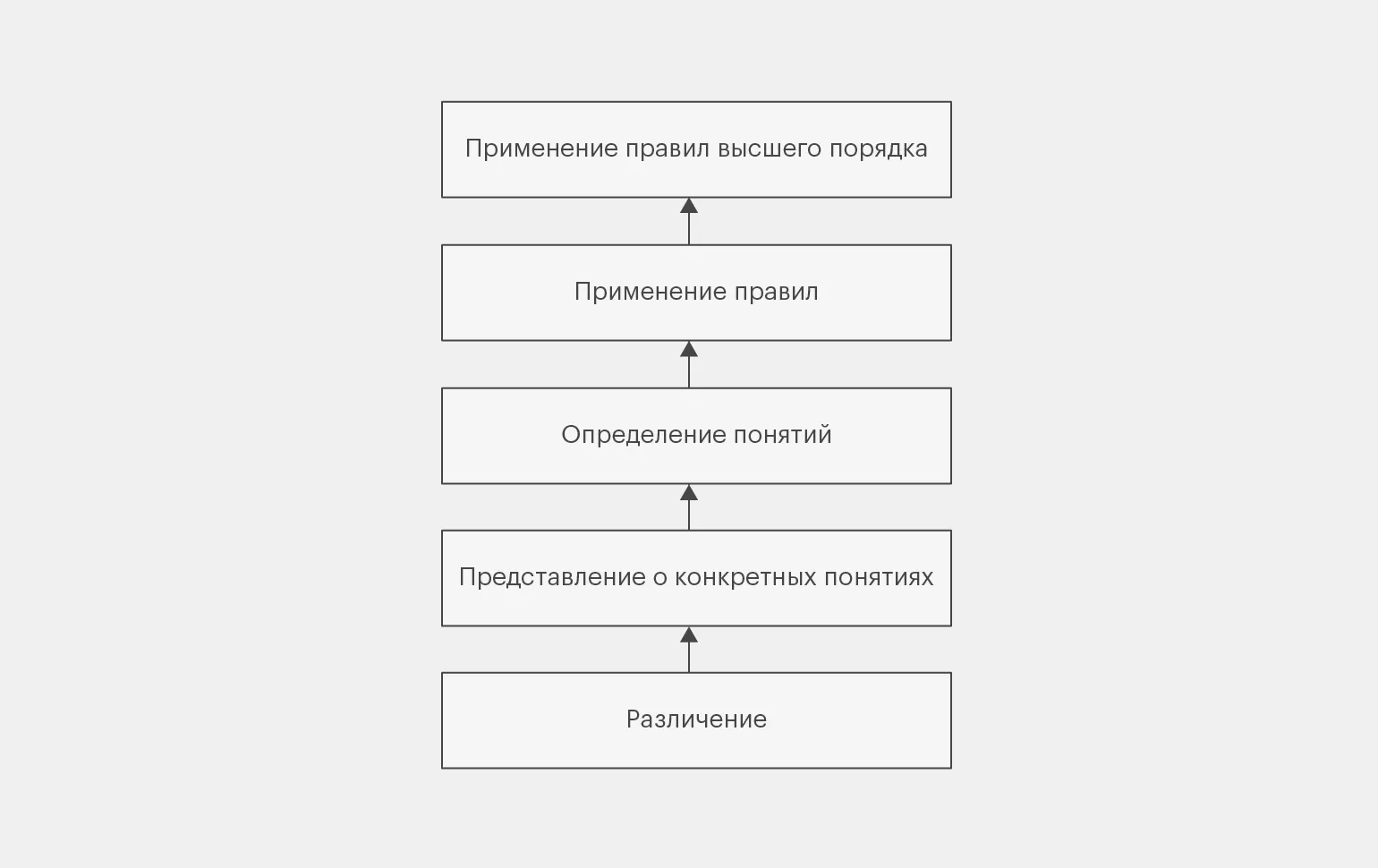
Charles Reigeluth emphasizes the importance of a hierarchical sequencing in teaching skills to both children and adults. Creating a curriculum based on this sequencing becomes a simple process if the skill being taught is carefully analyzed and decomposed into its component parts. This approach allows for more efficient skill acquisition, providing a deep understanding of each element and their interrelations. This makes learning more structured and focused, which in turn leads to better results.
Reigeluth identifies several drawbacks to this approach, including the fragmentation of material. He believes that such a structure can demotivate students and hinder the formation of long-term memory schemas. He also notes that a hierarchical sequencing may be insufficient for developing extensive courses aimed at mastering several complex skills. Furthermore, this approach does not offer solutions for integrating additional skills into the course, which are not mandatory for learning more complex ones, but nevertheless facilitate their acquisition.
A procedural sequence includes a series of steps that must be performed in a strictly defined order to successfully solve a task or achieve a set goal. This strategy is widely used in teaching how to perform various actions, such as repairing a car, baking a cake, writing a business letter, and conducting a needs analysis of the target audience. Correctly following a procedural sequence helps optimize the learning process and increase the efficiency of task completion.
To effectively apply this strategy, it is necessary to analyze the task and determine the sequence of necessary steps. However, as Reigeluth notes, procedural analysis alone may not be enough. For example, in the process of repairing a car, only two main stages can be distinguished: identifying the problem and fixing it. However, this will not provide a complete understanding of the repair process. Therefore, it is important to combine procedural analysis with the hierarchical method, breaking each stage of the task into smaller steps, and the steps into specific actions. This will allow for a level of detail that makes the information understandable and accessible to the target audience. This approach promotes deeper learning and increases the effectiveness of task completion.
In a procedural sequence, the material is studied in a logical order, which helps students better remember the necessary steps for completing practical tasks. Designing instruction in this manner is straightforward, as the course structure is formed during the analysis phase. However, as Charles Reigeluth points out, a purely procedural strategy is ineffective for developing instruction for complex tasks. These tasks often involve multiple options and alternative routes to completion, requiring a more flexible approach. To successfully master such topics, it is important to consider various scenarios and possible solutions, as well as integrate methods that promote critical thinking and decision-making under uncertainty.

Study additional materials:
Course Structure: What Options Are Available and How to Choose the Best One
When developing a course, it's important to consider its structure, as it impacts how effectively students learn the material. There are various approaches to course design, each with its own unique characteristics. It's important to choose a structure that meets the learning objectives and audience expectations.
The classic course structure includes an introductory section, main topics, and a conclusion. The introductory section introduces students to the goals and objectives of the course, while the main topics develop the material sequentially. The conclusion summarizes the course, allows students to consolidate their knowledge, and draw conclusions.
Another popular option is a modular structure, where the course is divided into individual modules or units. Each module can focus on a specific topic or skill, allowing students to study the material at their own pace. This approach is particularly suitable for online learning, where students require flexibility.
There is also a project-based structure, in which students work on specific projects, which helps them apply their acquired knowledge in practice. This approach promotes the development of critical thinking and problem-solving skills.
When choosing a course structure, it is important to consider the target audience, their level of preparation and preferences. It is also necessary to determine which teaching methods will be most effective in achieving the stated goals. A properly chosen course structure not only improves the comprehension of the material but also increases student motivation.
What content structuring strategies does design theory suggest?
Charles Reigeluth developed three strategies for organizing educational content aimed at overcoming the shortcomings of traditional teaching methods. An important aspect of his approach is maintaining the integrity of the content, which is achieved by adhering to the principle "from simple to complex." These strategies allow for a more effective organization of the educational process and promote better assimilation of the material. The use of these methods can significantly improve the quality of education and make it more accessible to students.
Charles Reigeluth argues that the optimal strategy for structuring educational content depends on its type and internal connections. Proper organization of educational material facilitates more effective knowledge acquisition and improves the learning process. Given the diversity of educational materials, it is important to adapt the structure based on the specific content and the relationships between elements. This not only improves the quality of the educational process but also makes it more accessible to learners.
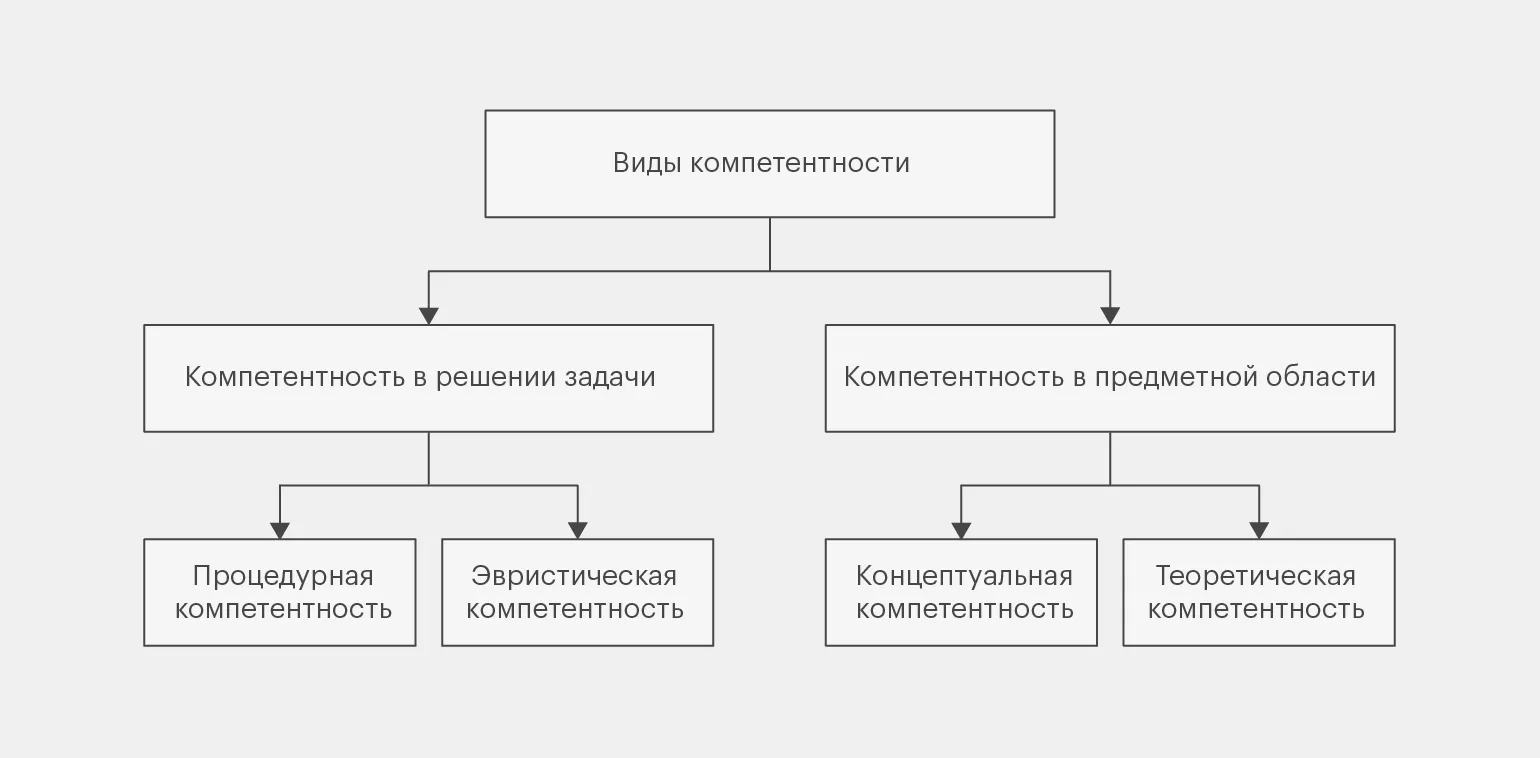
There are two key types of content that correspond to the types of competencies that training should develop.
Task expertise refers to a learner's ability to effectively perform specific tasks, such as selling a product or budgeting. Reigeluth emphasizes that tasks can be procedural, requiring the sequential execution of clear steps, or heuristic, solved using principles and patterns. In practice, most tasks combine elements of both approaches. Developing problem-solving competence is an important part of the educational process, as it allows students not only to absorb knowledge but also to apply it in real-world situations.
Theory-based problem solving plays a key role in solving complex problems, where outcomes can vary depending on changing conditions. This method is based on the simplification of conditions, which is a strategy for structuring educational content. Students begin by mastering the simplest version of a problem, as close as possible to a real-world situation, and gradually move on to more complex levels corresponding to their zone of proximal development. This approach promotes more effective learning and a deeper understanding of the material, allowing students to confidently tackle more complex concepts.
Domain expertise refers to a student's knowledge and experience related to a specific field, such as economics, biology, physics, or medicine. This learning focuses not only on solving specific problems but also on developing a deep understanding of various aspects of the chosen field. Having such expertise is essential for successfully solving a variety of problems and applying knowledge in practice in the relevant field. Developing subject-matter competence contributes to the quality of education and forms the foundation for professional practice.
To develop subject-matter competence, Reigeluth recommends beginning a course with basic, general concepts, which allows for a broader coverage of the topic. For example, in a macroeconomics course, students should first be introduced to the law of supply and demand. After this, students can move on to more detailed aspects, such as methods of profit maximization, the impact of taxes on the economy, and other specific topics. This approach promotes a deep understanding of the fundamentals and creates a solid foundation for studying more complex issues in the future.
In terms of content, Charles Reigeluth distinguishes two main types: conceptual and theoretical. Conceptual content encompasses the study of concepts and their interrelations, while theoretical content focuses on principles and patterns. For effective content development, each of these categories requires its own organization strategy. Conceptual consistency organizes information according to the logic of concepts, while theoretical consistency structures knowledge according to principles and patterns. Correct application of these strategies helps to create more understandable and structured content, which in turn improves its perception and assimilation by users.
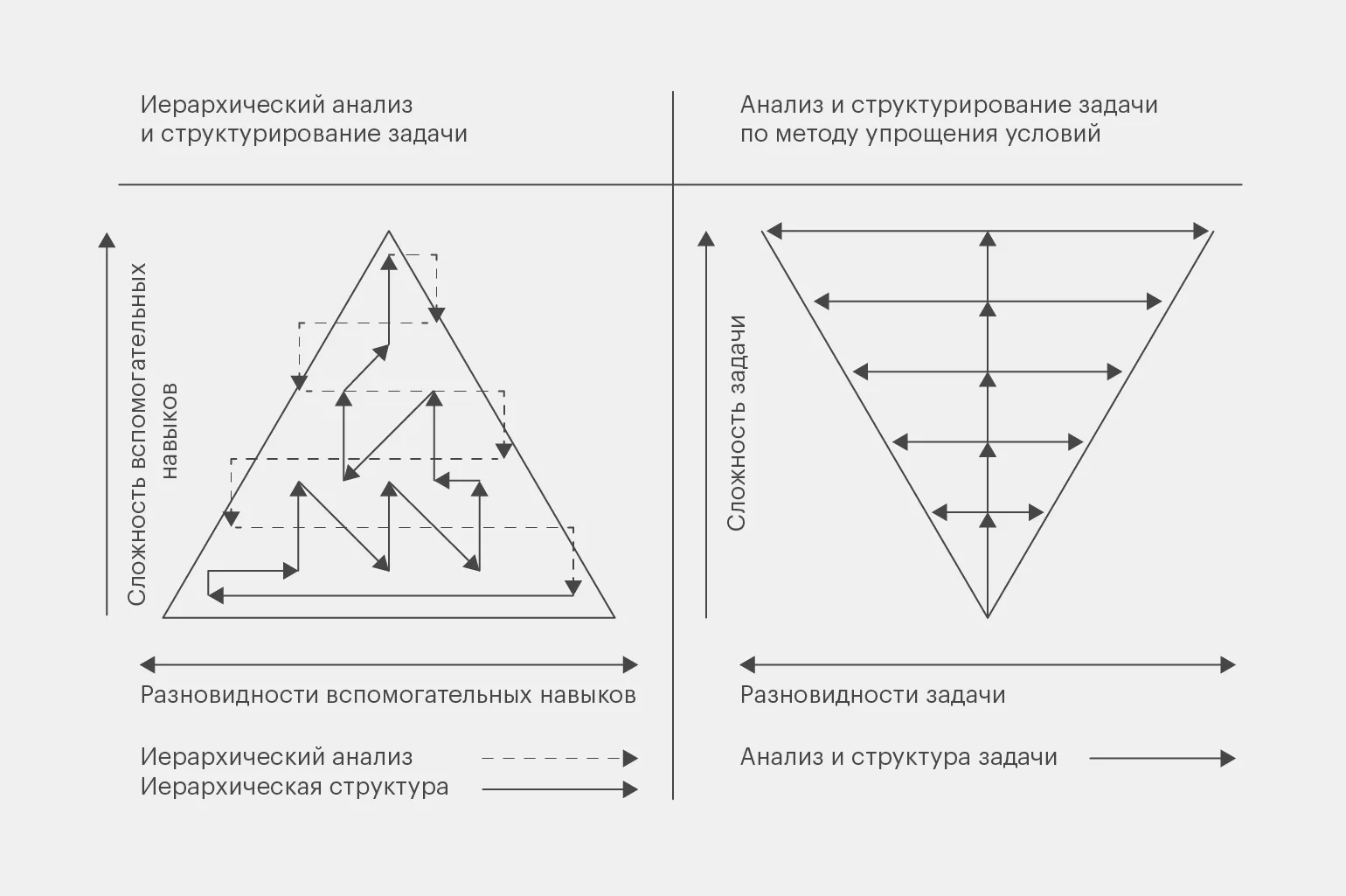
To successfully apply the instructional designer's method, it is necessary, in collaboration with a subject matter expert, to define the simplest, yet typical and realistic version of the task. Then, several variations of increasing difficulty should be formulated. This approach will allow the learner to gradually achieve a level of mastery corresponding to the course objectives. During the analysis of the main task, it is important to identify the conditions that influence its performance and understand how they affect the task difficulty. Modifying these conditions allows you to adapt the level of difficulty and create task variations corresponding to different levels of learner competence.
Reigeluth demonstrates the process of developing a course for sales employees working in the business segment. First, the trainer interviewed a specialist who shared successful case studies, allowing for a comprehensive understanding of the sales process. This includes the stages from identifying the purchase initiator to negotiating and closing the deal, as well as working with financial documents. Based on the collected data, the trainer identified several key factors, such as the client's attitude toward the company and product, the purchasing decision-making process, and the conditions under which the client is ready to close the deal. This approach allows for the creation of effective training programs that facilitate employee development and improve sales results.
In this course, the first task will be a scenario with the most favorable conditions. For example, the client has made multiple purchases, all negotiations and approvals are conducted with the same person, and there are no difficulties with payment and delivery. In subsequent stages, the course becomes more complex: it will require convincing a client who is loyal to competitors or arranging delivery to several remote locations. In this way, the methodologist gradually adapts the conditions to ultimately prepare the student to work with the most complex tasks they are likely to encounter in real-world practice.
To determine the necessary knowledge and skills for completing tasks at various levels, Reigeluth suggests using procedural and hierarchical analysis. The basic principle is to provide the student with all the necessary content in conjunction with a specific task. The use of hierarchical and procedural methods facilitates the organization of educational material, which is especially important for organizing the content of individual lessons. This approach not only allows for the careful structuring of information but also makes the learning process more effective and focused.
Elena Chernobay explains that the principles of design theory, including the method of simplifying conditions, are actively used in various models and approaches to instructional design. One such example is the four-component learning design model 4C/ID, created by Jeroen van Marienboer. This model uses the principles of facilitation to effectively design learning tasks, which promotes deeper understanding and mastery of the educational material.
To achieve educational outcomes, it is important not only to acquire knowledge and skills but also to integrate them into a coherent system, integrating them into everyday life. The holistic approach to learning, which underlies this model, assumes that the whole is greater than the sum of its parts. It includes not only individual elements but also their interrelations, which promotes a deep understanding and application of acquired knowledge. This approach allows learners to effectively use their skills in a variety of contexts, significantly increasing their educational value.
According to the 4C/ID model, tasks in an educational course should be holistic, realistic, and variable, as close as possible to real situations from professional practice. The methodologist can adjust the conditions for completing tasks and the amount of support, which allows them to design tasks of increasing complexity. This approach promotes the gradual development of mastery and independence in students, ensuring effective learning and preparation for the real challenges of their future professional activities.
According to Mikhail Osipov, Reigeluth's theory is rarely applied in its pure form in methodological practice, unlike the Marienbor model, which is actively used in online course development. Maria Junilainen's experience shows that modern curricula are most often created based on a combination of various approaches and design models, which allows for the educational process to be effectively adapted to the demands of the times and the needs of learners.
This strategy aims to structure content that encompasses interrelated concepts, such as classes of objects and phenomena. These classes are typically divided into types and include subclasses. For example, this could be a classification system for living organisms, musical genres, or product categories offered by a company. Effective organization of information helps improve perception and navigation, which in turn facilitates better understanding and assimilation of the material by users. Proper content structure also positively impacts search engine optimization, increasing the visibility and accessibility of information online.
The course is built on a conceptual sequence, starting with the most general concepts, allowing students to gradually delve into more specific categories and subcategories. This approach ensures the necessary level of detail and understanding of the material. The course structure is presented as a tree-like system with several multi-level branches, which promotes the effective acquisition of knowledge and skills.
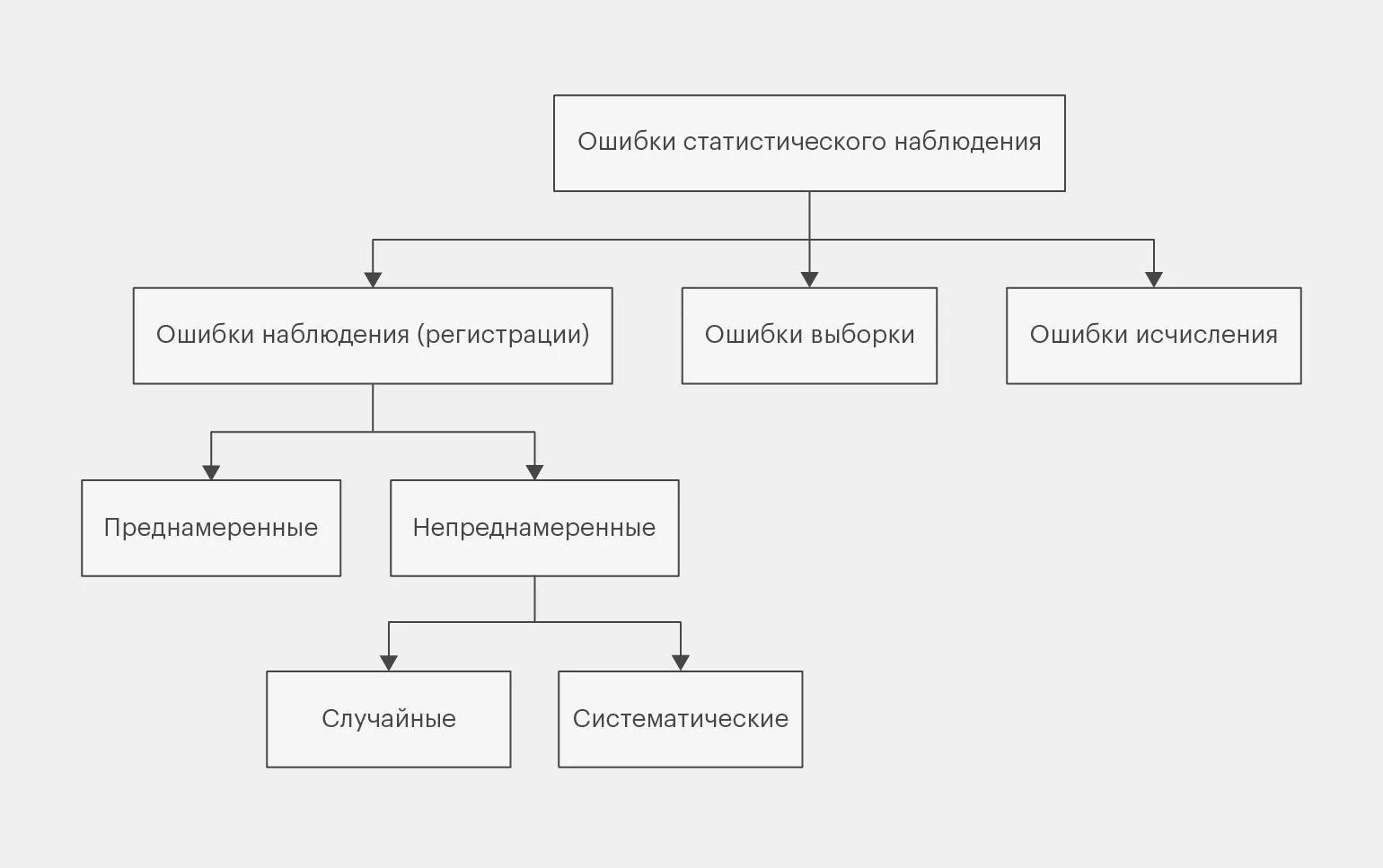
When developing a conceptual content structure, it is important to consider criterial and functional parameters depending on the research topic. In the first approach, concepts are grouped and arranged in a hierarchy based on common characteristics. For example, the category "trees" can be divided into "deciduous" and "coniferous" based on leaf shape. The second approach involves structuring concepts based on functional characteristics. In woodworking, wood is classified as softwood and hardwood, while in forestry practice, trees are divided into three categories: I - the best, II - auxiliary, and III - undesirable. This approach allows for more efficient resource management and optimization of processes related to forestry and woodworking.
Theoretical sequencing plays a key role in structuring the curriculum, enabling the organization of all interconnected concepts and principles. As Elena Chernobay notes, the course is built on the sequential study of large thematic blocks, which gradually increase in complexity and enrich with detail. For example, in courses on history, economics, or biology, the use of theoretical development allows students to first become familiar with the main theses and interrelations, and then delve deeper into individual elements. When creating a school history course, one can begin with a general overview of the historical era and then move on to a detailed study of key events, processes, and individuals, demonstrating their interrelations. This approach not only promotes better assimilation of the material but also helps develop critical thinking and analytical skills in students.
The conceptual and theoretical sequences begin with a general statement, for example: "Ambient temperature affects the behavior of living organisms." This statement is then refined, for example: "At high temperatures in arid environments, some animals switch to a nocturnal activity mode" and "At high temperatures, some animal species undergo aestivation." Such changes in organisms' behavior are adaptations to extreme conditions, emphasizing the importance of temperature as an ecological factor.
The theses of each subsequent level, as Charles Reigeluth notes, clarify the causes or consequences of the phenomenon or pattern described at the previous level. To formulate clarifying theses, it is useful to answer questions such as: What factors influence this phenomenon? What are the consequences of this process? This approach allows for a deeper understanding and analysis of the topic under study, identifying relationships and dependencies. This, in turn, promotes a clearer and more complete understanding of the subject matter, which is important for further analysis and the development of recommendations.
- What else is going on?
- What else could be causing this?
- When does this cause lead to this effect?
- Why do changes occur?
- In what direction and to what extent do changes occur?
The author of the theory argues that the theoretical sequence demonstrates the order in which students can ask questions about the topic being studied, which helps them identify relevant patterns. Reigeluth believes that this content delivery strategy is most effective for problem-based learning and other heuristic methods. Using this approach promotes a deeper understanding of the material and the development of critical thinking in students.
In what order is the content studied?
The conceptual and theoretical structure of the course uses a tree form, where many branches follow from a general concept. It is important to determine the order of studying the material after students are familiar with its main ideas. Proper organization of the material promotes a deeper understanding and assimilation of knowledge. It is necessary to take into account the logical sequence of topics to facilitate the learning process and ensure effective assimilation of information.
Charles Reigeluth distinguishes two main approaches to presenting educational material: thematic and spiral. The thematic approach focuses on an in-depth study of one topic, allowing students to fully immerse themselves in the material and assimilate it at a high level. The spiral approach, in turn, involves the repetition of topics at different levels of complexity, which promotes the consolidation of knowledge and its consistent deepening. Both methods have their advantages and can be effectively used in the educational process to achieve maximum learning results.
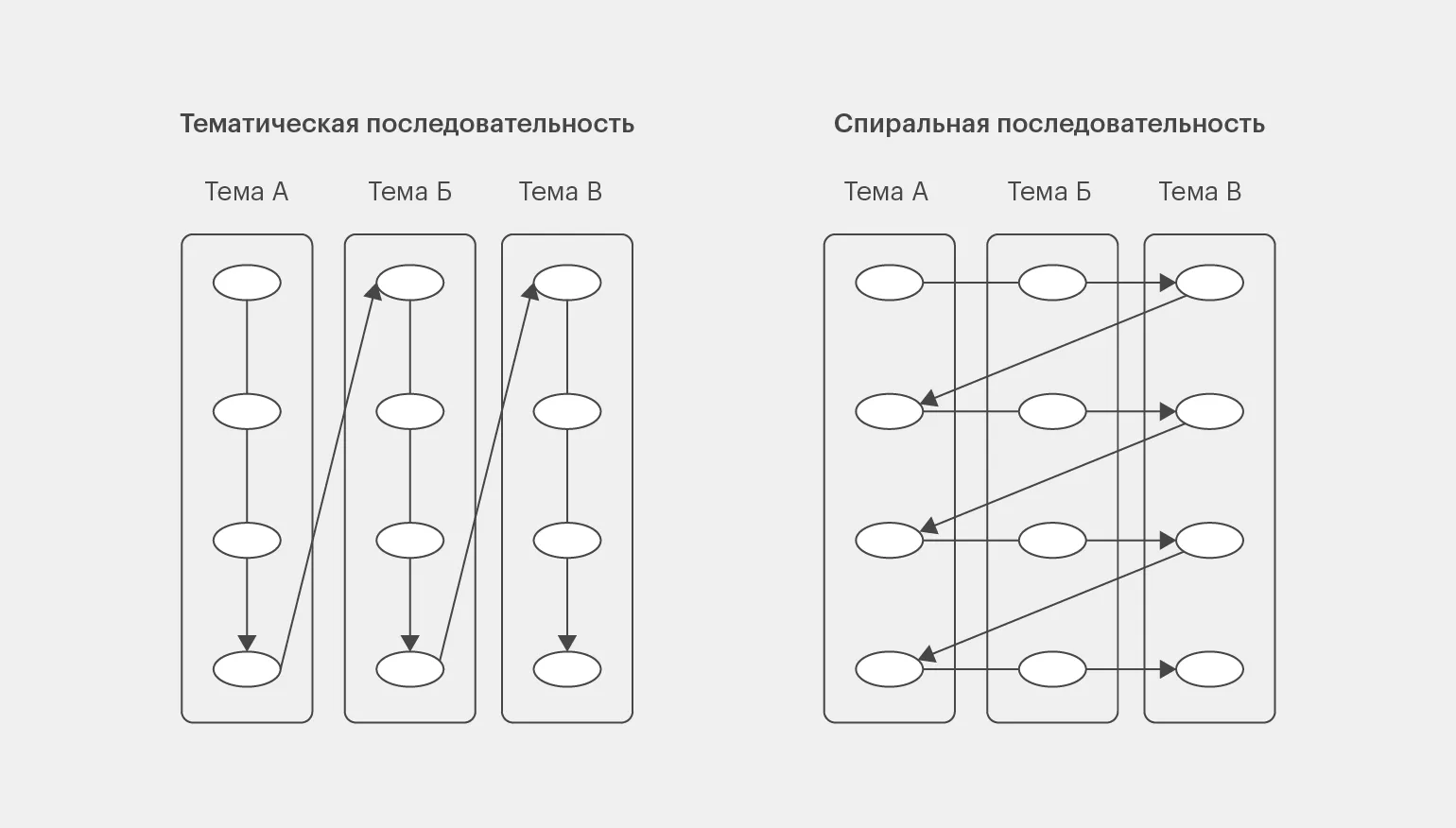
Thematic learning, known as the block method, involves students focusing on one topic until they achieve a high level of understanding and mastery of the material before moving on to the next. This approach promotes in-depth learning and maximizes engagement with the subject matter. From an organizational perspective, this method is also convenient, as it allows the necessary materials and equipment to be used at specific times, rather than scattered throughout the course. This streamlines the learning process and makes it more effective, which is especially important for achieving high-quality results.
When moving from one topic to another, students often forget previously covered material. This makes it difficult to perceive the holistic picture of the area being studied. To help students retain information better, a course should include an overview and review of the material covered. This will not only reinforce knowledge but also enhance understanding of the relationships between topics.
In a spiral learning model, students begin with a basic understanding of the first topic, then move on to the second, third, and subsequent topics, before returning to the first topic for deeper understanding. This process is repeated, creating a cyclical approach to learning. For example, when studying algae, students might be introduced to brown, green, and red algae in one lesson, and then gradually deepen their knowledge of each type in subsequent lessons. Unlike a topic-based model, where each lesson focuses on only one type of algae, a spiral sequence allows students to develop a holistic understanding of the material and develop a deeper understanding through a sequential deepening of knowledge.
Charles Reigeluth emphasizes that the spiral learning approach has a significant advantage due to its built-in review and review of key topics. This method allows students to more effectively compare various objects and phenomena, identifying their connections, similarities, and differences. Studying materials in close proximity to one another promotes deeper understanding. Returning to previously studied topics for depth not only helps refresh knowledge but also strengthens memory for the material, making the learning process more productive.
Research shows that frequently switching between topics can negatively impact deep learning and the formation of stable schemas in long-term memory. Furthermore, such alternation can cause inconvenience for both teachers and students, especially if different textbooks and handouts are required to study different topics. An approach to learning that requires constant changes in focus can reduce the effectiveness of the educational process and make it difficult to concentrate on key aspects of the material being studied.
Charles Reigeluth argues that in practice, the spiral and thematic approaches do not exist in their pure form. The researcher suggests viewing these two methods as two extreme positions on a continuum. This allows you to flexibly adjust the depth of study of a single topic and the frequency of transitions between different topics depending on the specific course and educational goal. This approach promotes more effective learning and better assimilation of the material.
Learn more about education by subscribing to our Telegram channel. We share current news, useful tips, and interesting materials to help you learn and develop. Join us and stay up to date with new trends in education.
Read also:
- Everything is intertwined: how alternating topics helps you remember the material for a long time
- How to build a course that will lead a novice student to professional mastery
- Four cognitive theories for everyone who teaches people
- How phenomenon-based learning teaches you to solve real-world problems
- Research: prior knowledge does not reduce, but increases cognitive load
The Profession of Methodologist from Scratch to PRO
You will improve your skills in developing curricula for online and offline courses. Master modern teaching practices, structure your experience, and become a more sought-after specialist.
Find out more