
Contents:

Learn: Profession Methodist from scratch to PRO
Learn MoreIn this article, we'll cover key aspects that will help you better understand the topic. You'll learn the most important points that affect your perception and application of information. We'll provide relevant data and tips that will be useful for your further study. Discover new horizons and gain valuable information that will help you in your practice.
- What is a competency-based approach and what principles is it based on;
- When and where did this approach appear and how did it develop;
- To what extent is the competency-based approach implemented in schools, universities, corporate training, and EdTech.
What is a competency-based approach?
A competency-based approach in education is aimed at developing specific competencies in students, which becomes the key goal and result of the educational process. This approach is manifested in the unique organization of the educational process, as well as in the careful selection of content, forms, methods, and means of teaching. The main focus is on the practical application of knowledge and skills, which contributes to a deeper assimilation of the material and prepares students for real-life situations. The implementation of a competency-based approach makes education more relevant and effective, meeting the modern demands of society and the labor market.
In Russia, this new educational approach began to develop relatively recently. The traditional Russian educational paradigm emphasized the formulation of goals and expected learning outcomes through the lens of knowledge, skills, and abilities (KSA). These elements were widely discussed in the works of such classic pedagogical and psychological thinkers as Vygotsky, Ushinsky, Skatkin, and Lerner. This system represents a harmonious combination in which knowledge serves as the foundation for the development of skills, which, in turn, are transformed into sustainable competencies through practice. This approach promotes a deeper understanding of the material and the effective acquisition of essential competencies, which is becoming especially relevant in the context of the modern educational process.
Maria Amelkina, a research fellow at the Institute of Education Management of the Russian Academy of Education, notes in her article "Competency-Based Approach: A New Stage in the Development of Domestic Education" that, for many years, teachers and methodologists have focused on the transfer of knowledge rather than its practical application. It was believed that the necessary skills and abilities would develop automatically through the acquisition of theoretical material. This approach limits students' opportunities, preventing them from effectively applying the knowledge they acquire in real-world situations. It is important to rethink educational methods and emphasize a competency-based approach that fosters the practical skills and abilities necessary for success in the modern world.
Modern reality confirms that traditional education does not always prepare students for the demands of the labor market. University graduates often face the need to complete additional training and retrain on the job in order to successfully cope with professional challenges. This situation highlights the importance of practical learning and adaptive skills, which are relevant in a rapidly changing world.
This problem has become especially pressing in the 21st century. Rapid changes in information technology and market demands make the accumulation of knowledge without practical competencies ineffective. In such a context, the ability to solve a variety of problems and tasks, many of which have no ready-made solutions, is increasingly important. A competency-based approach can be the key to successfully overcoming these challenges. It allows you to develop not only theoretical knowledge, but also the practical skills necessary for effective functioning in the modern world.
Learn more about our topics and current news. We offer quality content to help you stay up to date. Our articles cover a wide range of topics and provide useful information necessary for your development and understanding. Don't miss out on our publications that will help you expand your knowledge and skills. Subscribe to updates to stay informed and up-to-date.
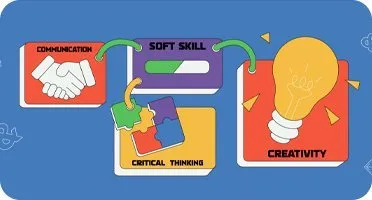
21st-century skills are mentioned in the Federal State Educational Standards (FSES), but the question remains: are they actually taught in practice? The importance of skills such as critical thinking, creativity, communication, and collaboration is undeniable. These competencies are becoming essential for successful adaptation in a rapidly changing world.
Despite their importance, the reality in educational institutions often turns out to be far from the theory. Teachers face various challenges, including a lack of resources and outdated methods. Therefore, it is important not only to mention these skills in standards but also to integrate them into educational programs.
To prepare students for modern challenges, it is necessary to adapt curricula, implement innovative approaches, and actively develop practical classes. Only in this case can we truly speak of learning 21st-century skills and their importance for students' futures.
Competency-based education focuses on the practical application of knowledge and skills. This means that individuals who complete a certain level of education acquire key competencies that enable them to effectively solve specific practical problems. This approach helps prepare specialists who are able to adapt to the demands of the modern labor market and successfully apply their knowledge in real-world situations.
The competency-based approach is not limited to vocational education and the development of work skills. It also encompasses universal competencies that contribute to overall personal development and are necessary for successful personal and social life. These skills, such as communication skills and critical and systems thinking, play an important role in various aspects, including professional activity. In school education, such skills are called meta-skills. Thus, the competency-based approach is relevant not only for adult education, but also for developing solid knowledge and skills in schoolchildren.
Fundamentals of the Competency-Based Approach
The competency-based approach in education is based on the key principles summarized by Grigory Matushansky and Oleg Kudakov in the article "Methodological Principles of the Competency-Based Approach in Vocational Education", as well as by Maria Amelkina in her work "The Competency-Based Approach: A New Round of Development of Domestic Education". These principles are aimed at developing the necessary competencies in students that facilitate successful adaptation in the professional environment. The most important aspects of this approach are a focus on learning outcomes, the integration of theoretical knowledge and practical skills, and an emphasis on the active participation of students in the educational process. The implementation of the competency-based approach helps improve the quality of education and train specialists who are able to effectively solve real-world problems in their professional activities.
- Interdisciplinarity. Students acquire various subject-specific knowledge and skills not separately, but in conjunction with one another, that is, as a whole. This helps them develop a holistic understanding of the world and systems thinking. They will be able to better navigate complex situations, notice non-obvious relationships, and apply a wide range of methods to solve practical problems.
- Development of creativity. This principle involves developing the ability to think outside the box, come up with new ideas and approaches, and find solutions to problems without ready-made answers.
- Development of communication skills. The ability to establish contact with people, negotiate, resolve conflicts, and work in a team—the importance of these skills is much discussed and written about. Indeed, they are essential for any modern specialist, unless we are talking about a lighthouse keeper on an isolated island.
- Continuous education and professional mobility. A person who is willing and able to quickly master new methods and technologies, constantly learn and retrain, need not worry about not being able to apply their skills.
- Professional (i.e., applied) focus of training. Mastering academic disciplines in a competency-based approach is always linked to real-world practice. This means that the list of competencies students must master is determined in accordance with employer demands and sociological research. At the same time, educational content must adapt to changing market conditions and the needs of society.
- Individualization. It is important to develop an educational path for each student that takes into account their personality traits, interests, and capabilities. However, as Maria Amelkina notes, the principle of individualization clashes with the principle of professional focus. Because the area in which a person is interested in developing is not always in demand in a market economy. A balance must be found here.
There is another key principle, stemming from the previously mentioned provisions, which Matushansky and Kudakov consider fundamental to the competency-based approach. This is the principle of developing universal competencies. It assumes that students should be prepared for active professional activity in various fields that correspond to their personal interests, as well as the needs of society and the labor market. This approach ensures more flexible adaptation to changes in the professional environment and promotes the development of the necessary skills for a successful career.

Modern Federal State Educational Standards The Federal State Educational Standard (FSES) for Higher Education identifies three main types of competencies. These competencies are key to preparing specialists who meet labor market demands and modern challenges. The first type are general professional competencies, which provide the basic knowledge and skills necessary to perform professional tasks. The second type are professional competencies, which are more narrowly focused on specific professions and specialties, enabling graduates to successfully cope with practical tasks in their field. The third type of competencies are universal competencies, which include general skills such as critical thinking, self-education, and teamwork. The combination of these three types of competencies helps develop qualified specialists prepared for success in a rapidly changing world.
- universal — that is, social and personal abilities that enable a person to be successful regardless of their professional field (in fact, these are the very same soft skills whose importance is now being talked about so much, and, in addition, digital skills);
- general professional — that is, generalized competencies that are needed in a certain group of professions (for example, the ability to apply scientific research methods in one's work, the ability to apply the regulatory framework governing professional activity);
- specialized professional — those needed for work in a specific profession (they are also called hard skills).
In online courses dedicated to specific professions, the organizers strive to develop in students not only professional skills, but also universal soft skills. This is important because possessing soft skills significantly increases one's chances of success in the workplace. Today's labor market demands that specialists be able to effectively collaborate with colleagues, adapt to changing conditions, and solve non-standard problems. Therefore, integrating soft skills into educational programs is becoming essential for training qualified personnel. The list of universal competencies can have various variants and classifications developed by both domestic and international researchers. According to current Federal State Educational Standards (FSES), seven groups of universal competencies can be identified for bachelor's degrees. These groups cover the key skills and knowledge necessary for successful professional activity and personal development of students.
- systemic and critical thinking;
- project development and implementation;
- teamwork and leadership;
- communication;
- intercultural interaction;
- self-organization and self-development (including health preservation);
- life safety.
Development of a competence-based approach
The concept of competence was first introduced into scientific circulation by the American psychologist Robert White in his article "Revising the concept of motivation: the concept of competence", published in 1959. However, the term "competence" did not begin to be used in the educational sphere immediately. In recent decades, it has gained significance in the context of educational standards and approaches to teaching, making it an essential element of teaching practice. Competency has become the basis for the development of educational programs aimed at developing the skills and abilities necessary for success in various areas of life. Irina Zimnyaya, psychologist and educator, academician of the Russian Academy of Education, identifies three key stages in the development of the competency-based approach in education. These stages are important for understanding the evolution of educational methods and their compliance with modern requirements. The competency-based approach emphasizes developing in students not only the knowledge but also the skills necessary for successful life in society. At this time, researchers began to actively use the term "competence" and developed a framework for distinguishing between the concepts of "competence" and "competency." In his 1965 work, "Aspects of Syntax Theory," linguist Noam Chomsky defined competence as knowledge of one's native language, emphasizing that this knowledge, while tacit, is manifested only in its practical use—that is, in competence. This distinction marked an important step in understanding language and its functioning.
The concepts of competence and competency have become important elements in both the theory and practice of native language teaching, as well as in personnel management. Competence implies the possession of the necessary knowledge, abilities, and skills that enable one to effectively perform certain tasks. Competence, in turn, reflects the ability to apply these skills in real-world situations. These terms are actively used to assess and develop professional qualities, making them relevant in the development of educational programs and in the recruitment process. It is important to consider that competencies and competencies can significantly improve the quality of training and employee performance, which is especially relevant in the current labor market.
Researchers are actively developing lists of key competencies. One such document is John Raven's "Competence in Modern Society," published in 1984. In this book, Raven identified 37 core competencies, including independent learning skills, the ability to seek and effectively use feedback, problem-solving skills, critical thinking, and self-control. These competencies play an important role in modern society, contributing to the development of personal and professional effectiveness.
Scientists are actively researching methods for constructing the educational process with the aim of developing essential competencies. Nina Kuzmina, Aelita Markova, and Larisa Petrovskaya have made significant contributions in this area, with their research helping to create effective curricula and methodologies. This research contributes to improving the quality of education and more targeted skill development in students.
The terms "competence" and "competency" are widely used in education. UNESCO uses these terms to define expected learning outcomes, which allows for the formulation of clearer learning goals and standards. Competence denotes the ability to apply knowledge, skills, and personal qualities in various situations, while competence involves the confidence in using these competencies in real-life situations. These concepts play a key role in modern educational systems aimed at preparing students for the challenges they will face in the future.

On At the 1996 Bern Symposium, Valo Huttmacher presented the concept of key competencies, identifying five main types. This concept has become a significant contribution to the understanding of the educational and professional skills necessary for successful functioning in modern society. The main types of competencies cover a wide range of skills and knowledge that enable adapting to rapidly changing conditions and effectively solving problems. The development and implementation of these key competencies in educational programs contributes to the formation of competitive specialists ready for the challenges of the 21st century.
- political and social;
- related to life in a multicultural society;
- communicative;
- related to the increasing informatization of society;
- the ability to learn throughout life.
In 2001, the Russian Ministry of Education presented the "Strategy for Modernizing the Contents of General Education", in which the competency-based approach became the basis for updating educational standards in the country. This approach emphasizes the development of skills and abilities necessary for successful socialization and professional activity of students. The updated standards are aimed at developing critical thinking, self-education, and collaboration skills in schoolchildren, which are key in the conditions of modern society. Thus, the competency-based approach not only updates the content of education but also helps prepare students for the challenges of the 21st century.
Competency-based Approach in Modern Education
Since the beginning of the 21st century, the competency-based approach has been actively implemented at all levels of education, with the possible exception of preschool. This approach helps students develop not only theoretical knowledge but also the practical skills necessary for successful life in modern society. The introduction of a competency-based approach into the educational process allows for the optimization of learning, making it more targeted and adapted to labor market requirements.
Marina Amelkina notes that the introduction of a competency-based approach into the educational process in schools began even earlier than in colleges and universities. Specialized classes, which appeared in the 2000s, such as information technology, chemistry and biology, and humanities, represent a step toward individualizing the education of high school students and their career guidance. These changes facilitate a deeper understanding of students' interests and capabilities, which in turn improves the quality of education and prepares them for future professional activities.
The competency-based approach has become the foundation of educational standards in Russia. The second-generation Federal State Educational Standards for schools, introduced in 2009, define requirements for learning outcomes, which are divided into personal, subject-specific, and meta-subject. It is important for schools to ensure the development of written and oral communication skills, group work, and research, project-based, and social activities. These competencies contribute to the comprehensive development of students and prepare them for life in modern society.
Modern educational standards introduce the concepts of an individual educational path and universal learning activities (ULA). These ULAs represent key competencies, which, according to Alexander Asmolov, a psychologist and the author of the ULA concept, can be defined as the "ability to learn." An individual educational path allows for tailoring education to the unique needs of each student, while universal learning activities develop the skills necessary for effective acquisition of knowledge and skills in various situations.
The new third-generation Federal State Educational Standards (FSES) have already begun to be implemented in educational institutions. These standards clarify expected learning outcomes and provide greater opportunities for program variability. For more detailed information on federal standards and their impact on the education system, please read our article.
In reality, the situation is more complex than it initially appears. Individualization in mass education faces certain limitations. The traditional "knowledge-based" approach to school education continues to prevail over practice-oriented methods. Furthermore, effective tools for objectively assessing personal learning outcomes and soft skills remain lacking. This creates a need to develop new methods and approaches that can take into account the individual achievements of students and promote their comprehensive development.

Read also:
The modern Russian school faces challenges associated with outdated educational standards that do not meet the requirements of the time. The educational program needs to be updated to meet modern realities and student needs. It is important that school education not only provides basic knowledge but also develops critical thinking, creativity, and problem-solving skills. Modern teaching methods should incorporate digital technologies, which will allow students to better adapt to a rapidly changing world. It is also necessary to emphasize an interdisciplinary approach that helps connect different fields of knowledge and promotes a deeper understanding of subjects. Thus, to prepare students for a successful future, the Russian education system must evolve, implementing modern methods and relevant knowledge. A competency system was introduced in federal standards for vocational education after 2007 and is more clearly defined than in general education standards. All requirements for learning outcomes in colleges and universities are presented in the form of lists of competencies, which include universal, general professional, and professional types. Professional competencies are often replaced by references to professional standards, which emphasizes their relevance and alignment with labor market requirements. Thus, the competency framework has become the basis for assessing the quality of education and training of specialists, ensuring their competitiveness in the modern labor market. Students face numerous challenges in developing various competencies. This applies to both universal skills and professional knowledge. It is important to understand that successful learning requires not only theoretical knowledge but also practical application. In a rapidly changing labor market, students are faced with the need to adapt to new demands and expectations. Effective competency development requires a comprehensive approach that includes both academic preparation and practical experience. Developing universal competencies in higher education institutions faces the same challenges as in school. Currently, there are no generally accepted approaches to developing such important skills as critical thinking, communication skills, and leadership qualities. As a result, Russian students often lack these key competencies. However, in recent years, initiatives have emerged aimed at improving the situation. We've already discussed some of these, including university consortia working on developing universal competencies, as well as management skills assessment and development centers. These projects contribute to improving the quality of education and preparing students for the demands of the modern labor market.
The issue of professional competencies raises various problems. One popular idea is collaboration between universities and businesses. In theory, this seems like an ideal solution: companies generate demand for specialists with the necessary skills, universities adapt their educational programs, invite practitioners as instructors, and send students on internships at partner organizations. As a result, universities receive funding, students become sought-after specialists, and employers eliminate the shortage of qualified personnel. However, some argue that this practice is not always effective.
Critics argue that universities are not always able to quickly respond to changing labor market needs. Curriculums often become outdated, and graduates do not meet current requirements. Furthermore, such collaboration can lead to excessive commercialization of education, where business interests become paramount, while academic values are relegated to the background. It's important to find a balance between employer needs and the quality of education to prepare specialists who can successfully adapt to a rapidly changing market.
HSE Rector Nikita Anisimov emphasizes that focusing universities solely on current business demands doesn't help students develop the competencies that will be in demand in the future. Employers often highlight the skills they need now, but few are able to predict what skills will be relevant in a few years, when students complete their studies. In a rapidly changing world, employers' current needs may lose their relevance, rendering the educational programs they rely on obsolete. It's crucial for universities to adapt their curricula, taking into account not only current but also future labor market trends, ensuring students have the necessary knowledge and skills for successful careers.
American professor James Rushing Daniel expresses a radical viewpoint, arguing that business interference in university curricula is detrimental to the quality of education. He emphasizes that, in their quest for greater efficiency, universities are beginning to invest primarily in technology and business areas, while the humanities and arts are relegated to the background. This can lead to a deficit in creative and critical thinking among students, which in turn negatively impacts the development of society as a whole.
The informal sector of continuing education, including corporate training and online schools, provides more opportunities for implementing a competency-based approach compared to traditional schools, universities, and formal continuing professional education. These alternative forms of education allow programs to be adapted to the current demands of the labor market, taking into account the individual needs of students. In a context of rapidly changing technologies and teaching methods, informal education is becoming an important tool for developing the practical skills and competencies needed in various professions.
Corporate training and the EdTech sector, dedicated to obtaining professions, are largely focused on the practical application of knowledge. Educational programs and courses are designed to ensure students acquire the skills that will be in demand in their future careers. Employers and online schools create competency maps, known as skill sets, which represent a set of specific skills required to perform various job tasks. To create these maps, employers research their internal needs, while EdTech representatives analyze the needs of the entire labor market, including job postings and the opinions of professionals in various industries. This approach allows us to create effective training programs that meet the current requirements and expectations of employers, which increases students' chances of successful employment.

To improve SEO, it is important to use keywords and phrases that are relevant to the topic. Here's the revised text:
Also read articles to help you gain a deeper understanding of the subject. We offer a wide range of information, including helpful tips, analysis, and research. Don't miss the opportunity to explore our resources to expand your knowledge and stay up-to-date on the topics that interest you.
Creating a course that will help a novice student achieve professional mastery requires careful planning and a structured approach. It is important to define the main objectives of the course and identify the key skills and knowledge needed to successfully master the topic.
Start by developing a syllabus that includes a sequential study of the material, starting with the basics and gradually moving to more complex topics. Each topic should be supported by practical assignments so that students can apply their knowledge in practice.
Don't forget the importance of interactivity. Incorporating discussions, group projects, and feedback promotes active learning and helps students better retain the material. It's also important to accommodate different learning styles by offering a variety of information formats: text, video, infographics.
Regularly assess student progress with tests and quizzes. This will help you identify learning weaknesses and adjust the course if necessary.
Finally, create a supportive atmosphere where students can ask questions and share their experiences. This will not only increase motivation but also help build a community that will facilitate further student development in their chosen field.
Thus, a well-organized course will become a reliable bridge from basic knowledge to professional mastery, making it a valuable resource for any beginner.
EdTech and corporate training programs are often shorter than university programs, allowing their content to remain relevant throughout the course. The lack of strict government regulation typical of higher and secondary vocational education gives these segments the opportunity to more quickly update courses and adapt them to changing market demands. This makes training more effective and responsive to modern needs in various competencies.
Learn more about education by subscribing to our Telegram channel. We share current news, helpful tips, and interesting materials to help you in your studies and professional development. Don't miss the opportunity to stay up to date with educational trends!
Read also:
- How to develop critical thinking and other 4K competencies in schoolchildren
- Soft skills versus hard skills: which is more important for employment
- What is pedagogical design and who is an educative designer
- "The true competencies of a methodologist and methodologist are a scientific approach"
The Profession of Methodologist from Scratch to PRO
You will improve your skills in developing curricula for online and offline courses. You will master modern pedagogical practices, structure your experience and become a more sought-after specialist.
Find out more