Contents:

Learn: Online Tutor
Learn MoreHow a Biologist Joined Forces with a Choreographer
Central Michigan University (CMU) Attracts a Large Number of Students, Creating an Active learning atmosphere. During a general biology lecture on cell division, a variety of reactions can be observed in the audience. Some students are visibly tired and yawning, while others appear to have already fallen asleep. This highlights the importance of an interesting and engaging approach to learning within an academic environment.
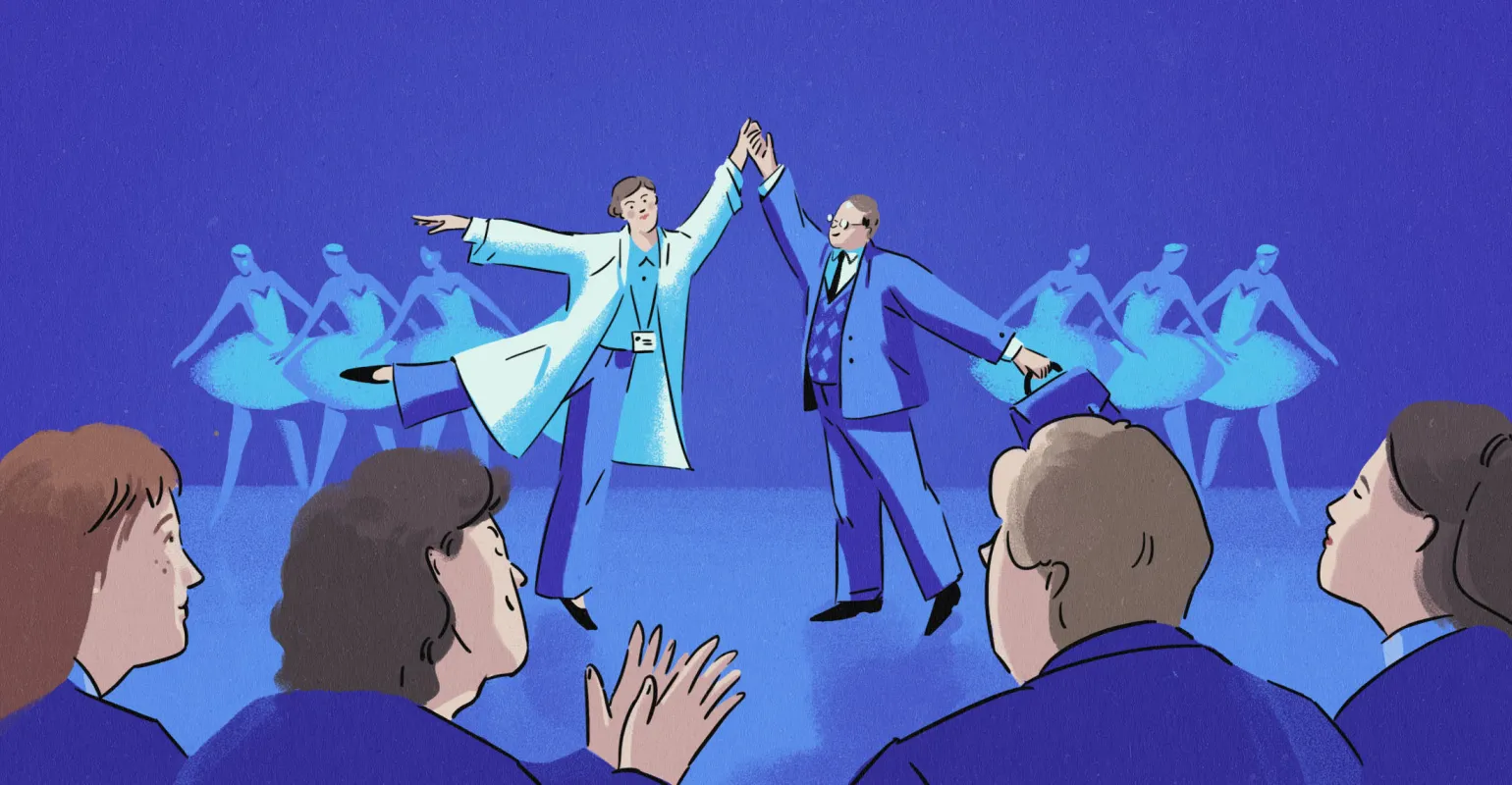
Lecturer and Professor Wilin Pangle presses a button, and music fills the room. At that moment, a unique performance begins: dancers appear in the audience, visualizing the process of cell division that Pangle just described. This performance is the first project of the creative group Team Hyena Puppet, which uses art to demonstrate biological concepts. Their approach combines science and art, which allows for a better understanding of complex topics and makes the educational process more engaging.
In an interview with Michigan Radio, Professor Wilin Pangle shared her experiences during her early teaching career. She was looking for effective methods to engage students in the learning process and strived to make the subject of biology more interesting. As she reflected, the professor recalled her mentor's approach to using art to illustrate scientific concepts. This method helped her develop new strategies for better understanding biological processes and increasing student interest in the subject.
The young teacher decided to adapt this approach to her practice. She sent emails to various dance instructors inviting them to collaborate. After sending about ten to fifteen emails, she received a response from Heather within ten minutes. This experience underscored the importance of active engagement and networking in education and the arts.
Heather Trommer-Beardsley is a choreographer and instructor in the CMU Department of Theatre. She develops choreography for productions based on the scientific concepts of Wilin Pangle. The pieces are performed by her students in the Theatre Department. Heather collaborates with a composer and costume designer during the production process, creating a unique theatrical experience.
The dance about cell division was first performed in 2013 and has since been regularly performed by the artists each fall semester as part of a lecture on the topic. Wilin Pangle emphasizes that this approach promotes deeper student engagement, making learning more visual and memorable. Using artistic expression in the educational process helps spark interest in the subject and enhances understanding of complex biological processes such as mitosis and meiosis.
During written exams, students often returned to dance moves when answering questions on the topic of "Cell Division," which contributed to better retention of the material. This approach truly contributed to long-term knowledge retention, as Pangle noted in an interview with Pioneer. Using active learning methods such as dance can significantly improve the understanding and retention of complex topics, including biological processes.
The Team Hyena Puppet project presents the performance "Clans," which is dedicated to Professor Pangle's scientific research on spotted hyenas. This unique project immerses viewers in a world of amazing facts and discoveries related to the life and behavior of these animals. The performance not only entertains but also educates, revealing important aspects of the ecology and biology of spotted hyenas.
The Dunes performance offers a unique interpretation of dune research in Michigan. This project immerses viewers in the world of natural processes and ecosystems, exploring the dynamics of dunes and their impact on the environment. Through artistic and scientific concepts, the performance reveals the importance of preserving these unique natural formations, emphasizing their role in the region's ecology. "Dunes" becomes not only an aesthetic but also an educational experience, promoting awareness of environmental issues and the need to address them.
Why Not Only Teachers, But Also Scientists Dance
Professor Pangle's idea may seem frivolous or even entertaining, reminiscent of Elena Malysheva's show. However, in fact, science and the art of dance have a deeper connection than it might seem at first glance. Dance not only expresses emotions, but also serves as a means of exploring human nature and psychology. A scientific approach to the study of dance opens new horizons for understanding its impact on health, creativity, and interaction between people. Research in this area can lead to new methods of training, rehabilitation, and improving quality of life.
The American Association for the Advancement of Science has a different point of view.
Since 2008, the international competition Dance Your Ph.D. has been held in collaboration with Science magazine. This unique competition is designed for PhD holders and postgraduate students to present their research through interpretive dance. The focus is on the dissertation and the active participation of the author in the performance. This approach allows scientific ideas to be communicated to a wider audience in an engaging and accessible way, combining art and science.
Competitors compete for the grand prize, as well as for victory in four categories: biology, physics, chemistry, and social sciences. Last year, a new category was added: COVID-19 research. Winners are selected by an expert committee of scientists and specialists, as well as by viewers who can rate performances posted on YouTube and TikTok. Each category winner receives $750, and the grand prize winner receives $2,000. The competition provides a unique opportunity for participants to showcase their knowledge and creativity in their chosen field, while the audience enjoys engaging and informative performances.
Scientists from all over the world, including Russians, participate in the competition. In 2016, Evgeny Sogorin, a graduate student from the Institute of Protein Sciences of the Russian Academy of Sciences, won the Chemistry category. He used ballroom dancing to explain the work of ribosomes—cell organelles responsible for protein synthesis. This approach demonstrated how science can be presented in an engaging and accessible form, drawing attention to important biological processes.
The Dance Your Ph.D. competition was created by John Bohannon, a scientist with a Ph.D. in molecular biology and science journalist. In his talk at TEDxBrussels, Bohannon shared that the concept for this unique creative competition arose during a conversation with a friend, a physicist at MIT. His friend struggled to explain a complex experiment involving cooling matter using a laser, which inspired Bohannon to create a competition where participants present their scientific ideas through dance. It's an unconventional approach to popularizing science and making complex topics easier to understand, and it appeals to both scientists and the general public.
"When my friend tried to explain the experiment, I felt like every word he said was escaping understanding. When you're trying to convey a complex idea, it's important to use as few words as possible. "In fact, perhaps it would be better to do without words altogether. I thought my friend might be able to convey the essence of the experiment better through dance," John Bohannon shared his thoughts with the audience.
The 13th Dance Your Ph.D. competition took place in 2020. The grand prize was awarded to Jakub Kubečka, a physics Ph.D. student from Finland. He presented his research paper, "Formation, Structure, and Stability of Atmospheric Molecular Clusters," using dance and a rap song. This competition combines science and art, allowing researchers to creatively present their research, which helps popularize science among a wider audience.
“The main goal of participating in the competition was entertainment and demonstrating that science is accessible only to a narrow circle of specialists,” he said in an interview with Haaretz.
The goals were successfully achieved: a multitude of enthusiastic comments accumulated under the video, including feedback from people far removed from the scientific field. Some even suggested sending young scientists to the Eurovision Song Contest, which indicates widespread interest and support for scientific initiatives.

Please note the following recommendations:
To effectively promote your content in search engines, it is important to consider the keywords and phrases that users enter in the search bar. Optimize your headings and subheadings to include keywords that capture the essence of your content. Also, ensure the text is structured and easy to read, using short paragraphs and lists when appropriate. Don't forget about internal and external linking. Including links to relevant pages on your site and authoritative sources will increase the credibility of your content and improve its visibility in search engines.
Regularly update your content to keep it relevant. This will not only have a positive impact on SEO but will also attract loyal readers interested in fresh information.
Keep an eye on meta tags, such as the meta title and meta description. They should be engaging and contain keywords to increase the likelihood of clicks on your content in search results.
Don't forget about mobile optimization. Make sure your content displays correctly on various devices, as more and more users use mobile phones to access the internet.
By following these recommendations, you can significantly improve the visibility of your content in search engines and attract a larger audience.
Educators have begun integrating rap into the educational process to make lessons more engaging and relevant for modern students. Rap, as an art form, has a powerful potential for conveying information and developing critical thinking. Using rap in the classroom helps teachers engage students and also promotes better learning.
Rhyme and rhythm can be used to explain complex topics, making learning more accessible. Rap also provides an opportunity to develop students' creativity. Creating their own lyrics allows them to express their thoughts and feelings, as well as develop writing and public speaking skills. Incorporating rap into lessons helps form deeper connections between teachers and students and creates a positive learning environment.
Why Schoolchildren Benefit From It Too
Dancing in education improves student performance in mathematics and helps them better understand concepts from chemistry and physics. Let's look at two unusual examples that illustrate this connection. Dance movements can be used to visualize mathematical concepts, such as geometric shapes and symmetry. Furthermore, rhythmic movements help students remember complex formulas and chemical reactions by associating them with physical sensations. This makes learning more interactive and engaging, which, in turn, increases student engagement and motivation.
Dance truly helps attract teenagers to programming and engineering. Since 2012, the nonprofit organization STEM from Dance has been actively implementing this initiative in New York City schools. The project combines elements of choreography and STEM disciplines, allowing students to develop creative and technical skills simultaneously. This approach helps children see the connection between art and science, inspiring them to explore technology.
The project was designed and implemented by Yamila Toussaint, a graduate of the Massachusetts Institute of Technology (MIT). After completing her studies, Toussaint began teaching algebra at a middle school in Brooklyn. During her work, she noticed that many students were reluctant to understand complex theoretical concepts because they did not believe in their ability to master the subject. This observation inspired a project aimed at increasing students' self-confidence and improving their understanding of mathematics.
Of course, I'm happy to help you with editing. Please provide the original text you wish to revise.
Our perception of our own success plays a key role in whether we achieve our desired results. In an interview for Dance Magazine, Yamila Toussaint emphasized that overcoming barriers related to self-esteem is an important step. How can a student see themselves as an expert in mathematics and natural sciences, or become an engineer? The answer lies in how we perceive ourselves and our capabilities. Developing a positive self-image can be the first step to academic and career achievement.
Dancing is an effective way to develop self-confidence. Toussaint, drawing on her own experience, began dancing at the age of four and continued this passion even at university. This inspiration became the impetus for the creation of her own dance education project, which also carries an important social mission. The project aims to engage people in dance and create a community where everyone can develop their skills and confidence.
Toussaint began her work supporting girls from disadvantaged African-American and Latino communities who struggle to get an education and face numerous career barriers. The founder of STEM for Dance is acutely aware of the vast gender and racial gaps in this field. While studying mechanical engineering at university, she noticed that out of 200 students, only two were African-American, including Yamily. This underscores the need for programs that help overcome these barriers and inspire younger generations to pursue careers in STEM disciplines.
"I strive to transform the future of scientists, engineers, and technical professionals." "The lack of diversity isn't due to a lack of desire to learn, but to a lack of awareness and preparation for STEM careers among Black and Latino communities," Toussaint noted in an interview with Broadway World.
In STEM from Dance programs, teachers and students combine choreography with programming and technology. For example, students develop computer graphics that support dance routines and are projected onto walls. They also program costumes equipped with backlights, allowing them to change color and flash frequency according to the dancer's movements. This approach promotes the development of creativity and technical skills, and also allows for a deeper understanding of the interaction of art and technology.
Yamile Toussaint notes that most girls initially come to the program simply to dance, and two-thirds of them encounter coding for the first time in STEM from Dance classes. Although the project team uses choreography as a motivator, Toussaint is confident that this approach is effective. By the end of the program, many girls realize that coding can be fun and interesting and express regret that they didn't learn about it sooner. This experience not only develops coding skills but also allows girls to see the connection between art and science, which may inspire them to pursue further education in STEM fields.
Dances suitable for training can include a variety of styles, such as ballet, hip-hop, bachata, and even Indian dance. This is confirmed by the experience of a Houston scientist and dance teacher, recently reported by the American publication Houston Chronicle. The diversity of dance styles offers everyone the opportunity to choose a style that is not only interesting but also beneficial for skill development and self-expression. Dance improves physical fitness, develops coordination and flexibility, and helps develop emotional intelligence. Learning dance, regardless of style, opens new horizons and promotes personal growth.
Lavanya Rajagopalan moved to the United States from India over 20 years ago. In America, she earned a doctorate in biochemistry, but soon realized that she missed the dance that had been an important part of her life in her homeland. In 2002, Rajagopalan founded the dance company Silambam Houston, which includes several classical Indian dance studios in Houston and Pearland. Despite her success in science, she continued her studies and launched a preschool STEM club. This club eventually expanded to 16 educational modules, including courses such as "Nimble Neurons," "Chemistry Crazy," and "EcoAdventures." Rajagopalan successfully combines her passion for dance with science education, inspiring a new generation of students to explore science and culture. Shortly before the COVID-19 pandemic, Rajagopalan decided to explore a new direction and began developing two modules for a project focused on STEM subjects taught through dance. In the first module, the teacher used rhythm and musical beats to explain numbers and mathematical concepts. The second module, titled "Science Story," remained unfinished as the pandemic led to a global lockdown. Rajagopalan developed a unique idea for creating educational videos that explain STEM topics through classical Indian dance for elementary school students. This innovative approach helps children better understand complex concepts by combining art and science. The project received funding from the Texas Arts Commission, which allowed the teacher to create scripts and engage dancers from Silambam Houston. This collaboration not only promotes education but also promotes Indian culture among young people.
"I had a lot of free time and an unusual way of thinking. These qualities became second nature to me. I am a scientist and a dancer. Although I didn't consciously think about it, I always wondered how to combine my passions," shared Lavanya Rajagopalan.
The Dancing Into STEM project has so far presented five videos dedicated to various scientific phenomena. Five more videos are currently in development, which emphasizes the active development of the project and its desire to popularize science.
Video lessons, which are available to all interested teachers, are available for free on the official Silambam Houston website and on the YouTube platform. These materials can be used in the educational process. Silambam Houston also offers offline lessons inspired by videos, allowing students to deepen their knowledge and skills in the field.
Read also:
- Op-op, gangnam style, or how k-pop is changing education
- How drawing is used during non-art classes
- A very unusual practice: how teachers make learning hotter
Online Tutor
It doesn't matter what you teach—English, CrossFit, yoga, vocals, or culinary arts. Everything you used to teach in schools, studios, and offices can now be taught online. Promote your knowledge and skills and earn money from anywhere in the world.
Find out more