Contents:

Course with employment: "The profession of a Methodologist from scratch to PRO"
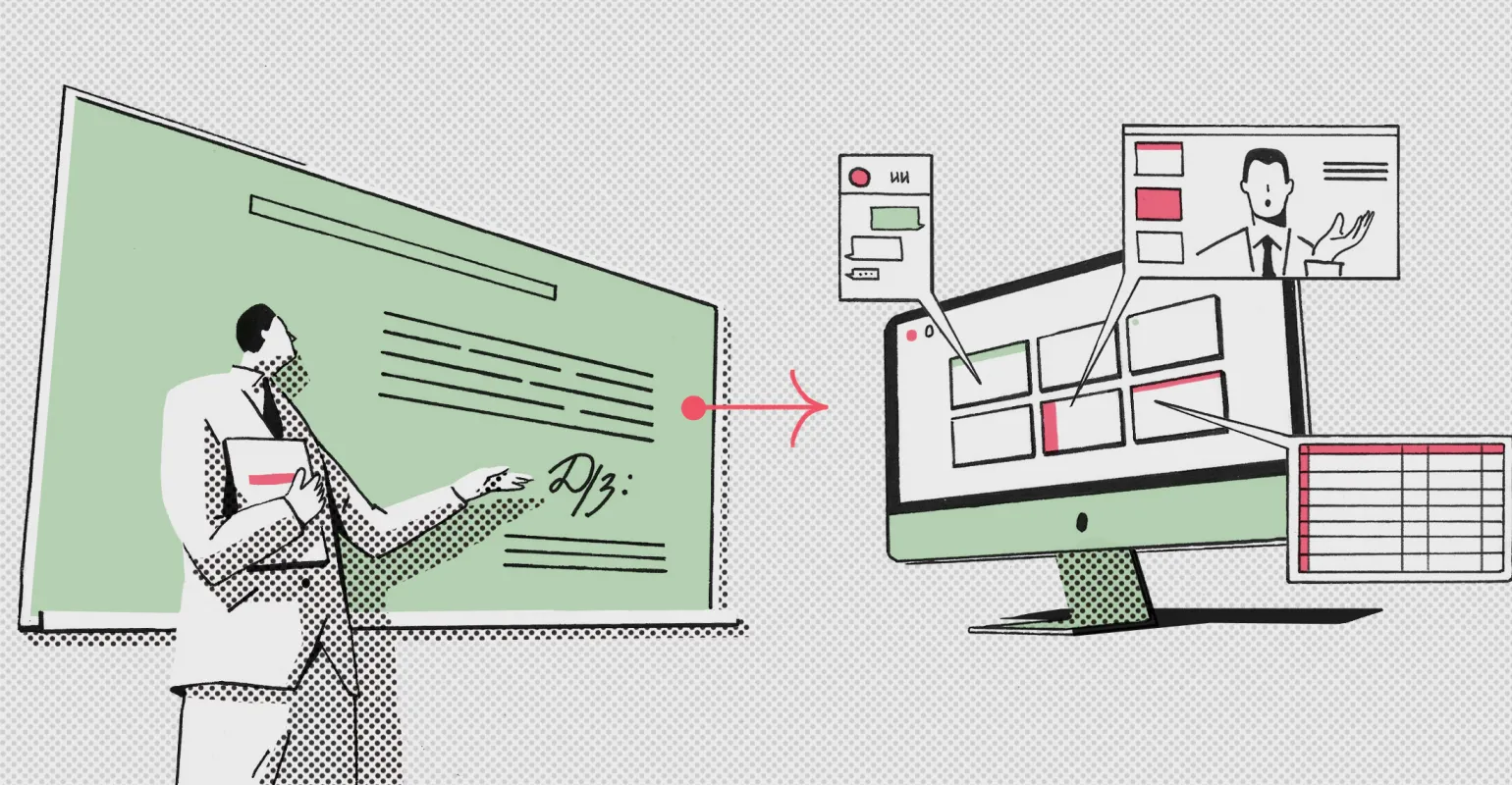
Find out moreThe education system in Russia is managed by two ministries, which implies the existence of two digital transformation strategies. Previously, we examined the document of the Ministry of Science and Higher Education, and now we will turn our attention to the recently published passport of the strategy "Digital Transformation of Education" from the Ministry of Education. This strategy is aimed at introducing modern technologies into the educational process and optimizing educational services, which is a key step towards modernizing the Russian education system in the context of digitalization. Educational authorities have prepared two of eleven documents concerning industry strategies for digital transformation. These strategies were developed at the request of the President of Russia and approved by the Government. Why Digitalize Schools The strategy highlights key issues that can be effectively addressed through digital transformation. Digital transformation provides new opportunities for process optimization, improving customer experience, and increasing competitiveness. The use of modern technologies allows for the automation of routine tasks, improved analytical capabilities, and faster decision-making. As a result, organizations can not only cope with existing challenges but also actively adapt to market changes, creating a sustainable future for their business. Poor-quality and unverified educational content. The state purchases paper textbooks for schools, and the strategy notes that this is a significant expense. At the same time, the strategy's developers believe the official federal list of textbooks contains many unnecessary items: some even contain fake information blocks used to create "ideological subversion" (quote from the strategy's data sheet). As for digital educational content, it currently exists on disparate platforms; there is no single point of collection where all government-verified and standards-compliant educational materials would be posted.

- Risks of Personal Data Theft teachers, students, and their parents. The threat to cybersecurity is created by the same disparity of digital systems: users have to register on numerous different platforms, and not all of them are well protected. Furthermore, the strategy notes that the capabilities of digital tools are undermined by "fake educational portals—multiple online schools." Teachers spend a significant amount of time manually entering information into various systems and problems with the quality of this data. "On average, teachers spend up to four hours a day filling out various reports, most of which are unrelated to either the subject or class management," the strategy states. Teachers lack the resources and incentives to verify this information, nor is there integration between different information systems. Such data cannot serve as a reliable basis for management decisions. The limitations and opacity of "analog" learning formats. Even for a standard multiple-choice test, a student receives a grade only after the teacher has manually checked it. The workload on teachers is enormous, and feedback is far from immediate. Furthermore, paper-based educational materials are more difficult to adapt for children with health issues. The strategy also highlights another limitation: paper formats do not provide teachers, parents, and students with as much objective testing data and results for portfolios as digital formats. For children, the Internet and gadgets are a means of entertainment, not learning. Digital products compete with schools for students' attention, and their capabilities are not utilized in the learning process. Furthermore, parents and students often don't know where to find useful contests online, enroll in courses, or obtain a digital certificate for additional education. Additional education for children is undergoing significant changes. In today's world, where technology and knowledge requirements are rapidly evolving, it is important to adapt educational programs to new realities. Parents and educational institutions must consider the interests and needs of children by offering a variety of courses and trainings. This can include traditional areas like art and sports, as well as modern technologies like programming and robotics. Investing in supplemental education helps children develop critical thinking, creativity, and the skills needed to succeed in their future professional environment. Pay attention to changes in the supplemental education system to ensure your child has access to the most relevant and useful knowledge.
In light of the aforementioned problems, according to the strategy, it is becoming extremely difficult to maintain the functioning of schools in force majeure situations. This also impacts the ability to provide students with diverse and verified digital content, as well as the sound development of individual educational trajectories and digital portfolios. What solutions does the Ministry of Education propose to overcome these difficulties?
What services are planned to be developed
The strategy highlights a major interdepartmental project, "Digital Transformation of the Education Sector." The project will be managed by the Ministry of Education jointly with the Ministry of Digital Development, Communications and Mass Media. The Federal Institute for Digital Transformation in Education (FIDTSE), which is subordinate to the Ministry of Education, is responsible for implementation. The ministries of culture and sports, as well as Rosobrnadzor, are also participating in the project. Federal subjects and IT companies are listed as potential participants. According to the strategy, the project will be financed from the federal budget, but the specific amount of funds required is not specified. The project aims to modernize the educational sector using digital technologies, which will contribute to improving the quality of education and the availability of educational resources.
The project includes six strategic initiatives aimed at developing digital services from 2021 to 2030. These initiatives focus on improving the user experience and introducing new technologies, which will ensure the effective use of digital resources. The main goal of the project is to create innovative solutions that promote the development of the digital economy and increase competitiveness.
The Digital Educational Content Library service will be available to all students and teachers by 2030. By 2024, it is expected that a third of all lessons will be conducted using modern digital materials. This service is expected to support the implementation of advanced educational programs, assist in the creation of individual educational trajectories, and enhance the professional competencies of teachers. The document does not mention the fate of paper textbooks and notebooks, leaving open the question of the future of traditional forms of education.
The student's digital assistant, according to the description, is a recommendation system that will create personalized collections of educational materials and learning plans based on the student's digital profile. Data uploading for profile creation is planned for this year, and the ability to provide collections on request is expected by 2024. By 2030, a full-fledged digital organizer for planning the educational process will be available. The strategy emphasizes student self-development and self-education. Specifically, students will undergo self-assessment to identify their interests and inclinations, as well as conduct self-diagnosis throughout the educational program. This will not only individualize the learning approach but also increase its effectiveness, facilitating a deeper understanding of their own educational path.
By 2023, artificial intelligence will be actively involved in selecting educational content. This will significantly simplify the learning process and make it more effective. AI will be able to analyze student needs, adapting materials to their individual characteristics and level of preparation. Thus, the use of artificial intelligence in educational processes will open new horizons for students and teachers, providing a more personalized approach to learning.
The "Digital Student Portfolio" service is similar to the announced "My Successes" platform from Rosobrnadzor. With parental consent, it will track a student's educational trajectory and achievements. Using this service's data, it will be possible to prepare a package of documents for admission to university or college. These functions are expected to be available by 2024. By 2030, it is planned that schoolchildren will be able to manage their educational trajectory using the integration of various services and artificial intelligence technologies.
The minister discussed the implementation of the digital student portfolio, emphasizing its importance for modern education. A digital portfolio allows for the systematization of student achievements, demonstrating their skills and knowledge. This not only simplifies the assessment process but also helps students better prepare for their future professional careers. The integration of such technologies into the educational process promotes the development of digital competencies and increases student motivation. A digital portfolio will become an important tool for teachers and students, facilitating information exchange and interaction.
The "Digital Parent Assistant" service will become an effective channel for interaction between schools and parents, enabling instant messaging with teachers. Automated school registration is planned to launch in 2021. By 2024, parents will be able to easily enroll their children in schools, kindergartens, and supplementary education programs using the convenient "4 OK" system, minimizing the time and effort spent searching for information. By 2030, the service will expand to include olympiads, contests, competitions, state exams, and obtaining educational documents, making the process of interaction between parents and educational institutions even simpler and more accessible.
The "Digital Teacher Assistant" service aims to automate a significant portion of teachers' work using artificial intelligence technologies. It includes homework checking, which will reduce grading time. It is expected that by 2030, more than 50% of homework will be checked automatically. The service will also assist in planning work programs. A key part of the project will be an online professional development system for teachers. Digital courses will become available as early as 2021, and by 2024, each teacher will be offered a personalized list of required programs. By 2030, the service will be proactive, anticipating teachers' needs and requests, making the learning process more effective and adapted to modern requirements. The educational management information system envisages a transition to paperless technologies by 2024, which will reduce the use of paper documentation. It is expected that 90% of document flow will be converted to electronic format. By 2030, all management decisions should be based on big data analysis using intelligent algorithms, as stated in the strategy. It's important to note that the effectiveness of the strategy's implementation will be assessed not by self-reports from educational institutions, but by data from the analytical subsystems of the new services. This will ensure more accurate and objective monitoring and management of educational processes.
What is the expected outcome of all this?
The main goal is to provide schoolchildren throughout Russia with access to high-quality and verified digital educational content and related services. It is planned that all general education programs will be implemented using e-learning through a unified system of the Ministry of Education, which will be integrated with regional resources. This will create a unified educational space that will improve the quality of education and make educational materials more accessible to all students.
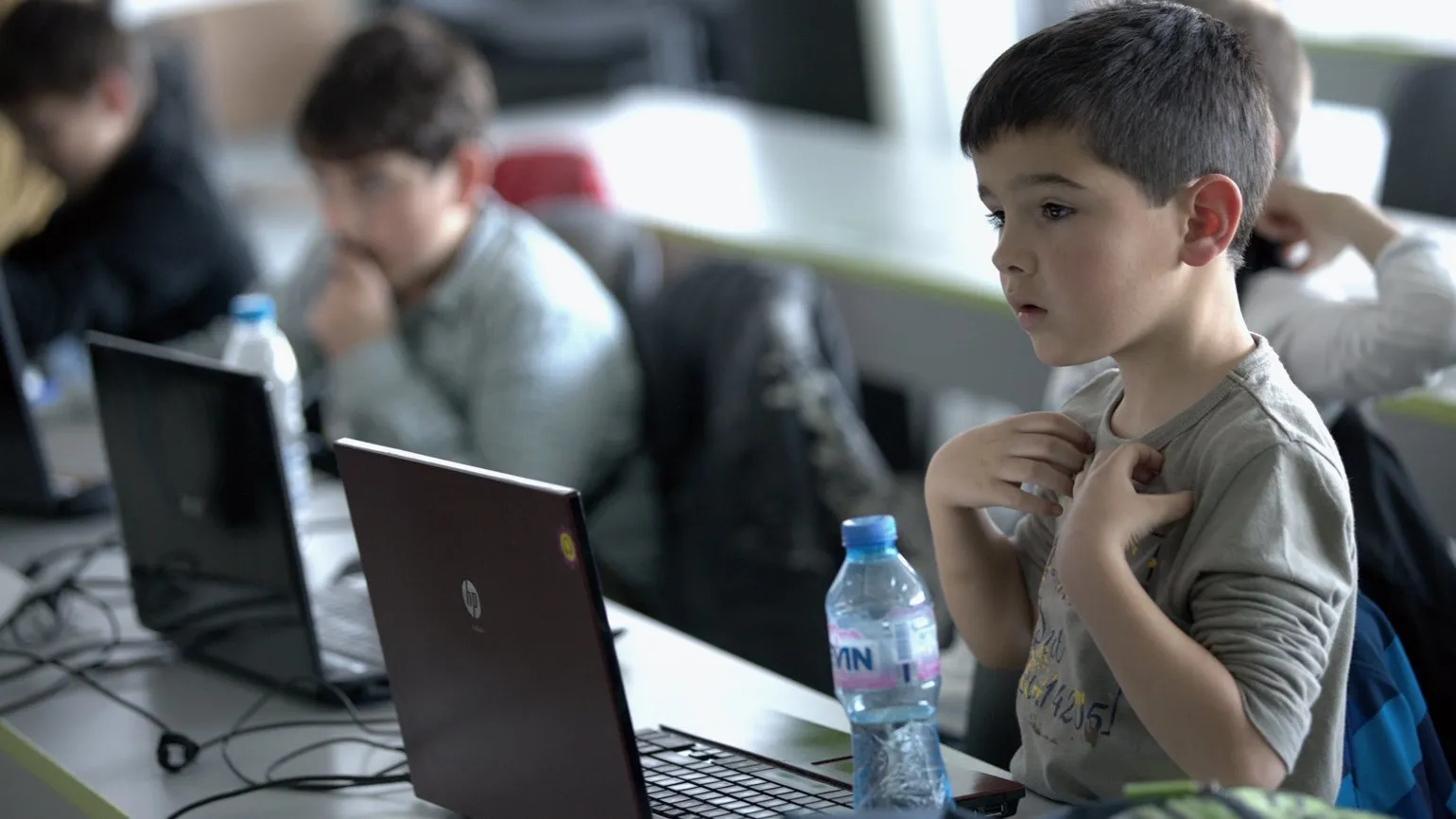
According to the strategy, this will benefit all participants in the educational process. This system is aimed at improving the quality of education, developing students' skills and competencies, and increasing the effectiveness of teachers. As a result, all parties, including students, teachers, and educational institutions, will benefit from the implementation of this strategy, which will contribute to the creation of a more effective and supportive educational environment.
- Schoolchildren will be able to use digital content for personalized development, and AI will help them determine their own trajectory.
- Teachers will have several times less routine work due to automated homework checking, electronic schedules and document management, and will have more opportunities for professional development.
- Parents will improve contact with the school.
- The state will receive electronic reporting and will reach a new level of management of the educational system based on objective data and services convenient for citizens.
- Schools will be able to implement individual trajectories of student development using advanced digital technologies.
In the educational community, the document of the Ministry of Education, similar to the document of the Ministry of Education and Science, has caused mistrust. Currently, only 37% of Russian schools have access to high-speed internet, meaning most educational institutions are still far from implementing automated management systems with comprehensive analytics. Furthermore, the introduction of automation into education raises concerns about the potential threat to teacher employment. This raises the question: will artificial intelligence replace teachers if it can provide personalized learning, feedback, and student achievement tracking? These concerns are expressed, in particular, by representatives of the "Teacher" trade union. The future will tell how events in the field of digitalization of education unfold. These are far from the first, and most likely, not the last, initiatives in this area. It is important to note that digitalization of education opens up new opportunities for students and teachers, improving access to resources and facilitating more interactive learning. It is expected that over time, such projects will develop and adapt, which will lead to significant changes in the educational process.
Read also:
- Why EdTech does not always help solve schools' problems
- What is hindering the digital transformation of schools
- Why teachers should become education engineers
- Do regular schools need individual educational trajectories?