Contents:
- What's wrong with the traditional memorization system
- 34% more effective: scientists on the benefits of interleaving
- Association game: what explains the benefits of interleaving
- How to use interleaving
- Mush in the head: why interleaving is criticized
- The golden mean: how to use the advantages of interleaving without compromising the curriculum
Learn: Educational Programs Methodologist
Learn MoreIn this article, we'll cover key aspects related to the topic that interests you. We'll share useful information and practical tips that will help you gain a deeper understanding of the issue and find optimal solutions. You'll receive valuable recommendations that will be useful for both beginners and more experienced readers. Stay with us to learn all the important nuances and details.
- What is interleaving and how does this method differ from the traditional (block) approach to learning;
- What does science say about the benefits of interleaving;
- How do researchers explain the effectiveness of interleaving;
- What principles should be taken into account when applying interleaving in practice;
- When interleaving is ineffective and can only confuse students.
Why the traditional memorization system is bad
While studying in college, Jen Schwanke, an American teacher with over twenty years of experience, worked part-time as a waitress. To provide housing costs, she also worked as a cook. Remembering those years, she feels nostalgic. In a short time, Jen mastered the art of quick and delicious cooking: she learned to simultaneously process ingredients for different dishes, chop vegetables, and stir the contents of a pan. This experience not only enriched her skills but also influenced her approach to learning, as cooking requires patience and organization, which contribute to the development of important life skills.
When I learned to cook, I didn't spend weeks mastering each individual ingredient, such as onions, carrots, or garlic. If I had followed this approach, it would have taken me a long time to even begin to make broth. It's important to understand that learning to cook requires practice and variety. You can't get hung up on individual ingredients; true cooking involves the ability to combine and use a variety of ingredients to create delicious dishes.
Schwanke argues that the same can be said for any learning process. Learning topics sequentially may seem logical—who would argue with the need to master one concept before moving on to the next? However, in practice, this presents certain challenges. First, this approach is time-consuming. Furthermore, it can become tedious and uninteresting. Notes are an essential element in texts, helping to clarify information, emphasize key points, or provide additional clarification. Including notes allows readers to better understand the context and facilitates comprehension. Notes can be used in research articles, tutorials, as well as blogs and information resources. Properly formatted notes and their logical placement within the text improve the structure and make the content more accessible. Use notes to emphasize important nuances and simplify complex concepts, which in turn will increase the value of your material for readers and improve its search engine optimization. Blocked learning, also known as blocking, is a method in which students master skills and concepts sequentially by breaking information into discrete units, such as AAA-BBB-CCC. This approach allows students to focus on a single topic or skill for a specific amount of time, which can lead to a deeper understanding of the material. In contrast to the block system, there is an interleaving method, in which instruction occurs in a blended format, referred to as ABC-ABC-ABC. Interleaving promotes retention and application of knowledge, as students are exposed to different concepts and tasks during a single lesson. Both methods have their advantages and disadvantages, and the choice of approach depends on the learning goals and student preferences. Imagine that you need to introduce students to the topic of rocks. American teacher with over 25 years of experience, Meg Riordan, offers an effective approach to teaching. Rocks are divided into three main types: igneous, sedimentary, and metamorphic. Using block teaching, a teacher might devote one lesson to igneous rocks, a second to sedimentary rocks, and a third to metamorphic rocks. However, the interleaving method ensures that each lesson covers information about all three types of rocks, which promotes greater retention and helps students see the relationships between the different categories. This approach can significantly increase students' understanding of the topic and their interest in geology.
Interleaving in teaching can significantly improve the effectiveness of learning. In mathematics, this means introducing multiplication and division simultaneously, with the teacher alternating problems from both topics. This approach helps students better understand the relationships between concepts and apply them in practice. Similarly, a beginning pianist might use interleaving by combining practice of arpeggios, scales, and chords. This promotes deeper musical development and improves overall instrumental performance.
A note is an important addition to the main text that may contain clarifications, recommendations, or additional information. It serves to emphasize significant aspects of the material. Notes can be used to clarify difficult terms, point to sources of information, or provide recommendations for further study. Proper use of notes helps readers better understand the content and makes the text more informative.
Psychologist Robert Bjork of the University of California, Los Angeles, argues that the block-based approach to learning may seem more logical, but it is actually less effective. Blocking topics creates the illusion of a deep understanding of the material, which is why many students prefer this method. However, research shows that students who use interleaving perform significantly better on tests on the topics they've studied. This suggests that blended learning, which involves alternating between different subjects or skills, promotes deeper learning and skill improvement.

Make sure The effectiveness of interleaving is challenging, especially when it comes to cognitive performance. However, imagine playing basketball and your coach requires you to shoot 100 free throws in a row. This becomes exhausting. Interleaving, a method of alternating tasks, may seem less productive, but research shows that it promotes better memory and information retention over the long term. Instead of performing the same task repeatedly, you alternate between different exercises, which activates different areas of the brain and improves overall performance.
Let's say you're a tennis player. One day, your coach focuses exclusively on right-handed strokes, and the next, on left-handed strokes. Meanwhile, a friend and their coach work on both hands. Research confirms that your friend is likely to achieve greater success because their training methods are more closely aligned with real-world game conditions and require greater mental engagement. This underscores the importance of a holistic approach to training, which promotes skill development and improved performance.
Regularly challenging the brain to new tasks requires more than simply retrieving a solution from short-term memory. The student must continually ask themselves, "What type of problem am I solving?" This requires activating knowledge from long-term memory, which facilitates its consolidation. This practice, based on constantly returning to previously learned information, is known as retrieval practice. It allows you to not only improve your understanding of the material, but also significantly increase the effectiveness of learning.
Learn more:
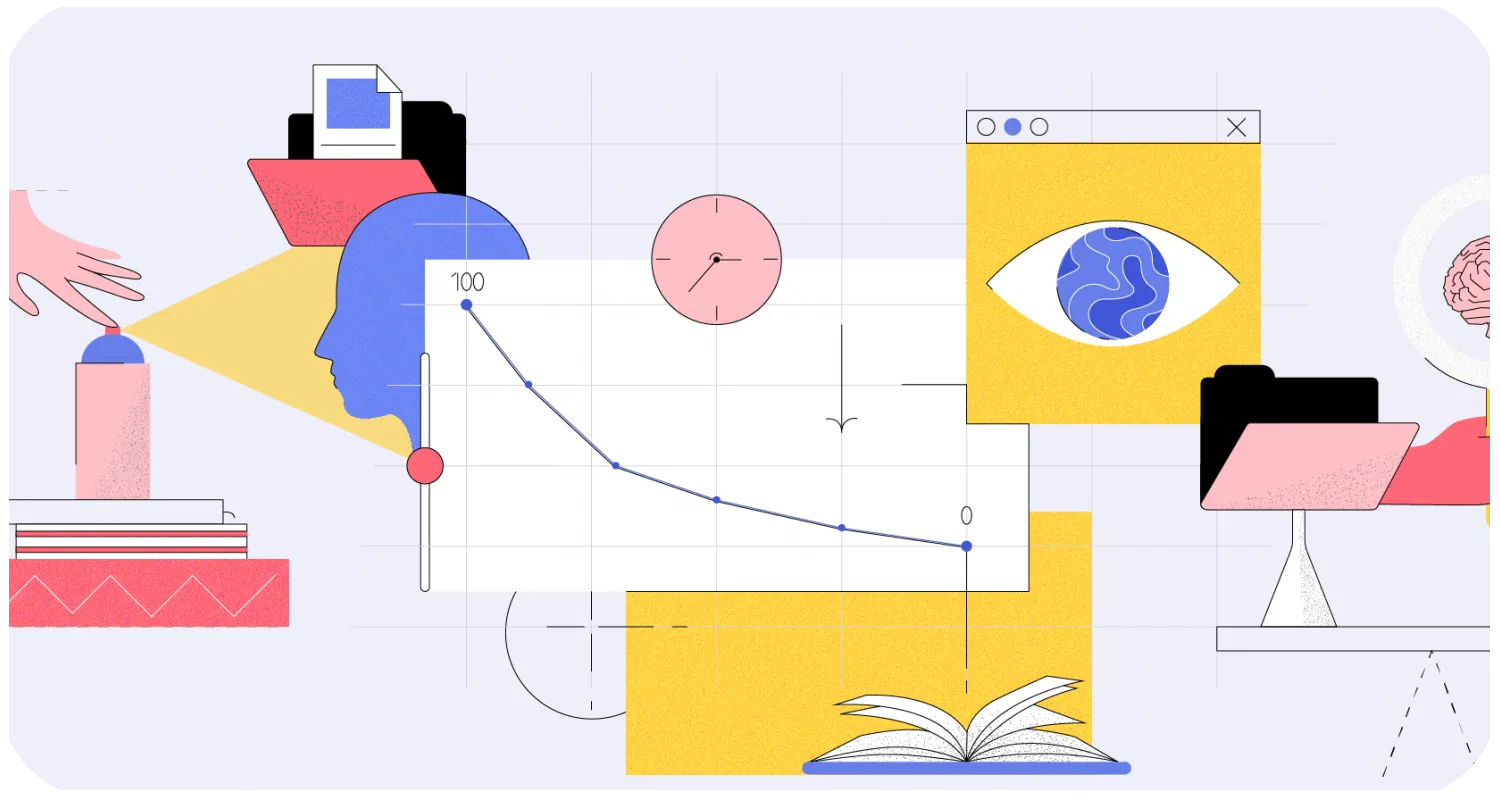
The forgetting curve is a concept that describes how quickly a person loses information after receiving it. Research shows that without repetition and systematic study, a significant portion of new information is forgotten within the first few days. For students who want to remember material for the long term, it is important to use effective study methods.
To help students better retain information, it is important to consider several strategies. First, regular repetition of learned material promotes knowledge consolidation. Using repetition intervals optimizes the memorization process, as information repeated at regular intervals is better absorbed.
Second, active engagement in the learning process, for example, through discussions, tests, or practical tasks, helps strengthen memory. Students can use associative methods, linking new information with already known information, which facilitates its memorization.
Furthermore, it is important to create a comfortable learning environment. A clean and organized space, free from distractions, and the use of various formats of materials such as videos, infographics, and audio recordings also contribute to better information retention. By using these approaches, students can significantly improve their memorization skills and increase learning efficiency. Information should be repeated regularly and at specific time intervals, says brain researcher and educator John Medina. Research shows that this approach significantly improves long-term retention of information across a variety of measurable parameters. Regular repetition promotes more effective knowledge acquisition and retention, making this method useful for students and professionals seeking to improve their skills and knowledge. The research cited by educators represents an important aspect of the modern educational process. Let's take a closer look at some of them.
34% More Effective: Scientists on the Benefits of Interleaving
The first scientific study on interleaving was published in 1986 in the American journal Motor Control and Learning. This study involved 30 women who practiced three different types of serves in badminton. The subjects were divided into three groups: one group trained using a block system, another performed a series of exercises, and the third used the interleaving method, that is, they practiced different types of serves in a random order. Training took place three times a week for three weeks. The day after completing the practice, the participants were tested, which assessed their skills and ability to adapt to changing conditions, for example, when serving from the opposite side of the court. The results showed that the group using the interleaving method significantly outperformed the group using block practice on all key measures. This confirms the effectiveness of interleaving in teaching and training, especially in sports.
Studies conducted among basketball and baseball players have shown similar results. These data highlight the importance of analyzing sports activity and its impact on player performance in various sports.
The interleaving method is truly effective in intellectual learning. In 2003, one of the first scientific articles examining its use outside of a sports context was published. Research has shown that interleaving can significantly improve the performance of medical students. For example, students using this method demonstrated higher accuracy in making diagnoses from electrocardiograms compared to those trained using the block system. This confirms that interleaving promotes better assimilation of the material and development of the skills necessary for professional activity.
Read also:
Practical training really has significant advantages over theoretical training. Hands-on experience enhances learning because students can apply their knowledge to real-world situations. This fosters a deeper understanding of the subject and the development of essential skills. Furthermore, hands-on learning stimulates critical thinking and fosters independence. As a result, graduates who have completed hands-on training are often better prepared for the challenges of their careers. Thus, a combination of theory and practice represents an optimal learning approach.
A 2008 study led by psychologist Robert Bjork found that the interleaving method improved subjects' ability to accurately recognize the styles of various artists. This finding underscores the effectiveness of interleaving as a teaching strategy for deepening understanding and appreciation of artistic styles.
The Guardian reports on a study demonstrating the effectiveness of the interleaving method in teaching mathematics. Subjects who studied using the block system performed better on tests administered immediately after completing the training. However, when tested later, the interleaving participants outperformed those who used the block method. This finding underscores the importance of interleaving for long-term retention and acquisition of mathematical concepts.
A study involving psychologist Doug Rohrer examines interleaving and includes a number of experiments. One of the most famous is the Tampa experiment, which was reported in The New York Times. This experiment was a milestone in the study of interleaving and its impact on cognitive processes.
Rohrer and two colleagues from the University of South Florida in Tampa conducted a study involving 140 seventh-graders studying mathematics. "We didn't introduce new methods or require any additional effort from teachers," notes Rohrer, who previously worked as a mathematics teacher. "We simply reworked existing material." This study highlights how simply reorganizing educational content can impact the quality of learning and students' perceptions of mathematics.
The material included four different types of problems.
- Linear equations - for example, find x if 3(x + 1) = x + 17.
- Problems using proportions - for example, if a tractor needs 14 gallons of gas to plow 6 acres of land, how many gallons of gas does it take to plow 21 acres?
- Graphing - for example, y = –3x + 1.
- Finding slopes - finding the slope of a line passing through points with given coordinates.
Students were divided into two groups. The first group worked on solving equations and problems involving proportions using the interleaving method, which alternates different types of problems to enhance learning. Problems involving graphs and slopes were solved using a block approach, allowing for a more focused approach and deeper understanding of the material. The second group's assignments were organized in the opposite way: a block approach was used to solve equations and problems involving proportions, while interleaving was used for problems involving graphs and angles. The interleaving-based problems were mixed and did not contain any instructions, allowing students to independently choose the appropriate strategy. This method contributed to the development of analytical thinking and improved skills in choosing optimal solutions in a variety of situations. Interleaving problems initially required more time from the children, but most students eventually adapted to them. One student noted, "I usually need a lot of time to prepare for tests, but thanks to the mixed homework, I was able to reduce my preparation time because the knowledge was fresh in my mind." This approach to learning promotes more effective learning and helps students better retain their acquired knowledge.
Note: This text requires editing for SEO and readability. It is important to ensure that keywords fit naturally into the text.
A note is an important element that serves to clarify, supplement, or clarify information. Notes can be used in various contexts, such as research papers, course materials, or documents. They help readers better understand the content and draw attention to important details. It is important to format notes correctly so that they do not distract from the main text, but at the same time are easily accessible. Using notes improves the quality of the content and facilitates its comprehension. Therefore, when adding notes, you should follow the recommendations for their placement and wording.
Two weeks after the last homework assignment, the researchers administered a surprise final test covering the entire course. Results showed that the average grade for material presented in the traditional block format was only 38%. Meanwhile, the average grade for assignments completed using the blended approach reached 72%. This indicates that the interleaving method improved results by 34%.
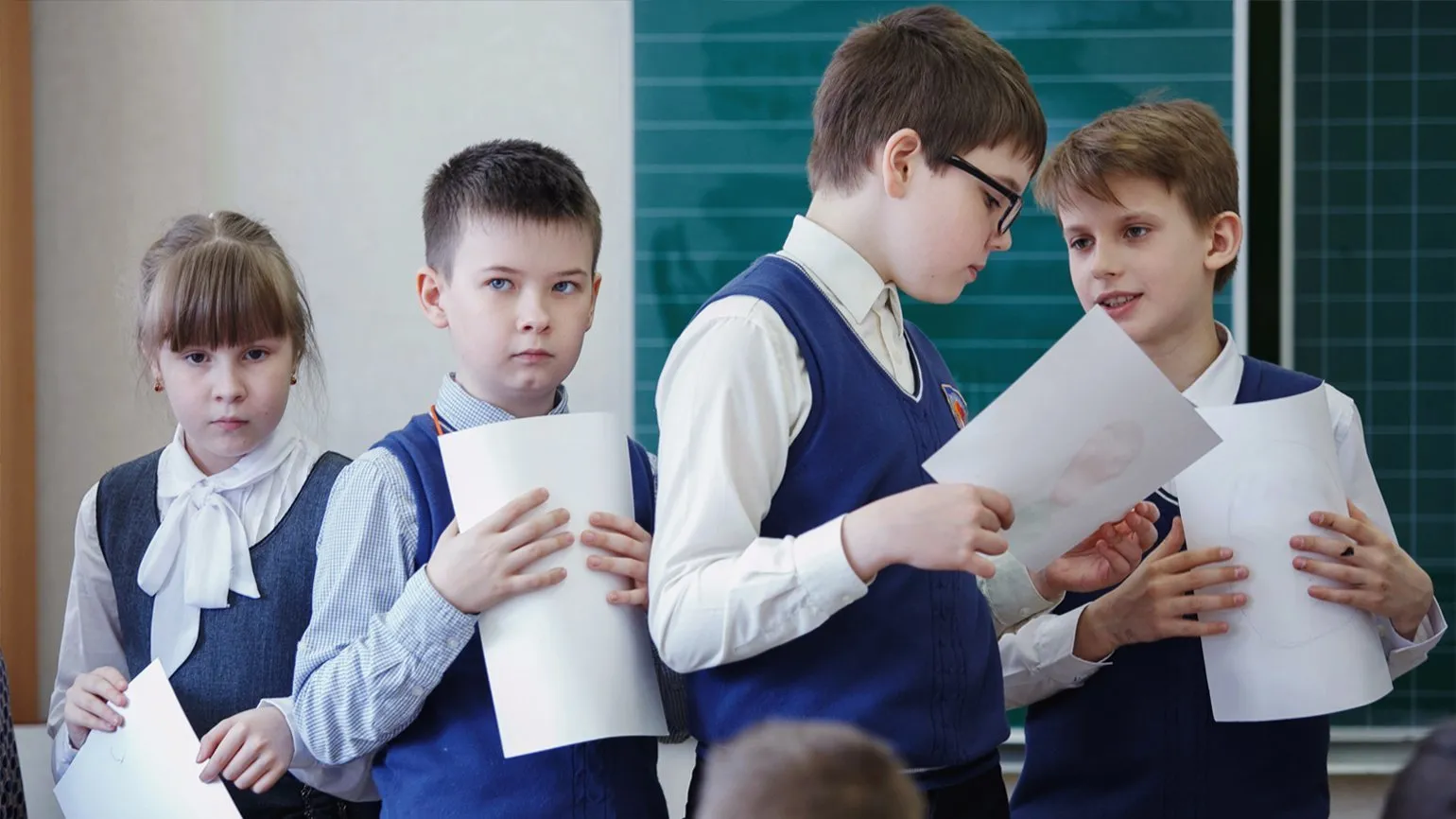
In one study conducted with 126 students, Rohrer and his Colleagues studied the effect of interleaving on long-term information retention. The experiment replicated previous studies in which participants completed tasks using both a block-based and interleaving approach. The results showed that interleaving promotes more effective memorization of material, which could be useful for educational methods.
The difference in testing methods was significant. Two final tests were conducted: the first one day after completing the practice, and the second one a month later. In the first test, the results of interleaving were 25% higher compared to block-based learning. However, after a month, the difference increased to 76%. This indicates that interleaving significantly improves long-term retention compared to traditional learning methods.
Association Game: Why Interleaving Is Beneficial
The benefits of interleaving in learning are discussed in detail in the popular science magazine Scientific American. Research cited by the authors shows that interleaving improves the learning process by requiring sustained concentration and by enhancing the ability to distinguish between similar concepts. Unlike block learning, where distinctions between concepts become blurred, interleaving helps avoid confusion. For example, students may confuse terms like "illusion" and "allusion" or choose incorrect strategies when solving math problems. Interleaving, on the other hand, makes the distinctions between topics and tasks clearer, which positively impacts learning. Using interleaving in teaching can significantly improve the effectiveness of the learning process, as confirmed by scientific research. Research shows that interleaving helps strengthen associative chains in learning. When using block learning, it is sufficient to rely on short-term memory, since the tasks in a block are similar and do not require significant effort to complete. However, with interleaving, long-term memory must be accessed to find solutions. This process activates neural connections between different tasks and their correct solutions, which promotes deeper assimilation of the material and increases the effectiveness of learning.
How to Use Interleaving
The Ness Labs website, dedicated to brain-based learning, recommends keeping in mind three key characteristics of interleaving. Interleaving is a method that combines different topics or skills in the learning process, which promotes better assimilation of information. The first characteristic is variety, which helps avoid monotony and activates different areas of the brain. The second aspect is timing, which allows for more efficient distribution of attention and improves memorization. The third characteristic concerns context, which helps connect new knowledge with existing knowledge, which significantly improves comprehension. Using interleaving in learning can significantly improve its efficiency and effectiveness.
- Interleaving is not the same as multitasking. Interleaving does not mean working on several tasks at the same time. It's also important to remember that switching between tasks requires time to absorb their context. Therefore, students should be given a short break before each new interleaving activity.
- Interleaving is useful when topics are interrelated. While the tasks in this approach shouldn't be similar, they shouldn't be too different either. Practicing tennis with both your left and right hands is a good idea. But alternating tennis with writing articles isn't, according to the authors of Ness Labs.
- Interleaving works better for long-term learning. If an exam is tomorrow, interleaving isn't the best method for accelerated preparation. But if final tests are still a long way off, alternating different tasks will help the brain consolidate knowledge in long-term memory.
In addition to this guide, Margaret Searle, a specialist in social-emotional and inclusive learning, offers examples of how to use interleaving in educational practice. Interleaving, a blended learning method, effectively integrates various topics and skills, promoting better learning. Examples of interleaving include combining theoretical and practical assignments, helping students apply knowledge and develop critical thinking. This approach not only improves comprehension but also fosters an inclusive learning environment where every student can find their path to success.
- Instead of teaching schoolchildren to first find the area of squares, and then rectangles and circles, you can teach them to find the areas of different figures at the same time. This will force students to think carefully about choosing the appropriate strategy and comparing solutions that work for different figures.
- In social studies, instead of studying each branch of government one at a time, consider comparing two or three branches to find similarities and differences.
- Instead of studying different types of plants and then studying their growing conditions separately, consider exploring which conditions work best for different types of plants.
- Instead of studying two writers separately, consider comparing two authors' approaches to character and plot development.
- Instead of reminding students in biology that mitosis is not the same as meiosis, study mitosis and meiosis together and point out their differences whenever one is mentioned.

Mush in the head: why interleaving is criticized
It is not surprising that this approach has opponents. Their opinions and arguments are worth considering to better understand all aspects of this topic.
Studies conducted in laboratory settings confirm that interleaving significantly improves memorization performance. Commenting on the results of the so-called "Tampa Experiment," University of Virginia psychologist Daniel Willingham emphasizes that, despite the positive results, he is more concerned about how these methods will integrate into a real-world learning environment. Each classroom is unique and consists of students with different dynamics, learning styles, and preferences. For example, some teachers may note that interleaving does not fit their approach to teaching mathematics. It is important to consider that the successful implementation of new methods requires adaptation to the individual characteristics of the educational process.
The block structure of topic presentation makes it easier for teachers to plan the curriculum. This is why this approach remains predominant not only in school education, but also in additional education courses and other forms of the educational process, notes Scientific American. Blocking helps organize information and makes learning more effective, allowing students to absorb the material more deeply.
Note: This text contains important information that should be considered. Pay attention to key points that will help you better understand the topic. Make sure you read the content carefully to avoid misunderstandings. This information may be useful for further study and application.
This publication highlights one significant disadvantage of interleaving from the students' point of view. Because topics in interleaving alternate, the learning process is perceived as more drawn out and gradual. It is not possible to quickly complete one block of information and mark it off the checklist. In addition, this approach to learning, as already noted, requires constant concentration and significant effort from students. This can lead to fatigue and reduce the overall productivity of the learning process, which is important to consider when choosing a teaching method.
One of the main problems with interleaving is its incorrect use. British teacher Mark Enser, who is the head of the geography department at Heathfield Community College, spoke about this from his own experience. One of his teacher acquaintances, having heard a recommendation to implement interleaving into the teaching process during a course, decided to implement this approach in a less-than-effective manner. Instead of studying tectonics in detail in one unit and then moving on to other topics, he proposed a lesson on tectonics that also included a discussion of rivers and urbanization. This approach can lead to confusion among students and reduce the effectiveness of their learning. Proper use of interleaving requires careful consideration of lesson structure and the logic of transitions from one topic to another. Enser emphasizes that the proposed approach is not interleaving and is likely not the most effective spaced repetition method. A long break between the first and second tectonics lessons can cause confusion among participants and lead to a lack of coherence in the curriculum. Such a disjointed approach to teaching can negatively impact learning and hinder the learning process. It's important to optimize your schedule to ensure topics are covered more coherently and effectively.
The Golden Mean: How to Harness the Benefits of Interleaving Without Compromising the Curriculum
Enser presents a method he calls interleaving, which translates as "weaving." This approach involves identifying key thoughts and ideas that recur across different topics and planning their presentation within the context of those topics. This method of teaching promotes deeper understanding and improves retention of information, making it an effective tool in the educational process.
Tectonics can be presented as a single topic, but it can also be integrated into different aspects of the curriculum, as Enser emphasizes. For example, the first lesson could be devoted to tectonic plates and the formation of volcanoes. Then, in the next lesson, it might be worth considering the geography of East Africa, where tectonic processes can be linked to the Great Rift Valley and its impact on the lives of the people. The next lesson should explore the landscape of Great Britain and the role of tectonics in the formation of anticlinal folds. Subsequently, you could move on to the geography of Haiti and discuss the phenomenon of earthquakes, again returning to the topic of tectonics and its impact on the lives of the country's inhabitants. This approach provides a deeper understanding of tectonic processes and their significance in different contexts. Creating a curriculum entirely based on interleaving or other experimental methods is a complex task. However, the introduction of individual innovative approaches can significantly enliven lessons and make them more varied. Using such tactics not only improves comprehension of the material but also promotes deeper assimilation of knowledge. It is important to find a balance between traditional teaching methods and modern techniques to create an effective learning environment. Margaret Searle argues that neither block learning nor interleaving alone promotes deep assimilation of material. In her opinion, the most effective approach is to first cover the basics of the topic through regular repetition. This helps cement key ideas in your memory. It's then important to connect what you've learned to other concepts, which helps you apply the knowledge in practice and deepen it through interleaving. This method promotes deeper understanding and effective learning.
Revised text:
Review additional materials on the topic. They will help you understand and retain the information more deeply. Don't miss the opportunity to expand your knowledge.
- Why observations are more important than textbooks and tests
- 10 principles of effective learning and teaching
- Microlearning: the pros and cons of short formats
Methodologist of educational programs
You will go through the full cycle of creation from scratch educational product. Learn to design curriculum for online and offline courses. Become a versatile specialist—you can launch your own project or find a job as a methodologist at a large company.
Find out more