
Contents:

Learn: Profession Methodist from scratch to PRO
Learn moreDuring exams, even the most diligent students can experience stress and nervous tension, which sometimes leads to failure. One effective way to combat this fear is expressive writing. This method not only helps manage emotions but also improves concentration and clarity of thought. Expressive writing allows students to express their experiences on paper, which reduces anxiety and helps them prepare for the exam with greater confidence. Using this approach, students can free their minds from negative thoughts and focus on passing exams successfully.
- What is expressive writing and why it can work;
- How does expressive writing help during exams and who benefits from it the most;
- Can expressive writing be positive, what might it look like, and how to use it in your practice.
What is expressive writing?
Expressive writing is a method that helps reduce anxiety and stress. The essence of the technique is that a person writes down their experiences associated with events from the past, present, or even the future. While writing, it is important to focus on your emotions without worrying about grammar, punctuation, and style. This form of self-expression allows you to deeper understand your feelings and free yourself from the negative emotions transferred to paper. Expressive writing can be an effective tool for improving psycho-emotional well-being and increasing awareness.
The technique in question was developed by American social psychologist James Pennebaker in the late 1980s. He hypothesized that people who share their traumatic experiences through written records can improve their psycho-emotional well-being and boost their immunity. An experiment he conducted confirmed this idea: participants who wrote about their traumatic experiences for four days began to seek medical help less often. This finding underscores the importance of mental health and its impact on overall well-being.
Expressive writing has found successful application in education. It promotes critical thinking, improves writing skills, and helps students better express their thoughts and feelings. Using expressive writing in the learning process allows students to more deeply understand the material they are studying and develop emotional literacy, which in turn promotes more effective learning and personal growth.

How Expressive Writing Helps Relieve Exam Stress
Research confirms that this practice significantly helps students during exam periods, finals, and entrance exams, especially those who experience elevated levels of anxiety.
In 2011, a group of American scientists conducted a series of experiments with college and high school students. These studies were aimed at examining various aspects of learning and information perception. The results showed how students react to different teaching methods and what factors influence their academic performance. The experiments revealed important patterns that may be useful for further improving educational approaches.
As part of the study, a group of students was placed in stressful conditions in a laboratory setting. First, the participants were asked to take a practice math test, and then the main test, about which they were warned in advance of several conditions. First, they were promised a financial reward for successfully completing the test. Secondly, students were paired with the understanding that if one partner failed the test, neither would receive the money, even though the other partner was assumed to have already performed well. These factors significantly increased the stress level during the test.
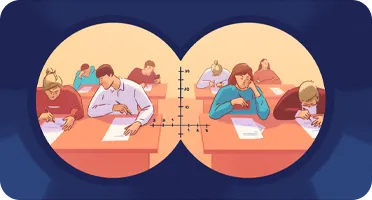
In the first experiment, participants were divided into two groups: a control group and an experimental group. Participants in the control group were asked to simply sit in silence for ten minutes before the test. The experimental group, in turn, was required to freely express their emotions in writing during this time. In the second experiment, a third group was added, whose participants were asked to write about neutral topics unrelated to the exam. Results showed that the control group and the group writing about neutral topics demonstrated worse performance compared to the practice test. In contrast, participants who wrote about their emotions were able to significantly improve their performance. These experiments highlight the importance of emotional processing in the context of exam preparation and show how self-expression can positively influence performance.
Studies conducted among schoolchildren during an actual final biology exam showed that expressive writing is especially effective for those with high levels of anxiety. When students have low stress levels or are in a relaxed state, the results of using this technique do not show significant improvements. Expressive writing can be a useful tool for reducing anxiety and improving academic performance, especially in stressful situations like exams.
Revised text:
Exploring new topics and ideas is an important part of our development. Reading articles, books, and other materials helps broaden your horizons and deepen your knowledge. It's important to choose quality sources to obtain up-to-date and verified data. Regular reading not only improves analytical skills but also develops critical thinking. This allows you to better understand the world around you and make more informed decisions. In today's world, where information is abundant, it's essential to be able to prioritize and focus on what's truly important. Read and develop yourself to stay informed about the latest trends and events.
Read also:
An Unusual Practice: Reasons Why Students Should Be Allowed to Cheat on Exams
In recent years, educational institutions have been adopting a policy of allowing cheating on exams. This decision has generated much discussion, and the reasons behind it are worthy of consideration. Firstly, cheating can reduce stress and pressure on students, allowing them to focus on understanding the material rather than memorizing it. Secondly, such a practice can promote the development of collaboration skills as students learn to work in teams and share knowledge.
Furthermore, allowing cheating can help reveal the true level of material assimilation. Instead of relying on rote memorization, students can apply critical thinking and solve real-world problems. This can lead to a deeper understanding of the subject, which is the main goal of education.
It is also worth noting that in today's world, where information is available at every turn, it is important to teach students to effectively use resources and find solutions in real-world situations. By allowing cheating, teachers can guide students in mastering information search and analysis skills, which are key to their future professional development.
Thus, allowing cheating on exams can be a step towards more humane and effective teaching, contributing to the development of competent and confident specialists.
In recent years, a similar experiment was conducted with participants suffering from "math anxiety." This condition is characterized by emotional tension and stress that arise during mathematical problem-solving. The study aims to examine the impact of this anxiety on cognitive abilities and problem-solving approaches. The results of the experiment may help develop support and training methods for people experiencing similar difficulties.
The study involved American college students, who were divided into two groups depending on their level of mathematical anxiety – low and high. The researchers assessed the level of anxiety to understand its impact on academic performance. All participants completed a practice test, which included complex tasks specifically designed to analyze students' reactions under stress.
The study participants were divided into two groups. The control group, consisting of 22 people with high levels of anxiety and 18 with low levels, waited in silence for seven minutes before the exam, as usually happens before real tests. The experimental group, also consisting of the same number of participants, anonymously recorded their feelings and thoughts about the upcoming exam during this time. This approach made it possible to identify the influence of emotional self-expression on the level of anxiety before an exam.
The researchers came to the following conclusions after conducting the experiment.
- People with high levels of anxiety in the control group spent more time on difficult tasks than those with less anxiety. They also made more mistakes on these tasks.
- People with high levels of anxiety in the experimental group were equal to those with less anxiety in both the time it took to solve the problems and the number of errors. That is, expressive writing really helped them.
- There was no significant difference in the results of people with high and low levels in both groups on simple tasks. The researchers explained this by the fact that math anxiety is particularly acute when solving difficult problems, due to the heavy load on working memory.
What is "positive" expressive writing and how does it work?
Expressive writing is not always associated with traumatic or negative experiences. This was confirmed by an experiment conducted in China. The study found that expressing your thoughts and emotions through writing can be beneficial even in the context of positive events. This approach not only promotes emotional well-being but also helps you better understand your feelings and experiences. Expressive writing can be a powerful tool for personal growth and self-reflection, regardless of the nature of the experience.
The study included 75 schoolchildren with high levels of anxiety, who were randomly divided into two groups. The first group wrote about their positive emotions for 20 minutes daily for 30 days. The second group, under the same conditions, simply recorded events that occurred during the day. This approach allows us to assess the impact of positive thinking on anxiety levels in adolescents.
Constantly focusing on positive emotions did indeed help reduce anxiety levels in the experiment participants. The researchers hypothesized that this effect could be due to a number of factors.
- By focusing on positive aspects, participants looked at troubling situations differently;
- By expressing their feelings, they began to better understand them, thereby creating the conditions for cognitive reappraisal—in other words, a change in attitude toward the problem;
- Since many performed the exercise in the evening, this could have affected the quality of sleep and, in turn, their overall mood.
Research shows that the results of the experiment have their own specific features, relating exclusively to China. In this country, schoolchildren experience significant pressure from an early age. This is due to high parental demands and fierce competition for access to quality education.
The authors of the study emphasize that this technique is effective, cost-effective, and suitable for mass use. However, you should not expect high results in all conditions.

Revised text:
Studying additional materials can also be useful in expanding your knowledge and improving your skills. It is recommended that you familiarize yourself with a variety of information sources to gain a more comprehensive understanding of the topic. Reading articles, books, and scientific publications will help deepen your understanding and open new perspectives. Remember that a variety of sources promotes deeper analysis and critical thinking.
Teacher anxiety has a significant impact on student anxiety levels. When a teacher experiences stress or anxiety, this can be transmitted to students, creating an atmosphere of tension in the learning process. The emotional state of the teacher is directly related to the academic performance and psychological well-being of students. Research shows that a positive classroom atmosphere helps reduce student anxiety, and teacher support helps improve their academic performance. Therefore, it is important for teachers to be aware of their impact on students and strive to create a calm and supportive learning environment.
What Expressive Writing Might Look Like
The question of what students write in their letters is of interest for studying their emotional state and approach to exams. In 2017, an experiment was conducted, which mainly involved second-year students preparing for an exam in biology. Students were asked to complete a standard exercise: writing down their thoughts and feelings about an upcoming test. However, in this case, there was one important difference: at the end of the exercise, the students were asked to crumple up the letter and throw it into the aisle between desks. The researchers hypothesized that this approach would help the participants relax a bit and improve their mood. This experiment demonstrates how a simple action can influence students' perception of stress and emotional state during the tense exam period.
The contents of these letters can be classified into eight main categories.
- Doodles. Some students didn’t write anything meaningful at all: some drew flowers, while others covered the entire page with the word “cucumbers” (in English, this word can also mean “redo” or “hiccup”).
- Reminders. Some students clearly tried to remember what they had learned and wrote it down briefly.
- Encouragement. “Remember to work fast!”, “Breathe, breathe”, “You studied hard and you know you can do it! Good luck.” Some wrote in more detail: “I successfully completed Introduction to Biology! This is the last exam of the course! I’m so glad I was able to complete it. I can do it. Just this exam, and that’s it! This test is going to be great!”
- Anxiety. “I’m so nervous that I couldn’t even write ‘nervous’ correctly the first time. Ha!
- Anxiety with elements of encouragement. “Mentally, I feel like I'm as prepared as I can be, but physically I still feel anxious.” “I'm ready for this test. I did poorly on the last one, but I know I can do better because I studied more this time!”
- Anxiety and fear of failure. “I'm soooo stressed about this test. I really need to get good grades this term, and I'm afraid that personal circumstances will interfere with my education again. I miss the days when I was the smartest person in the class, although it's bad to say that. I don't want to be a bigger disappointment than I am now.”
- Fluctuations between encouragement, anxiety, and fear of failure. “I know I should know the material better. I'm worried that I'll doubt my knowledge. I need to study more, but I don't know how. I really hope I do well. I need this to motivate myself. "I hope everything goes well."
The study did not provide information on differences in results between categories of participants. However, repeating this exercise on four exams demonstrated that over time, those who described their feelings experienced an increase in positive thinking and a decrease in anxiety. The authors of the experiment also noted that reading the participants' letters changed their perception of the experiences of their mentees and contributed to a more empathic attitude towards them.
Why this "miracle" technique works
To date, there is no definitive explanation for how exactly expressive writing works. Researchers continue to study this issue to understand the mechanisms behind its effectiveness. Expressive writing may promote emotional healing and improve mental well-being, but scientific evidence on its effects is still evolving.
One theory holds that expressive writing, which involves verbalizing emotions, promotes better understanding of them and, therefore, increases a person's ability to manage their feelings. Simply put, when emotions are named and described, they lose their frightening power. Another point of view is that using this technique allows a person to unload their working memory when they pour out their feelings on paper. This helps distance themselves from the source of stress, creating more opportunities to concentrate on current tasks. Expressive writing can be an effective tool for reducing emotional tension and improving psycho-emotional well-being.
If you want to repeat the experiment
Kevin Kent, a researcher from the University of Arizona, summarized the results of numerous experiments on expressive writing. He developed several key recommendations for educators wishing to integrate this technique into their students' teaching. Expressive writing helps develop self-expression skills, improves emotional well-being, and fosters a deeper understanding of personal experiences. Using Kent's recommendations, educators can effectively integrate expressive writing into educational practices, which in turn will increase student engagement and motivation.
The technique will only be effective if students write about topics that have real meaning to them.
Anonymity plays a key role in the process of self-expression. When sharing their experiences, they should feel safe and confident that their emotions will not lead to negative consequences. This creates a space for open and sincere communication, which is especially important for mental health and emotional well-being. A safe environment allows people to freely express their feelings and experiences, which promotes personal growth and strengthens their inner peace. Don't expect miracles from experimenting with expressive writing, although it can be a useful tool for people with high levels of anxiety. It's important to understand that this practice is not a one-size-fits-all solution. However, trying expressive writing is always useful, as it can help you better understand your emotions and improve your psychological state.
Read also:
- Why universities should care about the psychological state of students
- How students are taught not to give up in the face of difficulties: a selection of different practices
- The past: how students were taught and examined 130 years ago
Methodologist Profession from Beginner to Advanced
You will develop skills in developing curricula for online and offline courses. Master modern teaching practices, structure your experience, and become a more sought-after specialist.
Find out more